
On Ploughing for the Future
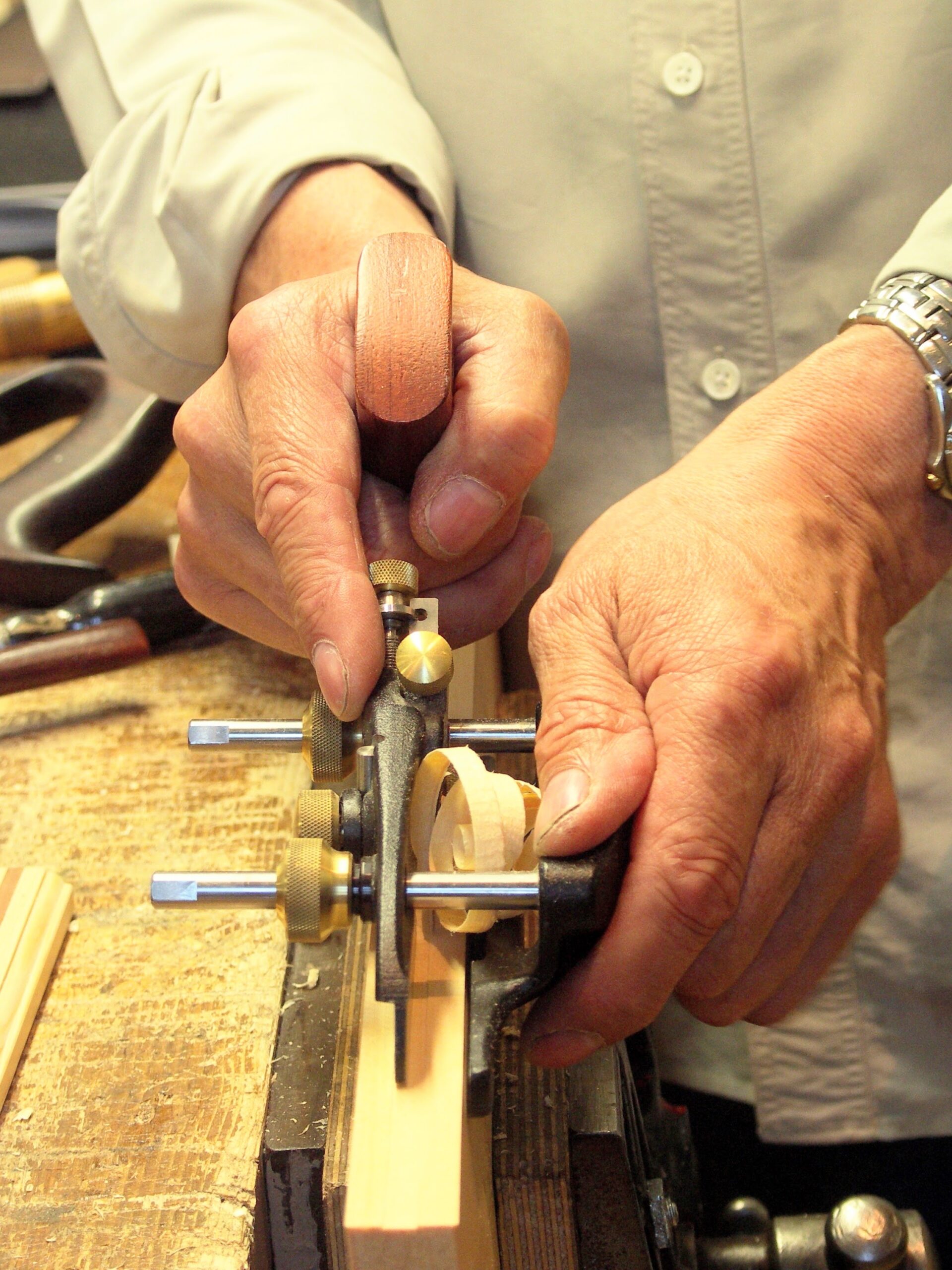
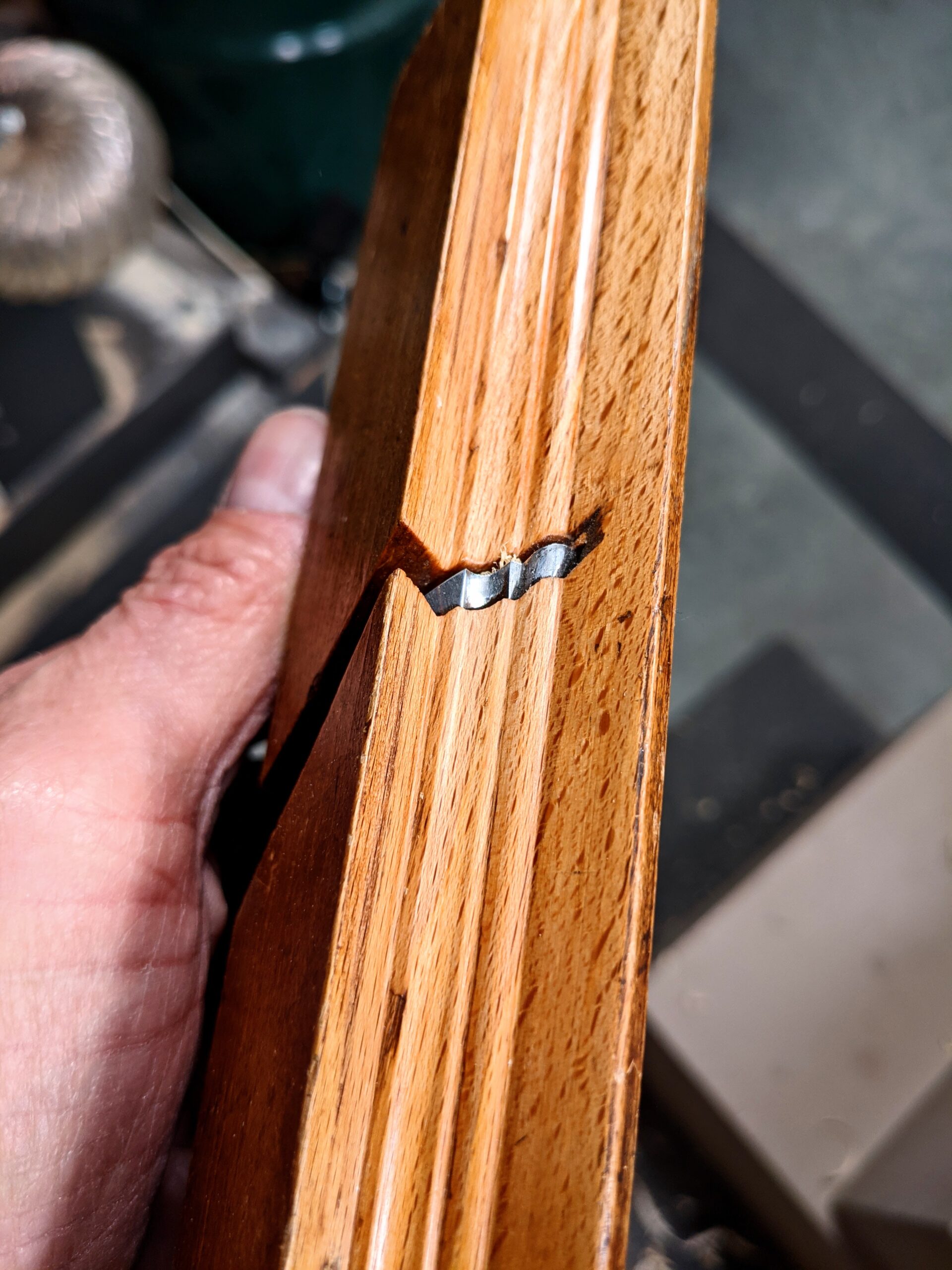
Can a basic plough plane create what you want from your woodworking? A moulding plane, perhaps? A #78 rebate (rabbet) plane, or a side rebate plane? I've been using them alongside machines throughout my life but it was only when I saw how easy machining is in not just replacing them but more displacing them and so prioritising machine methods as a preferred way of working. It makes it so easy to say, "Ah! That's what I need, not hand tools!" I completely understand! The press of a button, the flick of a cammed lever, quick lockdown of a fence and the job only needs a bit of a periodic nudge as you pass the wood into and through a cutterhead of one kind or another. What is there not to want with such equipment? I used my first saw machine with a 20" circular blade when I was 16. I was too young, much too young. Things did go wrong and I was not altogether equipped for such machinery. The company I worked for provided zero personal protection equipment, no dust extraction was anywhere on the radar and if I wanted a dust mask I had to go buy a surgical mask from the local pharmacy at my own expense. The saw and other equipment had no mechanical blade covers and I was handling 10-12 footers of 10" by 4" on my own to feed into the machines. The jointer was 24" wide and one slip would have taken my arm off to the shoulder in less than a few seconds. My weight? About half what I am now, I guess.
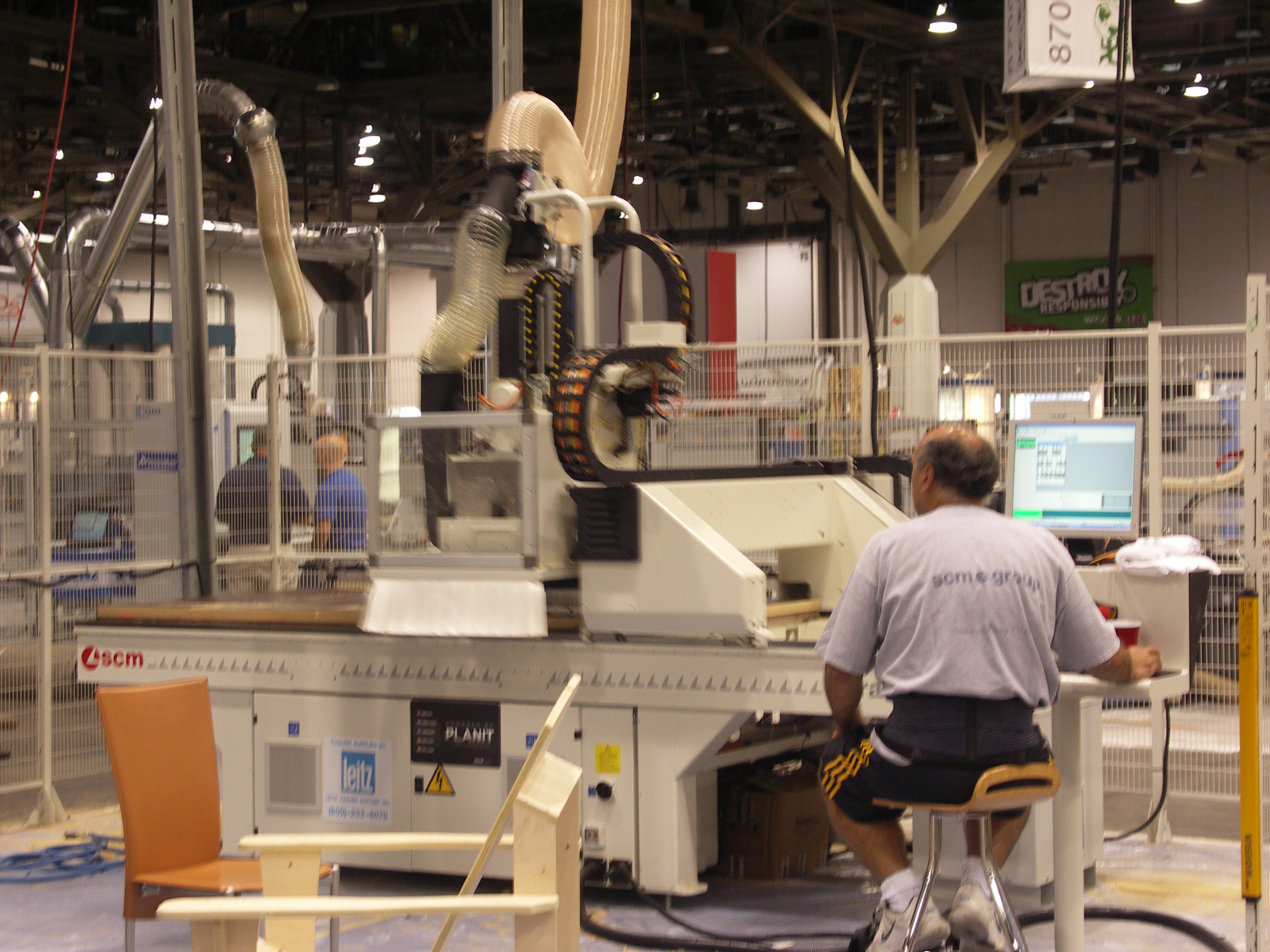
Of course, I gained confidence the more I used the different machines. And then one evening my dad said, "I hear you are using big machines now." I said I was and he pointed to his little finger with its terrible disfigurement throughout the nail. "I did this on a swing saw." he said. This swing saw, sometimes called a drop saw, hung from a fixed point above a bench and was dropped to cross-cut beams of wood. His had no guards. He woke me up to my original fears and ever since then the picture of his finger pops up when I use a machine. It was two decades before I caught my finger in a tablesaw blade and hit the bone through my fingernail. It came at the time when I was on production making hundreds of walking canes a week and in an unconscious moment, my finger shot off at a tangent and caught the tungsten teeth. I had had near misses at different points in my life and of course, the more you use machines the more you are likely to have things happen. It's important to note that even with all guards in place and with a saw that stops in a millisecond, things can and will happen when you did nothing wrong. Wood can split when and where and in ways that you would never expect. You are pushing, the blade releases tensions in the wood and parts curl in a split second and a two-horsepower thrust can lift and divert a balking section of timber in a way you could never forecast. Before you know it you are on your own on the floor with a shard of tungsten shooting through your thumb, your arm or your chest. How do I know? These things have happened either to me or in my presence. In some cases, no one did anything wrong and in others they did. These things are worthy of note when you press the button in your basement to make that last pass over the cutterhead.

I was 40 when I decided to make a more complete switch in my future world of woodworking. I would say that at that time I knew no one that used hand tools anywhere although I did know one woodcarver carving western scenes on headboards and plaques and such. Many professionals carried a plane for remedial work but would more likely reach for their belt sander and power planer and not the hand plane. I saw how, in general, living in the USA, people I knew well as carpenters and furniture makers used every machine type you could think of. In the backs of their trucks and vans, there really were no hand tools beyond a chisel and a hammer, a pinch bar and maybe a screwdriver, a pencil and a chalk line in a pouch. It wasn't at all different in workshops too. Hand tools were usually covered in dust on an equally dust-laden and dark shelf somewhere, a token relic or two from the past, mostly. Again, I understand how and why this happened. Deskilling is common practice throughout all crafts and trades but we now attribute skill to being able to operate a machine and in some ways that is true in that working the computer itself, developing plans and systems digitally is the different skillset people now acquire as the current alternative. And why not? Isn't technology supposed to make life easy? Power-feeds, Amazon, YouTube instruction, AI and such?
What others called the 'progressive way forward' made me rethink what woodworking really means. What does it mean for me as a maker of single items and small batches rather than mass-making of any kind? Stepping away from my mass-making walking canes, sticks and staffs put me on a new trajectory even though at times my wages were halved and even quartered. For some of us, the journey with hand tools becomes a clearly defined path and not in any way negative but progressive. It's a path and passage leading to life and living a way that seems so alien to so many yet to me and to others the journey of making by hand now means at least as much if not more than even the completion of the project itself.

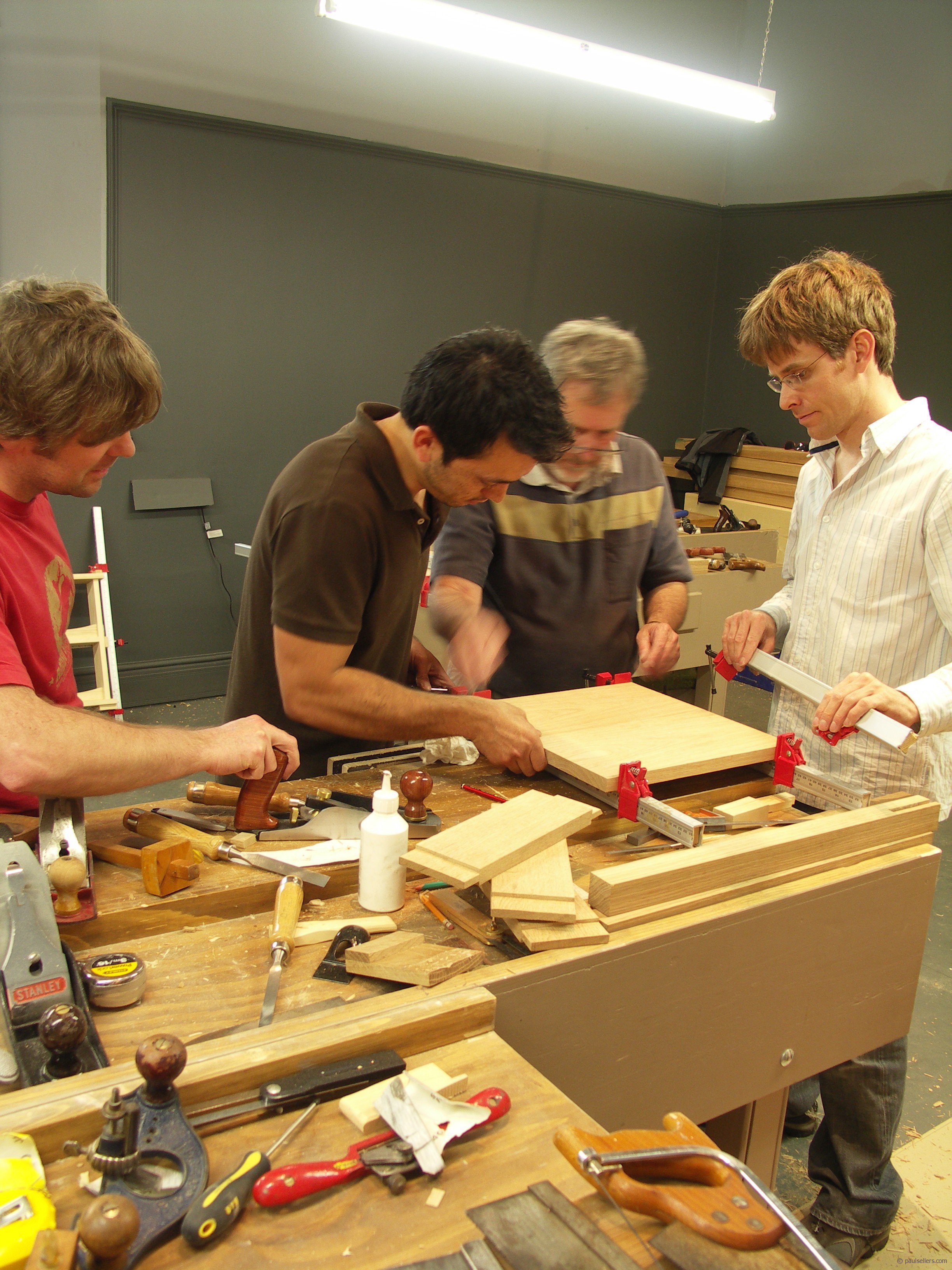
My seeing a way forward for hundreds of thousands of others starting out on their woodworking journey began by my own decisions to disengage from what had become the status quo and to actually take ever-greater control of my life. I cannot say it was a preconceived plan so much as an unfolding one where I saw a less trodden pathway. I did however see it as a path I felt was more the real woodworking I personally desired. As people clustered around to listen to the sales pitch of machine salesmen, my workbench held equal sway with many who actually found what they were looking for in a cluster of hand tools and man that knew exactly how to use them and without selling anything. Over many years it became ever-more obvious that I was not as alone as I thought I was. Who would have thought that my cutting a twin dovetail in half-inch pine with a gent's saw could change the course of life for thousands of others? In my 'evangelising' at my workbench, and I did this dozens of times each day of the woodworking events, I would make converts in just a few minutes. Often, with dozens and even hundreds circling me, and using TV screens beyond my reach, I could show people just how very effectively hand tools worked. What was common to me had become a rarity and watchers were mesmerised. They somehow believed that what I had adopted with hand tools was totally possible for them to adopt too. More so, perhaps, than any other way for most of them. Suddenly the concepts of hand-making with hand tools became a real option. No longer the one-way machine path, they had a direct comparison that would deliver the end results with a journey into skilfulness they could now take pride in. I told them how I could sharpen my saw in a few minutes and that they could do the same with just a little push and a bit of practice. I'd take out my diamond plates and sharpen a plane and a chisel in front of them and then let some of them try my plane, yet guess what? I wasn't even selling anything back then. Not classes. Not tools and I wasn't even getting paid for demonstrating either.
While still being open to other options as long as they were safe, my way was more available to all anywhere in the world and becoming all the more so. One by one, they could see how they too could skillfully work through the different projects they wanted to make. I think many watching my work grow through the decades may not know of the raw beginnings traveling state to state and show to show. It was hard and it was fun. It was expensive and I had no money and made none either. No one can ever accuse me of taking easy paths. That flat tyre in the middle of winter in the middle of nowhere on my way to Reno, Nevada from Willow City (population 13), Texas and the snow falling many inches deep and I, all alone, at 10pm. And who carries a spare tyre (tire USA) for their U-Haul trailer anyway?
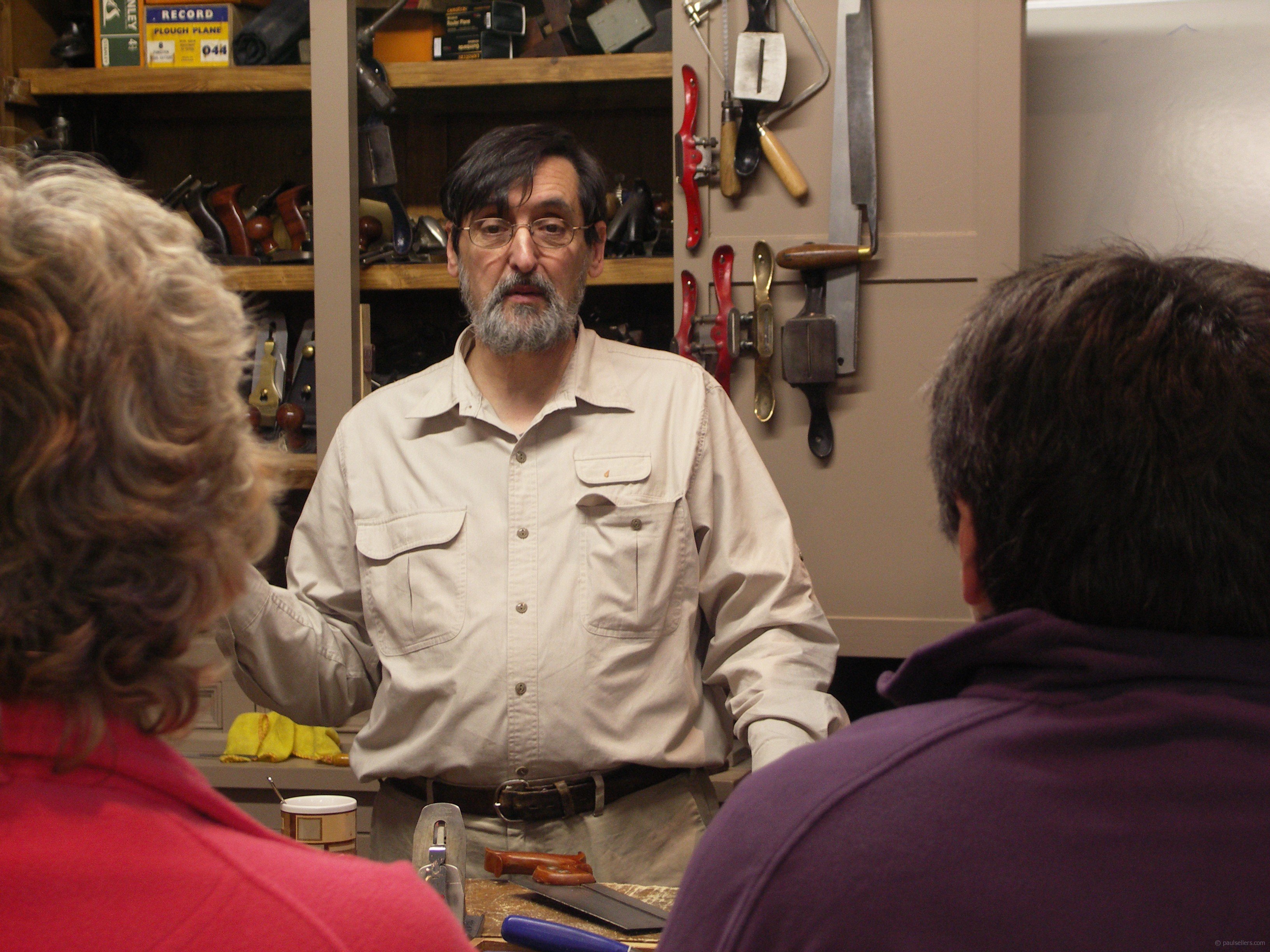
With the exception of the bandsaw, I have now proved well enough that while handwork does often take longer, it can also speed up many a process too. In my world, hand tools mean a good and general physical and mental workout, continual development and exercise, and much more, more than I can ever get from machining and indeed much more stimulating and less boredom. At 72-years of age, this hard labour gives life to my aging body, and it's just plain good for me. I credit my non-aching body to the workouts I get in working the way I do every day. On Thursday I planed wood by hand for five solid hours. I felt great! Yesterday I did about the same. What the NHS recommends as exercise for septuagenarians in a week, I do several times in every given day just woodworking and without my other exercise too.
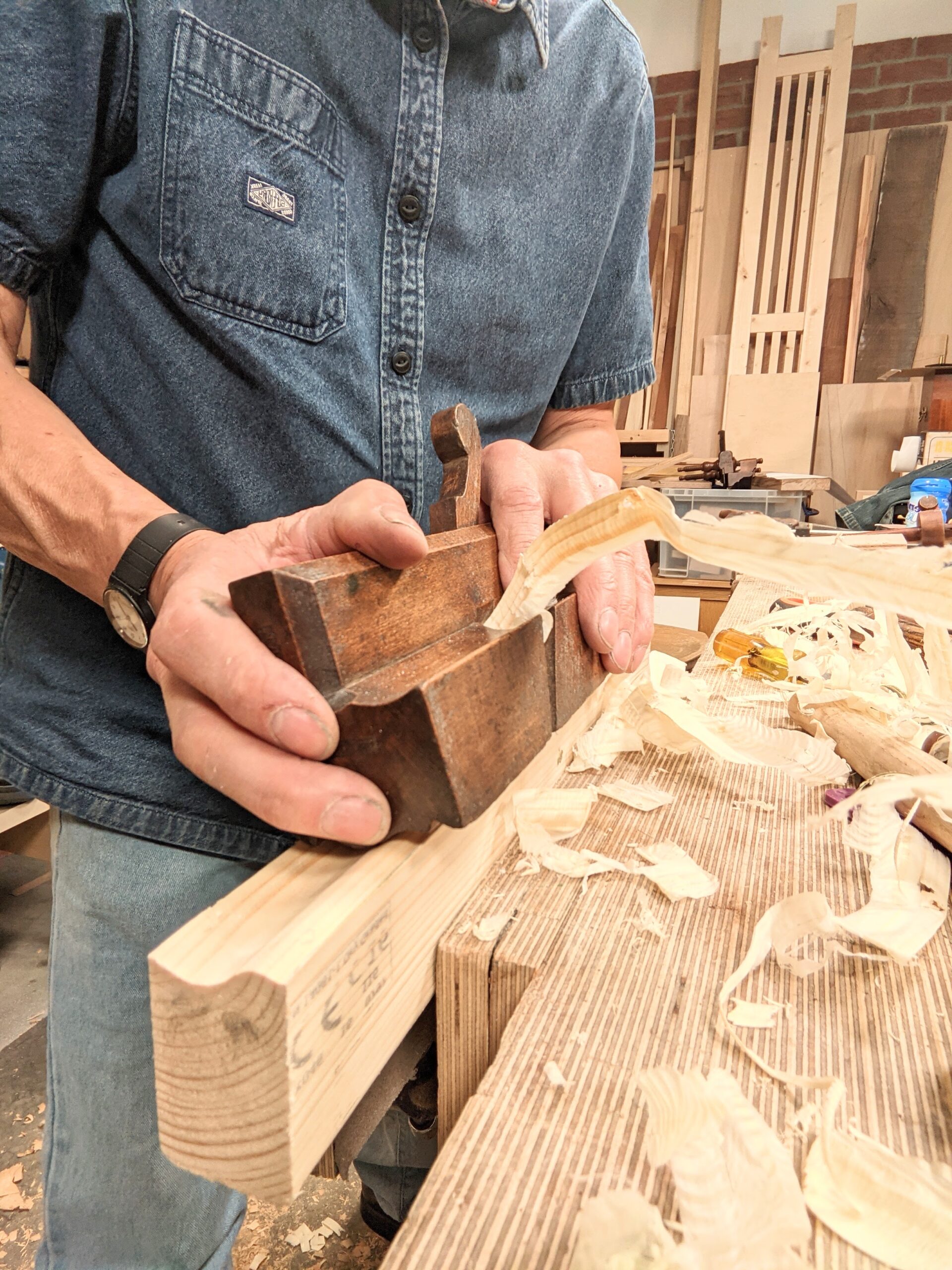
Some years ago, nope, decades now, I saw the writing on the wall for young people and I spoke out about it at the time. Standing inside a workshop where boys and men lined up to use a bandsaw to cut out some basic shapes and I felt grieved by the evident boredom and that they were setting coordinates for the children that said the only way for shaping was a machining experience. I know. Who owning a bandsaw wants to cut out with a coping saw? But the problem was it was the dads cutting out the shapes and not the kids. You cannot responsibly put children on bandsaws and please, don't those of you who say your kids used a bandsaw at eight comment that your kids did! The same thing happened when I saw a man sweep down the side of a felled tree with a chainsaw to trim off small branches as a prep-step for slabbing the tree into boards. The kids standing around were mesmerised by the speed of it, yes, but how much more would they have enjoyed using a branch saw and cutting them off themselves. We can do the same when we stand children around a machine that rips down a billet of wood to make a slimmer piece fit the size we want. Truth is though, we can be setting their coordinates for a machining future rather than a hand tool world that they might just love. I have lived through these different worlds, united them and then regretted it. If you take your kids to watch machine methods only then they must wait until they "come of age" before they too can become woodworkers by using such equipment. This for me is total sadness. Why? Kids love the idea of making things with their hands and with hand tools. I have yet to meet any person under the age of 18 years and all the way down to under three who balked at using a hand tool I handed to them to have a go. When each of my boys was around three I handed them a spokeshave and a section of wood and they shaped it into a spatula, a spoon or a cutting board.
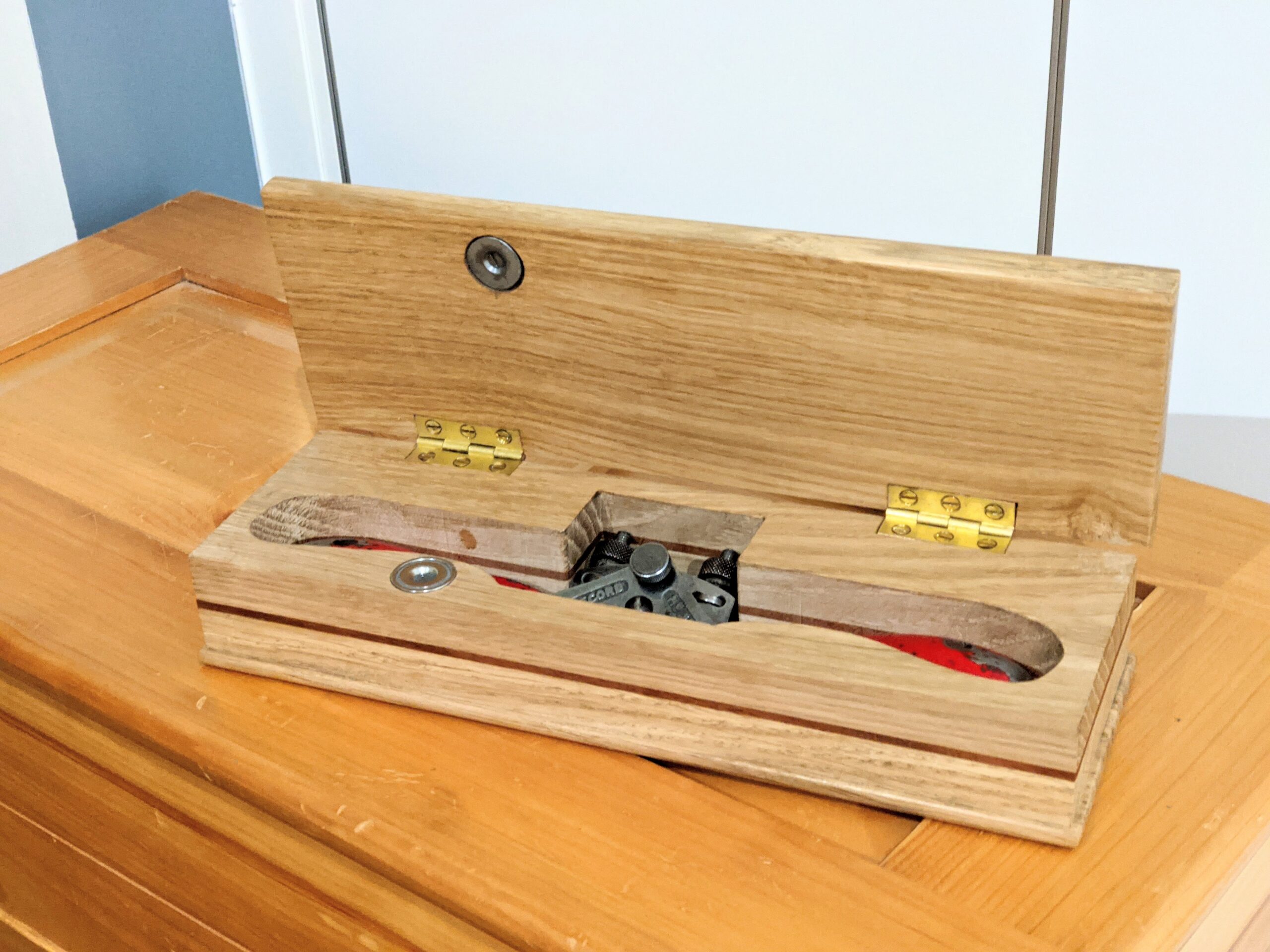
I recently, six months ago, handed my old Marples spokeshave to my 2 1/2-year-old granddaughter to fashion the same spatula her father and I made over 30 years ago. In the same fashion, I perched her atop a wooden platform base so that she could reach the benchtop and the vise and so she followed in his steps learning about wood and spokeshaves and possibly taking the steps he took to becoming a violin maker. She (and I) shaped and shaved the wood until a spatula emerged from the shavings and she took it proudly home as a gift. For her third birthday last week, I gave her the spokeshave she started woodworking with and I gave it in a small lidded box so that she would always know that this was a special tool for her from me.
I doubt that anyone saw what was happening 40 years and more ago when woodworkers adopted machine methods on a more-than-ever-before, universal scale to actually 'morph' the skills we once had to work our wood with. If or when you look back on woodworking magazines of the 1970s through the 90s, they were mostly articles about jigging and rigging up machines to replace hand skills and do different types of work to add versatility and a guaranteed outcome to the cuts made into a piece of wood; since then, of course, we have developed mostly sedentary aspects to our woodworking in the belief that ease is better than the more manual way or type of woodworking. As more resident machinist systems emerged, a completely different type of woodworking became the norm in most cultures that have nothing to do with handwork per se. Rather than the active performer of skilled workmanship through sensed contact with the wood fibres, we saw wood passed into, over and under cutterheads of different kinds that gave us near-pristine surfaces to work with and with edges all dead square and true. A skilled machinist can save hours of work truing up stock, we all know that, but the skill is not the type of dexterity handwork demands. Now it is the skill of programming, loading, and flipping, and turning wood to align with a fence guide, keeping the wood moving to avoid burn marks and steady to get that continuous cut without digs from a broken run, things like that.
But, as always, I must say that the catastrophe is not industrializing the processes of work in a home garage or shed. Far greater even than that is the sad loss of kids being with dads making things of substance with their own hands. Most dads and some mothers, a few, now place their children squarely outside the workshop doors and slam them shut! The catastrophe is not only becoming much less skilled when we could have become equally skilled but, more, that we denied children those unique and special formative years when skills are best adopted one by one and the development of sentience in working by hand becomes part of our developmental stimuli that sparks our efforts by touching every one of our 25 senses beyond the key five we are most familiar with. I cannot express the significance of this 'something' that is rarely if ever really explored or mentioned anywhere in woodworking magazines of the past and, indeed, even the present.
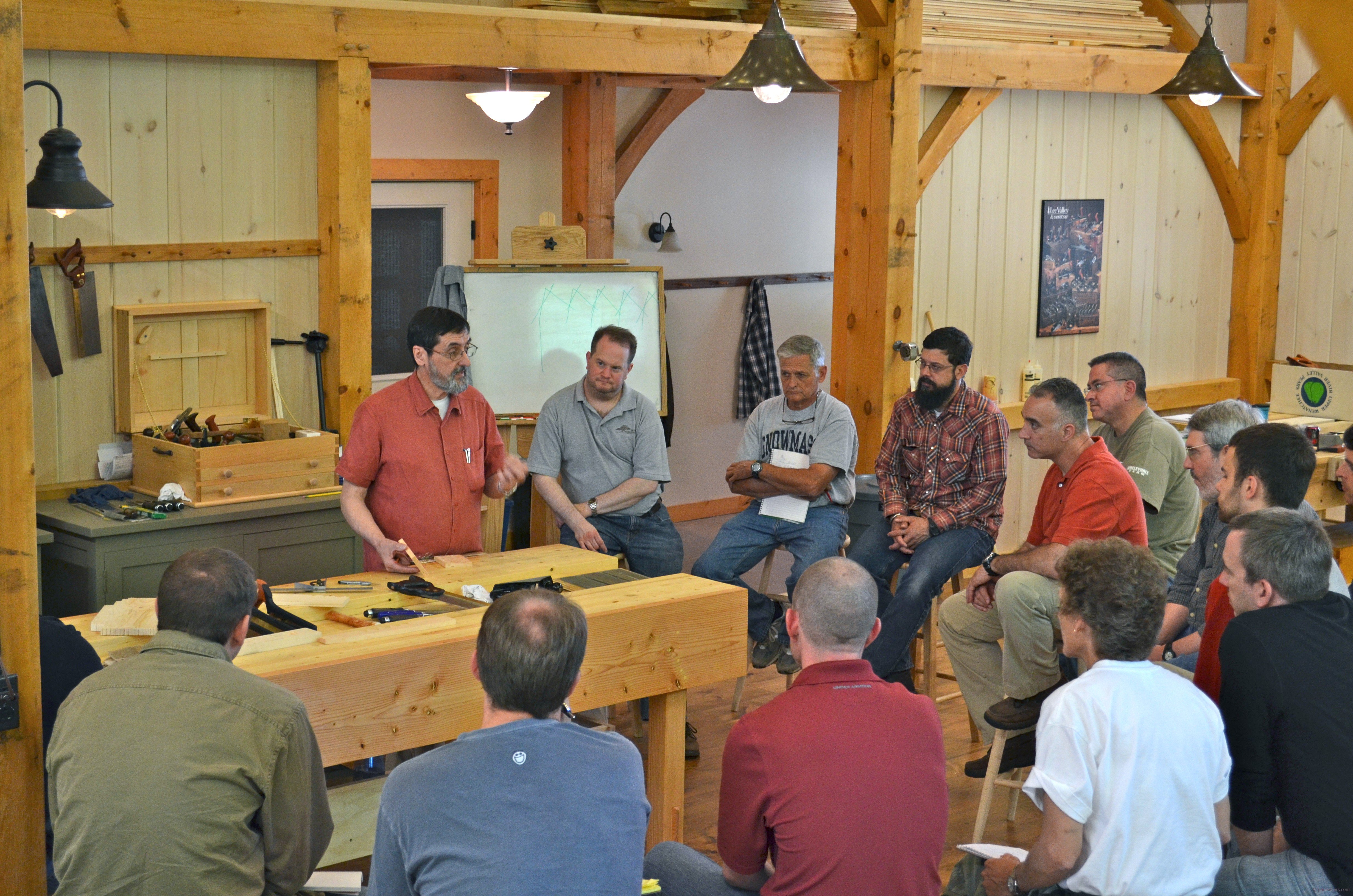
Machine methods without exception make woodworking a 'grown-ups-only' endeavour, and yet, with my own sons and now my granddaughter, we never turned on a machine to work with at all and we were, therefore, able to start the basics of woodworking at just three years of age. Closing the workshop doors on children is possibly the most egregious outcome of the machine-takeover thus far. We have at least two generations who never worked with hand tools and could therefore not tell their children of the benefits hand tools bring to our unique woodworking world. It is very likely that you as a reader have children and grandchildren of your own so I am hoping to nudge you not to leave it until it is too late. I have never met a child yet that wasn't sparked into an interest in woodworking after using a spokeshave for the first time.
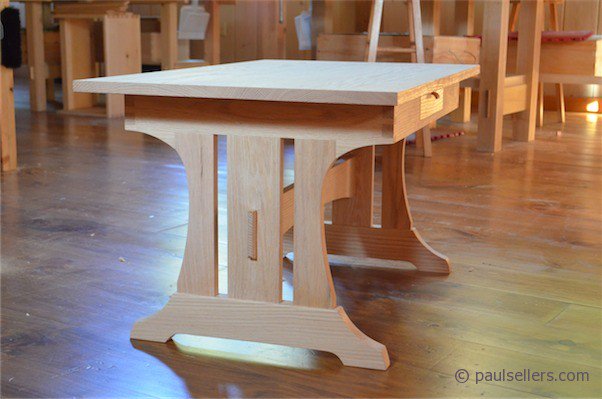
It's not about me preserving my turf, returning to the dark ages or denying the need for speed and efficiency where needed or preferred. I don't much care which methods people use to work their wood by but I do think it is good to sound the alarm now and then, that with a little effort we can nudge our kids off the couch, bed and chair and redirect those fingers from tapping into gripping, pushing and shoving planes and saws and chisels and spokeshaves into wood. Then too there is the added bonus of developing a nurturing environment whereby we can nurture good relationships that build and bond. I just prefer to present an alternative that truly works without me selling tools and equipment somewhere in the background. I have never once sold what I do to make money first. I do make an income, that's a fact, but my main motive then and now has been first to make and then too to provide a way of working that is rewarding and precious and leading to an income sufficient for the needs of a family. When others said you can't make a living your way, what they were saying was you can't own two and three cars, a bigger house and maybe a swimming pool. That was true, but I didn't want two cars a big house and a swimming pool anyway. I had my truck, my nice and compact home and garage workshop and the rivers and the lakes a mile or so away. This alternative often seemed to insult machinists and so-called professionals but that is mostly because I showed an alternative as the lifestyle woodworker I have always been and enjoyed.
. . . and a week later one of these!
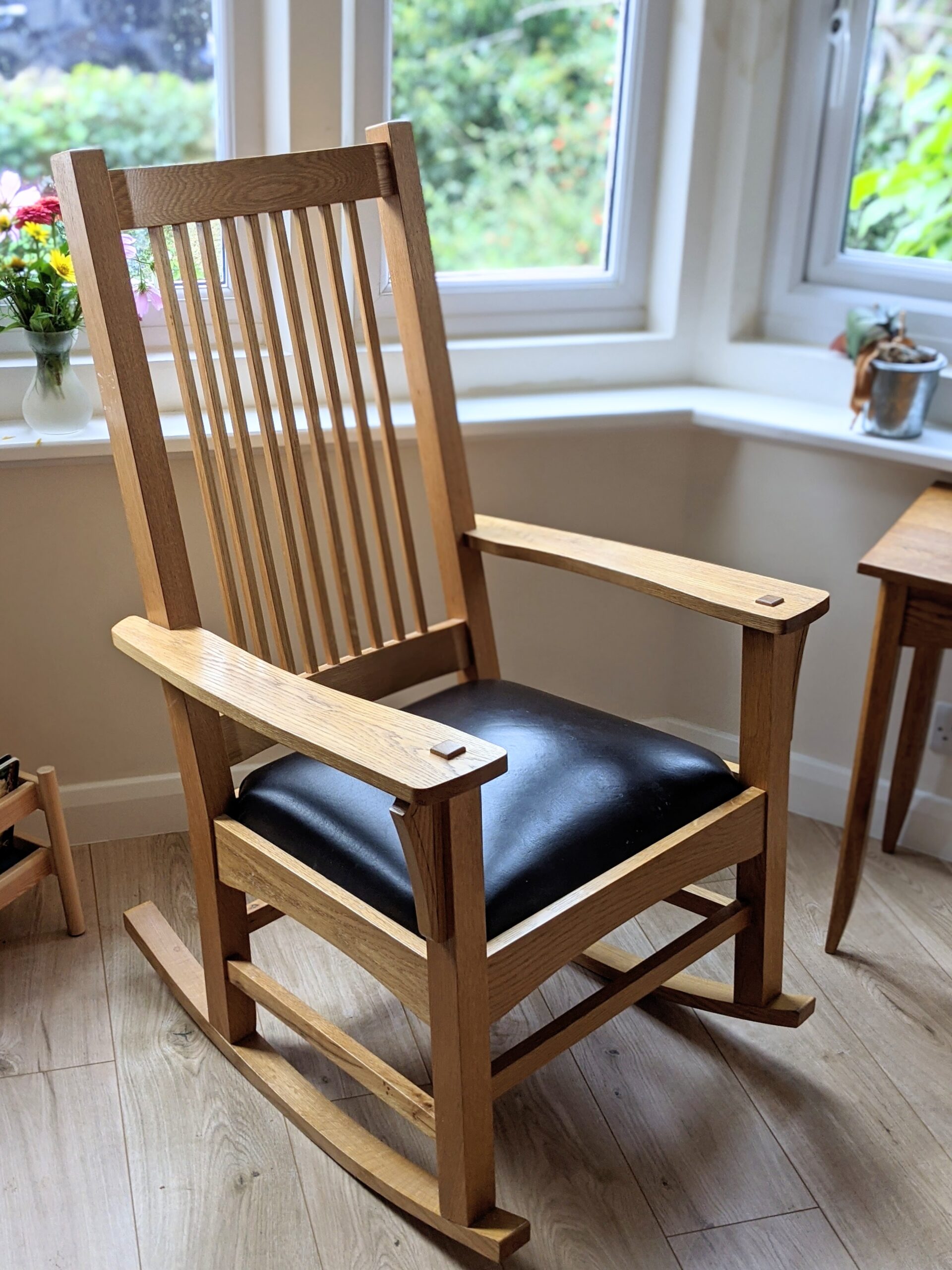
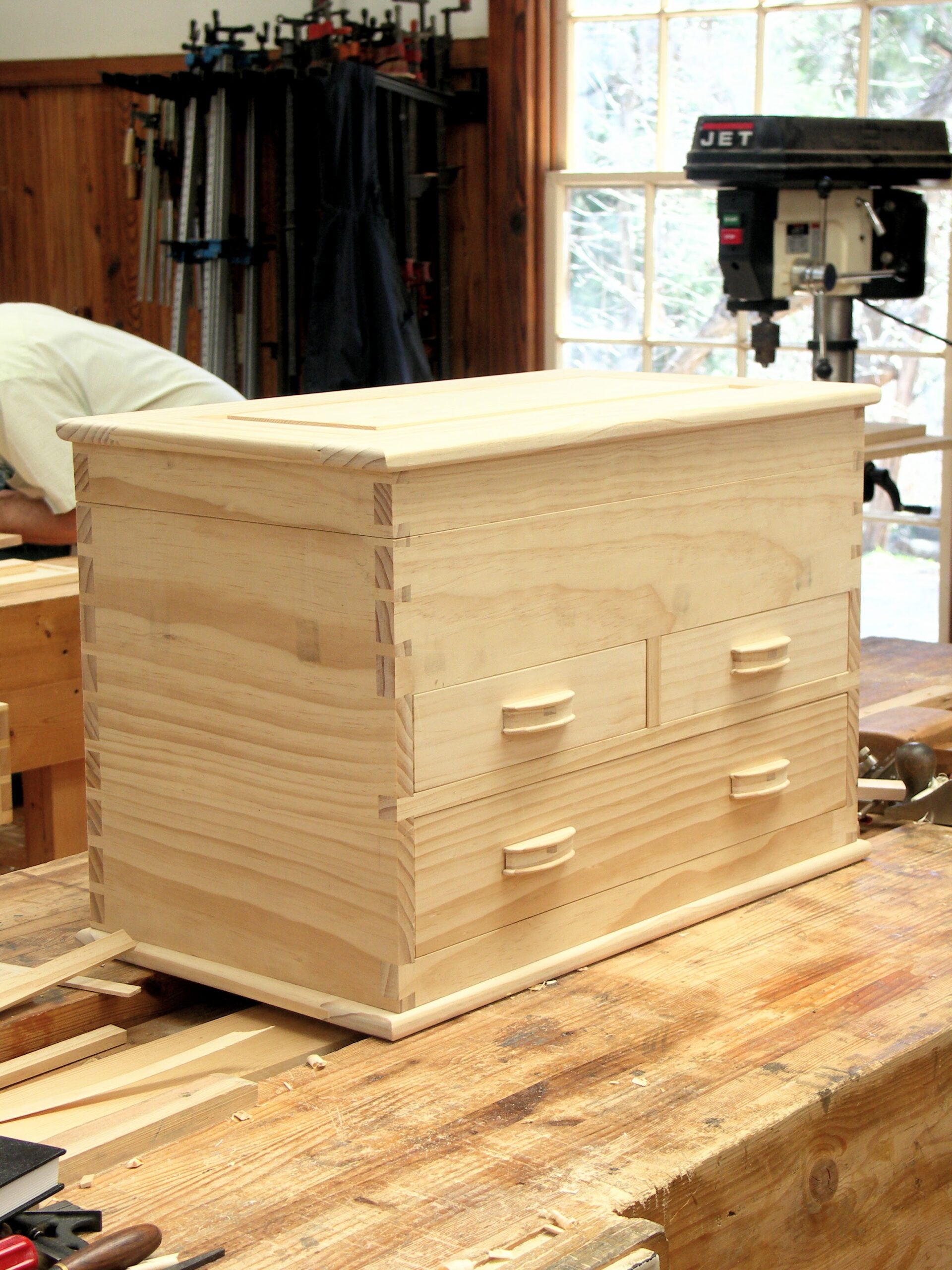
And before both of the above, you made this one below too. Machined? Nope, not one! We did start with dimensioned wood but after that, all surfaces were hand-planed, hand-sawn, and they used hand-cut joinery throughout. I know of no other woodworking course that ever achieved such outcomes in so short a time and in such quick succession like this. By the time of the rocking chair, we had concluded 24 workdays of 8-10 hours. Even colleges never achieved this in three-year-long full-time courses. What's amazing is this though, we have now put all of these into our woodworkingmasterclasses.com offering, alongside hundreds of other courses. 25 years of my teaching became an online resource for everyone to learn woodworking. How about that!
Comments ()