
In My Workspace
I looked back on the different workshops I have worked in since I came back to live and work in the UK. Two things that all have in common are my workbench and my work tools. They've never changed in nigh on 60 years. What I started with I still have and still use. What I bought in the mid-sixties I still use. A marking gauge, a mortise gauge, spokeshaves, bench planes, tenon saws, such like these are still the tools I reach for every day. In January 1965, I began my apprenticeship. Snow-covered the streets and the workshop roof where I would work and train and serve for the foreseeable future. 57 years later I have no regrets at my choosing woodworking as a way of life for me. Between that January morning and today, I have seen many changes and I have tried them to see how they might fit into my life. Most of the machine methods seemed to end up driving me to work faster and even beyond my control. Something about the swirling cutterheads drove me to get the job done as soon as possible so I could shut them down and stop their noise, their mess, their pushing that drove me so. Those ten-hour days on a router, a tablesaw, a thickness planer and such. The day I stopped all of this and changed the course of my life was a magical day that reminded me of other such days when I stopped doing what I shouldn't be doing for a living to take charge of my life, instead of being driven by others or indeed purely economic considerations. Stopping the mechanisms we consider to be essentials because of economics and such is often beyond our control, but I worked toward that end bit by bit. Eventually, I was able to climb down from the conveyor belt and live a life of my own choosing. How glad I am that I could see a way out of commercialism and begin to start out pioneering a new direction.
Leaving the USA and my beloved Texas, with the rebirth that often comes from living in a new culture to achieve a new life as a full-time lifestyle woodworker, took many years of consideration for preparedness. Mostly it was dismantling my own precepts and preconceived ideas of life and work. But it was also the precepts and expectations of others that I had to dismantle too. It is all too easy, thinking you own what you are and what you are doing, only to find others can somehow expect to have ownership of you by all types of ligatures. I liken this to owning possessions. Everything from owning a house, a car, a mass of personal possessions, like tools and equipment, and then finding that you don't actually own them--they own you! Many have lamented me taking down my mass of woodworking tools from the workshop walls and cupboards surrounding me that I have owned through the years of my woodworking. Well, I still have them, but what you see now in my workshop is actually the real me in control of my woodworking environment, so please celebrate with me as what you see is what you get and all pretention and any pretentiousness is gone.
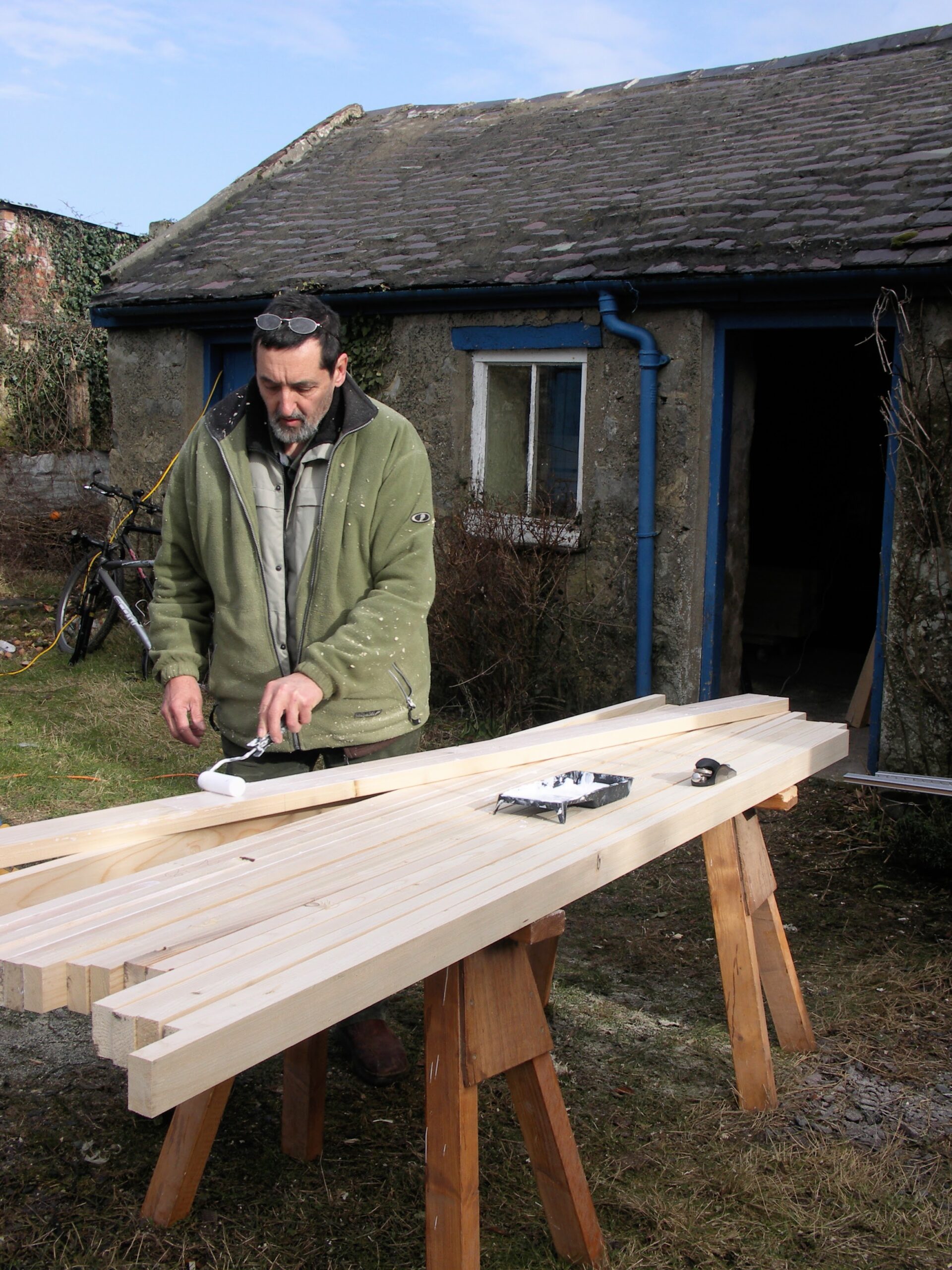
When I first began establishing myself back in my native Britain it was on the Isle of Anglesey (Ynys Môn in Welsh). Not that easy a place to survive let alone thrive with its isolation and dependency on a more local economy, but from the coasts of this small island my plans were formed, and survive I did. Here, I started my new future from scratch. Had I relied on the local economy to live based on making and teaching I would have most likely died. But it was in such isolation that I spent my evenings and weekends drawing, designing and planning the steps it would take to restart and reconfigure my new life. The island is largely a retirement community with some small industry and a now decommissioned nuclear power station; more a mix of peoples if you will of those who wanted a seaside within a few miles and a chilled way to live. Anglesey can be very cold. The quietness was conducive to my writing and nature study, but after a hectic life of 16-hour days, six and seven days a week over two decades, the pastoral element helped me to solidify my will to establish a new life reaching out to a world beyond my new borders. I found an old farmhouse property to rent with a few rugged stone outbuildings. It was a beginning, just a beginning, but one that wouldn't last too long. Often we are disadvantaged by people we come to know and associate with, but even that can launch us into a more successful future. I have needed to rebuild my life and my future several times brick by brick. When you do this, you really value what you've got.
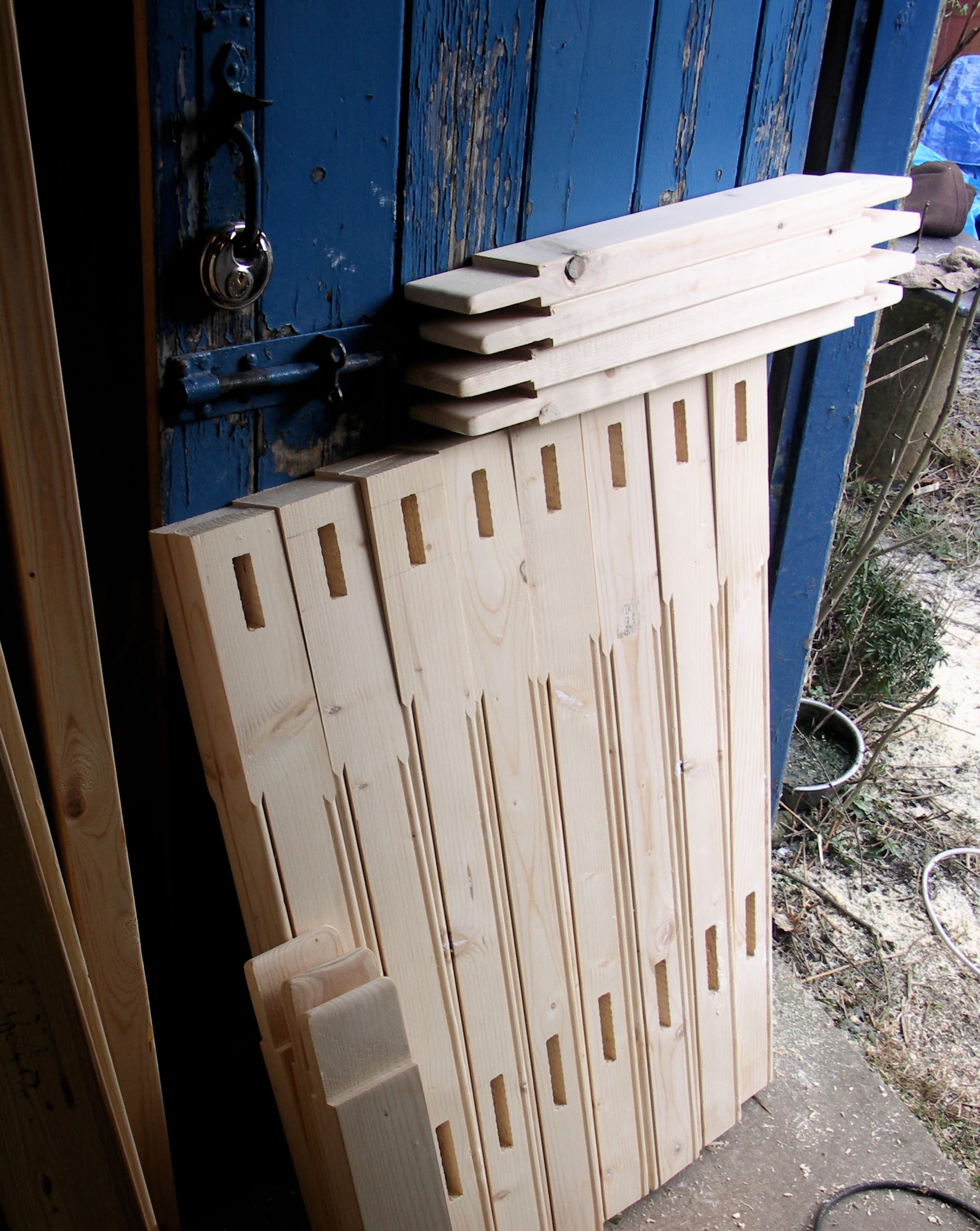
The picture at the top was my first workshop back in the UK. The picture above resulted from my making ten workbenches for the new school I would begin in 2011.
I actually liked this workshop despite its damp problems. In North Wales you want something solid between you and the great Atlantic beyond the more local Irish sea and Northern Ireland and Eire. Stone may be cold but it is pretty much immovable and fireproof too. A good woodstove works really well.

The views of the Snowdonia mountain range help resettlement when the weather is right.
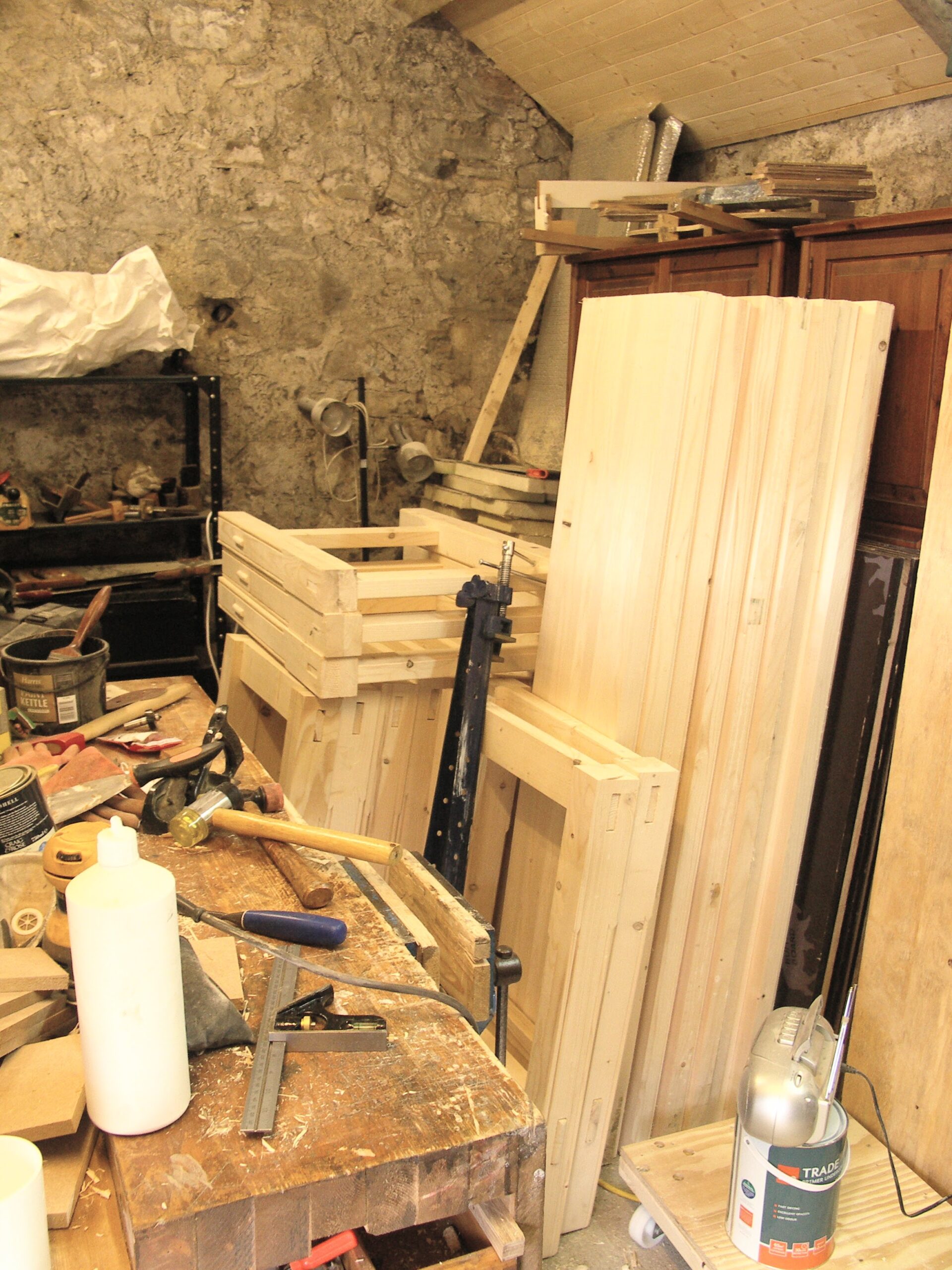
And things can get pretty tight in small workshops when you are making ten workbenches.
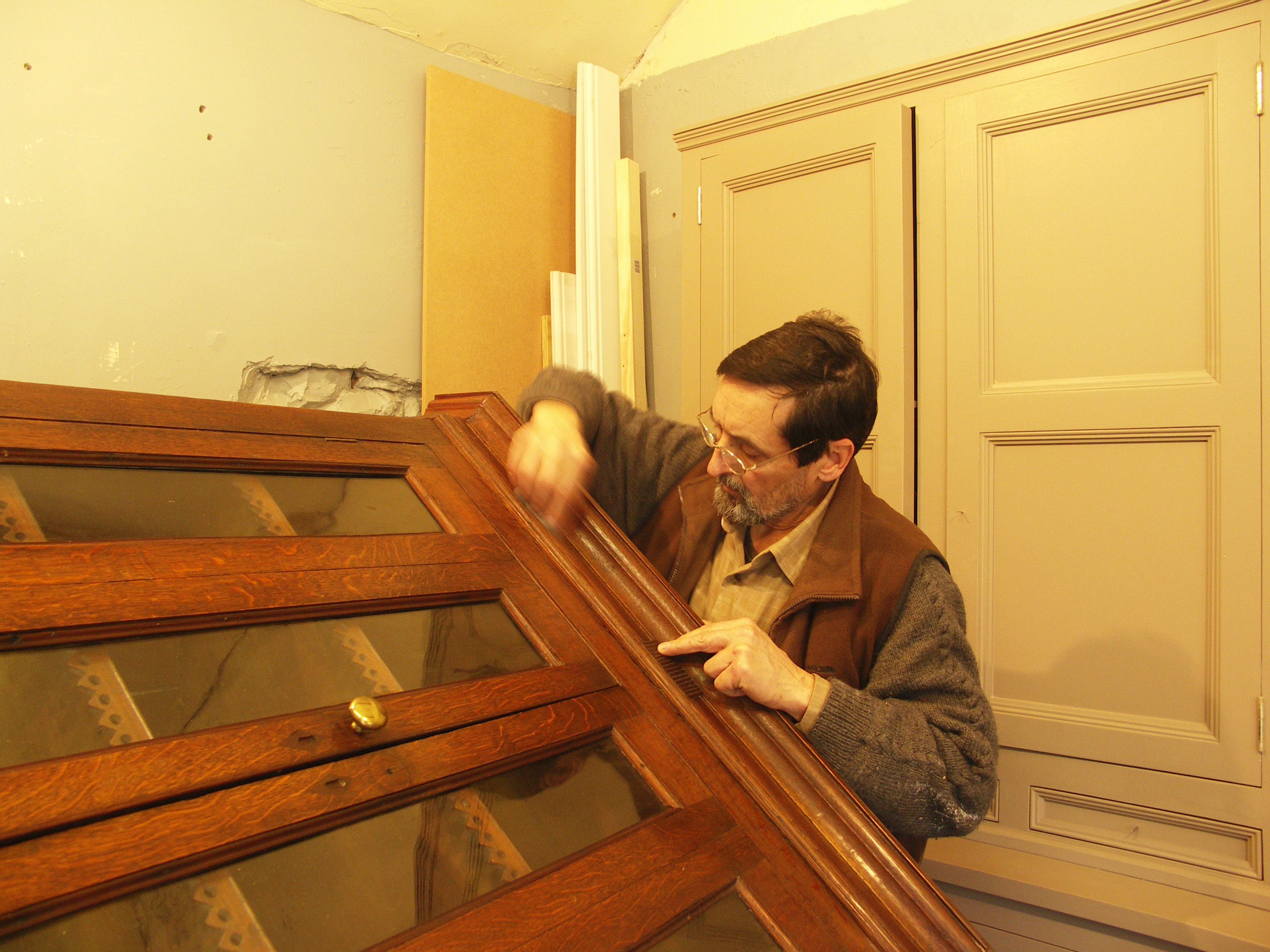
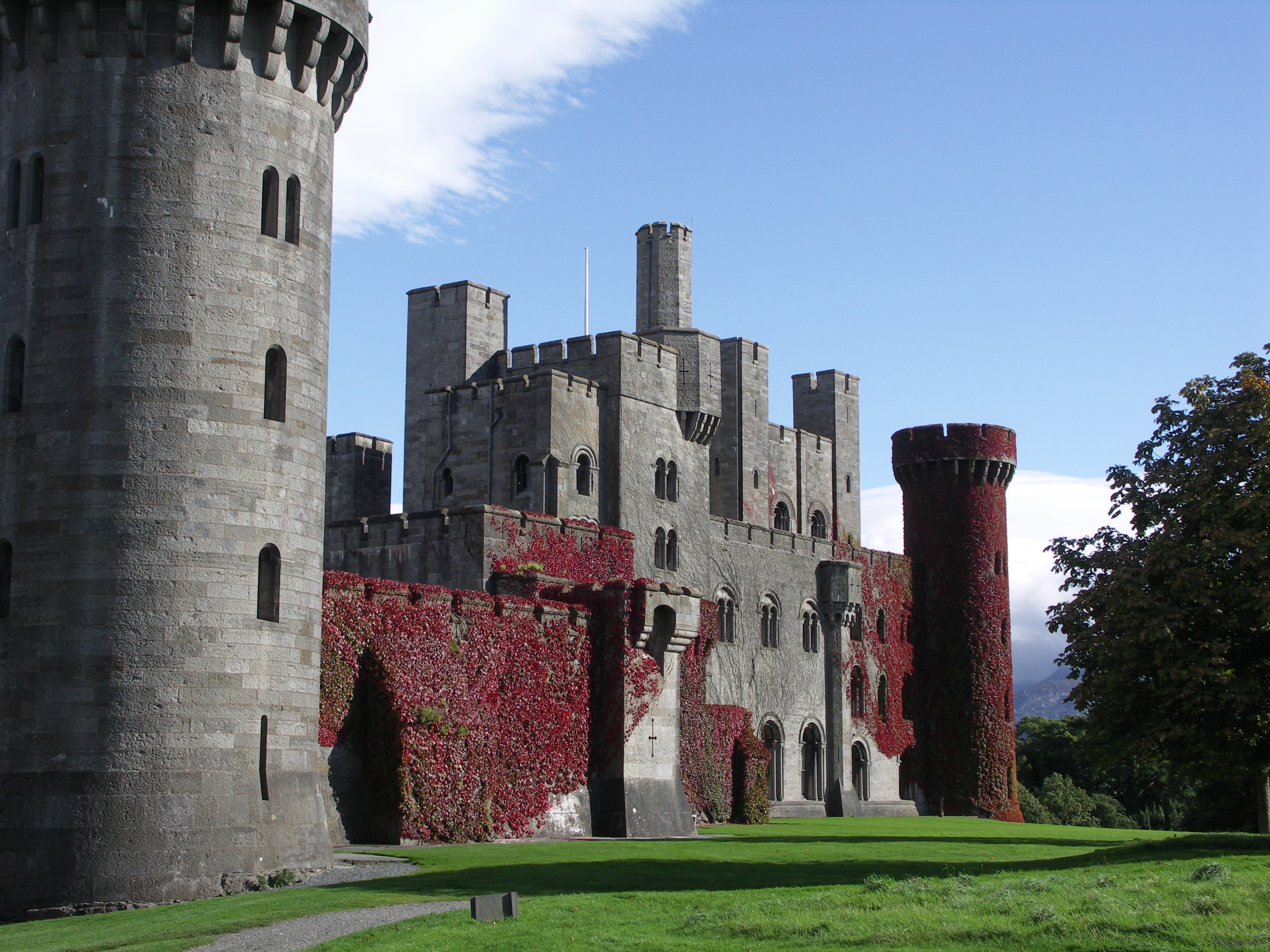
I had a small garage workshop in my next rental home, but I also had a workshop in Penrhyn Castle where I held my classes. My home garage was literally a single-car garage and I had three machines from which I milled all the 500 pieces I needed for classes in the Castle. To say it was compact is an understatement but it was how I survived. The castle made up for everything. I had a beautiful workshop there for five years until the contract ended and we relocated to central England. Wales was a wonderful transition for me and my family.
From Wales to a more central UK meant many new beginnings and I am grateful to the Sylva Foundation for enabling me once again to find a stepping stone and a place to work from. By now we had moved house four times in almost as many years.
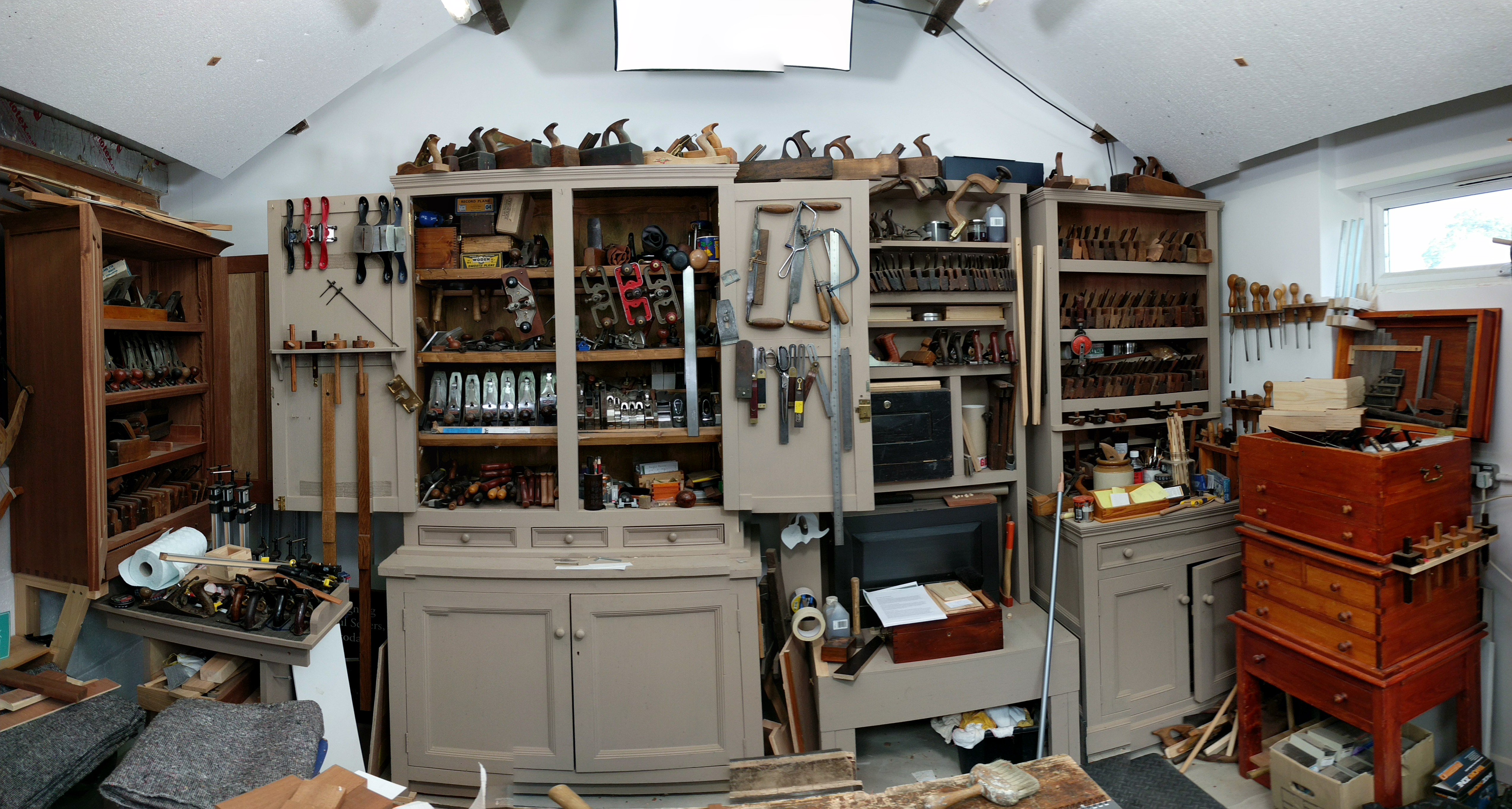
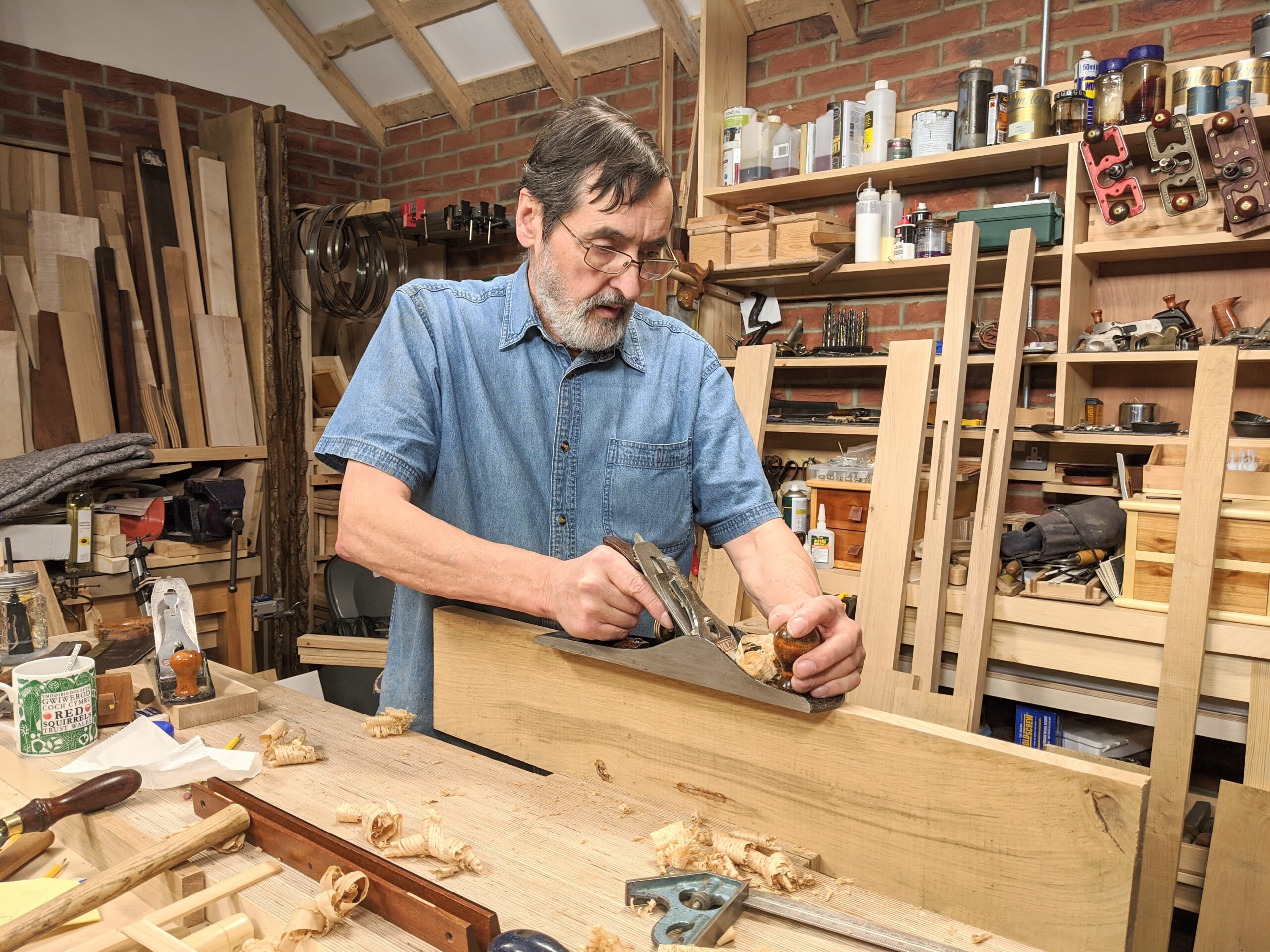
Here in Oxfordshire and in a terribly compact space, I started to thin down ready for our next and final move. On the home front, I had a nice garage workshop and it was at this point that we tried to match my circumstances to what the majority of people out there had access to. The garage workshop needed to be representative of what people were using at home too. The garage I was in was typical of the UK and lo and behold, after a survey of those following us online, we found that a massive percentage had the same space. This then set the parameters for our studio garage workshop here at our own building in Abingdon. Over the past four years, since our arrival in Oxfordshire and Abingdon, we have established what I consider to be the most likely workshop I will ever need to work from here in the UK. The machines I once needed for my hands-on classes are now gone. I rely only on a 16" bandsaw for resawing my wood. The rest is all handwork and I love it. I will never mass-make anything again.
Comments ()