
Beyond Smoke and Mirrors
Another George story begins with, "What you doing, boy?" as in 1965, aged 15, I crosscut a 4 by 8 with a brand new Canadian Disston (don't get one) handsaw. The saw seemed constantly to drift out of square despite the squared-across lines I'd carefully placed on the rough-sawn faces of the wood and was supposedly trying to follow. Merlin looked at the cut ends and tutted away while tweaking my ear between his first finger knuckle and thumb and cursing me. We were building a cupola window as part of a replacement roof being installed on an old circular barn. These sections would be the cills for circular windows being built in sections. It actually didn't matter to the whole that my end cuts weren't square as these were just the rough cuts leading to mitres once machined and profiled on the spindle moulder by our machinist, Alan. Nonetheless, I squirmed inside at my own lack and the tweaking of my ear.
Back at my own bench with George, George said, "Come here, Boy!" with the emphasis on the word "boy" as Merlin had said it. We chuckled together for a moment. In the vise was a two-by-four, flat face up and overhanging the end of the bench. "Watch!" and he crosscut the section of wood and asked me to check it with the square. I did. It was dead square even though there were no lines to follow.
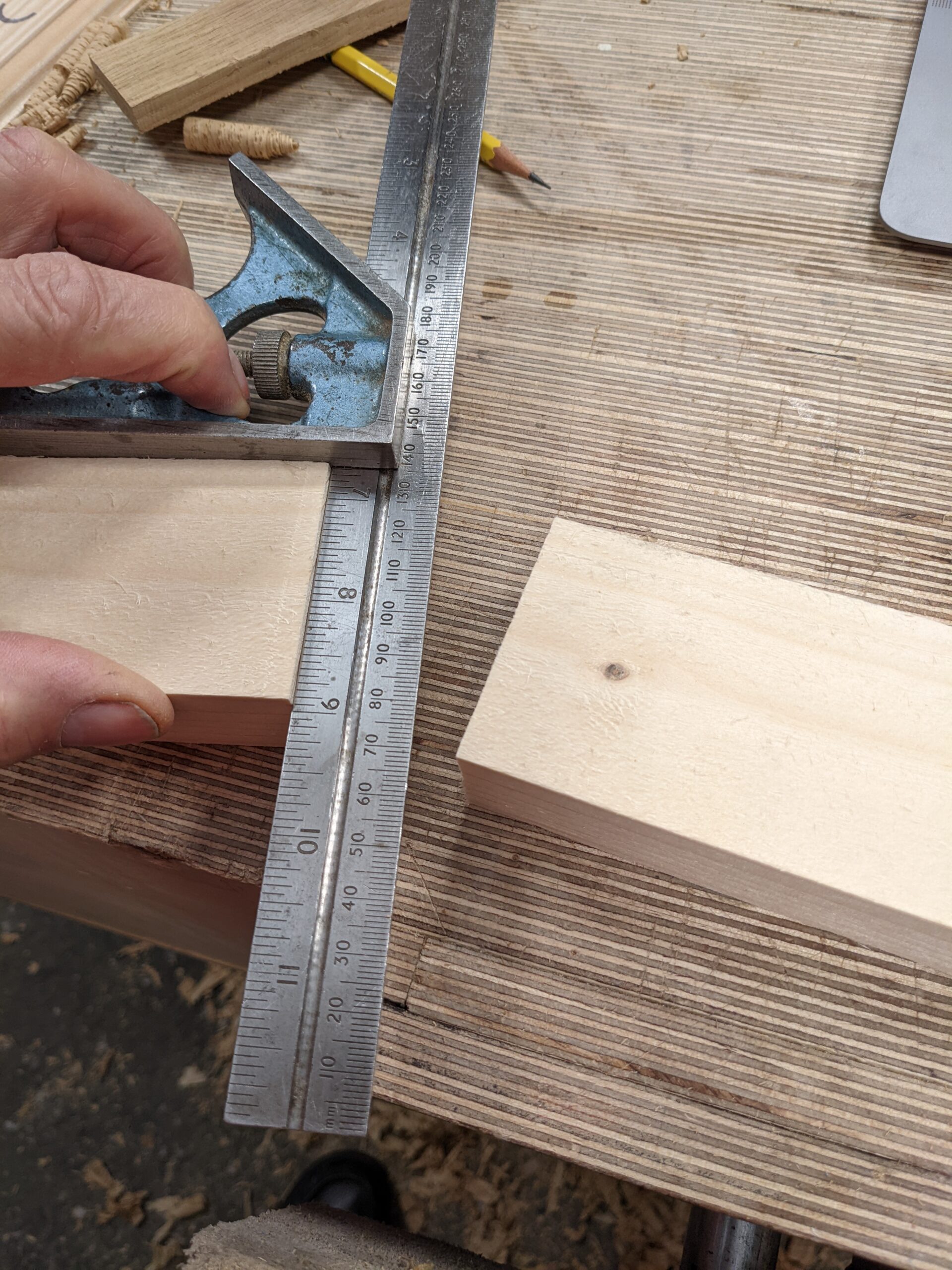
'Wow!' I said, 'How did you do that?'
"OK! Watch me to see if you see what I see."
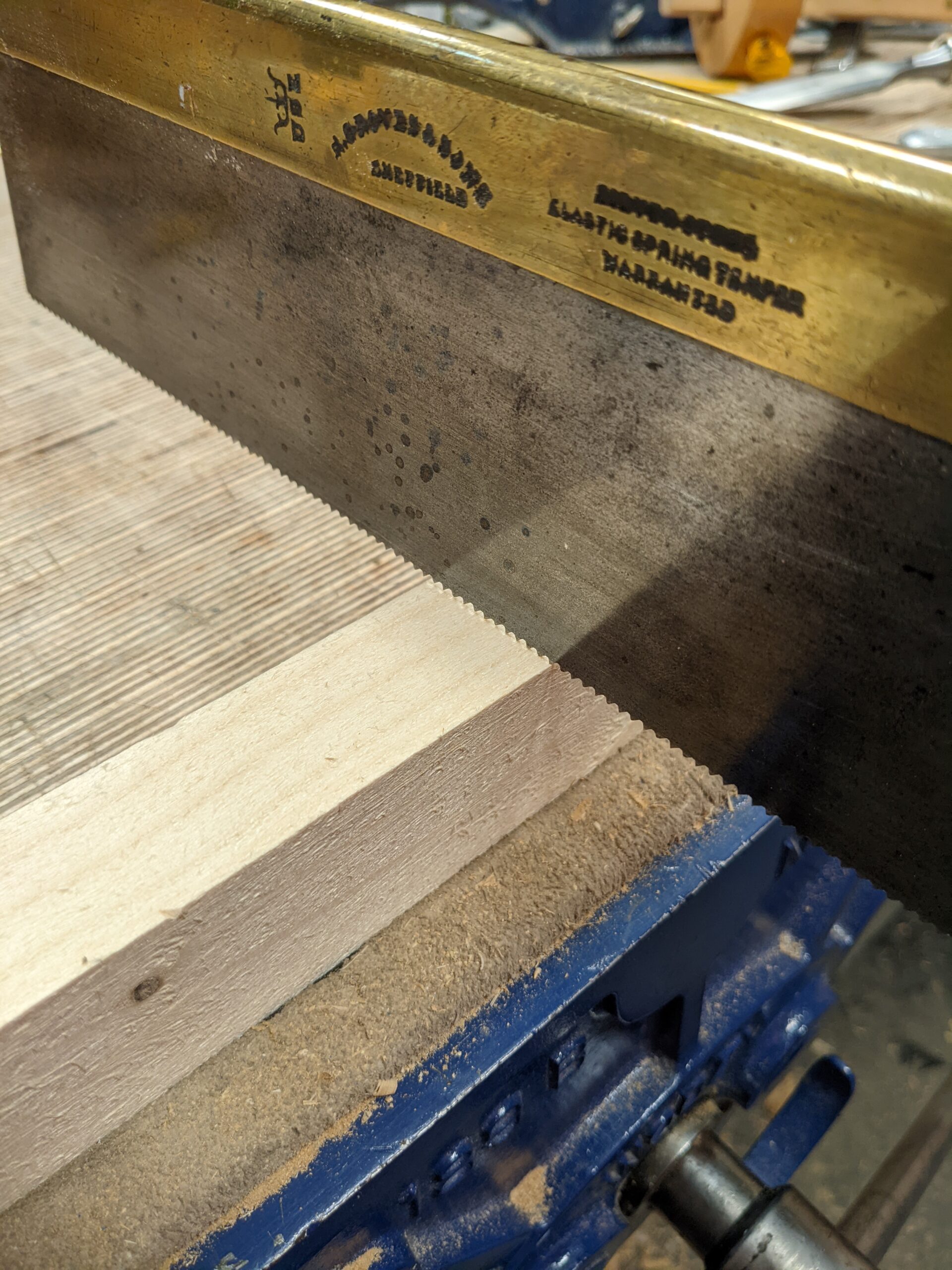
George placed the saw on the two-by edge and made a shallow, square-across cut first, entering the wood about a quarter of an inch.
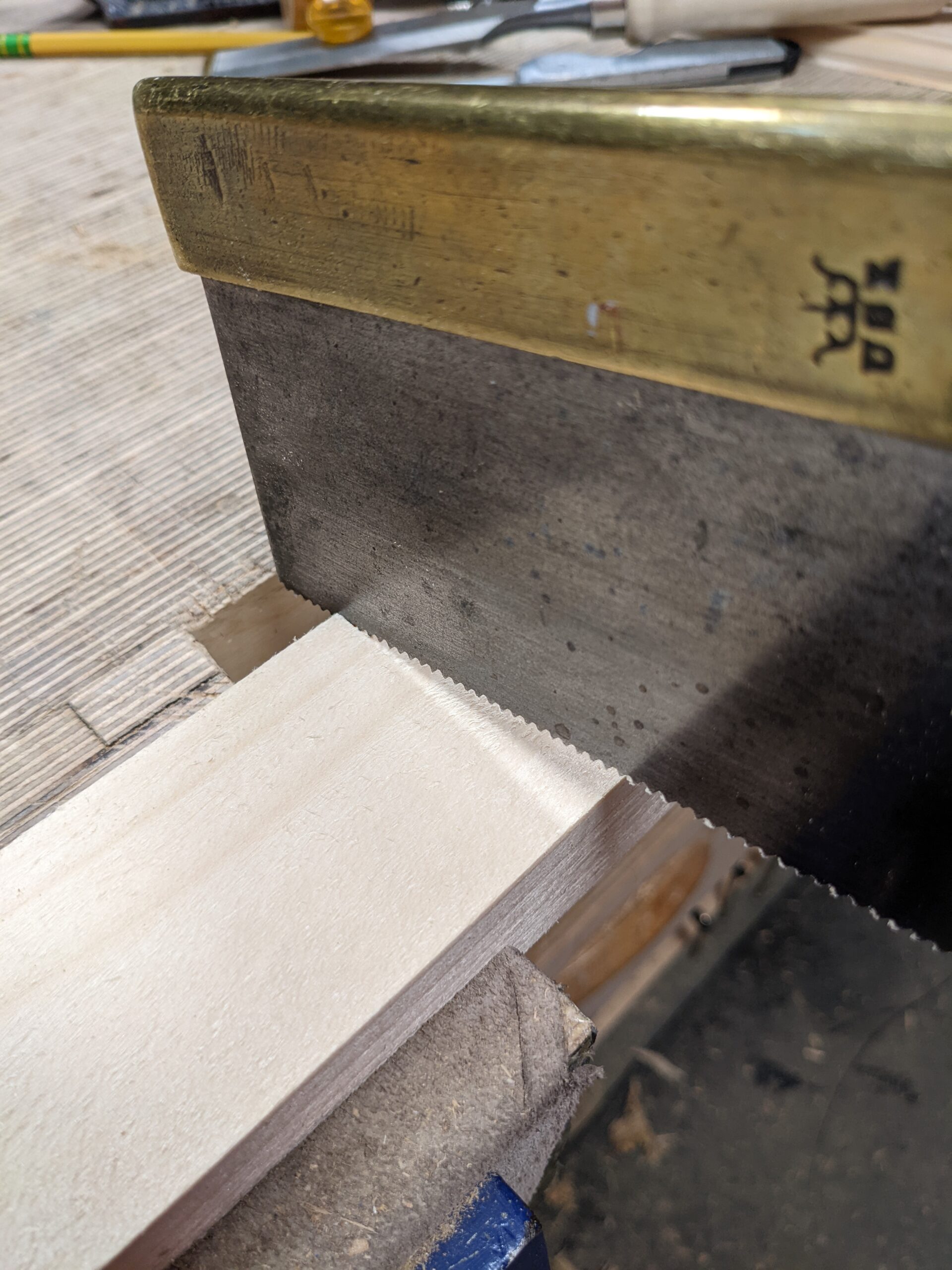
He then rotated the board in the vise to place the wider, flat face uppermost, placed his saw at the corner of the first cut, and lowered the saw square across and flat on the surface with two gentle strokes.
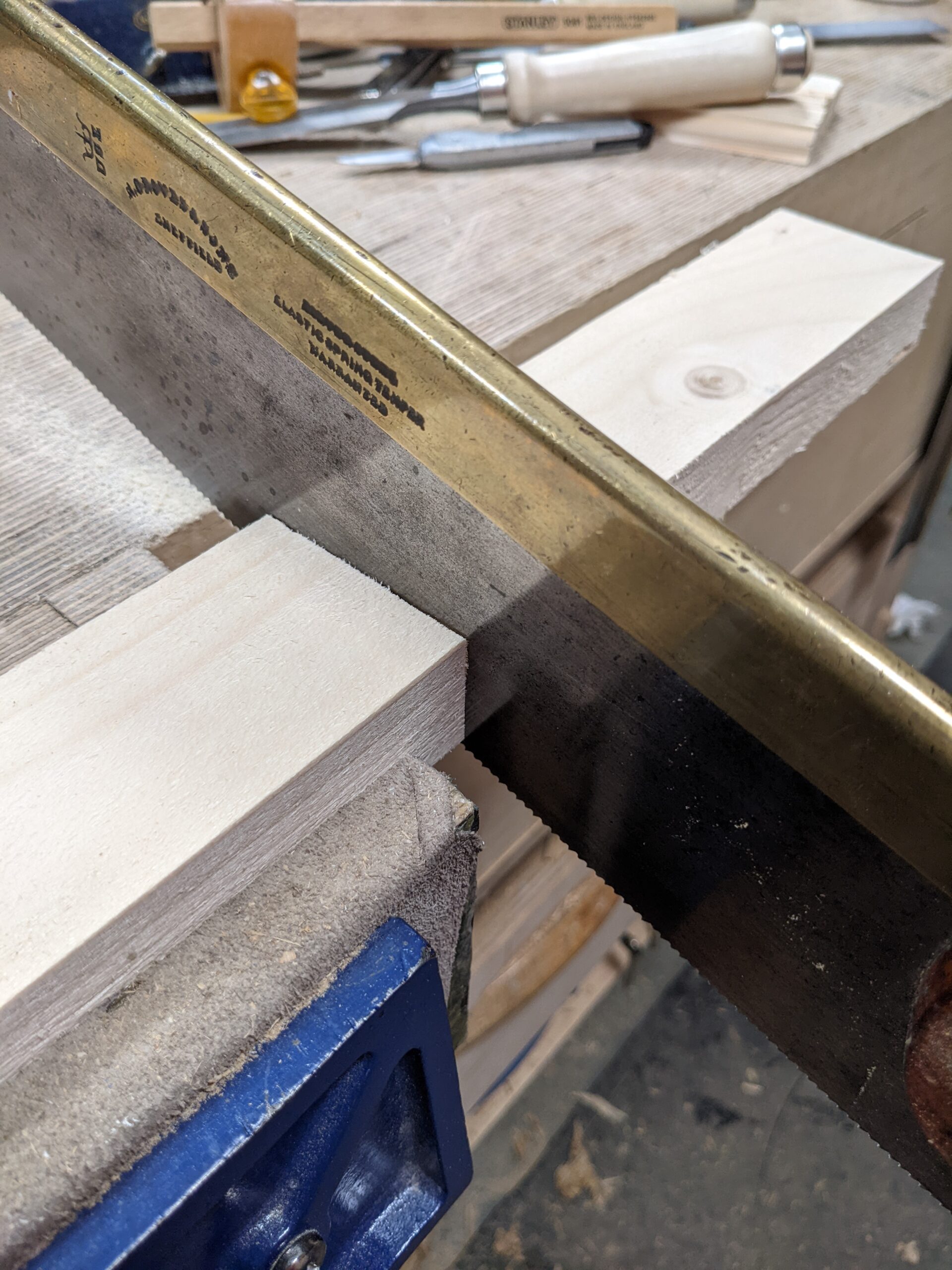
Subsequent cuts showed the saw going deeper and from my side of the bench, I saw him follow the first cut in the narrower 2" face but then square and straight across the wide face too. He stopped and said, "What do you see?"
'I see a square cut again, George. How did you do that/ How does Merl' do it?'
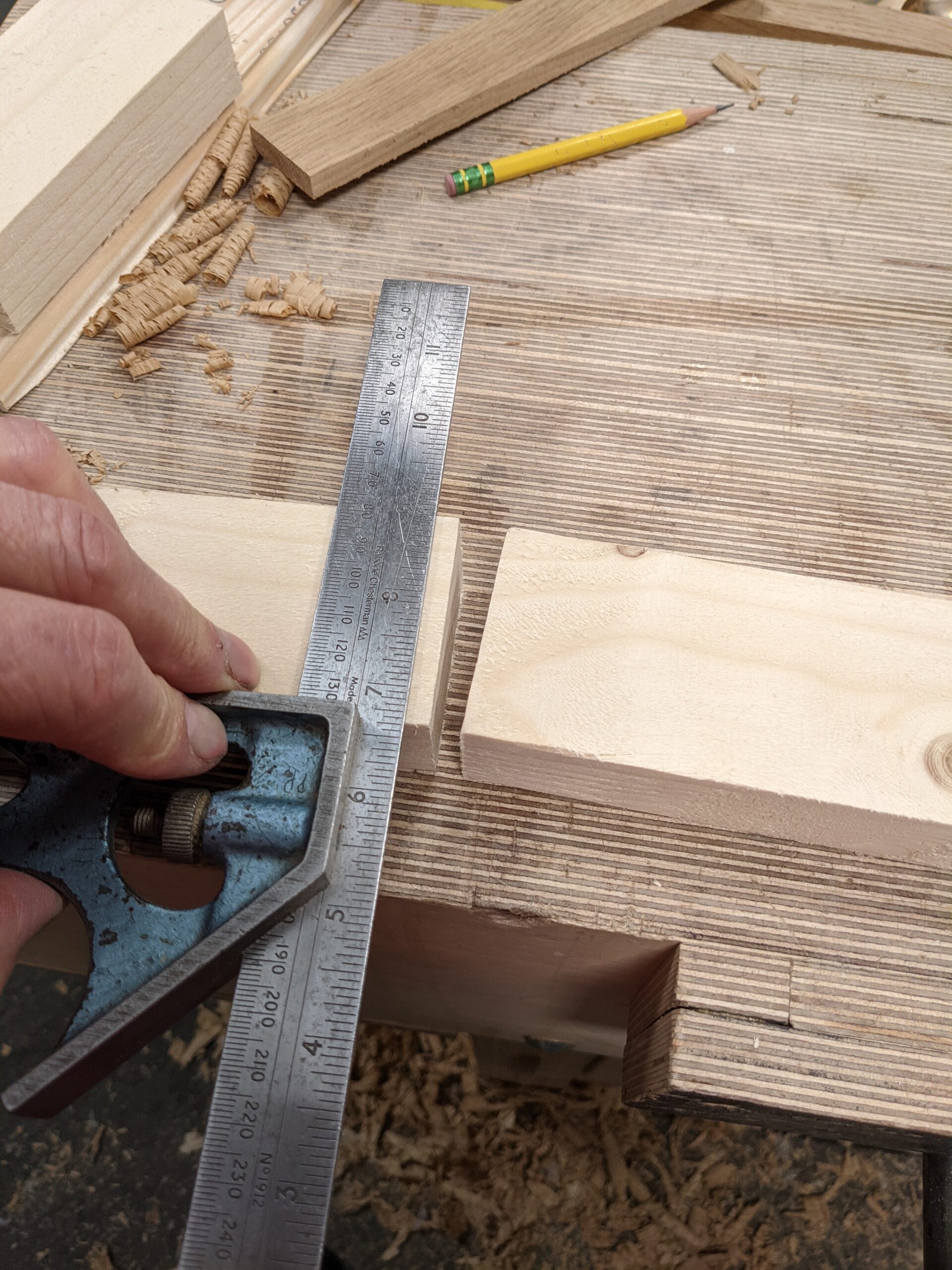
"Look again and keep looking until you can give me a correct answer," Goerge said.
I looked and looked but could not see what George expected me to see. He took the saw out and moved the saw from one angle to another and back again. The question came again, "OK! Watch me do it more slowly."
As I watched the saw swivel from left to right I caught a glimpse of something. Instead of seeing one piece of wood and one saw I saw two saws and two pieces of wood. There, right there, in the saw plate, I saw a perfect reflection of what was beneath the saw.
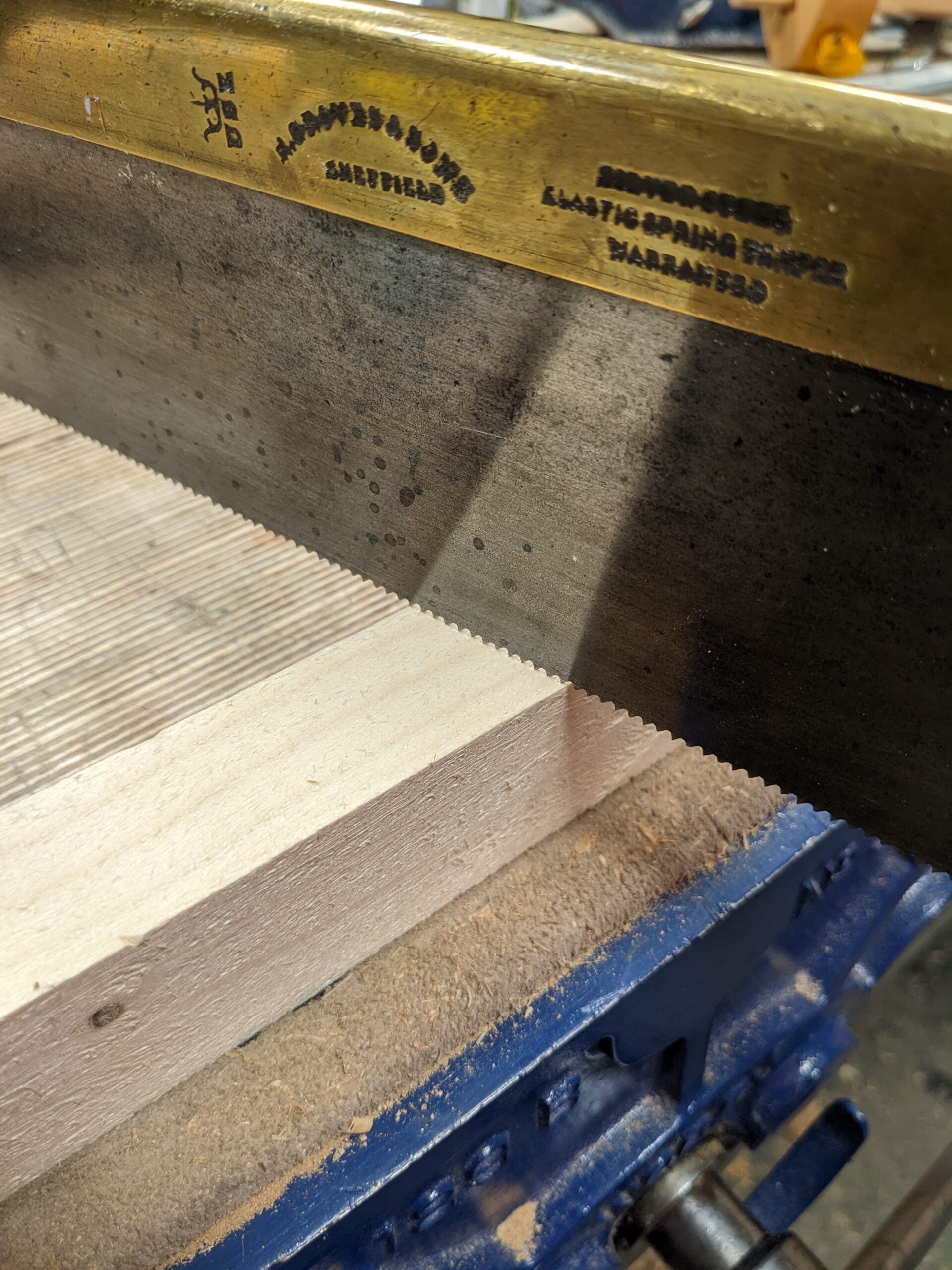
"OK, Paul, now watch the reflection." George moved the saw slowly around on the surface of the wood. In the reflection, I saw the angle the saw was placed at on the surface. As he moved it, the angle the saw was at seemed to change along the long axis of the saw in the plate of the saw. It looked like a mitred section when he started. As the saw moved, `I saw the angle lessen until the reflection became ever straighter and when dead straight George stopped. That was it! Suddenly I got it; vertical and horizontal lines can reflect the straightness and the angle of a saw in its placement of the saw on the wood. Sighting it in gives you squareness of cut. All I needed now was a steady hand to my saw strokes.
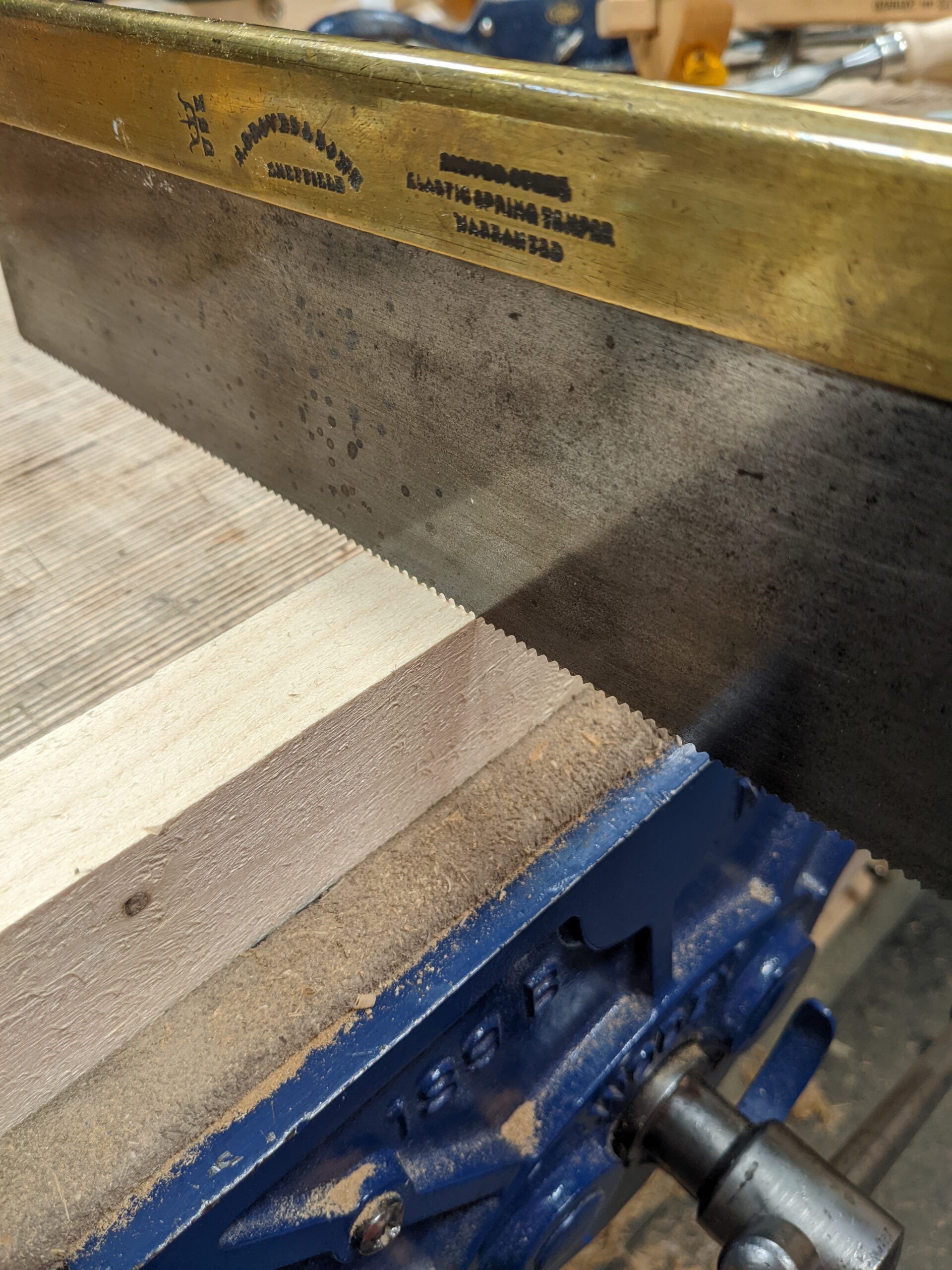
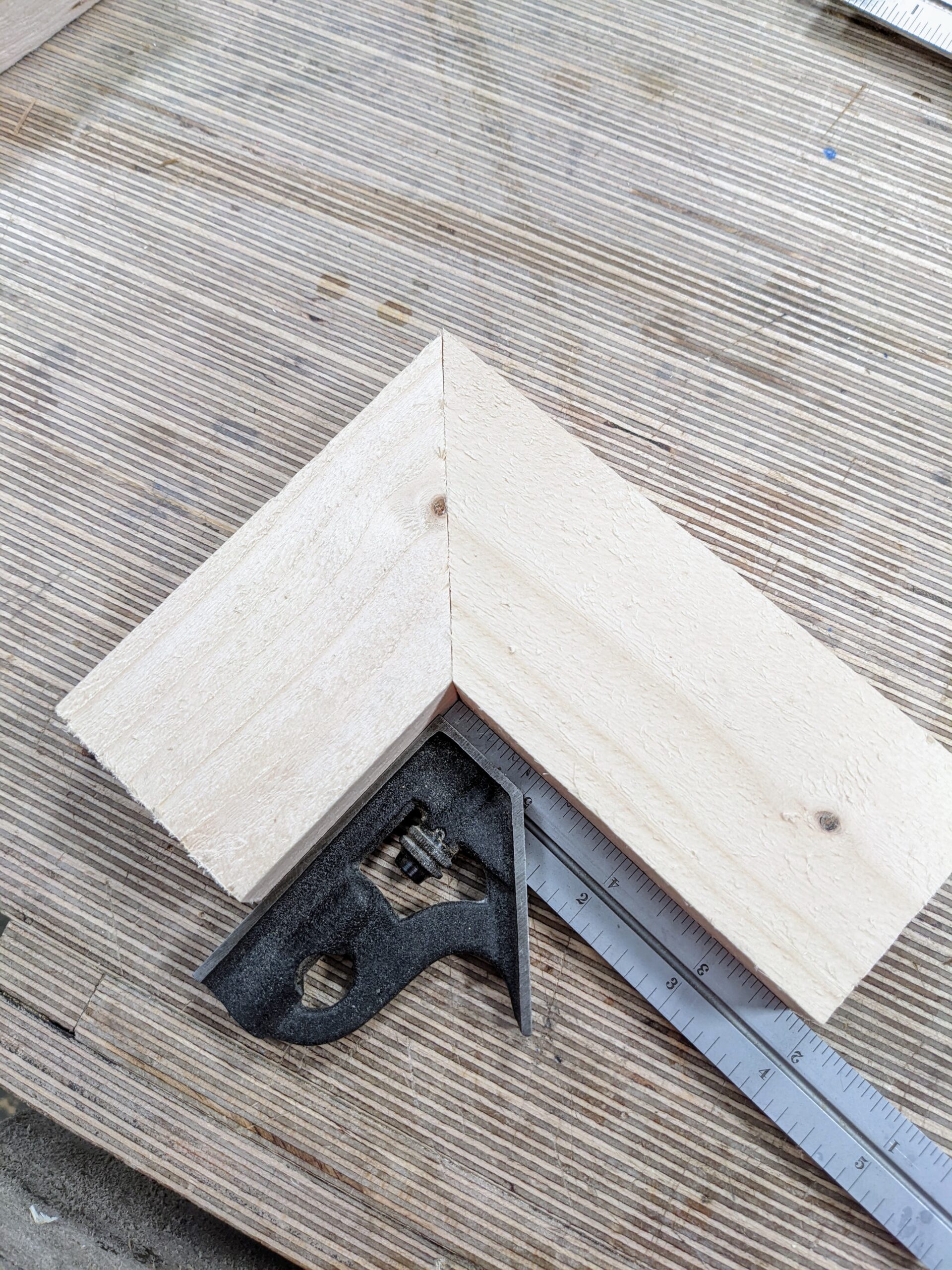
My lesson wasn't over either. George took the same two-by and placed the saw at an angle. He swiveled it from left to right and then started to cut at what seemed to be 45-degrees. He sliced through the wood with the handsaw and then took the two pieces, placed the mitres together, and offered his square to the inside corner. It was a dead ninety! When you see a reflection in the plate that looks like 45-degrees you will see a mitre form as a reflection like the corner of a picture frame and when it looks 90-degrees, start sawing.
Life, geometry, maths, life again, is a whole new learning experience working at the bench with a man like George.
Comments ()