
And George Said . . .
I'd been unloading for about two hours. The truckload of kiln-dried, Russian redwood was some of the most beautiful pine I had ever seen. Sixteen footers of knot-free wood in sections 8" wide and 3-4" wide. These sections and lengths were generally too long and heavy for a boy my age and weight to handle back in 1966. It wasn't just the weight though, there was no forklift in the company and the wood had to be lifted off, carried around a tight corner too sharp for the turn and then skidded and stacked neatly under the lean-to roof where our wood supplies were kept until made into doors and window frames. I recall that as soon as the tarps were off the load, it began to rain. The foreman came out, Jack Collins, and shouted, "I don't want that wood to get wet, so get a move on." There was of course no way we could keep the wood dry but he felt he needed to encourage us.
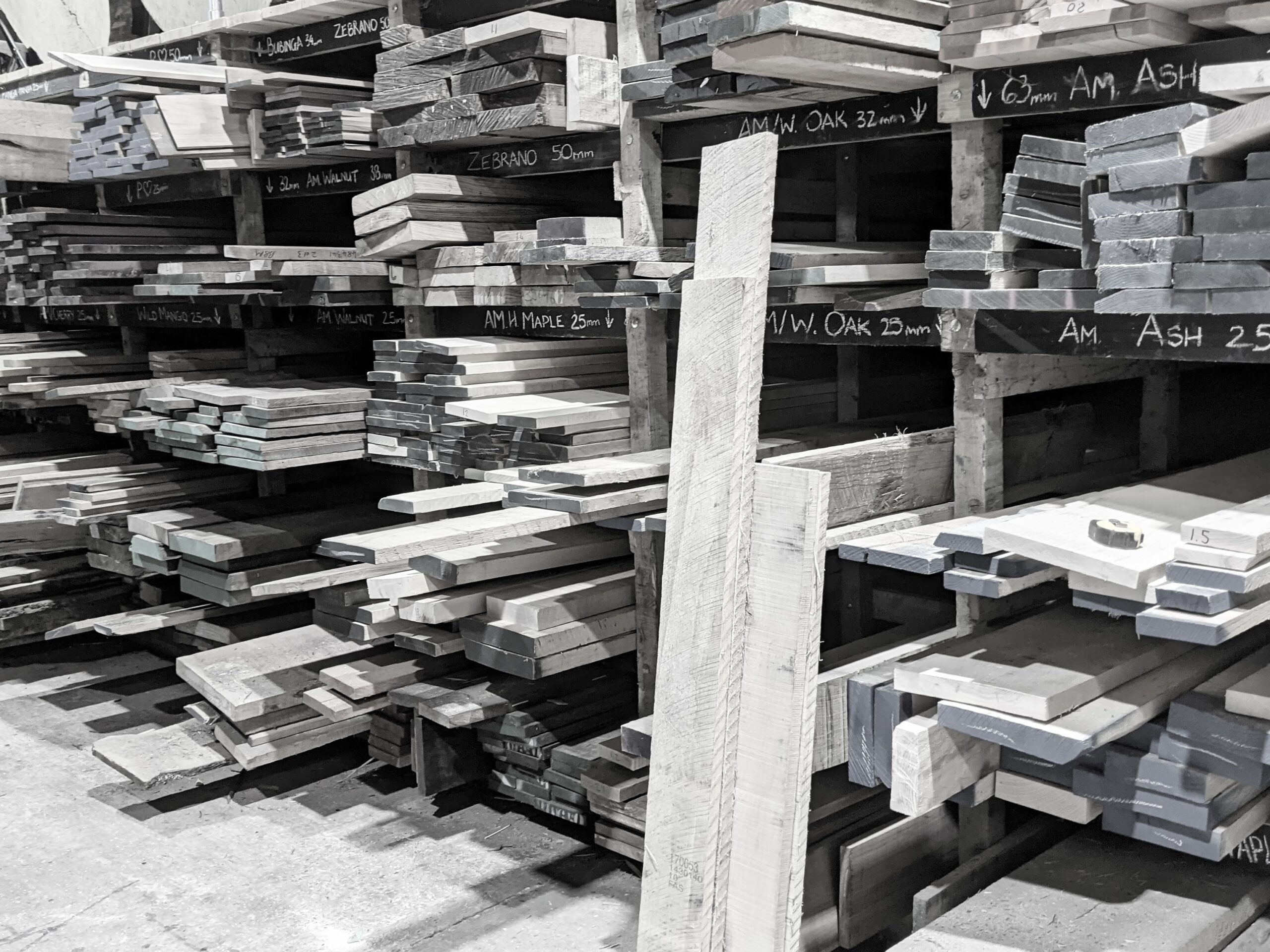
My first session of carrying and stacking this morning was with another apprentice named Les. Les was bigger and stronger than me and had been told to help me unload. After the first two hours, Les was released for another task on the roof with a bucket of pitch to repair holes in the asbestos--not the best forward planning in the world. Then came Kieth to join me. He was mad! By mad I mean angry. He did not want to be there and especially with a boy half his weight and size carrying wood awkwardly in the pouring rain. By the time he came out I was fairly contented; resigned to the reality that I was going to be doing this for another couple of hours. I could tell by Kieth's body language and a wide range of foul-mouthed expletives that we were not about to have fun.
There is a protocol between two carpenters carrying long, wide and heavy planks of wood that seems always to be well established early on in the stack whereby an unspoken agreement establishes a pattern of work. Even I knew that, even at my tender age, because George had shown me. Working alongside George was like poetry. Every move he made was economy of motion; he never missed a second where his movements were not a hundred percent effective. I doubt that I have worked with a more efficient person in my 57 years of working. Here is the system. Usually, the stacks on trucks or needing pickup are slightly uneven in length and one end or the other of the next board overhangs by a small amount. This overhang determines who picks up first. Whosever end is overhanging even by a minuscule amount takes the end, lifts the board and then twists the board so that the other carrier at the other end can slip his fingers in the gap and more readily access the wood to grab and lift his end. Together they shoulder the plank to the same shoulder, left or right, depending on which side of the stack you are on and which direction you will take it. A rhythm develops according to the ease of both men and this makes the work go more steadily.
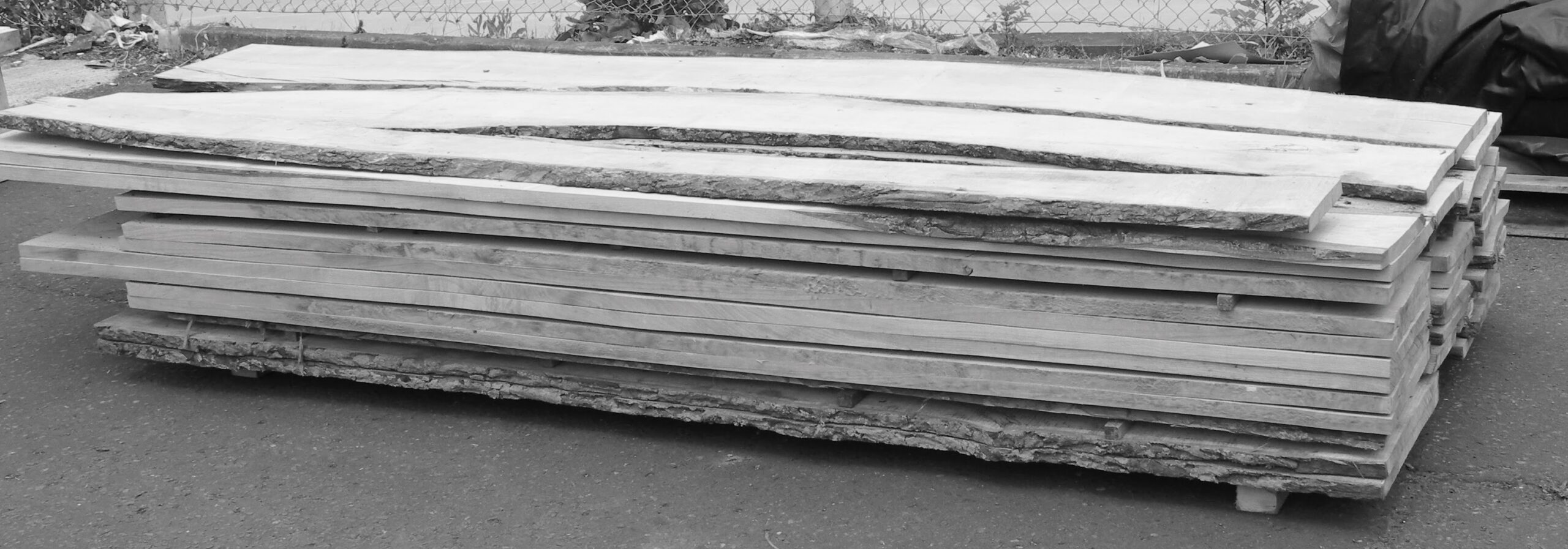
On long unloadings by hand and without a forklift, the work gets sore on the shoulders and sometimes results in grazed patches somewhere under the shirt. My shoulder was indeed very sore this day, bleeding in fact. I was boney and without much meat or muscle on me. On shorter runs, we often joked with one another by twisting the board opposite to the one we had established so that the opposite end lifted the opposite way and the other person didn't know which way to put which hand. He would look up and laugh and you would both laugh together. Other times you might quickly drop the opening you'd created with the twist and just miss the fingertips of the other carrier. It's surprising how many tricky maneuvers you can develop just carrying planks of wood. In cases such as these, both parties knew this was done more to break up the monotony of lifting, carrying and stacking and never for meanness. It was always for fun most of the time and though one party or the other might go a bit too far now and again, we always enjoyed the work better.
At first, Kieth and I carried the wood just fine. After a while, I could feel myself being pushed by the lengths we were carrying. It was subtle pressure to start and I didn't complain. I was the one negotiating the sharp turns first and the long planks would catch the corner brickwork and scar the corners. Shortly after, Kieth used the plank as a lever against me by disallowing his end to move out. That then changed to an active pushing opposite to the way it needed to go. I started to feel more and more irritated and tried to reason with Kieth. At first, I thought, 'Oh, good. He listened.'
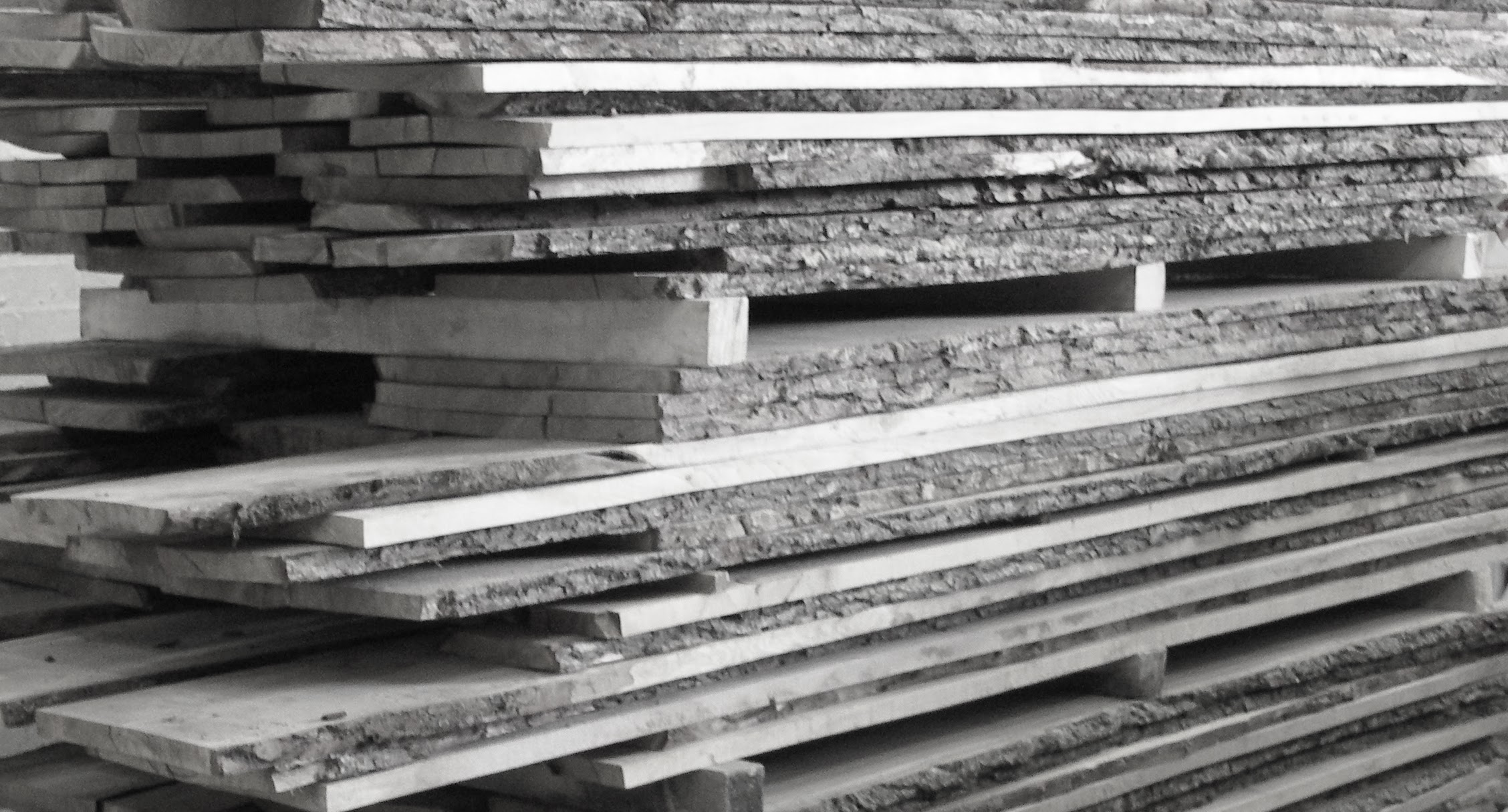
After a short while, I noticed that he did all of the twisting to start each plank and that the twists were always opposite to my expectations or that he would suddenly change direction. Every pickup was awkward and taken to the wrong shoulder. Looking through the window was George. I hadn't realised this until he came out. "Okay Paul, you lucky lad, you get a half-hour break now." I dashed off to the kettle, made a cup of tea, and sat under the lean-to roof as they worked. George, every bit the equal of Kieth in size and stature and then some, obligingly lifted his end of the planks with ease and worked it around the corners unhindered. After the first few planks, he began using the same tactics Kieth had been using. Odd twists, stubborn corners, leverage the wrong way. Eventually, Kieth asked of George, "Hey, what's going on?"
George answered. "We can work together or we can work separately. We can take advantage or we can advantage others. When we oppose those we are working with, it takes on a different meaning"
Keith answered, "C'mon, George. It was just a joke!"
George was quick thinking. "Taking out our frustrations on those who are younger, weaker and often unable to understand becomes indefensible, Kieth! How come you are no longer twisting and turning and flipping the boards a thousand different ways all of a sudden?" I just wanted you to revisit when someone didn't like you as a boy, as a reminder.
Kieth still curled his lip a little and turned to the planks to start again. George went to lift his end and presented it so Kieth could take hold in a deliberate, positive way and continued to help Kieth for another 20 minutes before he called me back to task. Kieth had become steadily more amenable to me and we finished off the work working together and in half the time with no more trapped fingers.
. . .later, back at the bench, "I want you to always remember that there is a perverse nature to all men when they allow themselves to become frustrated. This nature always takes itself out on someone who does not, cannot or doesn't want to retaliate. You did well not to retaliate, Paul. Kieth can indeed twist a plank a thousand different ways as can we all. We have a decision to make when such times come up. We can always be a solution or we can work as enemies. Solutions always work best!"
I thanked George and we moved on. Kieth never did such things again.
Moral lesson: It's often not about becoming like those that oppose you but sometimes a demonstration speaks a thousand words. Working together unites to resolve all opposition and becomes the solution to difficult situations in life.
Comments ()