
A Wonderfull Book For Your Library
I was reading a comment in the most recent edition of Bill Goodman's Plane Making from the 1700s book which is now the continued work taken over by Jane Rees under the title 'Goodman's British Planemakers 4th Edition' that intrigued me but left me questioning. The book is a veritable tome of almost 700 pages, so not a good bedtime read as such unless you have strong arms. As it says on the cover, it is an "authoritative reference, updated in new editions, for over 50 years." Bill Goodman's first edition came out in 1968 with an updated version in 1978. With three and a half times the number of pages in the latest publication, very little seems to be left out, but, as with all historical reference works, new evidence yet to emerge often discloses new facts. When it comes to identifying, tracing and dating your woodworking planes made by the UK makers from wood, this book does it. The book offers even more than that. Tracing the path and passage of planemakers from throughout the UK provides insights to the industrial shifts leading to the development of societal changes, some collaborative efforts such as the workshop of thee carpenter aboard the now raised Mary Rose from the 1700s. I thoroughly, thoroughly recommend this book to you. I have enjoyed catching up on the missing makers now included in this volume. There is much information about the historical paths taken by makers and then there is the corroborative work of extensive new finds to support theories as new realities.

Though the names on the cover reflect a major investment of time and effort, this more comprehensive and extended work comes from the support of those who knew of or collected the work and examples of makers and users through three or so centuries. If you are even remotely interested in dating the wooden planes you own as users or collectables from mostly UK makers and distributors, this book is a must for you. Nostalgically, I will always pull down my 1978 edition for a quick thumb-through search, but the newest Jane Rees' version is well worth adding to your library.
I prefaced what I did before this next section because I think what I noticed is important to consider. It's a small criticism and not intended in any way to detract from the marvellous work exemplified in the book. Sometimes things are said in books that may not obviate a lack of actual working knowledge that sometimes comes more definitively through experiential working knowledge. By that I mean you can write about the history of many things but some things only come through the working of tools in the hands of experienced users. Whereas you can make many direct evaluations pertinent to a tool that are indeed very obvious, it's in the actual working of the tools and equipment themselves, perhaps more on a daily basis and over a prolonged period, that things become critically seen, that impart realities not otherwise apparent. As a small example, the following anecdote might help. My perhaps irritating endeavour to question why we lay planes on their side comes from my never seeing or working with full-time plane users in user-realms lay their bench planes on their sides. It was a development from school use that children were trained to lay planes on their sides. Kids plonked their planes on top of other tools and the insistence of laying them down sideways made the kids more sensitive to being more careful, nothing more. The carryover to the benches of adult woodworking in domestic or hobby realms is, for me at least, plane silly. The only time I might have seen a plane laid on its side by daily users was in someone's home, office or business where the plane itself could have damaged a non-work or furniture surface. This brings me to my reason for this blog post. Occasionally a writer will put something down in print that then becomes both sacrosanct and permanent. Sometimes it is simply a mistake, an assumption, naivety or simply a personal opinion. Other times it is meant to be smart-alecky. Either way, it is best to put something out there to correct a possible wrong and I submit the following to that end.
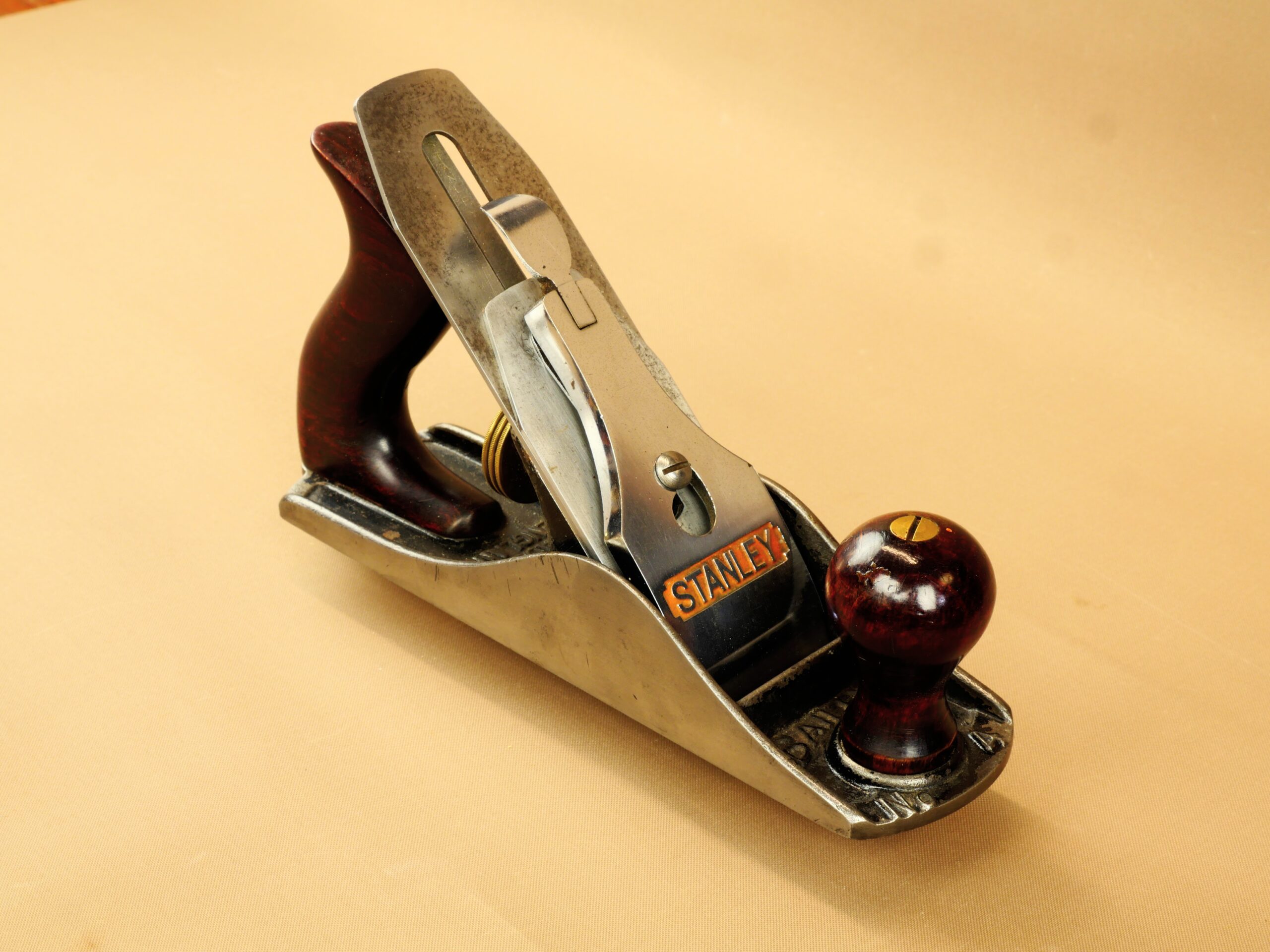
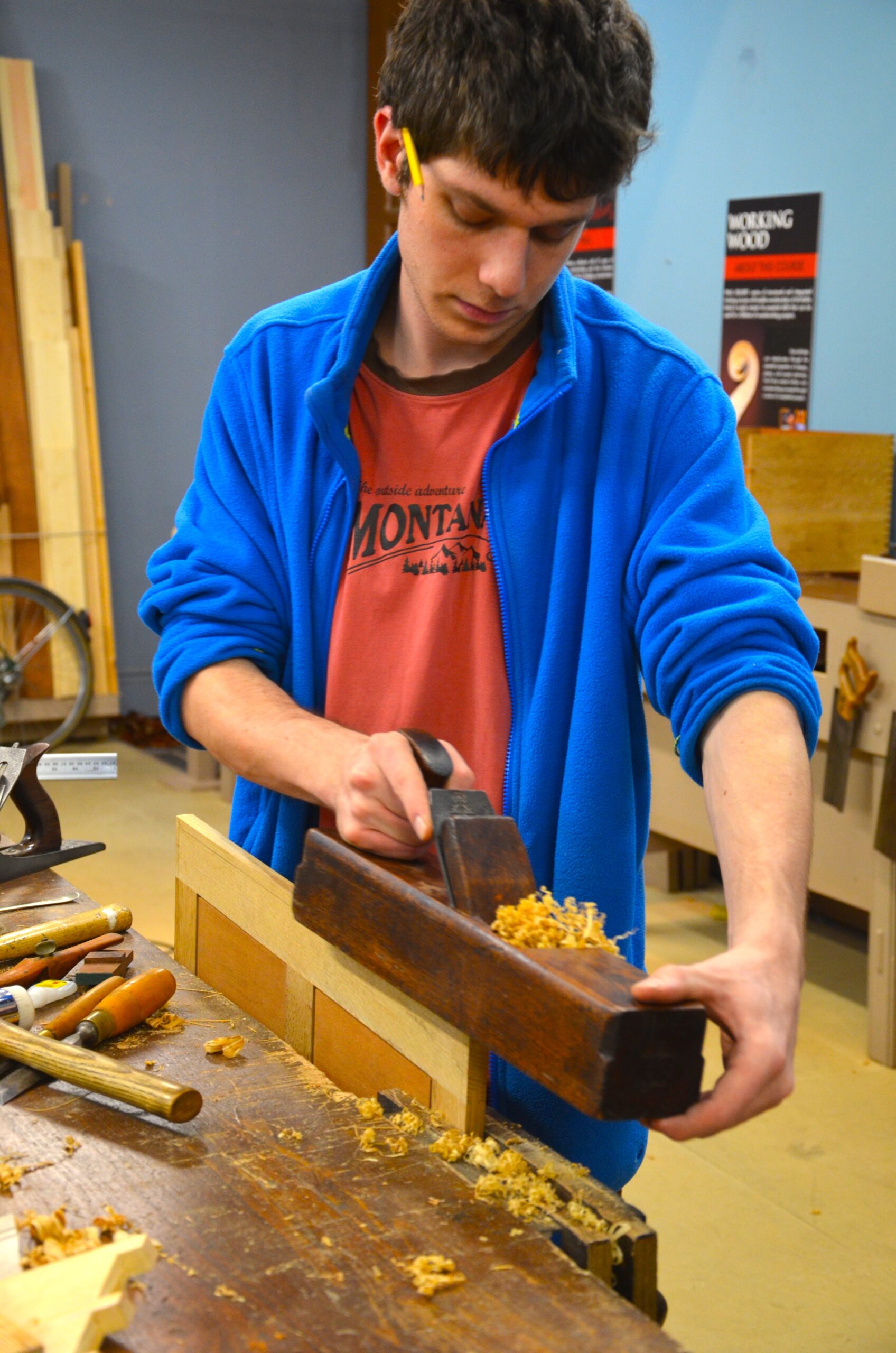
Reading through the Jane Rees' edition her,e I came to this intriguing section where a couple of things jumped out to me as incorrect perspectives. "In general, British planemakers were astonishingly slow to react to Stanley's Bailey-pattern planes that were ultimately to take over much of the market. The Stanley planes were about one-third of the price of an English dove-tailed steel equivalent." The text goes on to say that in "1905 a Stanley No. 4 cost 7s 0d (shillings) whilst a 2" dove-tailed steel, handled smoothing plane cost 21s 0d (21 shillings) - and the English plane had no adjuster." We should indeed consider this more fully. Where it is said that "the English plane had no adjuster", it did not mean that it could not be quickly, easily and readily adjusted with abject ease by any skilled craftsman user. Whereas we should remember that today's dabbler into the use of moulding planes might well indeed struggle badly to set any wooden plane with a wedge-held cutting iron, users of the day were well-practised practitioners and they would indeed hammer-tap and bench-knock a plane in a split second, using methods most of us have never considered or known. These methods worked amazingly well and might well have been much quicker in most cases. It might be worth noting here that many all-metal, adjustable planes have cutting irons, that have the evidence of hammer-tap adjustment on the cutting irons be that for lateral adjustment or depth. Old habits die hard, especially when a former method was indeed quick and easy. These planes had both depth and lateral adjustment mechanisms, I hasten to say.
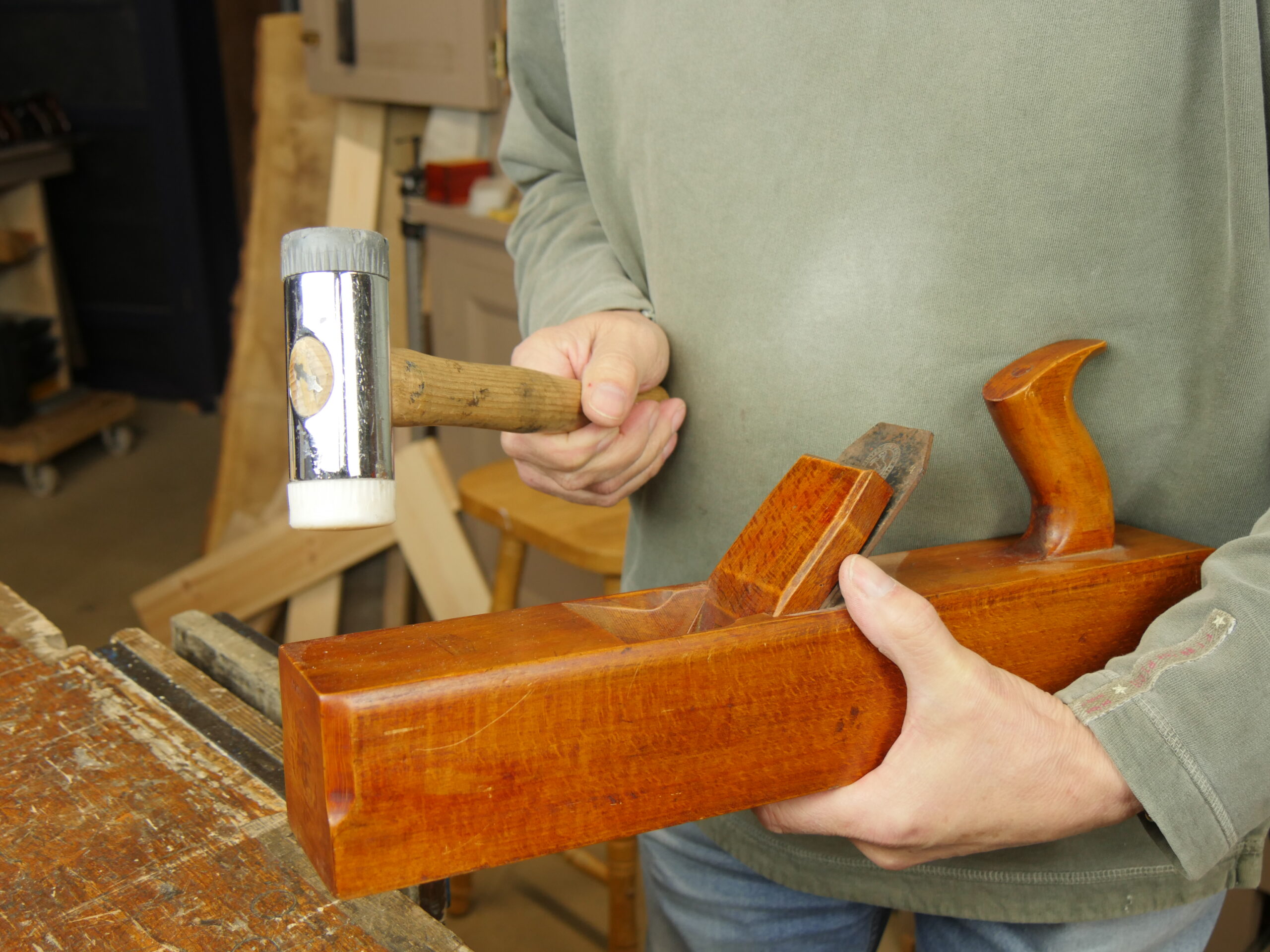
So, to compare the entities by cost alone is quite insufficient. Many cultures still make wooden planes with non-mechanical depth and alignment adjusters and use them with amazing alacrity and accuracy. It might seem to some from what's written in the book that wooden planes are somehow outdated and that a non-entity is the reality that wooden planes glide beautifully over the wood with amazing ease, requiring a mere fraction of the energy of any and all all-metal plane versions. I doubt that we would say that Japanese craftsmen through many centuries and still in our present age, still using wedge-held wooden planes,to be "astonishingly slow to react" and this is almost a century and a half after the Stanely #4 was invented. So too many European makers and much of the whole of Asia also. I think this might explain why users of wooden planes would not give up their planes. Why, in that era, would a well-versed crafting artisan with many decades and years under his belt replace them with the new all-metal versions? The reasons were less to do with the Stanley giving a better option of a plane and neither was it a better mouse-trap option. They most certainly were not dullards nor Luddites standing in the path of progress, but more the considerate artisans respecting the efforts of entrepreneurs but finding no need to change at the time. It did take half a century for Stanley to persuade existing users to accept what was actually a sluggish plane when compared to wooden versions. This was more to do with each generation not recognising the value of wood on wood, the demise of the wooden planemaker on the high street and then the less expensive manufacturing costs of all-metal planes. Remember too that from tree to workbench as a user plane, a blank of plane wood would actually be several years.
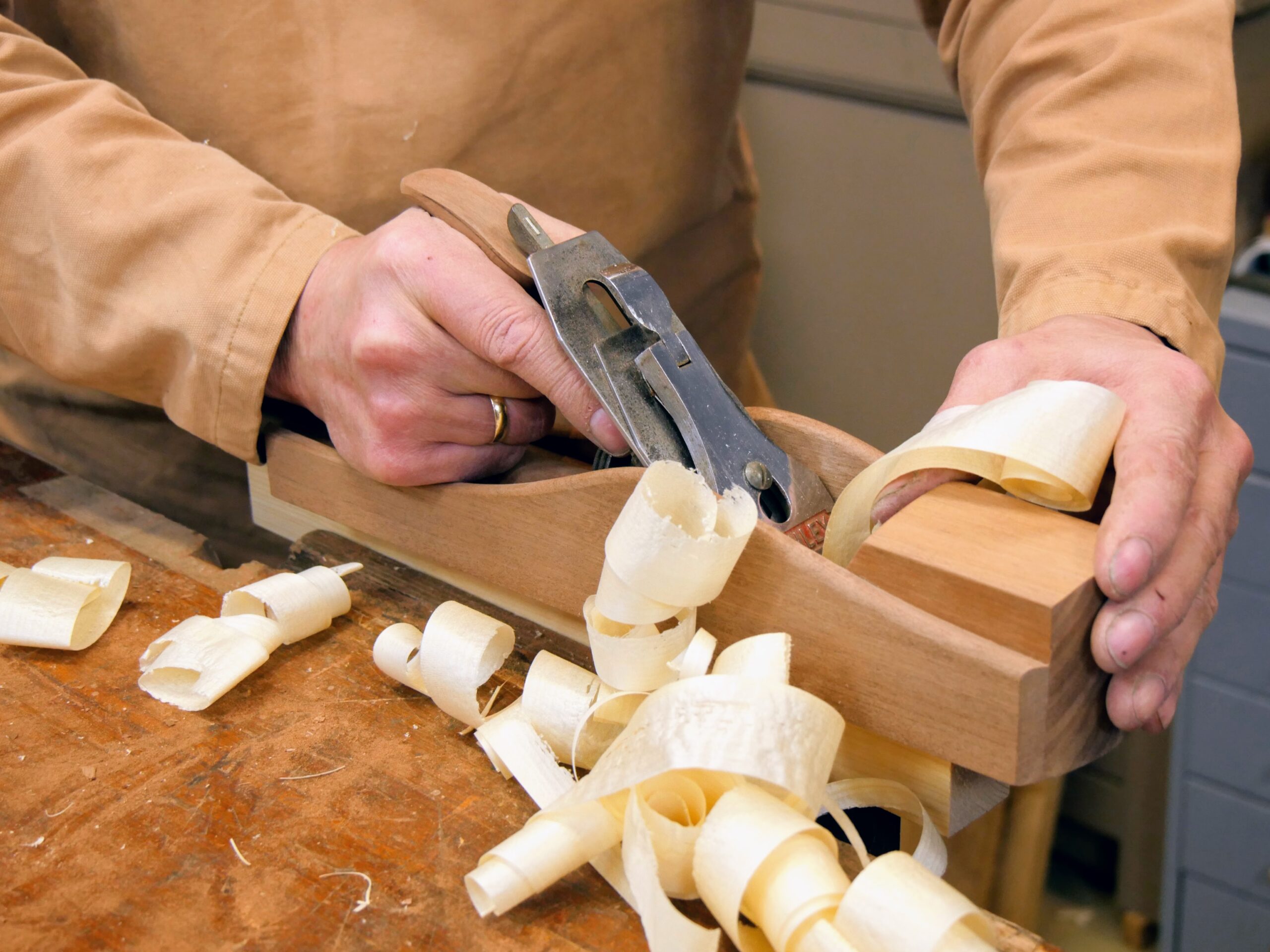
Additionally, wooden planes were much lighter in weight at the workbench and in the zone of working. A wooden smoothing plane and its longer counterparts were a fraction of the weight of the Stanley range of bench planes and all the more so than the newer heavyweights introduced of late by so-called premium makers. Whereas we currently extol the virtues of special steel alloys used in planemaking these days, wooden planes lasted very well. Yes, of course, they did wear, but as the sole wore down through years and decades of use, and the plane mouth or throat widened and became too enlarged for the finer work they might have originally been fashioned for, they went on further to be used as the roughing planes we now call scrub planes. These were used to prepare the way for the other bench planes.
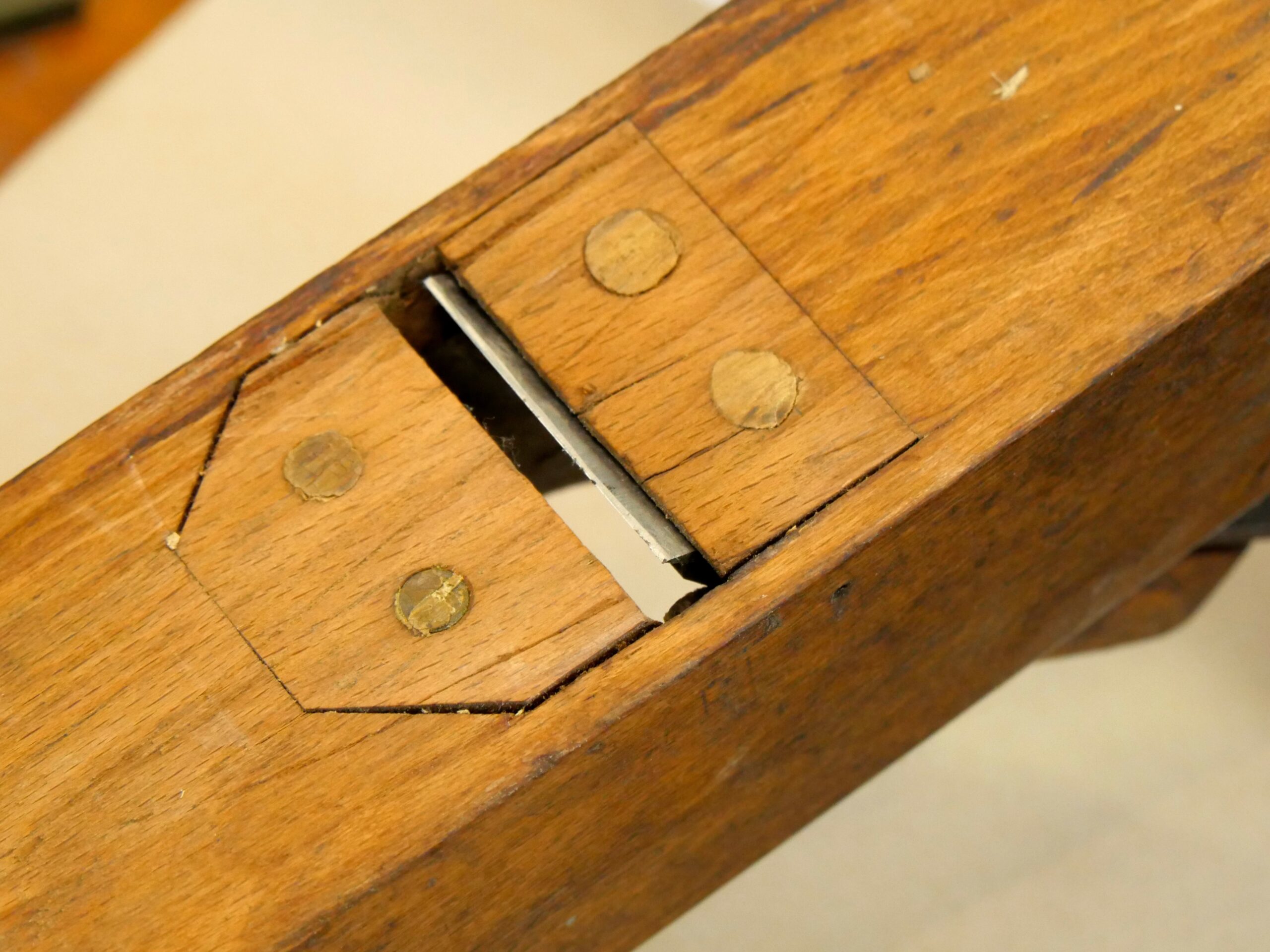
That wide, open throat would remove heavy shavings and masses of wood left by conversion in the milling of wood from trees to slabbed wood. No metal plane really equalled their functionality for removing saw kerf and in such wide swathes. These well-worn planes, having retained continued functionality in a slightly different sphere at the bench, were rarely completely abandoned. Only when they were worn down to the nub were they pensioned off. I should of course add here that they were often redeemed for further use by adding wooden inset throat closures to the forepart of the plane sole as often as necessary and sometimes several times too. They might also add a metal plate to the full coverage of the sole.
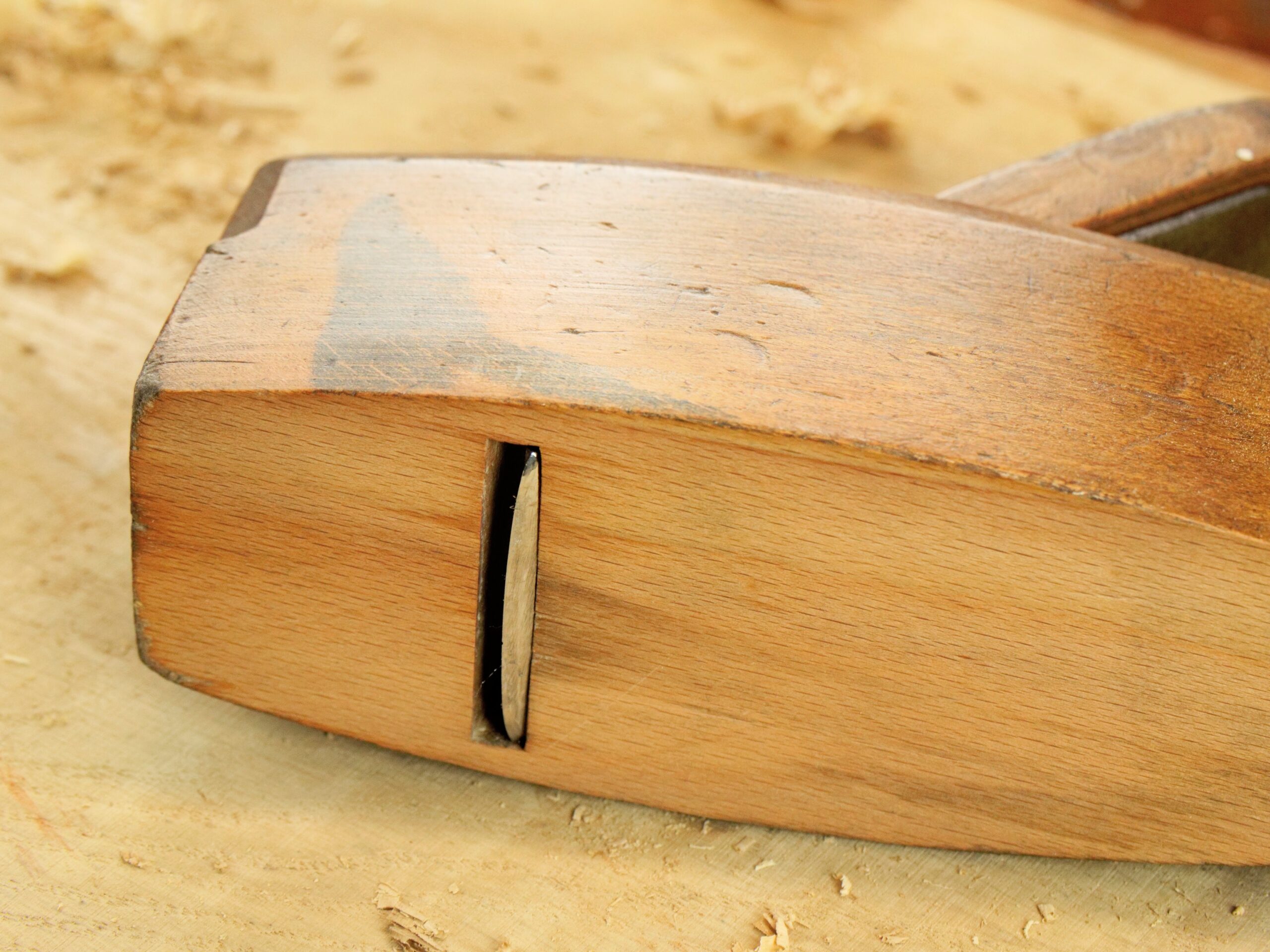
Whereas wooden planes were never designed nor intended to be thrown in the bottom of a toolbox or the back of a truck, the cheapening of planes by producing the Stanley type of plane seemed to somehow conjure up this kind of attitude with some carpenters. What Stanley offered in the Bailey-pattern bench plane really was a low-skilled version of plane making by deskilling the methods and types of production. The evolution of mass-making, as it so often does, reduced the care a craftsman might place on his and her tools. Especially does this become so, when the tool itself becomes disposable throughout its material construction. Handsaws are one of the best examples. Casting fifty planes all at one pour of molten iron and then bolting in place all of the components with no actual refinement needed, took a mere fraction of the time it took to make a wooden plane body replete with wedge and cutting-iron assembly; almost zero woodworking skill when compared to making wooden-bodied planes using traditional methods. Creating and fitting wooden planes, forming and shaping the throats, fitting the cutting iron assembly and then making, shaping and fitting wedges etc was highly focussed craftsmanship in a small area of woodworking, but nonetheless, it was skilled workmanship requiring extreme levels of dexterity and accuracy. Comparing the minutes it took to cast multiple all-metal-cast planes with the hours, days and weeks it took for their wooden counterparts is not comparing apples with apples. The outcome was very different too. The end result, whether we like to admit it or not, is that the English users were not at all "astonishingly slow", as suggested, but that they simply favoured their own amazing planes and they did not pursue the 'mighty dollar' saving because they had something that was actually well-suited to the work and superior in the first place.
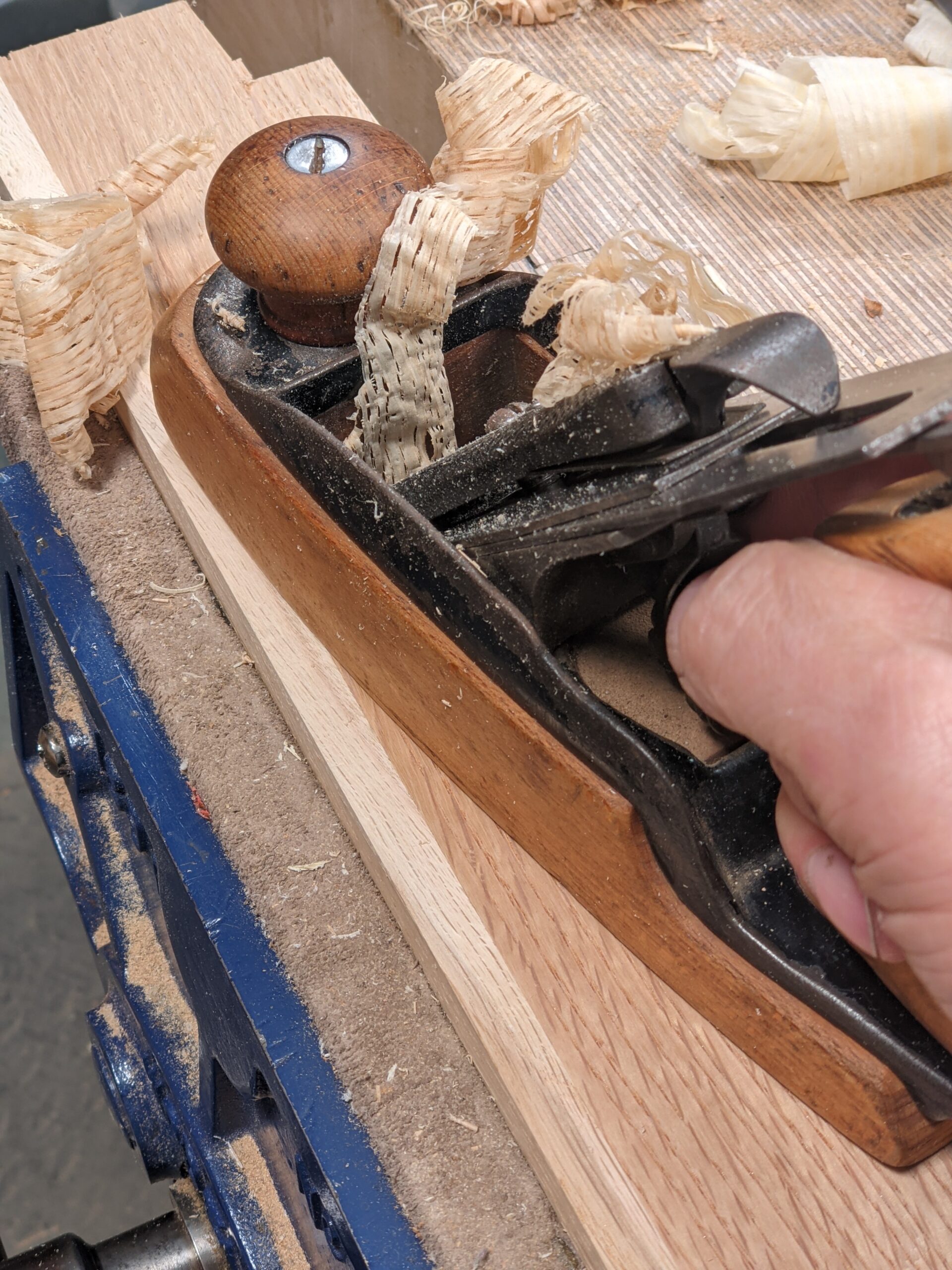
Of course, Stanley did not leave it at that. It went back to the drawing board to design a plane with a wooden sole and all the mechanisms of its full Bailey model, ie, lateral adjuster, moving frog and a wheeled depth adjuster. This Stanley model #36 came out in the early part of the 20th century and became popular to bridge the gap between all-metal and all-wood versions. Stanley was undaunted by any and all rejection. The funny thing for me is that the wooden sole with cast iron framework works so beautifully, lightens the weight of a regular #4 by almost 30%, what is there not to like about it? Nonetheless, it was an intentional move to transition from one camp to another. The deed was done and Stanley's success once again was secured.
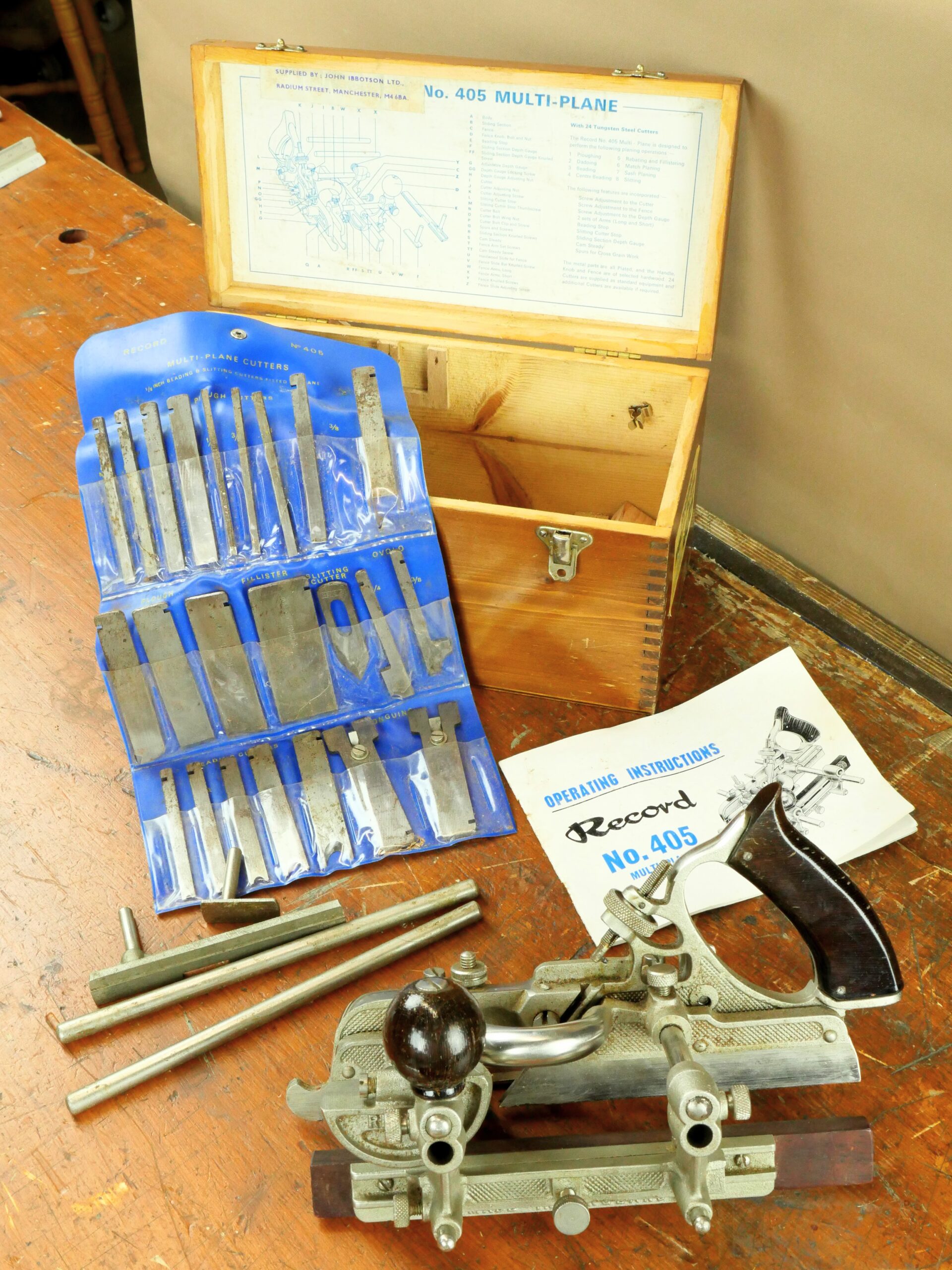
The next paragraph too is a somewhat inaccurate evaluation of the time. I wonder that the author/s didn't ask why multiplanes were often found with almost zero usage and with full-length, unrefined or minimally used cutters rusting in the neat packages in the boxes. I think that this question alone would have been greatly insightful and I say this because it is obvious that such planes were seldom used and for good reason. In the reality of real woodworking at the workbench, the combination planes worked abysmally poorly. I doubt that many experienced woodworkers can take more than a few strokes without the grain rising, jamming and tearing out the grain, no matter the wood type. The sentence, "They were even slower to respond to the Stanley Multi-planes, the 45 and 55. These combination planes were introduced in 1883 and 1897 respectively and were intended to replace a plough plane, a dado plane, a fillister and beads and sash planes all in one tool. The Record 405 Multiplane, a close copy of the Stanley 45, was not introduced until 1932!" Notice the exclamation mark. Again, other considerations should be considered here. In the British woodworking workshops of the day, the shelves and chests would be lined with a few hundred different moulding planes of every shape and size. These all had proven technology woven throughout their fibre fabric. The thought of the day would have been something like, "Why fix what ain't broke?" I might suggest. Another truth is this. These multiplanes did not only not work well at all, but they were also quite awkward to use, awkward and unpredictable to set up and they tore grain up and out on a stick of moulding like no other plane ever invented. This is of course the cause of great frustration to any woodworker. Another consideration is how badly they perform on end-grain cutting too. Worth considering also, regarding the slow uptake of manufacture by Record, UK: I wonder, as the dates given show an almost 50-year difference, would existing patents by Stanley have prevented such manufacture by Record?
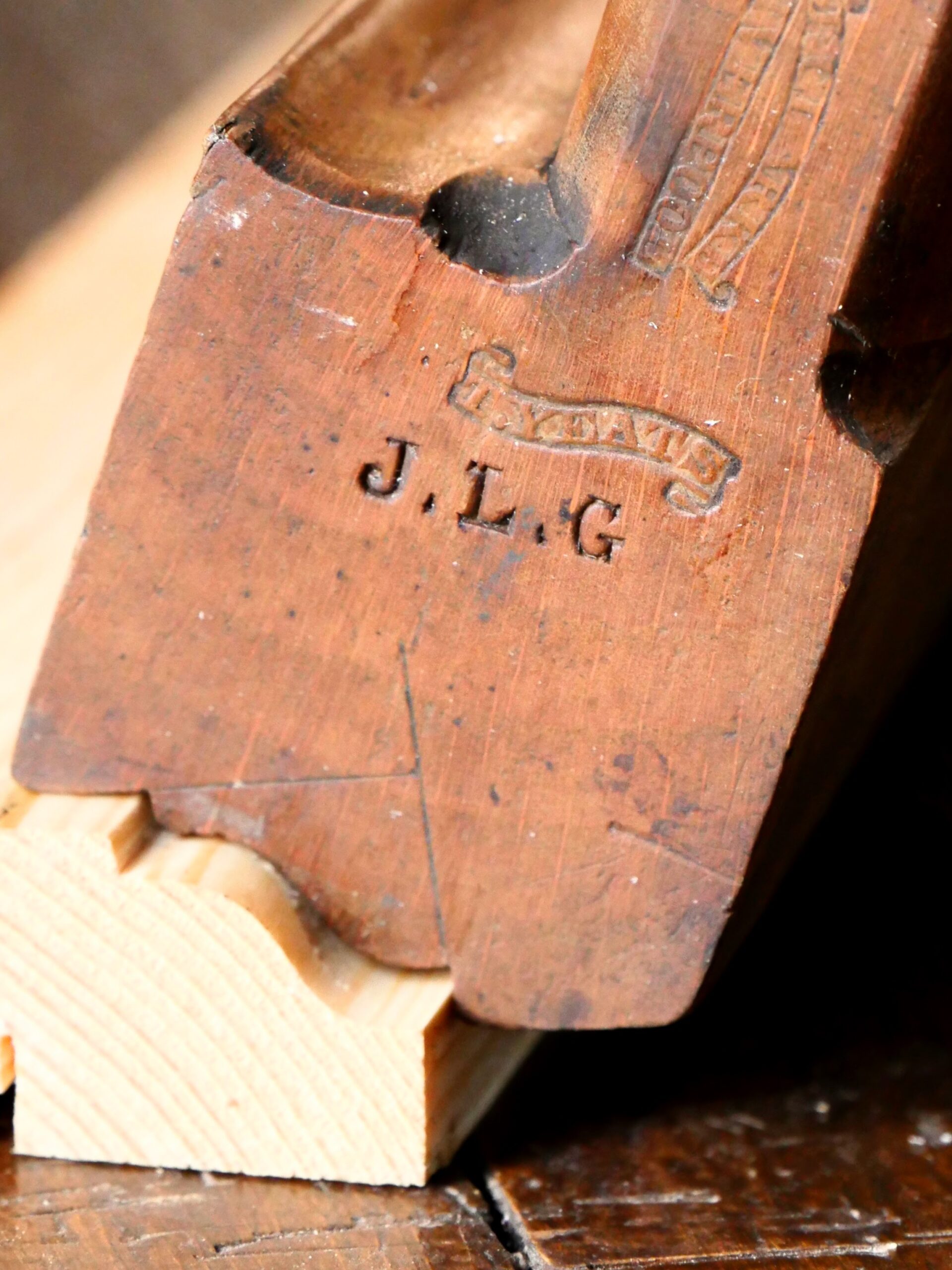
And then there was this, "Quite why the British trade should have made so little effort to develop and market this type of improvement is a reflection of the extreme conservatism of the joiners and carpenters of the time." I hope that I have convinced everyone here that the multiplane was not the 'power router' of the day but without the electric motor. The handheld power router is of course a remarkable machine. In the industry of woodworking, it would be hard to replace for all of the tasks you can achieve with them. At about the same time that Stanley was inventing its combination planes, a foot-pedaled version of the shaper was patented and 1906 produced the first portable power router with an electric drive to power it. I think that then the writing was on the wall. It was only a question of time before the handheld, battery versions with plunge ability and soft-start power routers would come into full-time use in any carpenters hand. There is no way a joiner and carpenter will trim out a house in a day or two with hand planes such as moulding planes, rebate planes, plough planes and so on. Going back though, the joiners and carpenters of the time were the potential buyers. The planes offered were highly innovative, yes, and some metal planes offered were just fine, but they often were not superior or improved on and a master craftsman of the era would not be likely to advise his prodigy apprentice to buy something that was possibly inferior to what he used. I doubt that this was resistance to progress so much as the reality that what they had worked really well.
I will concede that we users are reluctant to change for the sake of change's sake but we do consider tools for their functional merit. A point in case is the more modern Shinto saw rasp. Others had nudged me to adopt one for trial and I did. I found it ugly in appearance and wondered if it would be more like the Stanley Surform that came out somewhere near the mid-1960s. I strongly disliked almost everything about the surform but can see why it became popular. There was no adjustment needed and anyone can use a cheesegrater to shape wood with.
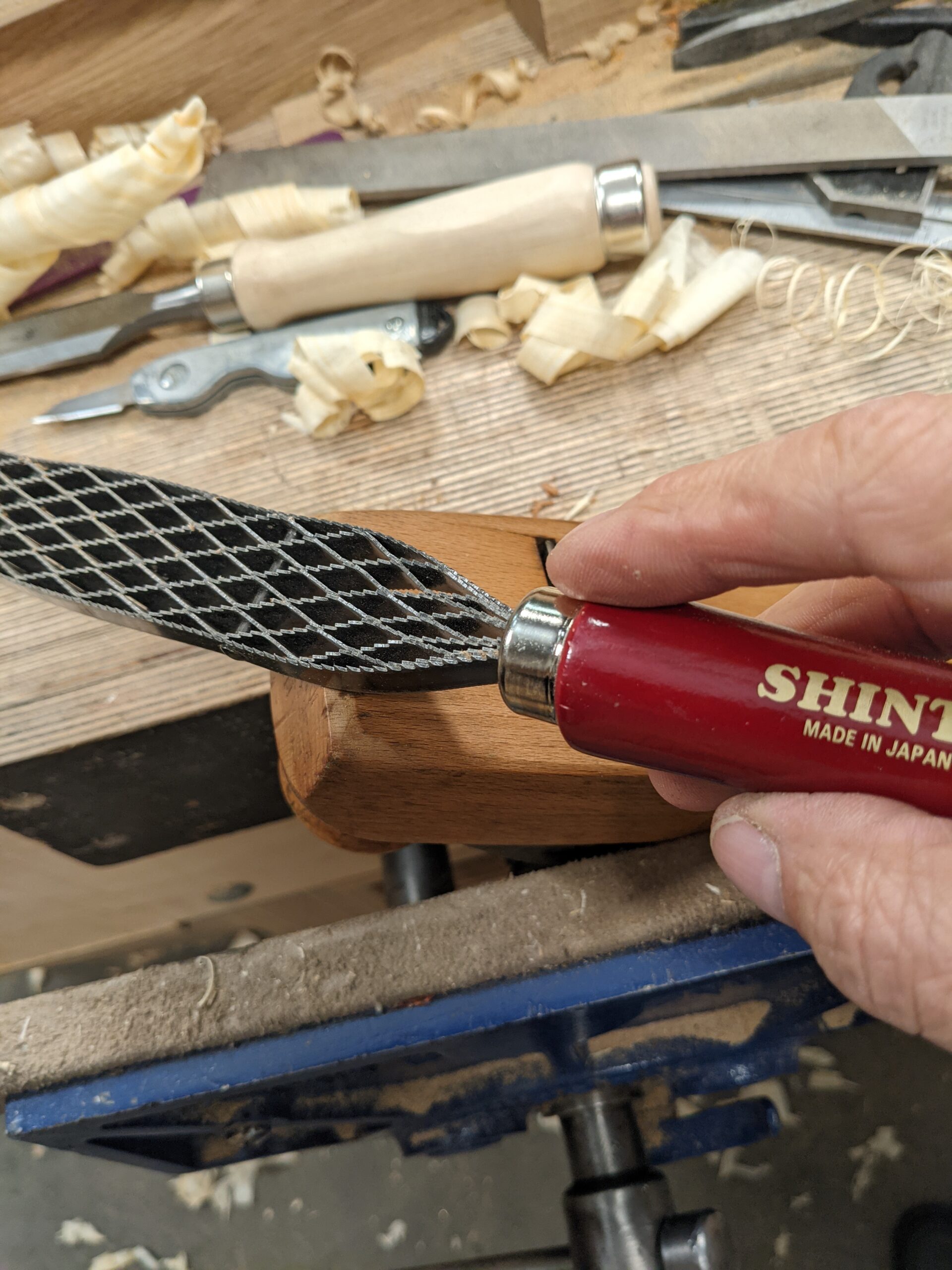
The Shinto on the other hand is a radical shaping tool altogether and outshines the Stanley Surform a million to one when it comes to woodworking. It is possibly the kind of tool I might take 4mm of the bottom of a door with, especially the end-grain of the stiles but then too I would shape a guitar neck with it too. How does it compare to a hand-stitched rasp from a premium maker stitching every barb by hand and catering to the sweep of an arm movement? Well, it's not that far off but it is I would say a lesser tool. Whereas I would not use my rasps for the bottom of a door needing clearance over a rustic gravel path, I would use the Shinto but hesitatingly so. The wonderful thing about it is that it works extremely well, offers two levels of cutting in a single tool and it costs about a fifth of its hand-stitch counterpart. Does it replace the better one? Not for me, but yes for someone with kids or a budget limit or a dozen other reasons.
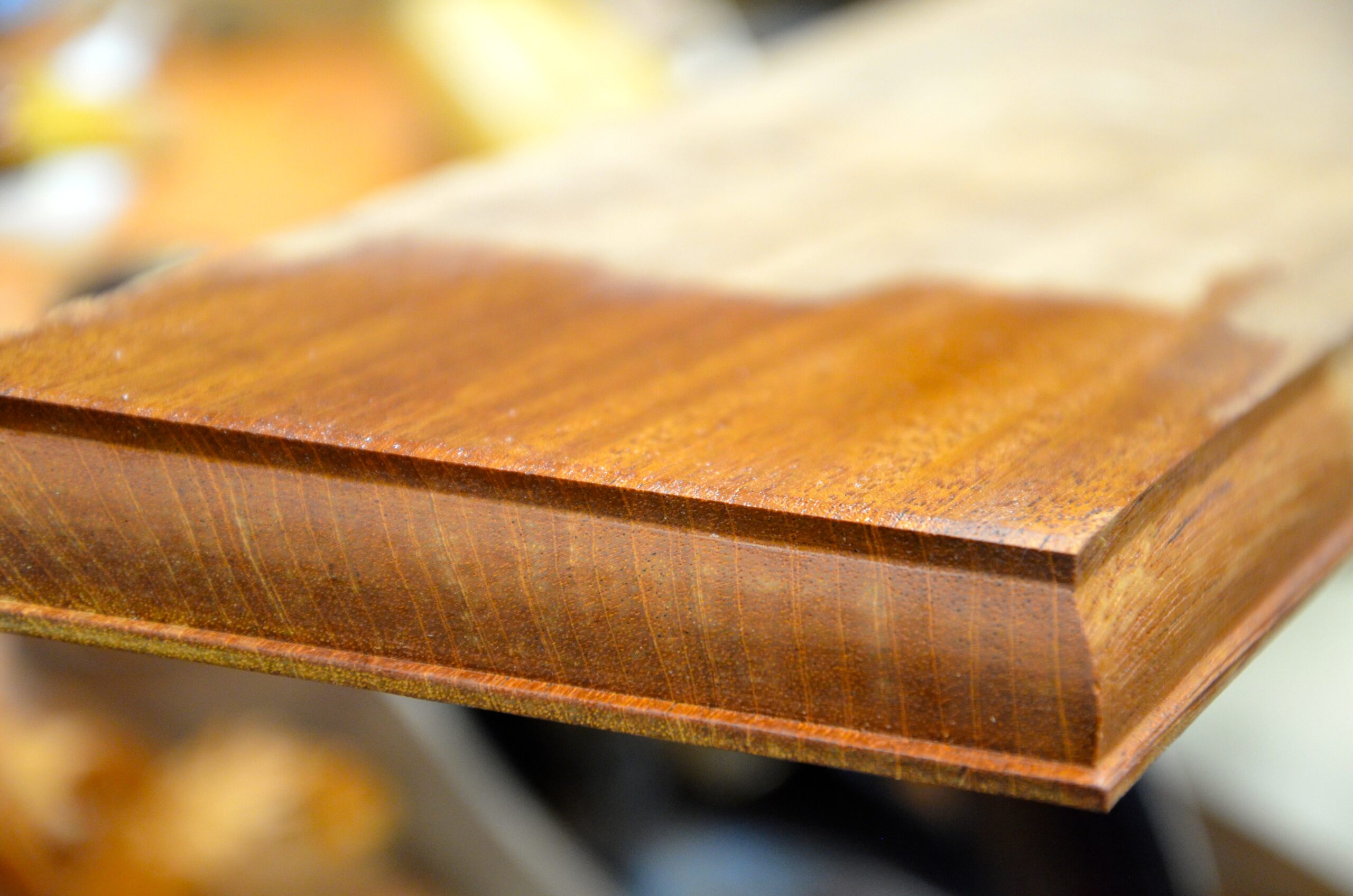
The multiplanes never offered what moulding planes did. To get any level of success you had to have the kind of wood available from harvesting virgin oaks and mahoganies beneath dense canopies that stood themselves for 200-300 years and more. Those days are mostly gone for us modern makers. Limbs spread in the lower density of today's managed forests have more side limbs anchored to their root in the stems of the trees that result in many knotted areas. And it is the knots that cause the greatest deviations in our wood. These deviations cannot generally be shaped and planed by multiplanes of any type. You must also remember that massive mouldings in skirting boards, dado rails, panel frames and door architraves were made up from parallel grooves side by side and formed using plough planes followed by moulding planes. By first running some grooves, an artisan could broaden the offering by using moulding planes alongside or into the grooves. Hollows and rounds, complex moulders and such, established long runs of moulding at the workbench before going out to the building project. The all-metal plough planes never really encountered such work as this was the era many manufacturers never saw coming. The era of the combination plane was indeed short-lived. Machines were well underway by the mid to late 1800s all be that they were driven by water, wind, steam and water-driven turbines etc. All that was needed was the development of the soon-to-be electric motor to replace the take-off belts that then drove the waterwheel, or the wind-driven mills and animal power. In the sage words of the great Bob Dylan; The times they [were]-a-changing.
Comments ()