
Ploughing the way
My hand router plane seems to have been well received. I am glad because it is a solution to the real problem of owning a good router plane, which I consider to be an essential woodworking hand tool. I have a few posts in the pipeline that will help you along the way and the metal parts kit is coming together too. Add your name to the list (at the bottom of this page) if you are interested in our updating you as to its availability as we now have enough to warrant putting the kits together and we hope to be distributing them soon. If you do want to sign up for updates go here and scroll to the bottom to find the registration form that will inform us of your interest.
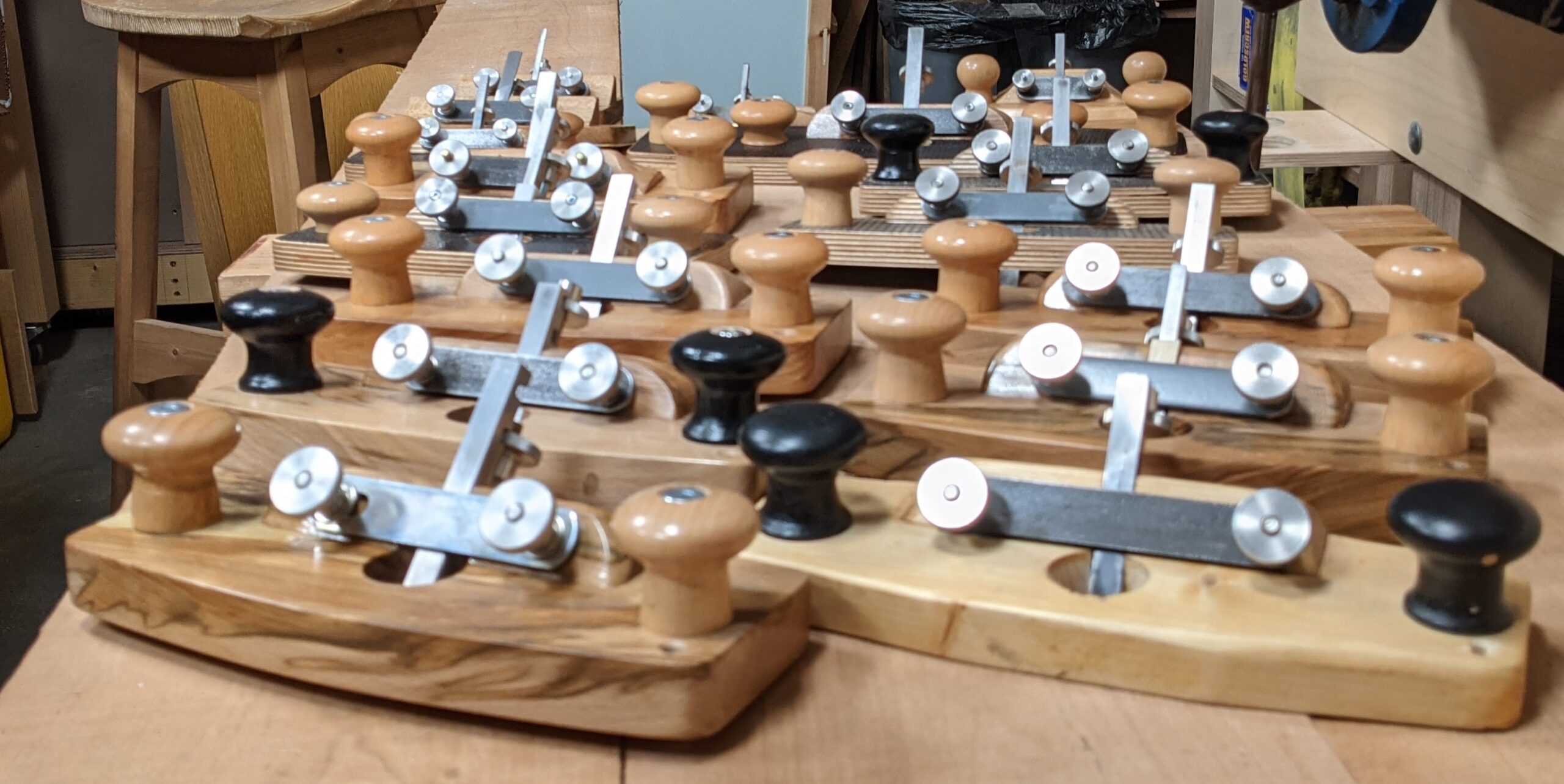
I have now used my new hand router planes since June on a more daily basis and especially since I brought it out of hiding. I cannot fault its functionality, weight-to-strength ratio in the hand and its simplicity, etc. I use three or four of my new types in quick succession or where I want to keep one to a fixed setting for the final pass. I have always done this because I have always owned 20 or more planes since the days of holding classes for that number of students. My concern in recent years has been the consistently rising costs that seemed on an ever-steepening climb month on month. New ones are generally prohibitive for those just starting out and those on a low budget, so something needed to be done. Also, since time immemorial, what we woodworkers have always enjoyed is customising an existing tool or making a tool that exemplified our crafting skills. We often want a tool to suit our more personal preferences and needs and this router plane offers that possibility perfectly. Already I see lignum vitae soles alongside purple heart sandwiched between maple, walnut and oak. Making any tool is always an adventure in the making but boy does this one tick all the boxes.
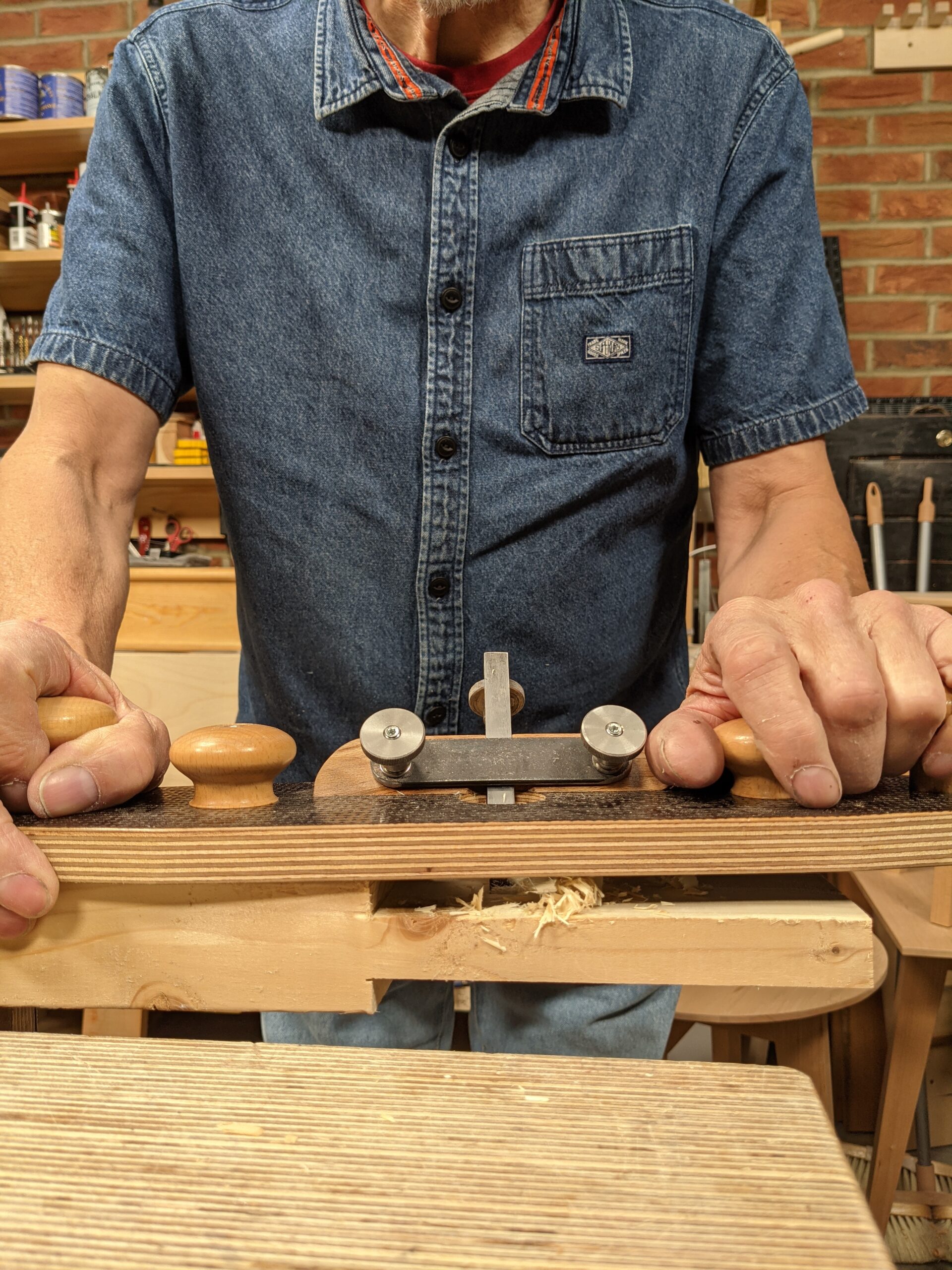
Some of you expressed concerns about not being able to sharpen the blade so that the cutting edge is perfectly paraplanar to the sole after sharpening. I showed how to achieve this with the now more common metal router planes with the vertical cutting iron strapped to the post with the adjuster to the top. My method works perfectly for settling what was a difficult issue to resolve on metal router planes on a consistent basis. On my new router plane, it's even simpler and I will offer this solution very shortly.
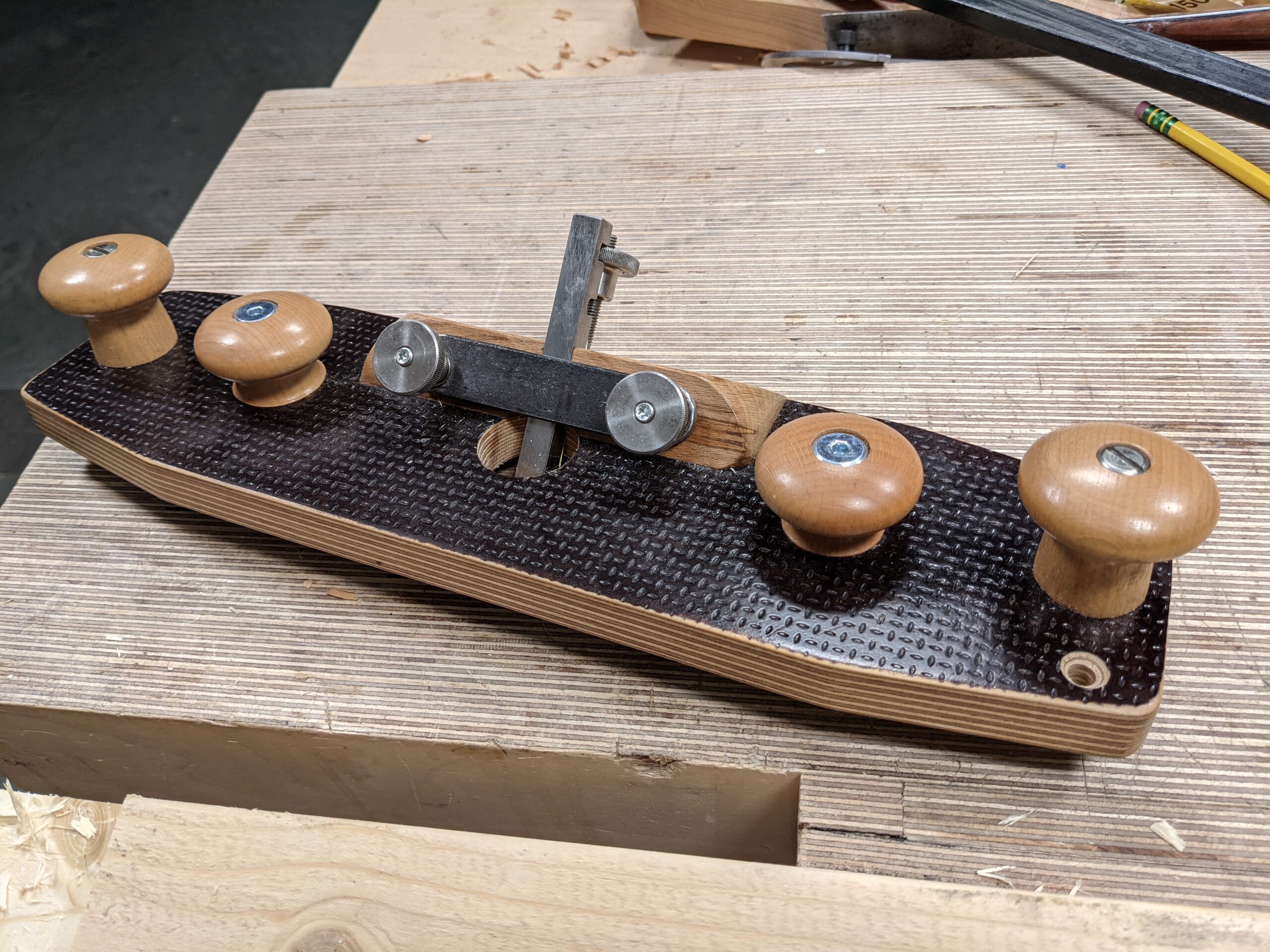
As some of you know, some 15 years ago I developed a router plane 'sole extender' to lengthen the sweep of the plane for surfacing tenon cheeks. You could flip the aluminum plate for left- and right-handed use but whereas it worked fine in achieving good results, metal soles tend to mar the wood surface in one way or another or both. Either they leave surface marring in the form of long indents in the wood or they discolour the wood with the colour of the metal used. I made one of my planes from the phenolic 15-ply plywood (above and below) and it works beautifully.
The wonderful thing about any of my router planes is the reduced cost which means you are more likely to be able to make several. I have indeed made a couple for under £4 and I will show you how I did that as soon as time permits. Above and below are the version I designed for longer, wider tenon making and then too routing out long and wider expanses for things such as inlays, reliefs to carvings and large and wide dadoes. The neat thing is this though, you can simply take the blade from one of the routers you make and install most of the components into the open-throated router to suit the different work. The double handles are designed for shifting hand positions according to preference and efficacy. You can use them individually or cup both in a single hand. It works great.
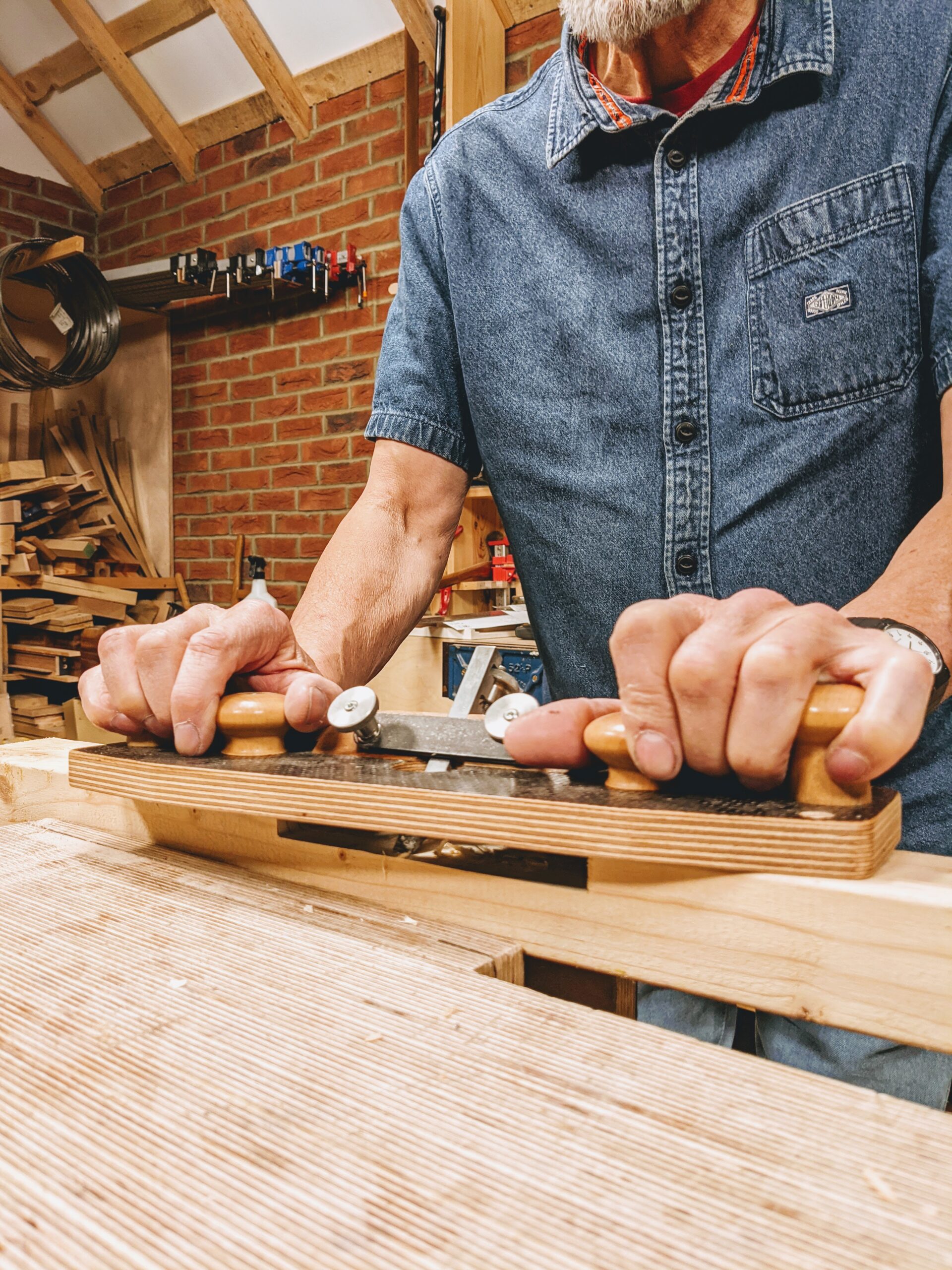
Some of you mentioned the open throat offering full sight to the cutting edge which of course it does. My reason for the closed throat opening is strength and registration together with the longevity it affords the plane. It's not an either-or though. Again, cut the vee in one sole and transfer the cutter and metalwork from one plane to the other as needed. Whereas with the closed throat shavings can jam between the fore-edge of the plane sole and the rim of a stopped housing or dado, you soon automatically assume this and are aware enough to blow away the debris before this happens. It's not really much of an issue and of course, we have had that with the early router planes for a century and more.
So, there we begin to see variations on the theme of my router plane. There are more on the way but next, I will tackle the sharpening issue that is exceptionally simple if you follow my method, which I have worked through to get it right even though it is almost as new to me as it is to you, almost!
Comments ()