
More On My Router Plane
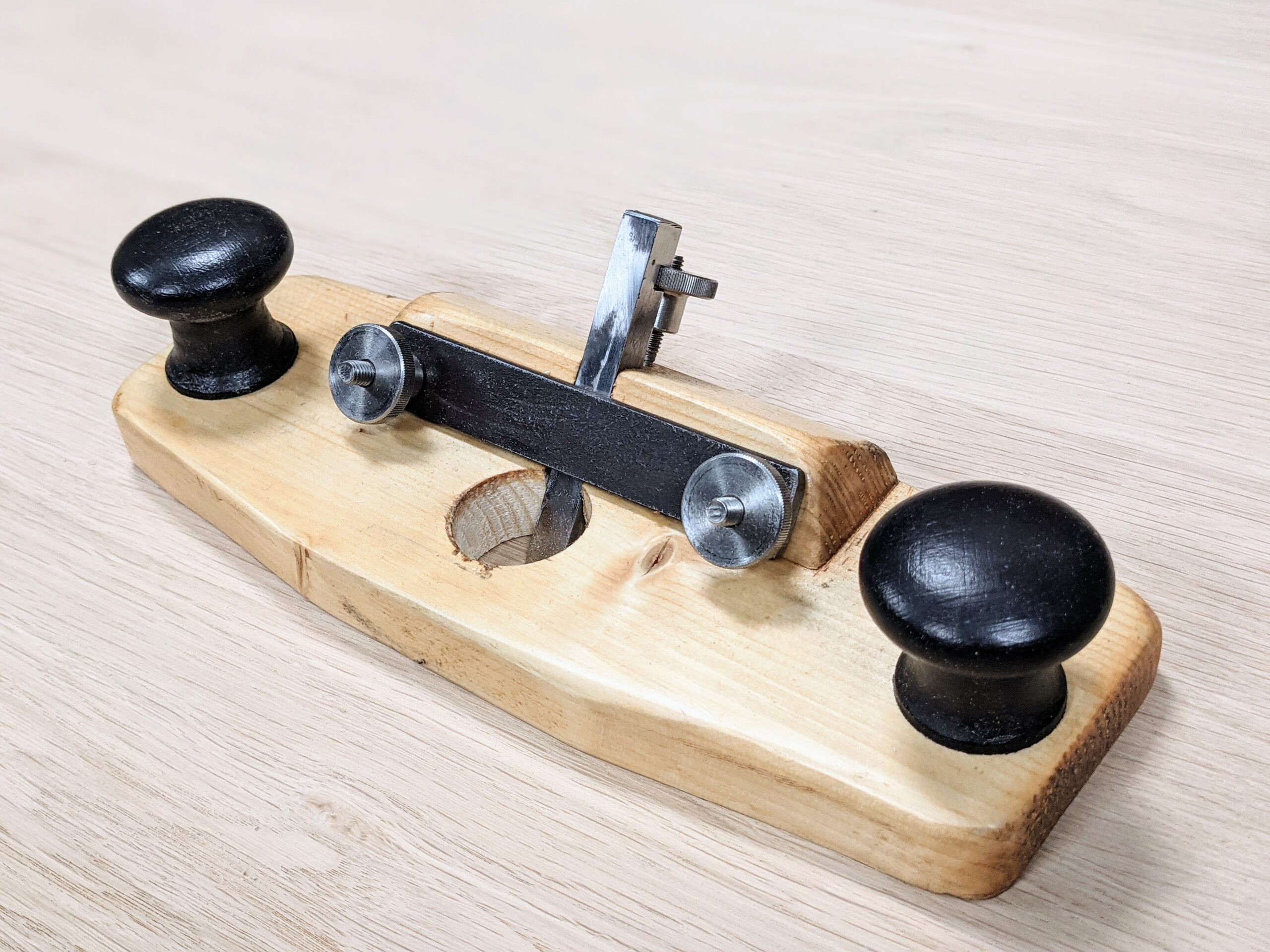
I think that this is worth saying. My new router plane reduces the cost of owning a lifetime tool to the cost of a few short hours in the shop making it and the price of a half-decent restaurant meal, probably less. Of all the hand tools worth making yourself, I consider this one to be the most worthwhile. To help you to understand this further and so you can clearly see what I mean, I plan to make one of my standard hand router planes all the way through using the kit of metal parts we supply without me taking a break until it's done and in use. The challenge details will follow soon but the idea is to show exactly what it takes if I stop talking and get on with what I do best. We thought that this would be very helpful for everyone to watch so that the sequencing is clear and so that you can see what I do to make everything happen efficiently and economically as I go. Anyway, that should be both fun and interesting and for another soon-coming day, time permitting.
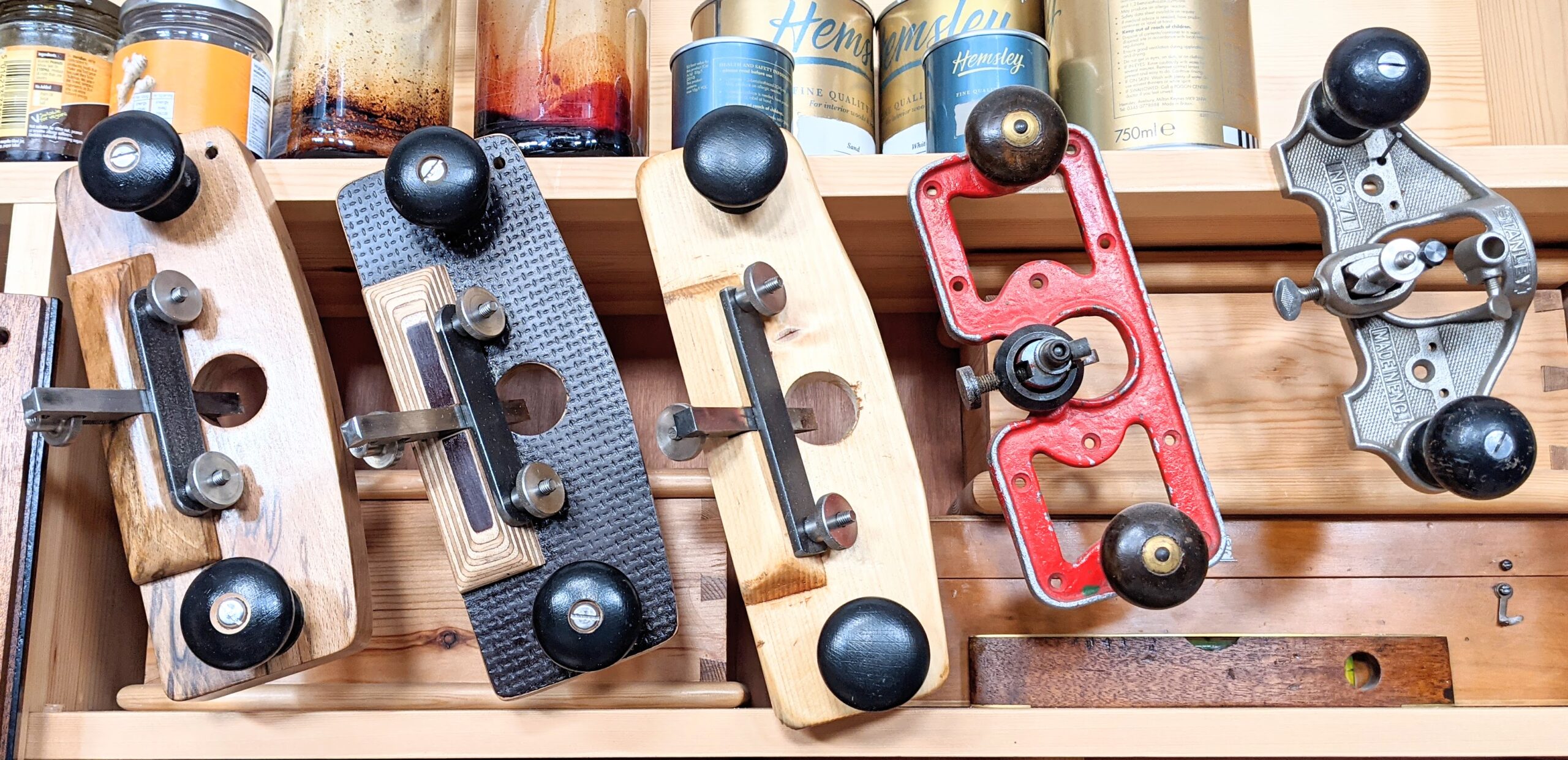
I made my plywood version to counter the snobbism surrounding tool ownership that is creeping into woodworking. Some planes have become works of art and that's nice but I am in the realms of a maker getting the work done with highly functional works of art that represent a different type of workmanship and a different type of attractiveness.
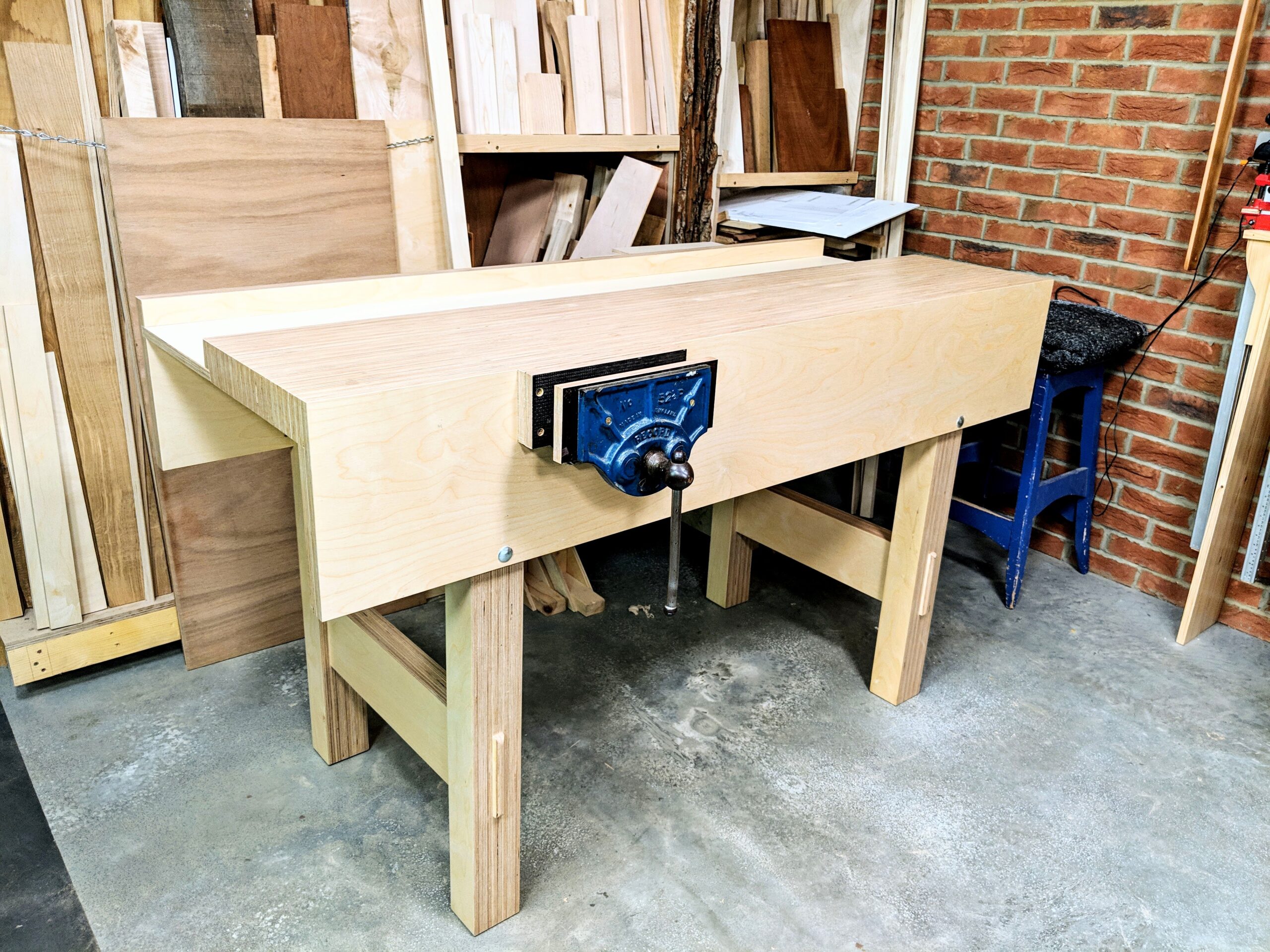
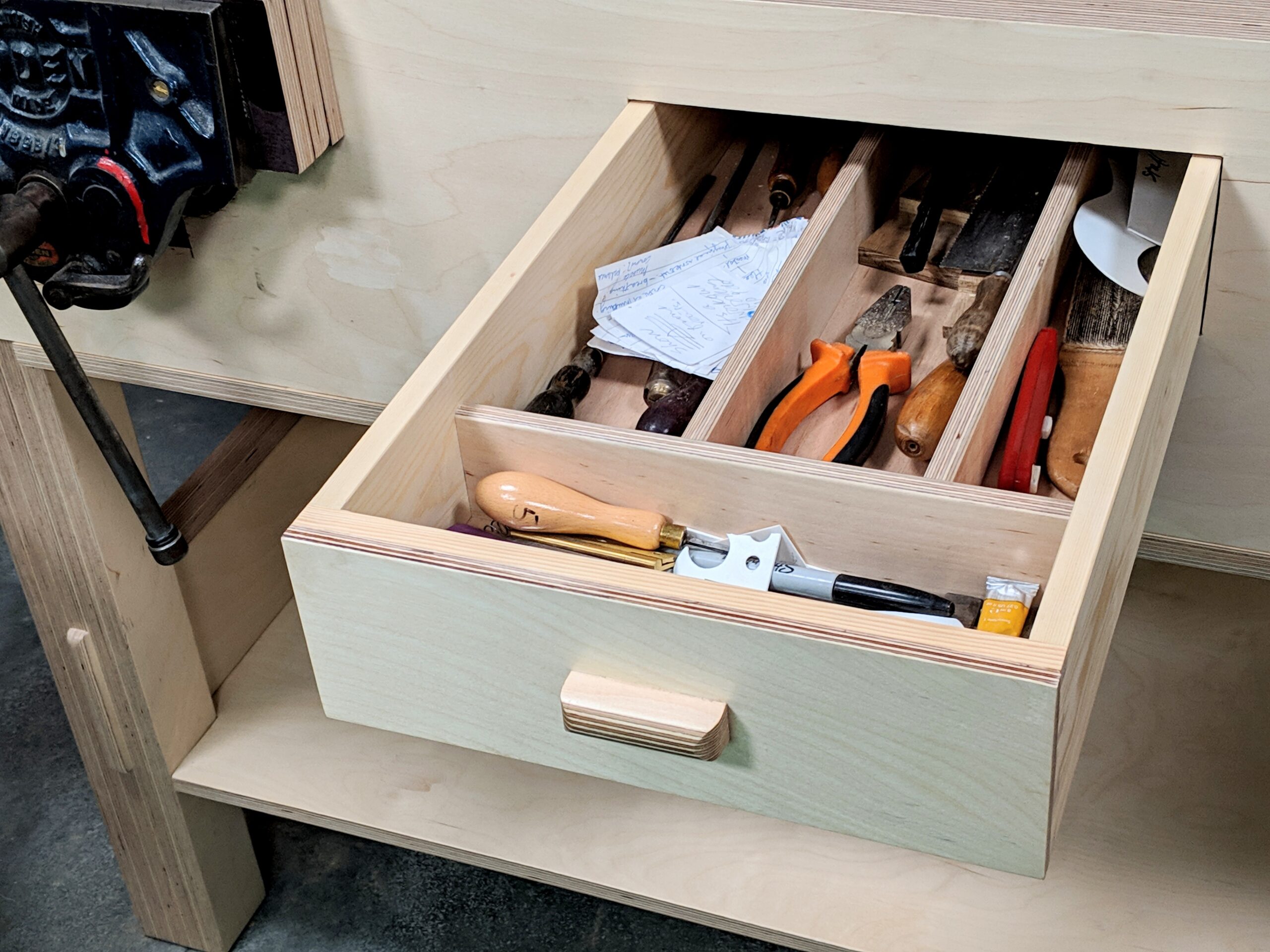
My plywood workbench did the same thing and punches above its weight in the daily use in my workshop. I am not into pretty workmanship (though I appreciate it most of the time and there is a place for it) so much as functionality first and by that the fullest of attraction. Truth is this, I want a bench I can gouge by accident when I slip with a saw or a chisel and one I can drive a nail into to describe an arc for a rocking chair rocker. If I spill paint, oil, glue or whatever, I don't want to panic. I just want to wipe up the spills and get back to it. So here is a tool that parallels my intent to simplify and counter pretentious snobbery yet something that truly works. Will plywood hold up long term? Probably, possibly! Does it matter that much? I expect a 10-20 year lifespan if I am careless with the plane, but I will not be. The only part that could be in jeopardy is the sole. This 15 ply Baltic birch plywood is the one engineered for lining working van floors, hence the texturing for an anti-slip surface. The other face is silky smooth. Of course, it's not cost-effective to buy an 8 by 4 sheet of 3/4" plywood to make a single router plane so you will need to be inventive in finding your piece. Start with eBay. I have seen inexpensive panels for just a few pounds. Also, you could consider the sole to be replaceable, add a wear plate of brass or reface it later.
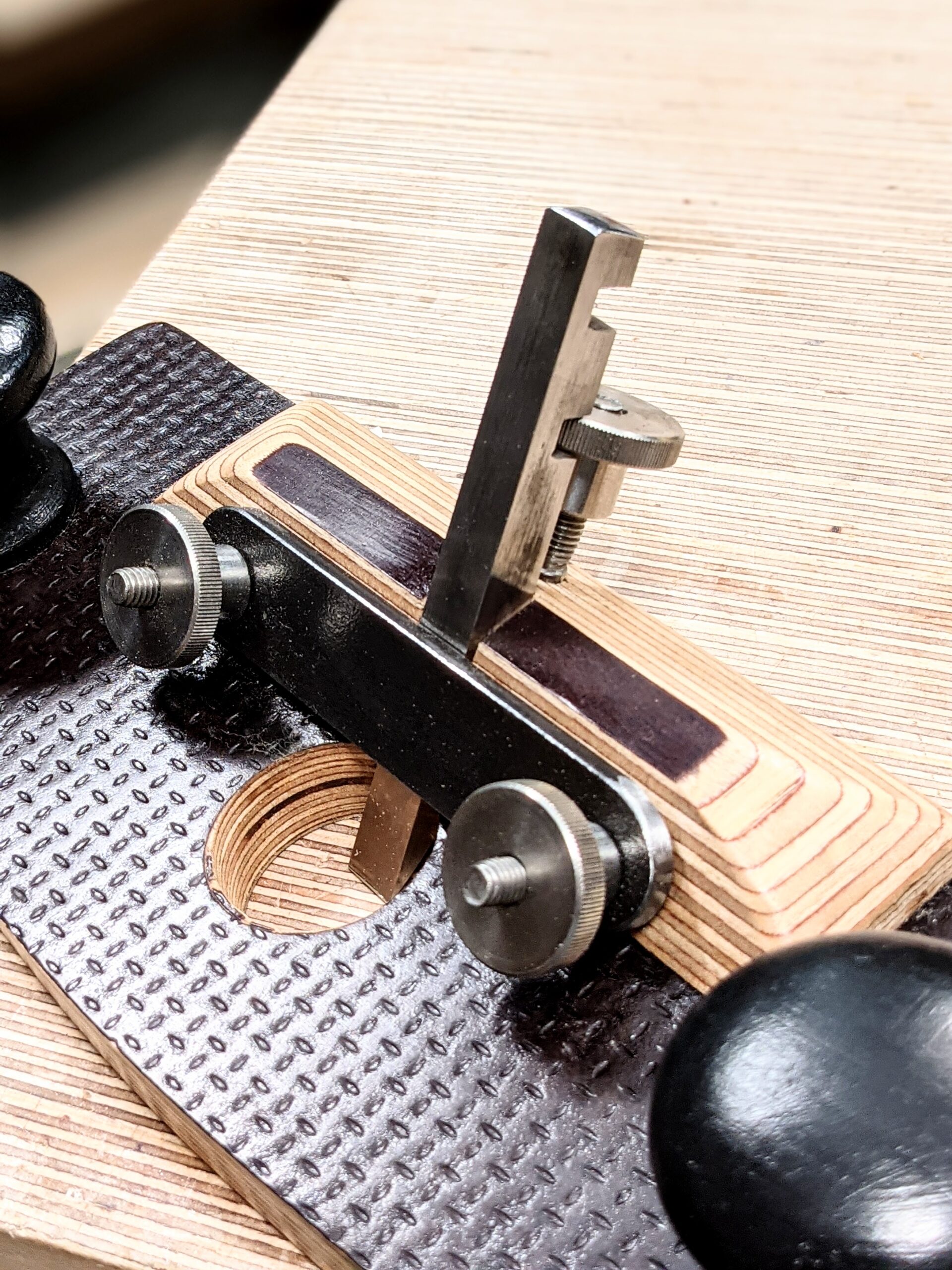
When I was making the first plane I took a two-by-four offcut (top pic and third from left above), lopped it down to 10" and then made the angled upstand and glued the two together. The thing for me in my world of designing and making is that I have always made the pieces I make inside my head before the physical work begins. These rehearsed actions in my head allow me to even arrange the tools I will use on my then 'virtual' benchtop so that as `I rehearse I can pick up the tools I will use to make sure that I have them all. That way, when I'm rehearsed so, I can just go for the real thing knowing the sequence of everything beforehand. Before too long, what I make is sitting or standing there in front of me replete with joints, shapes and so on. Ninety-five percent of the time everything works. I have picked my mortise & tenon sizes along with the dovetail types and sizes. Recently I was asked if I followed the so-called 'thirds-rule'. Not usually, I answered him, as a rule, it doesn't work for most stuff so I never even contemplate it and have never adopted it as a rule nor knew any of my mentoring craftsmen as full-time makers making any reference to such a thing even though for some frames we do end up with something like that happening. This rule generally works with doors and panel framing, so, for 95% of the work woodworkers and furniture makers do, the theory doesn't hold; table legs, chair legs are usually of unequal proportion when it comes to rails and legs, etc. How could it work? So too other pieces we make like tables, benches, bench seats and so on. Think about it. Look around your room and make mental notes. How many mortise and tenons on your furniture pieces follow the so-called thirds rule? On most tables, for instance, we push the mortise to the outer faces of the legs to increase tenon length in the rails to the maximum, for added strength.
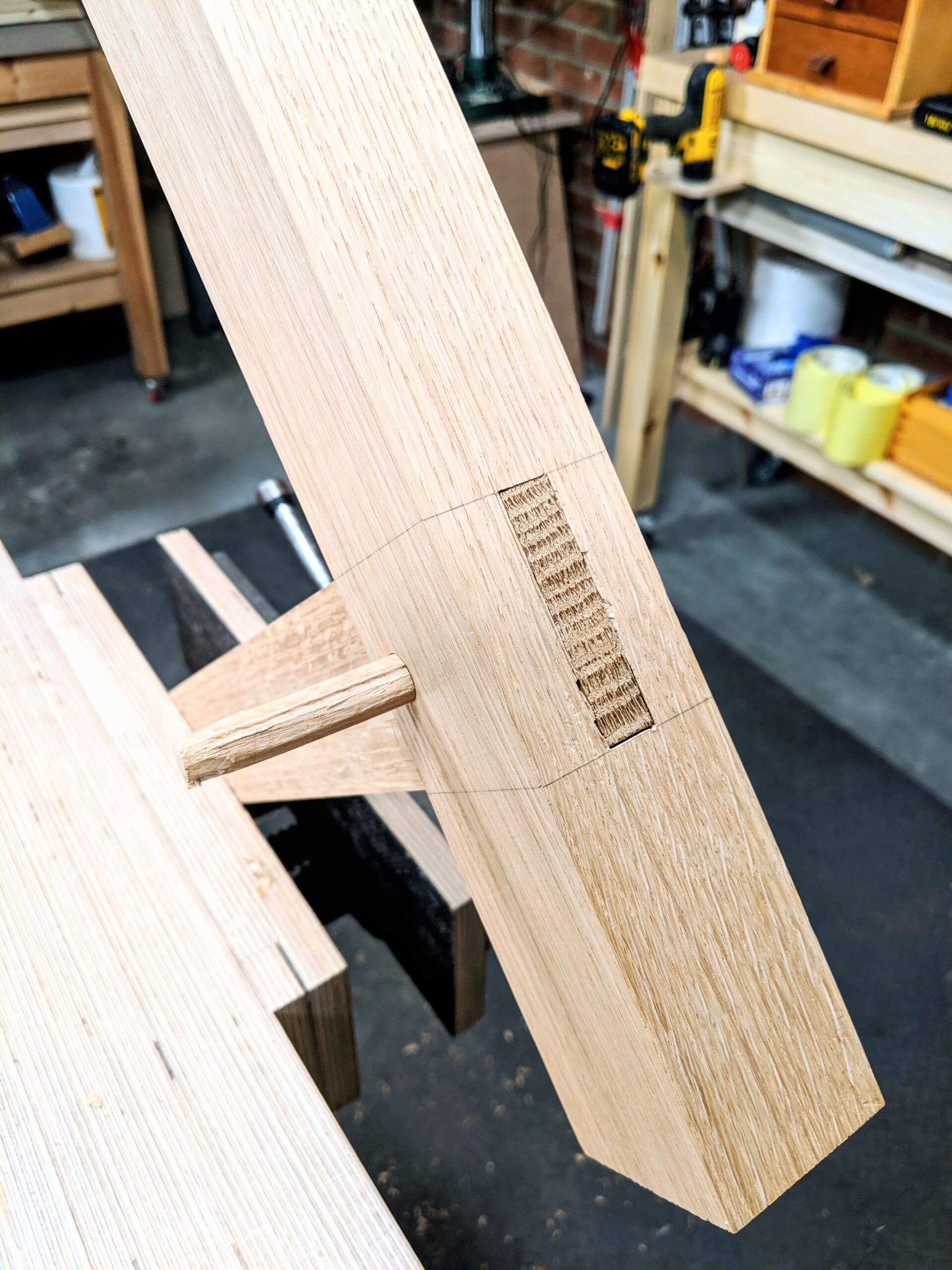
My first output worked as well as any of my router planes but I knew that it would. It was mostly a matter of logic but then most good ideas and solutions are. I quickly added up the numbers and the presentation angles to establish the optimum cut and then tweaked my endeavour at the bench. In the past, at different times, I have often relied on my poor man's router version I introduced to the wider world via the world-wide-web when my first bench-making escapade into videography went online. This was where I made a complete workbench in my back garden where the squeal of school children in the playground next door and the seagulls overhead cried out as I planed my bench parts. Ever since ```I was a boy, not owning any kind of dedicated router plane, I had to be more inventive, so I used a poor man's version for a number of years, but, as it is with many things, when something works we tend not to make changes and things carry on in a make-do-and-mend mode. It was then that I used it for truing up tenon cheeks even though no one I ever saw had done so and it has never been referenced in any books until I began teaching the technique in my courses and then online. I like this kind of innovation. Serendipitous synchrony! See a problem, be a solution. It gives me a buzz to think that hundreds of thousands have and will be watching me make a fully adjustable router plane with a cluster of ordinary hand tools and that they too will indeed own their own router planes in the future. How about that!
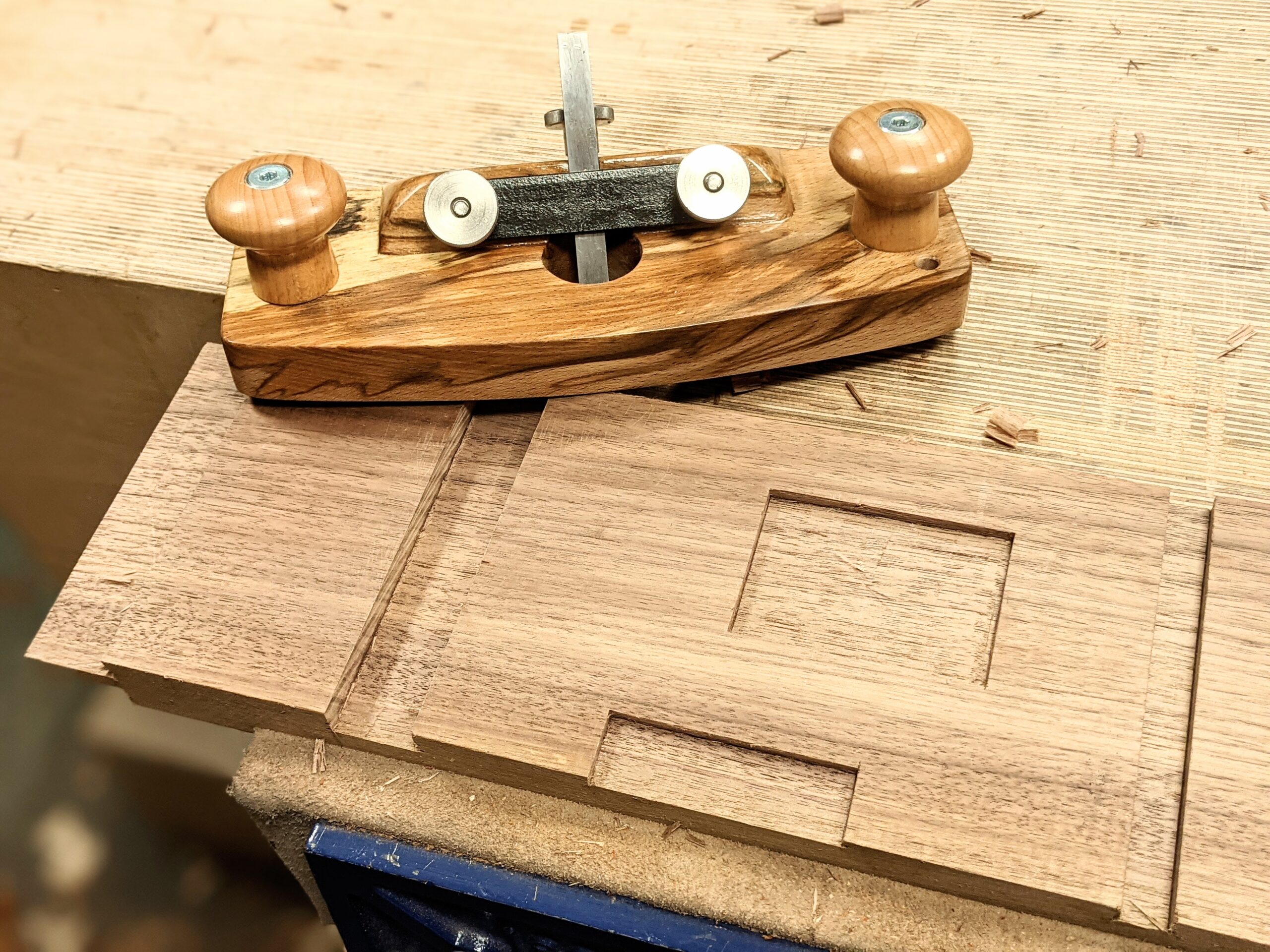
Going forward, my hope is that we can keep moving our work with woodworkers forward through the work we do. This was a major step for me, simply because `I was sending people to eBay and premium makers to fill the gap and that was causing a shortage for everyone because the premium makers could not now keep pace with demand, the vintage ones were being swallowed up by demand secondhand and everything was becoming overpriced generally. This plane solved all the problems completely and for not much money and effort. Even now, after just a few days, 70,000 woodworkers worldwide have watched the video. In practical terms, that has clocked up almost 18,000 hours of watching to date. So many of you let me know that you loved the videos and that you will indeed be making your own version even if you own metal versions or are still using the poor-man's version in the day-to-day. So, I thank YOU for your encouraging support with this new step. I love the idea that these planes will start popping up in all of my videos from now on going forward.
Comments ()