
Legalism Thrives
Or does it? For many years I have faced it and tried to counter some issues as I came across them if I felt it might be important enough. From laying a plane on its side to workbench work heights, micro-bevels on cutting edges and skewing planes and spokeshaves this way or that as you work. I recently became even more aware of just how prevalent legalism can be to simply standardise how things are done according to those 'in the trade' and then those in education teaching to curriculum that doesn't always or even often fit. Most of my tips and tricks are not really found in books because they came at the bench in the practicality of my working. More simply, they are the things I do in my everyday life as a working man making or training to help those new to woodworking who encounter difficulty and awkwardness complying with the expectations others try to shoe-horn them into. Those who perhaps care more about compliance than actually helping others along the right path.
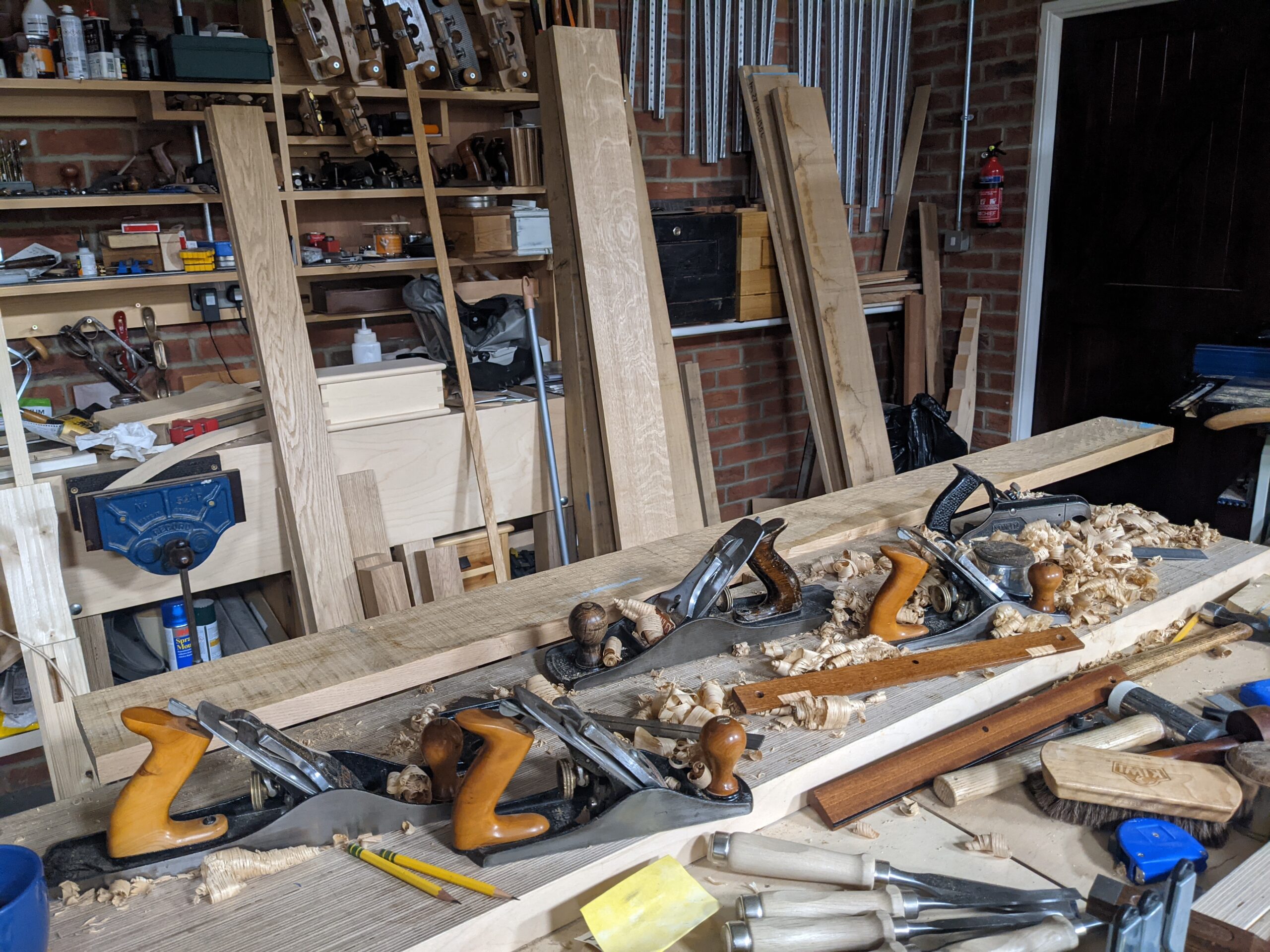
Personally, I too was forced to do things for years. I find placing a plane in its twice-as-large footprint when laid on its side on my workbench very messy and awkward. The condition is worsened because, in the practicality of my work, I frequently use three to four planes interchangeably on a continuous basis throughout the day. Worse still and seldom admitted to by advocates for this law is the unreadiness of the planes to pick up and put down between the activity of tasks that are short and repeated second by second.
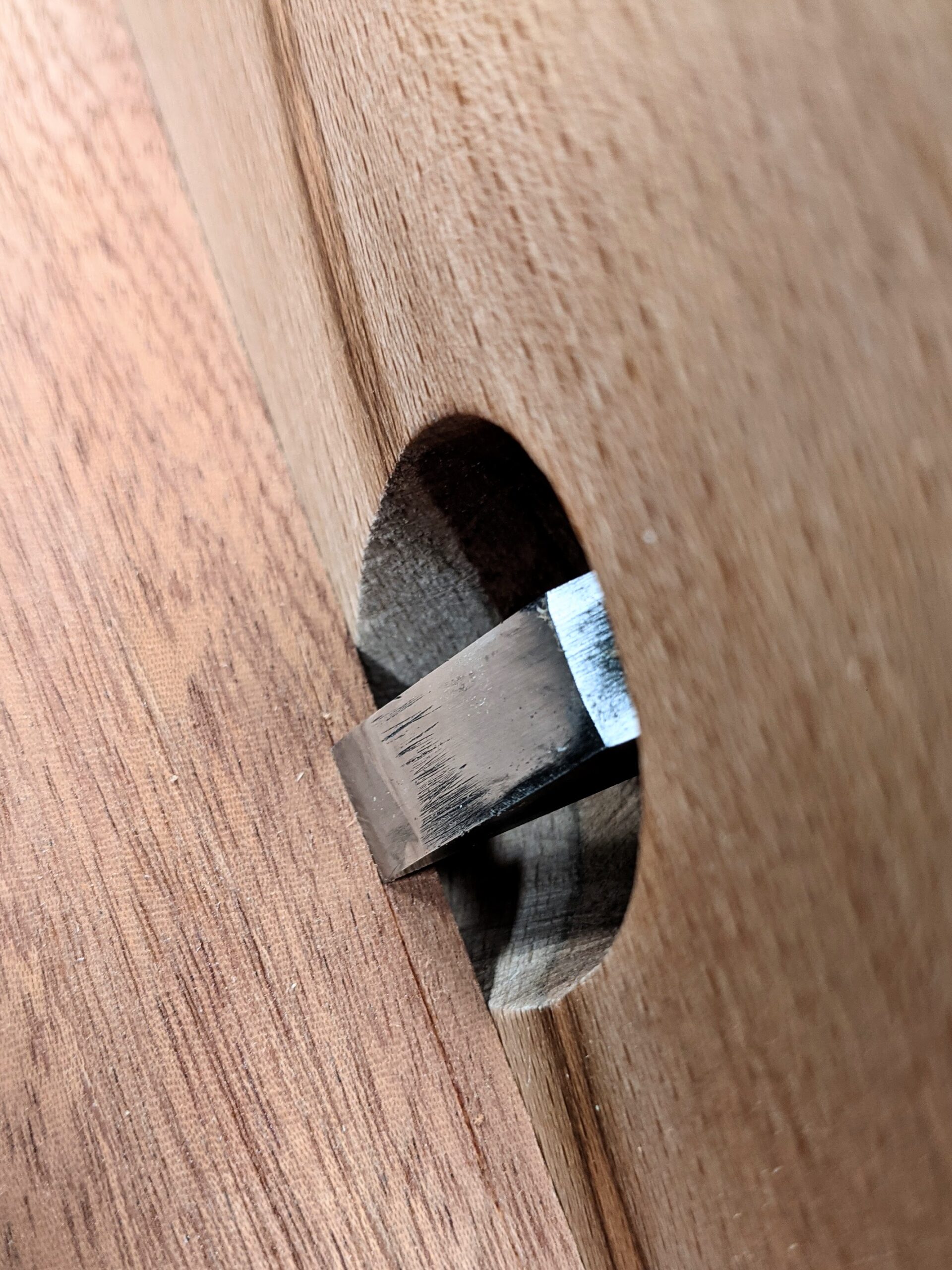
Discussions go on in different parts and many of them are sparked by my posts on different concepts on different social platforms. Simple things seem problematic to others. I often use my router as a marking and cutting gauge in place of actual marking and cutting gauges. It's quick, effective and instead of simply parting the fibres and creating an equal-sided 'V', as it would with a pin marking gauge, it actually cuts with a slicing cut that cannot be beaten for establishing the lowest point in a housing dado, hinge recess and so on. There are other situations where this does not work, of course, wide distances and such, but when it suits it suits and just watching that cutter slice the surface fibres to the exact depth of the actual cutter that then finalises the depth is priceless. It's funny to me to know that I never saw anyone ever use the router in that fashion until I did it.
What about the hinge recess video I posted on my FB that in four or five days reached 400,000 people to show them how simple it was to recess or mortise or set a hinge in a door style. My goal was not to provide the treatise on hinge recessing but just to nudge people to perhaps practice recessing a hinge as shown in a 2-minute video. Customising that method to a specific hinge, they might have, is the watchers' next task to work out because, well, not all hinges are created equal. Hinge flaps and knuckle positions on hinges are all different and there are different ways to make the hinges look right. But the method I showed was to encourage woodworkers to understand the simplicity of how to do it.
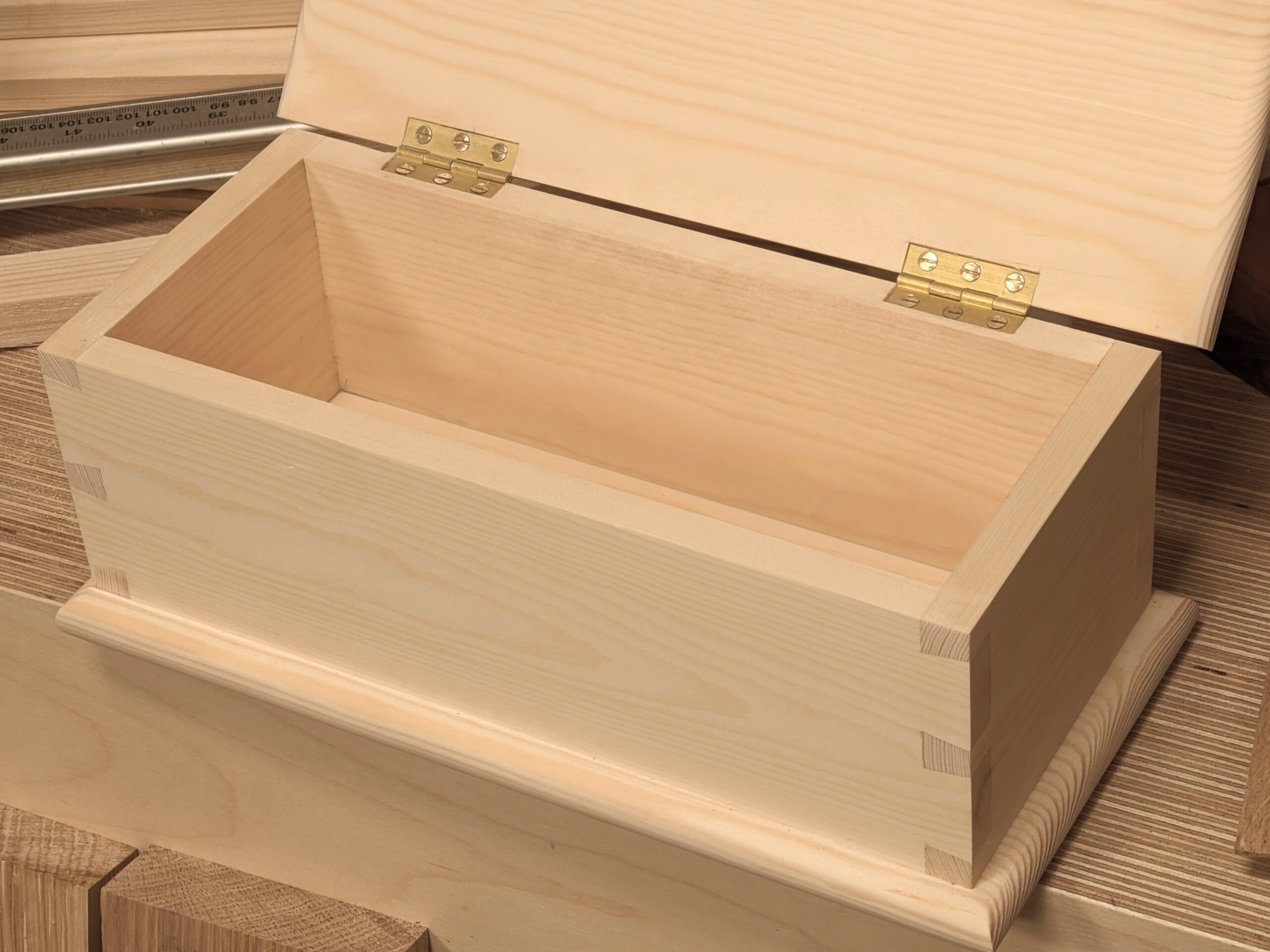
But, did it really matter that I called it 'recessing' a hinge rather than "mortising" a hinge? Both are in actuality equally acceptable but, as said, recessing seems much more accurate. And then, of course, 'setting' hinges is just as well used as the other two terms, but no one mentioned that. Admittedly, I wouldn't call mortising a tenon recessing a tenon, but then recessing tells me it's not deep, like a mortise, or indeed, a hole passing all the way through a related piece.
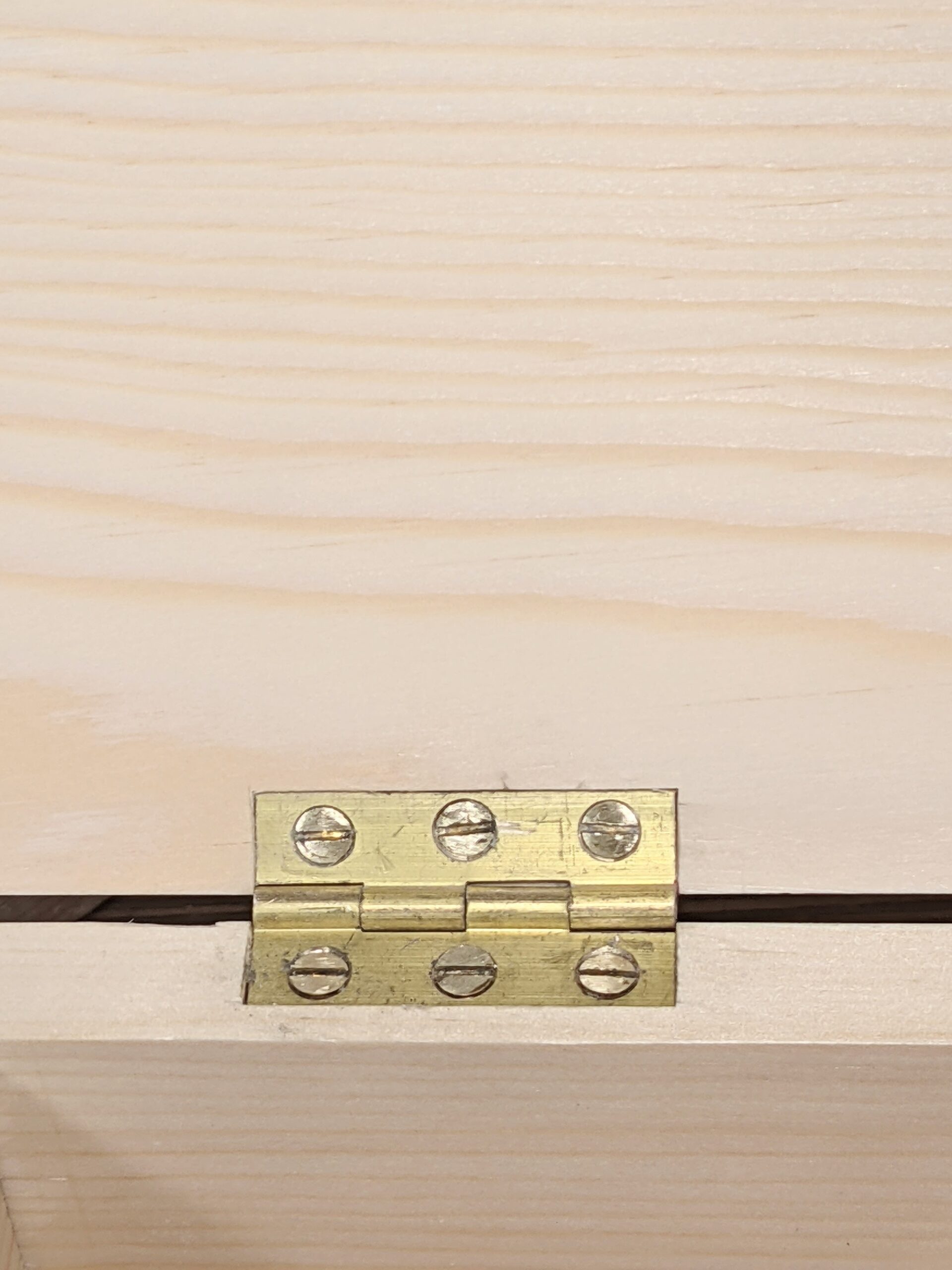
Others told me that the thin flap should always be flush with the surrounding surface. I have rarely found this to be good practice and as no hinge is a one-size-fits-all hinge, there are many other factors that determine this to be a very impractical theory. Knuckles of hinges too thick or heavy, the thickness of flaps, the distance between flaps when closed and so on. They again were more concerned about legalism than practical solutions.
It made me realise the legalism of a computer that one minute underscores my English spellings throughout this blog to prompt my incorrectedness because the program is American born or intended and the words in red prompt me to make changes, unless I adopt the UK spelling checker. Because I end my words like customise with an 's' at the end instead of a 'z', or fibres is my correct spelling instead of fibers.
When I lived and worked in the US for twenty odd years, odd meaning a few more and not that odd means something about America, I used all-American spellings, and I also called a car park a parking lot and the bonnet of a car a hood. It would be confusing for those learning English from me if I adopted Americanisms or used parentheses next to the chosen words just to be politically correct.
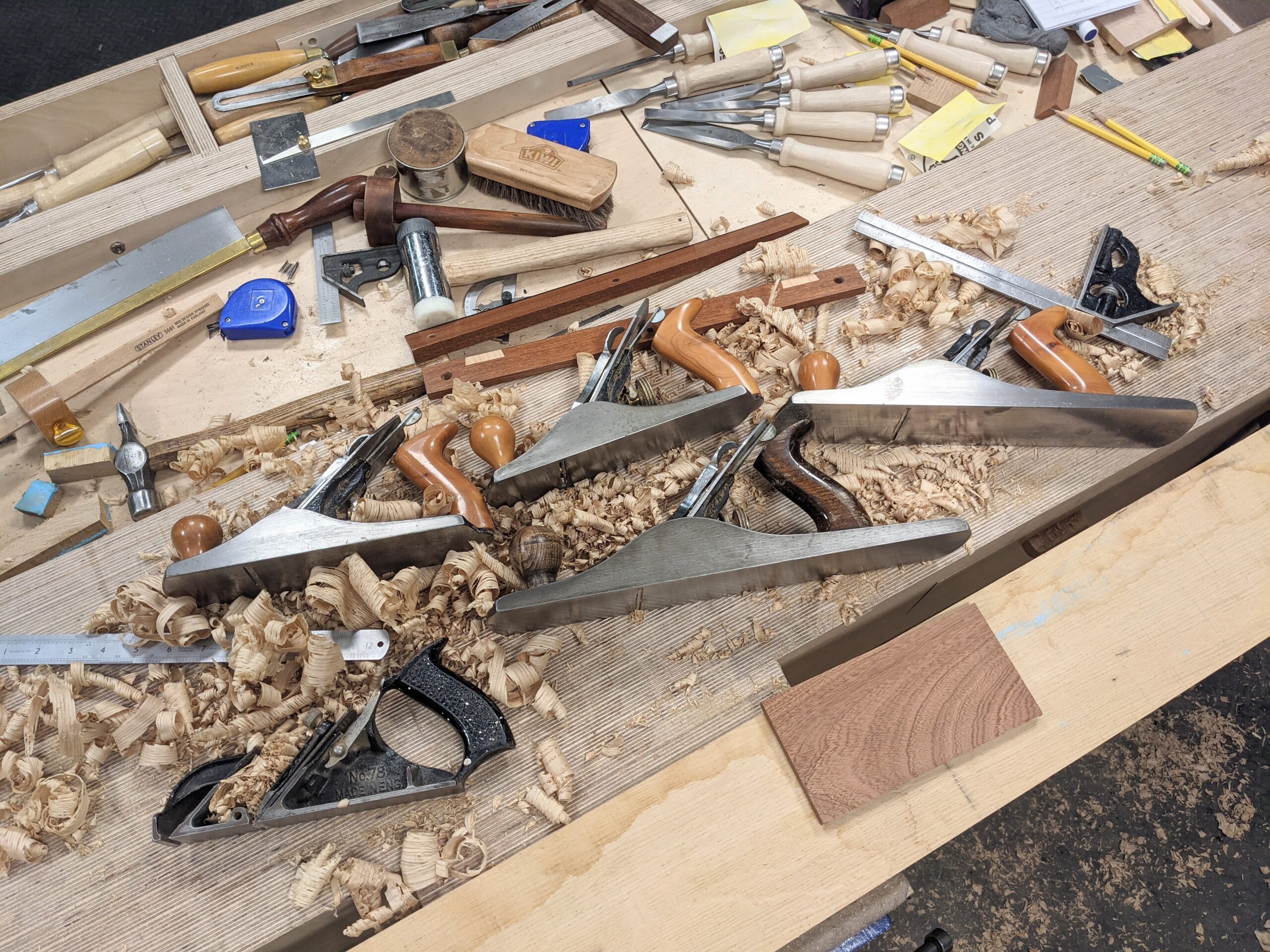
Anyway, it's all quite bemusing if not intensely amusing to think that traditions are often upheld within the ranks even though they matter not a jot in most cases or indeed make very little sense. My friends in Singapore, Lithuania, France and Turkey know exactly that it is of little consequence whether you recess, mortise or set a hinge, and then stand the plane upright or lay it on its side. I have noticed that those from other countries and continents, those where the English influence of plane resting between tasks was never prescribed, never correct my incorrectness and actually stand their planes upright near by them. Because they were never exposed to the British rules, thankfully, they never had such expectations of me or themselves. So too the workbench height of 32". Of my three decades of teaching woodworkers at bench heights of 38" I never had a single complaint that the bench was too high or too low, and that is for over 6,500 students. In my experience with such, I discovered that 32" is mostly good for those who are around 5' 4" tall or less and certainly bad for those of the average height of around 5' 9" on up. In my case, 5'11", it is absolutely perfect and I have never had back pain or any upper-body issues using a bench at this height for 57 years to date.
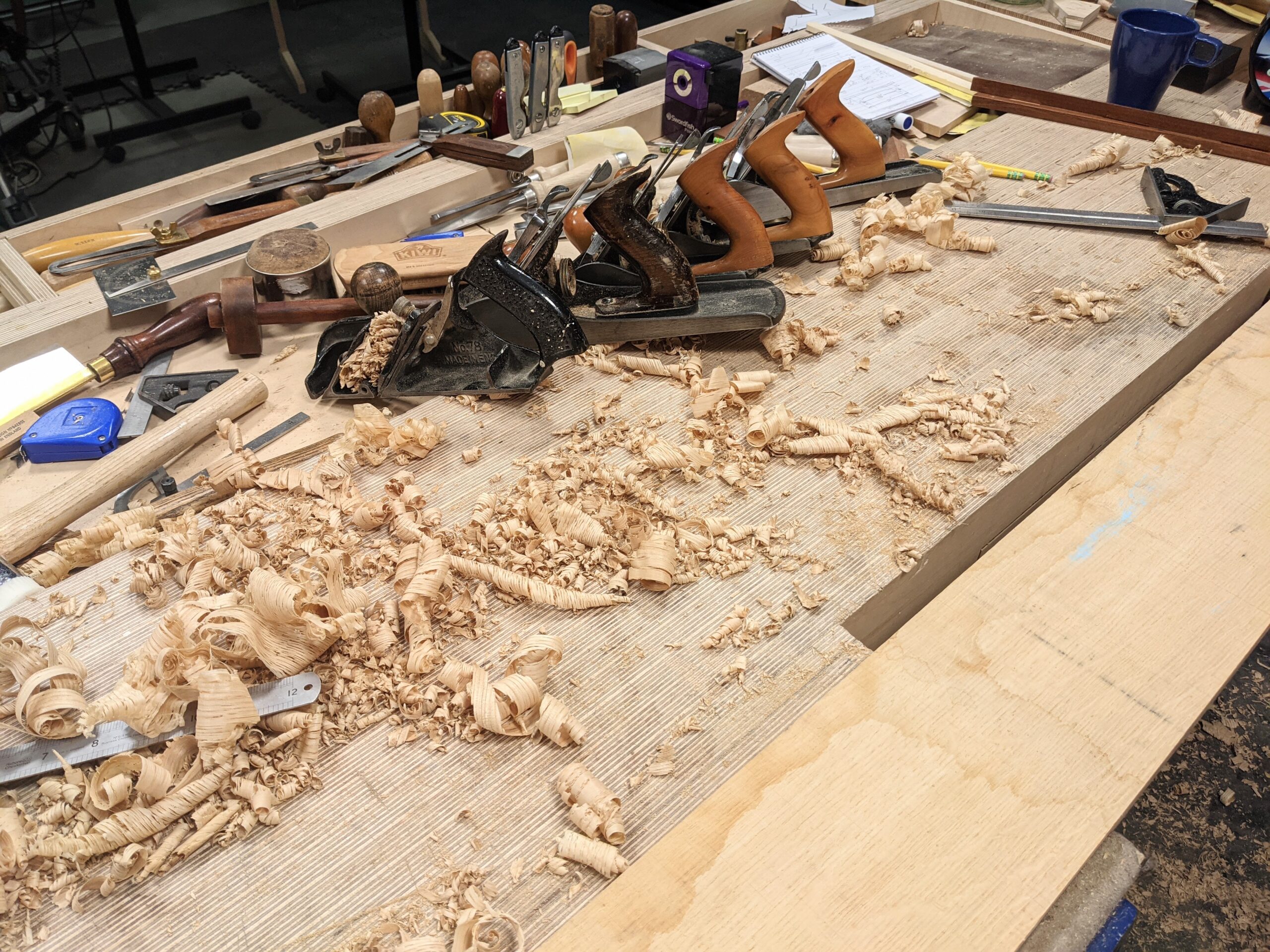
. . . or this?
As it is with planing wood and ripping down wood with a handsaw, cutting dovetails with a gent's saw, also called tenon saw and backsaw. The greatest successes (and enjoyment) are yours when you loosen your grip and stop strangling the handles with rigidity. It's best to stop straining your arm, wrist, hands and fingers instead of simply flexing to the task, so that you can indeed feel again. I am learning something too. I would that I had learned it when I was younger but there you are. It's a good thing to become flexible. It doesn't mean to compromise the outcome of your work. It might even lead to greater resilience.
One of the things I do love about woodworking is that you, you, will feel what's right for you and the longer you practice anything the more methods and systems and tactics you will adopt to make them your own; just as I have done through the years. It is good to listen to others but when you do, question the authority with which they speak. I recommend my audience not to lift the plane off the board between strokes. Other gurus make something of a show of lifting the plane off the wood but it is always best to keep it registered with the surface of the board. For one stroke in a hundred, a shaving might just stick to the underside of the plane and prevent the next pass from cutting. Here is the trick. Instead of pulling the plane back at the very end of the cut, push it a couple of inches more so that the shaving is truly separated from the main body of wood and it will be a hundred times less likely to be trapped by the fore part of the plane's sole to pull it back with the plane and under the sole.
Comments ()