
Do Wooden planes still have a place?
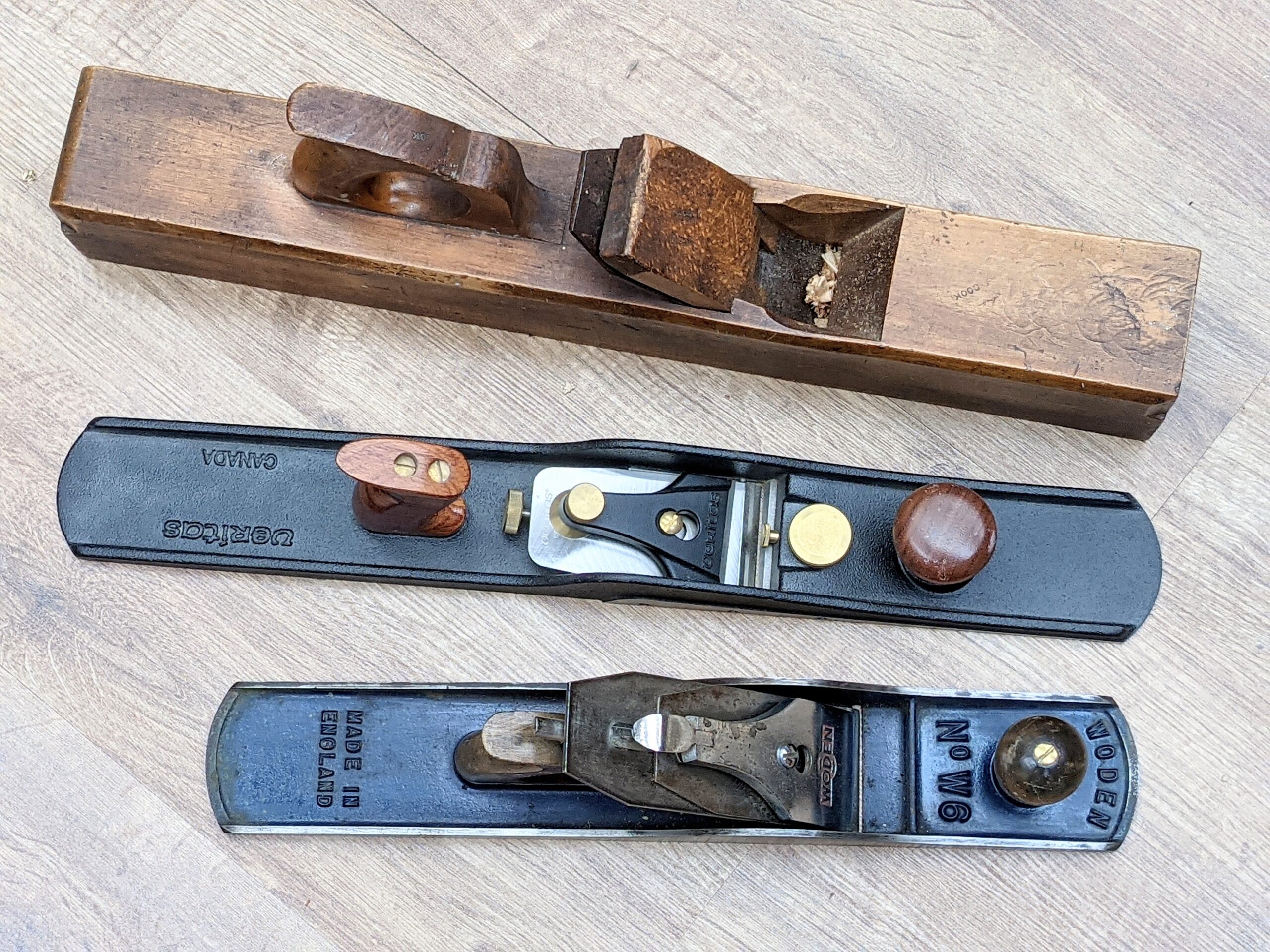
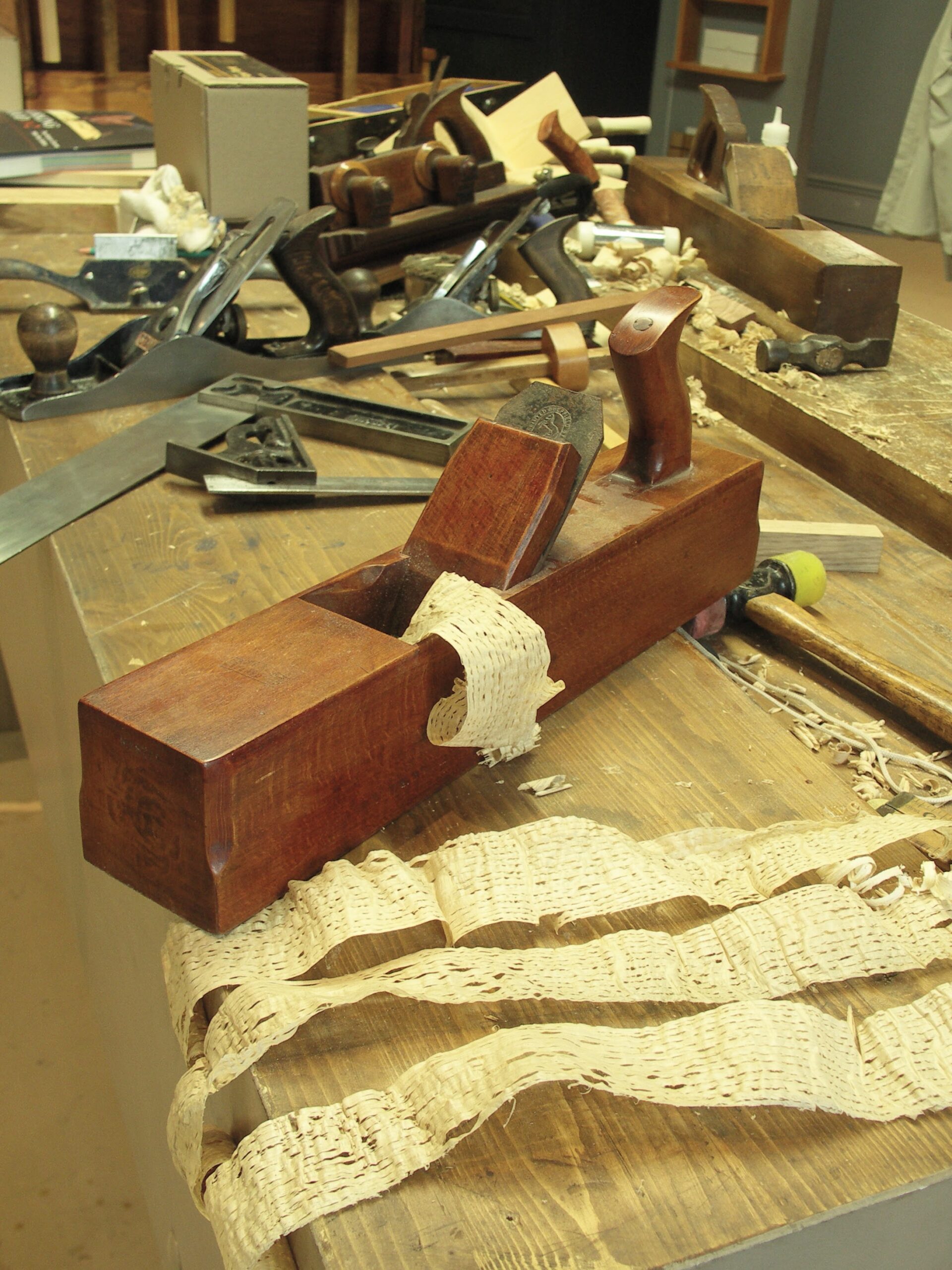
I think sometimes we look at planes more like we might consider, say, hmm, a bulldozer or a road grader -- the logic where mass and weight and a dropped blade levels all opposition by sheer, unyielding force alone. The funny thing for me is this, a 22" wooden plane, weighs 3.4 kilos, and the bevel up Veritas of the same length weighs 4 kilos but when the wooden plane hits the wood it seems to be ten times lighter because of the reduced friction even though the weights of the two are so close. Of course, we are not just talking Veritas planes, we are talking all metal-cast planes no matter the maker. The Woden plane weighs 3.1 kilos but it is 2" shorter so it will be comparable to the other two cousins.
Sometimes a commenter somewhere will draw a comparison between the thicker blades in the old planes with the newer heavyweights, saying that they had thick irons too and that they were comparable in thickness to the modern ones and that it must have been because of chatter associated with thinner plates but that was not the case at all. There are differences between the new plate steels used today and hammer-forged steel cutting irons where a trip hammer compels steel into itself with repetitive blows while the steel is yellow-hot throughout the process. Mid process, a hardened plate was hammer forge-welded to softer steel, making up two-thirds of the thickness of the new iron, the iron of which was tapered from around 4mm to 2mm over a five-inch distance. This meant that the sharpening process was less laboursome than the new steels because the hard part of the bevel was only one-third or so of the width of the bevel -- about the same as a Stanley cutting iron bevel.
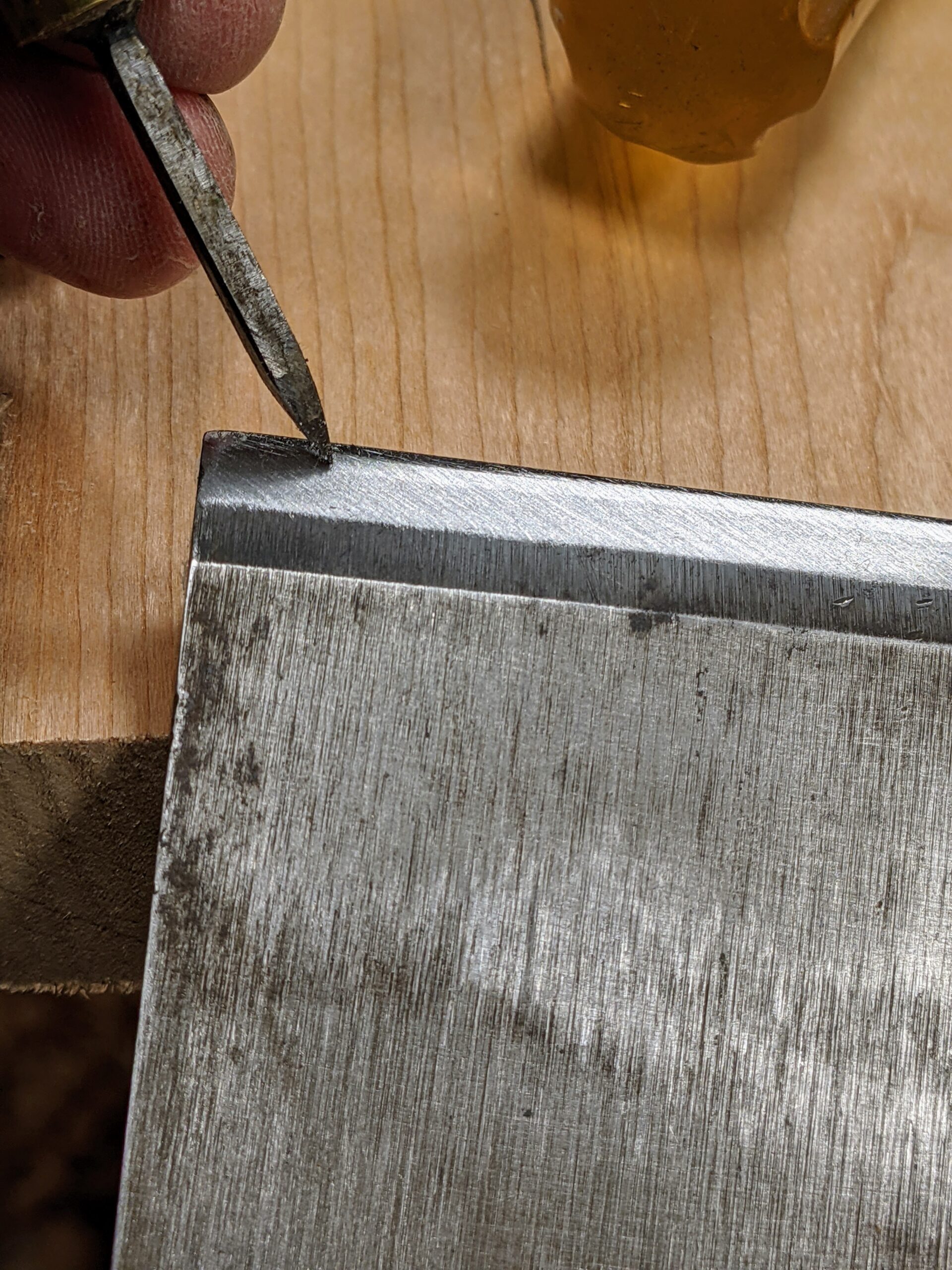
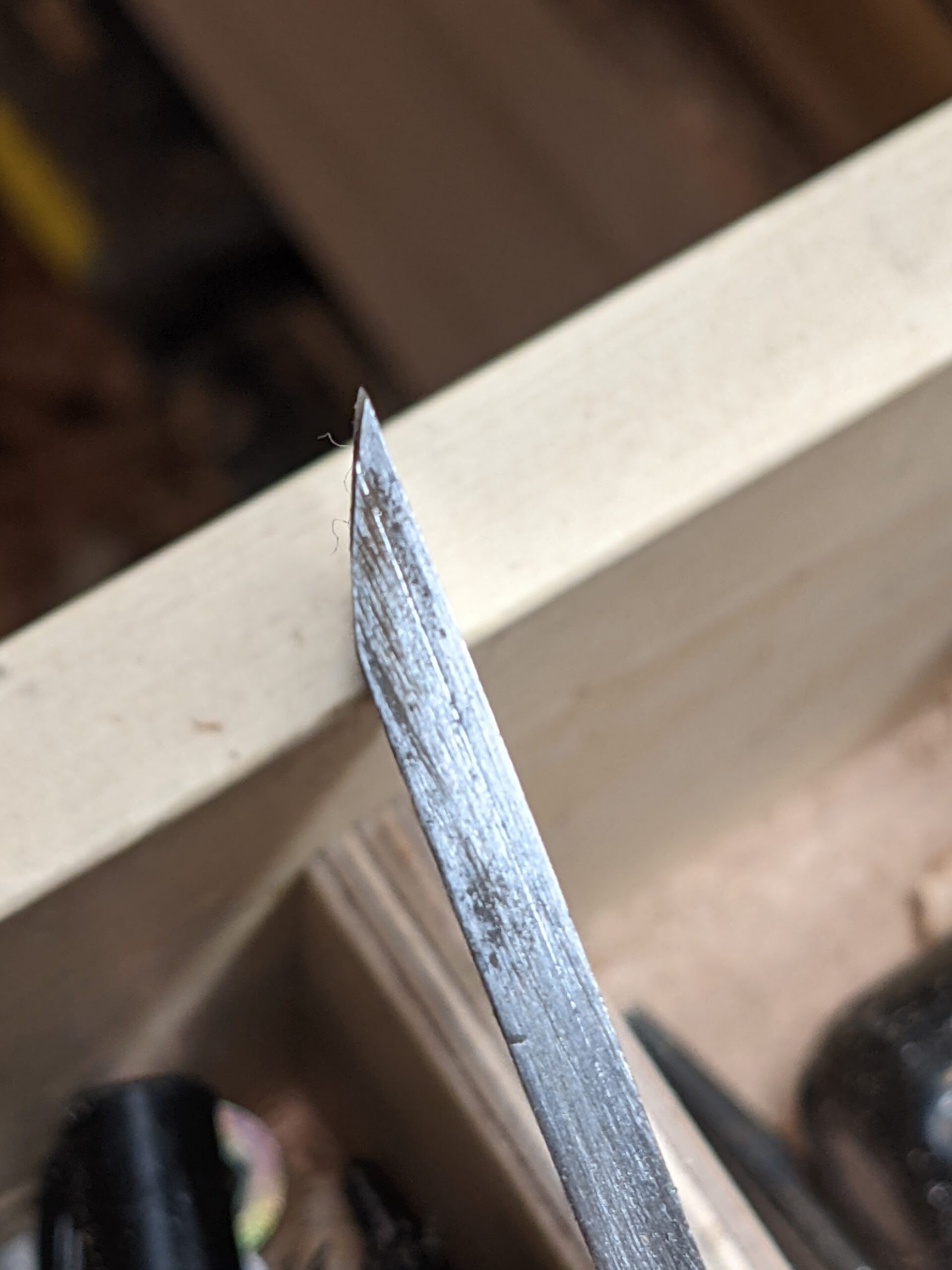
So why were the cutting irons so thick? More because the lamination of the steel using the methods available required it and mostly because the thicker, tapered cutting irons countered the forces of planing which had no mechanical device to prevent the blades from being driven back as would happen with a parallel cutting iron. These planes relied on a simple wedge to hold the cutting iron assembly. On Stanley planes and then those such as Norris planes, there was introduced a winding adjustment mechanism fitted to the cutting iron or the cap iron that once set, held the blade at a set distance depth. This advantaged makers like Stanley for a couple of reasons, one, the plane suddenly became much lighter and more compact, the refinements of a mechanism gave instant and highly controlled adjustability. Even Stanley actually laminated some of their plane irons. They are hard to get hold of I find, but they take and hold a good edge that lasts well if you can get hold of them.
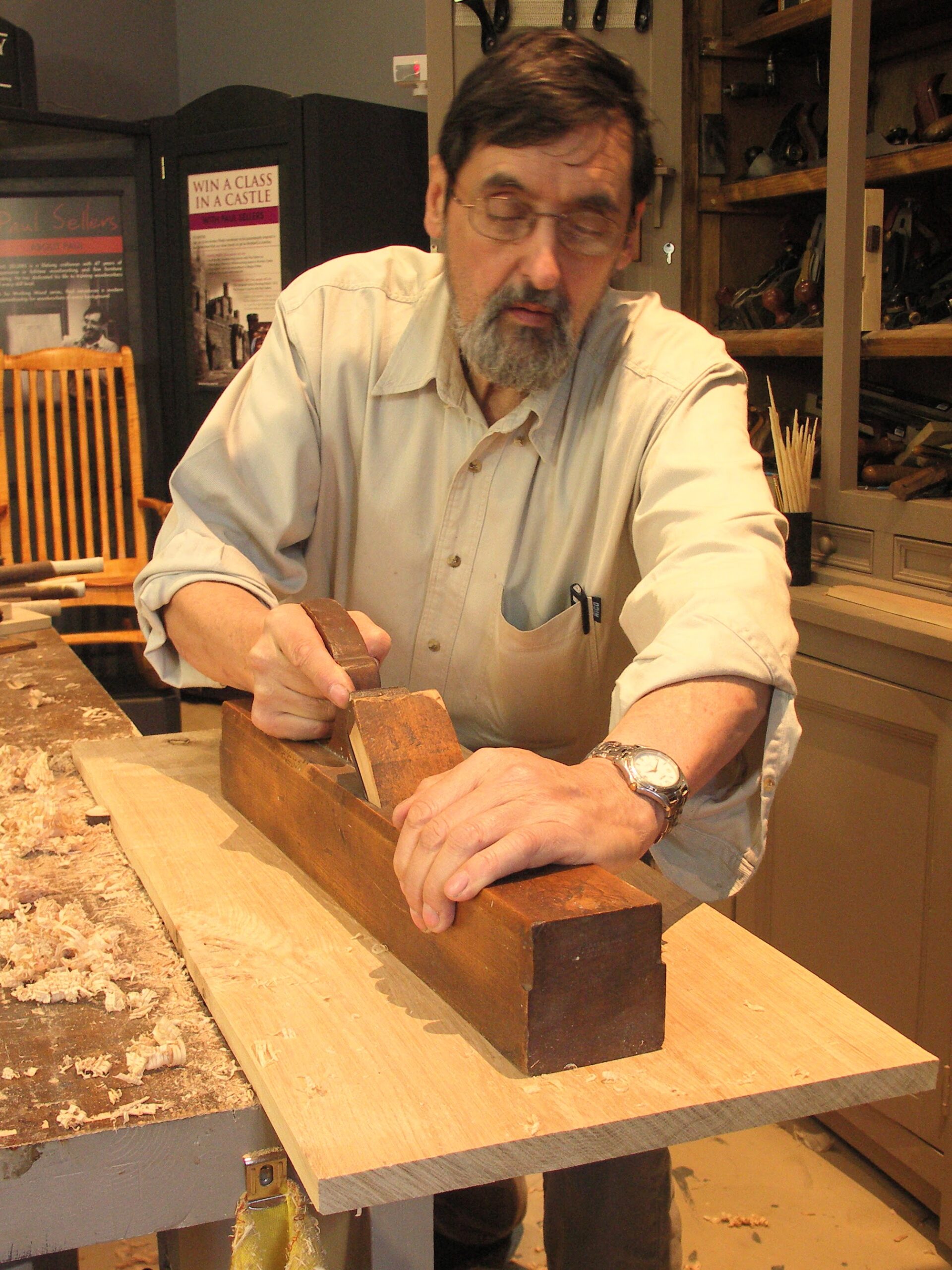
Sliding a large and blocky wooden plane into the wood brings with it the pleasant surprise that often defies describing. The cherry wood that I am currently planing is pure joy to me. Once planed, if I were to withdraw the cutting iron, I could shove the plane and it would glide across the surface for a couple of feet or more. That would not happen with a metal plane. The pleasant surprise of planing with a wooden plane is mostly about the lightness but then too the reality that you can actually plane for longer and I might suggest more accurately. The verticality of the plane is easier with an overhand grip at the fore-end and the push hand firmly enclosing the rear tote.
I am not saying that everyone should go back to the wooden planes. Not at all. I am saying that if you see one in good shape in the coming years and it costs less than say £30 or even £100 and you can afford one you should go ahead and add it to your collection to use as needed. They are nice to use and once you get used to the shape and such they will help you in dimensioning your wood greatly.
Comments ()