
Humility Makes a difference
I live and have lived in a different world than most for many decades. At what point things changed I am not altogether sure. I think, for the main part, that this is mostly because I didn't continue along the same paths as those I worked alongside when I was a young emerging craftsman, and then most of the professional woodworkers shifting from handwork to machines during major shifts in industrialism back in the 60s, 70s, and 80s. My arrival in the USA in the mid-1980s broke many biases, prejudices, and, especially, the cultural barriers that held me back. This new beginning enabled me to strike out on a hitherto unknown, unused path that unfolded rapidly. I had no other to copy or follow. It seemed a more narrow path if you like. One not too well traveled. The different path? I think mostly that I recognised for the first time that I as a woodworker skilled in hand work was somehow relieved from the pressures of competitiveness. That there was no competition between handwork and machine work because the work itself was so completely different. Then too, I was not controlled by peers, disabled through my own fears and self-doubts, trying always to be accepted, things like that. Sloughing off my past thus then empowered me to pursue my love of true handwork without being intimidated, humiliated or bullied by anything or anyone. I wondered this though, was I some kind of dinosaur destined for extinction and a denier refusing to move with the times and see the writing on the walls of 'progress'. Not all progress is progressive.
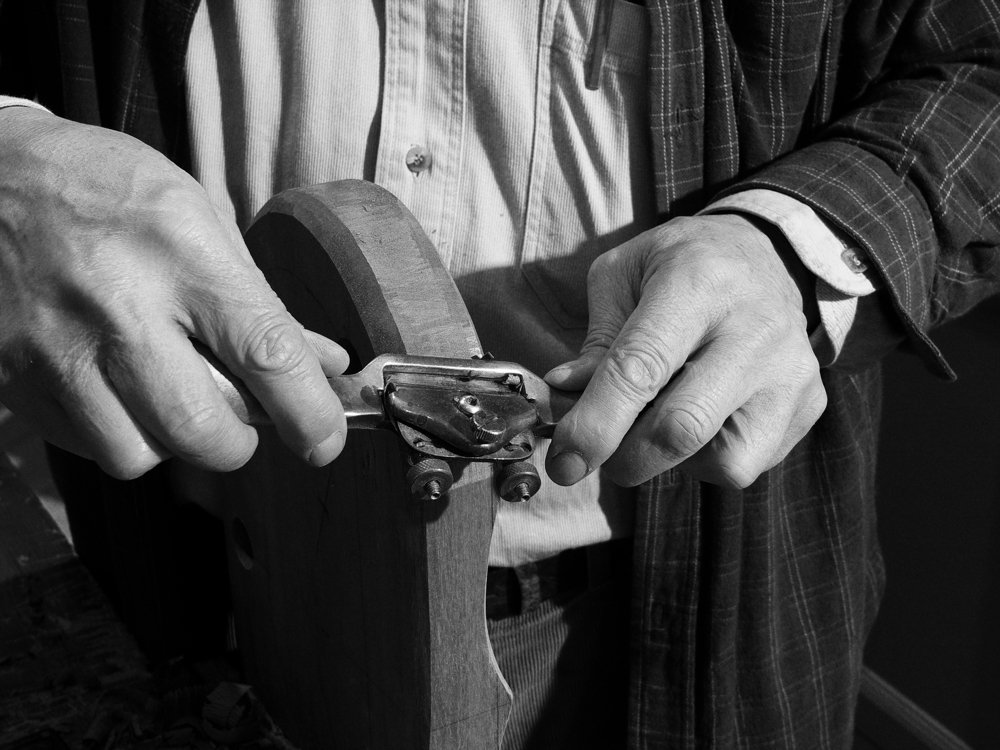
I was surviving just fine in my newfound world making things predominantly through my handwork and skill. That I had gone on to study and train myself beyond my apprenticing would not at all be evident to all, but study and train I did. Through the years, these studies equipped me to further embrace my quest to research woodworking of every kind on a continuing basis. Skills and techniques were being lost one by one and this became evident to me as some were indeed lost altogether already. Through my research, many techniques became evident and could only have been rediscovered through the dismantling of furniture pieces to see which tool did what and which technique enabled this and stopped that. One of the most evidential realities was the almost abandonment of the hand router plane throughout even the world of hand tool woodworking. It seemed, at least to me, that no one anywhere was using a hand router plane anymore and no magazines nor books for decades even mentioned them as a viable tool let alone advocate their value to woodworkers. I took the router and showed what it was really capable of doing and introduced it as a refinement tool for several joints and other aspects of woodworking etc. At a low cost of £10 on eBay ten years ago, and being passed over at garage sales and car-boot sales, it now sells for £150 and up secondhand. That's hard to believe or imagine. A technique I came up with and indeed invented is the foolproof mortising guide and the system that goes with it. The greatest struggle in my class, and any classes I taught anywhere on two continents, was not so much cutting the tenons paraplanar to the outside faces but chopping the mortise paraplanar to the outside face say of the stile or rail of a frame and such. The unique combination in my using the router plane to correct small surface discrepancies, thicknesses of tenons, such like that, and then developing the mortising guide created the perfect symbiosis in a system of M&T joinery. I knew of the various problems all woodworkers experienced regardless of experience levels as it came to light through the 6,500 students I had trained in the 1990s through 2010. This resulted in well-fitting mortise and tenons and no more twisted frames for panels and frames. It was that pre-internet and the pre-YouTube period before blogging, selfie-videoing, etc. This union between the old world and the new emerging one created the symbiosis I needed to reach the millions that soon followed. I now reach these woodworkers with an apprenticing strategy through the internet platforms I now teach on.
It's all too easy to say that my apprenticeship gave me all that I needed. It did not! Whereas it was a low springboard into deepening waters, most of my working knowledge came over the ensuing decades as I experimented to try different methods of working. By taking on the mantle of the researcher in the field, I found many hidden answers. That said, I did start to think to myself, 'Am I a working man with a message that gets lost in the mass of information, with a message that is distinctly different than that of all his peers, if indeed he has any peers anywhere at all?' For the longest period, I felt more alone in my thoughts that handwork was far more important than anyone anywhere gave credit to. I say this because there was a period there in the USA and Britain that I never met a man that worked with hand tools at all. And I say this now because from time to time and all the more I continue to feel incompatible with many things in the world as a whole and especially perhaps out of touch with what has become the world of woodworking.
To be frank, I feel that I have less, if anything, to connect me with today's so-called woodworking professionals who claim the titles of woodworker and furniture maker when they seem to me to have much less knowledge of serious woodworking than their amateur counterparts that now outnumber them a hundred to one. I find my peers are now in the realms of the amateur rather than the professional and so much less now than I had in my youth as an apprentice. Why is that? I think mostly it's the skillfulness that seems now to be missing in professional woodworking. I see clearly that something has stymied the growth of professionals and I think this ties in with actually becoming that professional by certification and qualification to work by the very machine methods that so limit them. Inevitably, the brain itself becomes programmed to work within the limitations of the rotary cut a machine can only produce. A brain that's programmed to think machine procedure rarely steps out of its comfort zone even though that brain capably functions multidimensionally.
Funny though, I am supposedly an influencer because I have over 500,000 subscribers on my YouTube channel, yet I don't feel too much deserving of this newish title. In other words, I can find no others who are actually at all like me. By that, I mean that no one else specifically makes or has made furniture by which they made their living as such, and definitely few have actually earned from their craft to support family life by working with their hands as artisans, and nor likely have they for three decades now. Now I am not saying that there aren't some out there in this great big world making by hand as such and as much as I am, just that they are not in the town where `I live and nor are they in the whole of my neighbouring city of Oxford, as far as I know. I ask again am I a man with a message distinctly different than that of his peers? I ask this because I can find no others who are anything like me. By this, I mean that my reason for doing what I do is to highlight the reality that being the kind of woodworker I am has greater validity than just making money or a living. I believe so much in what I am doing and have done that I would never change the course I have taken. So I have come to this simple reality. The preservation of hand tool woodworking will continue to grow through the efforts of the amateur woodworker who is indeed prepared to discomfort him and herself to pursue the art of woodworking through their developing skills. This is a remarkable turn of events.
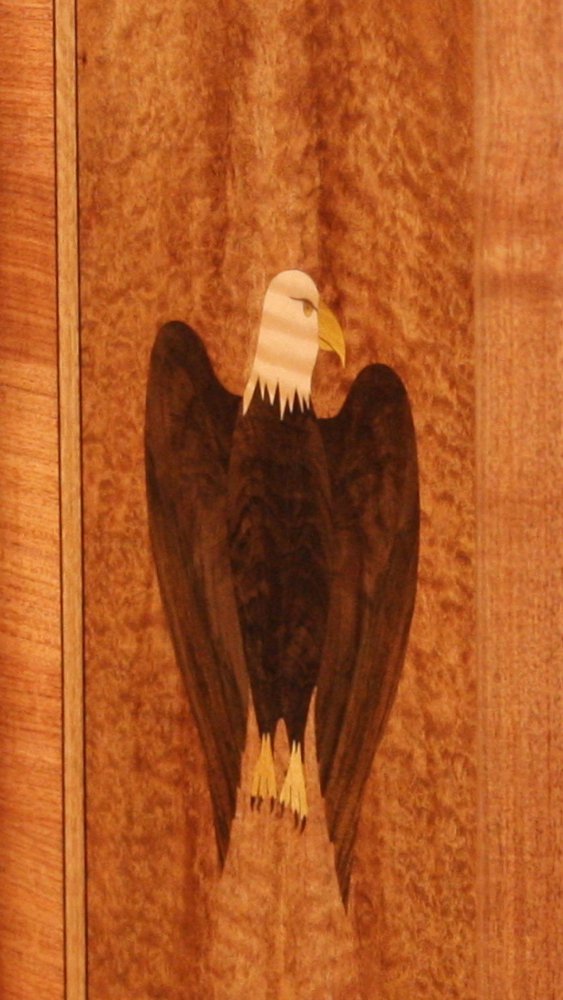
Compatible or not, it makes little difference to me. Why? Because I feel successful. Am I successful in completing a commission for two pieces in the White House, for making high-end pieces for successful leaders and wealthy customers, things like that? Not really. My greater success is still living my craft and making, despite the many hardships I had to overcome. I am successful in the face of smart alecks who say things like, "Work smart, not hard!" It should be, "Work smart and work hard!" Working hard and being diligent is equally important. Cute sayings are often meaningless phrases made by those we recognise as being 'successful' in dominating the business world. I've worked alongside people, poor people, people with no money, no status, and living in rented housing most of their lives who said, "Can I help you with that?" as I tried to lift a heavy item up to a higher point. These are the sayings that are quote-worthy: 'Can I help you with that?', 'I see you are struggling, what can `I do?' The reason I am here doing what I do is because different people along the way had that kind of true humility. They didn't say to me, 'Paul, work smarter, not harder.' And they didn't say, 'Find your passion and you'll never work a day in your life again.' These men and women saw me working diligently as a father, a woodworking furniture maker, and as an honest man and they saw that they could help, whether I needed it or not. They chipped in if you will. In most such cases we became long-term friends or friends just for a season. What these people with humility did was put their shoulders under the load and lift with me. There were no lectures about overworking, there were shoulders side by side that pushed and pulled with me in the same direction. They said kind things and encouraged my efforts. I can cite many cases where all I needed was an encouraging word from people with humility. This is the real success of the world I live in.
I read every comment that comes in because if they are important enough for people to spend time writing them down and sending them to me, then they are important enough for me to read them. Working as I do with so remarkable a team is humbling too. I have been working on something for a few weeks, about three months since I made my first prototype in several iterations. I wanted this project to be as perfect as possible and everyone filming me in the making was with me, heart and soul. Patiently, the project went well. No retakes, the effort of my hands and my energies went forth like a volley of pistol shots in quick succession. The videographers were right there over my shoulders, underneath the bench looking up as the tools pierced the wood, and then right in my face. They gave their very best shot for every scene and technique to make sure that they captured exactly what I wanted and what they wanted too. The rough wood became planed parts and the planed parts became my intention and so a new project came to pass as possibly the most important piece I have ever made. They were with my every step. But then, yesterday and the day before, we had seven or eight retakes so that I could get it right. Patiently we did the retakes and patiently they strove with me until the words came in the right order and in the right way for what needed to be said. I should point out that this is highly unusual as the words just flow out of me because the work I do becomes words according to what I do best and these words are who I am. In this particular case, things were very different. This last session needing the retakes was my hope to make everyone know the importance of what it meant to me. Possibly the most significant piece of my career and yet it is also one of the very simplest pieces I have put together to date.
Closing my week, sweeping the floor, tools going in their places, and things like that, gave me time to reflect on the meaning of work. I have read what many skilled writers have written about in their first encounter with working manually actually using their hands and their bodies. It was as if they discovered something meaningful as they expressed this so tangibly in their writing. The funny thing though is this. It seemed as though they had suddenly become the interpreters of working manually and even had the audacity to tell others, those who had worked in such a way for years, of the value of manual working. Though they seemed to really enjoy their discovery, they didn't actually give up what they did to become manual workers but remained interpreters of the concept using clever phraseology to keep a distance from manual working and no different to what they were as reporters and journalists. I knew a speaker/leader like this personally once too. He spoke often of the things I speak of with regards to being manual workers yet in the three decades I knew him I never saw or heard of him working manually anywhere. In most of the cases cited, all of them, as far as I know, it seemed that these people, successful writers of books, orators with stories to tell, were merely anecdotal. It was little more than them taking an excursion somewhere, a vacation or holiday into the world of working with their bodies. Ultimately, it was typing they wanted and, of course, the careful crafting of words in sentences and paragraphs is a powerful tool, as we all know. But living the life is more powerful than anecdotal information and better than anything I have ever known. This, for me, is the true mark of humility.
Comments ()