
Comparing What, Now?
I looked down at my latest design I just finished for Sellers' Home. It's the fourth piece this year, aside from all the other things I have been developing and working on. This one took some working through but how it ended up is exactly what I both wanted and needed.
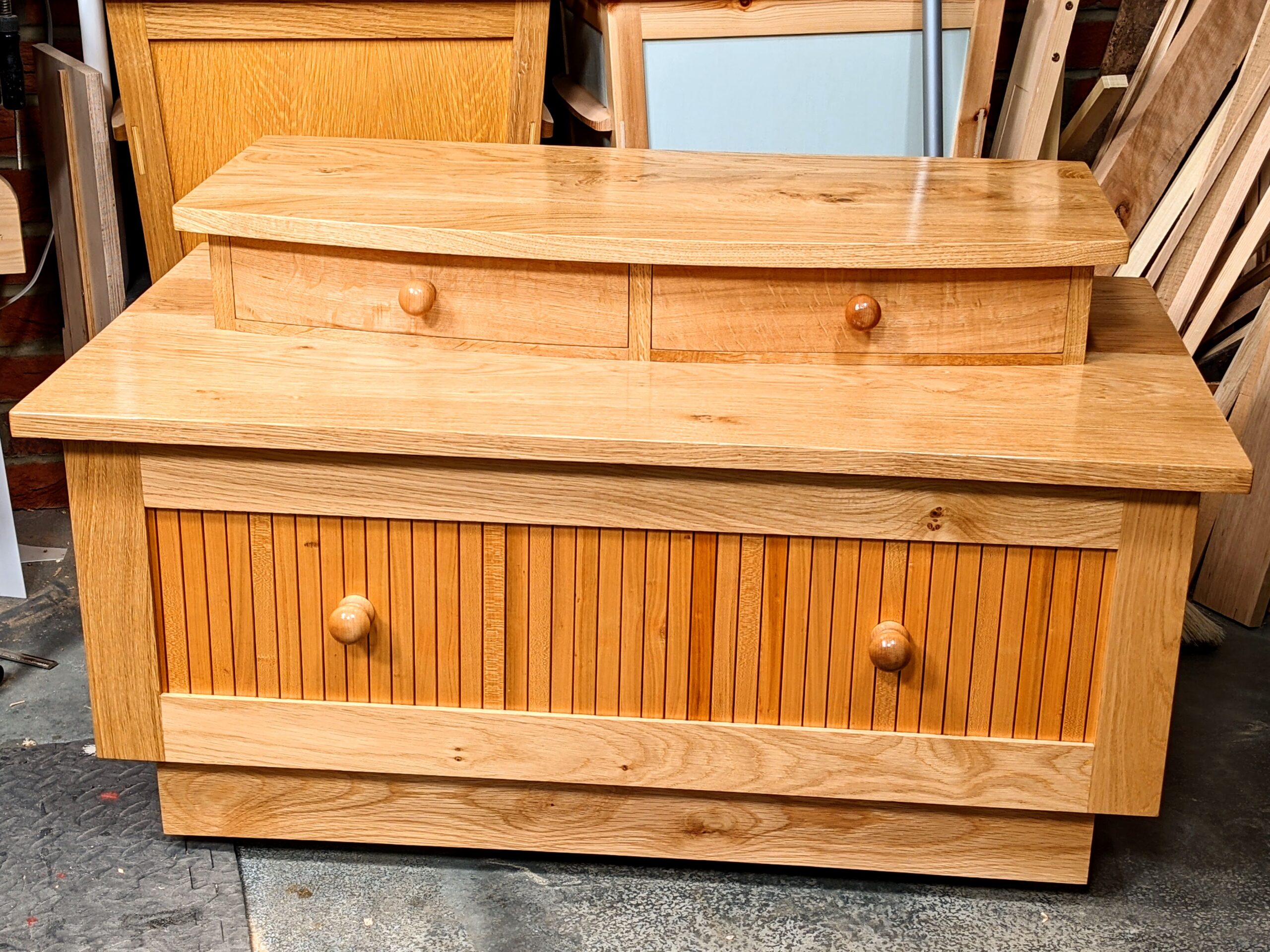
I calculate that outside of prototyping and filming, additional drawings for PDFs for followers and all of the extra bits and pieces, this TV stand has taken me 60 hours to make by hand. Now, when I say 'to make by hand' I do not mean to say I used my hands to pass every stick and stem through a tablesaw, jointer, thickness planer, power router, chopsaw, radial arm saw, mortising machine, tenoner, and others. This, for me, does not constitute nor does it mean handmade at all. Mostly, it more likely means hand-assembled. Not too unlike making your own flat-pack, without importing it from somewhere else in the global economy. So my 36 different joints comprising through-dovetails, half-lap dovetails, haunched mortise and tenons, stopped housing dadoes and so on all came from tenon saws, dovetail saws, chisels and mallet blows, marking gauges and hand router planes. The 1/4" and 3/8" grooves for tambour-type panels and drawer bottoms, etc came from vintage plough planes I bought on eBay for £10-15 aeons ago. The 200 pieces I used throughout were each individually planed from rough-sawn oak, cherry, and poplar using standard Stanley bench planes and this includes 240 bevels to the tambour pieces to emphasise the lines between each upright and give the tambour-effect I wanted. In other words, they were nor routed by a power router, ripped on a tablesaw or belt sanded or drum sanded to get to a finished size and surface treatment. They were all hand planed and scraped. This is what makes this piece handmade in the truest sense of the word and this is what makes the piece stand out against the machine-made.
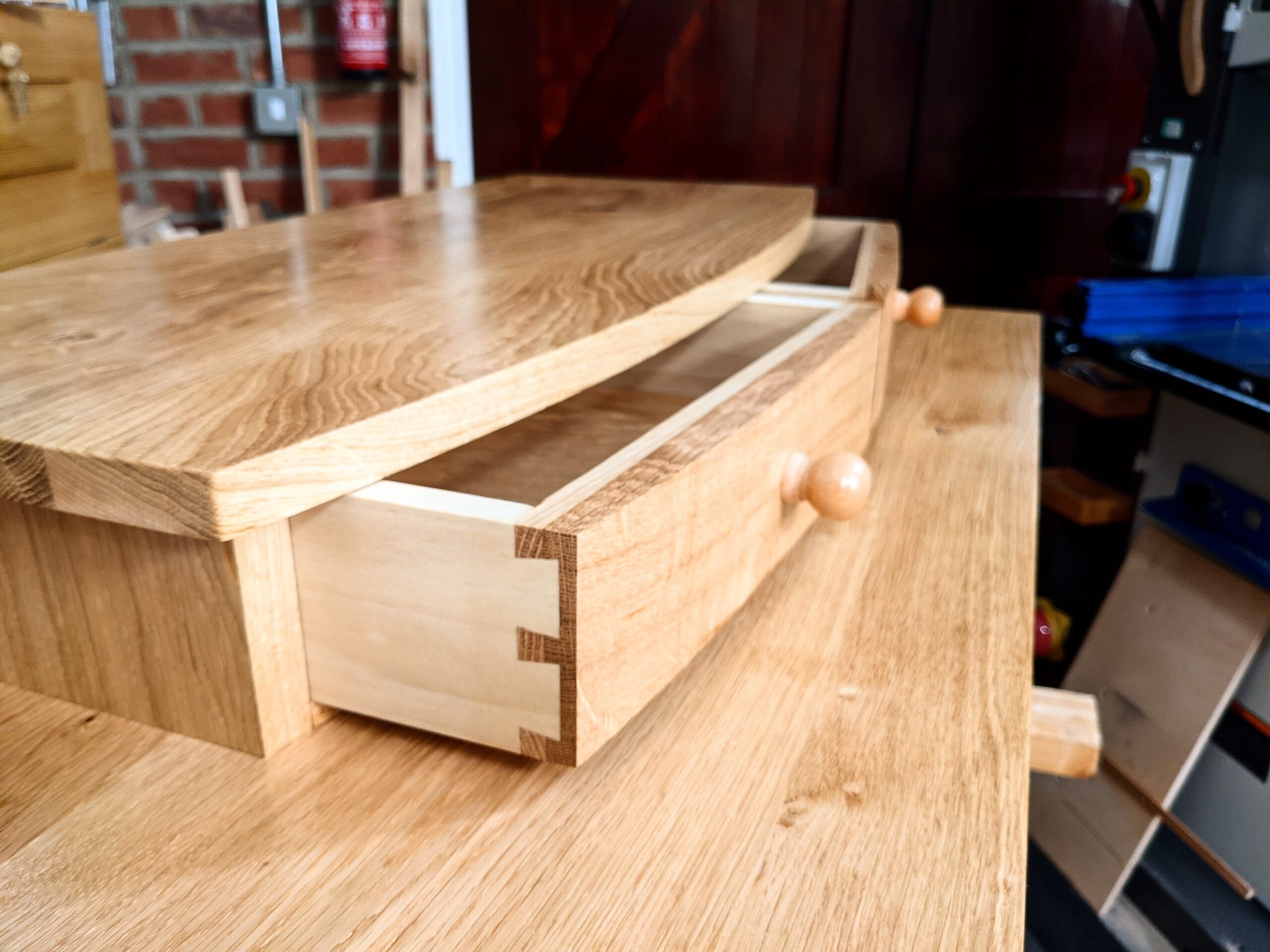
I have swept up three large bin bags of plane shavings on this project alone. If I owned the machines I spoke of above, I would not change a thing. I would not have used the machines because, after 56 of making, still want the whole immersive experience I get from using hand tools for the majority of the work. Aside from the body workout I get day in and day out it is much more than that. Yesterday, when I took the steel wool and soft wax polish to buff out the final surfaces, I felt this enormous satisfaction that my using the simplest of planes and the most modest of all chisels bought 12 years ago from Aldi for £10 for four and then other such tools too, I crafted something brand new using 98% handwork only.
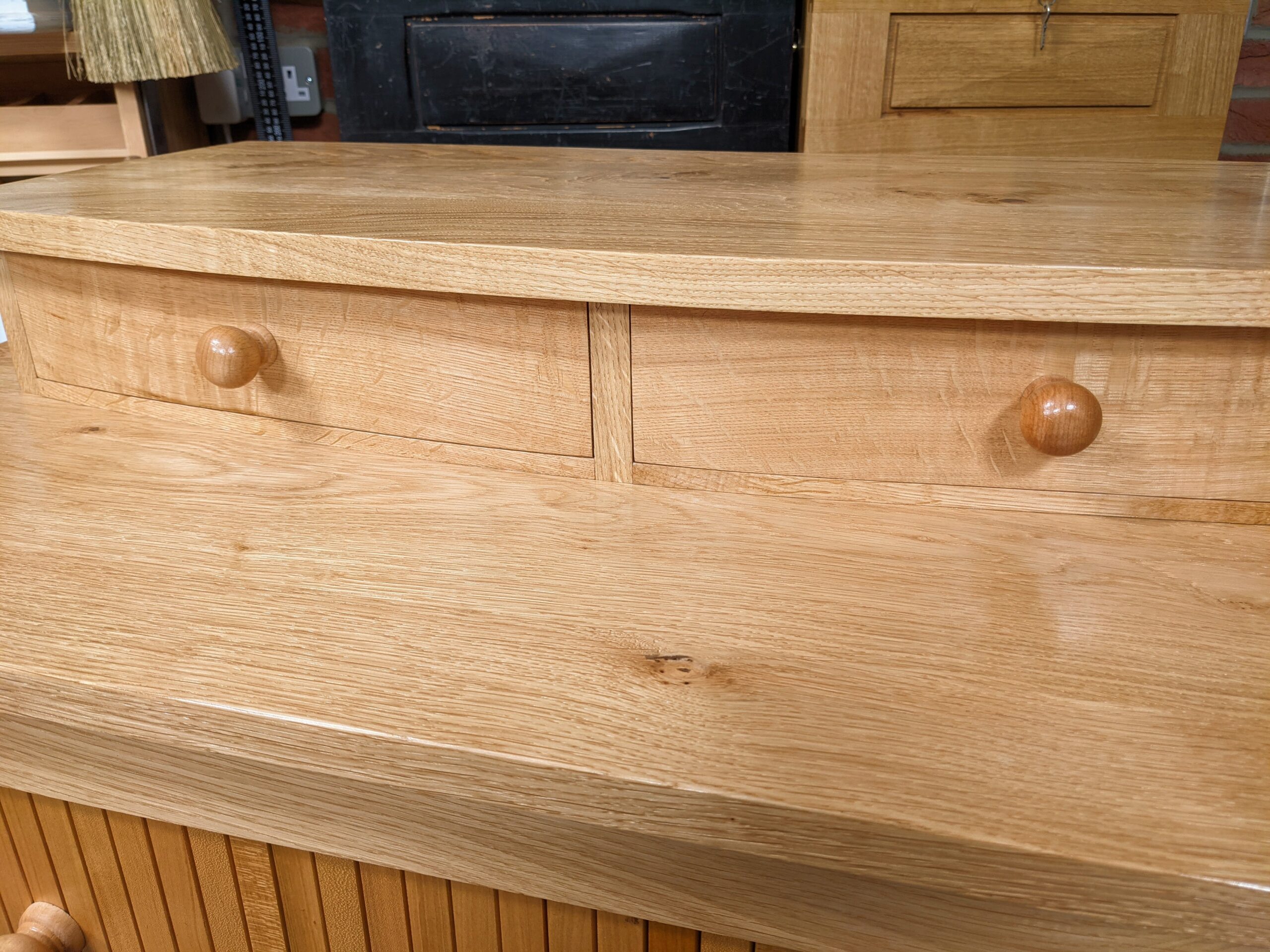
Now I am careful not to say that machinist woodworkers don't get enormous satisfaction from making the same thing with machines. I am simply saying that, unless they know handwork as I do, they will never know of what I speak. Also, they will only assume that their methods are faster and more efficient. But efficient in what? The speed of production? I think of this often when tubers using machines even speed up their videos to make the process look even faster. It's as if they can't wait for you the viewer to get through it. Unsatisfied with the reality that pushing sticks of wood into tablesaws and power routers is indeed extremely boring, they make the process look all the faster and easier by using time lapses to speed up even the process of watching. Yes, it is mesmerizing. What does mesmerizing mean? The word mesmerize comes from the last name of 18th-century German physician Franz Mesmer, who believed that all people and objects are pulled together by a strong magnetic force, later called mesmerism. Moreso: "to bring into a mesmeric state, to hypnotize!" My methods don't put people into a hypnotic state or any other such condition but they do wake people up from seeing things only one way to think new possibilities and when you look at this cabinet, knowing it was made with tools that cost a mere £200 or so, and that these tools will indeed make thousands upon thousands of such pieces, (as they have for me) you are wakened from the hypnosis of our modern YT gurus with flashing images and razmataz to think, 'Surely, I too could do this!'
So the process of making the way I do, and hundreds of thousands of men have done through the centuries of furniture making did before me, is what I actually want. The processes are important to me because they have different values that cannot be had in any other way. Trying to compare machine methods with hand methods simply does not work. Passing wood into a power-fed planer-thicknesser is no workout at all. It needs no strategising and no critical thinking. That work is all done for you. Your job is to just wait at the other side of the conveyor belt to take the wood off and take it to the next machine process. Mine is reaching for the marking gauge and then the tenon saw, the plane, and the chisel and chisel hammer. Mine is adjusting my body height, bracing my legs, pushing, pulling, adjusting flexing my kneck, my shoulders, my arms and hands and pare-cutting the cheek faces of the tenon until it fits the mortise I just chopped.
Comments ()