
How does your workshop grow
Hey Paul,
I have been slowly going through some of your older videos and posts on here, and I’ve learned a lot (as I do from all the material you post). I have noticed in older posts and videos that you would be seen to use a greater variety of tools than you do in your more recent videos. I’ve seen Veritas planes, and even some infill planes, and of course, you have a variety of amazing vintage saws and chisels.
I know some of your choices have been deliberate – showing that Aldi chisels, modern S&J saws and vanilla Stanley #4 planes can do everything we need to. You’ve also mentioned archiving some of your tools.
My question is this: would you prefer to use a greater variety of tools in your day to day work if you didn’t feel constrained to show that they are not necessary? For example, would you reach for a Veritas router over your Stanley #71? Or one of their custom planes over your Stanley #4? As you say, this is not an either/or question – you can certainly just use them interchangeably.
I wonder if we’ll someday see you use whatever you feel like using at that time rather than what you’ve constrained yourself to use because of the teaching aspect of your videos.
I’m not expressing myself well, but basically if you were to take off your teacher hat and just be a guy working in his garage, what tools would you reach for? and will we see more of that in your videos over time?
Thanks.
In reply:
Hello, Yohann, This is a valid question.
I am not sure whether everyone recalls the days when all of the tools I own surrounded me in the workshop, a sort of comfort blanket perhaps. I'm joking, but my tools do give me a measure of security, just not volumes of them. Many of these tools were indeed collectable and though tools that I collected through five decades as a woodworker, they assisted me in my research, teaching classes one on one with up to 20 students per class and then too my actual work designing, making and restorative work. A single moulding plane can replicate 12" of torus skirting board in under a minute whereas setting up a spindle moulder even when you have the cutter to match will take much longer.
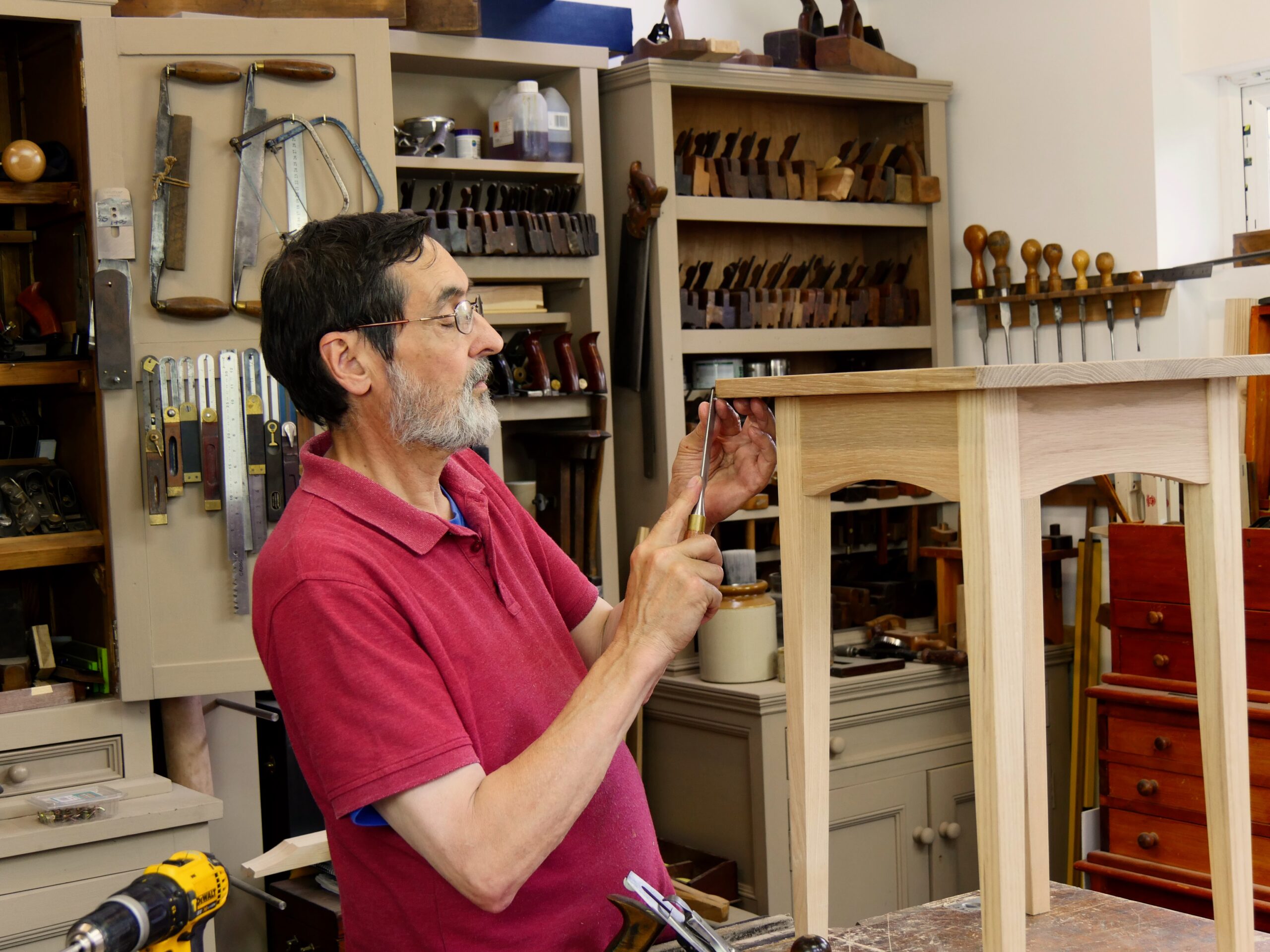
Throughout life as a full-timer, tools came my way from several sources. Retirees wanted to pass on their tools and so too their families. Who is going to walk past a plough plane in a garage sale for 50 pence or a whole tool chest in a garage sale for a few pounds? Then there are those offered by others out of kindness, knowing that you are a user and not an opportunist buying and selling on eBay. Wait long enough and you will have all of the tools you ever need for almost nothing, and especially is this so in England, living but 50 miles from the heart of where they were made in Sheffield for over three centuries. I have kept most of my accumulations of tools for many good reasons not the least of which is the reality that there is no shortage of them and I can give them away to those who might benefit most. I also have students on a more personal level who come in for extended periods or for apprenticing. One day, I am sure, they will be too much for those that follow to keep and they will go to auction or some such thing, but that is not likely as long as I am doing the work I do.
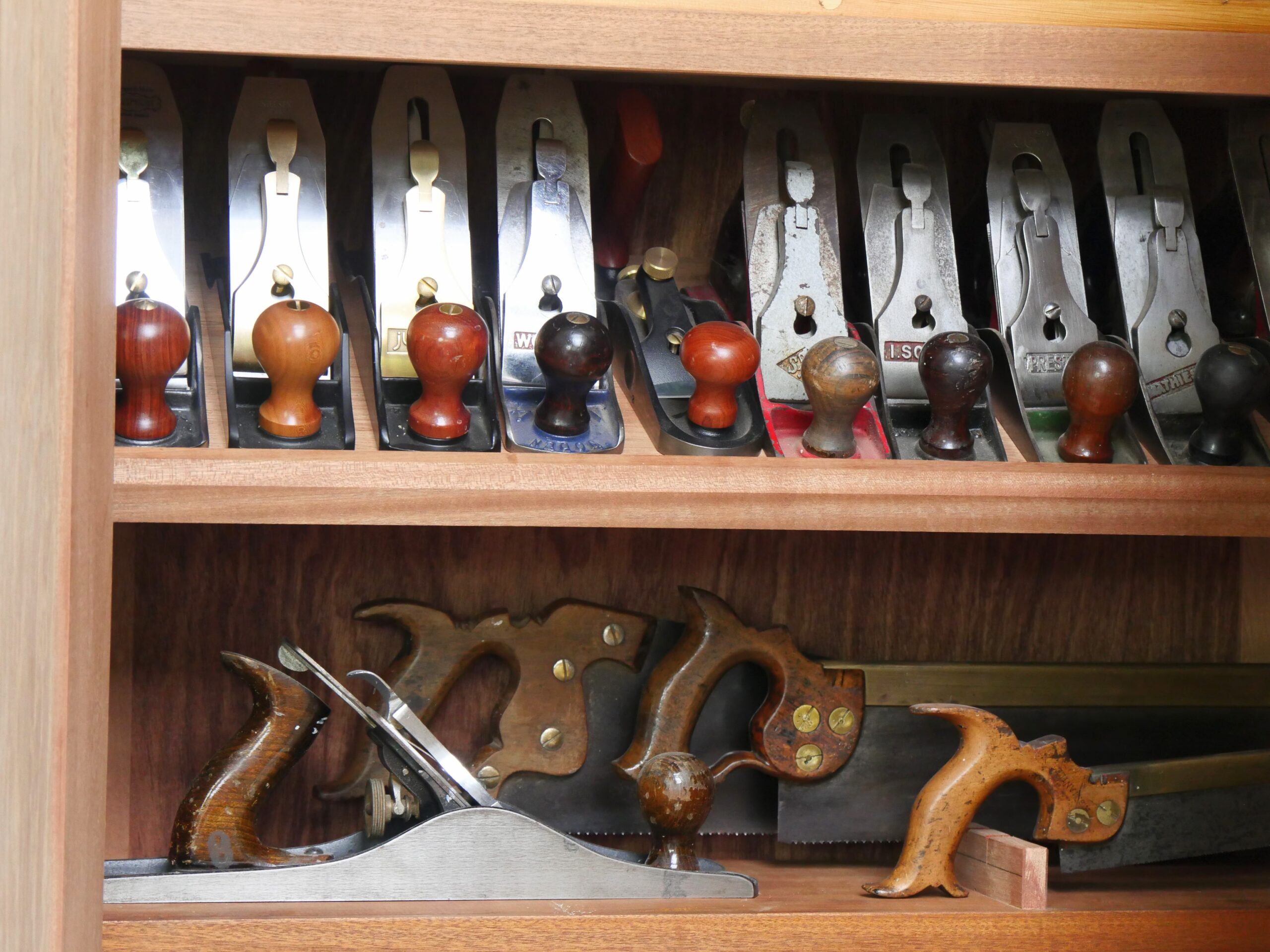
In answer to your question, I doubt that I would change very much if anything at all. If someone offered me a Lie Nielsen, Veritas, Quang Sheng, Luban, Wood River, Jumma or any other of the modern-day knock-offs of the Leonard Bailey-style Bed Rock bench plane designs, I would store it with the ones I already own and have bought for trialling and testing. My Stanley and Record versions are generally superior for a couple of exceptionally valid reasons. These, my personal planes, have been trialled now for 56 years in the day to day of life through 8-10 hour periods every single day, six days a week, and from the list of modern-day knock-offs above, I always reach for one of these two now vintage planes I bought new in the mid-1960s.
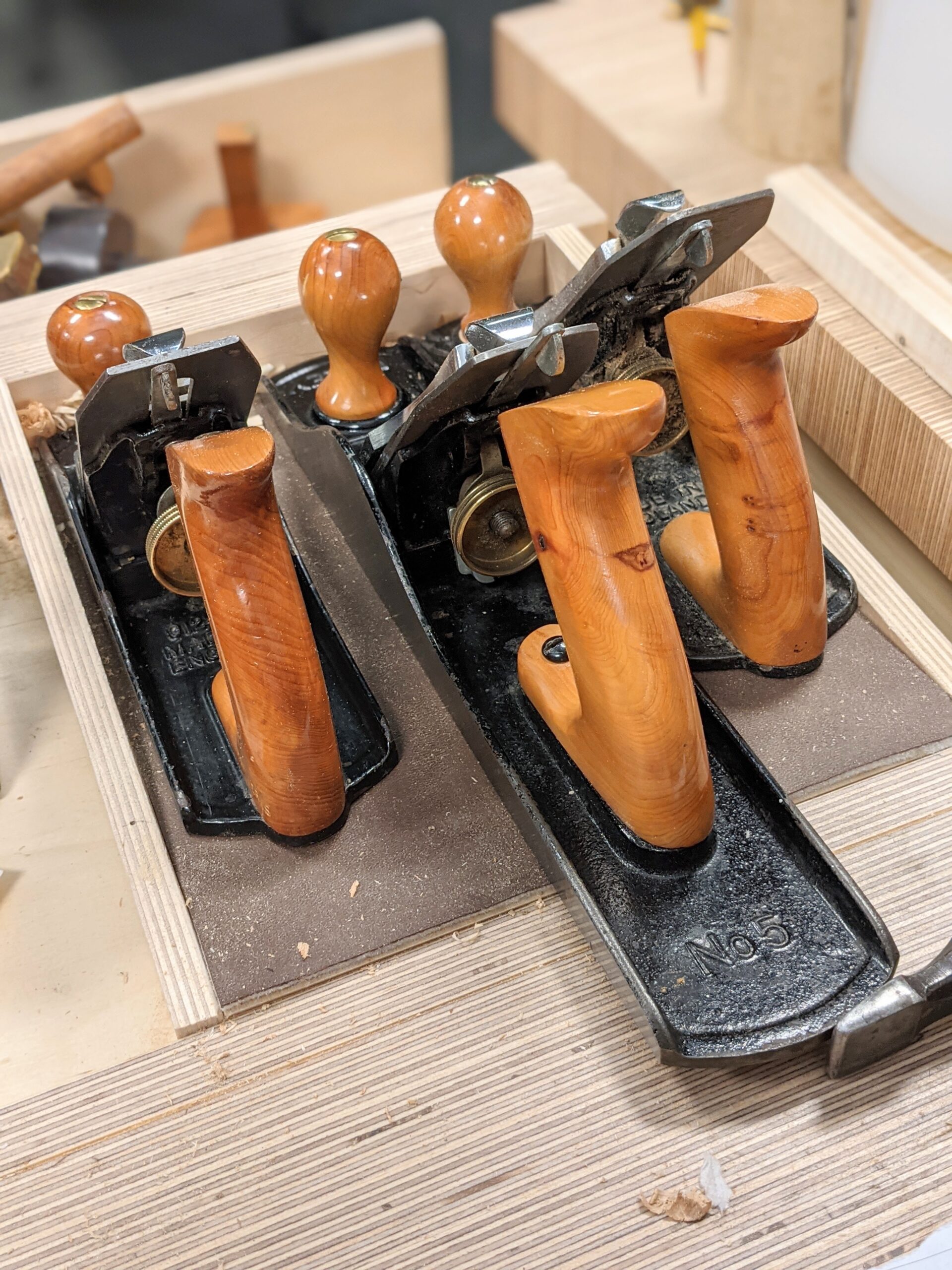
Why do I mention the length of time and days and hours? As it is with many things, picking a tool up at a woodworking show and testing it out at a woodworking show with all things pristinely set and tuned before the show and throughout the day is not the same as in daily use at the bench. Using different tools side by side as I do over extended periods now spanning years, we discover the subtle nuances that set one thing above any other. It is not just a mere preference but an earned acceptability that one tool has above any other. More directly, I would not change my current selection of benchtop bench planes, all Stanley models, for any of the modern maker brands because they do no more and much less.
So there you have it. Heavier bodies and thicker irons, refined tolerances add little if anything to the qualities of how they work but some people just like heavy rigidity and hate tolerance and flex. I once read of how the Vikings mastered boat building in boats that 'flexed' along the hull so that they could 'bend' with the tighter bends in rivers and in sea and river currents. The rigid counterparts made by other nations got stuck on a course and failed to negotiate. I feel the same way about overly rigid bench planes that offer zero flex. My Arabian geldings can twist and turn on a penny and negotiate every type of grain and awkward situation while still dealing with straight grain and developing a true and straight line as needed.
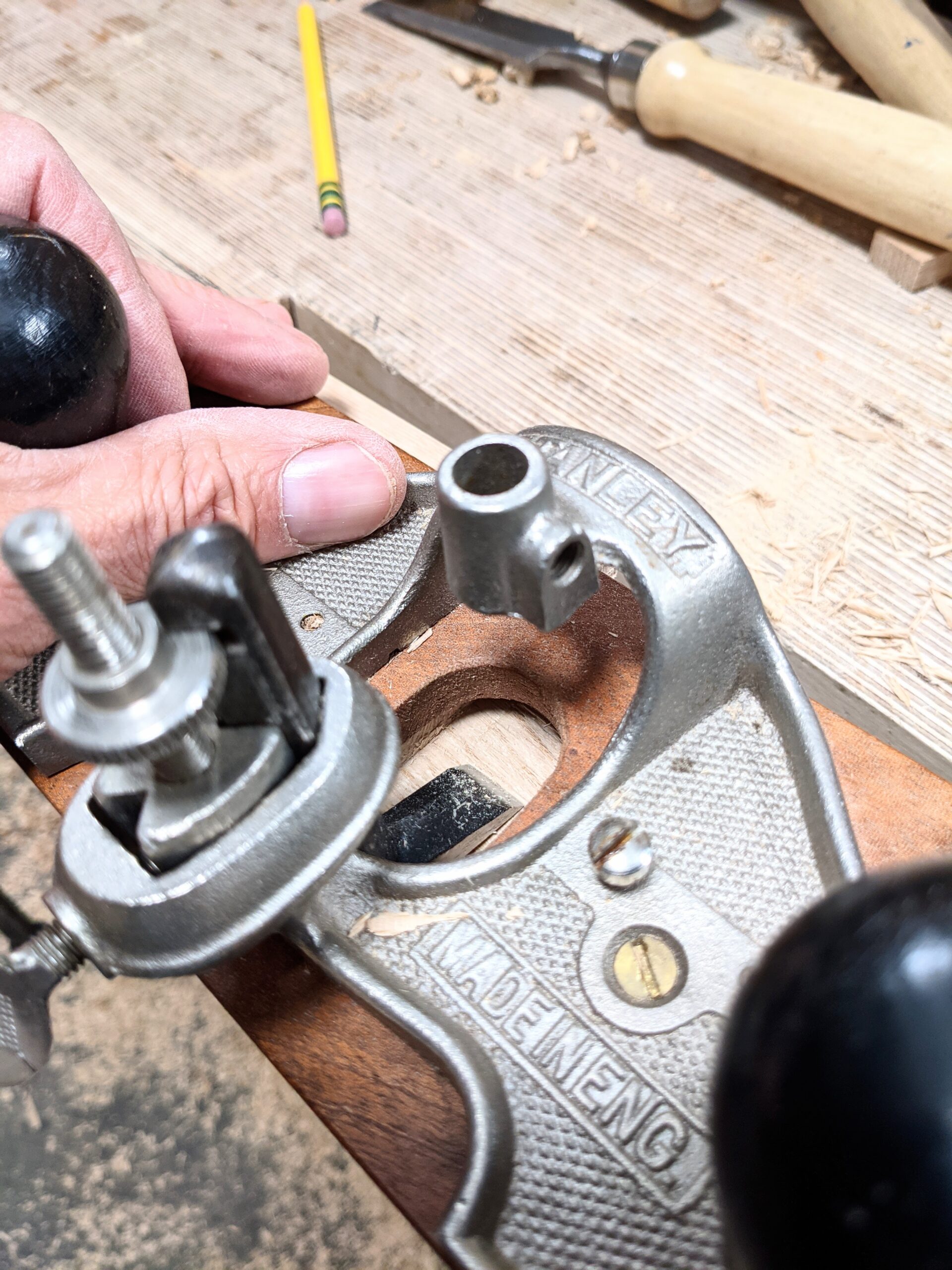
Notice the range of planes behind me in the top photo. I have some different types, a couple of Stanley router planes and the Preston types too of which I still own three. Which one do I reach for most? Here again, I own a few so-called premium ones too, the ones that don't hang there. These are all good planes but the one I rely on most is the Stanley 71. It's all I really need but the others are just friends. Why so many? I can set one to final depth and use that as the marking gauge too, and then I can use one of the others for altering the depth of cut as I go deeper. That way I can keep the one router plane set for skimming off the last surface to establish that finalised depth. It's a luxury I feel no guilt about. There are enough on eBay every day to know that there are plenty to go around. When I started sharing my knowledge on the router plane they were selling in boxes for £10. Now that people following my work see their full scope and efficiency, they sell for upwards of £130. Do I feel bad about the high price? Not really, because they are so worth that price. That said, I have done something about the dilemma for those struggling to buy a good router plane. I have designed a router plane that functions every bit as well if not better and the adjustment stays dead on. A fractional turn forward or back is instant and the setting never moves through vibration. How about that? Cost? Well, you will make your own fully adjustable router plane for under £10. Make three and you will have what I described above, for under £30 and they will be heirloom quality. They're built to last a lifetime.
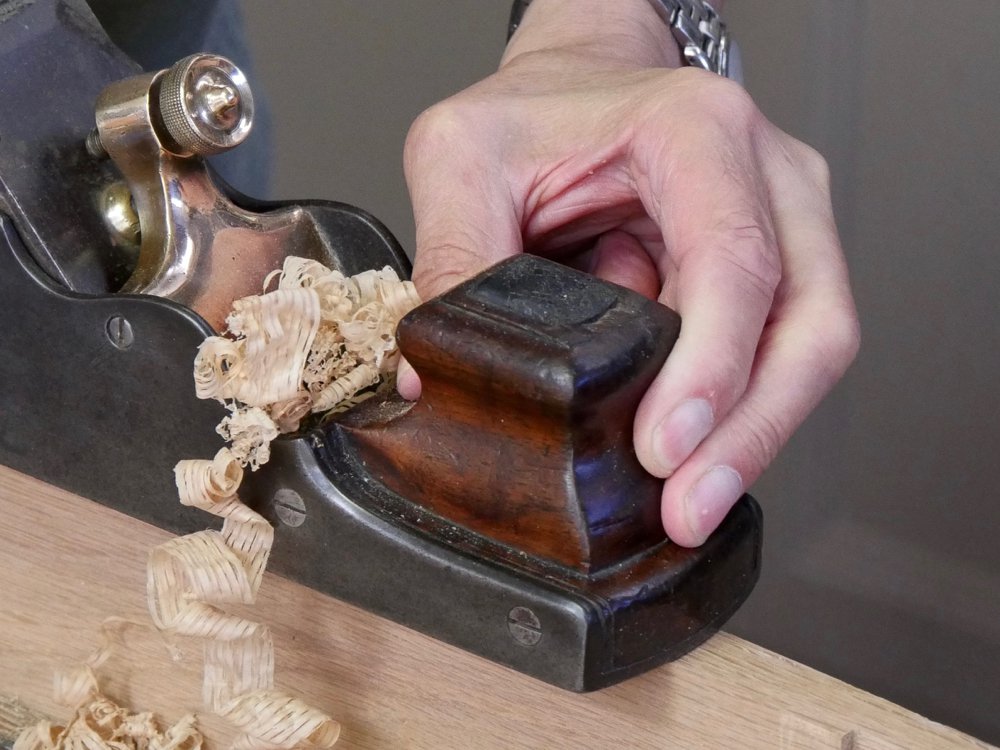
In one sense, I generally plumb for my three or four very ordinary bench planes because they are effective, lightweight, strong, durable and efficient. I do like a couple of low-angle bevel-up planes too, but not because they do more than these I just mentioned. Any will do, but my absolute favourite is the Veritas small smoothing plane. It's the most balanced, well adjusted new-style plane I have ever used for a bevel-up blade. Its compact size makes it an effective plane that works in tandem with my bench planes. It is excellent for those of smaller stature but not too small for the largish too. In another sense, I do tend to work economically. I converted #78 to a heavy scrub plane followed by a #4 converted to a lighter scrub plane and these often preface my use of the regular #4, #5 and #5 1/2 planes. This is not minimalism but many claiming minimal are not actually makers like myself and never were. In my maker life, time is essential to being minimally profitable. Now don't get me wrong, I can still easily do just about all of my surface planing work with a single #4 plane.
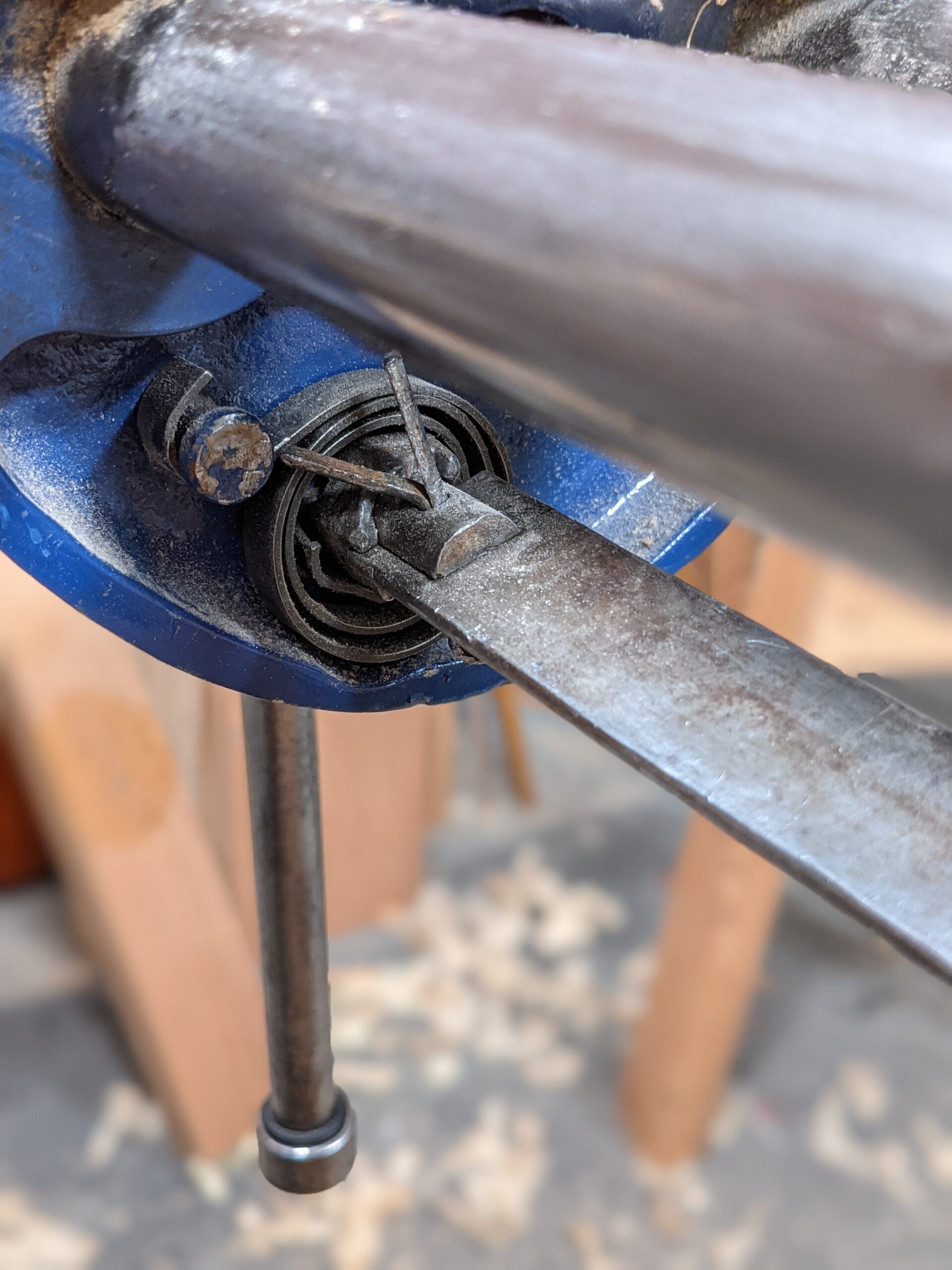
You may or may not have noticed the plethora of various tool types dotted around in the background or in the well of my workbench: marking gauges and spokeshaves other, less common and less obvious planes, a gathering of gouges and other chisels in sizes we use more scarcely but need from time to time, my 1/16" and 1/8" chisels, for instance. In my bench drawer, I have dozens of tools you see only once or twice in a video including mechanic's tools like a socket set or adjustable wrench. We accumulate these for various reasons. I just dismantled my replacement vise because something was binding and causing me issues. I found the problem, fixed it with the wrenches and wished that I had done it three weeks before.
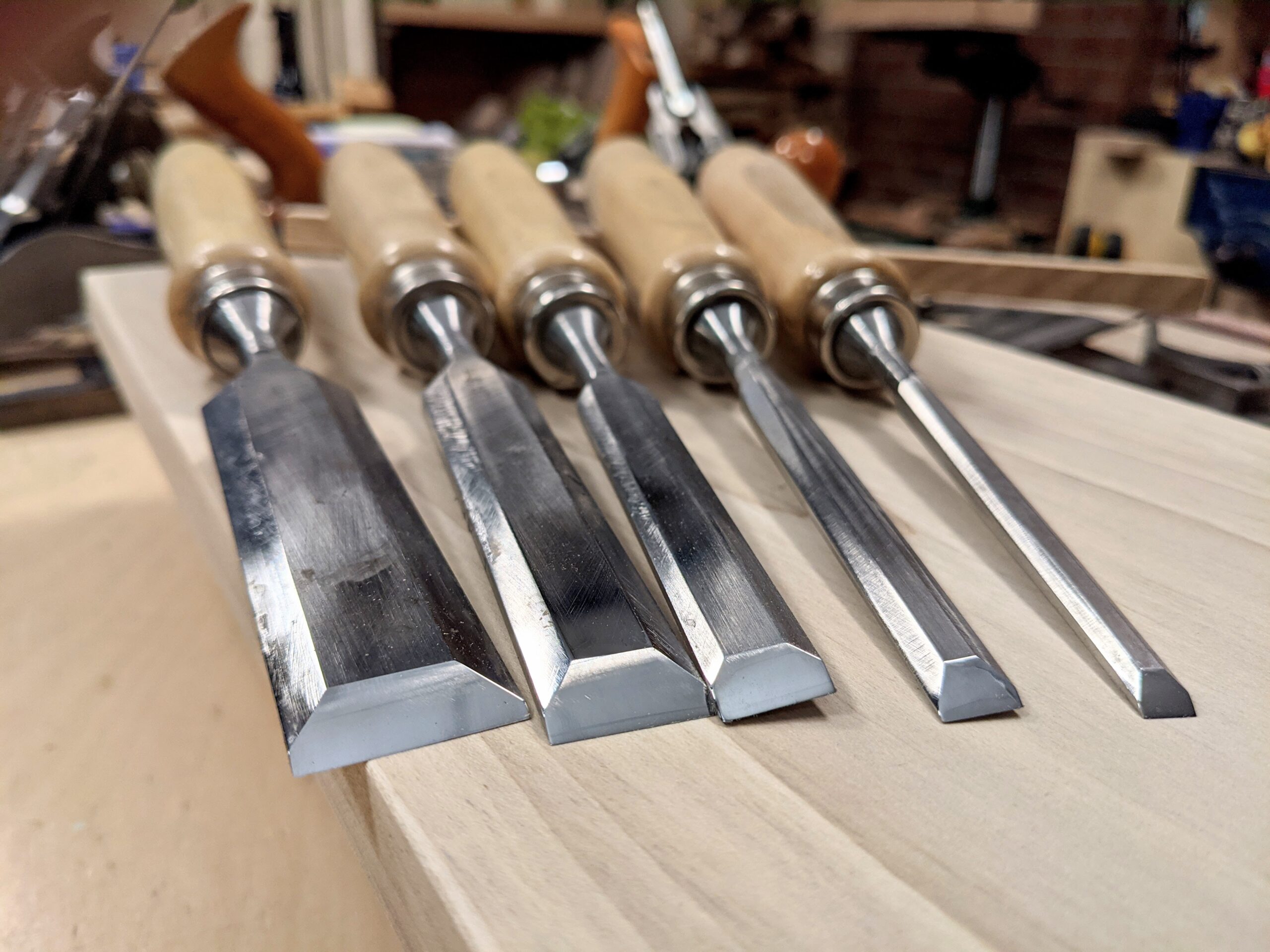
Combination gauges are amongst my favourite gauge types, two for the price of one, they can be had for around £10 secondhand on eBay -- boxwood ones at that. eBay has generally become my best resource for buying all tools and especially secondhand ones. Here, I can work with individual sellers and then too businesses, all on a global scale. My Aldi chisels still suit me so well that I never went back to my more traditional styles even though they might at first seem slimmer, more refined and better made. These chisels, the Aldi versions, have been well proven for over a decade. I improved their quality by simply finessing the handles and the steel surfaces and so they are just as perfect as can be, they take and hold a good edge forever and they are the only long-term use versions that have never snapped or bent on me in a decade of use. Try pulling the handles off the tang and you will have a fight on your hands. This is no small thing when considering how much I use chisels in my day to day of woodworking compared to other users. That alone is a testimony above all others, I think. Whereas they were sold under the Aldi supermarket brand name, the makers are the German firm MHG. Dieter Schmid's Fine Tools sells them very reasonably at between €10-15 per chisel or a set of six for under €70. Look for their 'regular' bevel-edged chisels and don't fall for the butt chisels.
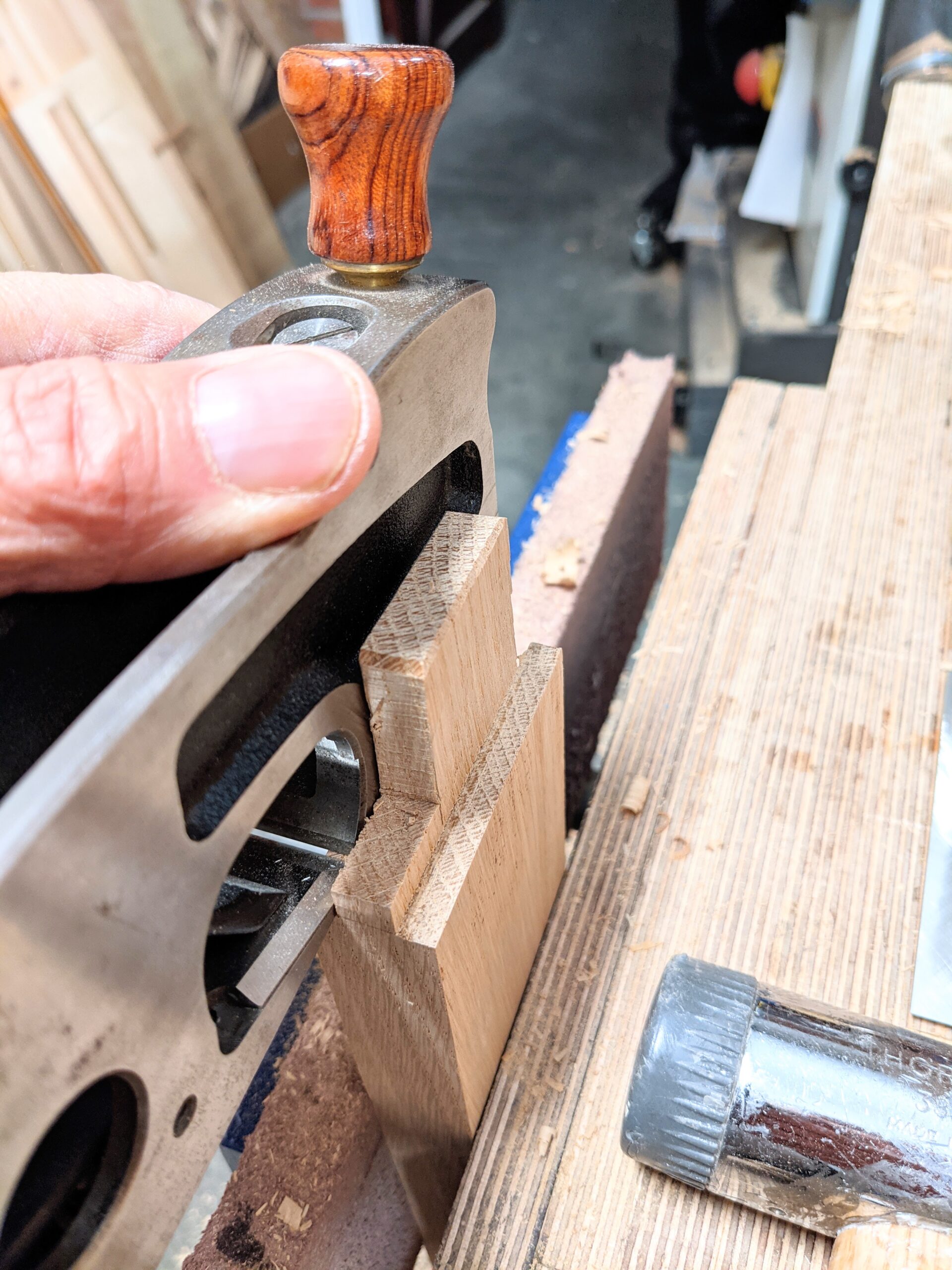
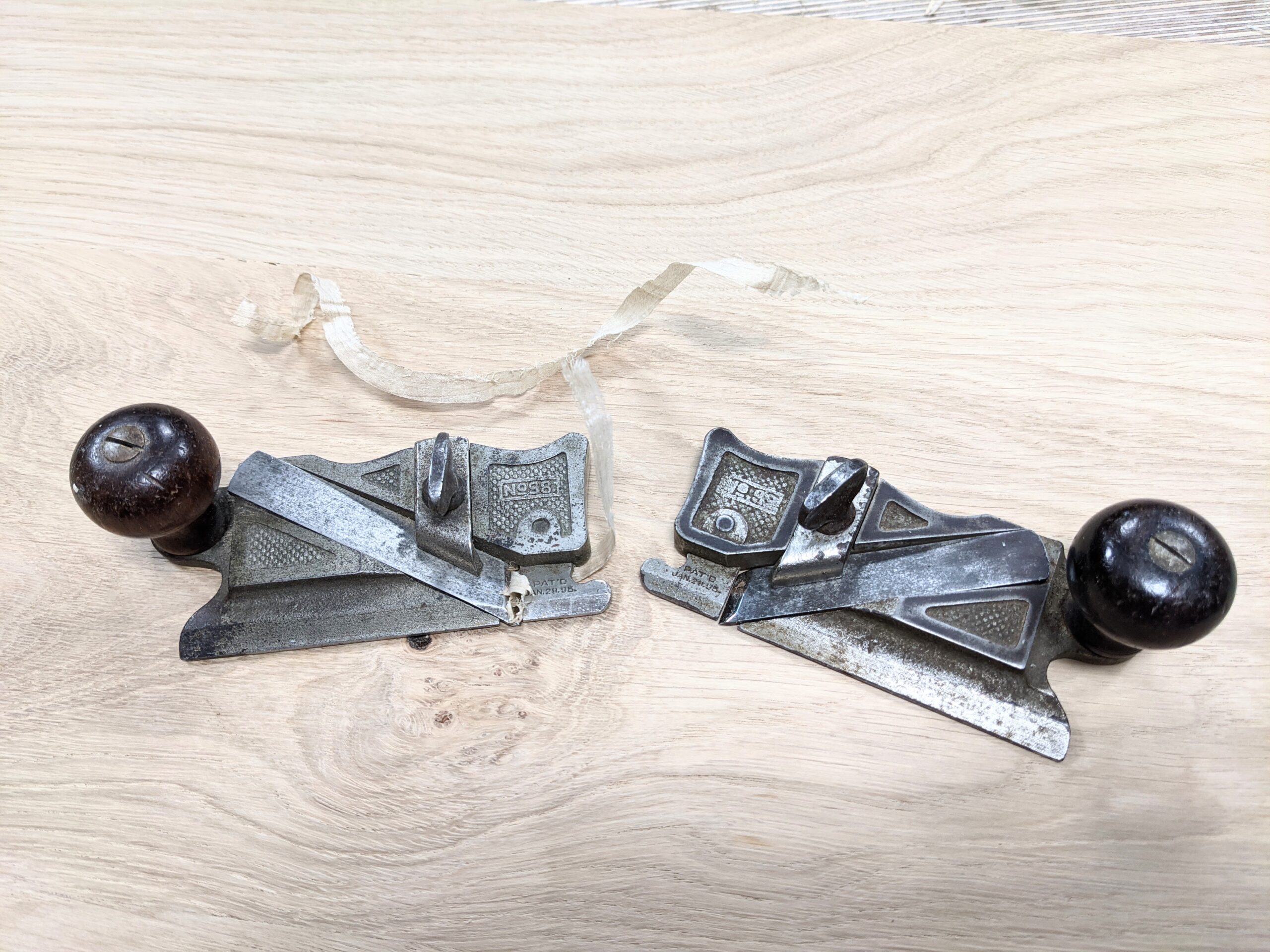
Other tools around and surrounding me are generally basic tools yet becoming more scarce. I frequently use side rebate planes by Stanley. These will get rarer as the years go by but I do find them ever useful for aspects of my work such as sizing grooves to precision when housing plywood into grooves because plywood is rarely a dead size of say half an inch but nearer 7/16" but even then slightly less or more. The side rebate plane is a unique plane designed to trim off a few shavings to the walls of rebates and grooves too.
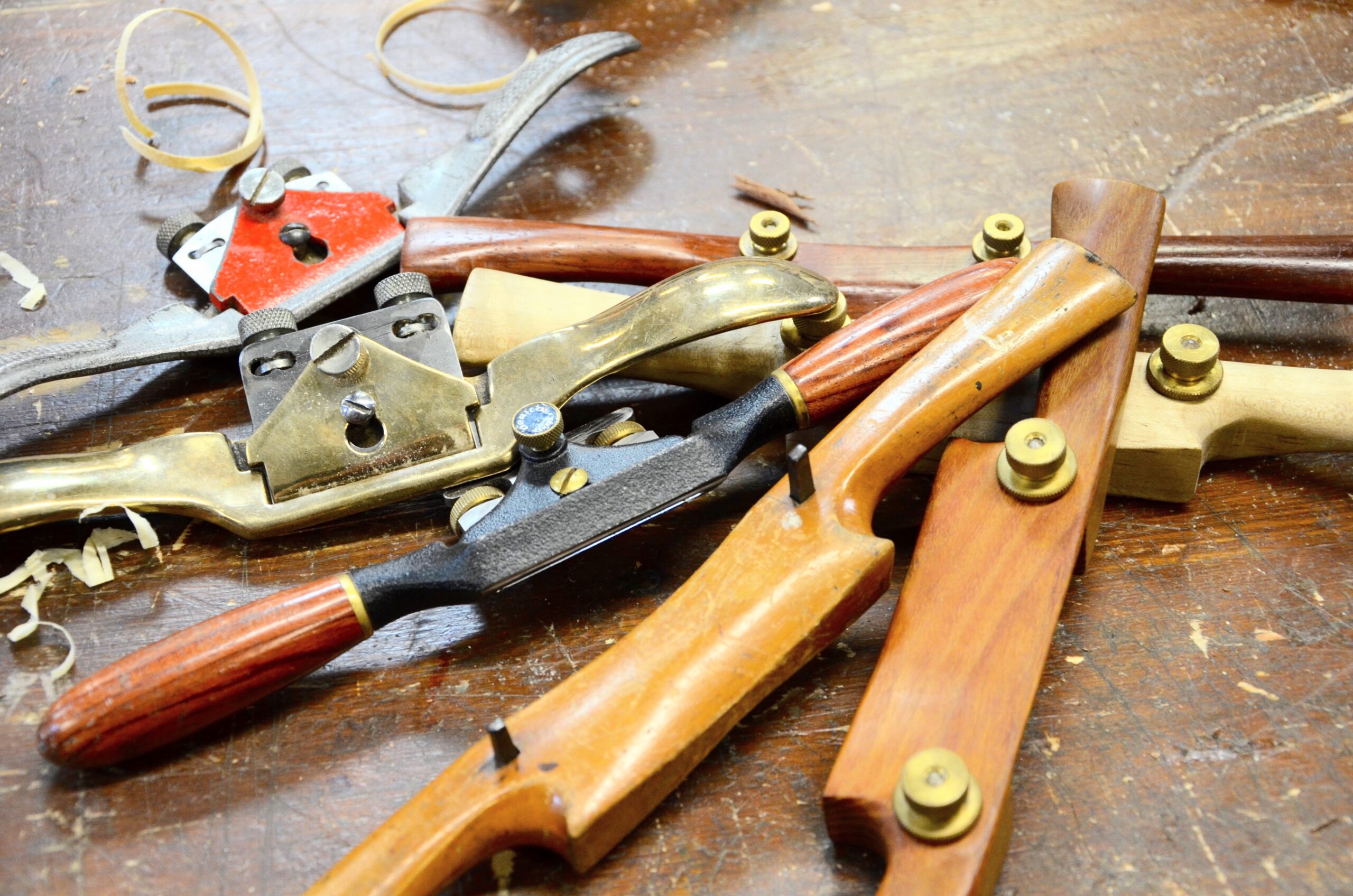
My spokeshaves are both very standard #151 style spokeshaves alongside vintage wooden ones and then those I have made. I have made a dozen or more different bevel-up spokeshaves where the blade is also the sole of the plane -- a spokeshave is a plane but with side handles! Again, as with many tools, rarely is it a one-tool-fits-all tool. Bevel-up and bevel-down spokeshaves both have their place and I have several spokeshaves as a matter of preference rather than necessity. One of each would do for most people and even just a #151 we'll do 95% of any work type requiring a spokeshave.
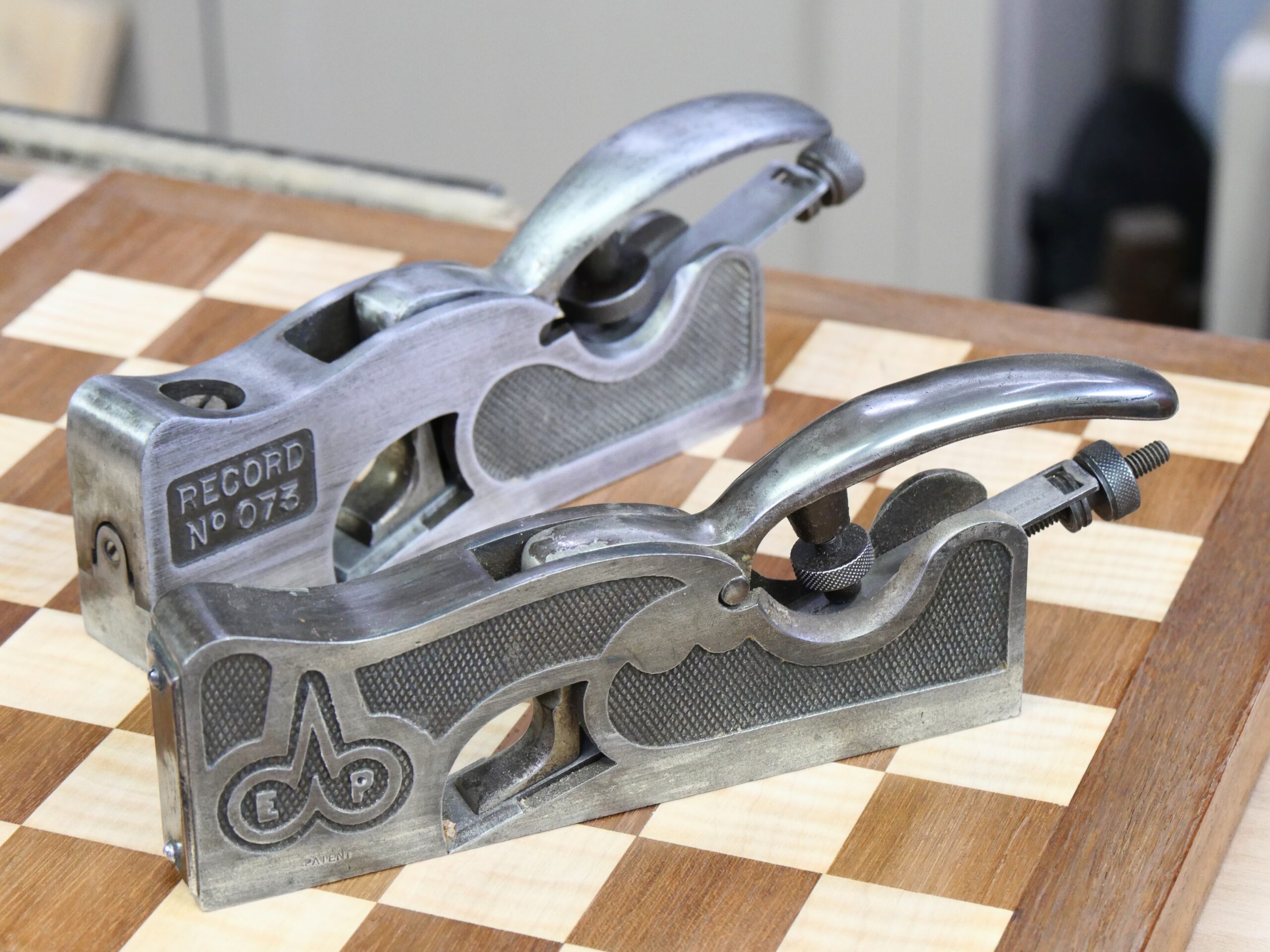
I have a shoulder plane that I like for the faces of tenons and then too the shoulders from time to time. Using the knifewall actually eliminated the need for shoulder planes. Transforming the term from marking knife to knifewall knife changed the game really. Once people adopted the knifewall line as an actual wall of severed and parted fibres along a distinct wall pristinely cut. This meant that a chisel cut would sever the walls to the exactness established by squared knifewall lines. Hence, the shoulder plane was rendered pretty much obsolete. That said, should a shoulder line be a fraction too long, a thou' say, the shoulder plane will take that thou' off in a single parallel swipe. More swipes will take off more according to need. On the face of tenons too, my system using the router plane for surface refinement of tenons using the outer faces of the wood as a registration face for the surfacing of tenon cheeks has rendered the shoulder plane obsolete once more. Why this was never done before I don't know. Maybe somewhere in the annals of history, it could have been, but I never heard nor saw of it in all of my extensive research and certainly, it was never recorded until I made it popular. I was glad to be the originator that made it so relevant to our day and age.
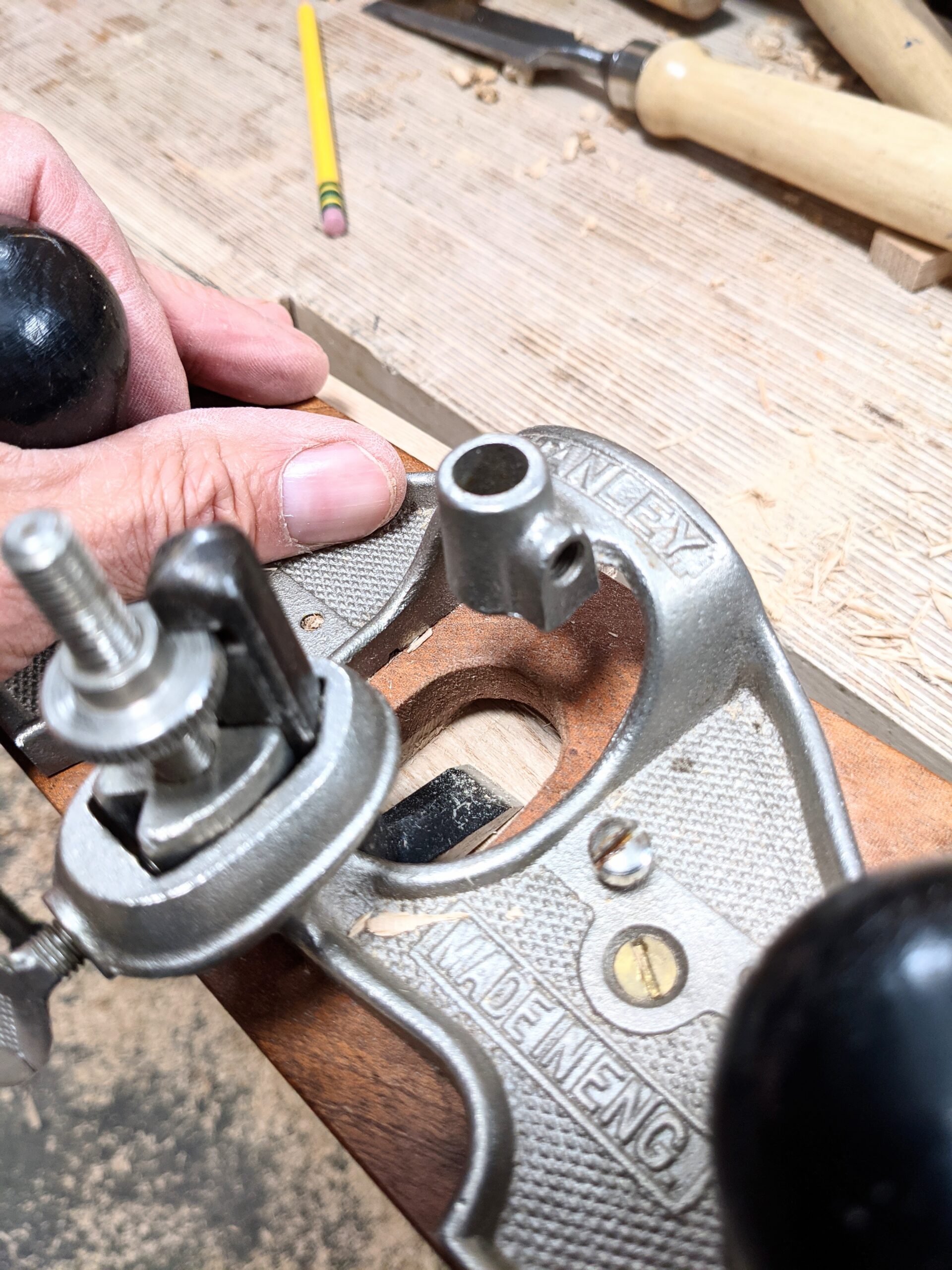
Conclusion: The evolution of my workspace began as a burden for others to see exactly what it truly takes to work wood using real woodworking methods which in my view is in handwork predominantly. This is the development of skilled working to develop dexterity, skillfulness, strength and resilience of mind and body. Machine work will never give you any one of these, simply because machines were developed to replace them, substitute for them and remove the human input in industry to a minimum. One is soulless, the other soulful. It's that simple. My workspace has been developed over a number of decades and never more than the last and most recent decade. Making hundreds of pieces ranging in size from miniature handles to king-size beds has been quite comfortable for me both physically and mentally in the 2.5-metre by 5-metre space. In many ways, less is more. It makes woodworking doable for all and is not in any way exclusive but totally inclusive. I could not assemble a full king-size bed inside the garage from which I work, but I can build just about anything I need with regards to furniture and joinery ready for final assembly elsewhere which is what we do with many large projects anyway. As far as I can see there is nothing I would change.
Comments ()