
Accuracy and Tolerance
In discussing accuracy, I can't help myself but to continue pointing out the two distinct differences between handwork and machine work simply because many see machine work as the more progressive and advanced way and handwork as primitively backwards and retro-thinking. My skills with handwork are highly developed, I know that, but many think that handwork takes years if not decades to develop when in actuality we can learn skills in a matter of weeks and then develop speed and efficiency using them over a number of years. So no, it doesn't take many years at all, what can take years is learning about woodworking, wood, techniques and ideas.
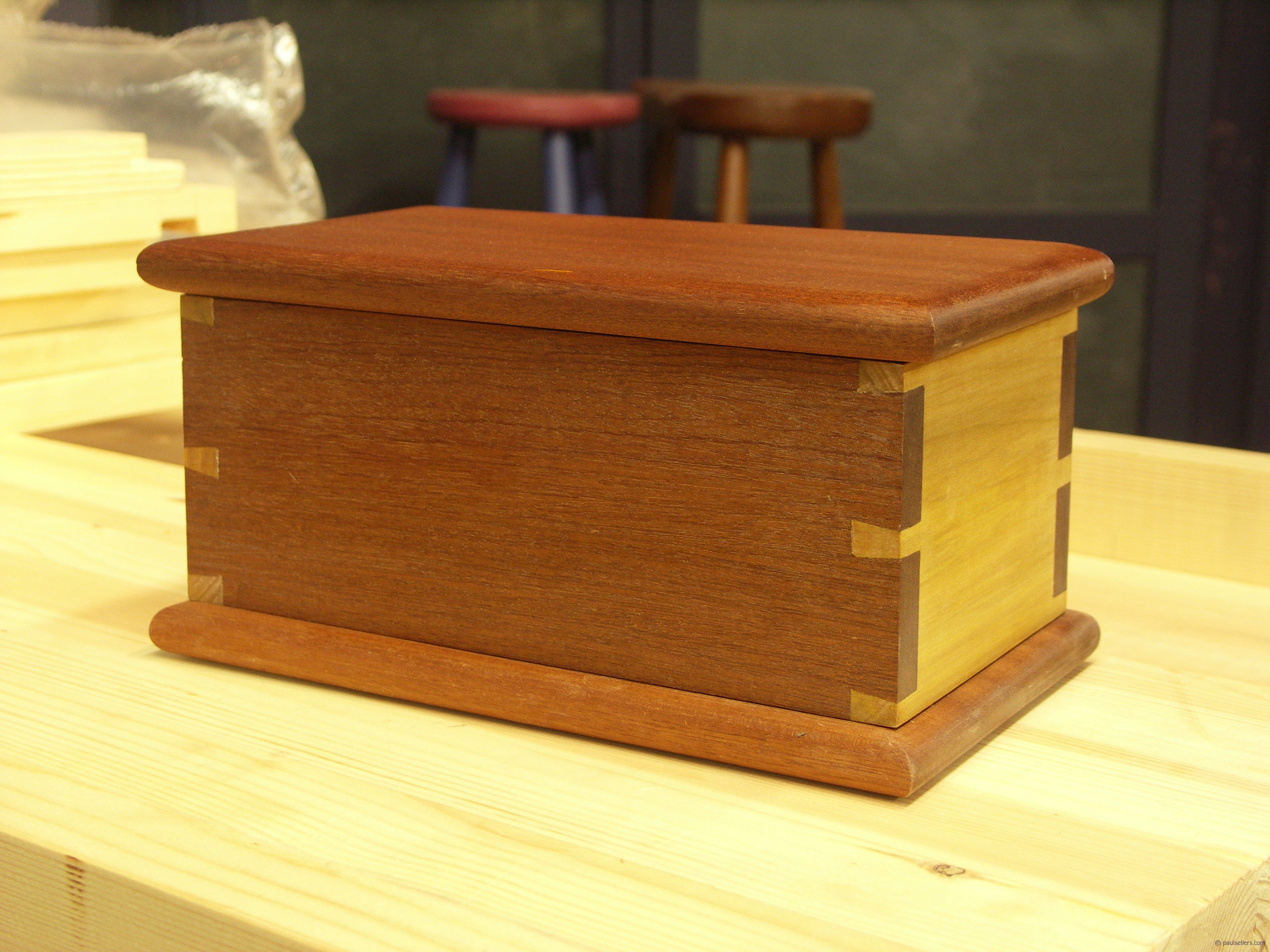
I see nothing wrong with using a machine like a router for recessing a hundred hinge recesses all identically placed in like-kind doors and door stiles at all, but to recess three hinges in a door and stile, it seems to me like a sledgehammer to crack the proverbial nut. So too planing a door to fit within a thou' without taking off the door to offer it to a power planer or a belt sander and so on. I would guess that the majority of those following my work have no way of setting up a machine shop and also see no reason to because they don't mass-make anything and see no reason to set up a mass-making system. If they then pursue handwork they must develop many skills, many of which take only minutes to master and understand, but they have no choice but to develop sensitivity which is accuracy which is precision in the multi-dimensional ways I speak of. Instead of pushing the boundaries, they are willing to be constrained by them. They don't throw off the restraints handwork demands but pull them on. It's as if they sense the dullness two seconds before sharpening is needed. They know that without sharpness the knifewall will not have a crisp and precise edge but a sorely bruised and rounded one. The chisel will slide away from following the knifewall corner in its crispness and will slope away from it. They soon start self-correction because their demand for quality is governed by their self-awareness in the work and they feel for pressures and then the added pressure needed to work dull tool. You see the difference between the two distinctly different and generally unrelated camps of the machine worker and those using hand tools becomes self-evident to the hand toolist. He, she begins to know the difference between road-grader rigidity and the sensitivity of flex I have written on elsewhere in my blog. As hand toolist, we use mostly a handful of cuts to expedite our work rather than the thousands of cuts per minute the machines all rely on. For this to happen the tools must be sharp. If you are not going to sharpen in time and then sharpen accurately and sensitively you should just use machines. To be a hand toolist, you have to want to be skillful and if you want to be skillful you have to want to sharpen much of the time. This, then, is the paradigm shift we all ultimately make at some point in time in becoming progressive hand tool woodworkers.
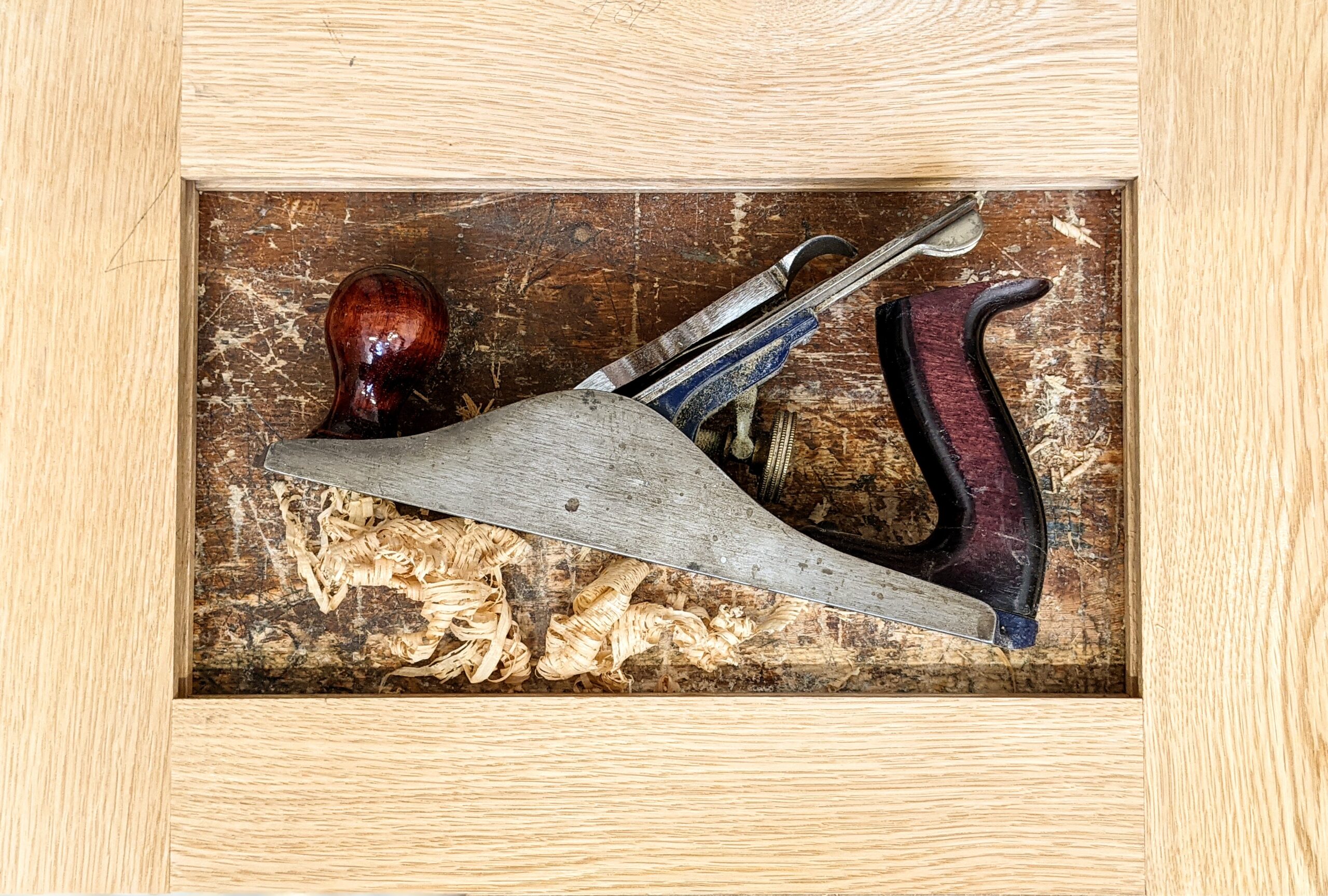
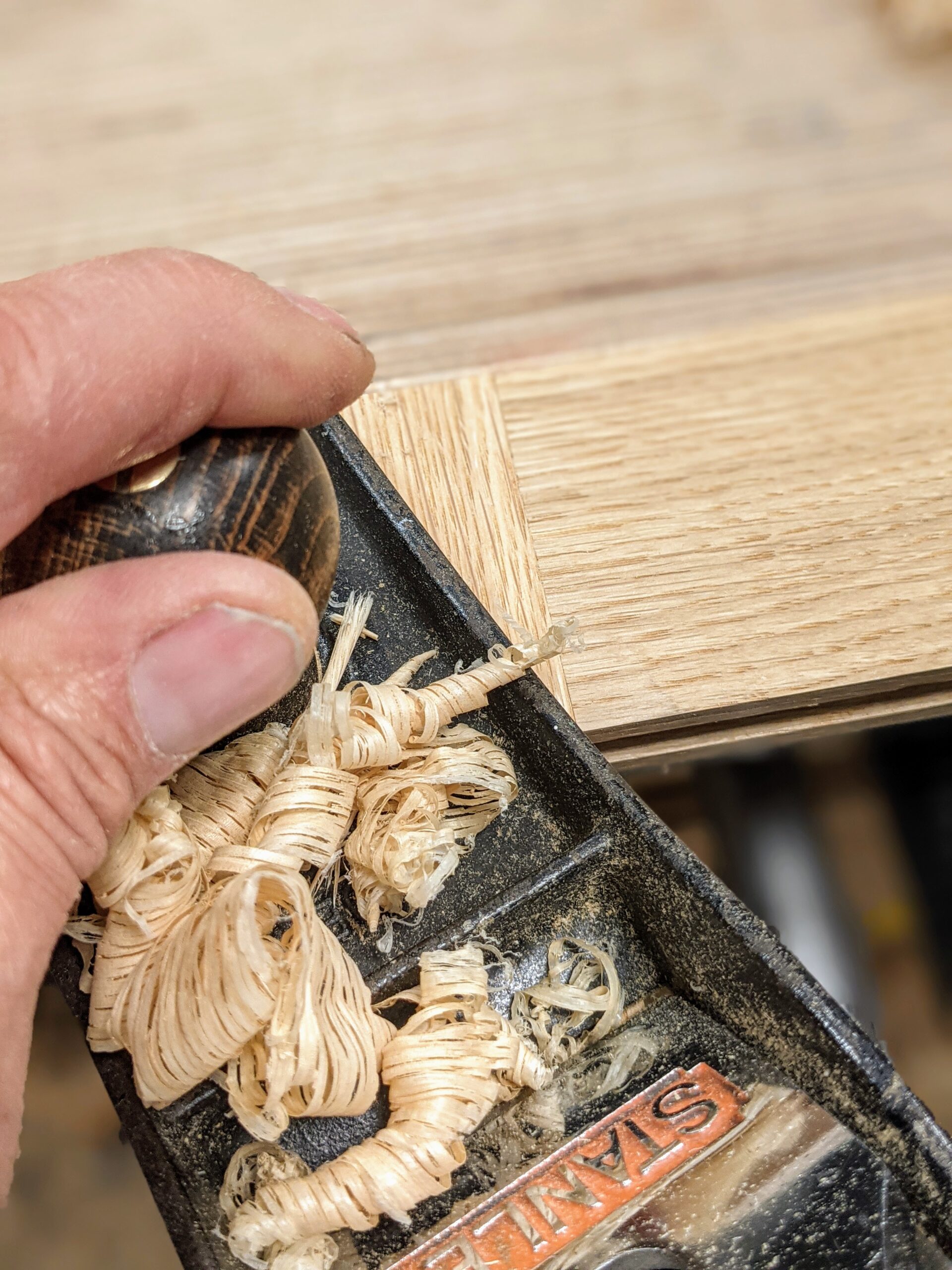
The knifepoint enters the surface fibres with only the most minimal pressure from either hand. It's the gentle interaction between both that many forsake, yet to use more excessive force with heavy-handedness often leads to less control and slippage. Negating the use of a more sensitive pass over, into, and through the surface fibres carries with it a lack of self-confidence. What we need and rely on mostly is a multidimensional flex that responds to every rise and dips into the irregularities of density between each of the growth rings if growth rings are indeed present. As we gain sensitivity, we realise that every species we work with is different and no two are similar in any way. Our presence and sensitivity are indeed ever-present as we part the waste from the wanted with the finest and thinnest and straightest of lines I call knifewalls. Because tree growth in every species is different, each of the species produces different densities, different grain textures and we, the worker with hand tools, must define accuracy, sensitivity and sharpness throughout every minute that we work. If we stubbornly refuse to sharpen we refuse sensitivity to our work and we cannot work accurately to separate that part that must be taken away from that which will create the perfect joint line. Having just made 12 tenons, I fit each to its partnered mortise. All 24 shoulder lines rest gapless as the joints seat. Every shoulder square, every shoulder parallel to the opposite side, all frames uncompromised by inaccuracy from the final mallet blow. The frames rest square with no need for checking. For 56 years, this has been my ever-present goal.
There is of course that spiritual element to craft that no man or woman seems apt to capture with words - it's because we're not supposed to. Working to make is a space of total, immersing absorption where words cannot altogether exist because they somehow manage to clutter what we do. It's why makers, when they are making and when they are done, say nothing that makes much sense. The small smile, a gentle sigh, the settling of the once stiff shoulders, the arms and hands that hang limp and dangled. These manifestations speak of many settled and peaceful things. I think that it is a space, a place, an occasion and an occupation where no words exist. Perhaps the art of working with your hands will one day be erased from most cultures, replaced by artificial intelligence in a way that nothing has replaced craft before. What AI will never replace is the soul of makers who work their material by the sensing of the substance they work. The spiritual element of handwork can never be experienced by or through any machine process because by its very nature, as with the lie, the machine stands in truth's stead and the machine is designed to both displace and replace the need for feeling and touch by human senses and sensing. Because the machine was developed to replace both man and skill, our hands and arms may well lose the sensitivity craft demands and relies on. The machinist flexes almost nothing to make the cut but stands proudly by as the machine displaces the need of him and of her. Punching the keys delivers the intent and the machine adjusts to the smallest fractions of a millimeter, eliminating any human sensitivity. The whirring begins and the cutterhead passes into the wood. Minimal human energy is spent - no art is made. The end result is that the senses and sensitivity of man lie dormant and unused. And by this, I do not just mean the physical muscle and sinew. The belief in your own ability can be severely impaired too. Eventually, all becomes atrophied and dead, to be lost in any practical way, in the same way, evolutionary changes leave the back wings of beetles fixed and unusable. Accuracy then becomes more relied on as a programmable intent of unfelt energy. We no longer adjust for nor deliver precision by the human effort of planing and sawing, spokeshaving, chiseling as such. Instead, we tap keys that set distances and the mechanism turns the dials and sets the stops. It is nothing but soulless, yet when a human hand uses its energy it is measureless.
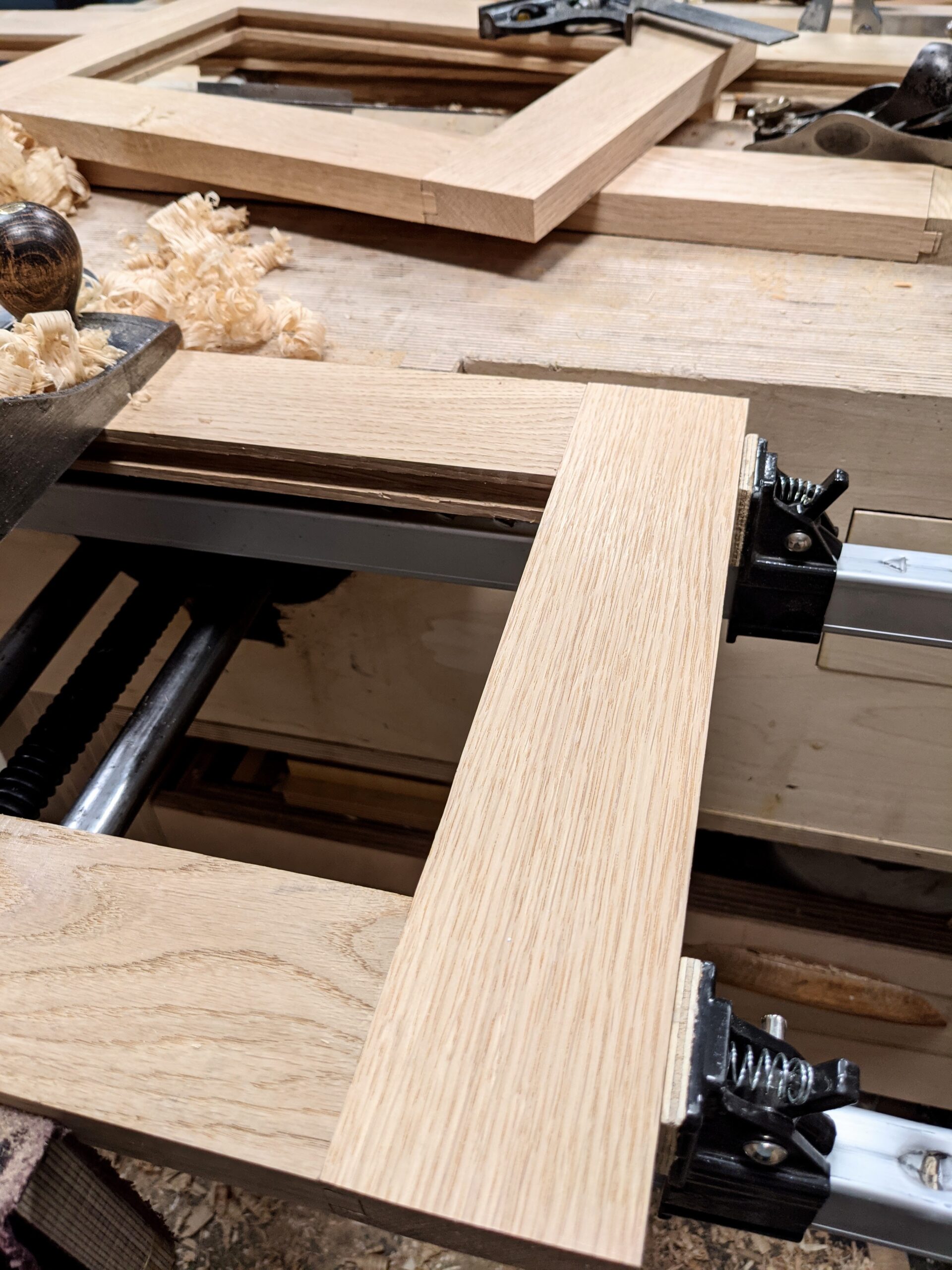
My hands have served me for 71 years to date. By serve, I mean they've manipulated hand tools and wood to make fine woodworking, furniture, and such on two continents equally and performed all of the other tasks of life. They still work and they are still good. One thing that I've come to know is that accuracy does not happen by accident. I am a fortunate man in that my hands have remained always sure and steady with no hand tremors, my eyes are still as good as when I was young and that my hearing, sense of touch, taste and smell seem to me unchanged. Defining exactly what accuracy is, almost defies the written word. Accuracy, in our world of making, marking, measuring, cutting and fitting, is as near as our imperfect humanity allows our hands and eyes to coordinate the placing of cut lines and our ability to cut true to such lines. In the theory of it, perfection disallows any level of what we often refer to as tolerance. Tolerance suggests marginalism. In the world of woodworking, indeed in any craftwork, it's the intolerance of tolerance that sets the artisan apart from other makers. Creating perfect work from imperfect wood is to merely minimise any and all discrepancies. Our acceptance of margin must be so highly intolerant that the human eye and hand cannot detect any level of imperfection. Imperfection may well still exist, it just cannot be detected by human touch, sight, sound. There is no such thing as perfection as we might but are unlikely to know it.
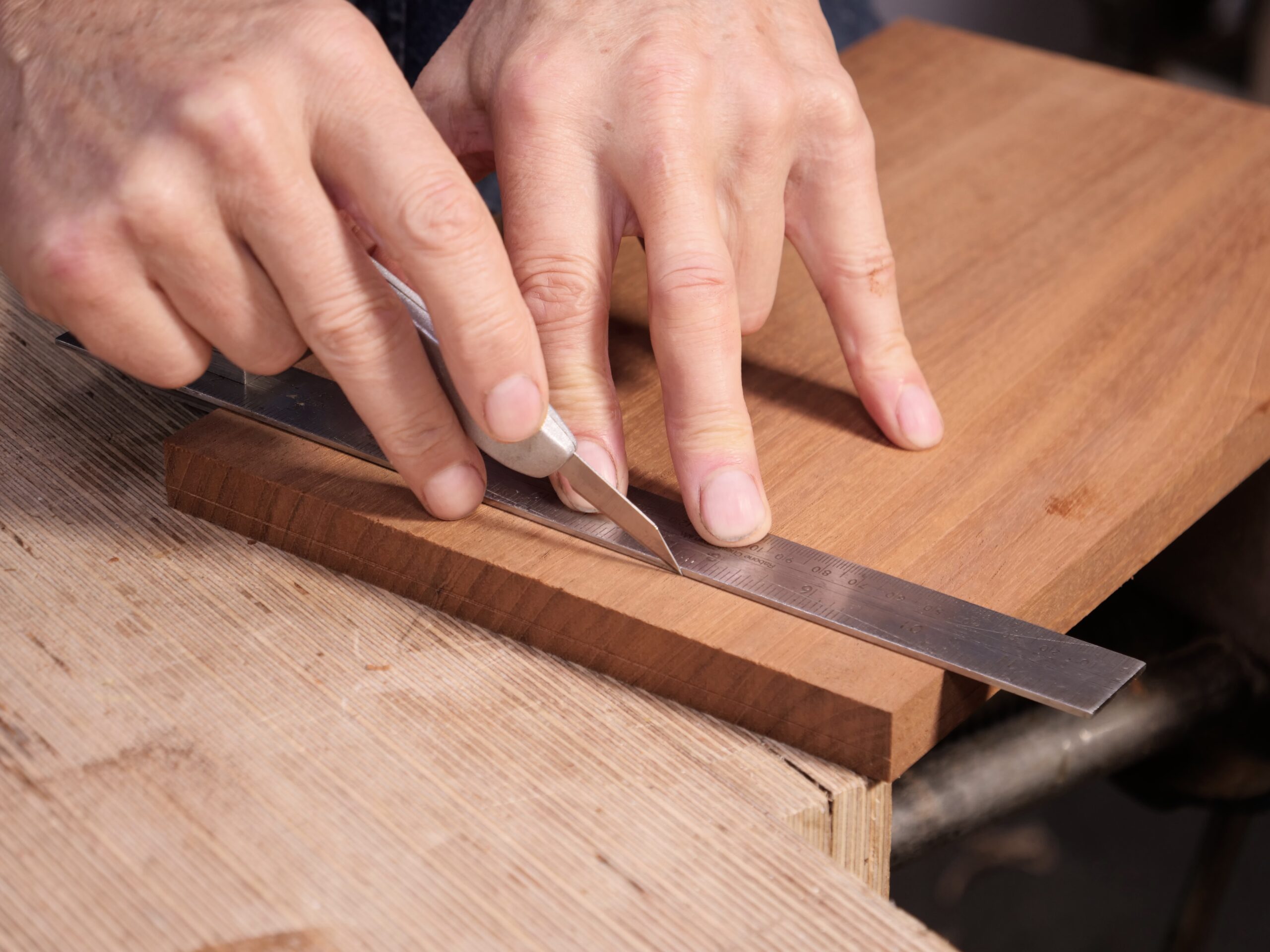
Once we realise the direct interplay of the three words I began with, we realise precisely that a positive codependency exists and our quality of workmanship maximises accordingly. I think this to be a marvelous development in our lives as makers.
Comments ()