
Knowing your Router
In my world, the real and true power in woodworking is in hand tools. Simplistic? Not at all. I deal with one of the two key realms that have gradually evolved in the world of woodworking. I am not interested in the so-called professional realm. Amateur woodworking is of primary importance to me because it is my firm belief that amateurs alone will be the ones to carry real woodworking forward as they better understand the power of hand tools and become as skilled or more skilled and knowledgeable than I am. Nothing and no one can change that because I have lived both worlds, cross-pollinated them, and I ultimately chose and continue to choose hand tools as my ultimate objective. It was a choice of lifestyle for me as a maker, writer, and teacher! The Lifestyle of which I speak is always choice. You may not get it all at once. You may only ever get it in part, but including it in your life is ultimately up to us.
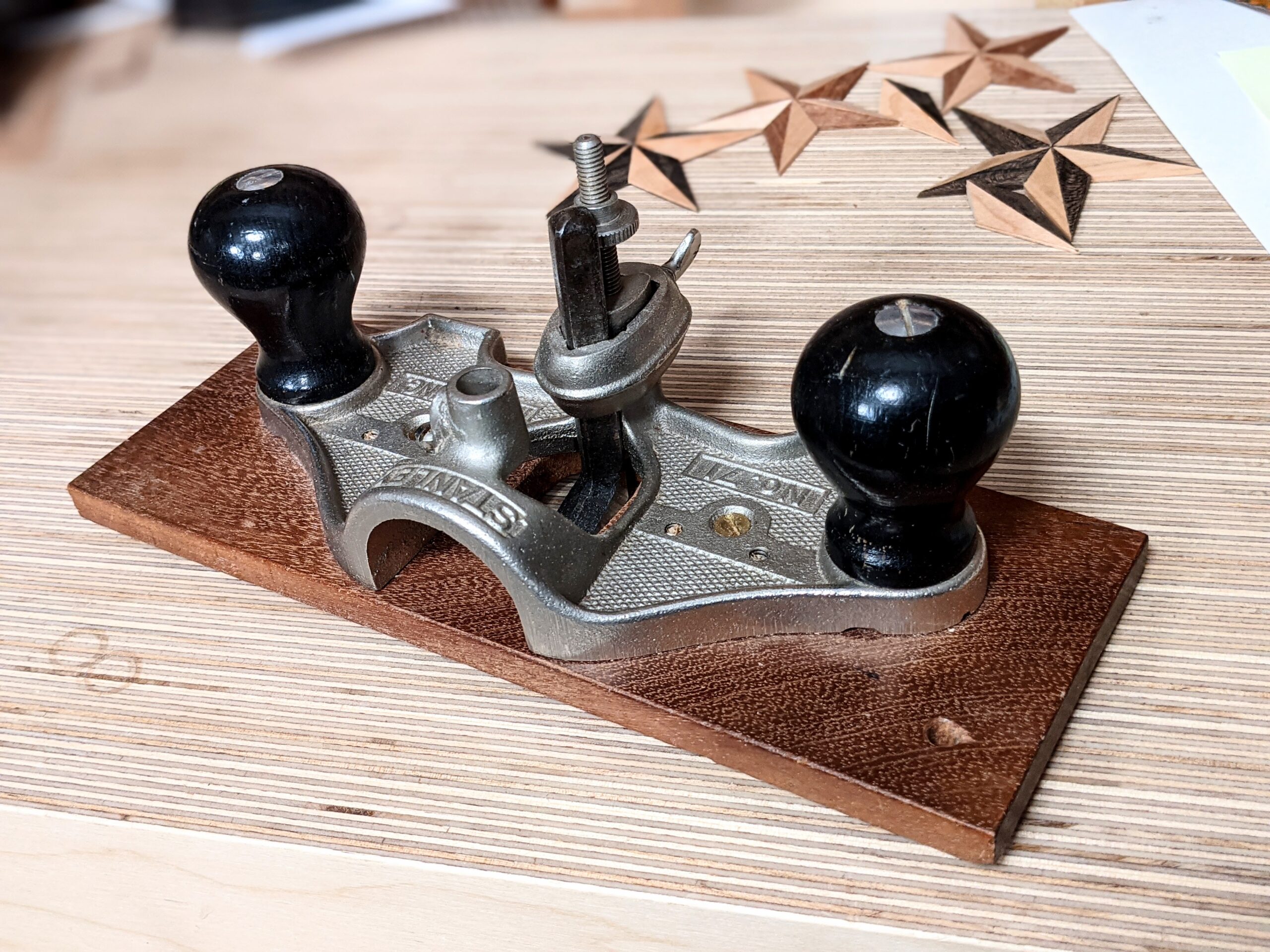
It seems such an insignificant tool in one way and then again it captures the imagination of all that see it. Its purpose seems less obvious than other planes because, to the uninitiated, its shape and construction together with its name belies all modern concepts of what a router is. Even in our woodworking world, the hand router plane went through decades of abandonment. For half a century I doubt I ever saw anyone use a hand router plane anywhere except to lay forlorn in the bottom of a tool chest. From my being 15 years old (1965) in apprenticeship through to my early fifties I cannot recall seeing any woodworker anywhere use a router plane and yet, for me, life as a maker relying on handwork making handmade pieces would have been nigh on impossible without it.
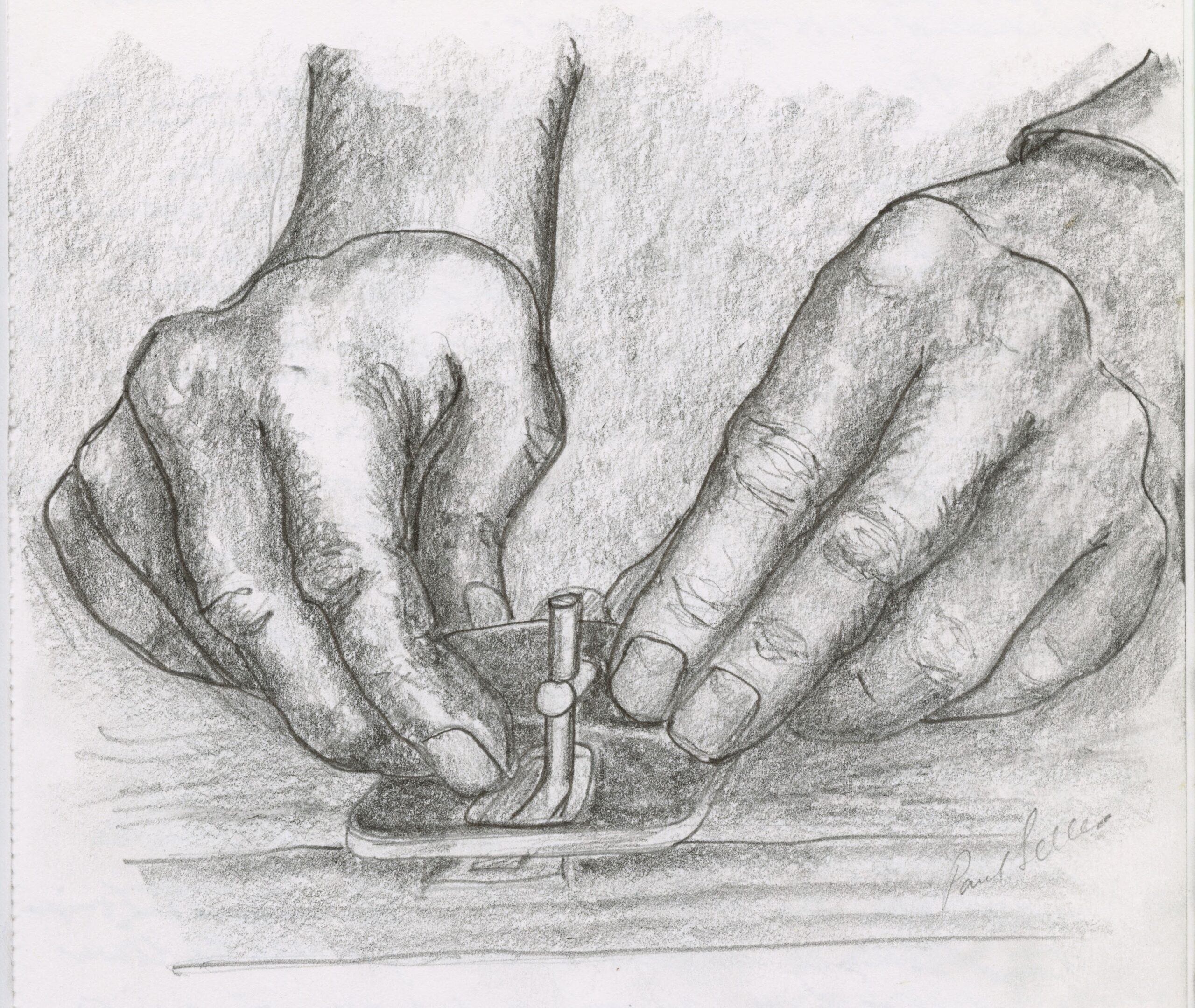
So why is this plane such a needed tool for me?
After my #4 smoothing plane, the Stanley model #71 router plane is the only plane that delivers the perfect refinement to housing dadoes, tenon faces, recesses like housings and many more adaptations of the tool. Whereas the power router replaced the router plane in most workshops around the world, the hand router gives me the true power that hand tools seem always able to deliver. As with others, I have used so-called power router machines at different points in my woodworking life; I've also depended on them abnormally heavily for a short number of years. In the last 26 years, I think I may have switched one on a couple of times . . . and then switched them off within a few seconds. One thing that I can say about power routers in my day-to-day working is that I never ever felt peace about them. Why? Well, the power router is a powerful machine packed into a small body held between and relying on two hands to control it. In my work, fine woods, thin sections, small components, fine joints, a single slip, tip, trip and clip can destroy a section of my work in less than a heartbeat. If there was/is a benefit, it is far outweighed by the anxiety I feel as I lower it down fully powered or even soft-start into the wood and try to judge by torque which direction I should best go with it.
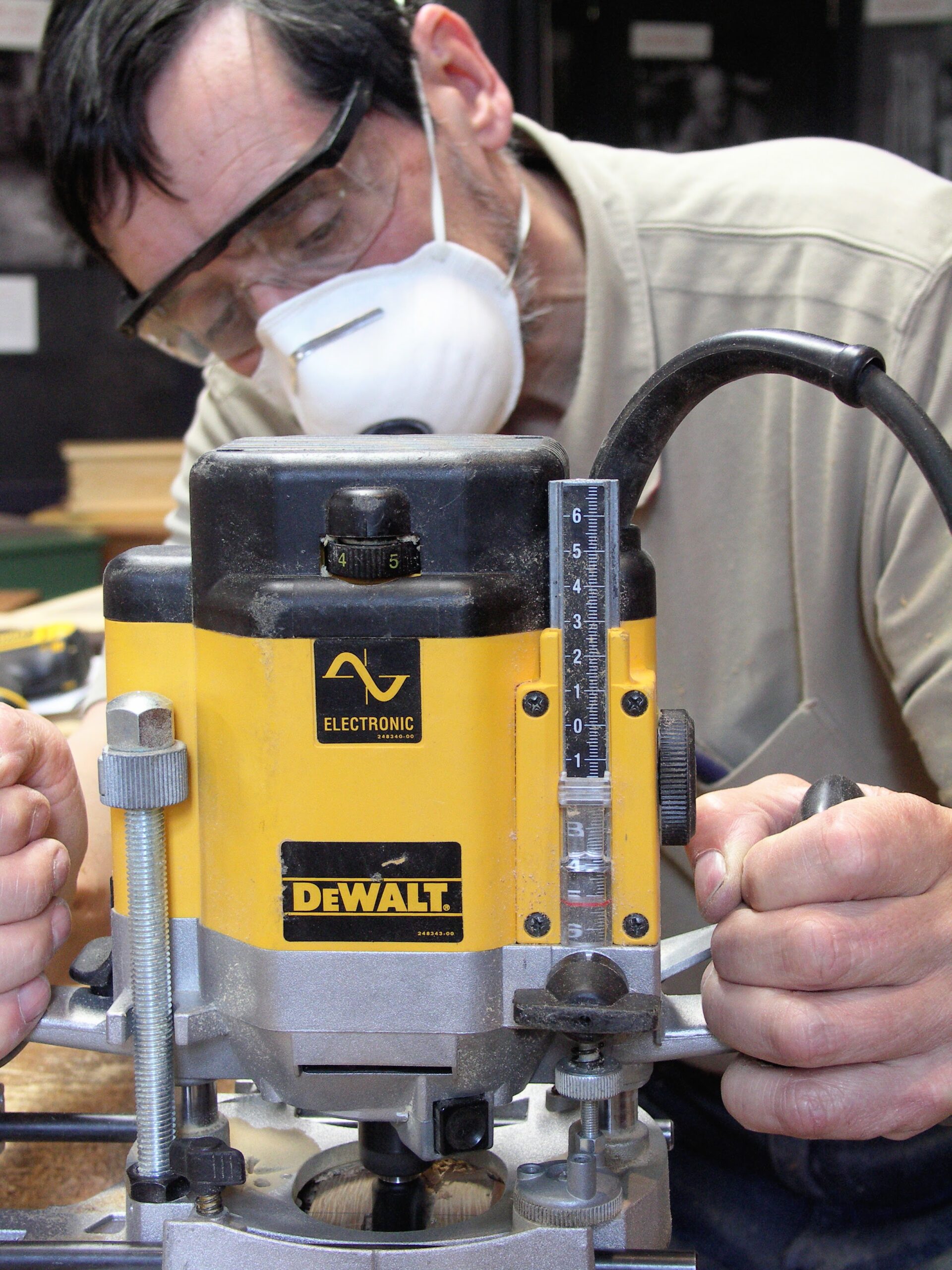
It is most unlikely that I will ever use a power router again. I will say this though, for moulding the end-grain of wood, for whatever reason, I can understand buying, owning and using one, but I can't think why people would use mouldings like this much these days. They definitely date the work and tie it to bygone eras too, mostly these are eras of pretentiousness at best. But, thinking about it, if you've bought a £300 router and £300 worth of router bits, you have to justify the purchase and you have to do something with it beyond making a dado now and then, I suppose. And who am I to criticise? I own 500 moulding planes at at least £12 a pop and some worth hundreds of pounds that I no longer use! How do I justify that? I don't! But then I can tell you that these are true works of art, they have helped me to replicate the impossible through the years of making and matching, and I am a collector of useable tools. In the now not too distant future they will be sold, I am sure, to the highest bidder. The sentimental ones will remain in the family if needed or preferred. They did indeed earn their keep and love to sit with them in my workshop for an hour and pull them out one by one as I recall which jobs they were used on. Either way, I am OK with that.
Thankfully, I can say hand on heart that I have never used a machine-driven router to make a dovetail and I have never been tempted once. Why? Well, someone wrote recently how they were cheating themselves by using a bandsaw. I don't at all feel that way about machines. There may well be a time for anything and everything in woodworking. I am not averse to buying in a power planer if age and strength become to limiting for me in my aging years - I am certainly not a purist when it comes to hand tool woodworking. In my world of reality, that would be plain silly. My reasoning is based on several things not the least of which is that I doubt a machine like a power router will cut a dovetail faster than I can if we are starting from scratch. I doubt whether setting up the power router can match my abilities to proportionalise a dovetail's sizing according to a design in my head as readily and as quickly as I can if indeed it can even ever do it. I doubt many things that I might do with any type of dovetail are even possible with a power router. What is surprising to me though, is that people so associate the power router with the hand router plane and even often think that the hand router plane does the same as the power router; that it holds interchangeable bits to mould the edges of wood. They ask me where they can buy the bits for an ogee or an astragal! But I also feel that in the evolution of woodworking people see powered equipment as an evolutionary process bettering what existed before but no matter how you slice it, a planing machine, a belt sander and a random orbit sander cannot produce the multidimensional results that a single hand plane can if you know how to use it to optimise the best outcome
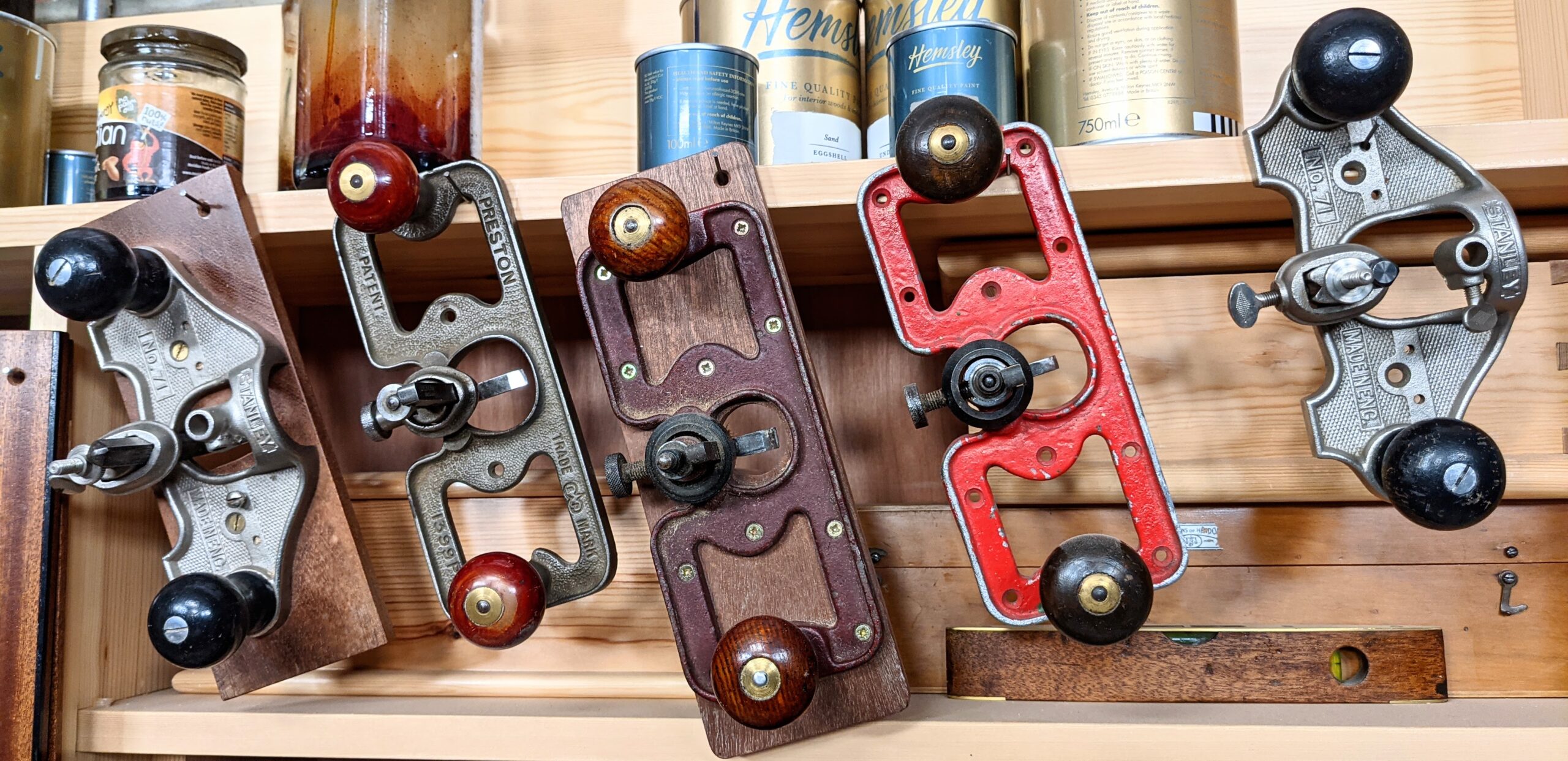
Leaving off two words, 'hand' and 'plane', fails to identify the tool I speak of and might mistakenly identify a power machine instead of the tool of which I speak. Whenever I say router, it is never the visualised machine you are thinking of now in your mind's eye and it's not the networking device that forwards data packets between computer networks. That's why I usually make sure that the word router, in my world, is always accompanied by the two words 'hand' and 'plane' wherever possible. This hand tool, in the hands of any skilled woodworker, is the true power tool. You will never hear me say the words 'power' and 'tool' together either. This was a developed term birthed in the US to suggest a more advanced level of hand tool and nothing more than a sales strategy. These, whether handheld or stationary, battery-driven or hard-wired, are just machines. The user, as a mere part of the mechanisms, is a holder and a pusher of buttons. Not much to it if you really think about it honestly and with an open heart.
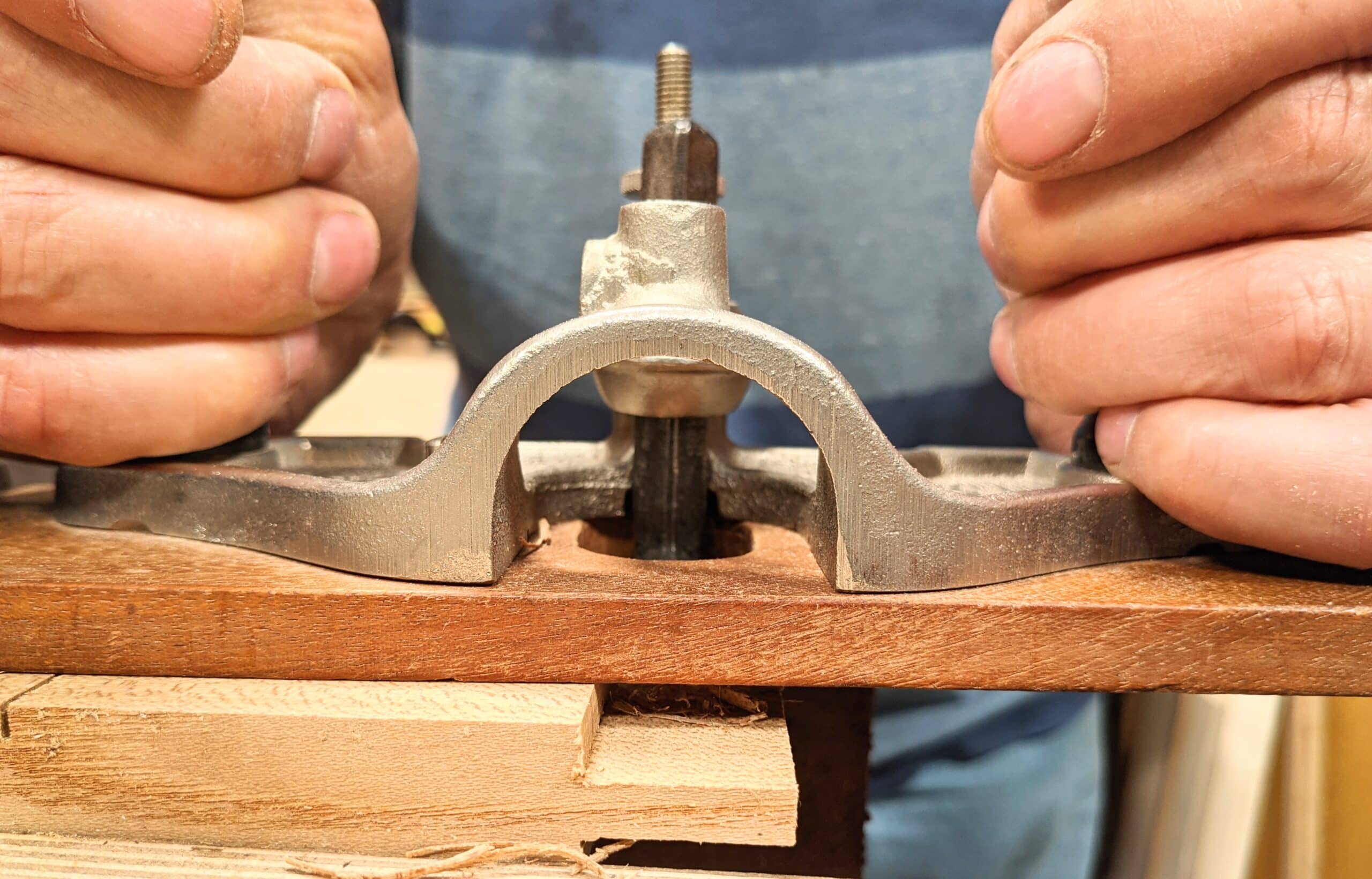
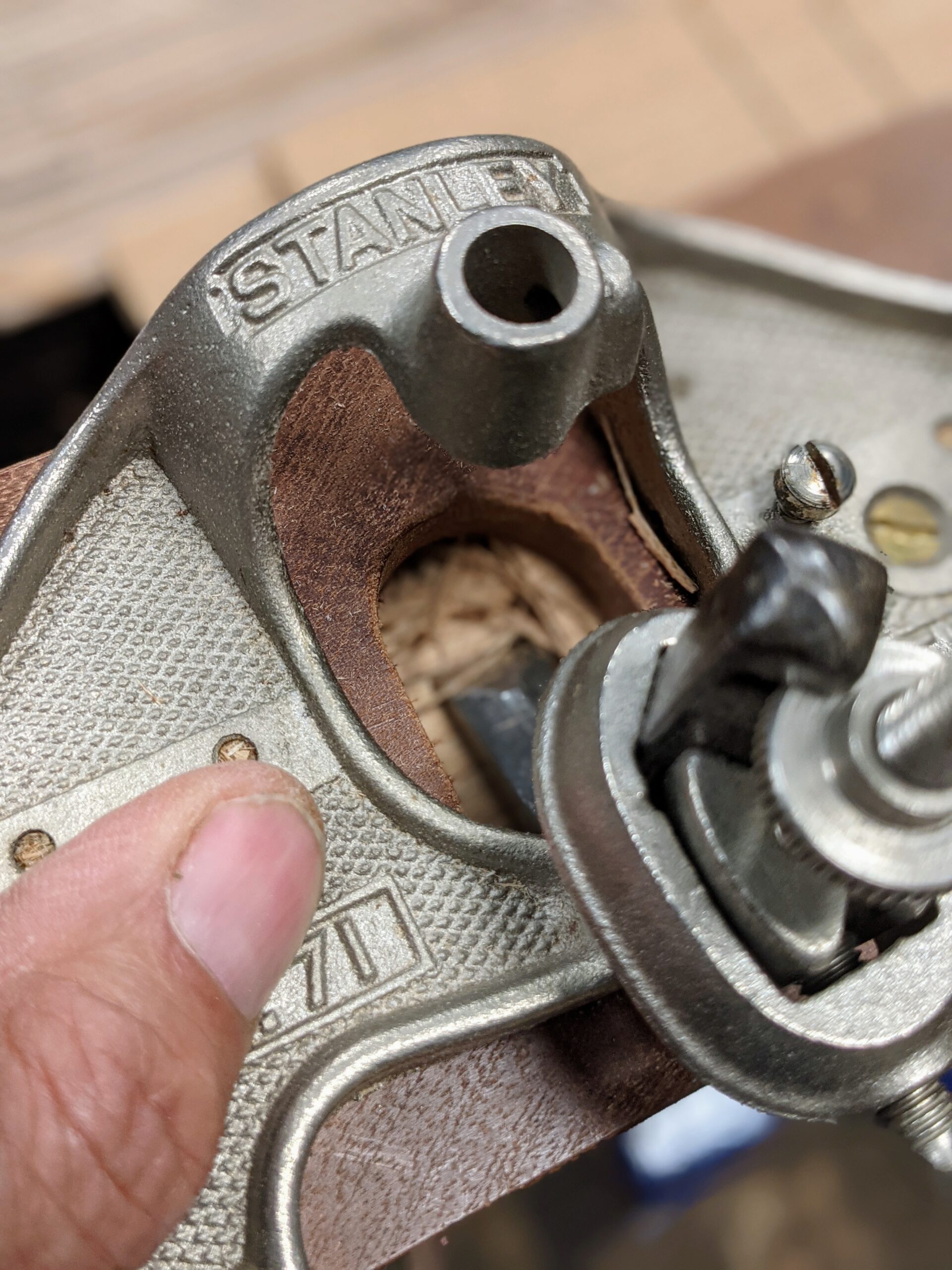
The word rout means to uncover, eject, grub out, and so on. Pronounced it as 'rowt', will help to distinguish the networking device pronounced 'rooter' (or in the US 'rooder' or 'rowder') but will not help separate the power router and the hand router plane. These two pieces should never be identified as partners and nor should they be compared with one another. In our world of real woodworking, the hand router plane is second only to the #4 bench plane in terms of significant importance. Just as no modern maker has ever been able to offer more than the Stanley bench plane series for smoothing, evening out and truing our wood, so too the hand router plane has yet to be improved on in its ability to level dadoes and housings, recesses for inlaying and such. This is one plane I included in my book Essential Woodworking Hand Tools. It's a plane I would not be without. Hence, since I started extolling the virtue of the Stanely router plane a decade ago, the price has remained steady at the same and higher prices of those made new by Veritas and Lie Nielsen. How remarkable is that! When it comes to invention, Stanley had it. Perhaps I should say The Stanley Rule & Level Company had it, actually. The Stanley, and then later the English Record versions, were and still are lifetime tools. I can hear the groans when I mention this because there are those out there bidding for theirs on eBay as I type. Truth is, even when they are £220 a pop and more, as they are if boxed and in newish condition on eBay tonight, they are well worth the money. I pull mine to task many times in a day. It makes the best marking gauge and the finest recesser of any tool I know. What does not make sense is buying them over a Lie Nielsen or a Veritas version, which do exactly the same for much less money.
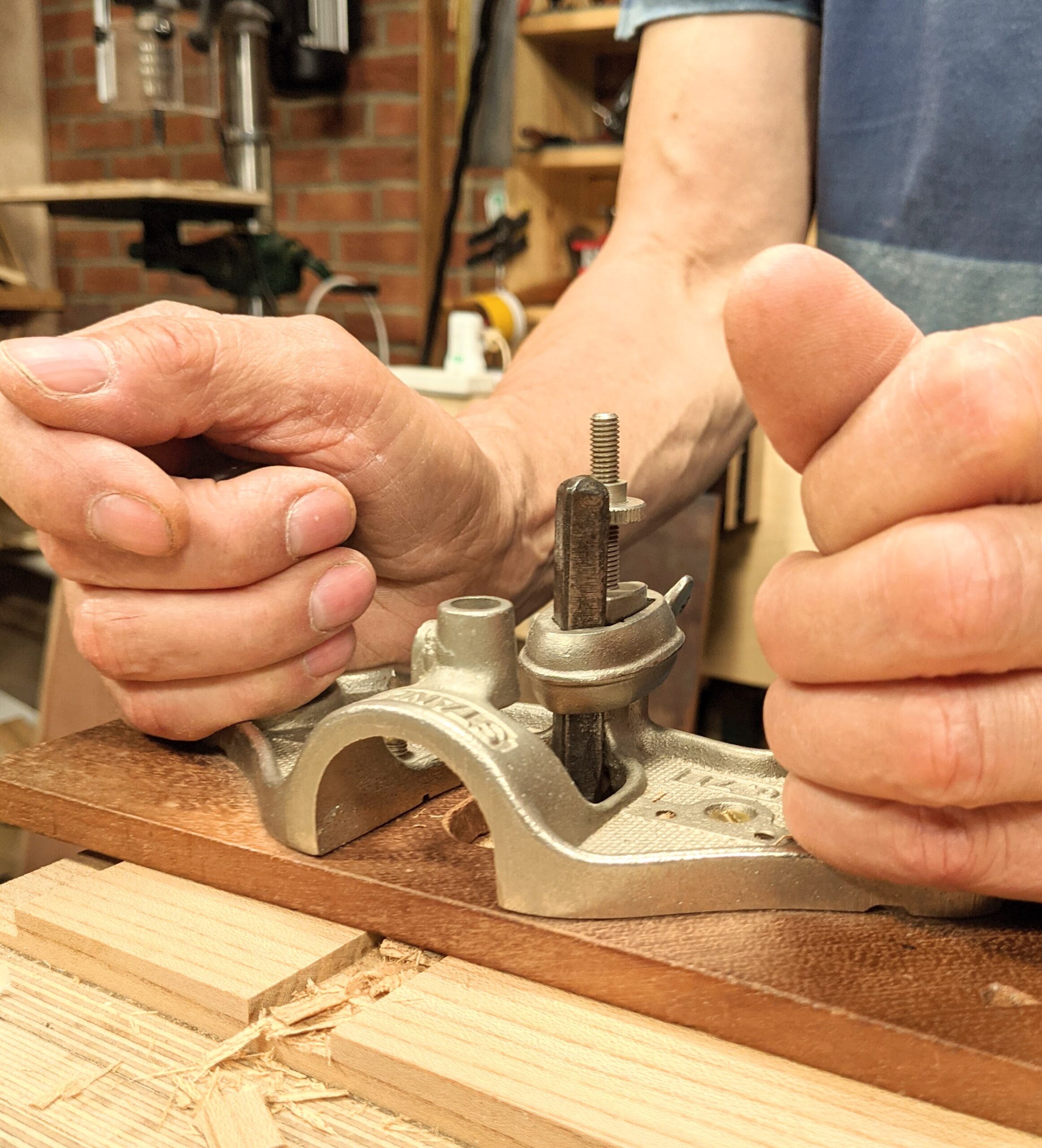
Adding the wooden sole eliminates the metal on wood marring that pretty much seems always to take place without it. The plane operates much more smoothly wood to wood too so in general I always reach for the ones I have with wooden soles attached. How many do I have? Well, I think I have four hanging behind me at my bench and I use interchange between them as I work. Remember, I gave one of my Preston ones away a month ago when I reached 500,000 on my YouTube channel. I own several #71s by both Record and Stanley from my school days when I ran classes too and I still use these as loaners here at the workshop for my apprentices or visiting students and such. Setting them up with different sized cutters and using two in tandem makes my work more efficient as I can keep one set to final depth for final cleaning up and the other for staggering the depth to get down close to level in increments.
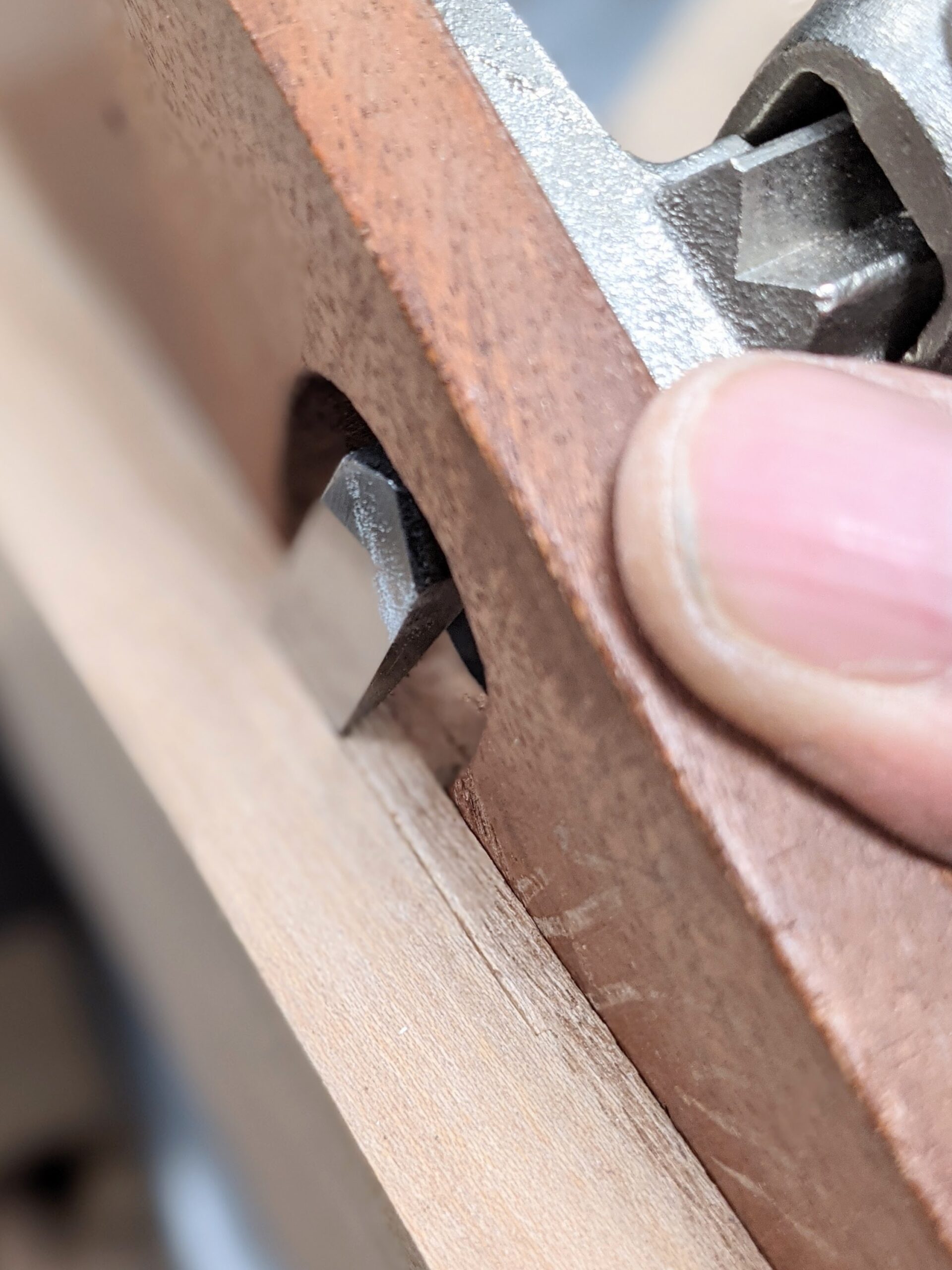
Am I ashamed of owning so many hand router planes. I am not. these planes will keep cycling through beyond demand for the foreseeable future. Loading mine on eBay will not lower the prices but even possibly raise them. Also, I bought mine when they were indeed all but abandoned and there was no sign of any price rise until I began to write about how valuable they are to my work as both a maker and as one intent on conserving the art of my craft in all levels and areas of fine woodworking, furniture making and so on.
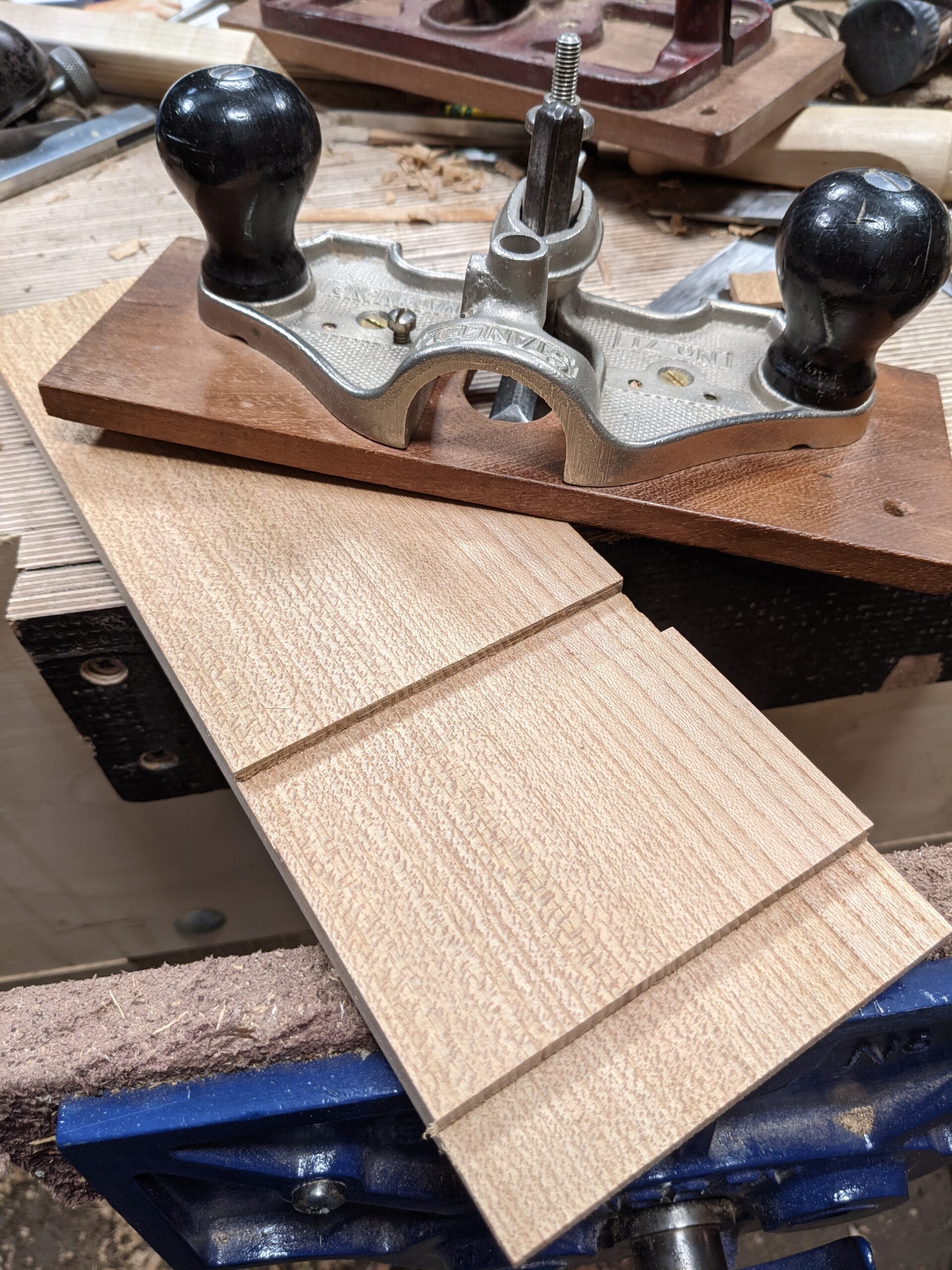
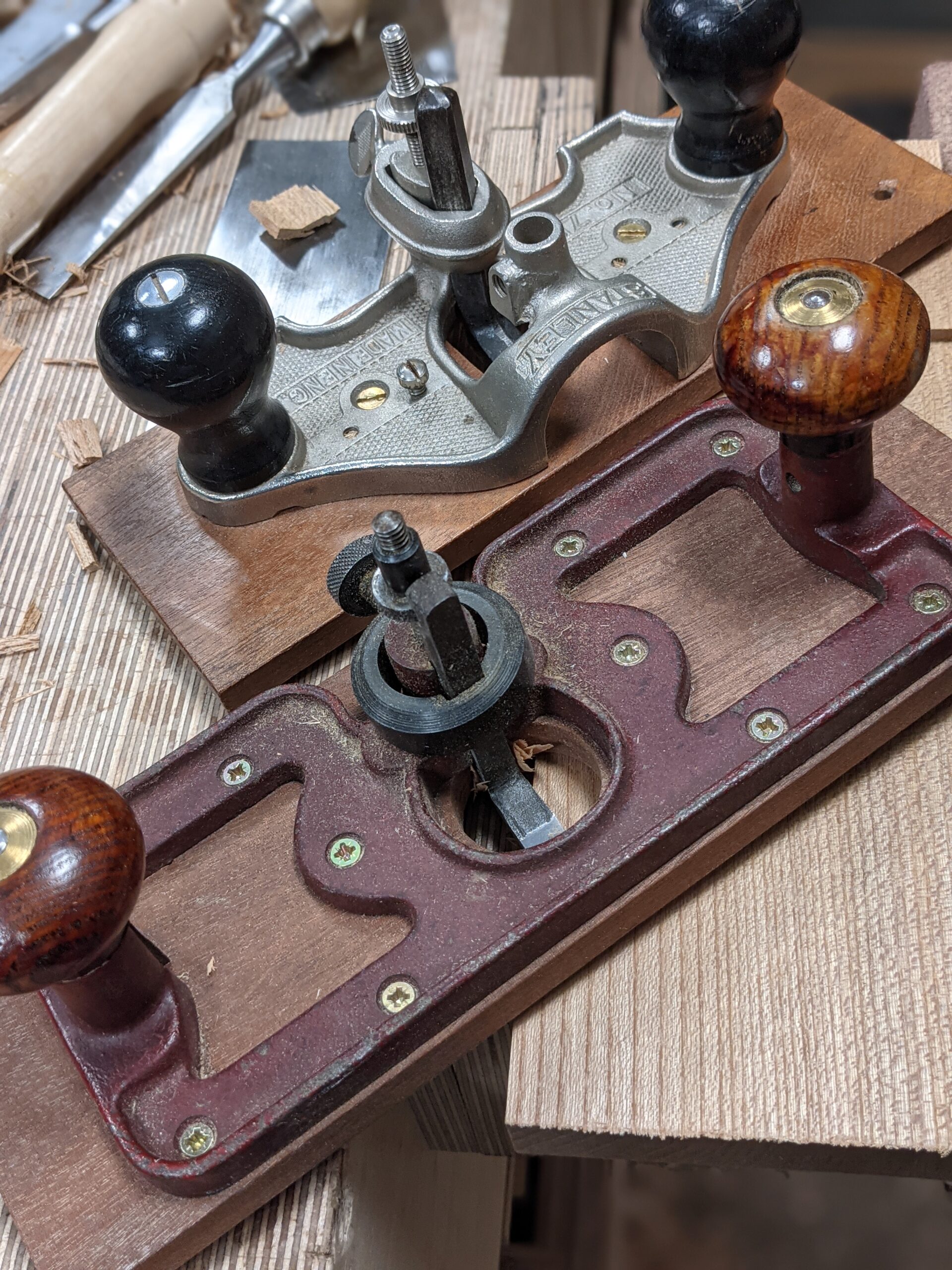
What of the difference between my Preston-type hand router plane and the more commonly known Stanley #71 version? There is no doubt that these two planes give equal quality in functionality and neither one is better than the other when wooden soles are attached. When not, the hump-backed opening improves on the Preston-type i that removing the sole in this area allows for uninterrupted routing in stopped housing and housing in general because there is a space for the ejection of shavings without jamming between the rim of the plane and the rim of the rims of recesses and so on. Of course, the difference in price is significant too. The Preston type costs around £1,000 on eBay.
Comments ()