
Experience through Experiments
As you grow older you perhaps consider doing what you are used to to be a better thing and might not experience by experimenting because, well, you might over-stretch your comfort zone to the point of extending yourself too far. The root of the word extension is to 'stretch out', and we don't necessarily find ourselves so willing to stretch as our flexibilities are more affected by our comfort limitations. Sometimes, considering our comfort zone might limit our understanding and learning and of course, such things can be a waste of our most valuable commodity - time. I spent a day developing an idea. I wanted to create an 11" wide, bent drawer front from laminated plies of oak to find out different things. I used six layers 43" long and 12" wide taken mainly from sequentially cut layers from a single board and ripped on the bandsaw I have. Because the bandsaw would only allow 11 3/8" high stock, I considered removing the top guides and that would have easily worked but I calculated that I ultimately needed only 11 1/4" and that with judicious alignment I would need only minimal trimming so I left the top guides in place.
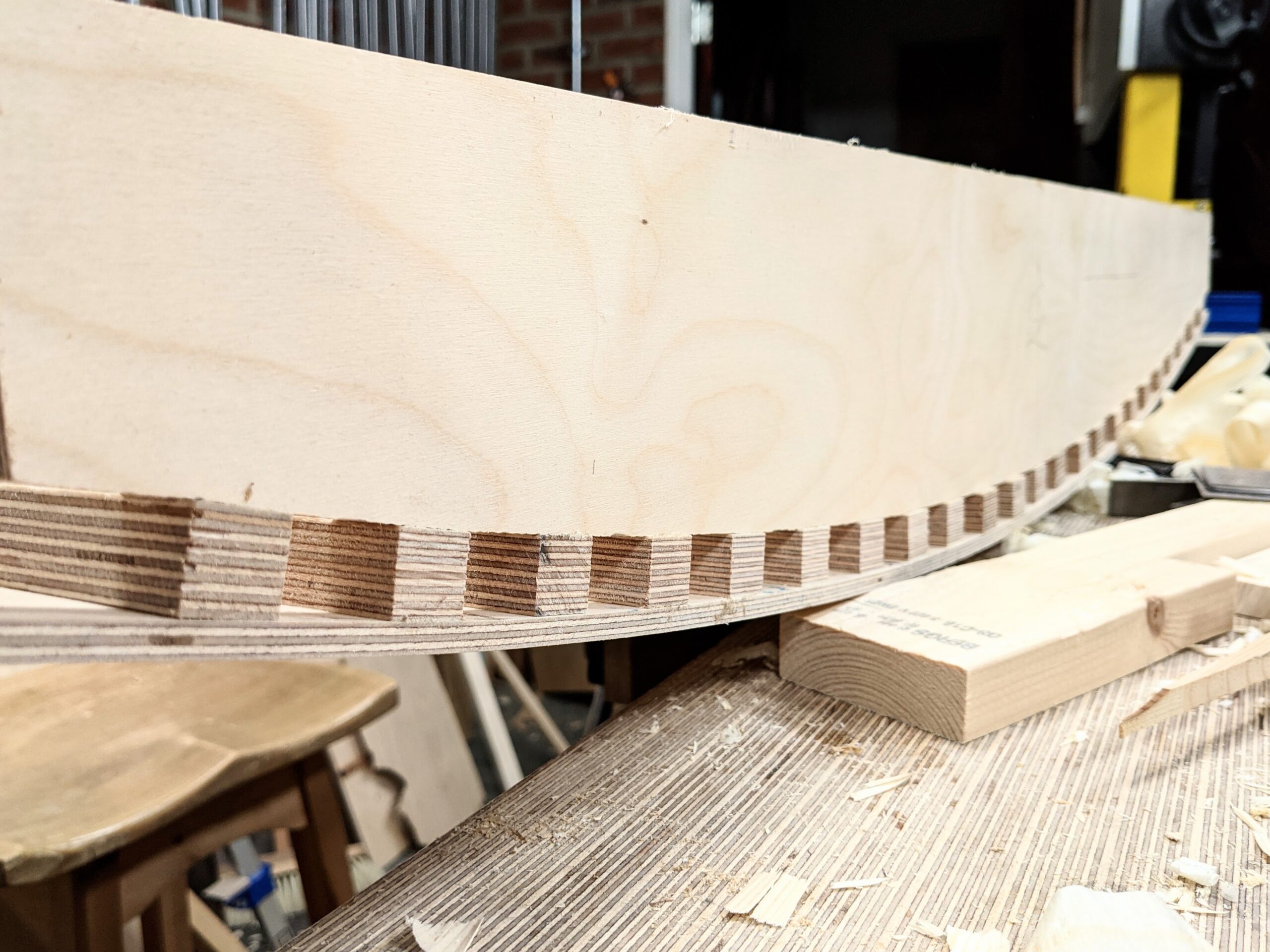
I built a platform from 3/4" plywood that gave me the rigid resistance to any flex that I needed. Experience told me that the thinner the layers the more readily the wood would conform to the bending process and more importantly that the bends would not spring back as much as when using thicker layers. Were I able to cut thin layers of say 1/16", retention of shape would be as near perfect as possible, but the issue then becomes consistency in thickness and the possibility of a certain amount of bandsaw drift, blade bulge and so on. A bandsaw blade, no matter the level of sharpness, no matter the tautness of the blade between wheels, feed rate etc, will usually still tend towards that inevitable path of least resistance. Such straying on so thin a material as 1/16" will often end up with the blade popping out the side of the wood. Going thicker resolves this and will also allow for further planing and scraping if needed or you choose to. Also, planing thinner stock that wide and that long can be problematic - one section in a panel with opposing or rising grain, a swirl here, a knot affected area there, will tend to tear or rip out all the way through the layer. (Those with a wide belt sanding machine, please desist from telling me you have no problem with such an issue. We all know!)

For the four core layers, I decided on 3/16" stock and that I would not plane in between the cuts at all. I chose this because removing undulation would be a major investment of time and felt this was unnecessary because the undulations would each be commensurate the other. Also, as we generally roughen the surfaces with a toothing plane or such, I could simply use the saw kerf to my advantage. Taking the slices successively meant each would compensate for any discrepancies whether bulges, parallelity differences or whatever. I did plane and scrape the outer faces of my 1" thick board though. The addition of the two outer layers were not from the same board but chosen for their even grain pattern, colour and texture. I also book-matched the face grain lengthways albeit not chosen for distinctiveness but for evenness of colour, grain configuration and texture.
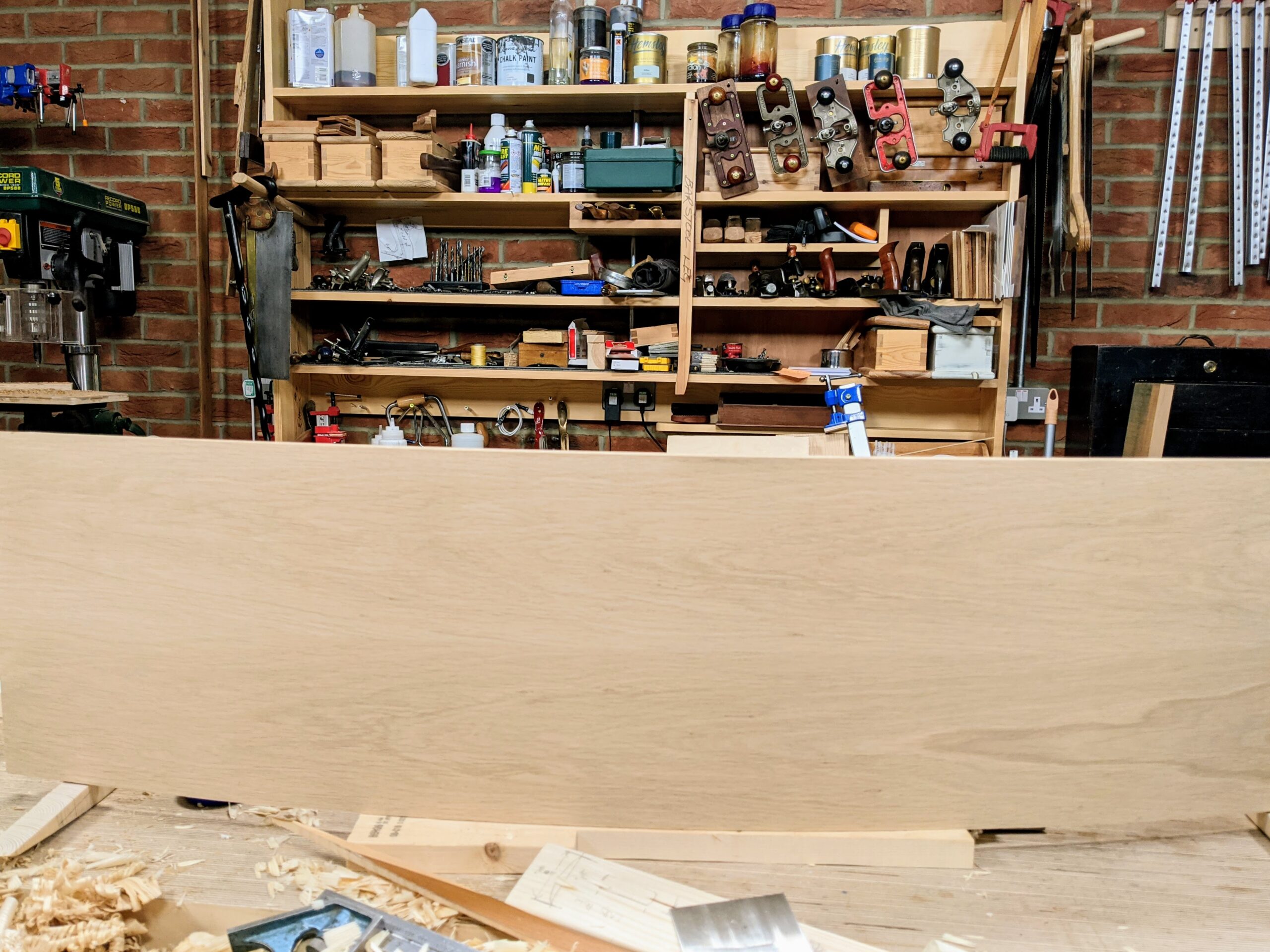
Firstly, I bent the four core pieces, glued them and conformed them to the former. I checked for bendability with a dry bend beforehand, just so I could check for conformity and gapping. It was fine. Fighting off the guilt feeling for doing something that might waste time and wood, I continued with the glue-up and left the whole for a day before removing the clamps. In past experiments I have always seen shape retention miss the mark by a small margin. Memory in the wood resists bending without the essential ingredient of using heat. I, on the other hand, was resisting the use of steam and water because it is messy with such work and it takes much more effort with little if any advantage.
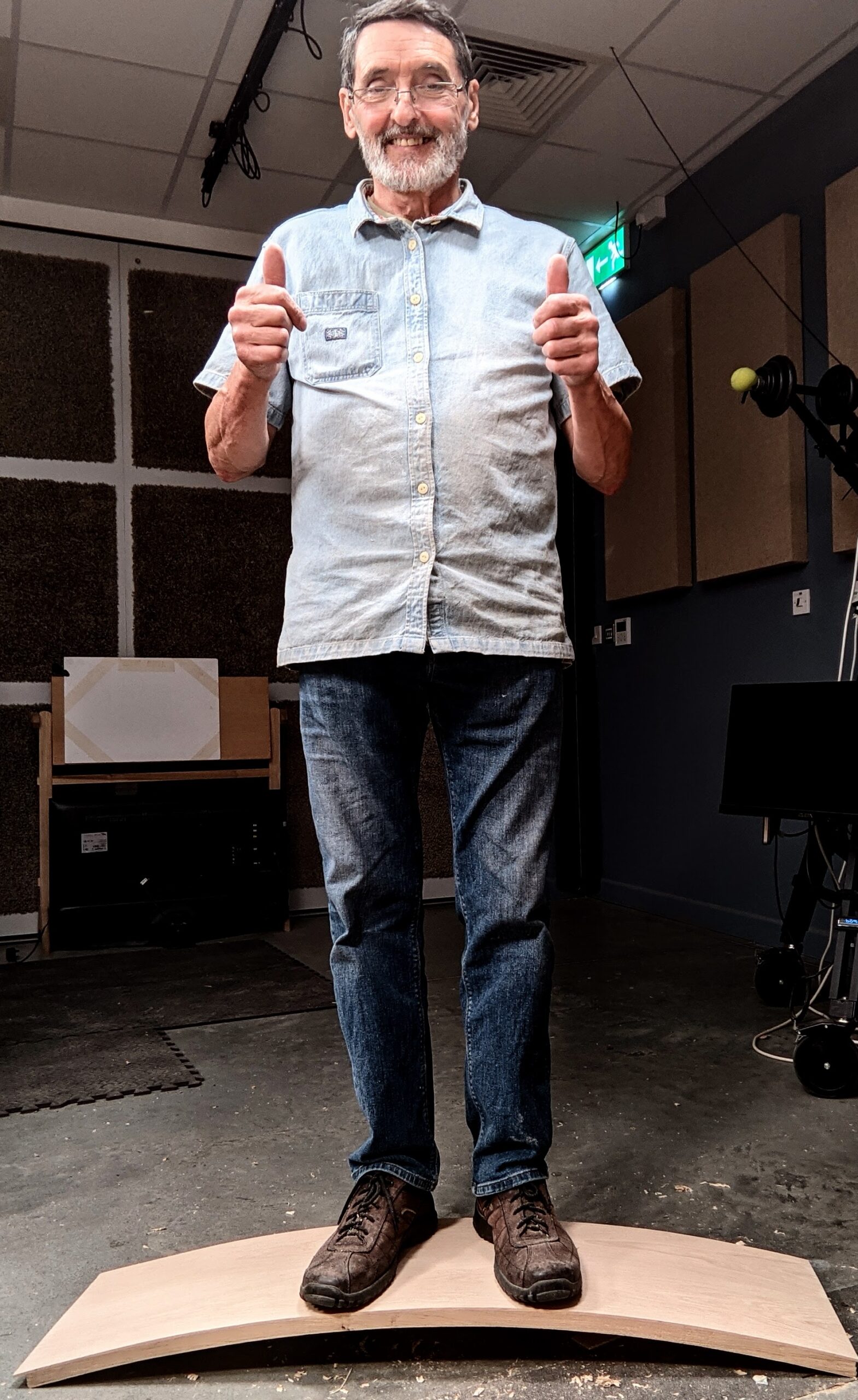
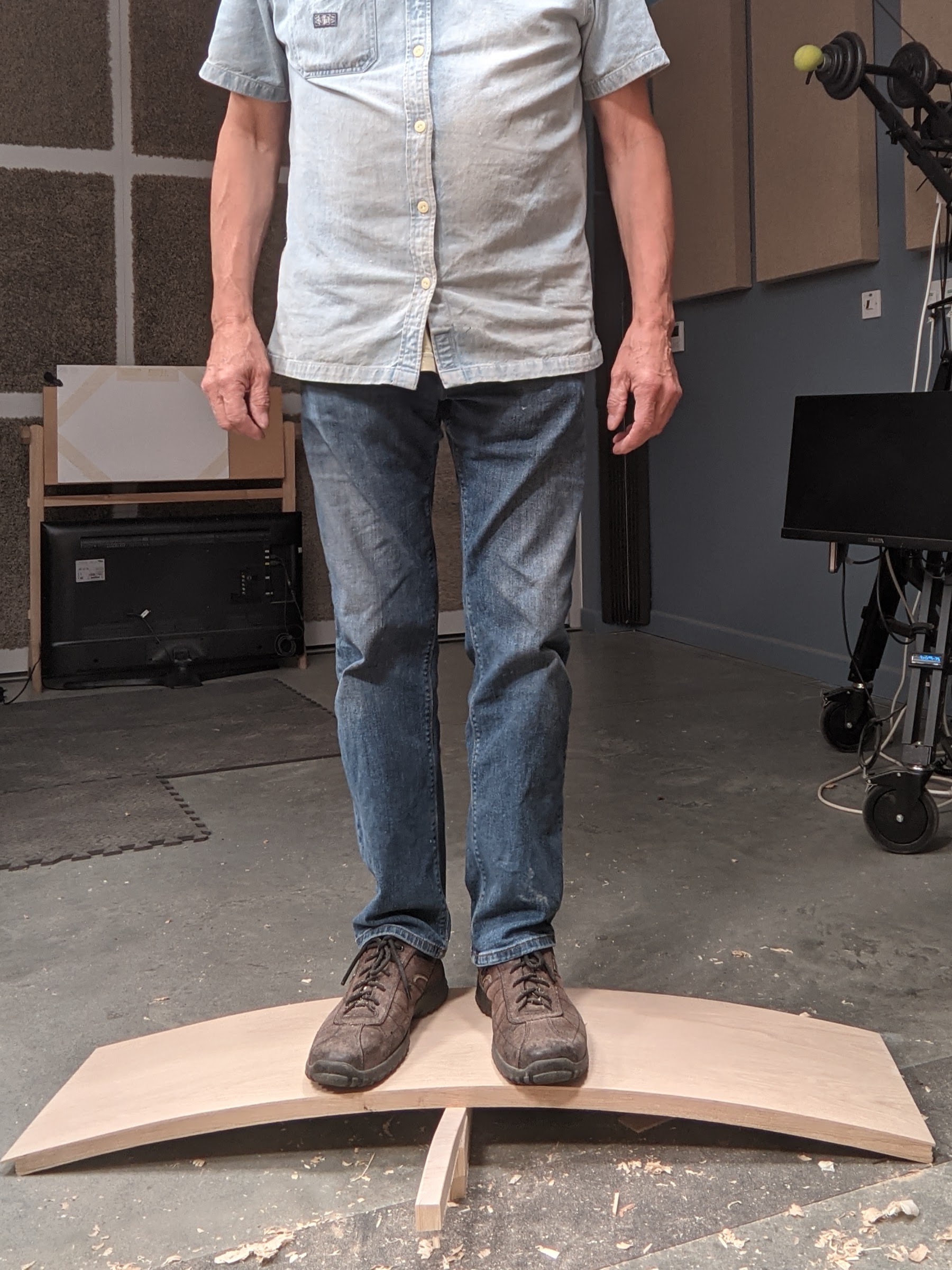
I ended up at just under an inch thick. The strength arching adds is incredible of course. My weight of 165 lbs (75 kilo) made barely any impact on the flex. In fact, it gave just 1/16" (1.5mm). It feels so rock solid when you stand on it as I did here. What will I do with the experiment now? Not sure, but it will get used I assure you
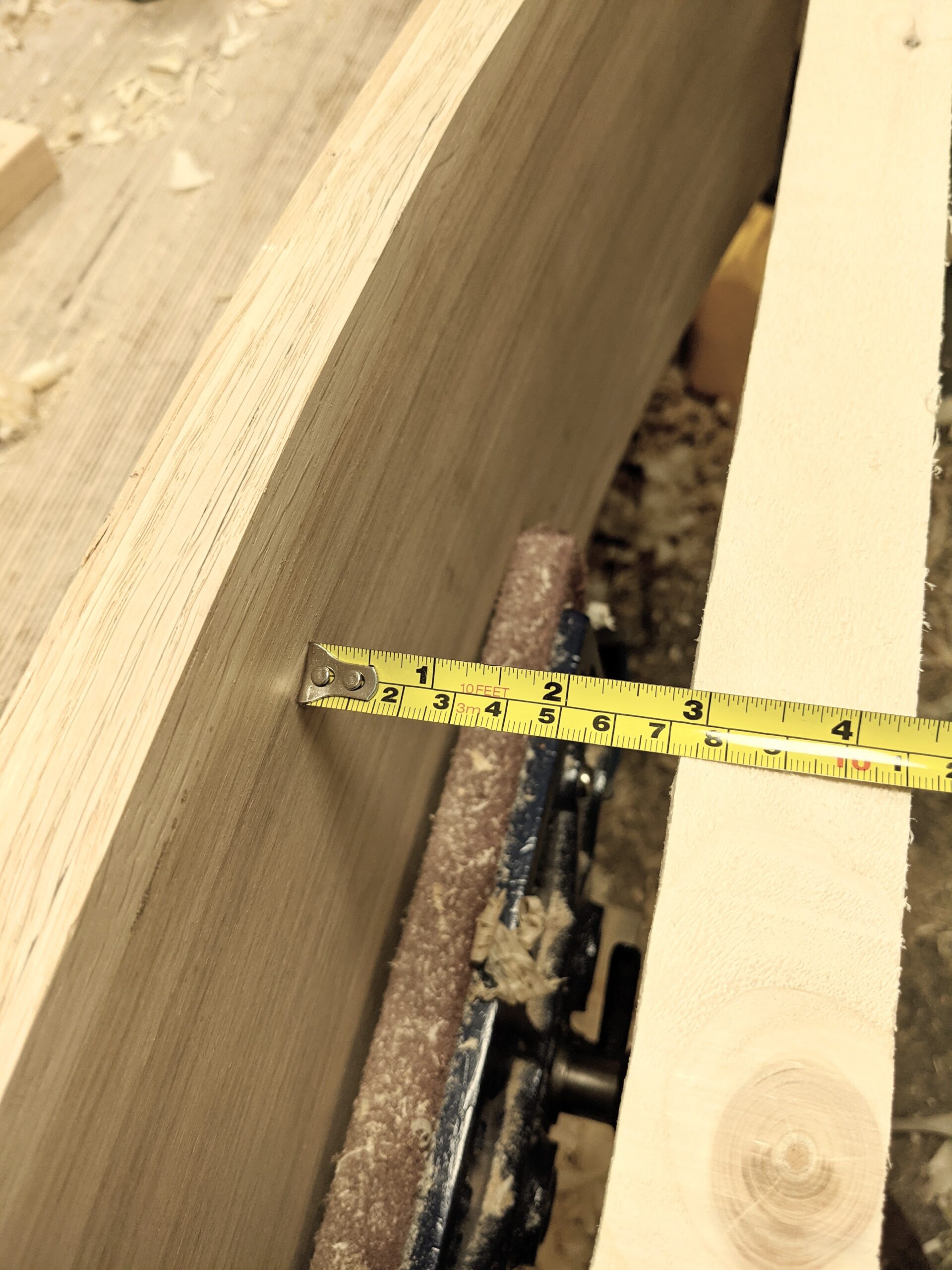
With my core bends completed, I compared the results to my bend lines and there was a 1/4" discrepancy from my 76" radii goal. I expected this, which is why I went for the two-step process. If I added a single layer to the inside of the cove, the glue could snatch and pull the curve into a tighter bend - I knew this also, from general veneering practice. I used a 1/8" veneer on the inside face and a 3/16" layer on the outside. I left the glue-up clamped in the caul until the following day, sixteen hours, and when I removed the lamination it matched the original line of my intent to perfection.
Comments ()