
Why Shrink?
It is all too easy to use the word shrink as a catchall for all wood movement. To say you understand that wood shrinks and swells according to atmospheric moisture levels surrounding that particular section of wood only describes a small percentage of what happened, what is happening and then what can ultimately happen. Wood movement is often misunderstood because it is so governed by the atmosphere surrounding it and its unpredictability even within itself as a single length and stick of wood. Sections of wood, even within a single length, can and does expand differently because it invariably has various intervals of density changes and it's this that often causes the variations that subsequently affect the wood.
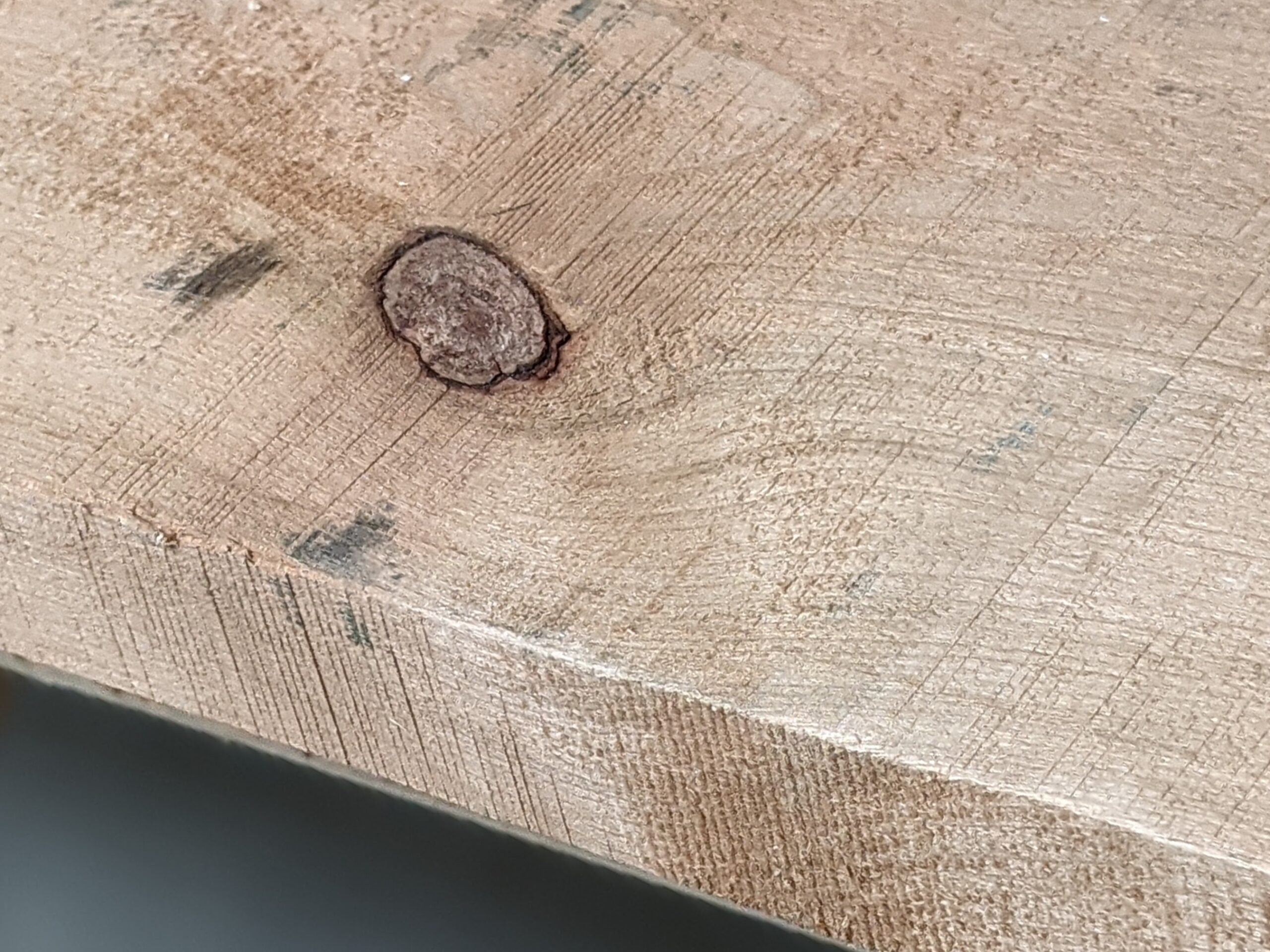
A knotted area some distance from any and all knots will have various levels of density and may well absorb or release moisture differently in each of the adjacent areas. Knowing what to expect becomes central to our considerations at the bench and also in the yard and racks of our supplier, but, at best, it will always be unpredictable. For the main part, we all want to avoid difficult and awkward grain. Therefore we must work with the grain, the knots and the various stresses and strains of the wood to maximise the possibility of a good outcome.
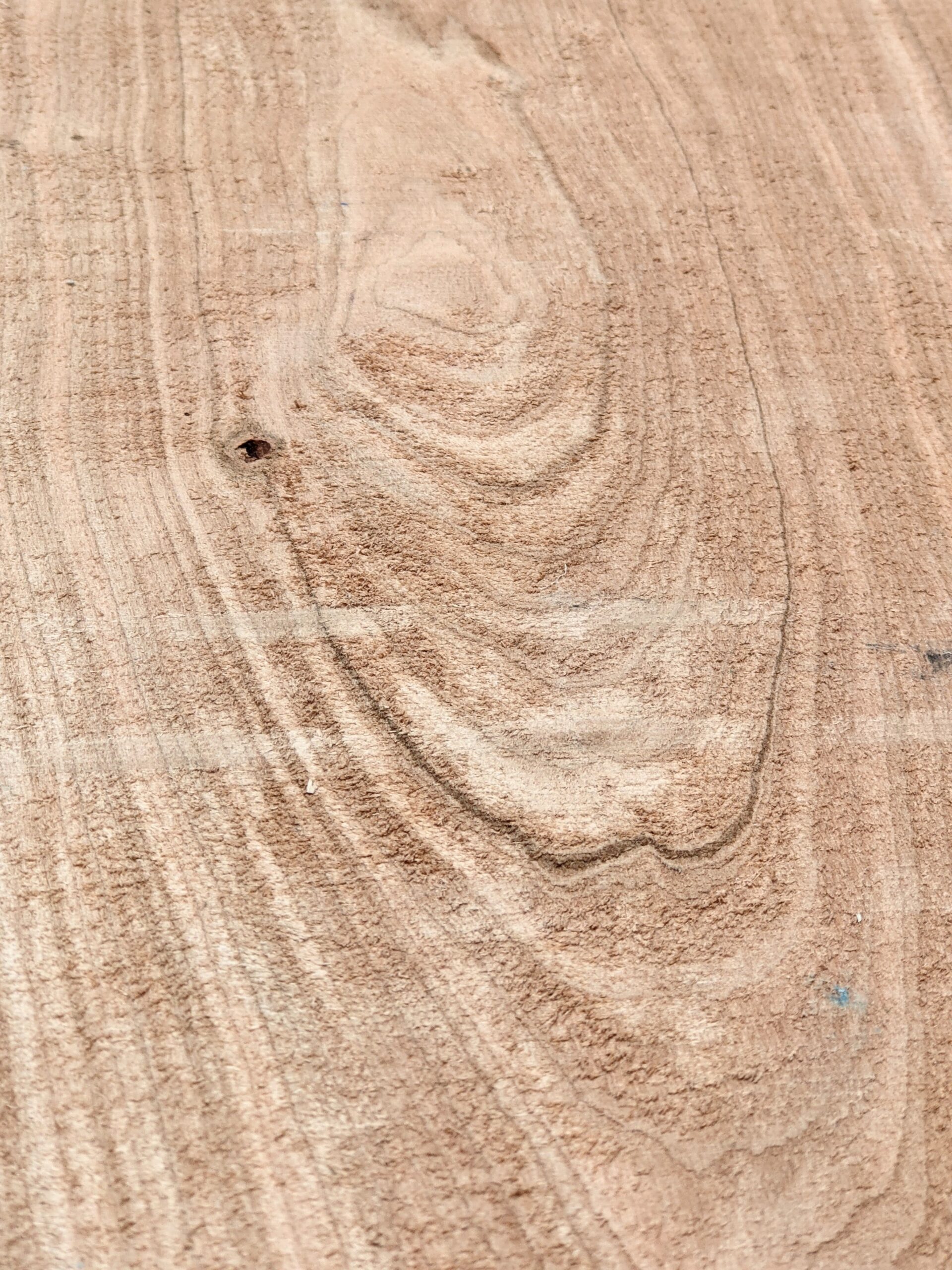
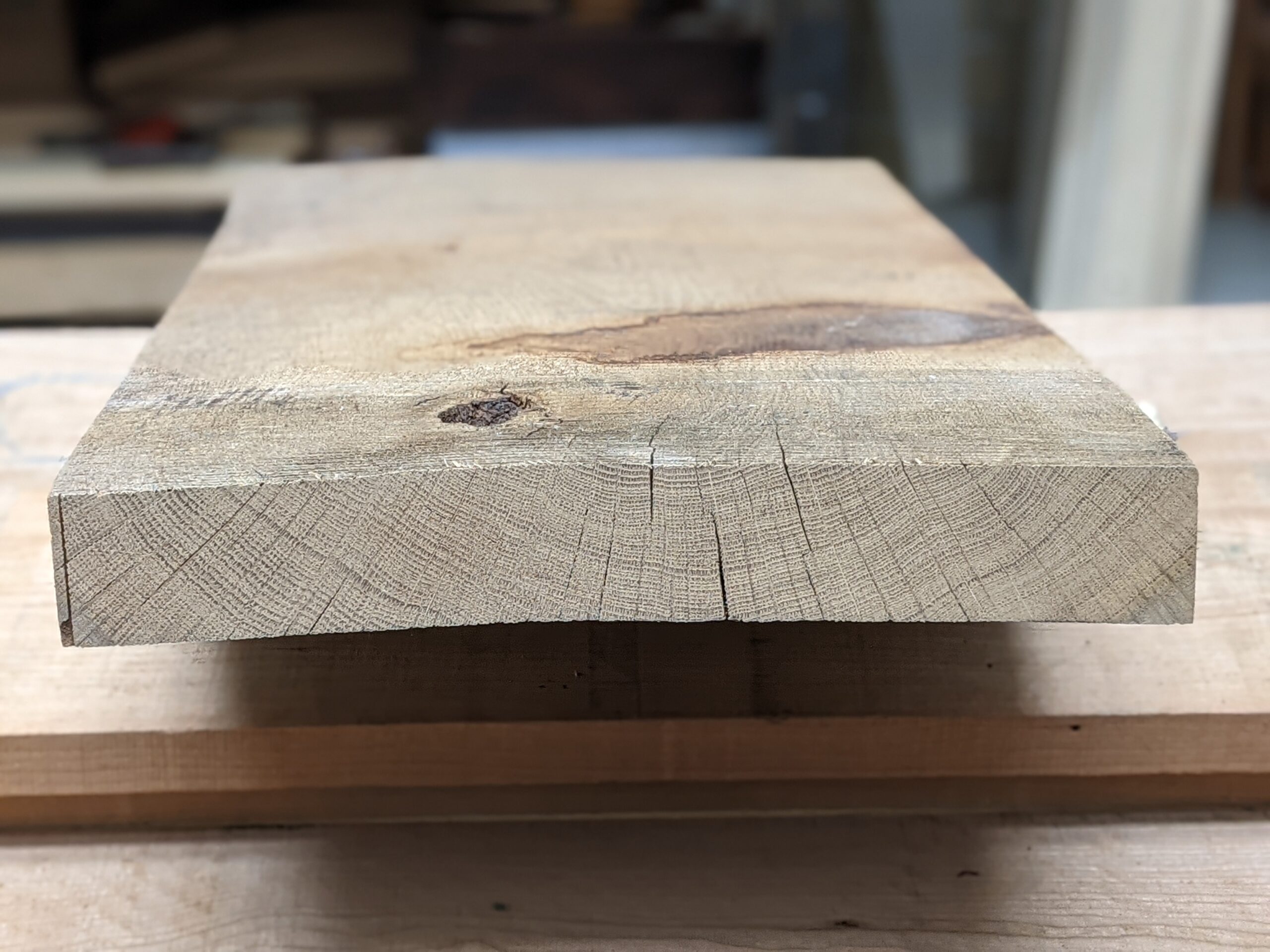
The surface textures left from the industrial saw leaves telltale 'calf licks' or 'cowlicks' in the surface of a board. Just as in human hair, these cowlicks show that sub-fibres in the grain of that section of wood have a momentary shift in grain direction. At this level, there is no way of knowing exactly which direction this change has taken and even in a subconscious consideration of the overall condition of the wood, we might decide to reject such aboard.
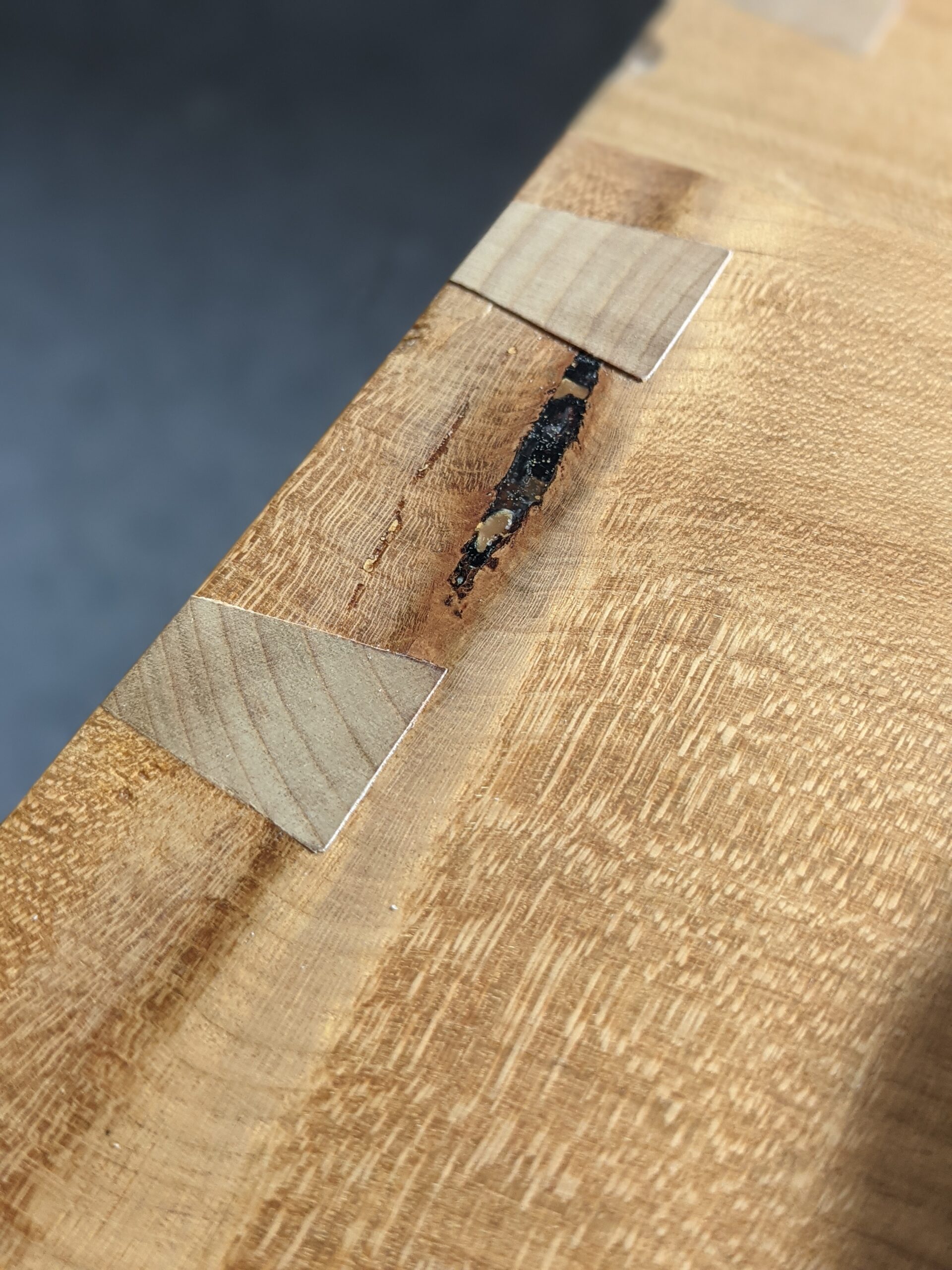
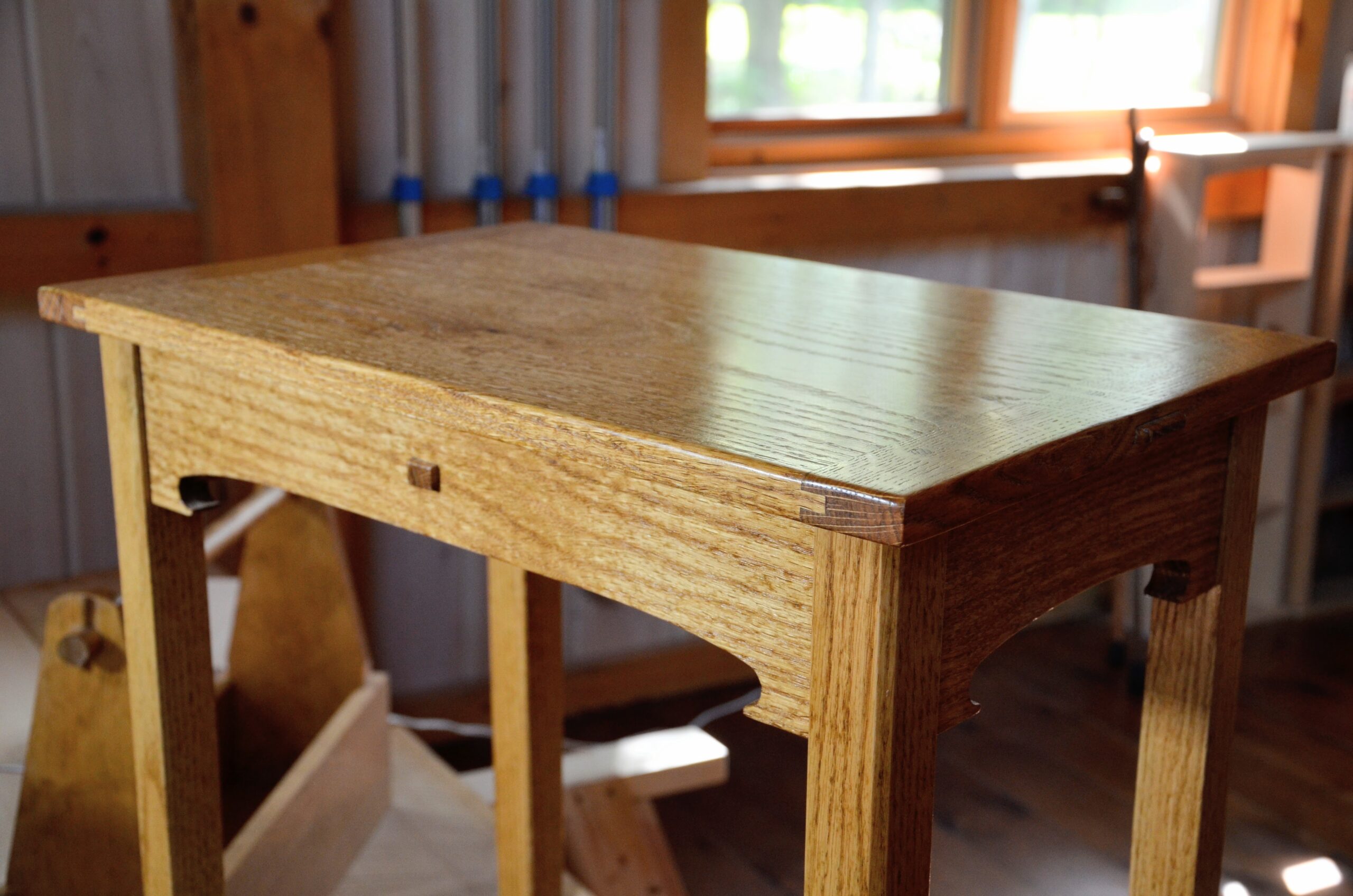
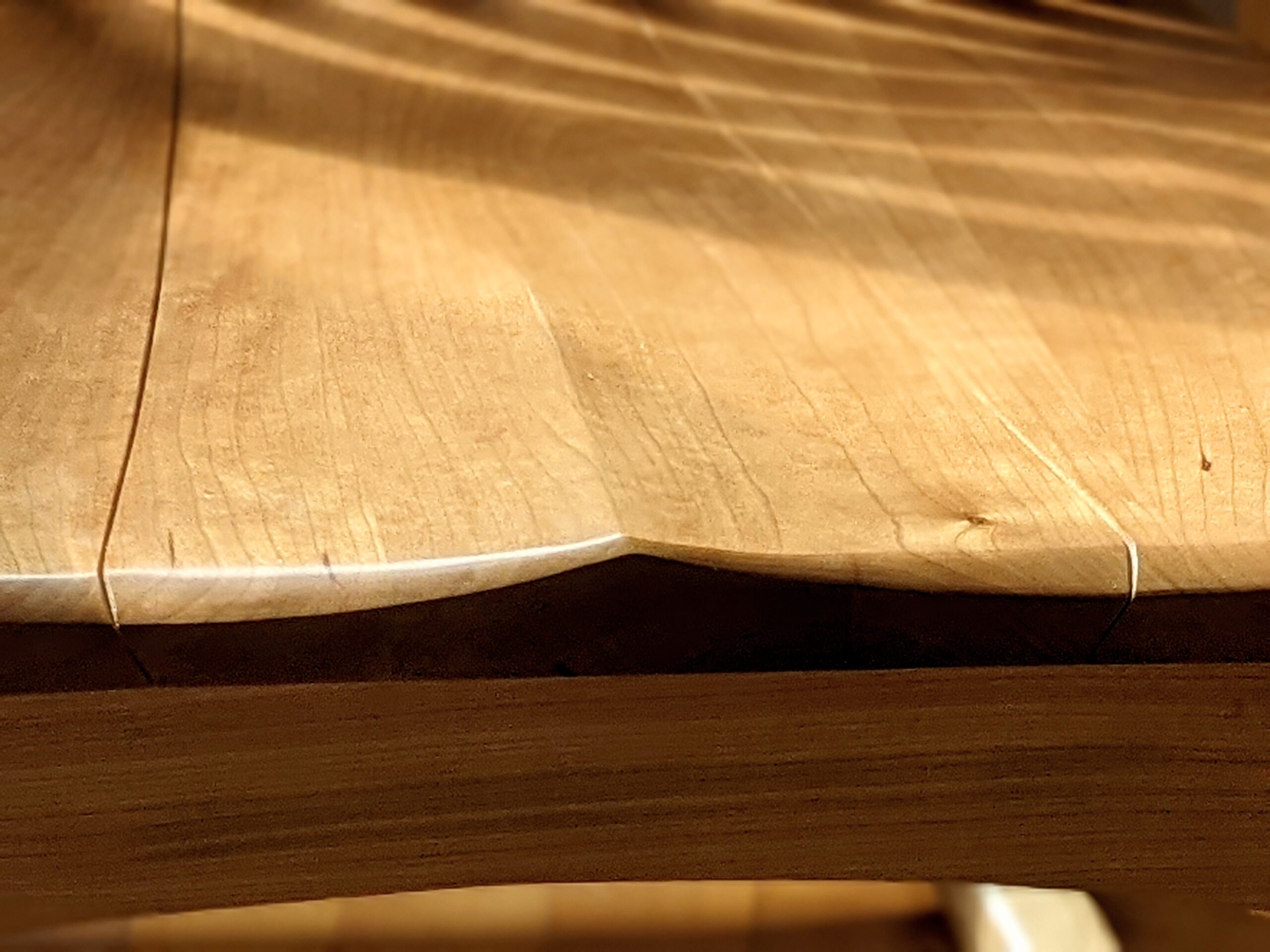
In this piece above I should technically have rejected this section of wood but I wanted to persevere despite knowing the grain surrounding the knot would emanate into the joint areas and cause me difficulty. The wood was very dry at 5% and yet it still shrank to a level that I could feel the pin's slight protrusion. In this piece, I, liked it. In others, I might not.
If we see that wood shrinkage is indeed diversely variable throughout its length, width and thickness, and then too within its species and without, we understand that there will be unpredictabilities we must learn to work with too. This is not a choice. We must try to predict an outcome which can be like predicting the weather and in some ways, it is that too because weather changes, how often a family takes showers how much it cooks food, sweats and more, will affect our precious wood. To get into this is complicated beyond need. Sapwood and heartwood shrink and expand at different rates, often resulting in conflicting levels when the wood finally reaches some kind of equilibrium in its final home space. By the time this happens, the wood becomes 'set' and little will change without reworking the surfaces to straighten and level everything by the removal of wood.
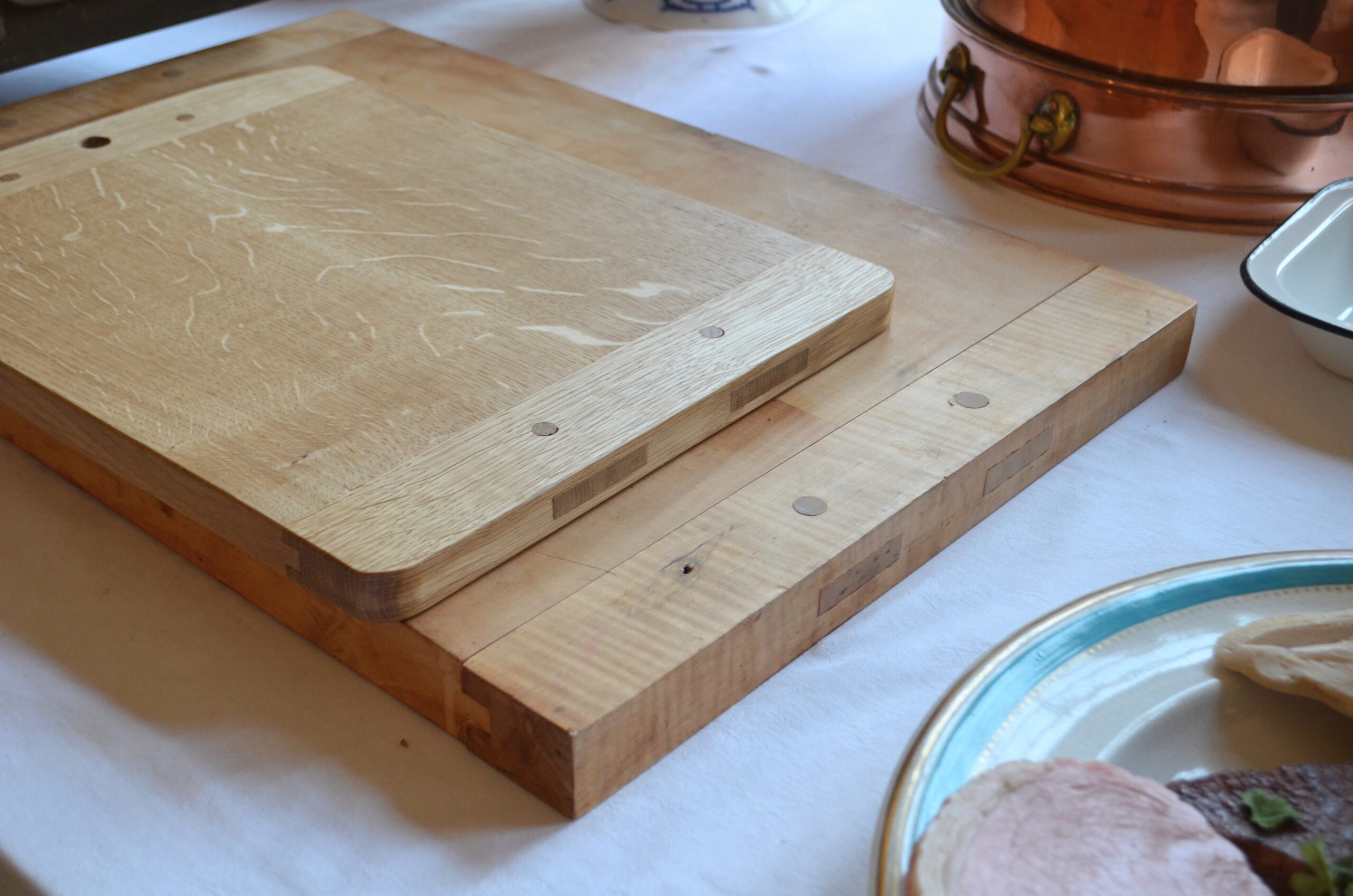
In most cases, our wood is ultimately constrained by additional elements used in construction, the glued areas, jointed areas and then additional constraining influences such as turn buttons to the undersides of tabletops, or bread-board ends. Now, I say constrained but I am always surprised by how much or how little wood can be held in check (no pun here). I have a tabletop made years ago that was crowned round and pulled down with a single turnbutton quarter of an inch. It went flat and stayed flat and when I released the turnbutton screw the tabletop remained flat.
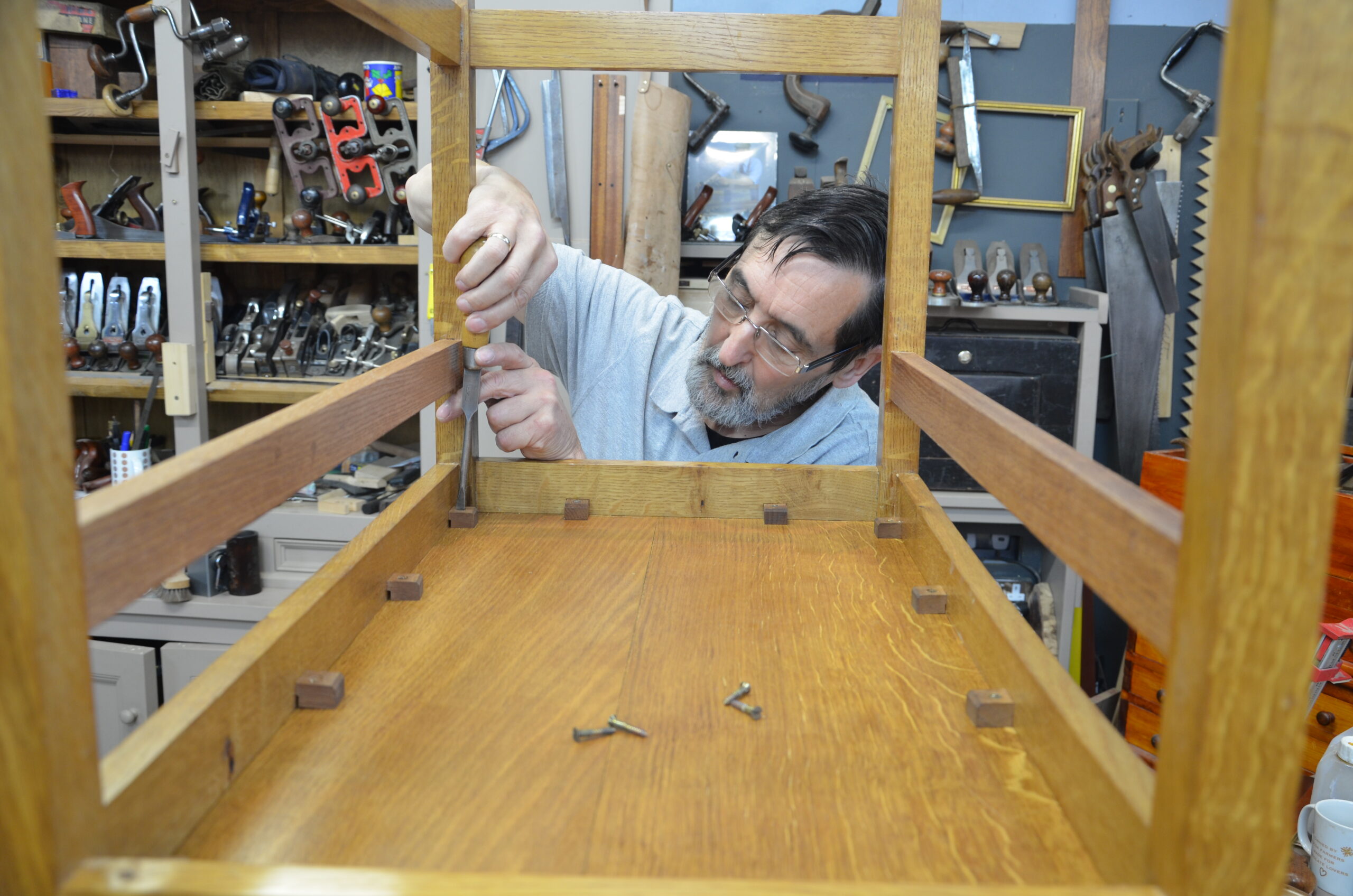
Using the principle of flipping boards to change the orientation of growth rings for a tabletop or wide panel has become common practice for all. Whereas it is an acceptable practice, it also more necessary for commercial products rather than the home craftsman or individual artisan like myself. The best way to prevent excessive distortion will be through an attempt to severely prevent the moisture from entering and leaving the wood. Drying down to 5% means the only way for it to go is to expand. Expansion is less likely to result in cracking. Applying many coats of a finish like polyurethane varnish, a surface skin if you will, disallows or slows down quick ingress of both spilled and atmospheric moisture such as water as humidity, steam and spillage. Oil finishes and others also serve to slow down uptake of water into the fibres and some manage this better than others.
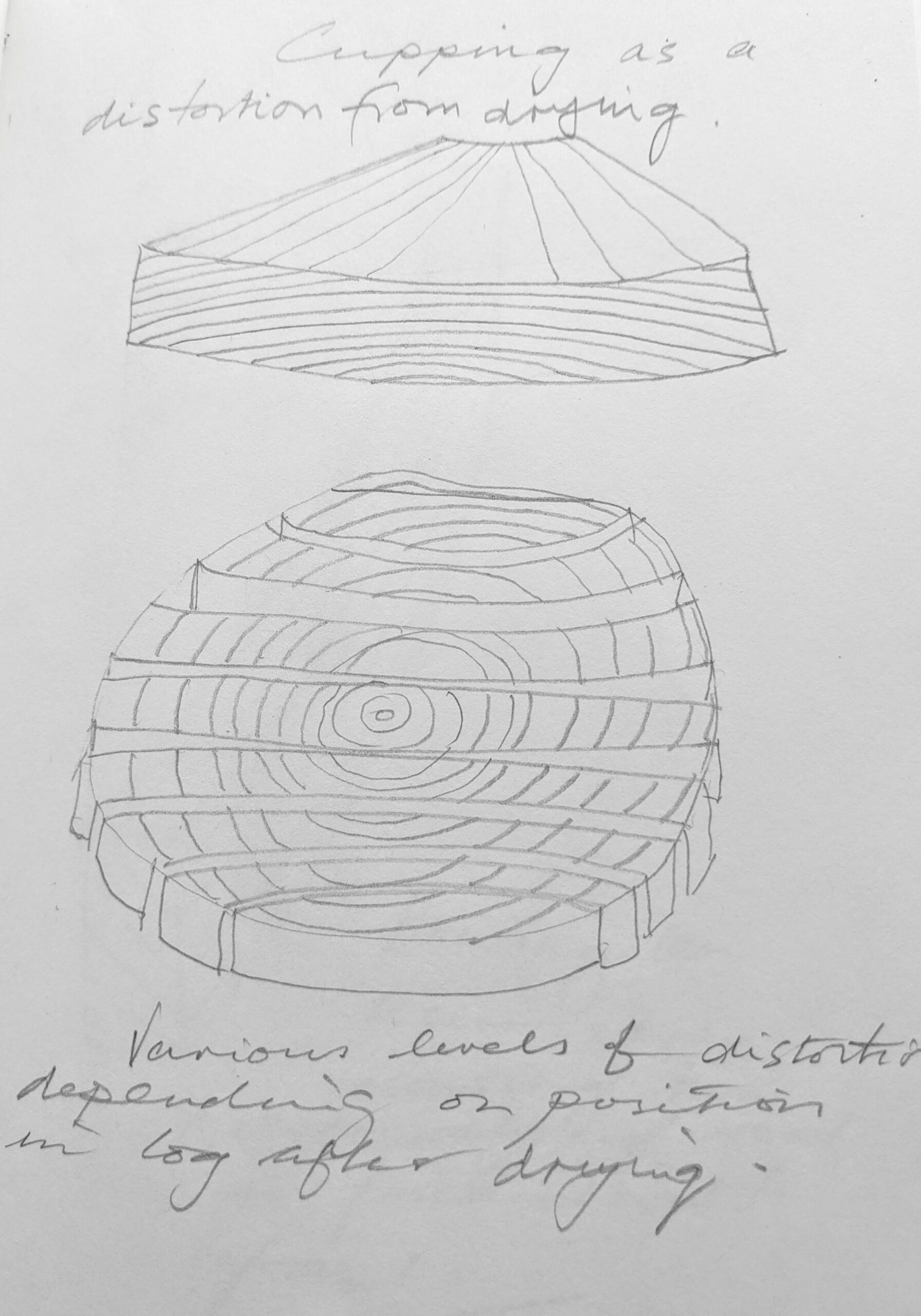
The drawings will show what can happen by alternating growth rings and also keeping them in the same plain.
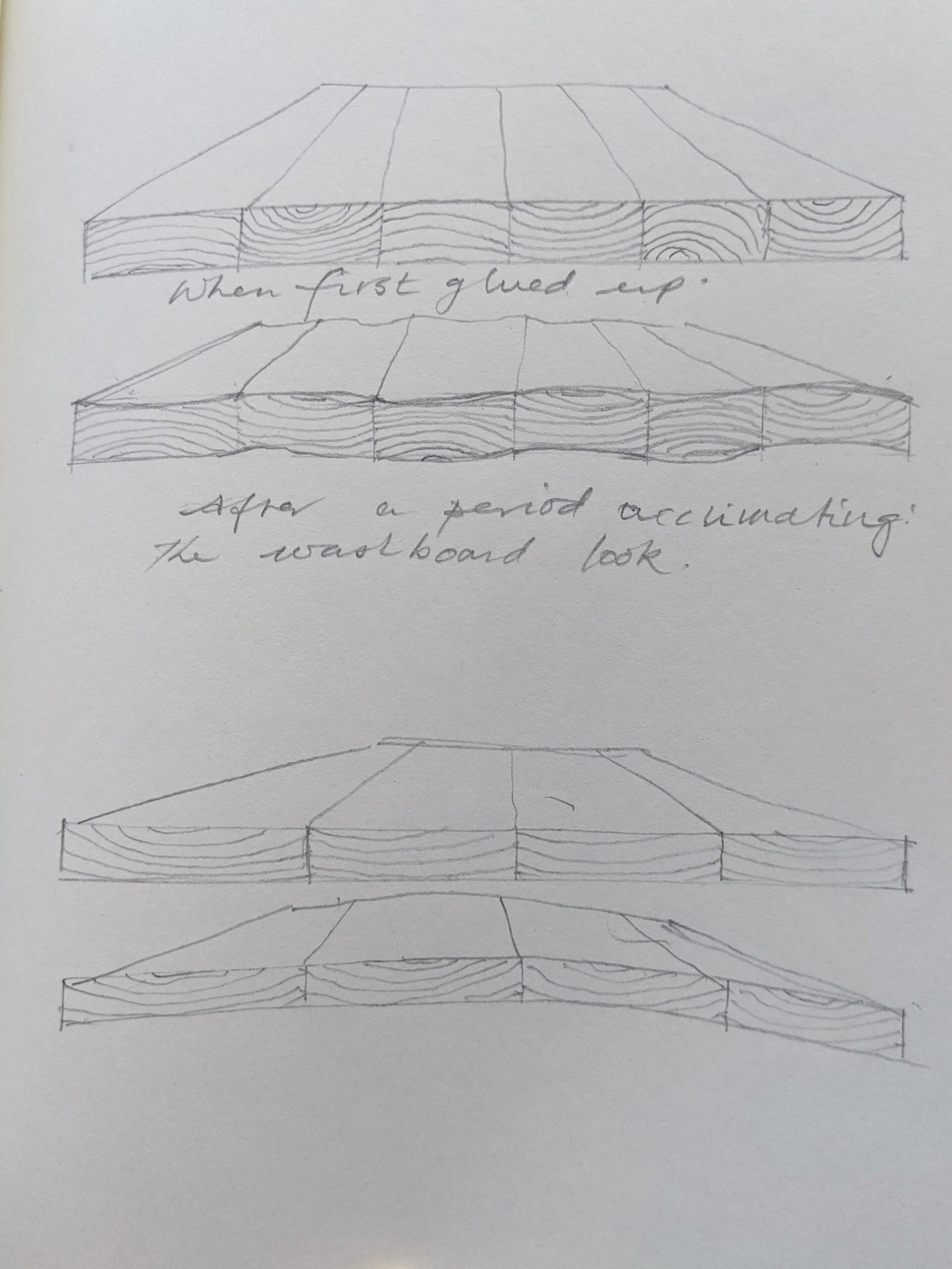
The top drawing shows the alternating presentation while the bottom one shows what happens when all the growth rings in separate boards are oriented the same way.
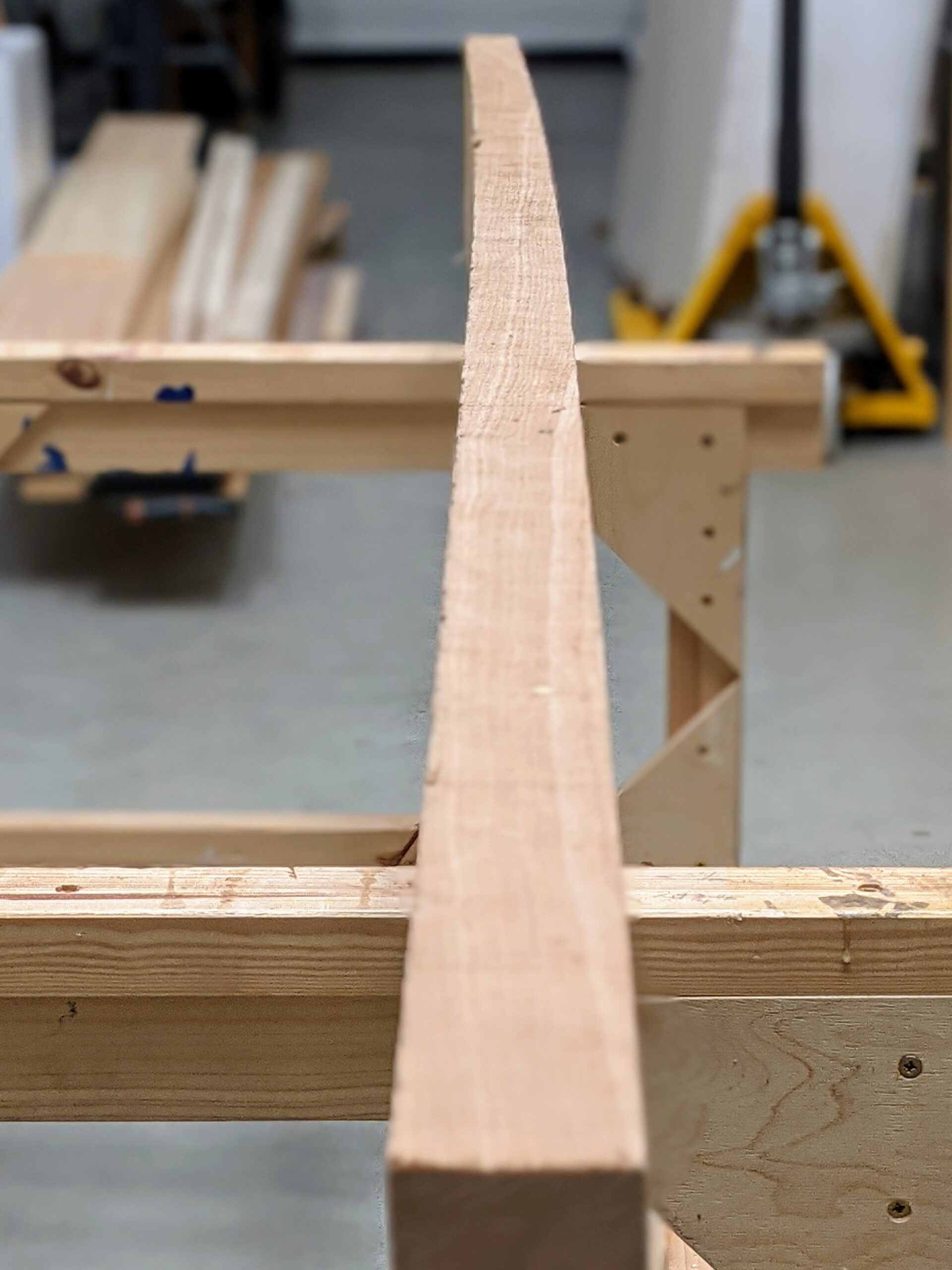
I prefer not to use the practice because such a technique works best with narrow sections of wood rather than the wide boards I prefer. In most cases, should the board curve in a continuous arc, the arc can readily be pulled to flatness without overstraining the wood. We often do this with a tabletop to say a table apron where we use turnbuttons or enclose the edges of a panel into a grooved frame.
Seasoning wood by air- and kiln-drying is to effectively reduce the probabilities of major shifts and changes subsequent to our working our material. In essence, we preshrink our wood ahead of time and of course, this takes time. By gradually reducing the moisture levels within all the fibres of the wood the wood becomes much more stabilised. For those of us at this end of the spectrum, it is usually enough to know that the wood is dried down to around 7-10%. The main reason that we dry our wood down before we work it is that there will be major consequences to the overall work after we are done.
Additionally, drying substantially reduces the weight of the wood, increases its strength, stops fungal attack and allows us to glue surfaces and finish our work with external wood finishes. Any and all of these conditions, if left unchecked by drying, will result in severe deterioration at many levels. Even taking care of our fundamental duty to use well-seasoned wood before we start, we cannot usually predict and control the environment in which the final work will sit. We just do our best. Accepting the natural benefits of working and living with real wood is still far better than resorting to the use of MDF and particleboard. I can live with the slight variations of surface differences knowing that my work is real wood, real woodwork and that what I made will easily last for a couple of hundred years.
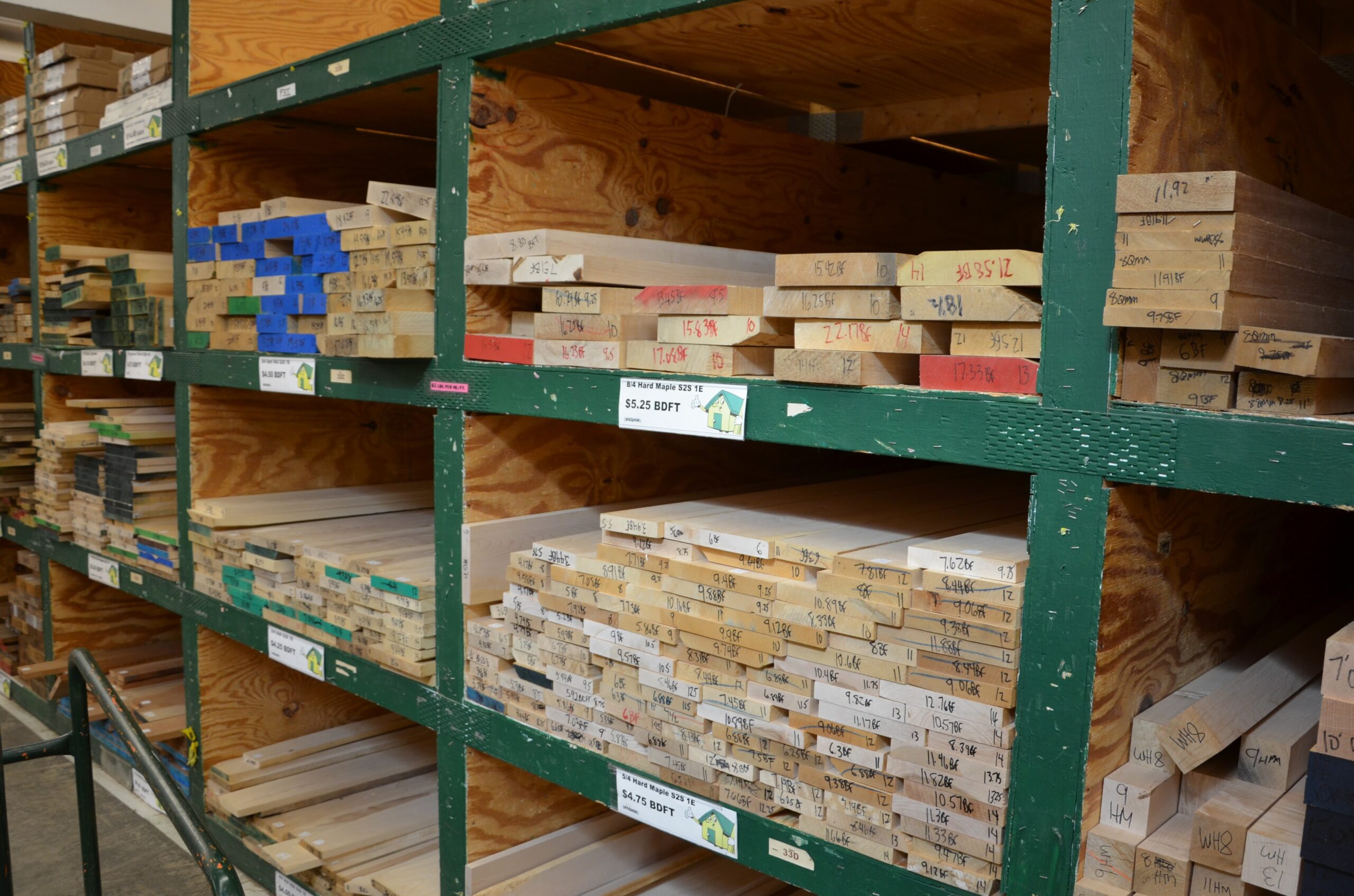
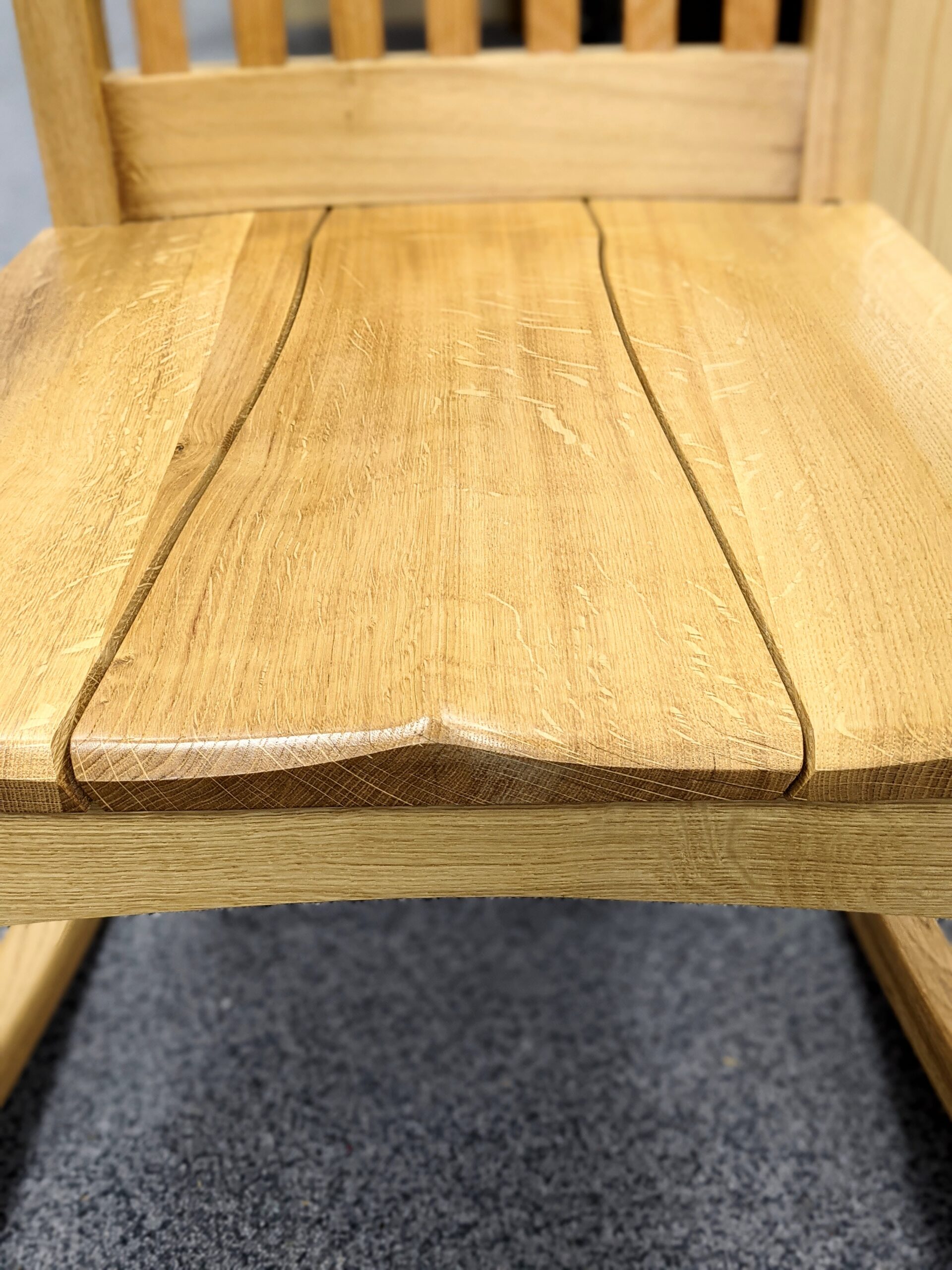
The timber yard usually stocks dried wood. Even so, we must go the extra mile and make sure that our newly attained wood is acclimated in a suitable environment. Wood dried down to 5-7% will readily wick up atmospheric moisture to double those levels in just a few weeks. Shrinking our wood for good reason can soon be negated by damp and wet working environments. My shop in my garage is dry. This is worth dealing with early on in establishing our workshop. A benefit of a wood-framed, shed-type workshop is that you can line it, insulate it and thereby best maintain humidity levels. Older bricks and mortar buildings can retain high levels of water in the bricks and concrete floor. Dry-lining will help here, together with a wooden floor on top of the concrete. My recent addition to my garage workshop is stick framed, insulated all around and then lined with plywood panels. It's easy to keep dry and it is here that wood is best stored. Even so, my oak rocking chair with its spit seat continued to shrink after it was completed three months ago. I am glad it added the angled split seat design element because had I not the seat would indeed have likely cracked. On the other hand, my cherry rocker seat expanded to close the gaps I made.
So you will see that, whereas the expansion and contraction of wood is inevitable, we can counter its impact on our work by accepting facts and then, of course, working with it in consideration of our purchasing, stowing, working and delivery.
Comments ()