
Prepping Wood V
Choosing the wood we use in any project precipitates wood on the benchtop. At the timberyard, we search the racks and flip each board to try to preempt any possibility that what we buy might cause us problems after we've left the store. We consider everything that could go wrong with a particular board if there is a split or some wiry-looking fibre in the piece we chose. This anticipation helps us to stay focused when and as we begin our search for good wood. Minimising the waste of our energies is important and so we must think ahead. Flogging off massive twists with a bench plane can quickly cease to be fun. In times past, a man had an apprentice or two for the donkey work. No such luxury for us. The wood we will choose can result in the waste of a piece or section. But secure in the knowledge of our future piece, enables us to envisage different pieces in the grand scheme of things. This or that would have worked better here or there in the overall piece rather than where we thought it should be: think straight rail with arching grain, busy, turbulent grain can dominate whereas passive submission would have worked perfectly, and so too the dark, heavy depths of colour can clashingly imbalance amidst its counterparts.
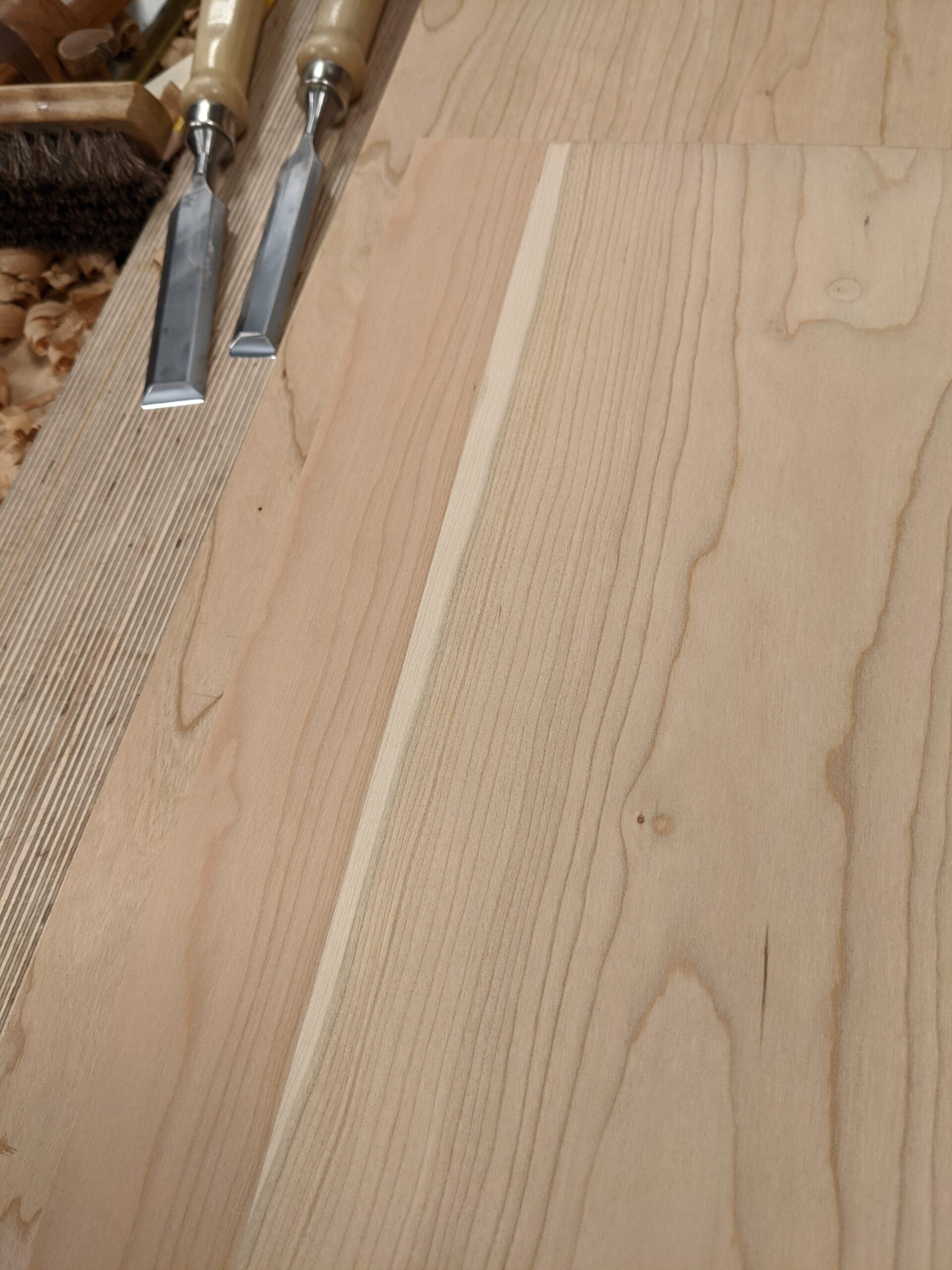
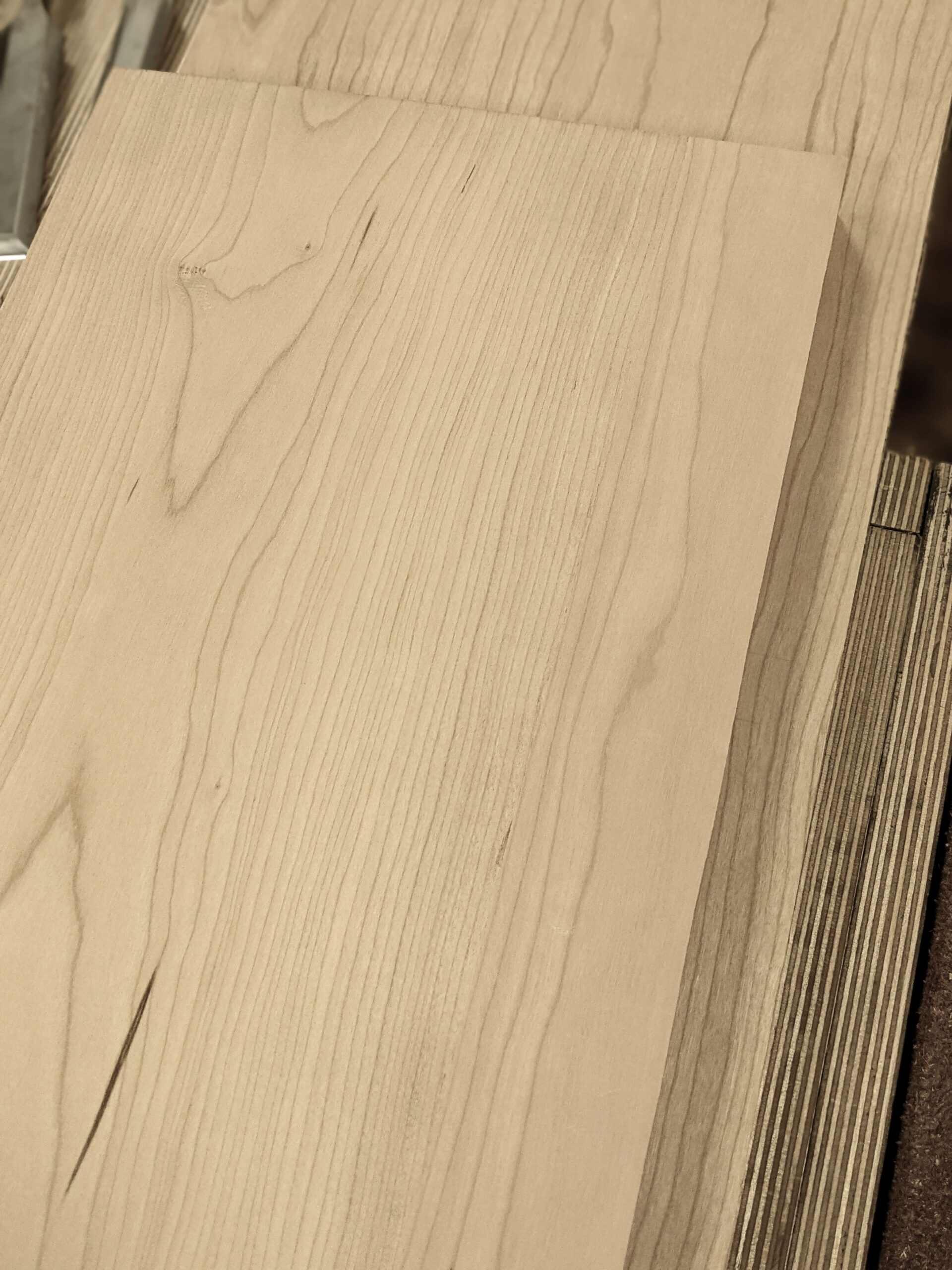
Just as planning ahead by drawing, enables you to plan buying by taking off a cutting list from your drawing, so too thinking about the individual parts to your piece will help prevent a crash in the middle of the whole when done. A panel with cherry sapwood that can sometimes not be detected in a newly cut and planed surface and edge can almost always be detected in the end grain.
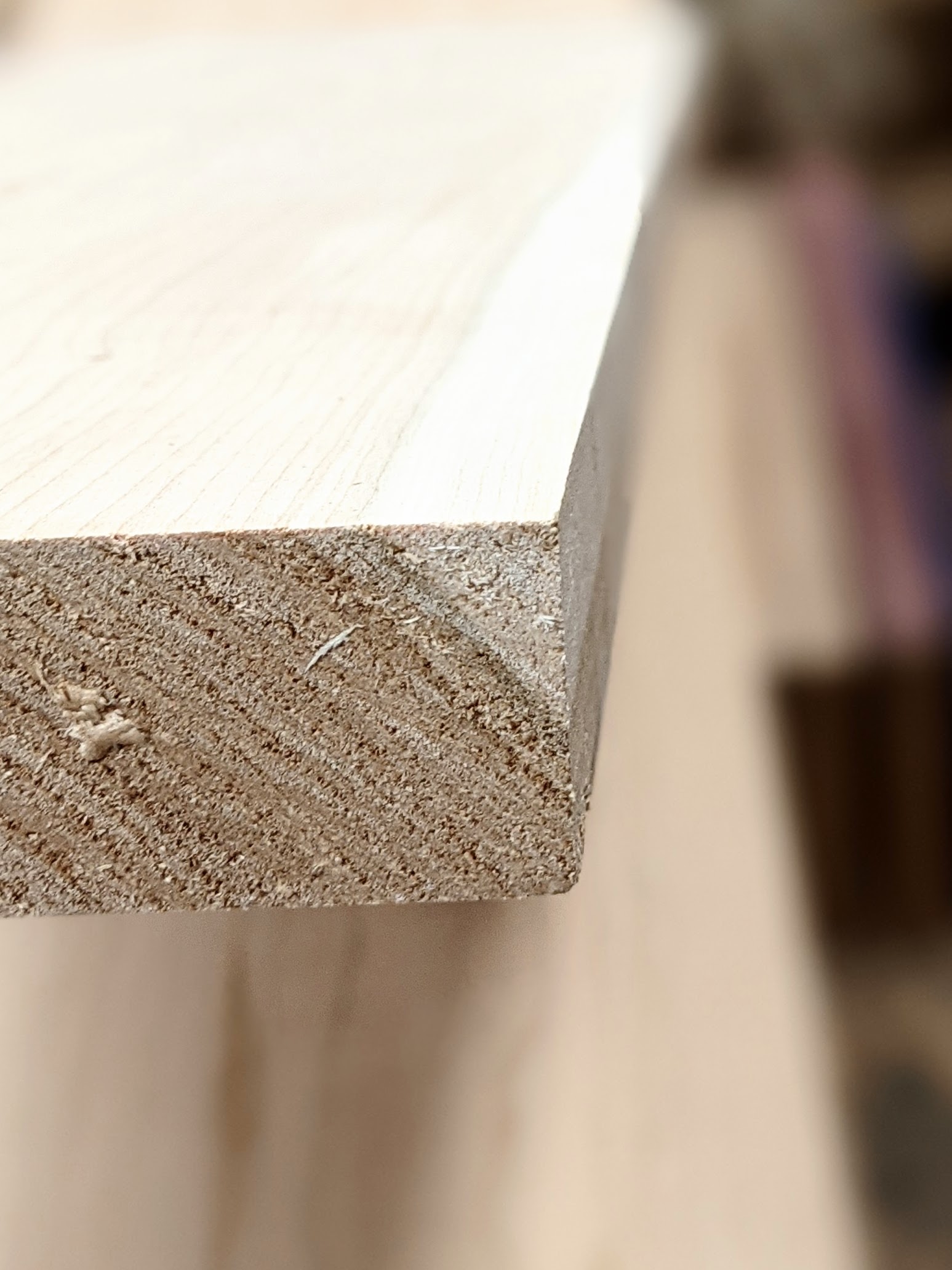
In a month or two of daylight, the whiter sapwood will contrast markedly and will likely ruin the midsection joint line of a laminated tabletop. Take time to think and look. The heartwood on some woods will darken whereas the sapwood will not.
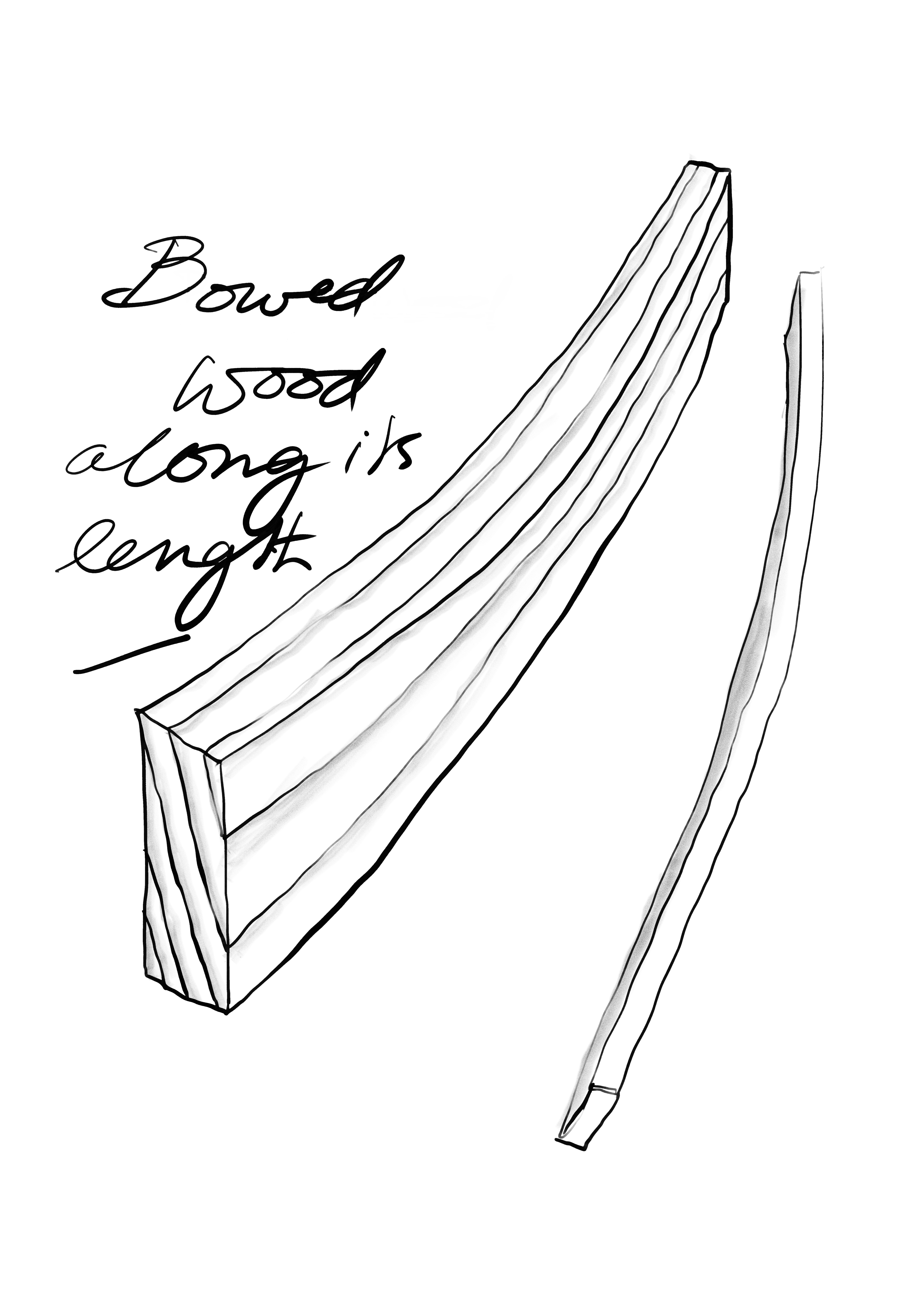
Cupped boards, long bows and short, twists are all standard when buying wood. Most can be salvaged but not changed as in applying opposing pressure or bending in an opposite direction once dried. To resolve such distortions necessitates the removal of wood and doing this using hand tools: primarily saw and plane, is time and energy consuming and the wood you take off is lost too. Wood with wane to some is character but to most it is waste you will ultimately pay for in wasted wood. Most people as customers buying your pieces and makers selling them do not like or want waney-edged items. When the advertisement describes "Character oak" expect everything and anything from waney-edged boards, massive cracks, patches of wood rot, wormhole, deep and dark discolouration, deep pits and inclusions and more. Most so-called 'character wood' takes some working with. Sometimes it is stunning, often it is over-domineering, overemphasised as a term, and quite ugly. In my world, it is on a par with pallet wood when compared to furniture wood. As I said, every so often something comes up that can be made into something stunning. I have dealt with too many sellers describing their wood as character this and that and only been disappointed when they try to sell me some bog oak from a foundation of a building that was thoroughly rotted.
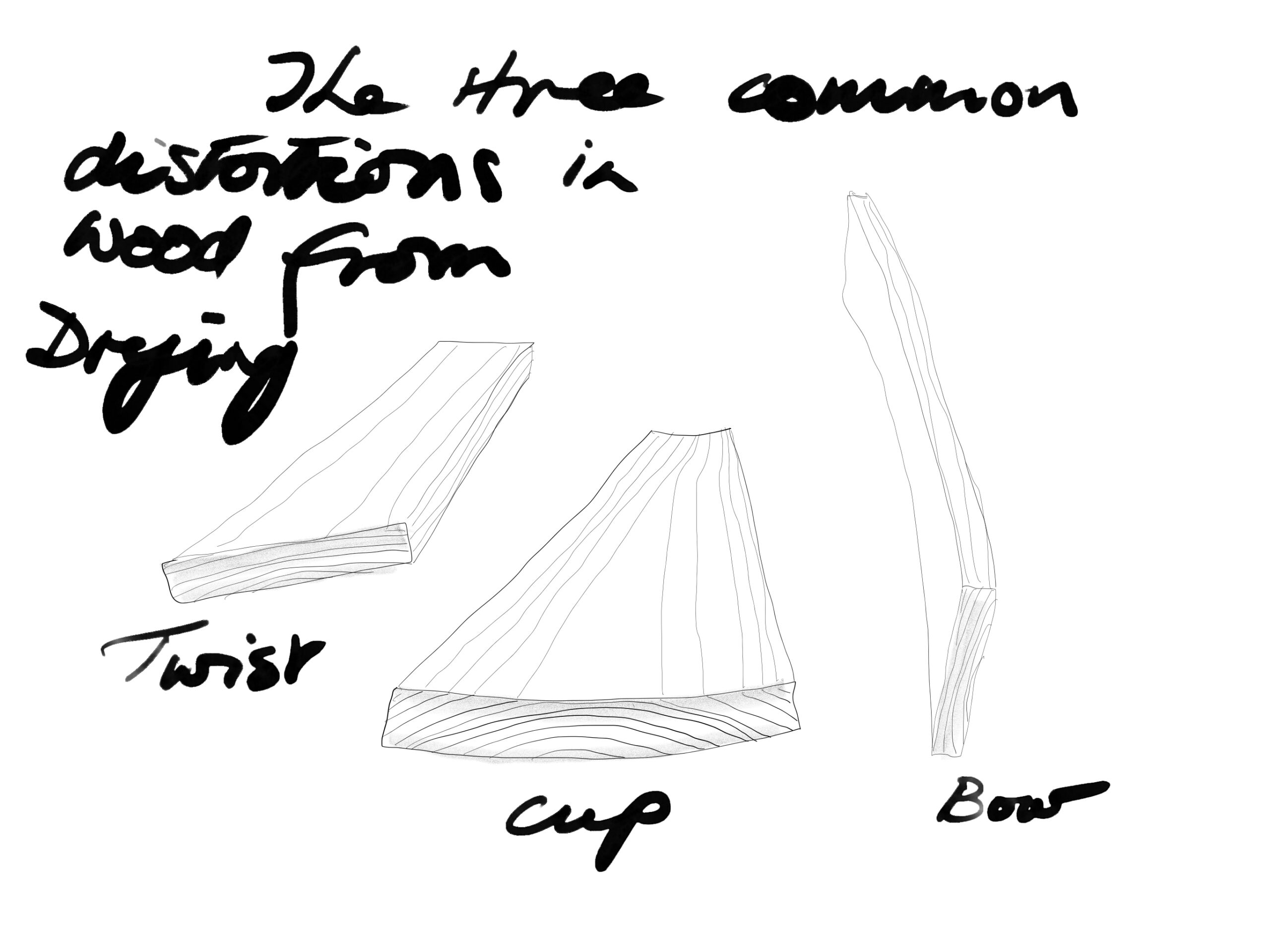
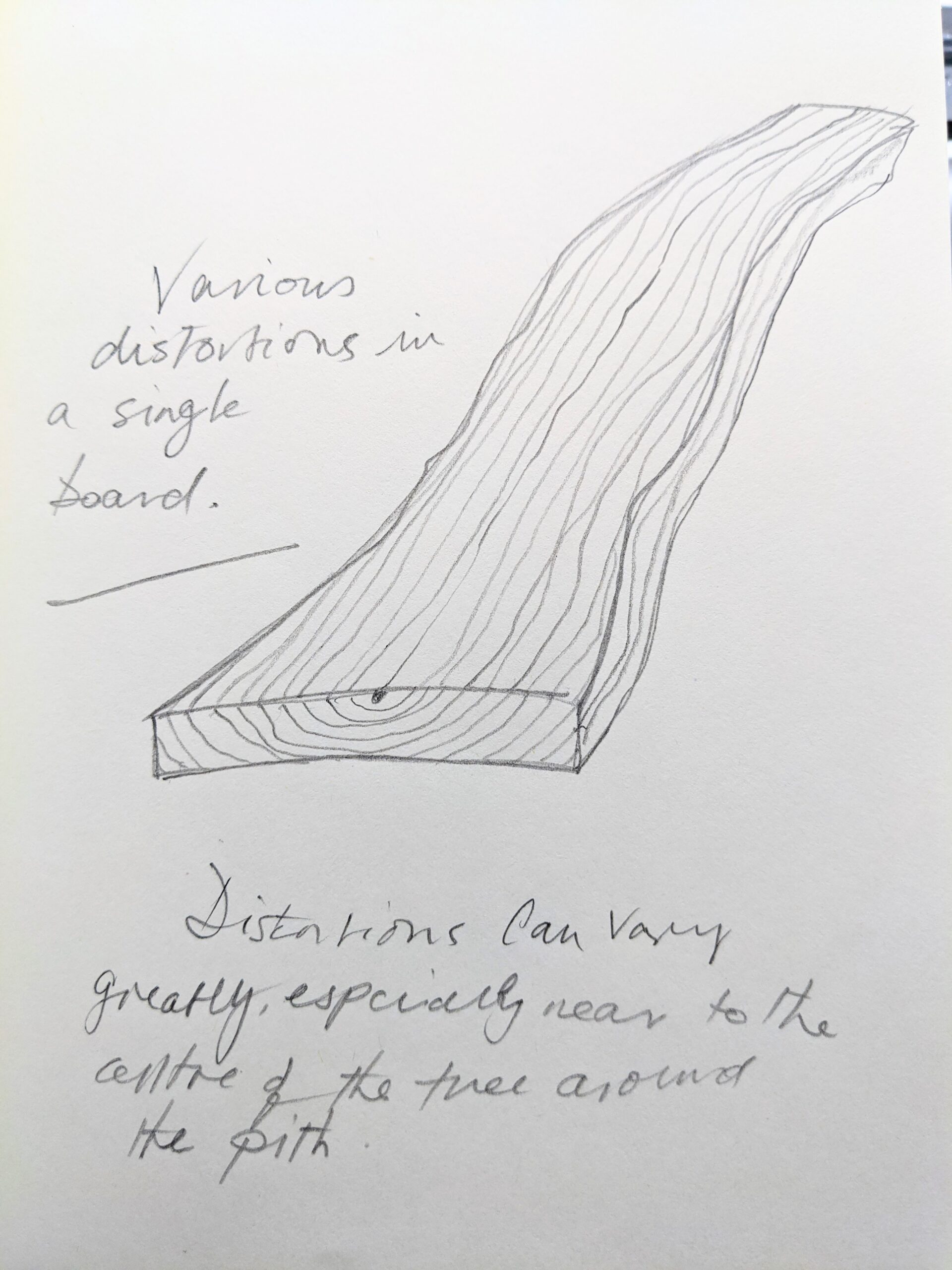
Cupped boards will be present in about 80% or more of the boards we buy simply because when the wood is cut green, as it almost always is, drying still must take place. Drying results in distortion of different kinds and at various levels and most of these are indeed predictable to a greater or lesser degree. Cupping, twist and bow will always be acceptable but not always accepted. If you go to a supplier looking for a flat, rough-sawn board every time, you will mostly be disappointed. I briefly covered the ways we can work it into our work in Why Shrink here. In other words most of our wood, once dried down to around 8%, will indeed be cupped to some degree. This cupping occurs as the wood is dried and it's because wood does not shrink to an even width or thickness and nor does it shrink in perfect parallel symmetry to its outer sawn faces, we must accept that we have yet more work to do.
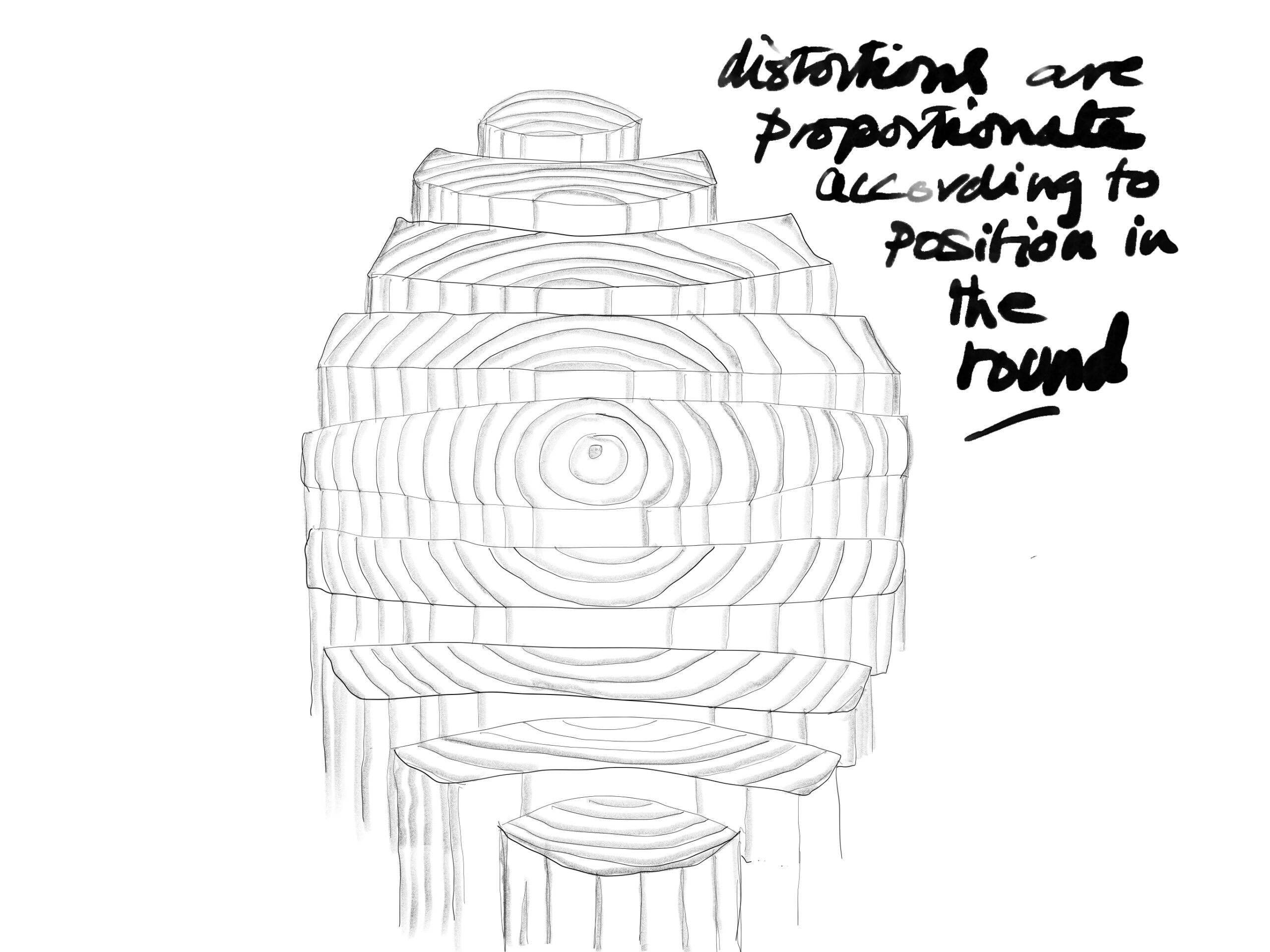
It may be tedious to see the same drawings depicting the ends of a sawn log showing the end sections of planks and beams in dotted lines that in turn delineate expected distortion but they are indeed worth studying. From these, we can see that rectangular sections often dry to diamond shapes and then too that the nearer to the outside of the tree stem that we take our wood the greater the amount of cupping. Also, the twisted stem of trees will indeed yield twisted boards and though twist may visible on the outside of the tree, no logger will anticipate nor be concerned about you picking out your dried and twisted wood in the timberyard. On the one hand, I might advise anyone to reject twisted boards because there can be a lot of loss after correcting a full-length distortion. If short sections are needed, then the loss will be much less and the board may well suit your needs. This is true too of long bowed pieces. For short sections needed in chairs and such, there will be little if any loss. Especially is this so if the parts are lathe-turned for whatever piece you are making.
Distortions should always be expected in general
No matter how wood is dried, distortion will take place at some level with the lowest levels of distortion taking place in quarter-sawn wood. Most of the wood we buy will be sawn through and through which means that the tree stem is slabbed with every pass through the saw being parallel to the first. Three or four boards will naturally be quartersawn; quartersawn material distorts the least during and after drying. Depending on how close subsequent boards are to the centre of the tree determines how much the boards will cup. We have no real way of considering this when we are in the timber yard buying our wood (I am not talking construction-grade softwood here). The ends of hardwoods are almost always painted to reduce too rapid shrinkage at the end sections.
So we learn to work and live with board distortion as and when we buy and work our wood - it goes with the territory. I have always said that life is like wood, it comes with knots in it. Well, in picking out our wood, it comes with much more than a few knots.
Comments ()