
Springtime Innovation

Though we still have cold starts to the day, my eager anticipation of working never fails to motivate me and indeed keep me warm. Today is no different. I open up the workshop and smell the roses, in this case it's more the cherry blossom in the wood I'm working with. I recently abandoned a bookcase because it was more complicated than I really wanted. I will rework the idea and settle on it this week. I just pulled together a new coffee table design that has some unusual design features I like, one that has a little challenge but with it a clean, clear-cut uncomplicated design. A few years ago I pretty much-abandoned mouldings altogether, mostly because they tend to date and tie my work to a past era of retention and unnecessary adornment. Days now gone! In many ways I think that the main reason that they even exist these days is, well, if you bought a powered router machine, you've got to have something to do with the thing. And there are a hundred different classical bits to interchange in many different sizes and, if no one sees you use the power router, it looks like you did something clever. Take away the molding capability and you have little much you can do with a power router because most other tasks that you can do will always need multiple jigs that must be made to create a pathway guide to control the twin-handled beast. Most people could readily cut their dadoes by hand if they were trained for it, housings and recesses come from a hand router plane faster too. It is much safer for the user and the wood, it's also acceptable to the neighbors, even into the evenings.
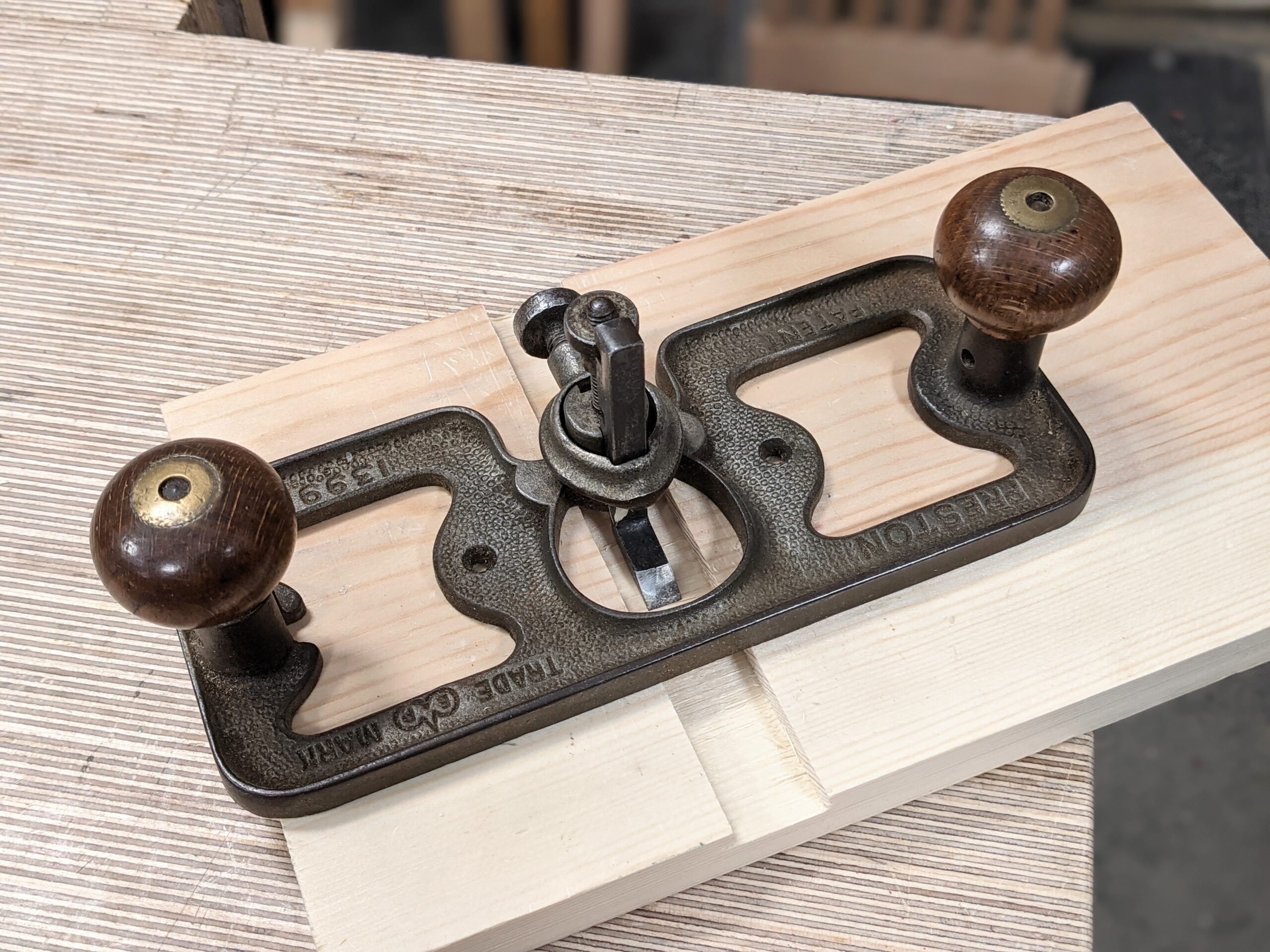
It's not that long ago that the hand router was virtually abandoned. Prior to ten years ago, over a previous period of thirty years, I never met anyone that used one. I decided ten years ago that I would try to resurrect it. Today we have a generation that seems to think that everyone everywhere always used a hand router plane, but that is not the case at all. Show me a woodworker from prior to 15 years ago that used a hand router. I doubt you'll find one. Okay, that was a red rag to a bull! Well, perhaps it was, but there is a large truth in it. Even now, few woodworkers outside of hand toolists have any use for a hand router. I recall 10 years ago buying hand router planes for a tenner (£10) and I could have bought a dozen for that price. I even bought a new-to-me one that was barely used and in a new-looking box. How much? £12.67 on eBay bidding. Today you will be hard-pressed to buy even a rugged-looking one for under £120 and many buy-it-nows are over £200. I am glad that this happened and so are Lie Nielsen and Veritas who make fine new ones that sell for less.
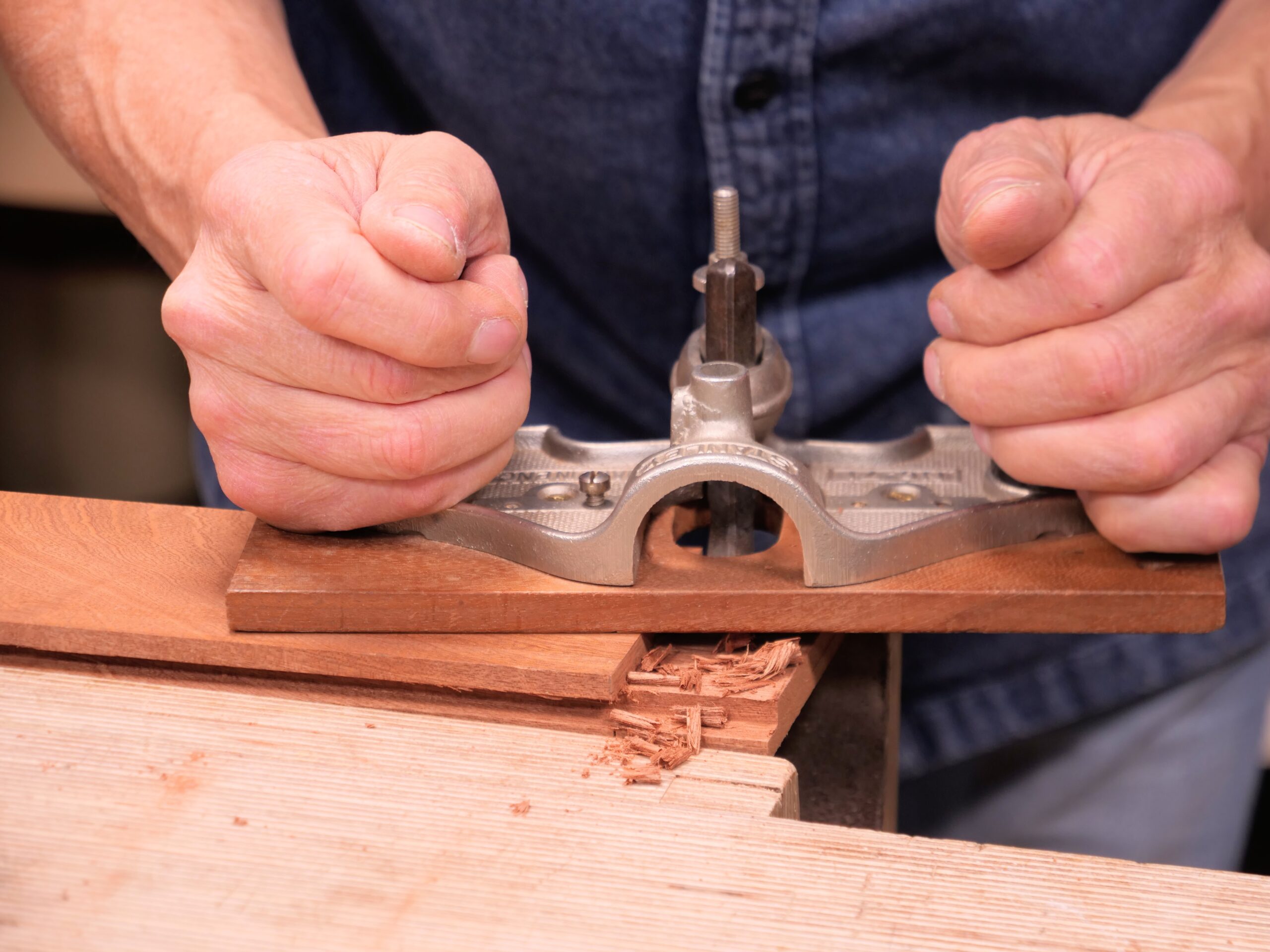
My instructions on how the router can be used to refine tenons to perfectly fine tolerances changed the game for hand tool enthusiasts serious about their work. Adding in my mortise guides was a game-changer too. This partnership gradually became the hand tool users standard practice even though nothing anywhere was ever written about the practice before I introduced it to my students. My work these days is to pass on what was never written down but might well have been passed on from man to boy but most of what I teach now is not what was passed on from man to boy. Inventiveness accompanies every maker. It has to!
What about the shoulder plane?
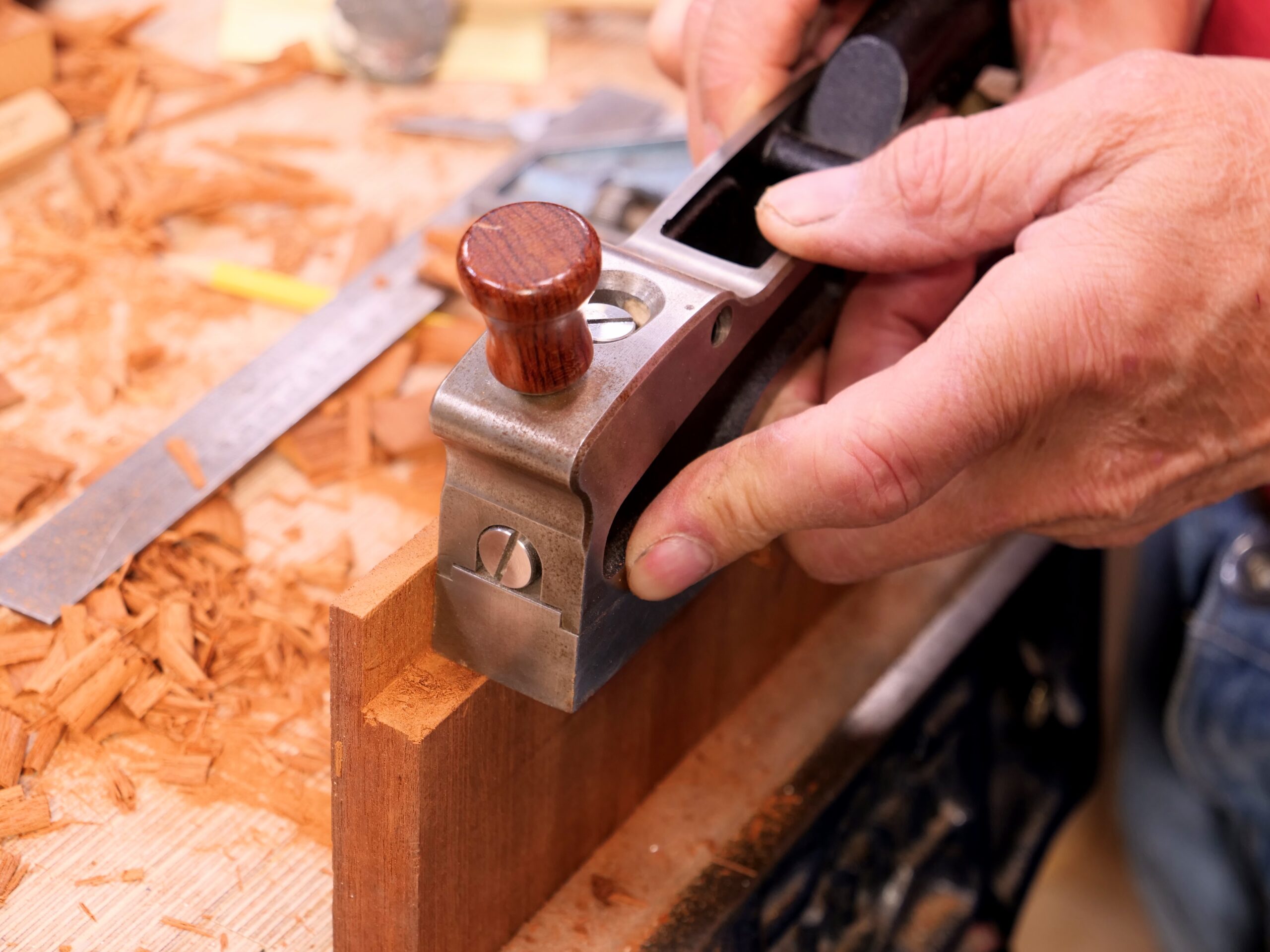
The shoulder plane is a narrower plane with a blade the width of the outside cheeks of the plane width. We use it to perfect the end grain of shoulders to tenons and then also to true up the faces of tenons too. Here is another plane that you seldom see but no one really questions why. In my world and with my audience it is simple in that they very rarely see me use one, if ever. Quite frankly, I generally don't need to use one, and with good reason, if you think about it. In teaching my classes I emphasized something that seemed not to exist in any teaching circles I came across. Even textbooks on woodworking more glanced over it rather than emphasized it. If you say, "Use the marking knife (also could be 'striking knife' and could be 'layout knife') to layout the shoulder lines to the tenon or the dovetail, etc. Well, this literally means to make a mark. In my classes, I wanted something so emphatic and definitive that no one would ever misunderstand what I meant. I instead called it 'knifewall' for every single cross-grain cut line I made and never used 'mark' as a term for the same thing again. By then naming it 'knifewall' I meant that we were severing fibres deep enough to create a deep and perpendicular wall and at the same time intending to sever the outdated term 'marking' but not claiming anything more than the term alone. The practice of creating knifewalls is evident throughout the world in fine woodworking of every type ranging from fine instrument making to furniture making and more. Why, until then, the term was never used I don't know, but now, at last, my students got it. We went for thin knife blades that flexed a little too. No thick and chunky, oversized and clunky. We wanted surgical sharpness with fineness. No more dull-edged and bruising as in the dull and ever-dulled marking knives used in schools and colleges. The knife wall would go on to delineate the future with a precise term and action of the finest tolerances. Knifewall said it all.
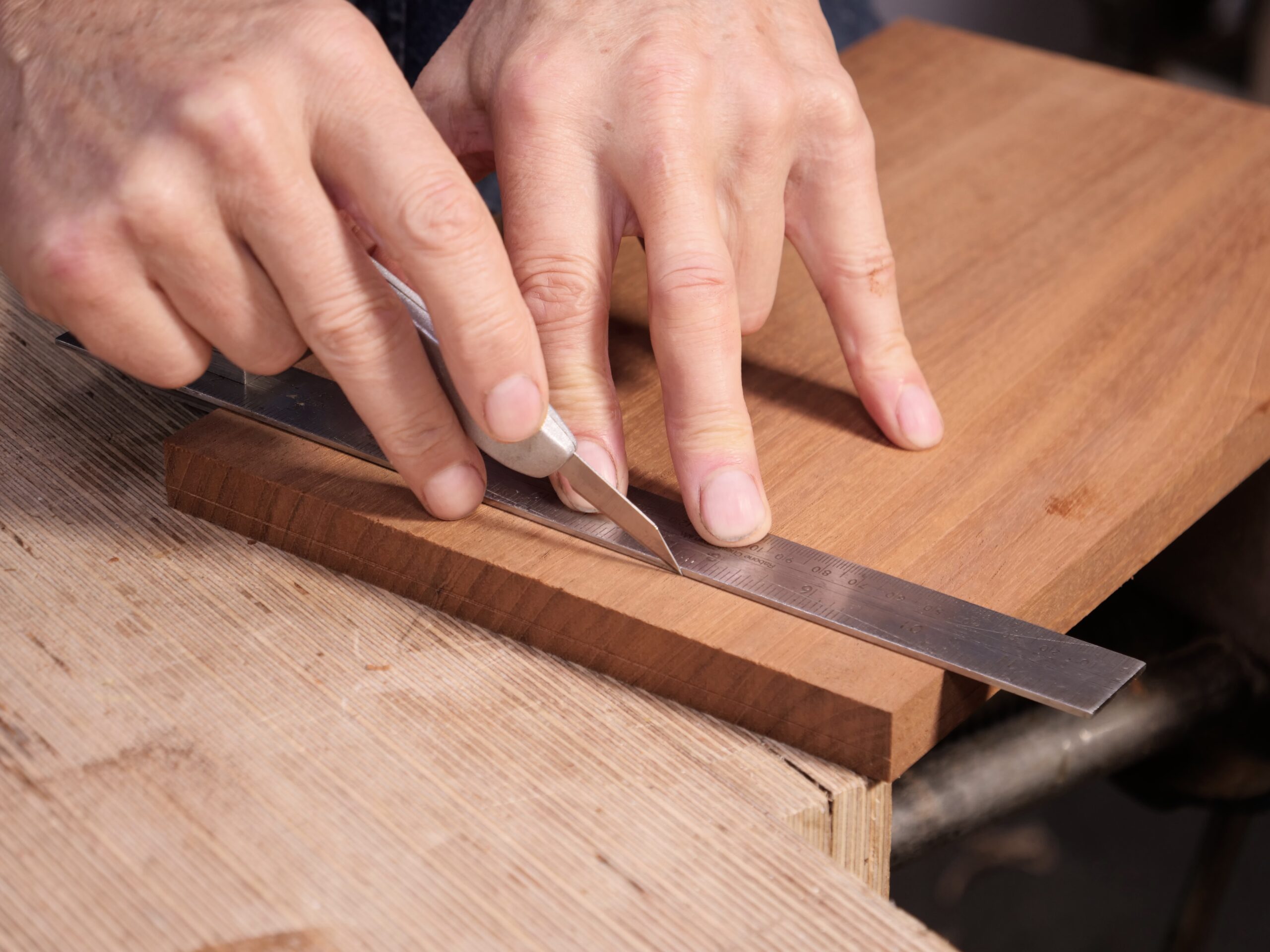
Because the knifewall created the dead squareness we needed, and the chisel could rest perfectly on its knife-cut, slice-cut edge for perfecting the shoulder to the tenon, that part of tenon making was thoroughly completed, nothing a shoulder plane could do could improve the meeting length of the shoulder line. Prior to this time, the shoulder plane would have completed the work, now it became more a luxury tool rather than an essential one. It would be a seldom-needed plane used only occasionally. The knifewall and chisel method for shoulder lines saved new woodworkers more than £200 on a single plane.
The router plane
Of course, though named the shoulder plane, the shoulder plane could and is also used for the faces of tenons too. My introducing the router plane for face trimming the cheeks of tenons was highly innovative. I had never seen it done by anyone nor had I ever seen such a task referenced in any book nor in the handbook given with the plane by the maker. The first-ever reference then is in my Essential Woodworking Hand Tools book. This system of refinement was yet another game-changer for all. Combining this with my inventing the mortise guide system for chopping perfectly aligned mortise holes dead parallel to the outside faces of rails and stiles, chair and table legs, etc meant that everyone succeeded in joint accuracies matching that of any machine set up. In fact, it would replace two or three machines that would be generally used by machinists.
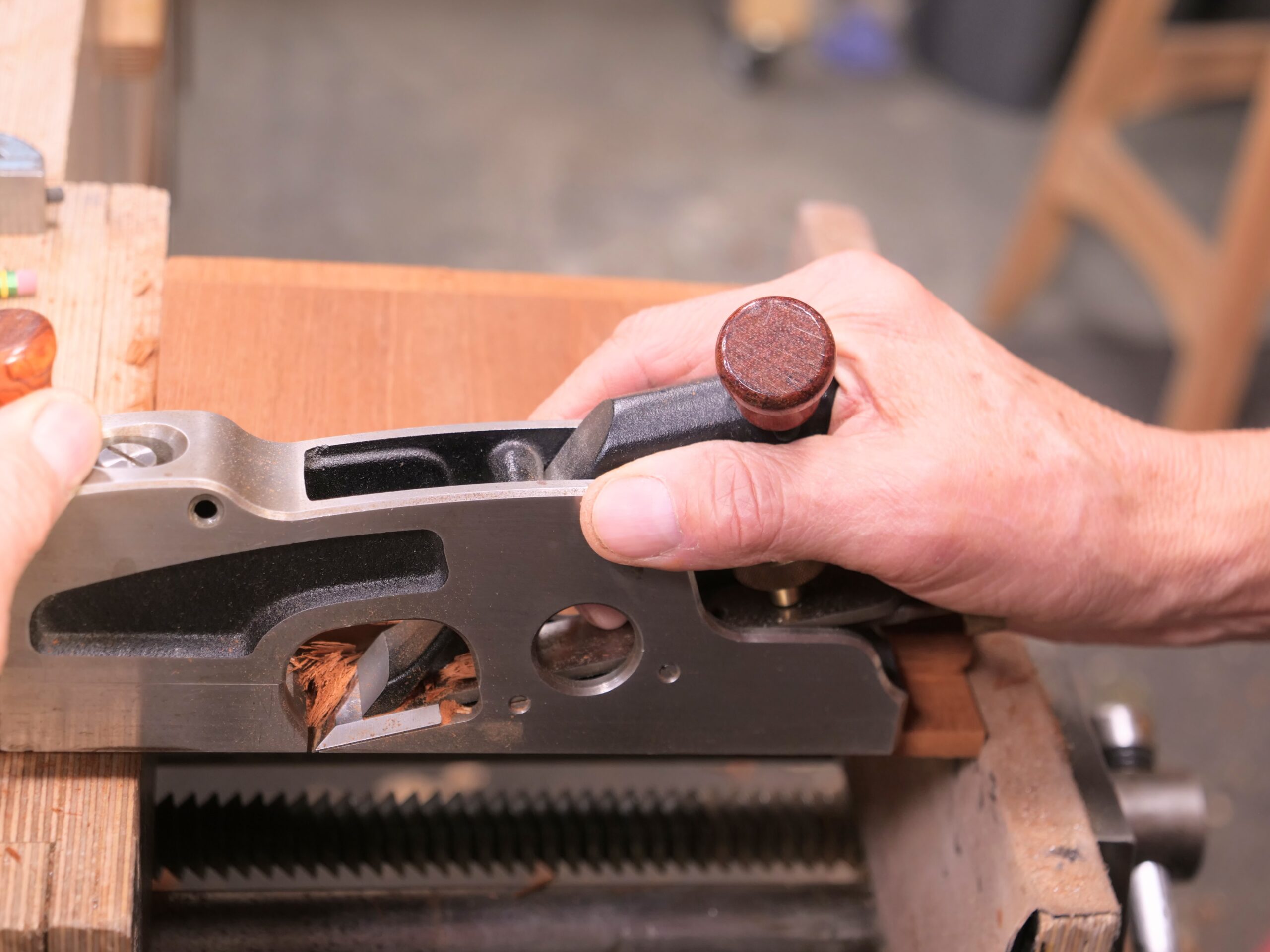
By roughing down the tenons in the usual hand tool manner using a tenon saw, or split cutting and paring, the final surface leveling could be trimmed off with the router plane to tolerances of a thousandth of an inch. Even though the blade of the router plane might only be 1/2", parallel shaving would level the tenon cheeks to a pristine hand planed finish. Test and try into the mortise meant that the tenon could be sized perfectly.
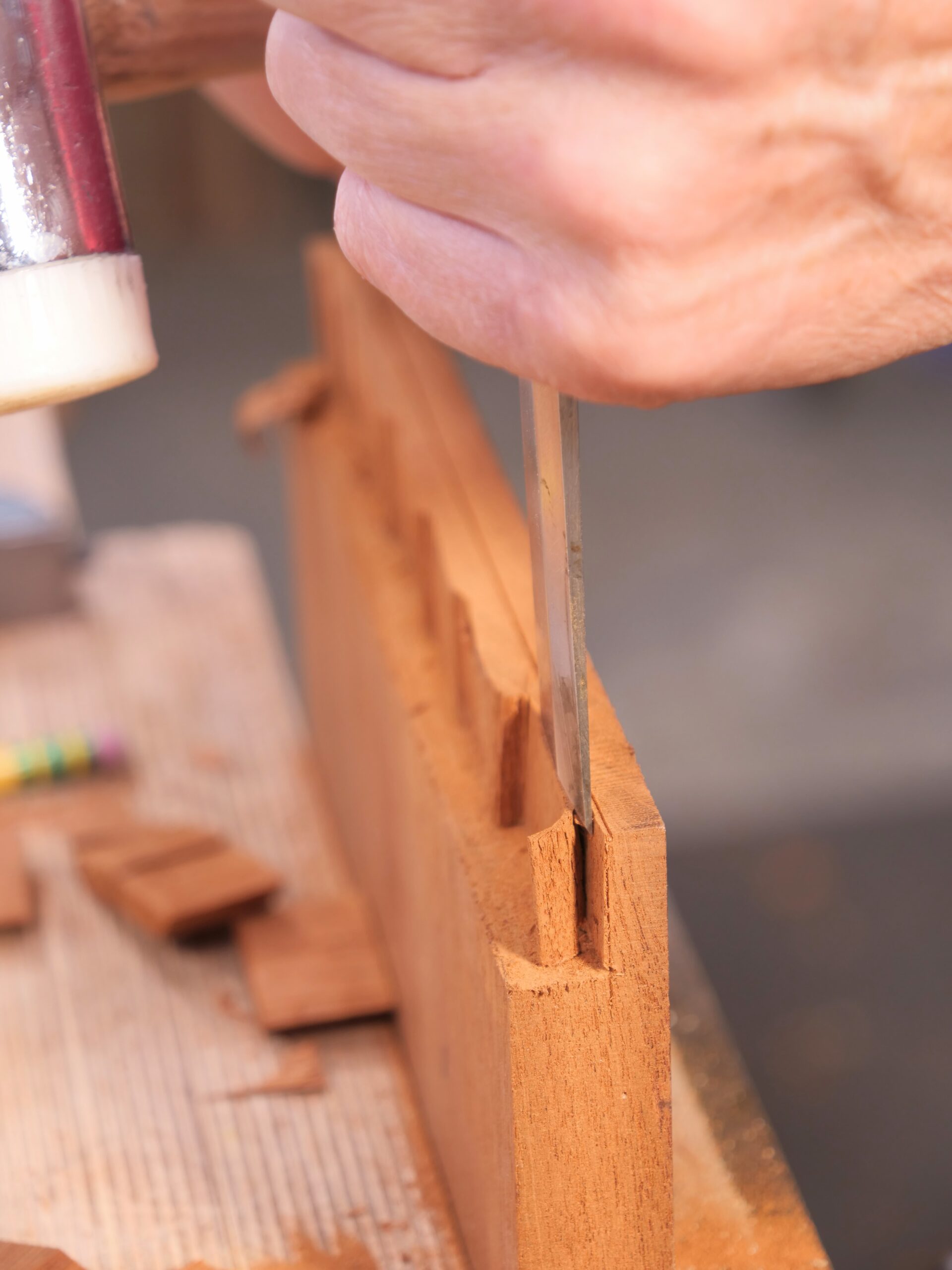
The mortise guide I introduced to the woodworking world enabled the guide to further refine even the insides of the mortise holes. When clamped to the workpiece in the vise, the face of the guide could be used to align the chisel face of a wider chisel so that paring down the inside faces of the mortise holes established a planed finish with perfect parallelity.
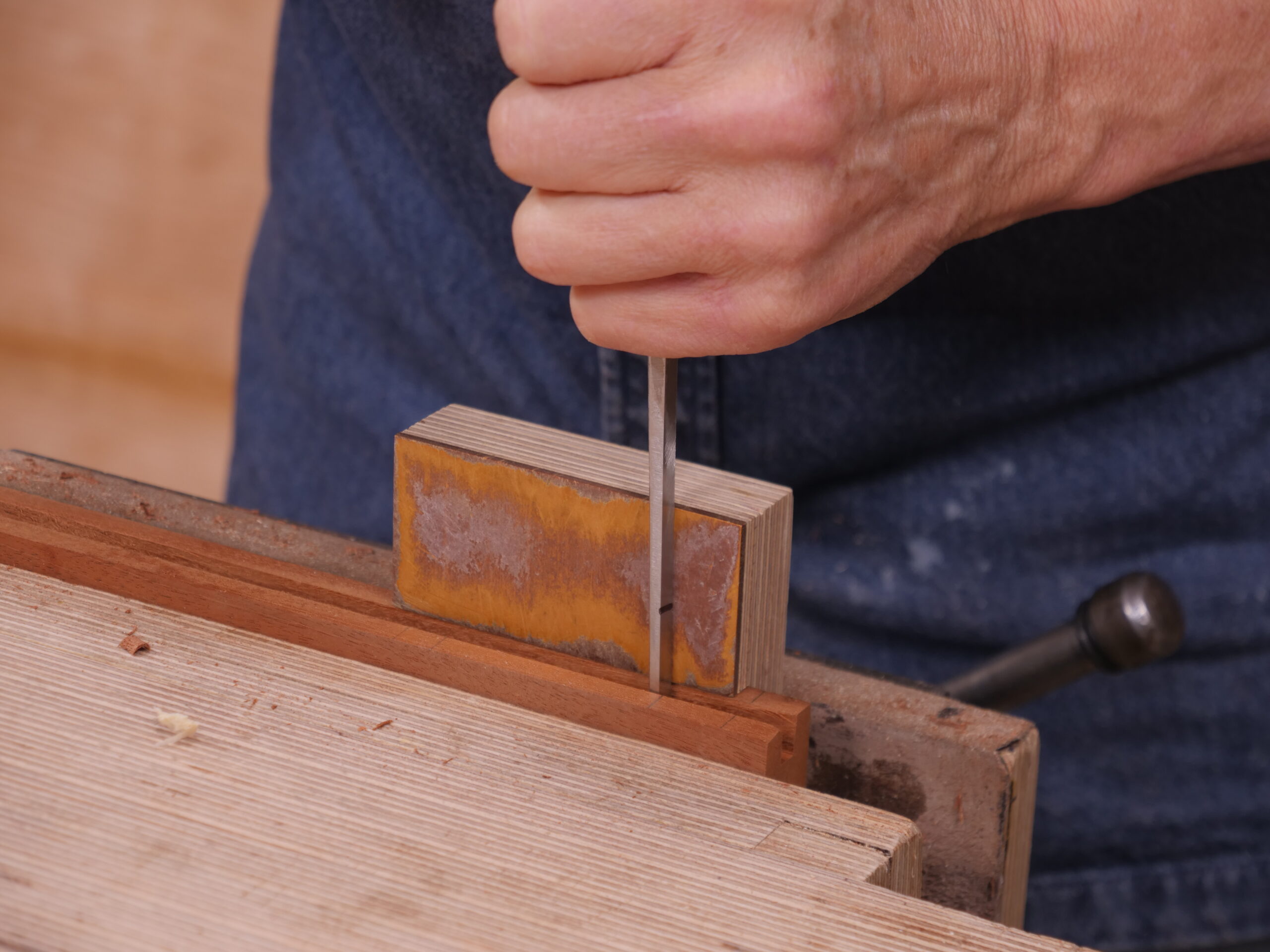
Am I saying that you should not buy a shoulder plane? No. I own a couple and I enjoy them. Whereas they might be rendered obsolete by my M&T systems, they are handy to take off a thou from the face and shoulders of the tenons should that ever be needed. And also, on long shoulders such as the bottom rails of massive doors, they can custom fit to accommodate for discrepancies. You can also rebate with them both across and along the grain by clamping a fence to the workpiece. No tool is ever truly dismissed. The knifewall system is perfect for creating perfect cut lines. You can use the shoulder plane to trim down any fuzzy fibres left by the saw cut too, instead of the chisel.
Comments ()