
In 20 Minutes
My Warrington cross pein hammer has been with me since 1966. It's from the days when it cost 30 pence and what was then 7 shillings and 6 pence (£0.7.6p), the simpler days when we had 20 shillings in a pound and 12 pence in a shilling, things cost half a crown, two bob, and then again a tanner, thruppence and more. As with almost all UK hammer shafts, axe shafts etc, the handle was ash. It was and is a Stanley 10 ounce and it is well used with 55 years of six-day weeks and between 8- and 10-hour days.
Within a few weeks of my arriving in Texas and my tools being in dark green storage containers from a sea voyage on the sunny docks for a few weeks, the heads of my hammers and axes arrived loose. I did not have any steel wedges for my Warrington version so I used wooden wedges and surprisingly this worked well for my 23-year life living in or near the Texas Hill country in central to south Texas. Since I arrived back in the UK the head has come loose. With steel wedges, this is usually just a question of striking the end of the hammer shaft with another hammer to shock the head down onto the bulb of the shaft, the part just behind the inside of the hammer head. Once shocked on, the steel wedges can be driven deeper into the eye of the hammer head to spread the wood intro its dovetailed profile with a nail punch (set US).
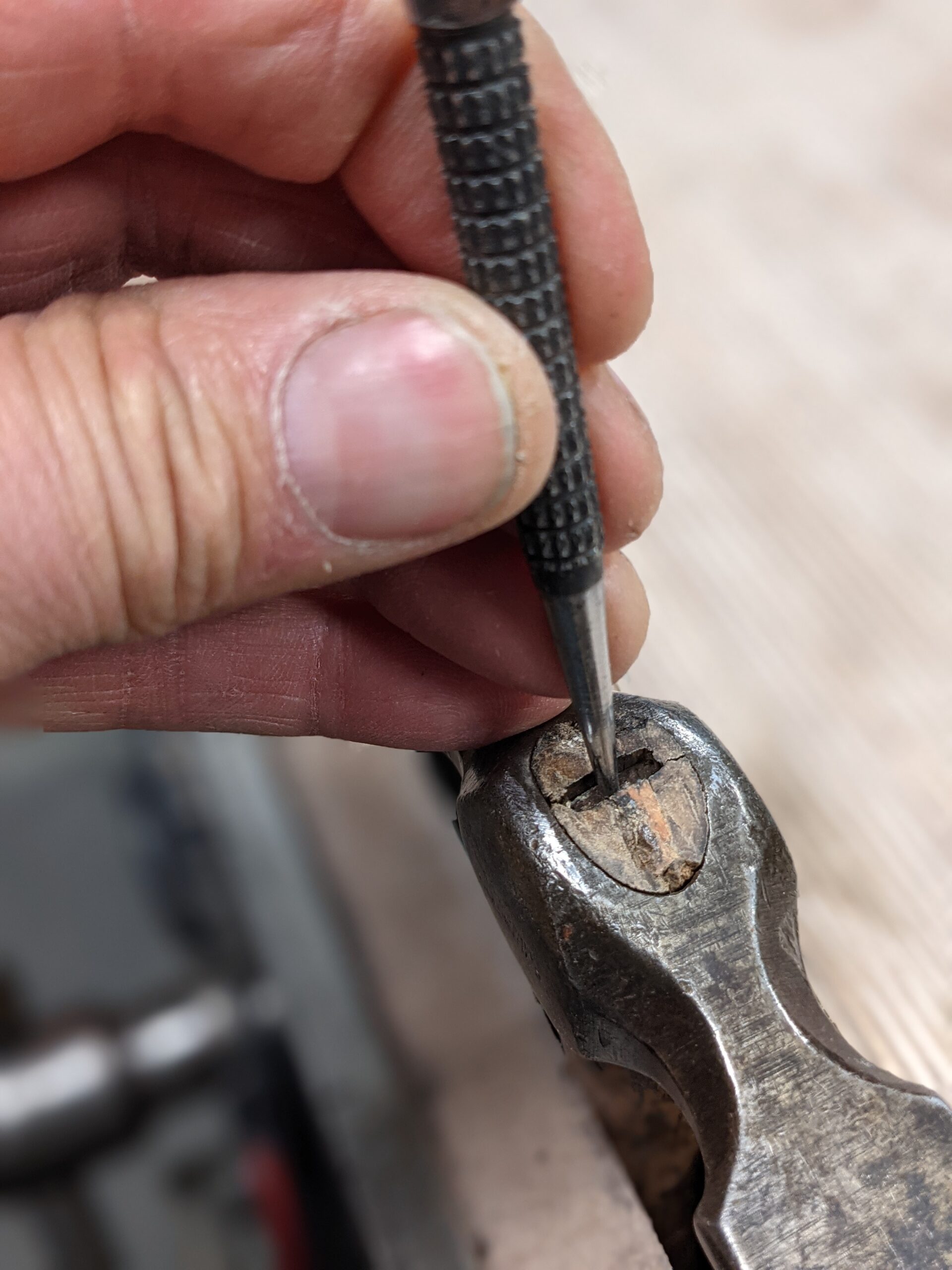
My hammerhead only came loose a few days ago so I decided to resolve the issue long-term. I don't know how it is where you live but many so-called hardware stores mostly stock household stuff like cleaners and plastic ware these days. Steel hammer wedges have long since gone, hence a general leaning towards procrastination. My wooden wedges cannot be tightened more for obvious reasons. Of course, you do get those 'experts' who say, "Leave it in a bucket of water overnight and that will fix it." Please don't.
How to stop procrastination
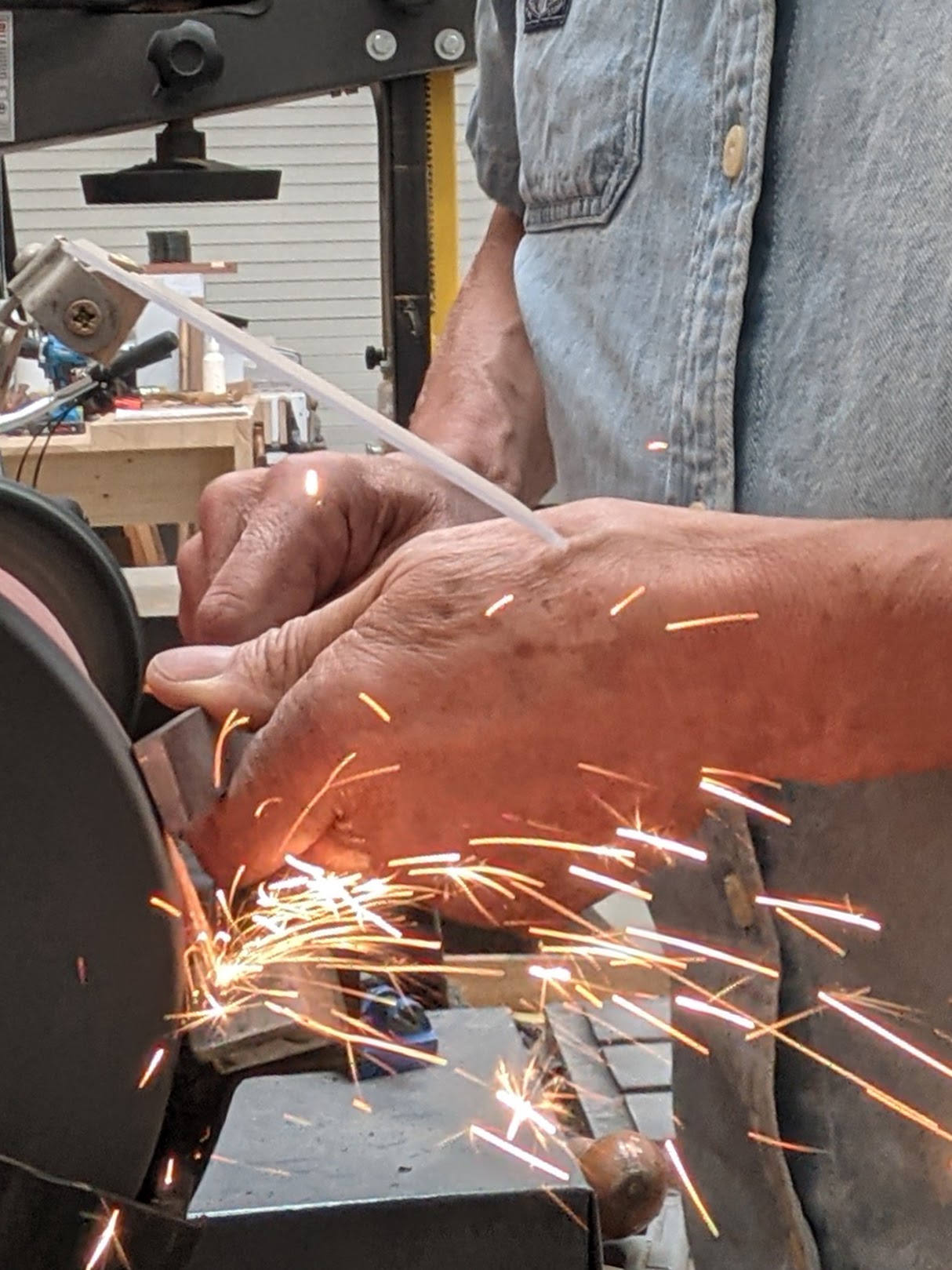
Take a piece of mild steel and grind a shallow wedge. My steel is 1/8" (4mm) thick. Best to do it on the length of steel for safe handling.
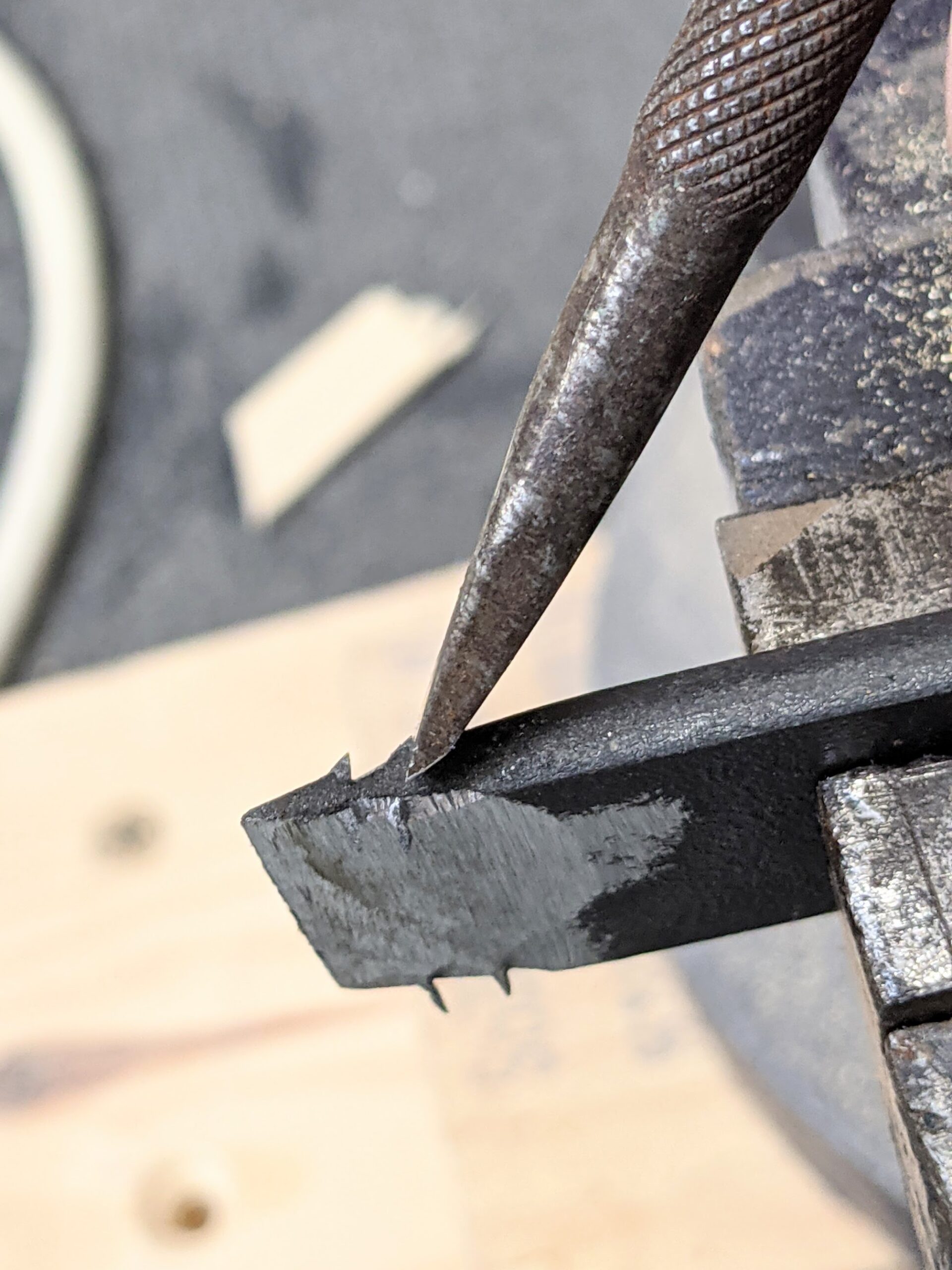
Once you have the wedge shape you want, take a sharp cold chisel and create barbs on each of the corners.These barbs will prevent the wedge from backing out.
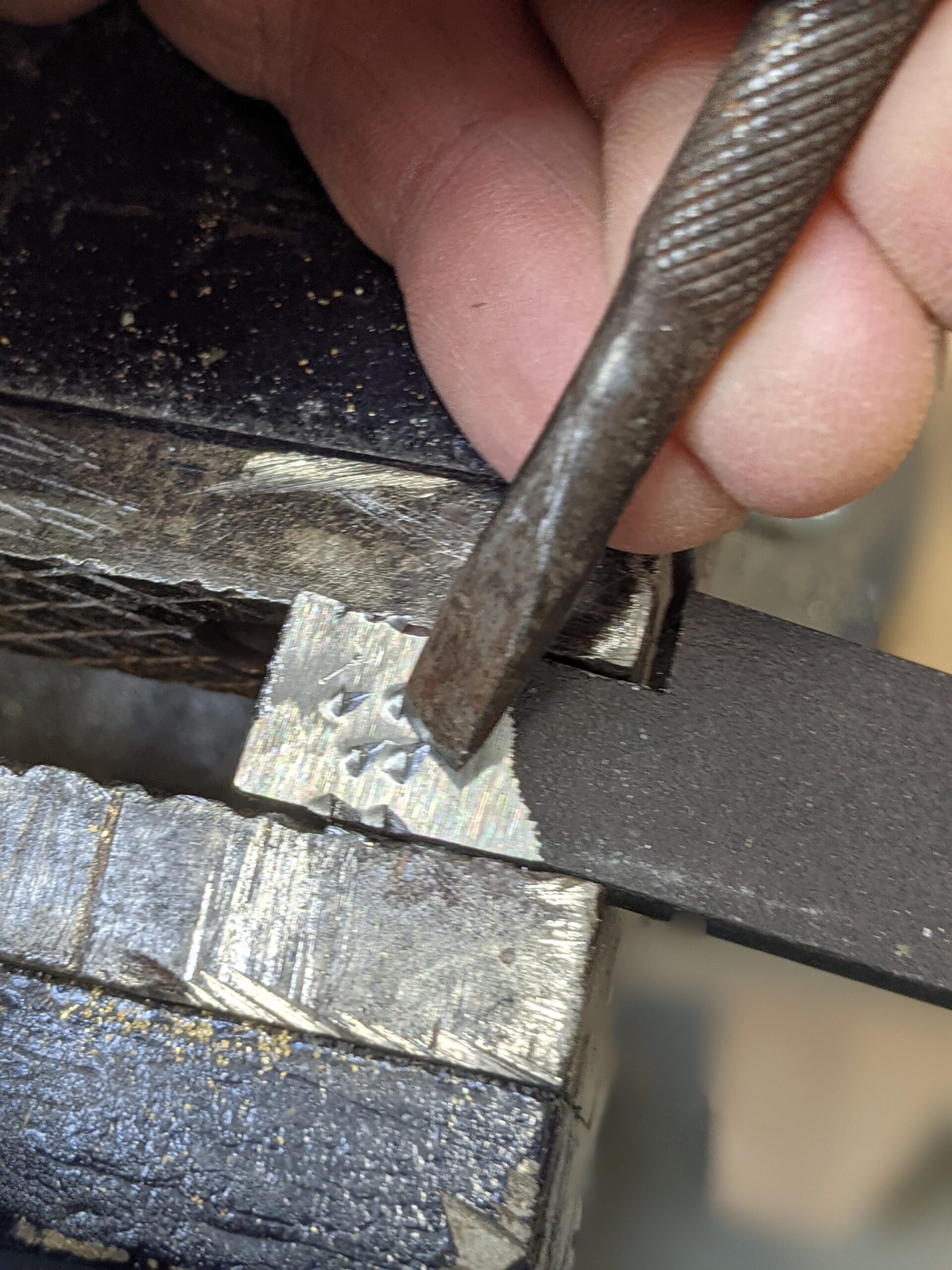
Use the corner of the cold chisel to make more barbs on each wide face of the wedge. As the wedge is driven in, the wood yields to the one-way barbs and beds into the wood.
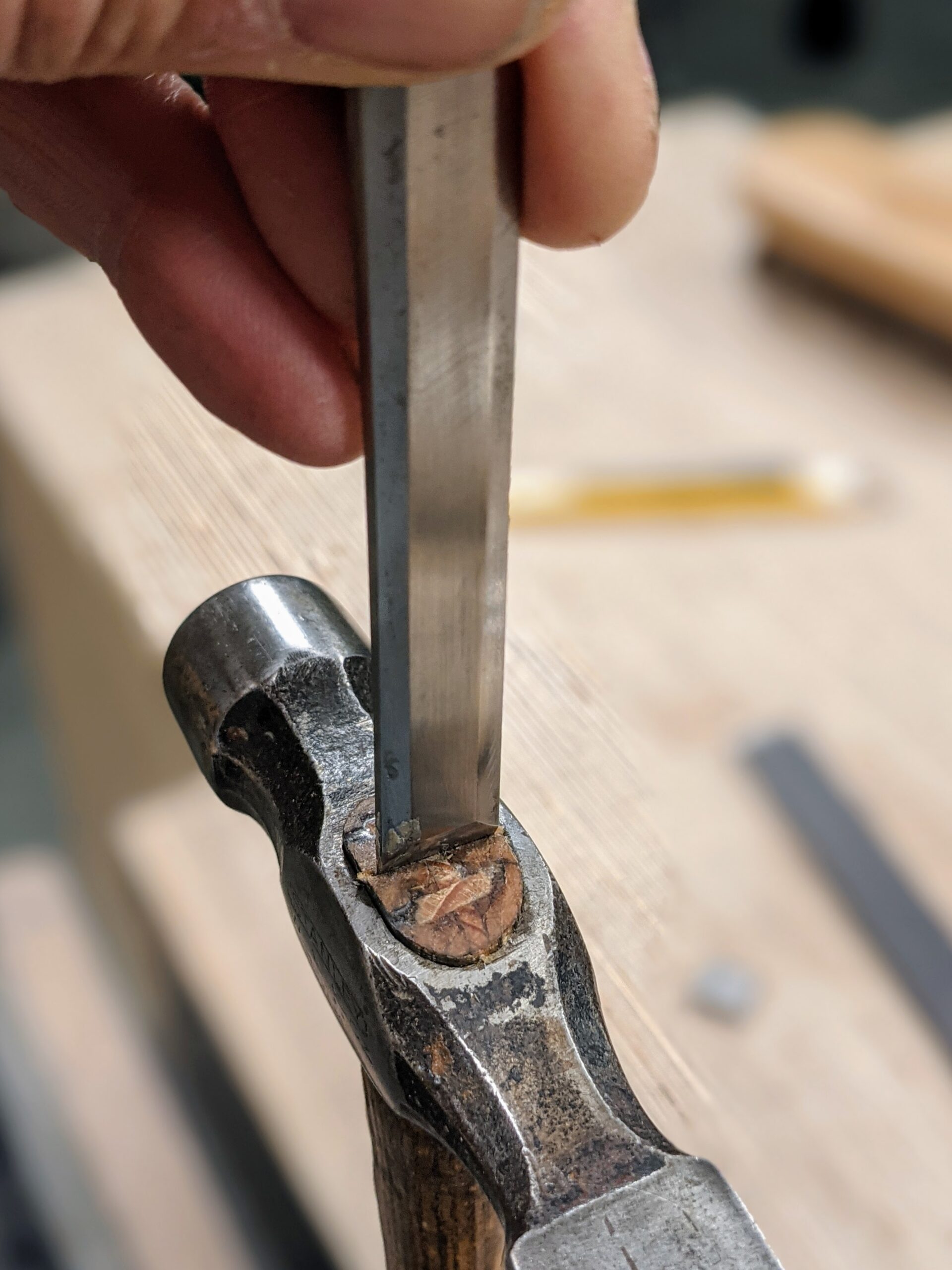
Use a chisel in the eye of the hammer head just to give a firm start point for driving the wedge.
Strike the end of the hammer shaft to drive the head onto the bulb tight.
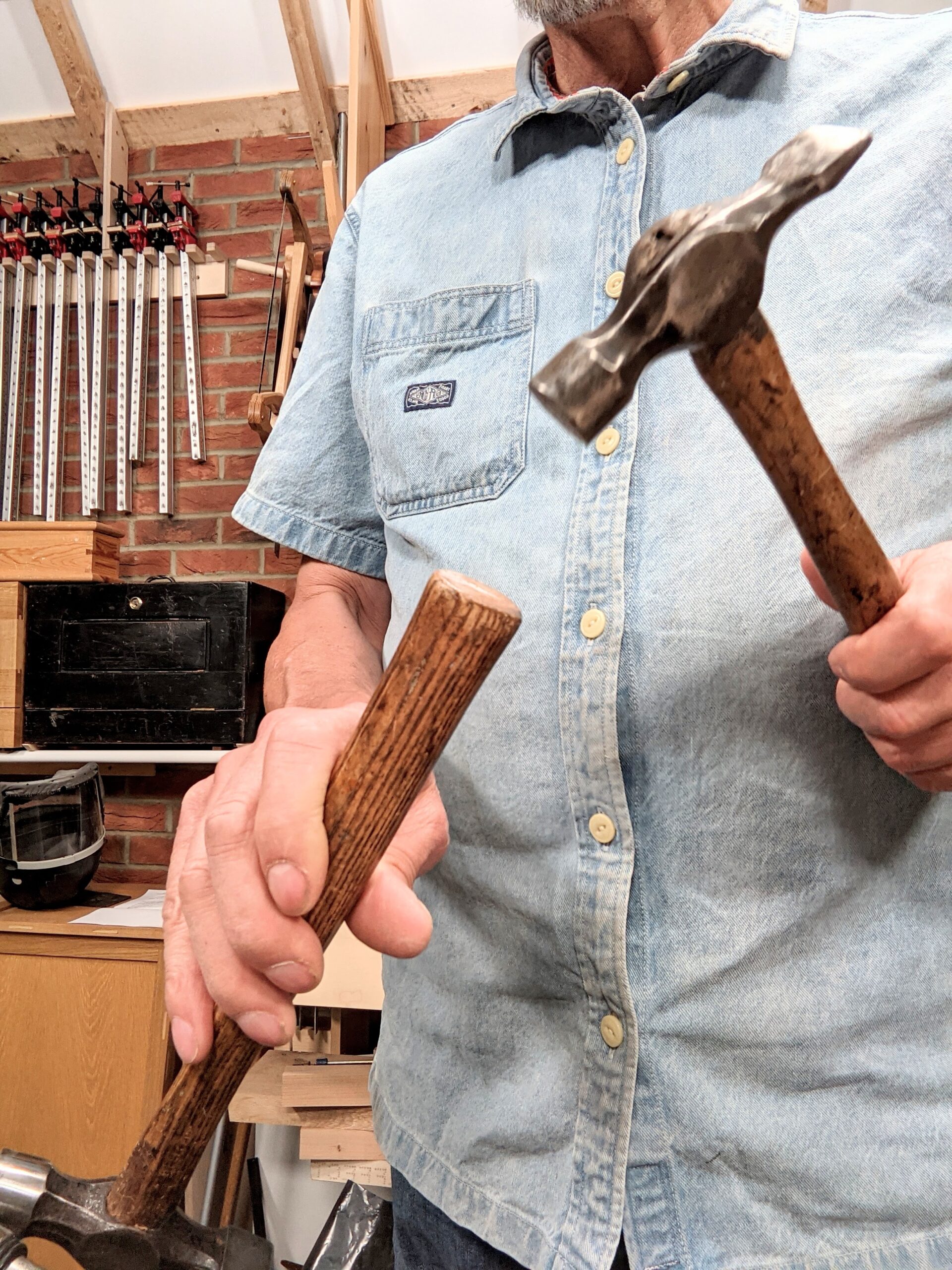
The shaft will protrude through the hammer eye as seen here.
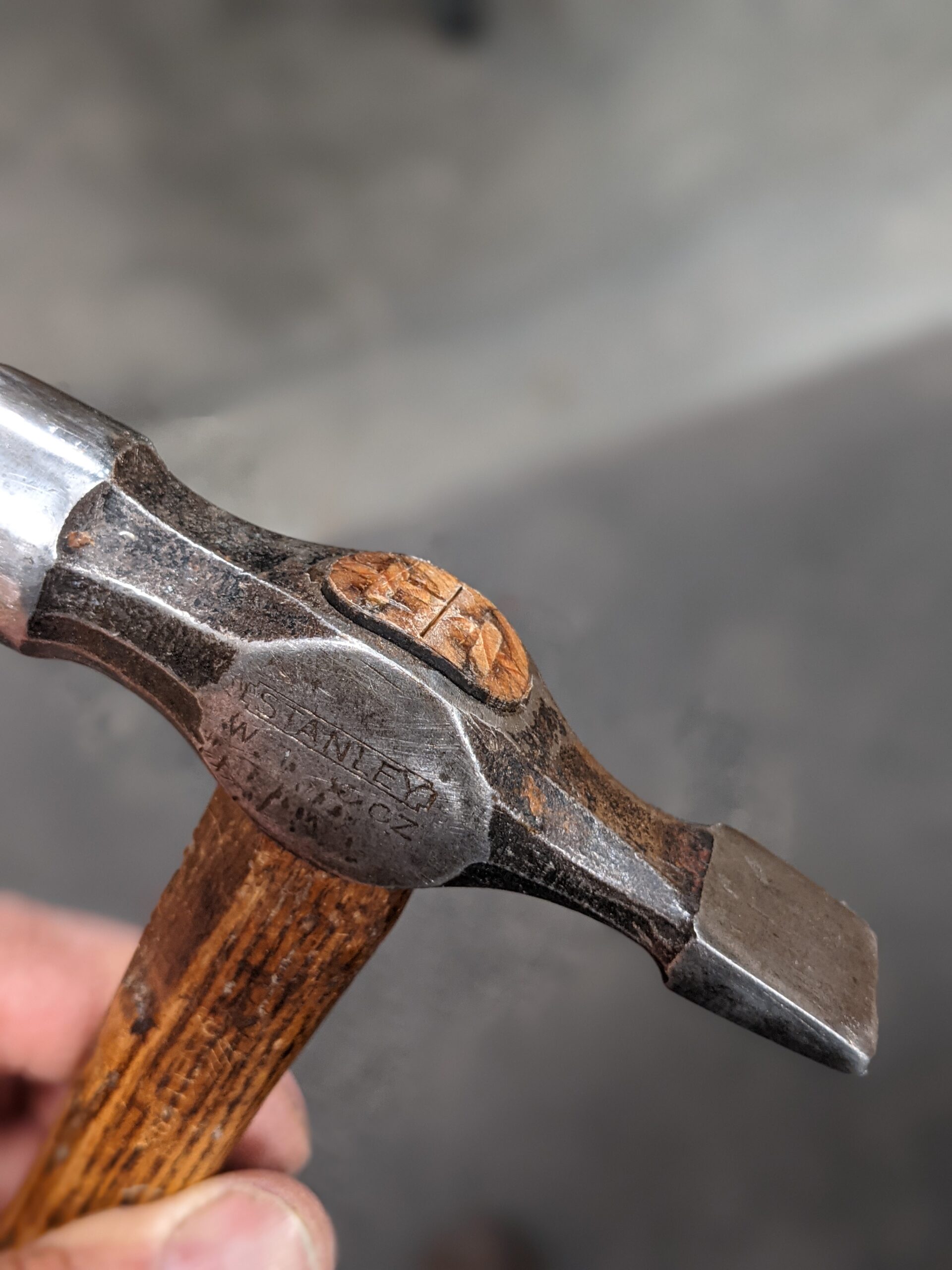
Drive the wedge in as far as it will go. You will be surprised how much compression will take place in the wood to absorb the wedge.
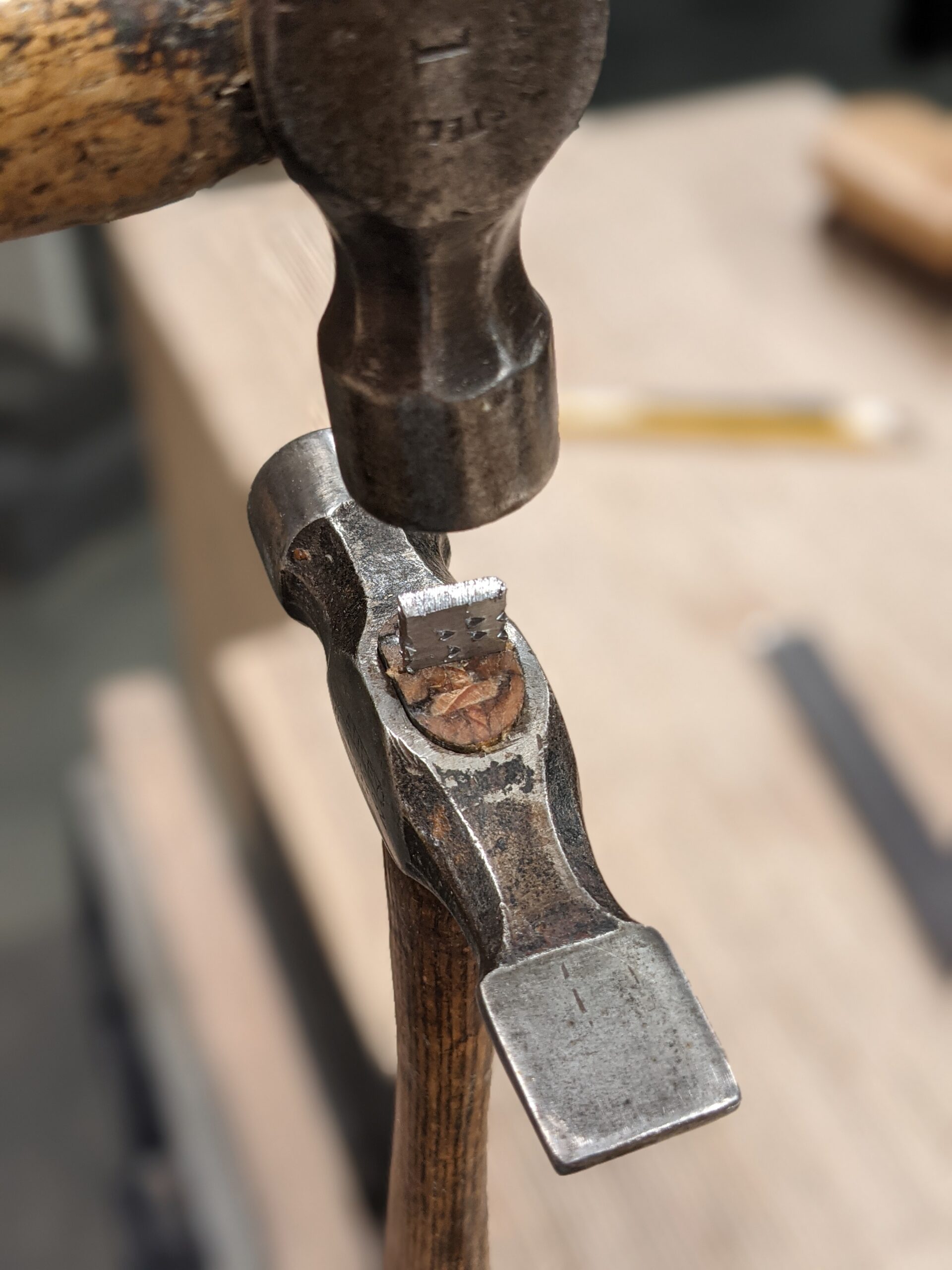
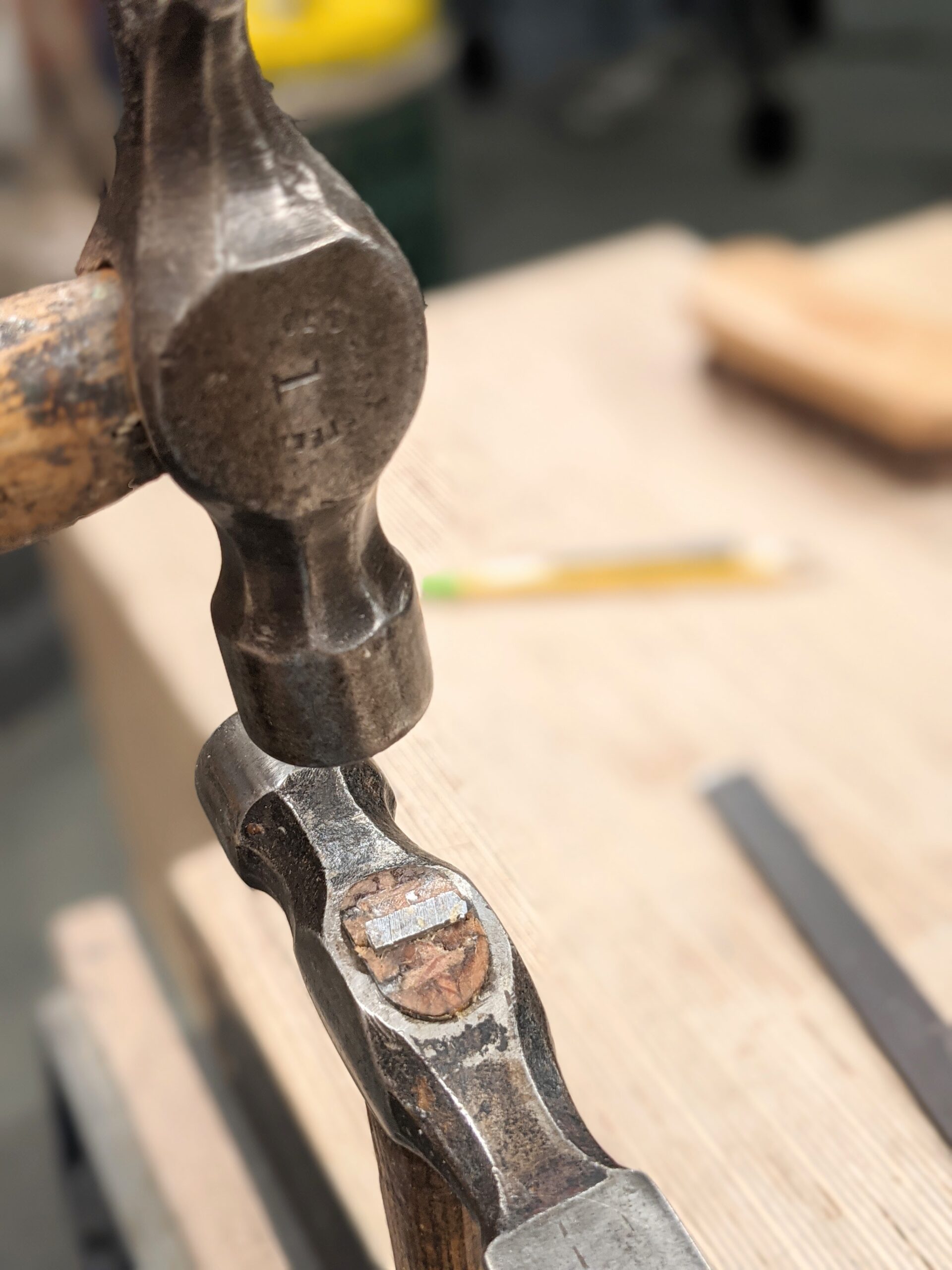
Remove any excess protruding from the eye with a file or file and chisel.
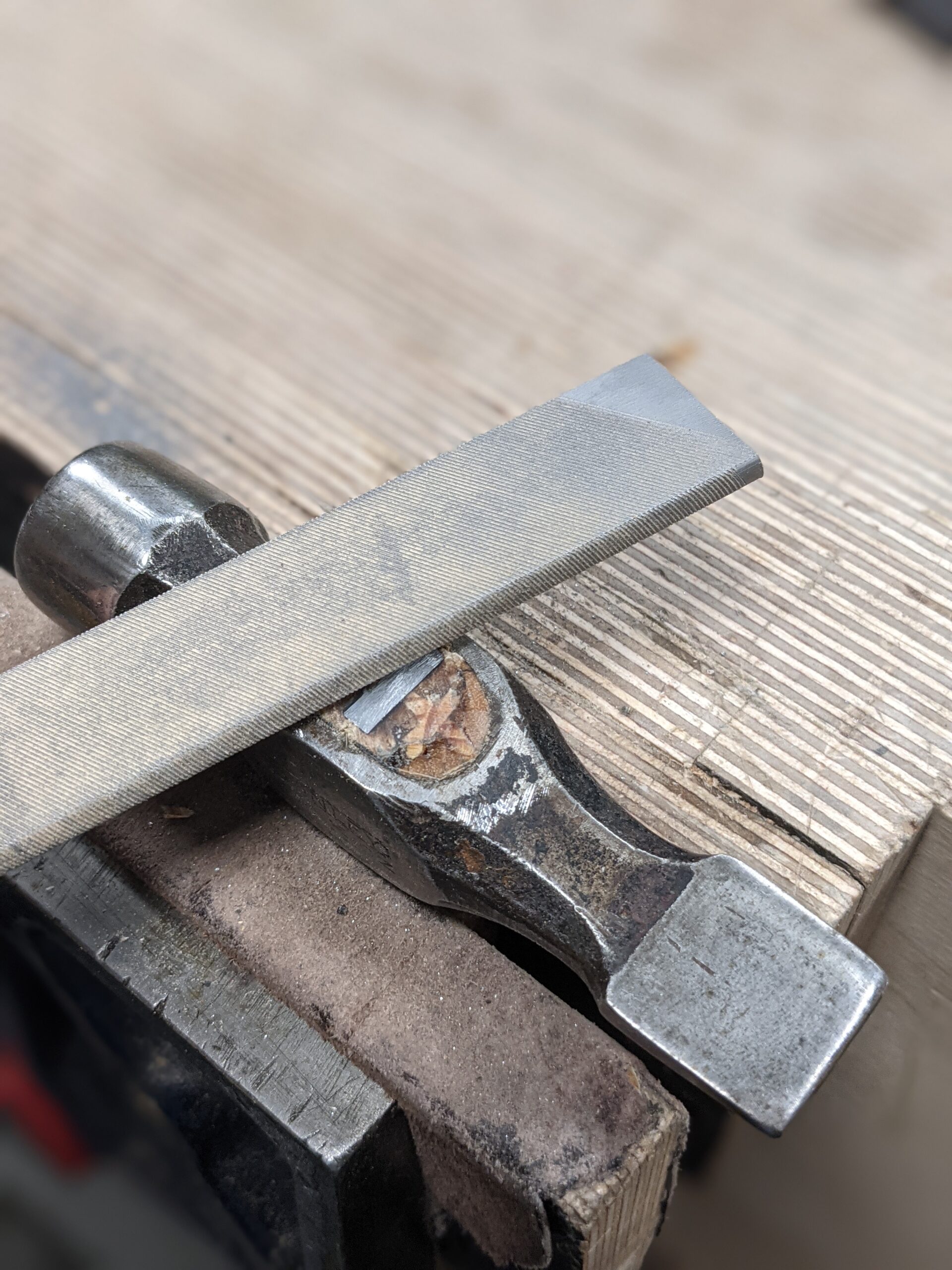
Job done!
Comments ()