
You Advise Me
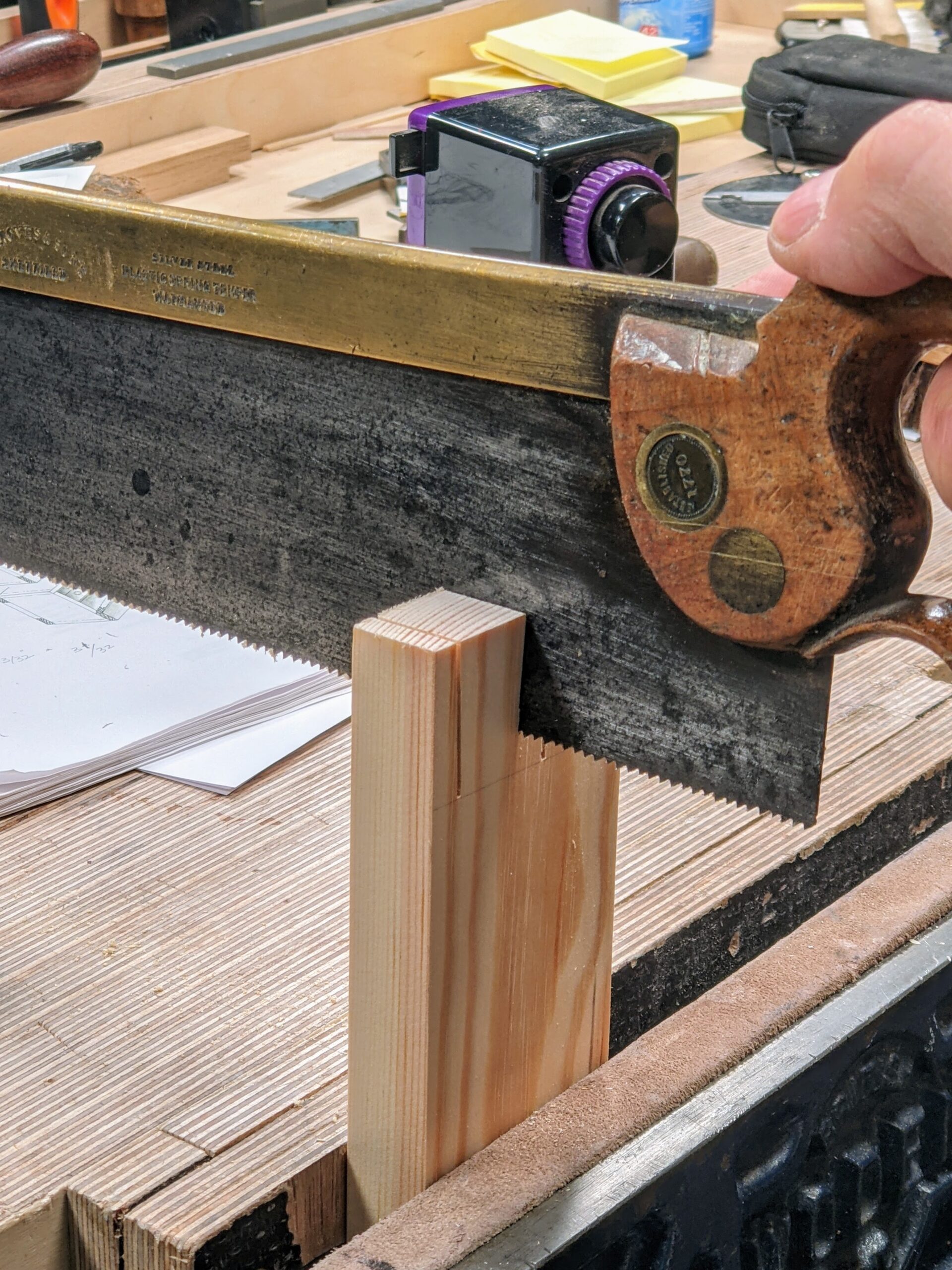
I still receive an occasional comment from someone who knows me not at all and knows nothing of my work beyond just having seen me saw down a dovetail angle. With my gent's saw still poised, they're advising me that a power router will do this or that better, faster or whatever other adjective they care to address the issue with. It's funny though, they seem to think that somehow I might not even know that there is such a machine after my being in the saddle for 56 years. They are certain that I am on the wrong path and that I, moreover, am on the losing side. As Wendell Berry puts it, my efforts are "relegated to the dustbin of history." Anyone who takes a differing path and declares it a better way, perhaps with wider views and smells and sensations unattainable any other way, they often become offended for no real reason at all, you know, more huffy or even condescending. I am never really sure why this creates an anxiety in them.
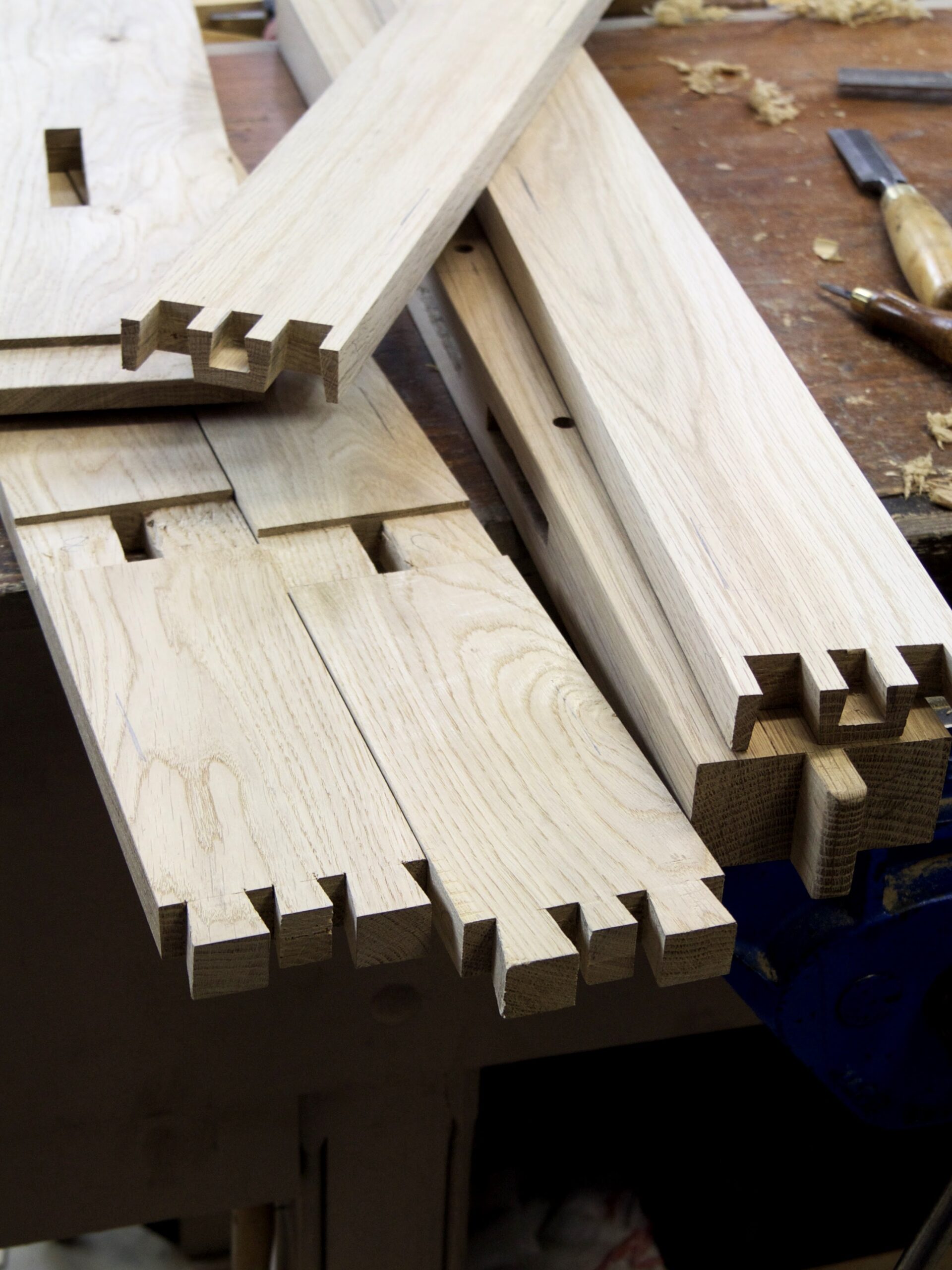
I only imagine my methods somehow scratch their super-sensitive skin, as if I am shunning the advancement of technology and the more progressive way. One thing is for certain, in most cases they see my hand working as tediously difficult, body-straining and primitive. In essence, they also see it as less accurate, which I am sure it probably is. When my handsaw passes through the wood, I deliver only a hundred teeth to the 1/4" depth of cut in each stroke I take. Their circular saw, on the other hand, on its fixed, immoveable axis, delivers thousands of cuts in perfect alignment over the same depth and distance. Surely, then, if this is the superior cut, why not use it? In chorus, they usually repeat what their college tutors and mentors have taught them to mimic, "It's outdated, old-fashioned, uneconomical and impossible to make a living from!" My response? 'Oh, well, you can't really altogether understand. I don't make to live, I live to make! That way, the rest all falls into place!' Perhaps that is a little romantic in some people's worlds but making anything, even badly, is better than making nothing at all. I do know people who only buy needs and never make or grow or bake anything. Imagine!
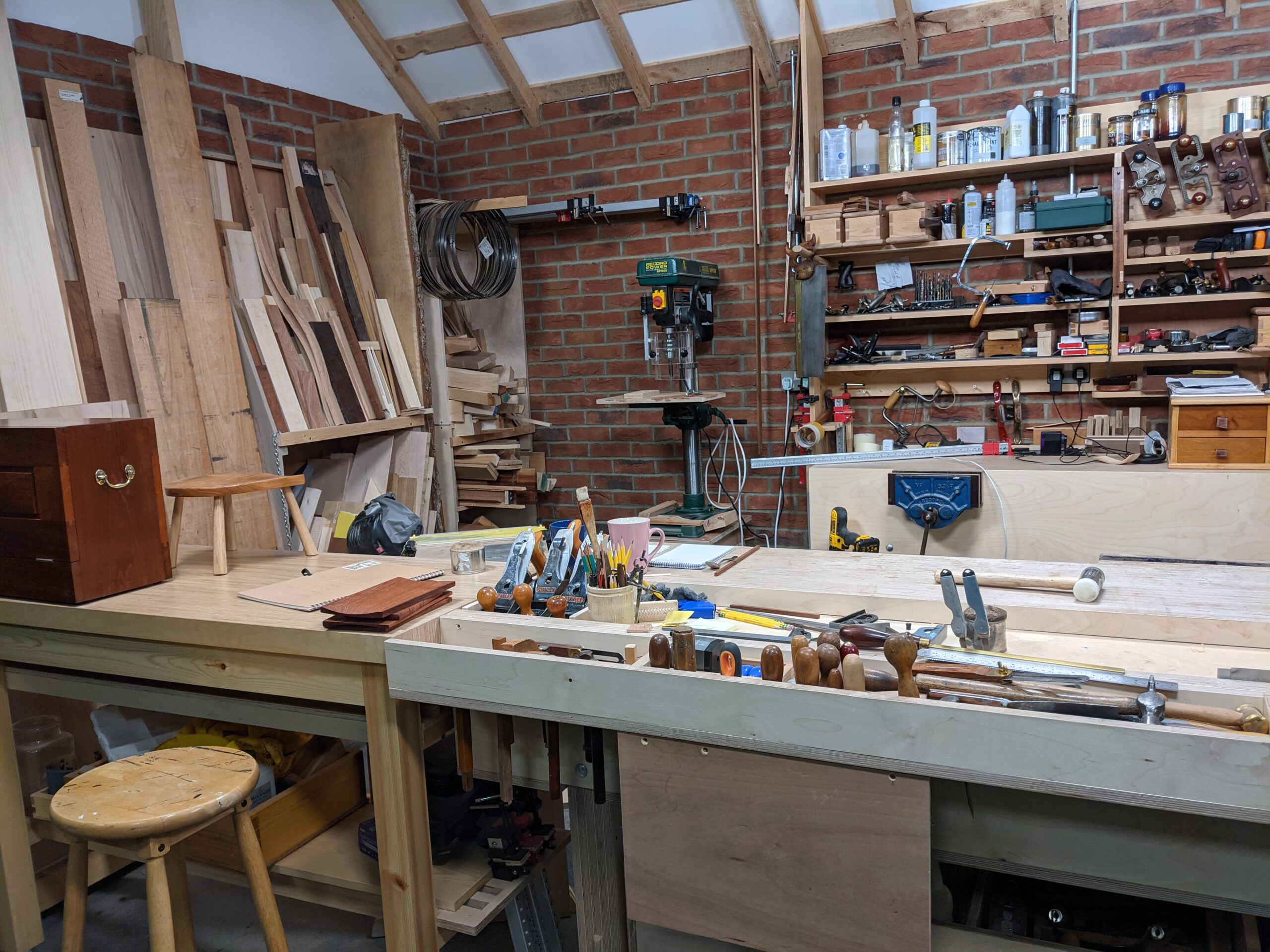
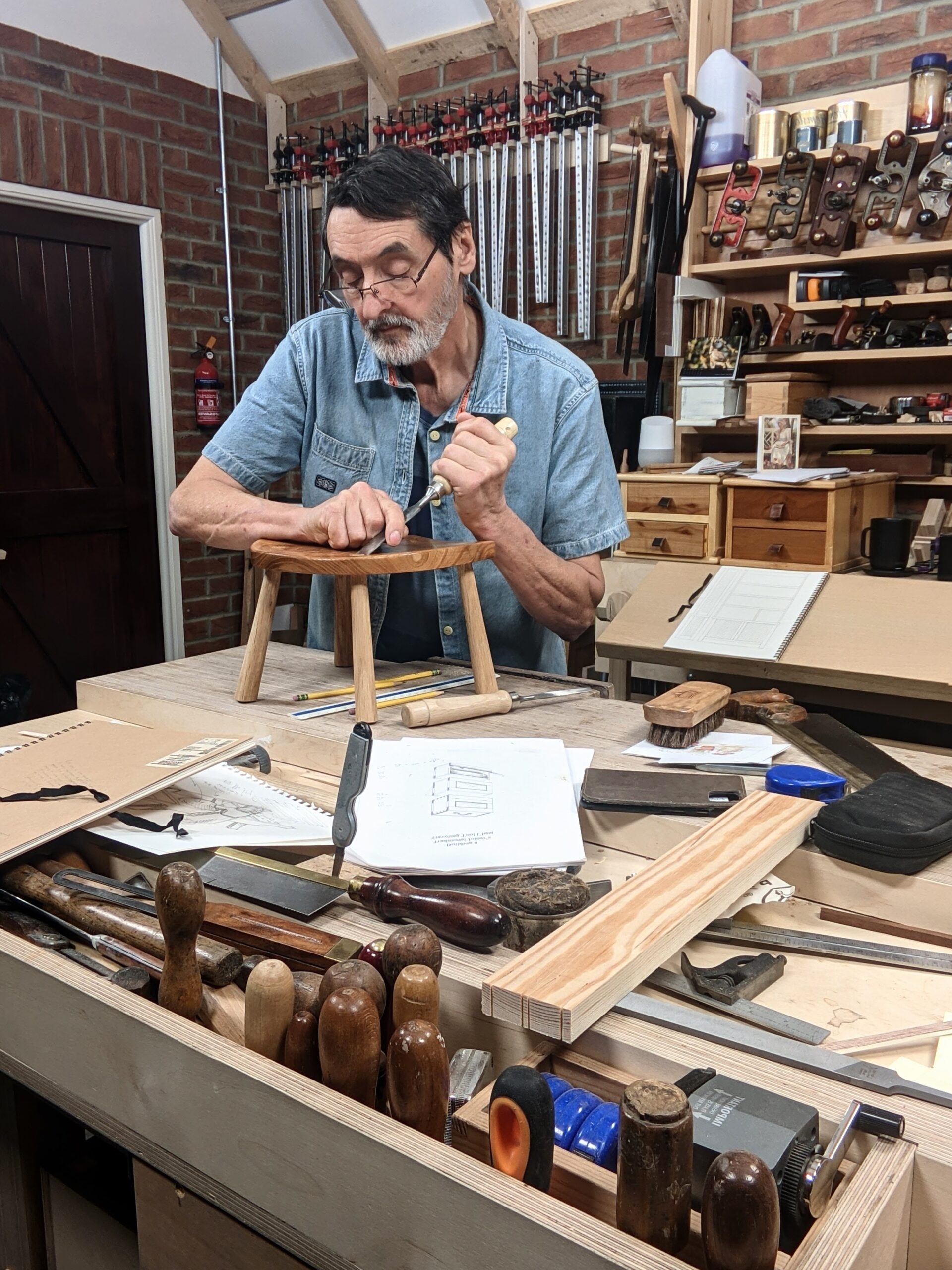
At my workbench, I'm in a world seldom known by most today, certainly so-called professionals, that is. The brick walls become a shield and shelter. They take away most but not all sound and much light too. I still can hear the robin and the blackbird singing, alongside the thrush. If you have never listened to Ann Murray's songs or Maria Callas singing "Casta Diva" in the otherwise silence of your workshop you might just try it. What about the newly mastered Brahms Cello Sonatas #1 and 2 with Jacqueline Du Pré and Daniel Barenboim. Such diverse intonations lift your spirits and elevate the work you engage stroke on stroke, be that chisel or plane and saw, or the bow across the cello strings. I hear my plane strokes and the saw teeth strike chords no machine work can. I hear the voices yet again saying, "It's not real to do it that way!" "You can't make a living that way!" I say to myself, in a low breath, or in my head, "How come I just did so for over five wonderful decades then?" or, better, "I don't make to live, I live to make!"
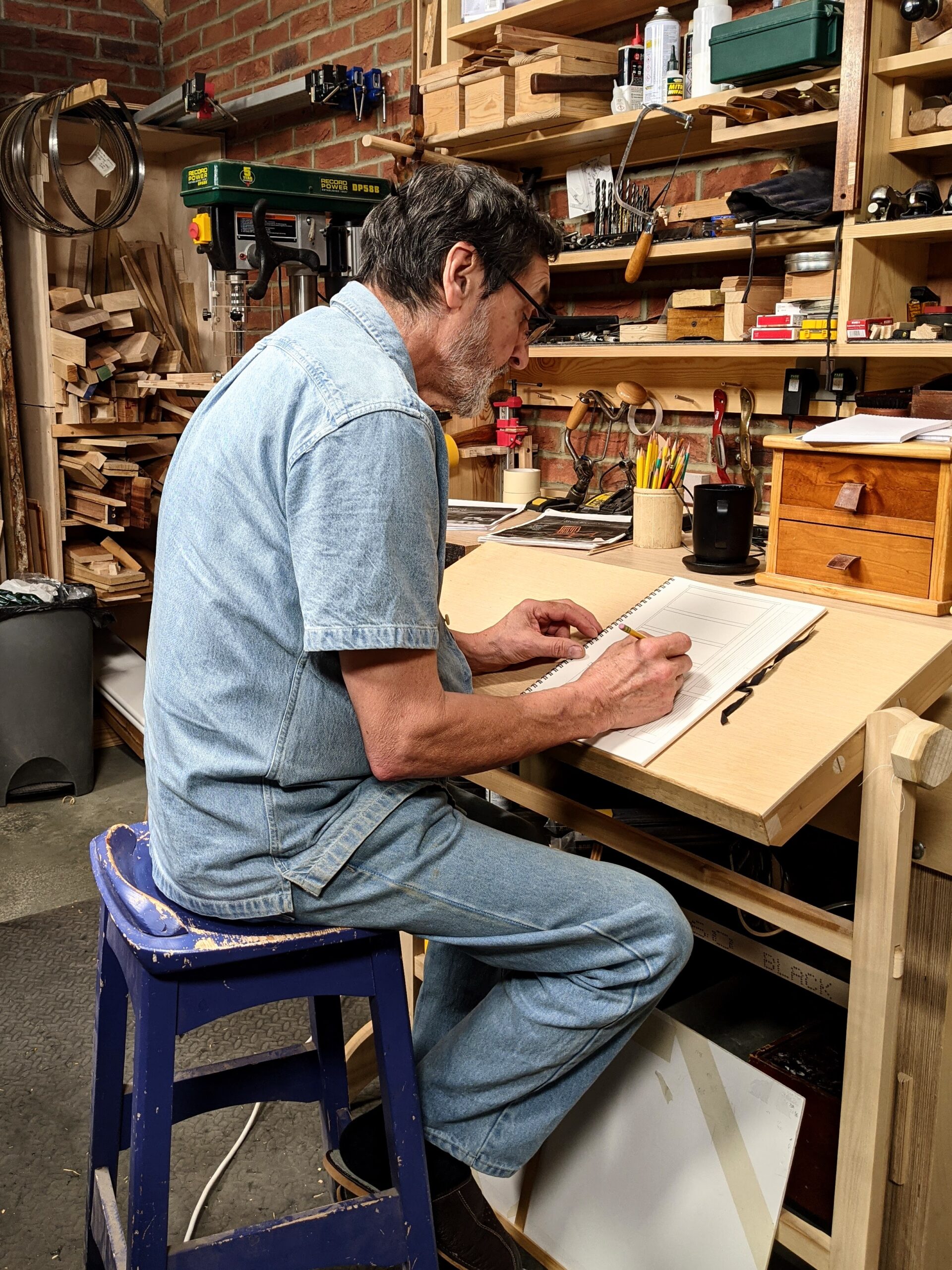
The cello moves almost seamlessly to Elgar's cello concerto and Jacqueline plays unswervingly between the passages of my work and I might just stop to listen for a minute or two. It's Saturday. I am drawing up the new design for a bookshelf and thinking as I work the joints in my head. I choose joints that cannot come from a machine and choose them carefully. The hand tools I choose twist and turn in my mind's eye as I rehearse the possibilities and the orchestra comes in and out as I tune my sketches for my future intent. I strain for a certain line and suddenly the deep tones of the cello describe my peace at finding what I strove for. The bow dances from string to string in short jags before returning the deep dulcet tones and deeper peace still! My intention to limit the invasive and harmful technologies wherever and whenever I can have brought me to a place of sanctuary within the walls of my creative space. Yes, it is just a garage, maybe my shed/studio/garden-room-cum-potting shed. But it is mine and I love it! I'm no longer asking myself if I can but more the how and when. My fingers move steadily and precisely across the page and the lines fill in the white space to compose. I look from a distance and I feel a good composition coming together. It's more a sketch and the importance of it this: that sketch takes the negative of clear unoccupied space to a place filled with a new work. It is, in essence, the genesis of a design. Probably, possibly the most important stage of the design process.
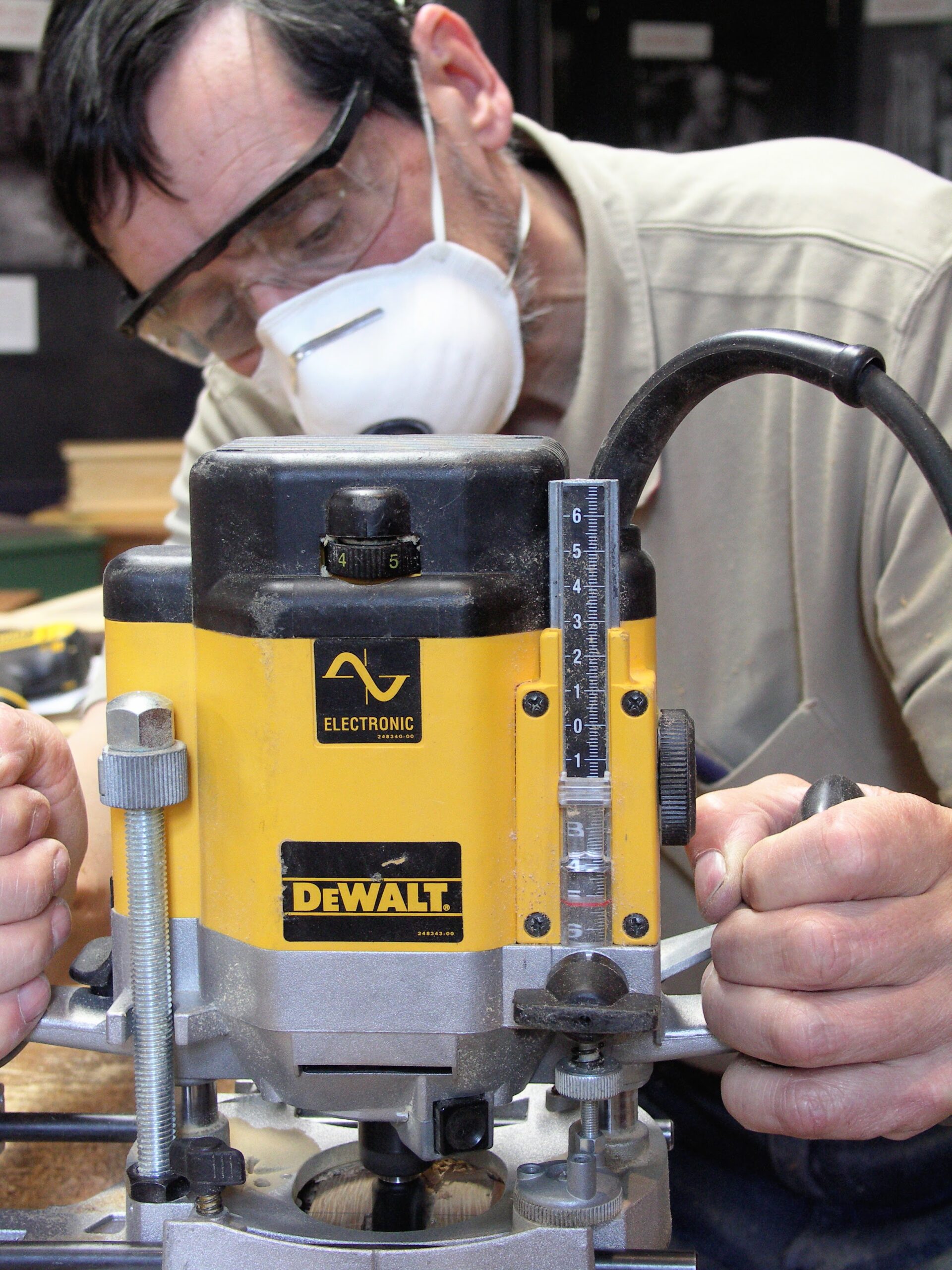
I am not sure that I can ever recall using a power router to cut a dado housing, I do think I have., but certainly not in the last 10 years or so though. I think that was the last time I turned one on. And I never ever used one to make joints of any kind with. Of this, I am certain though--even two street blocks away, let alone in my own workshop, I have never once felt the peace I speak of now when a power router is switched on and the cutter engages in the wood. If this is not a good reason for never turning one on again, then it's as good as any. I think it was more in the USA that I felt the strongest resistance to my working with hand tools. That changed significantly over the ensuing years though, as I gained approval show by show and demo venue on demo venue. Those advocates for power equipment, the ones that weren't going to consider new options using older and well-proven technologies anyway, just walked on by. I'm never sure whether they just couldn't believe in themselves or wouldn't. This kind of blindness is common to us all if or when we think we see everything. This is when we are at our most blind. We can readily close off many alternative probabilities if or should I say when we think we know it all. Guilty!
At my age of 71, I feel I have found a peace in my work that I never knew to be possible. The good thing is that you don't need to wait five decades or until you are my age. If you will just believe that it is there for you and that you can make decisions to establish it now or soon, you are 98% there. I do find it a little disrespectful when a 23-year-old scoffs in my face and makes a retort saying, "They've invented routers for that!" What's worse though, is when a 50-year-old says it. I don't altogether care that much, but I do know that if they gave me a day or two with them that I could change their minds. Having lived where they live, I can say that the peace I find now is second to none. It respects all ages providing you seek change and try the possibilities. Being inured to the dangers of a machine is the most dangerous stage in any machinist's life. That kind of confidence gives me the shivers. It is never spoken of by sales personnel. I wonder why?
In reality, though, I have found peace in working the way I do. Know this too though, after years, decades, of using machines, I am at peace with both them and with hand tools. I simply choose to no longer own them. That said, for ripping down 10,000 linear feet of fencing I might consider using a small and portable tablesaw in my back yard. In my workshop, this is very different. What I don't really care for is the noise, loss of workspace, extreme dustiness, inherent danger and then the dependency that comes in tandem with all machine work. For the vast majority of woodworkers who follow me today, machines might well be out of the question anyway. Wealthier nations make many assumptions and the main one is that anyone can, well, just go buy one; that everyone has a half-acre garden and a four-car garage too. Cost, space-guzzling footprints, housing, economics and availability are really the key factors. Does that mean that this is the reason I generally avoid having machines? Well, no, not at all. But I do understand that it is all too easy to misunderstand m. For the majority, they are simply unnecessary, and when they discover that they too can actually own the skills I have for themselves, they just want to become skillful with their hands like me and go for it. I think I can say that the majority do, anyway.
Comments ()