
Yankee Drive Meanderings
I talked recently about whether, when we say we are in or out of our "comfort zone", it is often more likely we are describing our being in or out of anything we want to control. A controlled area makes us feel comfortable and we only really feel comfortable when we are in control. My area immediately around my workbench is organised to suit me and, after 55 years of working my bench and my tools, I feel I know exactly where everything should be and is when I want to reach for something. This, of course, is most comfortable to me and that's because it maximises my control, my effectiveness and my efficiency. So is comfort and control more synonymous than we might think? To elaborate, we generally like to be in total control of our area and whatever area we are in as much as possible. I might redefine this more as an obsessive demand for controlling most everything, even things that don't belong in our own camp. When I am in my own workspace, I don't altogether like others to get too close to me and my things and I strongly dislike it if someone starts to fiddle with a tool or two.
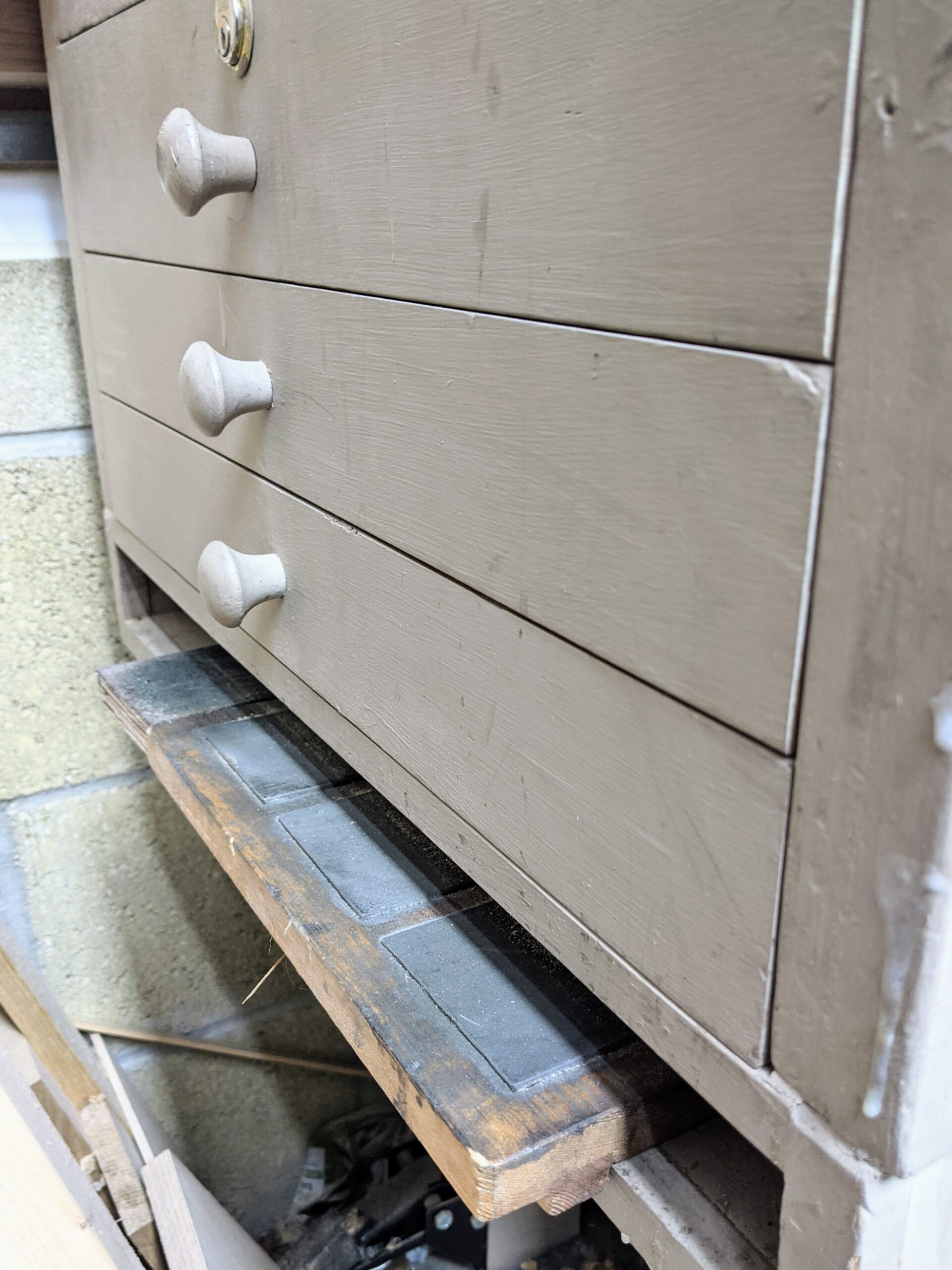
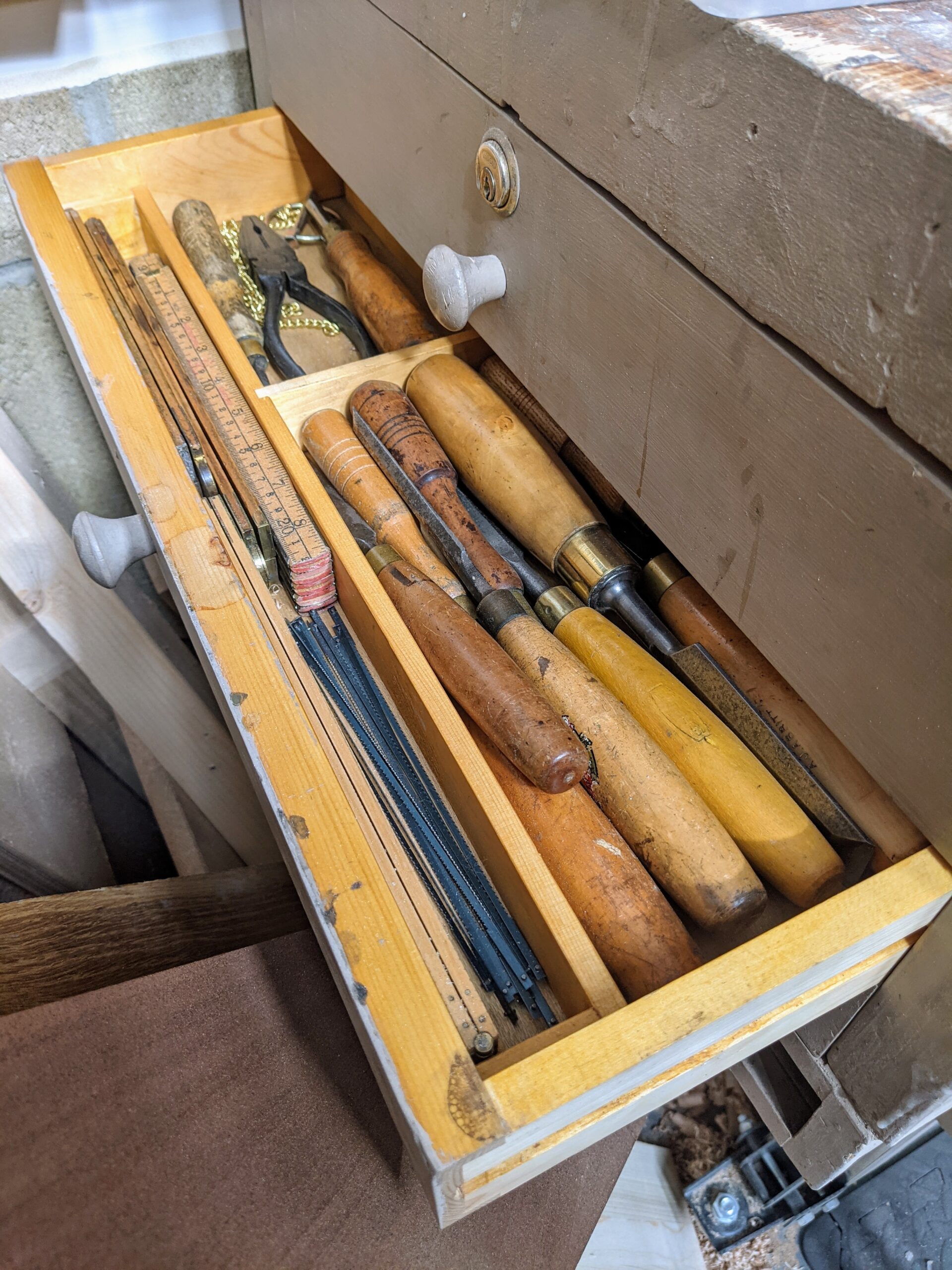
When I lived in the US, I had an open-door policy. People could come into my workshop to visit and see me as I worked, together with my completed work. This was back then my bread and butter lines were small pieces that could be carried off easily. Tourism was a mainstay and a wonderful cash flow. At the ends of my workbench were two wide but not too deep tills fitted between the aprons. They carried what my apron drawer takes care of now and were packed with small tools that seemed not to fit anywhere else at all. Inevitably, to the inquisitive, not knowing what the drawer held was just too much and the drawer was regularly pulled out that one-eighth of an inch too far. Six inches is not very deep for a drawer, and all of my precious tools were spewed out all over the shop floor. The problem was that that was not the only problem. Getting them back to my comfort level might take a week or two. Red-faced, the perpetrator held up their hands as guilt crossed their face. My comfort and my control were both gone.
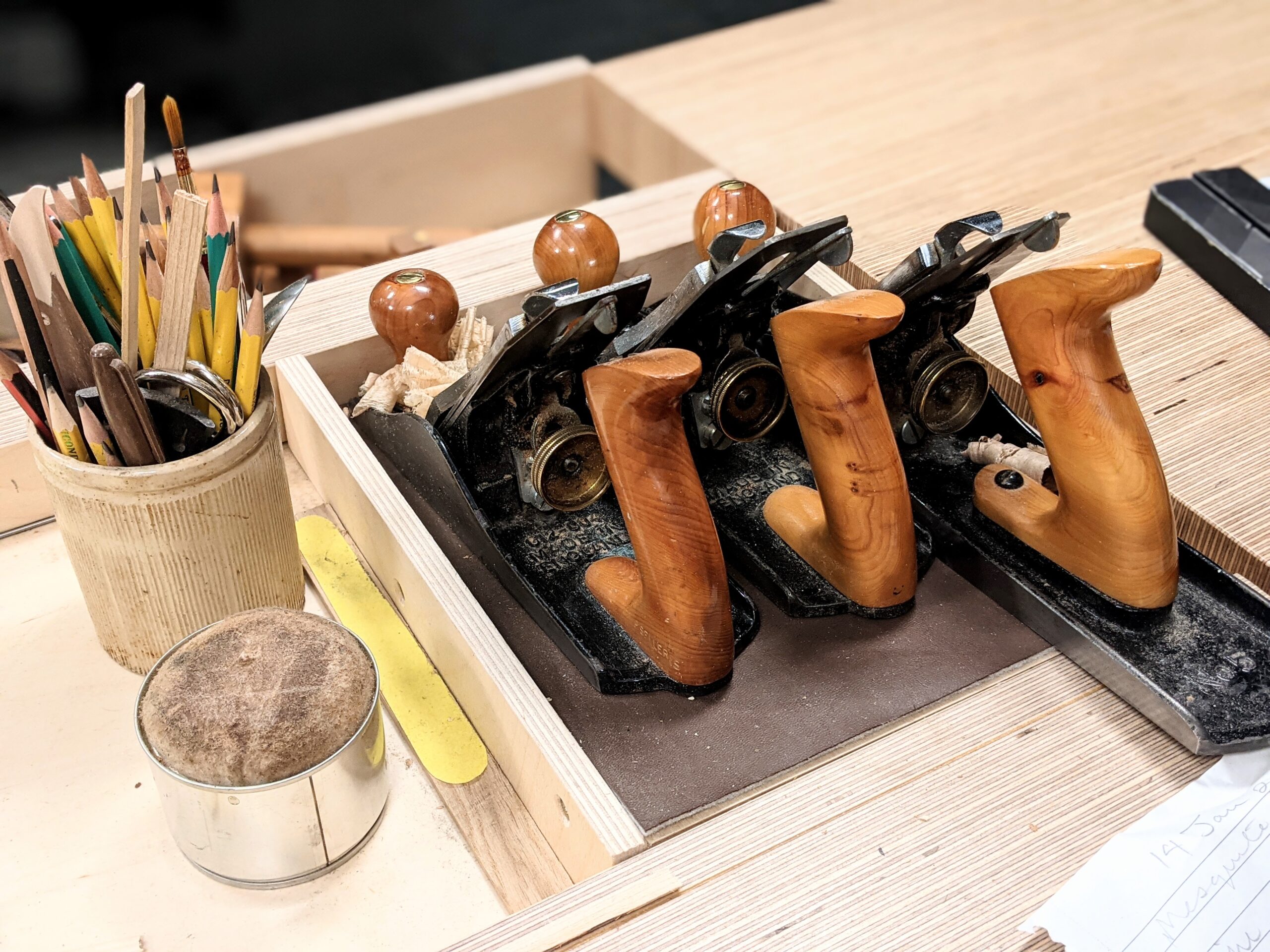
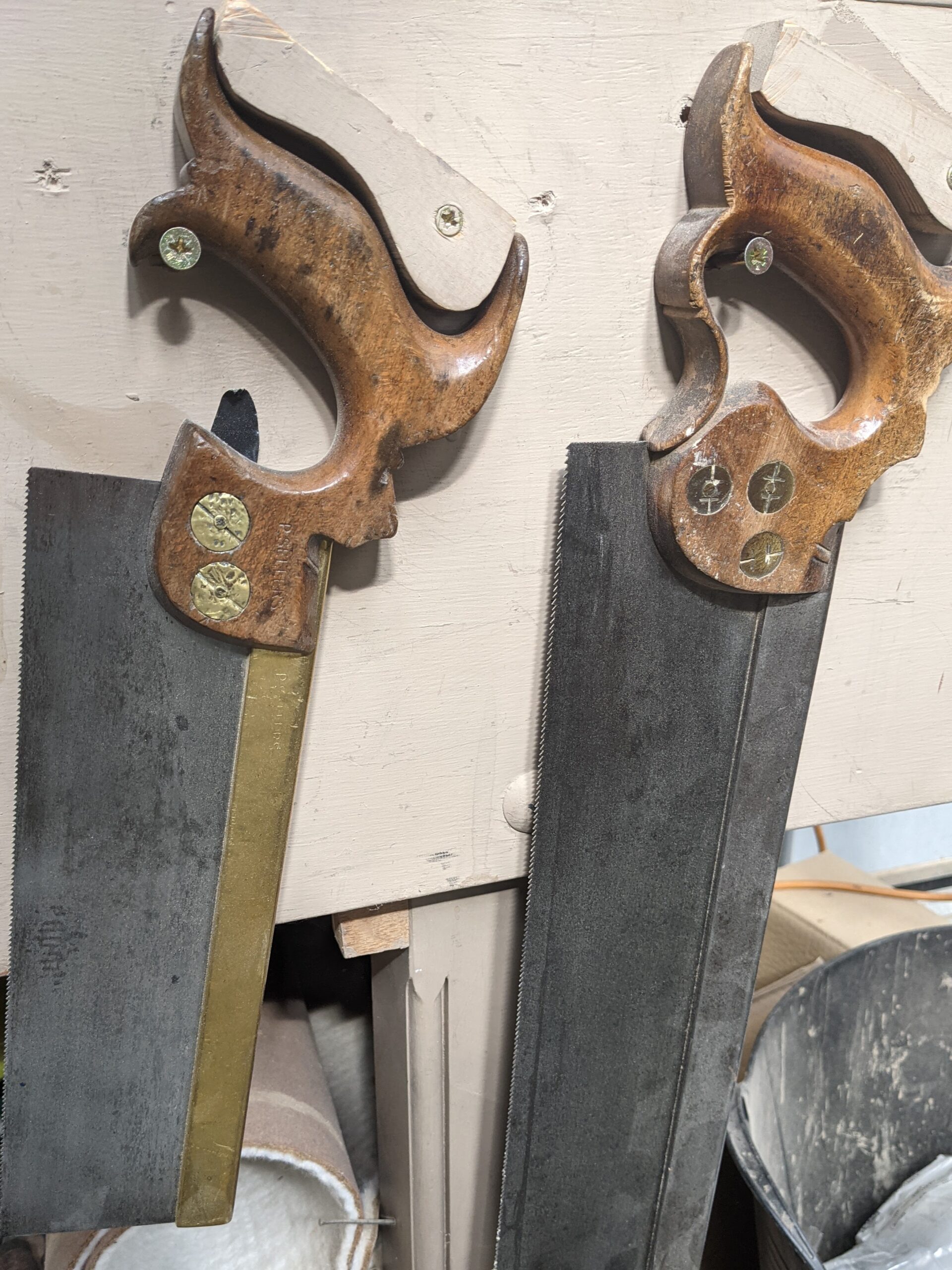
Today, my tools are as well placed as it will get for me. I doubt that I will change much now. I can pull any of my three most used planes to my hand and switch them out in a split second and so too my saws, chisels, dustpan and brush, sharpening plates etc. Comfort and control all in one.
I often hear of the affection people have for the Yankee pump-action screwdriver for driving screws. I too used this unique contraption during my apprenticeship, for several years. You could drive screws in quick succession and back then much of my work was making window frames and hanging doors in frames etc. Hanging four hinged sashes with two or three hinges a piece was a cinch and about as fast as it gets. This was a pre-battery drill-driver age but to the accomplished user of the Yankee driver, screws could be pumped in single-handedly once the start was taken up and three or four thrusts with ten turns apiece the screws were set in seconds. I became well used to the Yankee driver but when I started working at my next job with the furniture company one foreman, seeing the purple Stanley handle in my toolbox till said, "Get rid of that lad. We don't use them here!" When he walked away, my newfound friend, Derek said, "If you slip in general joinery it likely won't matter beneath a painted finish. On furniture, it will!" I put it away and never used it again because it was about the time drill-drivers a d Pozi-drives came in to replace both the screws and the way we drove them.
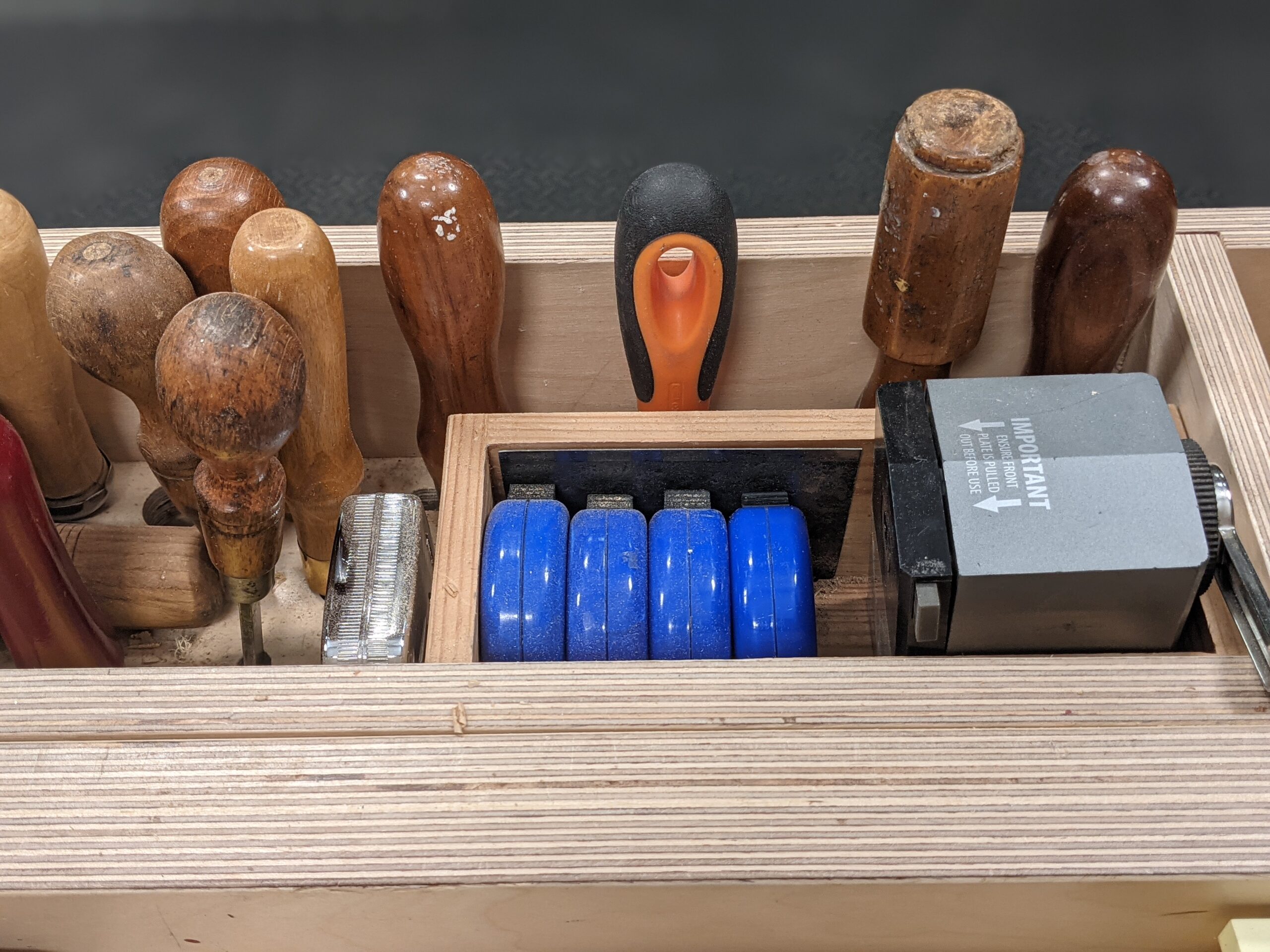
I think that what I am saying is that it's funny what you become accustomed to though. Most people will not know that I am equally accustomed to machines as I am to hand tools. Whether I am as comfortable with machines as I am with hand tools is a different matter. By comfort, I don't mean equally capable. I am equally as capable with any and all machines for woodworking as I am with hand tools. By comfort I mean accepting, I suppose. I somehow crossed a line 30 years or so ago when I decided that mass-making and using mass-making methods gelled much less with the lifestyle I was aiming for. I felt that equipment like power routers seemed less and less fitting to the way I wanted to work and that for me, with my skill level and strengths, such equipment was more mess-making than mass-making. It was not some kind of blanket statement against ever using them again though, more that I wanted to use them less and less rather than never. Also, I didn't want them in my way to be working around them all the time. It was very freeing to take my vintage mortiser and tablesaw to the metal scrap metal yard. They had zero safety features on them by now and they had really served their purpose. If I did start another woodworking school I would buy them in again for preparing stock for 20 students. But that's not likely to happen now.
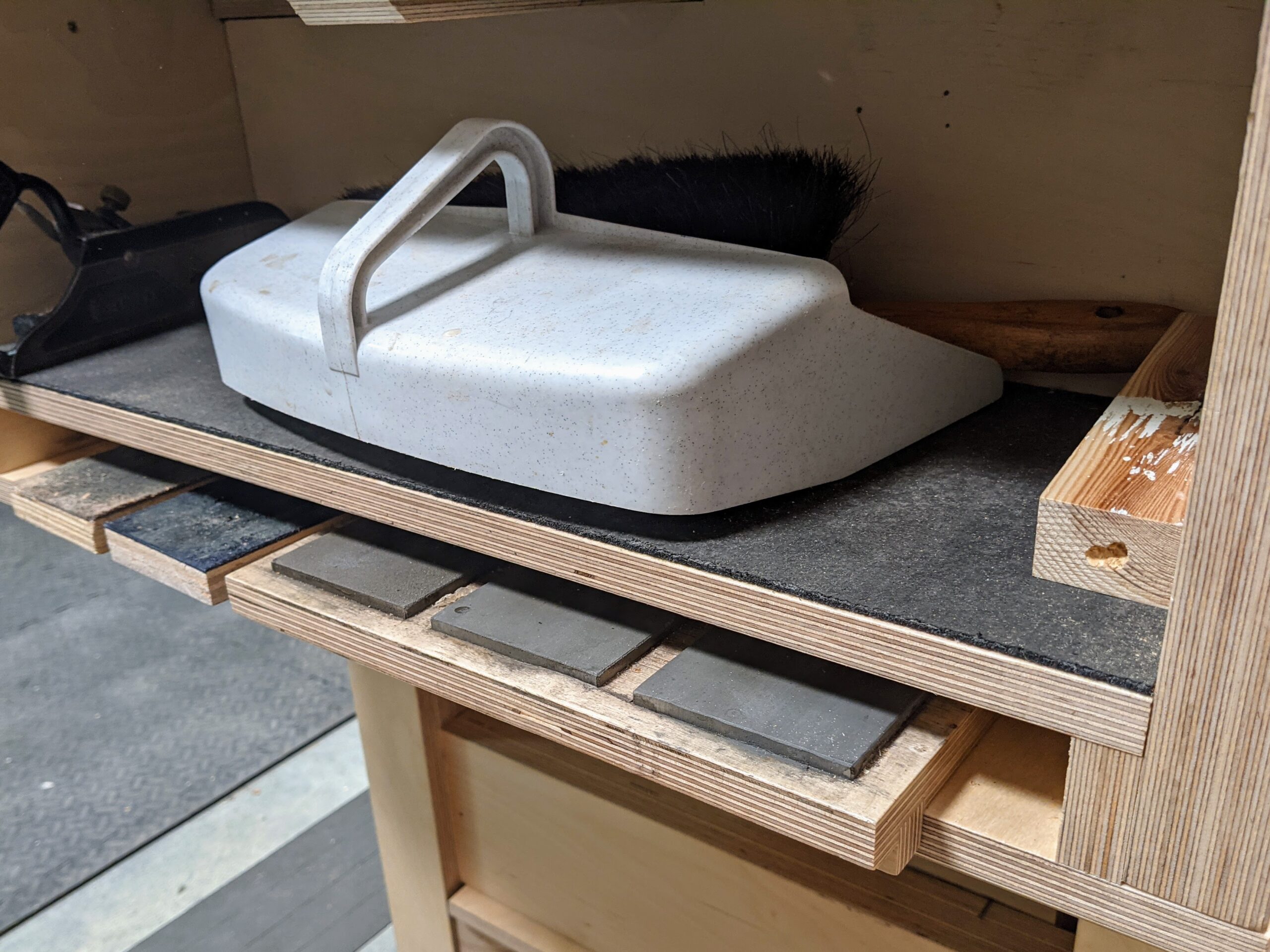
Organising your workspace to suit you is critical to effective working. It can take time. Weeks, years even, but when you arrive you know that you have arrived a nail hanger here, a screw hanger there, a sliding shelf or drawer, a tin can or a pot vase can radically change your peace arrangement as will lining up the planes at the end of your bench or hanging up the saws to the right of your leg. These things take consideration. It can mean much more to leave the gap between the vise face and the bench top so that you can use an overhand or underhand grip when installing your wood in the vise than a flush-to-the-edge vise where only a front face grip can be used. It's a million time more convenient for everyday working than that rare need to clamp a board to the bench edge, believe me. People often tell me that stick of candle for waxing the sole of your plane or your saw plate is better than my rag-in-a-can oiler ut i don't find that to be true at all. My rag-in-a-can oiler oils the bed of my bandsaw, the ways and thread on my vise mechanisms and much more. I even oil my chisels and spokeshaves very conveniently. Comfort is control and control is comfort.
Comments ()