
Exclusively Inclusive
What hand tool woodworking gives me.
I remember passing John's workbench one evening a week or less ago. It was dark, but the light from my work area cast a soft blush on the end of his toolbox carcass. I wasn't examining his dovetails, it was a certain level of perfection that caught my eye. Perfection for me comes in levels. There is no such thing as an ultimate level of perfection per se. Perfection, to me, is the level at which need is met. The four corners were meticulously joined in gapless union I find to be rarely ever seen. I recall snatches of him working in my mind's eye and the reward of seeing him align every element of his body in delivering exactness to every cut to the wood. This too is more the rarity and scarcity to me as a maker in this age. I seldom see such things yet I know that they exist in small and ever-diminishing pockets around the world.
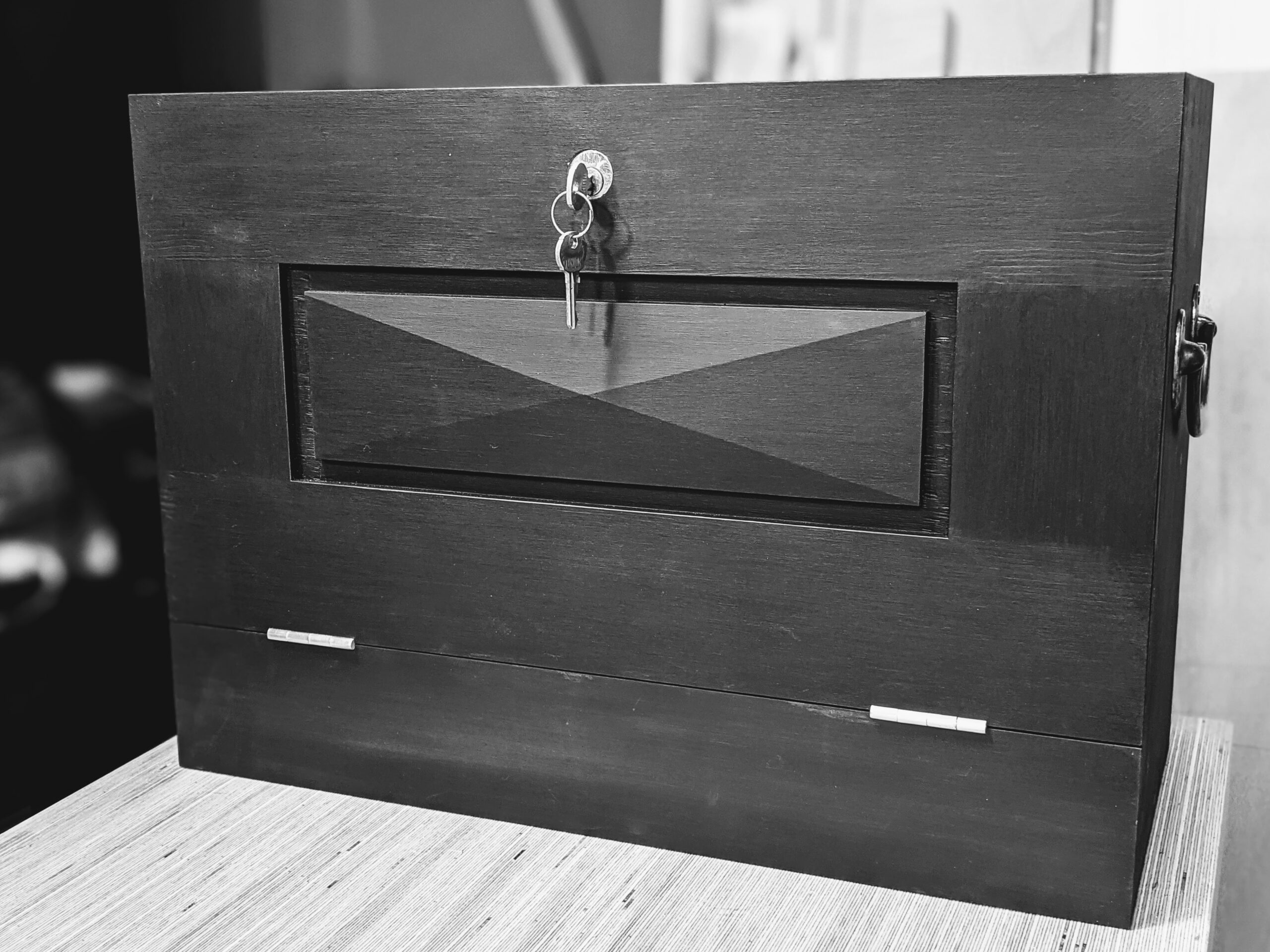
It made me think that, given the right input, the right encouragement, an environment of nurture and set-aside time, skilled work can thrive and succeed. John, as I watched him on and off through the days, never stopped moving. And he worked systematically and with sympathetic deliberation through the execution of his work.
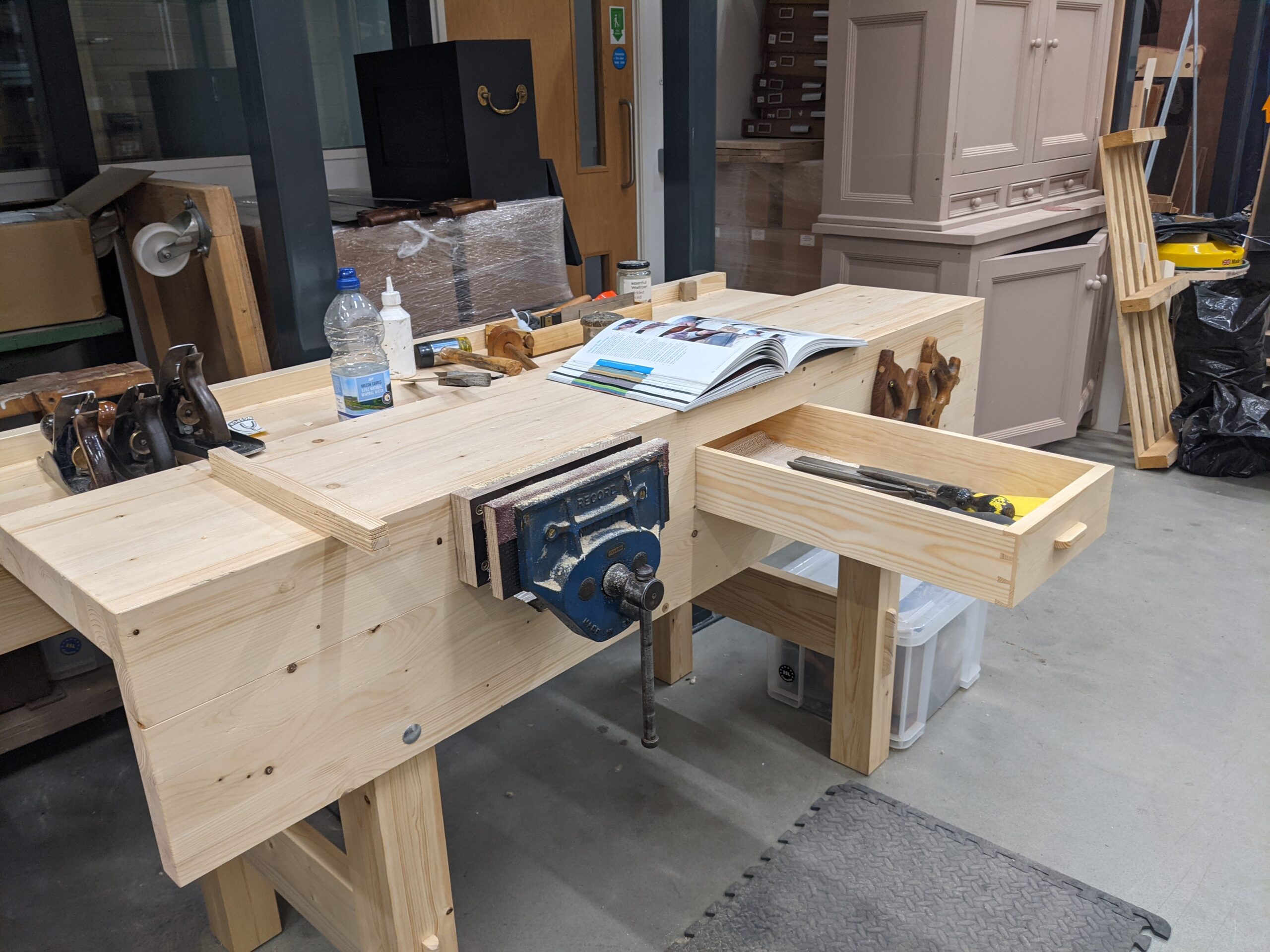
The essence of his being there at the bench divides off into essential elements. He is currently testing my written instructions in how-to's I wrote over the decades and so the steps provide a planned and strategic way of making. But without them, given an order for one of those project-based how-to's, he would create precisely the same steps for himself by himslef. I have worked for 30 years to encapsulate those elements from my life to prepare, plan and make any and every piece I make. Beyond the pages he's following though are the unwritten essentials of order. No matter how untidy a workbench is, or the placement of tools, there are elements of work and working that just cannot be defied, tools that cannot be replaced by others or adapted, methods and techniques that can never be ignored no matter what. The essence of good work is order. I find and always have found such things to be enthralling.
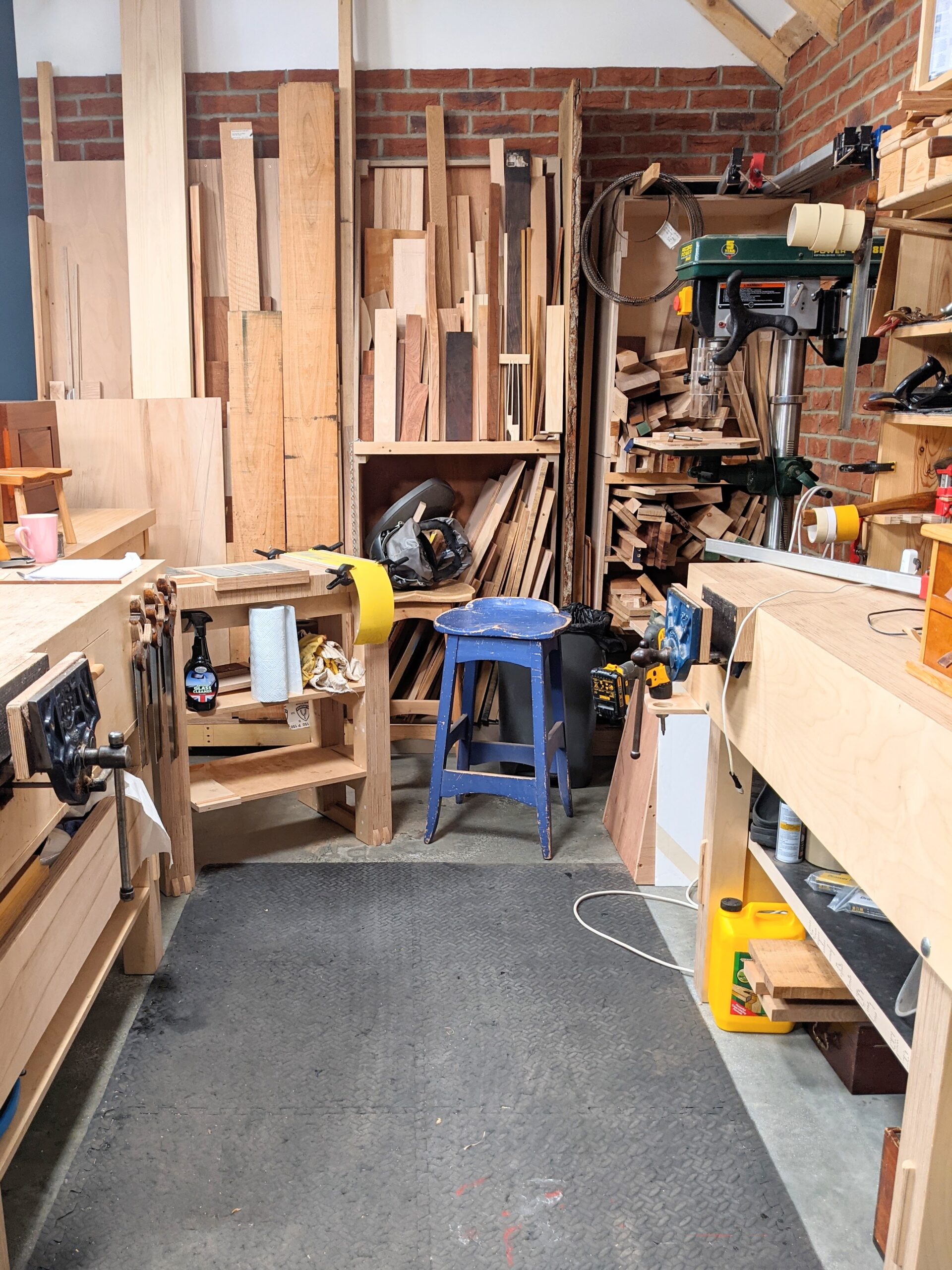
Key to peace in working is method. Without it, work and workmanship go to pot. The very nature of woodworking with hand tools demands the replacement of tools to their proper place on or near to hand at the workbench. My workbench is the most perfect tool support in every way; it organises me. I reach within a foot or two and every tool jumps up and into my hand as if my hands and the tools are polarised. John is either making or sharpening. No tool goes very far beyond that pristinely sharp edge or tooth for more than a few seconds. His level of sharpness is identical to mine.I would have no hesitation in allowing him to sharpen my tools for me. He is one of three or four people I might feel that about. Otherwise, no one touches my hand tools. No one!
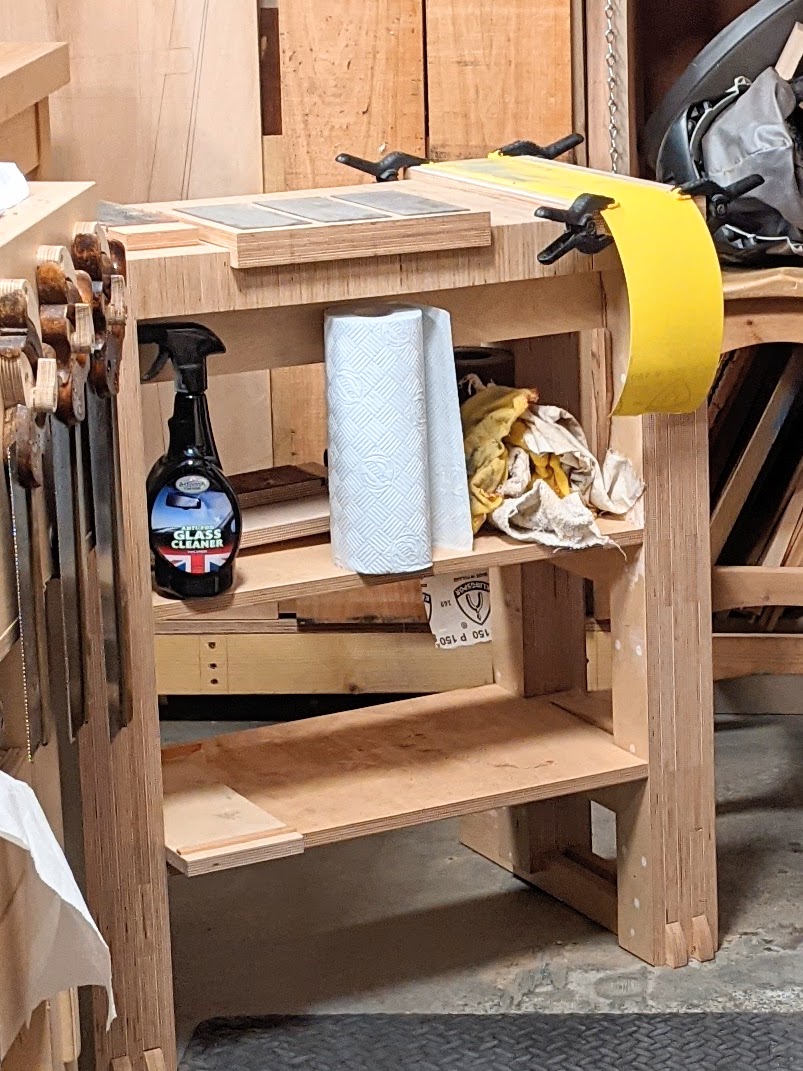
Flitting between sharpening and cutting is the essence of efficiency and skillful working demands that these two work in sympathy with one another. Clutter also demands attention and the recognition of natural breakpoints that don't interrupt our flow of work or pattern of thought. There are points when we move tools aside in a cluster so as the maintain continuity, yes, but there are also those points when each tool must be returned to somewhere and the bench and floor swept to enable us some clear time to think fo the next steps. Ignoring the signs of dull edges, disorderliness and good maintenance on an ongoing minute-by-minute basis are signs of indecision that come from procrastination. This lazy disposition rarely leads to becoming a good crafter and mostly it can lead to an accident waiting to happen.
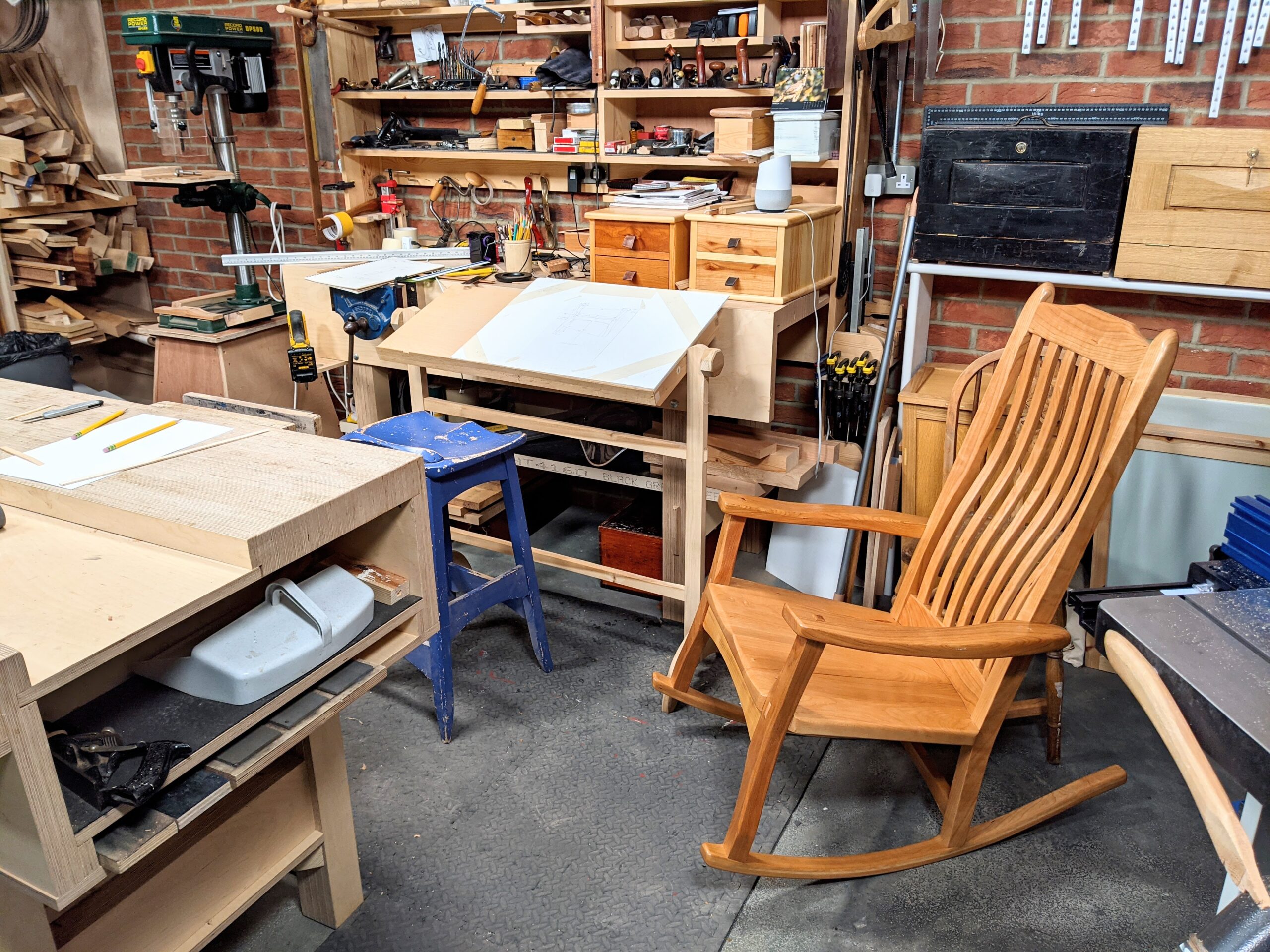
Detail comes with care and results from forethought. Forethought facilitates planning and stages get set for performance. I just redied my workspace after crafting four rocking chairs in quick and immediate succession. My next pieces for sellershome.com rotate like a three-dimensional Ferris wheel through my mind. I see wall clocks and coffee tables, bookshelves and even toyboxes glide in and out throughout my clean-up time. My planks lie in wait for my flipping and turning them for choosing their place in the whole. My mind settles on John's box for a fifth time and I revisit the scene of my opening and closing the fall-front to hear the click of the catch or feel the slide of the dovetailed tills.
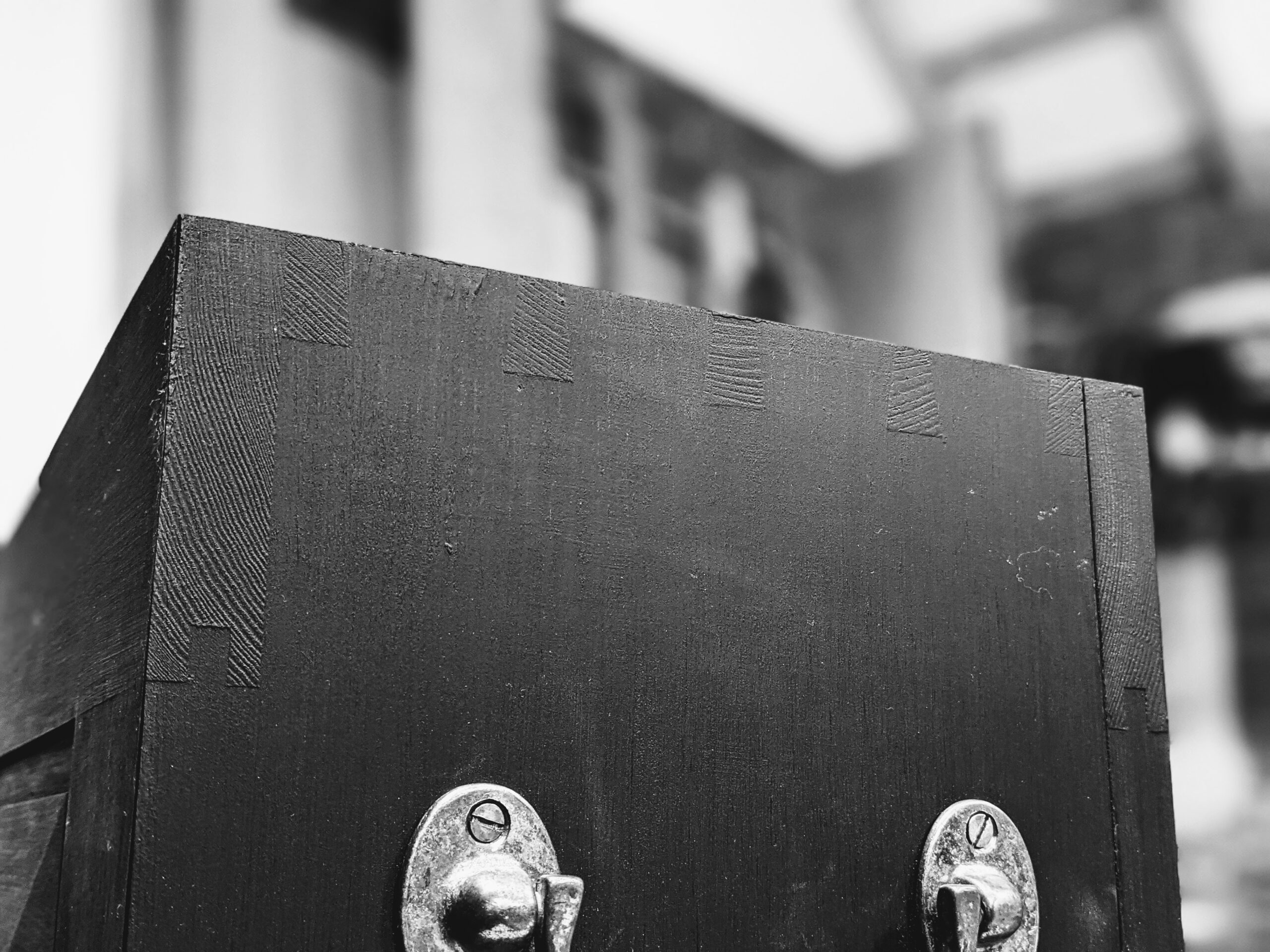
His tools are home inside in that belonging place that cushions them from the harsher extremes and exposure. It sits squarely on his workbench close to hand where he works. There is a crispness to it but, eventually, it will develop wear and marring from the nature of being there. There is a certain gladness that the tools are safely placed and stowed. This is why we do what we do using hand tools. It is about order, yes, but it is more about the organic processing that only hand tools provide us with.
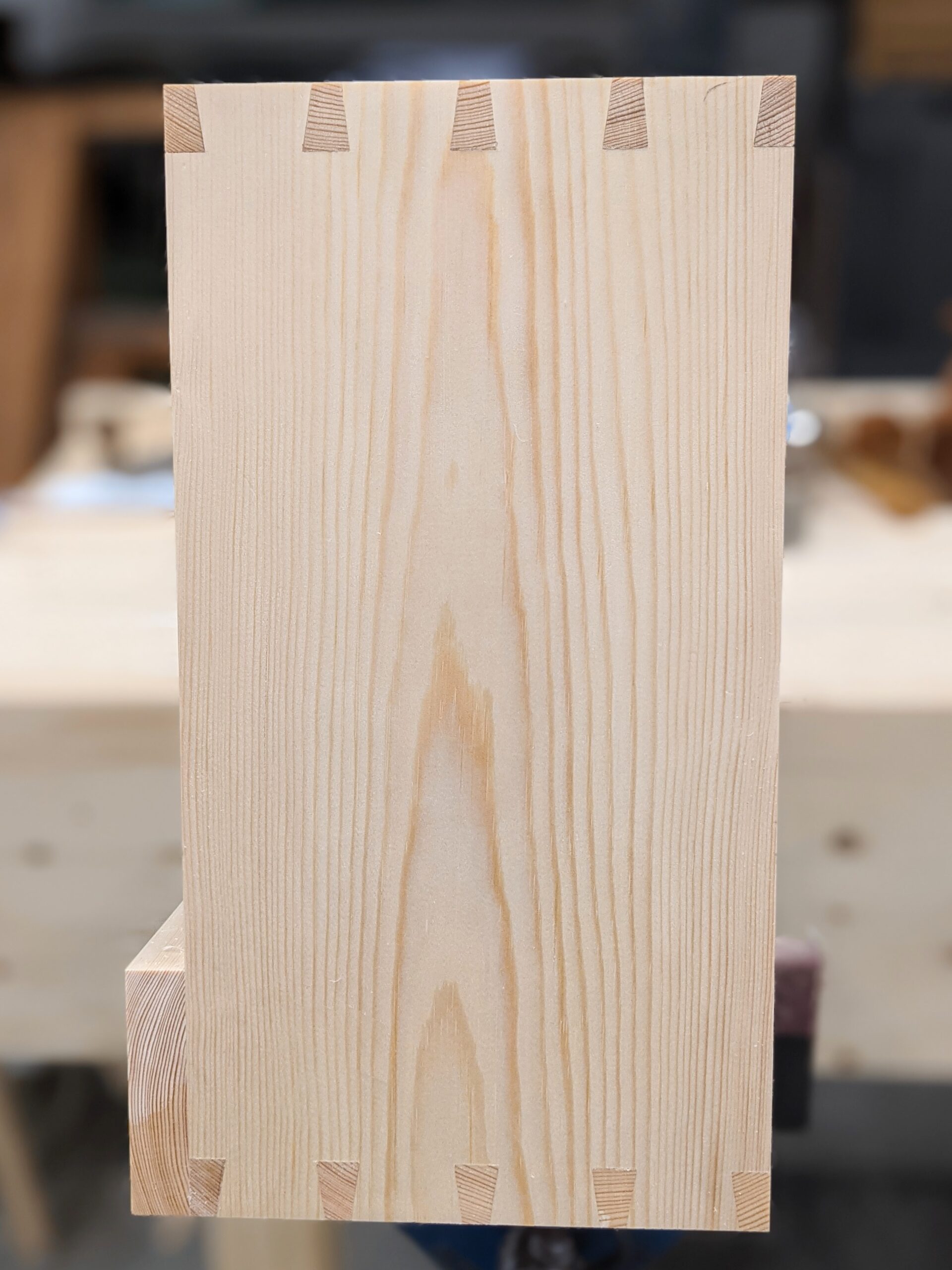
This is what sets the crafting artisan apart. It is by no means exclusivity that makes us exclusive, more that we cannot achieve what we achieve any other way. We cannot achieve the ultimate levels of satisfaction we strive for without using the exclusive tools we need. For this there is no substitute; the hand tool is never replaceable by any machine. That creates exclusivity where it is needed. It's what we crafting artisans rely on. There just is no other way once you've been there!
Comments ()