
The Woods for the White House Pieces
After the phone, call I took a pencil and sketched out a framework of tasks, choices, ideas...in reverse order. Most of what I do thought-wise is done in reverse order as is my thinking where I think in pictures and colour. Most design starts with a space, empty or not, but ultimately emptied; a space to receive the made thing in my mind. I had never designed anything particularly formal before now, aside from boardroom tables and associated furniture for suits--lawyers and county councilors and such. My pencil skipped quickly across the page and some paper ended up tossed into the bin. I was sorry for this because I distinctly remember the sketches evolving from a rectangular box with square corners to develop flowing curves, columns and inlays over the course of about two hours. I added a little colour wash and before I knew it the design felt resolved in my head.
The tradition of joinery would be an essential element in the complexities of the design. I wanted something exemplary of fine woodworking throughout the whole. That meant there would be no wood substitutes used anywhere; all of the main decorative elements in panels and inlay work demanded that I use nothing but solid wood. If this piece was to match or exceed the skilled work of the other 300 plus pieces in the Permanent Collection, only solid wood could be acceptable! Why? No man-made, engineered substitute material had the proven longevity of wood. Whatever we used had to come up to the longevity of 200 plus years. The White House was occupied for the first time in 1800, having taken just 18 years to build it, so I couldn't let the artisans before me down by using MDF, particleboard or even plywood.
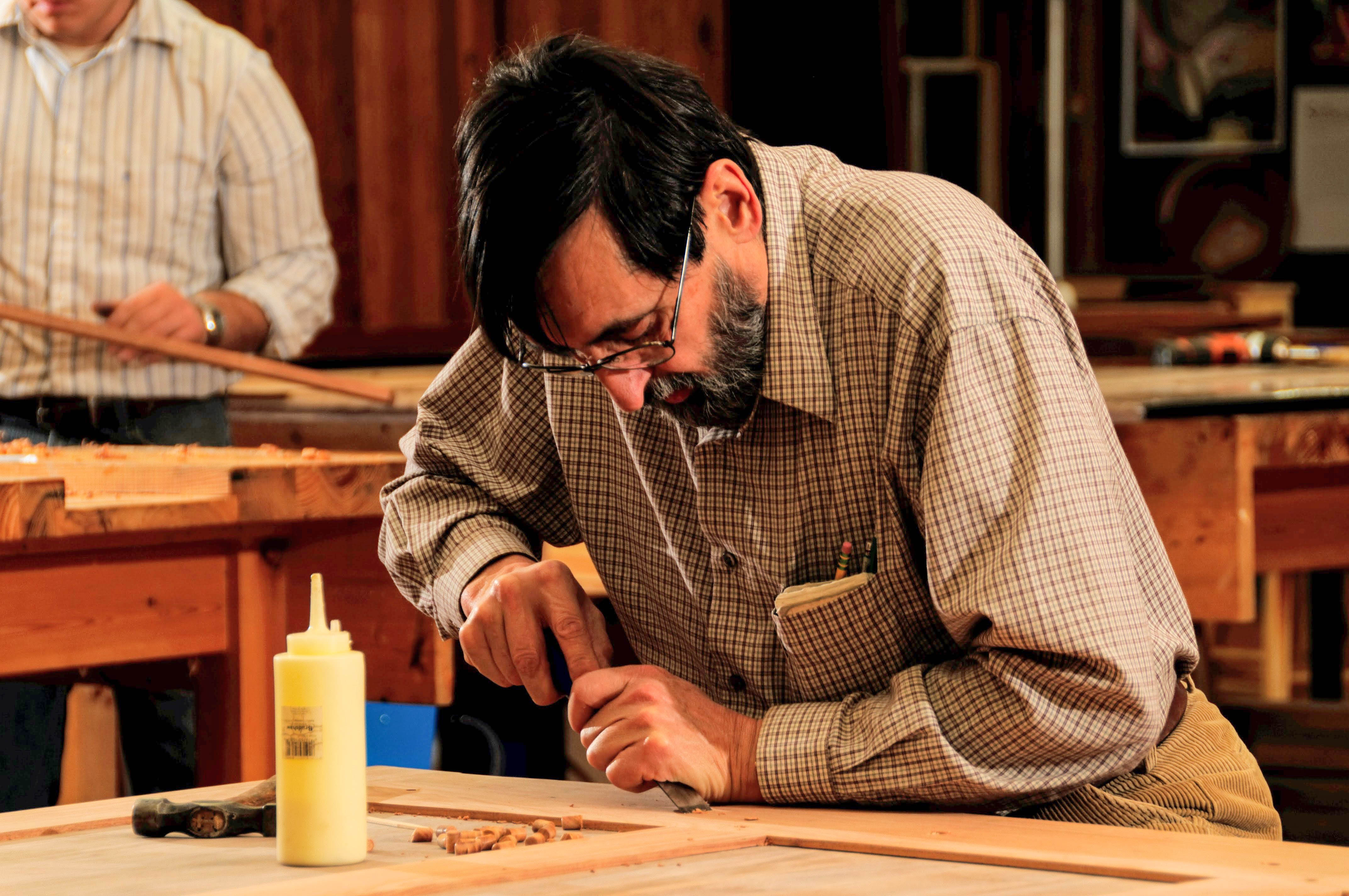
A messenger knocked on the door to collect my sketches and I had no way of keeping my originals so I stupidly let them go with the understanding that, "I must get these drawings back, Troy!" Oh, Troy, why did I trust them to you? I should have known! My drawings never returned to me. How many books loaned have never returned to us? Never ask me to borrow my old Stanley #4. It won't happen!
The main decisions to come were the choice of wood. The commission originated with President Bush, to both celebrate his closing term of eight years in office and then also to welcome the new President, President Obama. Because of President Bush's Texan roots, I felt the strongest about native-Texan mesquite. President Bush has his country residence in a place called Crawford. Mesquites thrive throughout much of Texas and unfortunately, it is known more as a scrubby brush tree rather than an actual tree altogether. I have cut several trees two to three feet in diameter and eight feet long. Mesquite just seemed a natural choice. As it is with almost all furniture pieces, the final composition emerges from many, many smaller components. Though mesquite, when left alone unbulldozed, undieseled or burned, will grow to a sizeable girth and length. Its main problem can be overgrazing (the seed pods flourishing cattle dung) or a mass of branches spreading out in every direction from a very stubby stem. Finding a straight, long stem of mesquite is like looking for a needle in a haystack. Added to all that that, the mesquite is highly susceptible to wind checking, meaning it has cup shake or shakes along the long axis of growth that cannot be seen from the bark side. The Texas long-horn borer thrives on the sapwood of the mesquite as do other parasitic creatures and much more. We needed the most beautiful mesquite we could find. I already had some prime pieces and we had recently cut some, though it did look somewhat rugged. Scrounging around in the dim and dark corners of friends' workshops and my own stash from two decades of collecting, we finally had it. It was at this point that I felt we could deliver the goods!
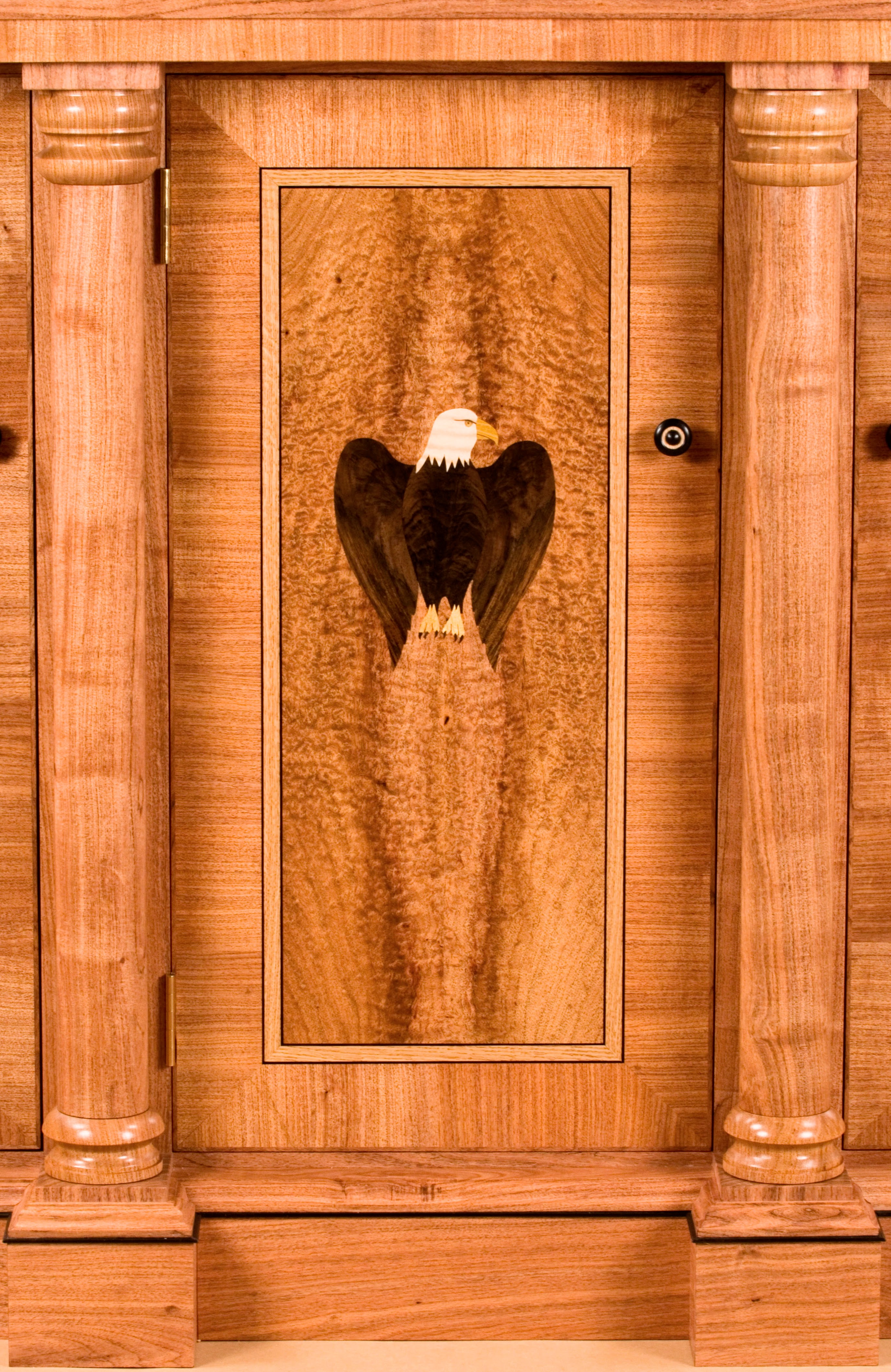
Though mesquite was the primary wood, there was a special request for a wood to be used in the design. President Harrison had planted a Scarlet oak tree in the grounds of the White House in 1889. Prior to 2009, this oak dropped a large limb which was taken and preserved by the groundsmen. I was asked if some of this oak could be used in my White House pieces. There was not a lot to work with but more than enough and plenty for inlay work and such. In use, the Harrison Oak now frames the main book-matched panels I used on every facet of the pieces; doors, end panels and tops all have the strip of the oak sandwiched between two strips of ebony. The doorknobs too have a parallel ring of the Harrison oak sandwiched between an ebony eye and surround. Quite pretty accents, I thought.
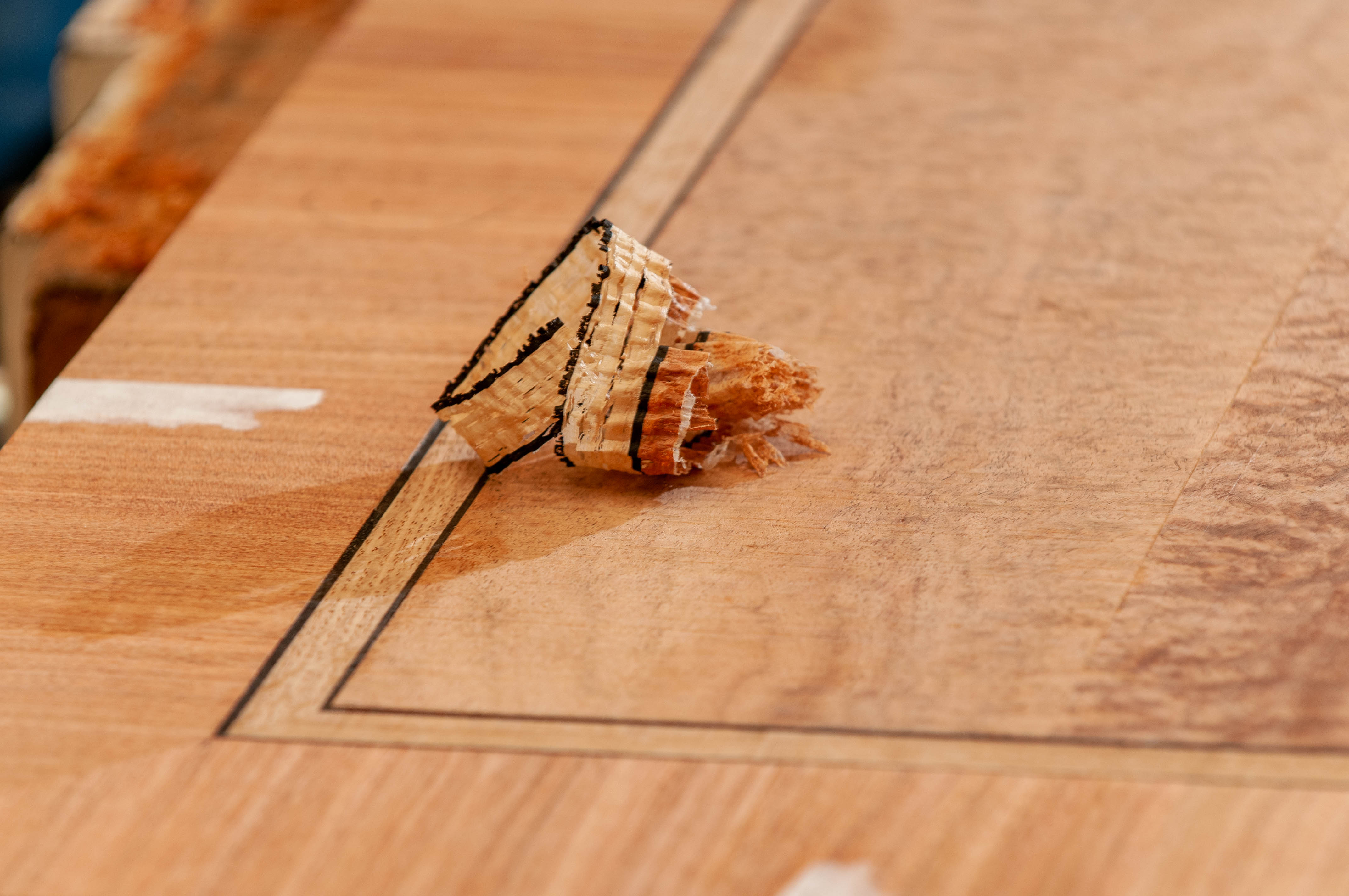
The two Bald Eagles are exact opposites of one another. My son Joseph Sellers and I put these together. We used Osage Orange for the eye, feet and beak, striped flame maple for the head and neck feathers, Texas black walnut for the breast and under-wing feathers. To get the eye was a trick I had learned from a previous project. I will let you know how we did it later.
Comments ()