
Making My Way
I'm currently in the middle of making two toolboxes, to replicate the building of one completed by Joseph and I in 2003. It's not a small amount of work to make two in tandem, but necessary in the preparation of the video work we need. I rip-cut my components on the bandsaw and by hand and then I hand planed the surfaces to true and square them; a quick count says 50 pieces in all. Daunting? No, not really! In fact, it all makes sense to me, especially to my daily exercise regimen.
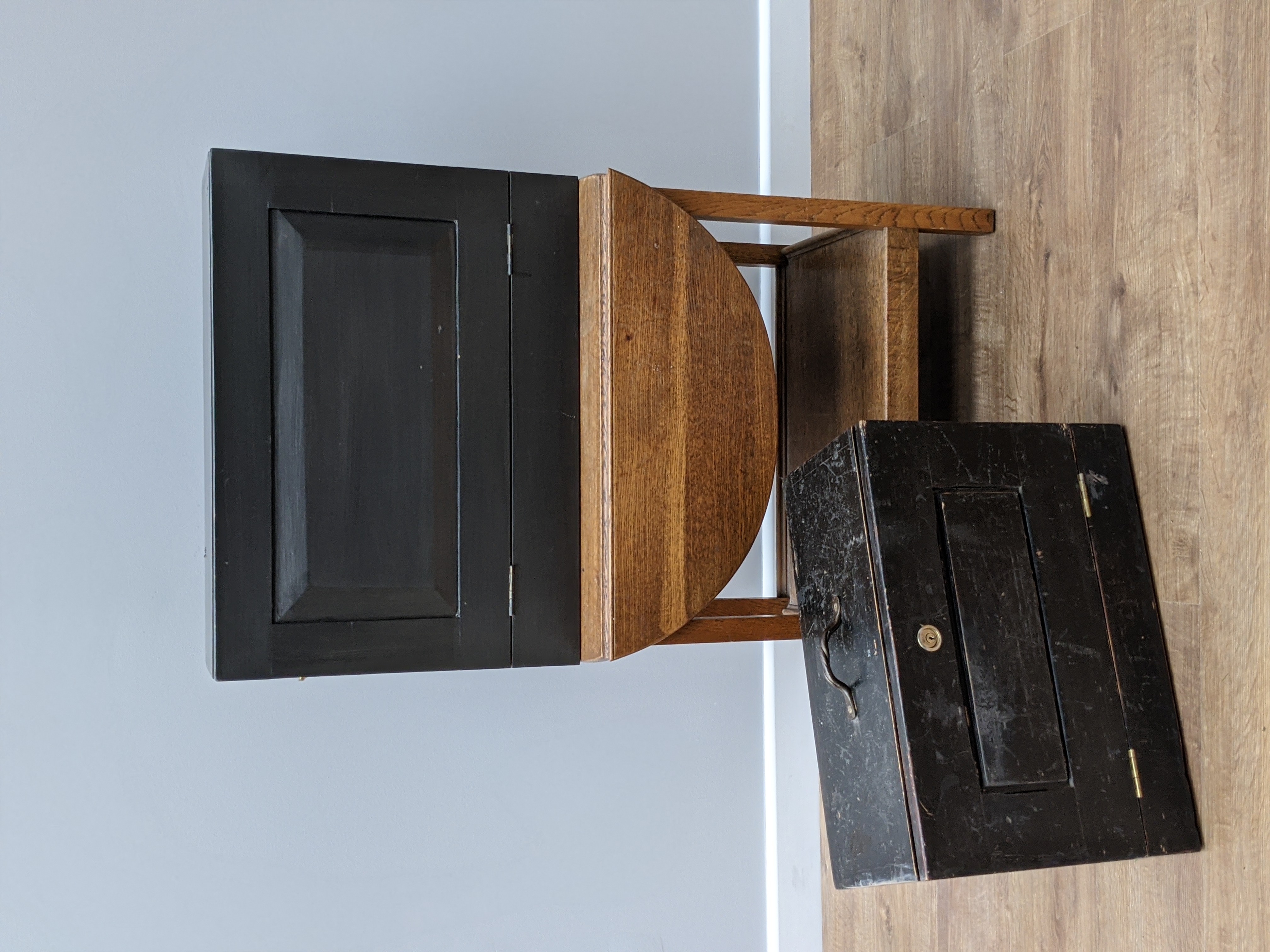
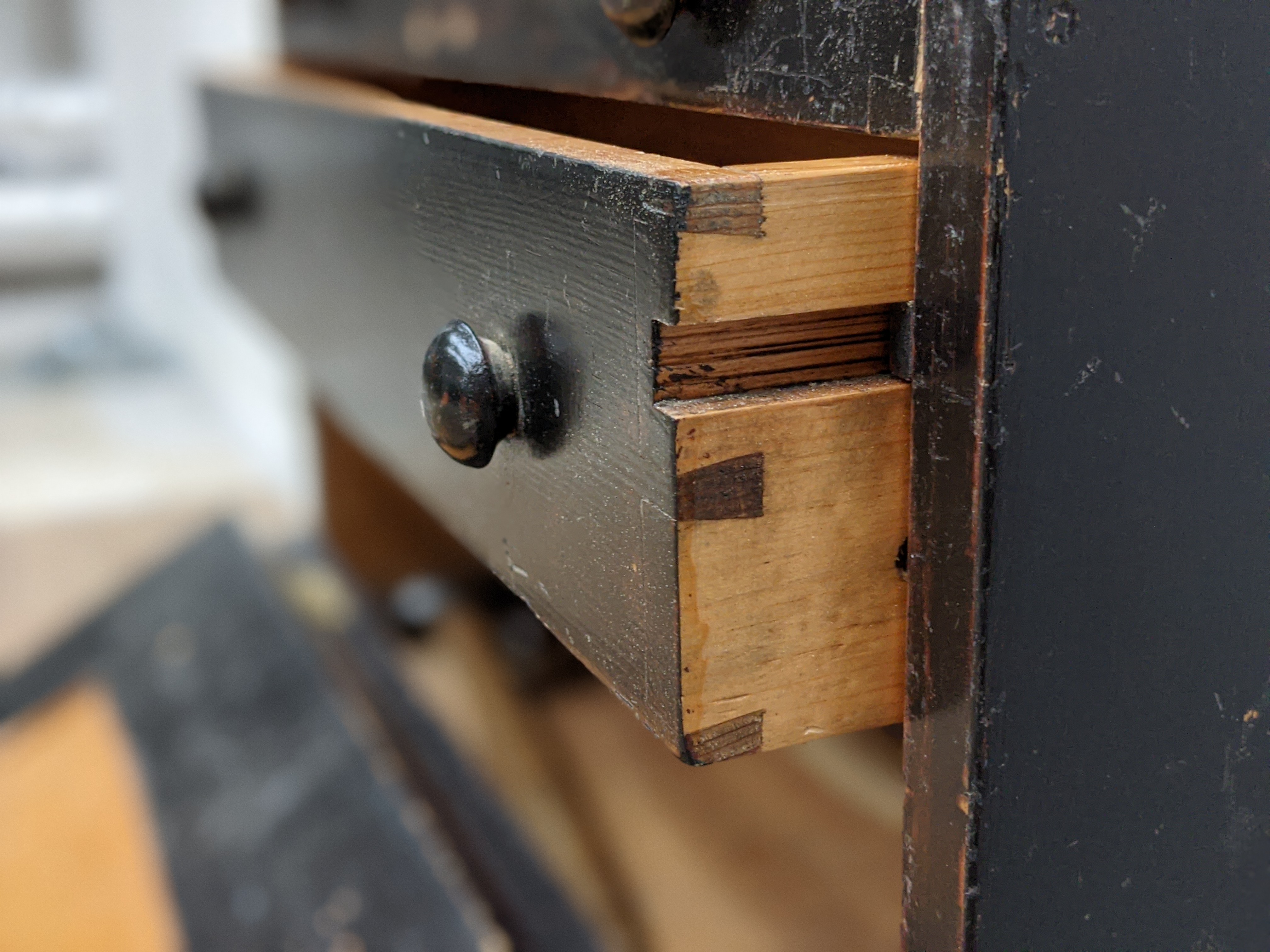
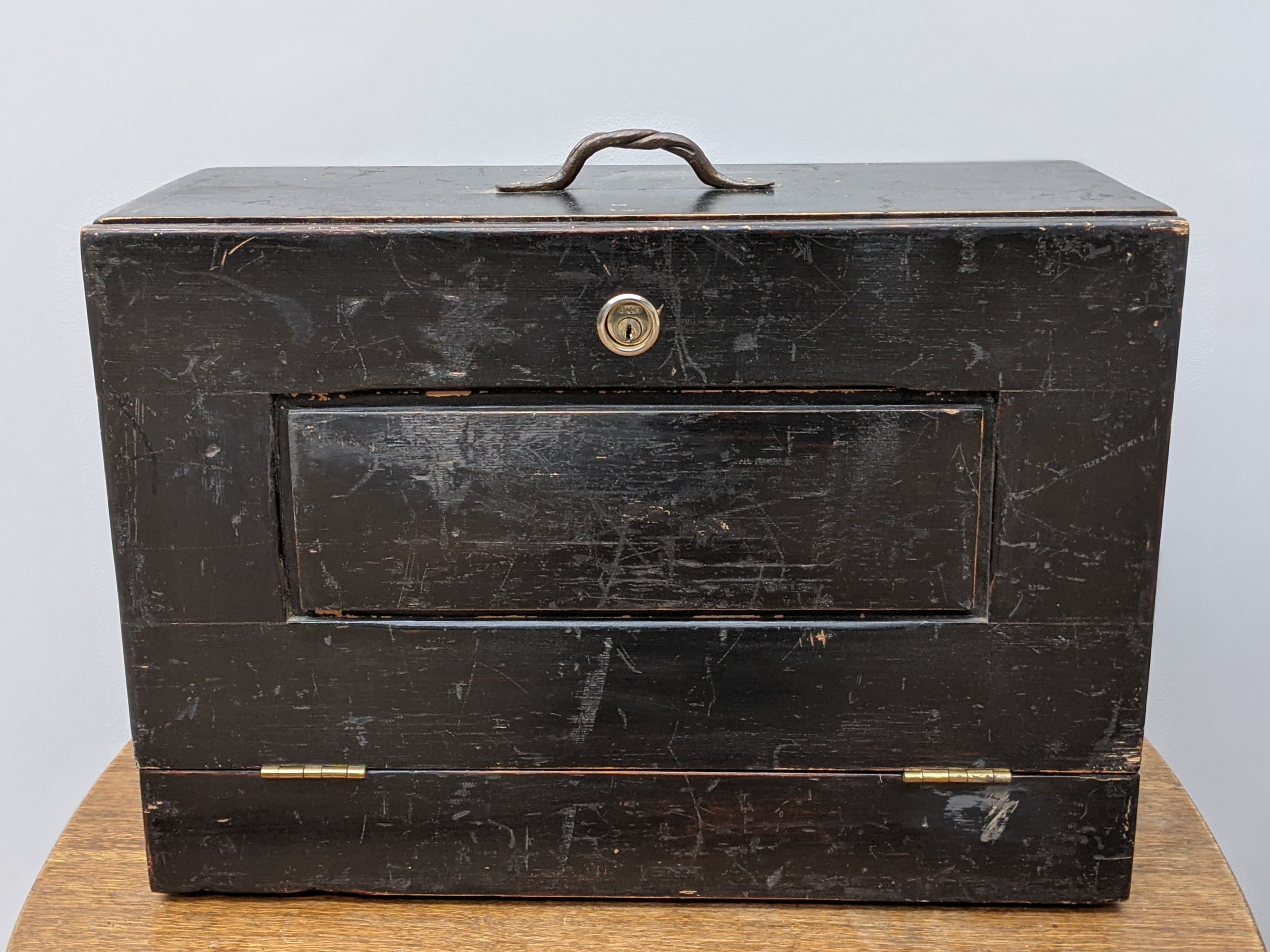
The toolboxes here are my original designs, not copied you see, yet they look traditional. The ones I saw as a boy were all skinned on the two outer faces with 1/4" plywood pinned and glued to the main box and then the front was cut from the back with a handsaw for the formulation of a fall-front lid or door. Once cut to about two-thirds down on each side the cut took a curve to connect the cut to the outer front face and then a long cut was made along the front to connect up to the opposite side. The exposed plywood edges were then beefed up with a one-by that made two hinge rails and the drop-down front was hinged to the main box. It was a clever post-war design advantaged by plywood and necessary for the new mobility of a postwar culture emerging for joiners and carpenters.
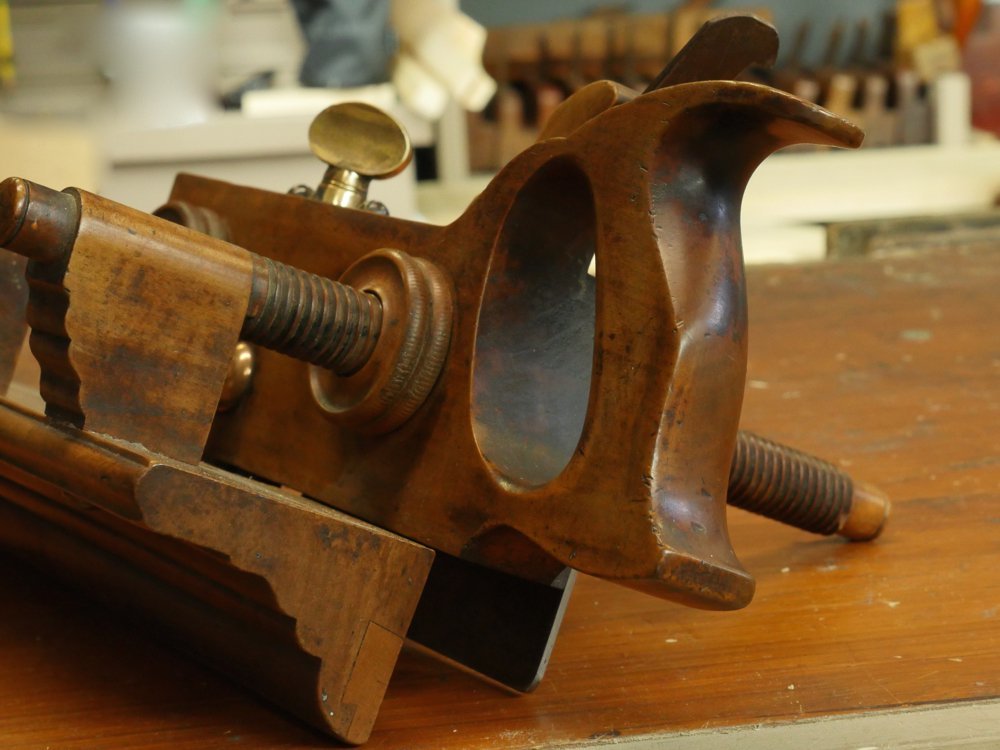
These men now owned cars and vans where they hadn't before. Construction was booming in the rebuilding of bombed Britain and men moved according to work. You could carry such a box filled with tools on buses and trams, take them to new work and to and from work and home. Lightweightness yet strong, the boxes kept tools safe and portable. The mass of tools once needed by crafting artisans at the bench, bits and braces, massive plough planes and filletsters, dozens of moulding planes, all big and bulky items, were not needed in the emerging of the newer mass-production world of woodworking.
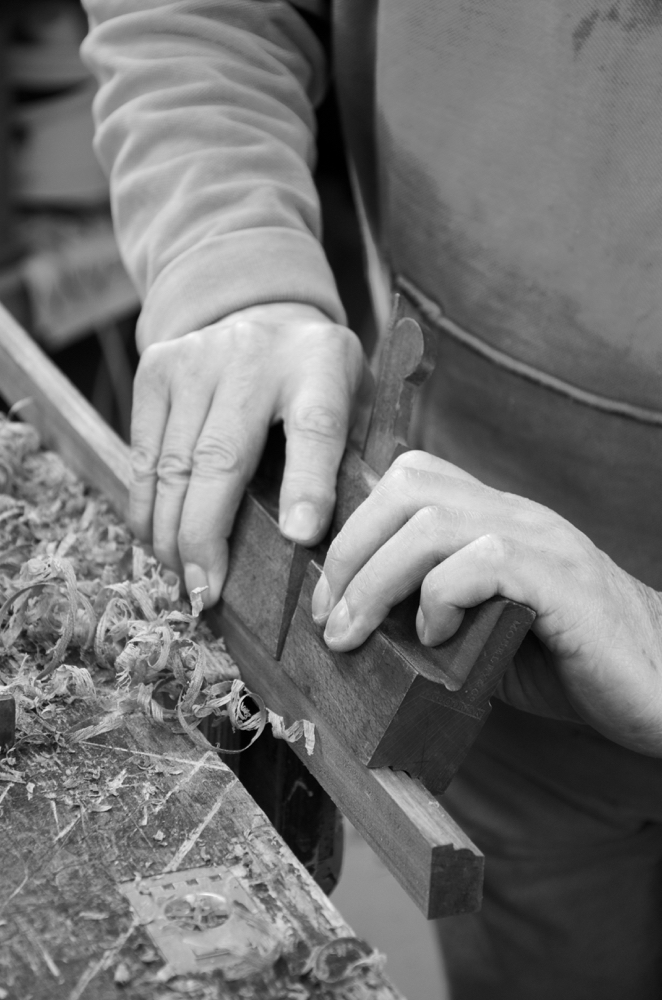
Within two decades most such ordinary tools like planes and handsaws would be a thing of the past. Skillsaws and jigsaws, routers and pneumatic nailers owned by the company you worked for would replace the traditions of handwork. And eventually, individuals like myself would be able to buy into the so-called power-woodworking world as the costs of this equipment came down and wages increased. Look in the back of a big white van or a US Ford crew-cab Ranger with a truck bed cover on and all you will see is a mass of black plastic boxes and a tool belt. There was no need for hand tools anymore. Just a hammer and some nail punches, wrenches, screwdrivers for adjustment and beverage, a torpedo level, a tape and a chalk line, maybe a couple of chisels.
I redesigned the toolboxes of the day to create something with added longevity and a hidden quality that equalled the value of the tools inside. Reach back into the history and most toolboxes and chests were painted and repainted throughout a century and two of use. Beneath the workbenches stood two or three massive boxes filled with hand tools. These were taken to site, office and house, but traveling toolboxes for repair work would carry the tools to site with greater ease. As I said, this box below and at top was my original, uncopied design. This one is the smallest one that I have made and the one above is the more traditional size. Remember that joiners working in houses and offices transported their tools on two-wheeled pushcarts, alongside other equipment, wood and such.
I timed cutting two of the mortises in oak by hand. They took me 20 minutes the pair. In the mahogany, it took me 11 minutes. Either one, I felt totally immersed in the work and that gave me the contented feeling I always get when I have done things like this. Happy as I always am, really happy and contented, I relax by talking to myself as if talking to a friend. No, it's far from tedious or burdensome to me. Not in any way tiresome at all.
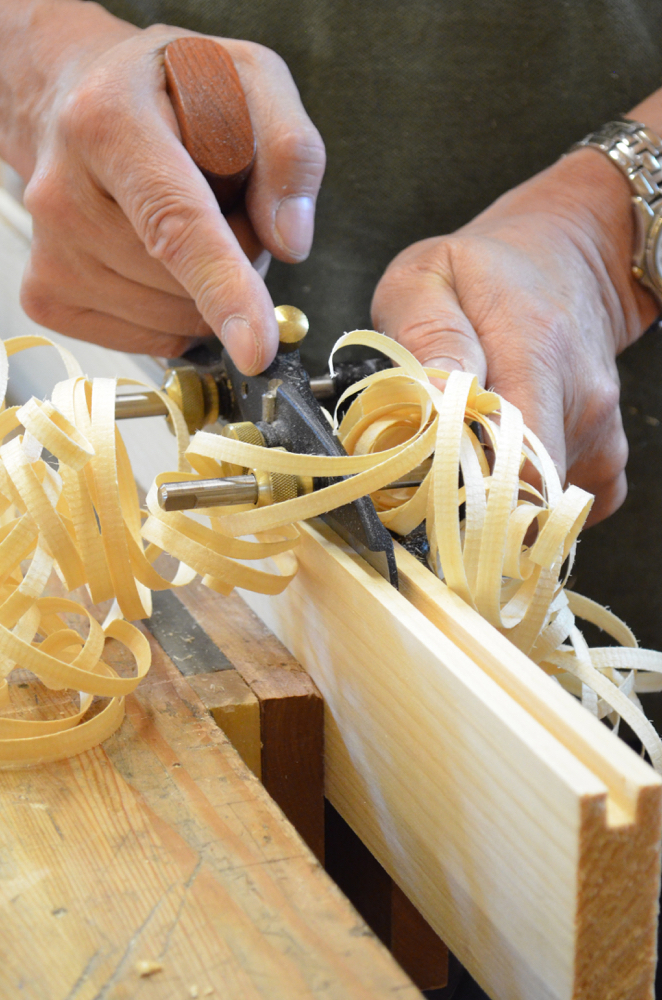
Talking to a friend, I said that the workout I get from hand planing causes my heart to beat harder than any of the daily exercises I do in a given day but that I can sustain longer sessions my workout resulted in something of true substance being made. In other words, when I am making I don't notice the extra exercise at all. I just stop for a breath and then carry on. Exercise alone is, for me, boring beyond measure.
My timing my cuts is not to compare in a competitive way but more to help others understand that taking 8 minutes to chop a mortise means that the hour spent making them is not a lot in the grand scheme of building the table. Tenons take ten minutes to make and fit.
Comments ()