
Woodworking Budgeting
I have similar problems. It is difficult for me to decide how to spend the limited time that I have to devote to this hobby. To make matters worse, I’ve become more of a tool collector than a woodworker. Now I find myself believing that a $1000 dollar black and green floating tenon machine will make a difference.
I kid myself that I am “setting up shop for retirement when I will have more time”.
How do you decide what to do with your time????
Hello D,
Hope you are well. I contemplated this for a while because it's important to me to feel I am helping you with your question. Firstly, it's not uncommon to collect woodworking tools when you are interested in woodworking. There's nothing wrong with that. Some authors did nothing more than research their findings and write about their findings without making a thing. Edward H Pinto collected treen wear and became an expert on treen. His knowledge amassed over many decades, resulted in a fine book entitled Treen and other Wooden Bygones. He was very interested in woodworking and though he did indeed work wood, the time it took for him to pull together his book left little time for him to become an expert woodworker as is the case for a full time practicing artisan like myself. His knowledge of treen and woodenware far exceeded mine though. He left a legacy from his interest. We have the same from many authors we admire and respect; R A Salaman's Dictionary of Woodworking Tools, W Goodman's British Planemakers from 1700 and then many more too.

From my experience being with amateur woodworkers over the past three decades or so, it seems their future was mostly woodworking related from the beginning; that they just hadn't had the opportunity to get the training but they were the one's that had all the passion. They each held to a latent interest in craftwork, and in our community, it is indeed mainly, but not limited to, woodworking. In the general mix of things, many wood-related issues begin to occur that impact our decision making. That was why I started writing my thoughts and feelings on what it would take for an amateur with a growing interest to have some kind of plan leading to a different concept in woodworking training. Today's apprenticeship if you will. My thoughts in 1990 were somewhat radical but I was not alone. DFotted around the USA I found a handful of other truly independents. Drew Langsner out in California taught country workshops from his home workshop. Marc Adams in Indiana started a new teaching workshop in Indiana at the same I did.
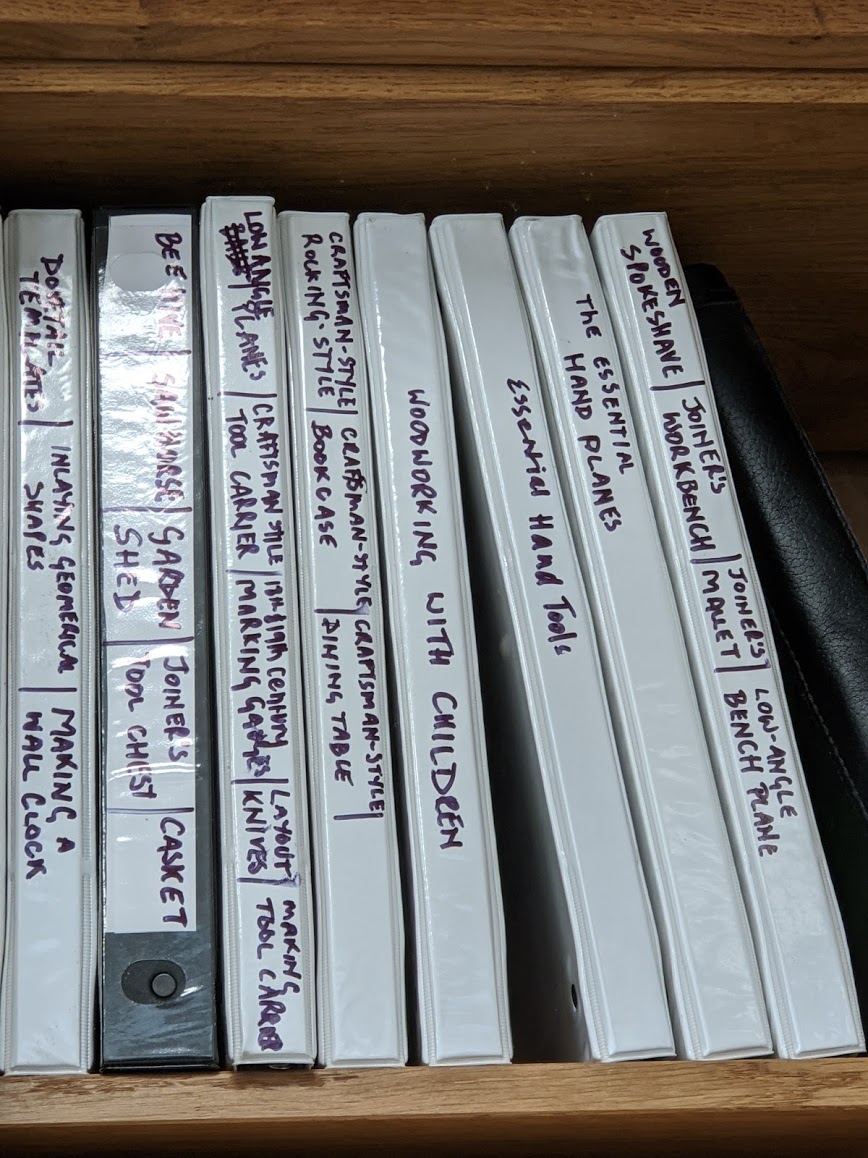
My foundational courses kept expanding because in my early days of passing on knowledge I started to put together my notes from my experience woodworking and coupled that with the feedback I got from the then-new classes I was teaching. Before long, the era of digital photography hit the new world at faster-than-lightning speed. Remember at the time of my writing, YouTube is but 15 years old and still in its infant stages. Amazingly, I contacted the former owners of my how-to curriculum in woodworking, about 25 of them, and they are now back in my ownership again. I am currently working through them to bring them up to date but looking through them and seeing the very beginnings of my writing I felt goosebumps just thinking about republishing them as I complete the revisions.
With so much knowledge now at our fingertips today it is all too easy to "Google it!" rather than read a comprehensive book or article. hence my quest 10 years ago with my first blogposts. Hard to imagine now but there are 1,400 blogposts and 30 million views together 33,000 comments from all of you guys. Later we felt people needed more of the basics because our woodworkingmasterclasses.com had gained such ground, so we put our commonwoodworking.com website up to help new woodworkers follow a course. With this as a foundational entry it made things simple. Of course, that does not mean 'googling things' doesn't cause confusion. Read enough in comments and reviews, product information, catalogs and magazines and already the very thing that consumes our time is the processing of far too much information. We are now learning from reading and watching this overload of information and so the needle just keeps getting buried deeper in the mounting hay of the now worldwide haystack.
My advice will come manifold. Here it is. Make a list of what you feel is indeed important. We can procrastinate and put off making because we feel we need to have a mass of power equipment, special hand tools, a designer workshop and some kind of over-massive workbench built from a seasoned hardwood. None of this is really true. The list should be headed with what do you want in becoming a woodworker? Nice tools, cleaned up repaired, restored and ready to go or a lineup from prestigious makers from around the globe that, well just need nothing to do to them. In my world, restoring a vintage Stanley #4 and 5 means immediate training in the workings and maintenance of bench planes. Strip them down and pout them together a few times and you will have it down in a heartbeat. Use the plane to work the wood and you will soon be tweaking the leavers and adjustments as though you were born with one in your hand. This then of course, goes for all the other tools. So you will see that it is not just that buying secondhand saves on cost but more that the tool becomes the vehicle through which you then learn about how the plane functions, how to handle it and how to mainain it which of course, includes its idiosyncracies.
My suggestion in all of this is to budget your money. Decide on what you want to spend. For instance, buying a Stanley plane could be say a maximum of £20, and then too, you might prefer to look on different venues or even advertise for tools in your local paper. Yes, this costs, and yes it takes effort,t but you might be surprised by the results. Oh, and by budget I do not mean some arbitrary figue in your head but a paper copy with pen and paper in front of you resulting in a physical commitment for you to follow.
My next consideration is perhaps harder to do. What about budgeting your time? I believe in budgeting because it makes clear the objective we need to save. The saving here is mostly time. We only have so many 'daylight' hours. We suffer the illusion of saying "Just Google it!" implying this is fast and effective. Generally, this takes a very unique mind to have that much self-control and of course, Google knows this. Looking for a plane on eBay results in looking through dozens of offerings for the bargain 'Buy-it-now' bargain when we passed the ideal one on page one. Perhaps consider allowing say an hour to find three tools. Same of course with catalogs and so on. If in the day time was money, then of course for us time surfing the internet is indeed not so much money but time no longer available for working with our wood in the garage. Budgeting time for woodworking will indeed mean allocating time. This can be evenings not watching something elsewhere like TV or on a device. You must budget this woodworking time around your family if you are the only one interested in woodworking but, as it was with my boys, woodworking can be a family interest and the kids were with me every evening in the workshop from around 4 pm until bedtime from an early age. the result was very capable woodworkers whether they became woodworkers full time or not. Again, write it down. Work to it and keep a record.
Budgeting space. This is important too. Workbench space needs a place and finding the space is hard for some of us. Work out what you have and how you can future-proof your growth as your interest expands. if you are collecting tools as part of the endeavour then perhaps finds or build a tool and equipment shed. that way you are not climbing over stuff to start working at your bench and your bench is clutter free. The basis for my woodworking course is that with about ten hand tools you can make every woodworking joint that's ever been made. Importantly, you do not need many more than that to make just about anything from wood.
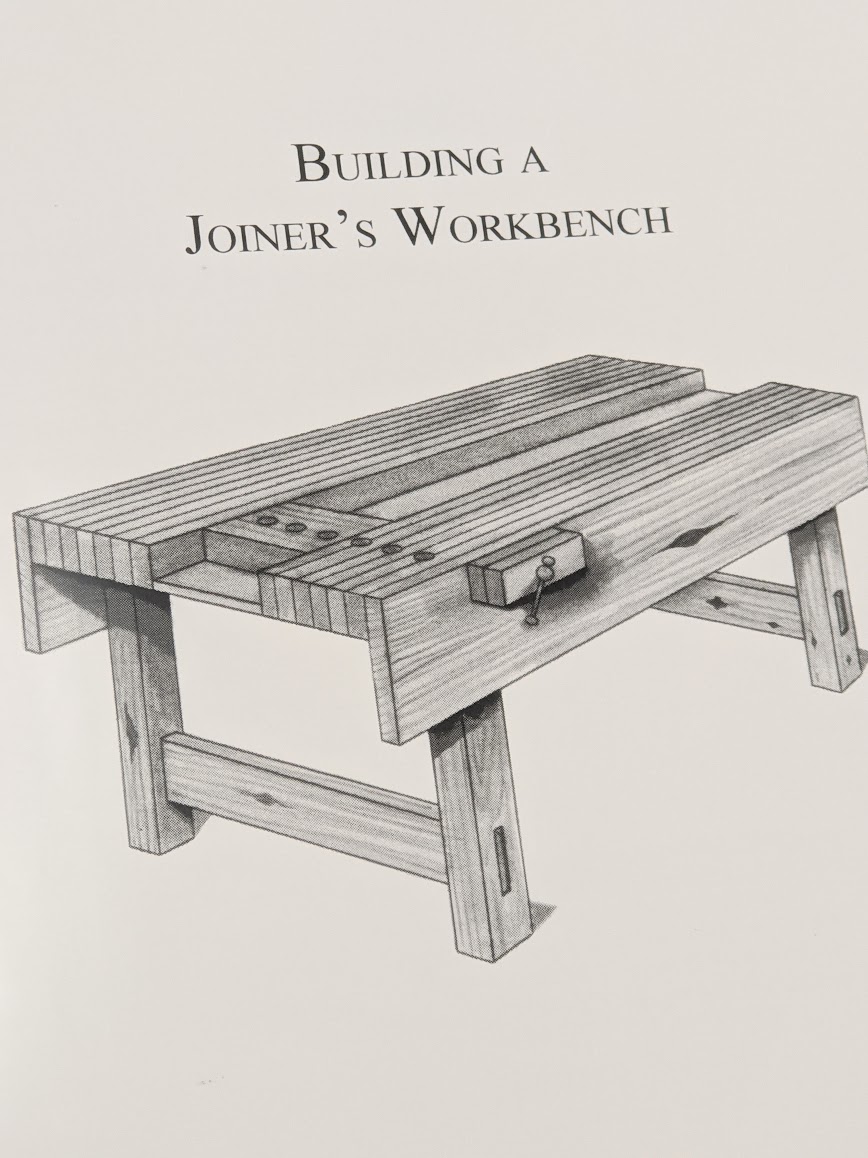
My idea to build a workbench in the garden ten years ago was to knock the stuffing out of advocates touting that you needed a massive behemoth of a bench "to stay put!" Such statements are indeed erroneous but they also promote a certain type of prideful strutting that's mainly unnecessary and puts the novice off. All of those special winding mechanisms, hounds-tooth dovetails, massive sections with tenons that take a month to chop through. You can build a good bench in your garden in three or four days and use it for a hundred years and you only need some pine and ten hand tools you can buy on eBay to do it. I have proved this time and time again. How? I used to offer a three-day course in Texas to sixteen students per class and they all loaded up their benches at the end of the third day!
The important thing in my world is to live in the day and each day as it comes. Don't do as many do and wait for the illusional retirement. Why do businesses always take the best years of your life and then somehow let you go after 50 years? Make life happen now with the start of the budget. Show it to your family and see how it fits with them. Tweak it and then look for the enjoyment.
Okay Dan. I'm done! Hope that this helps.
Comments ()