
I Stood Back . . .
. . . looked up, and I said to myself, in my head, 'Perfect!'
This was a month ago.
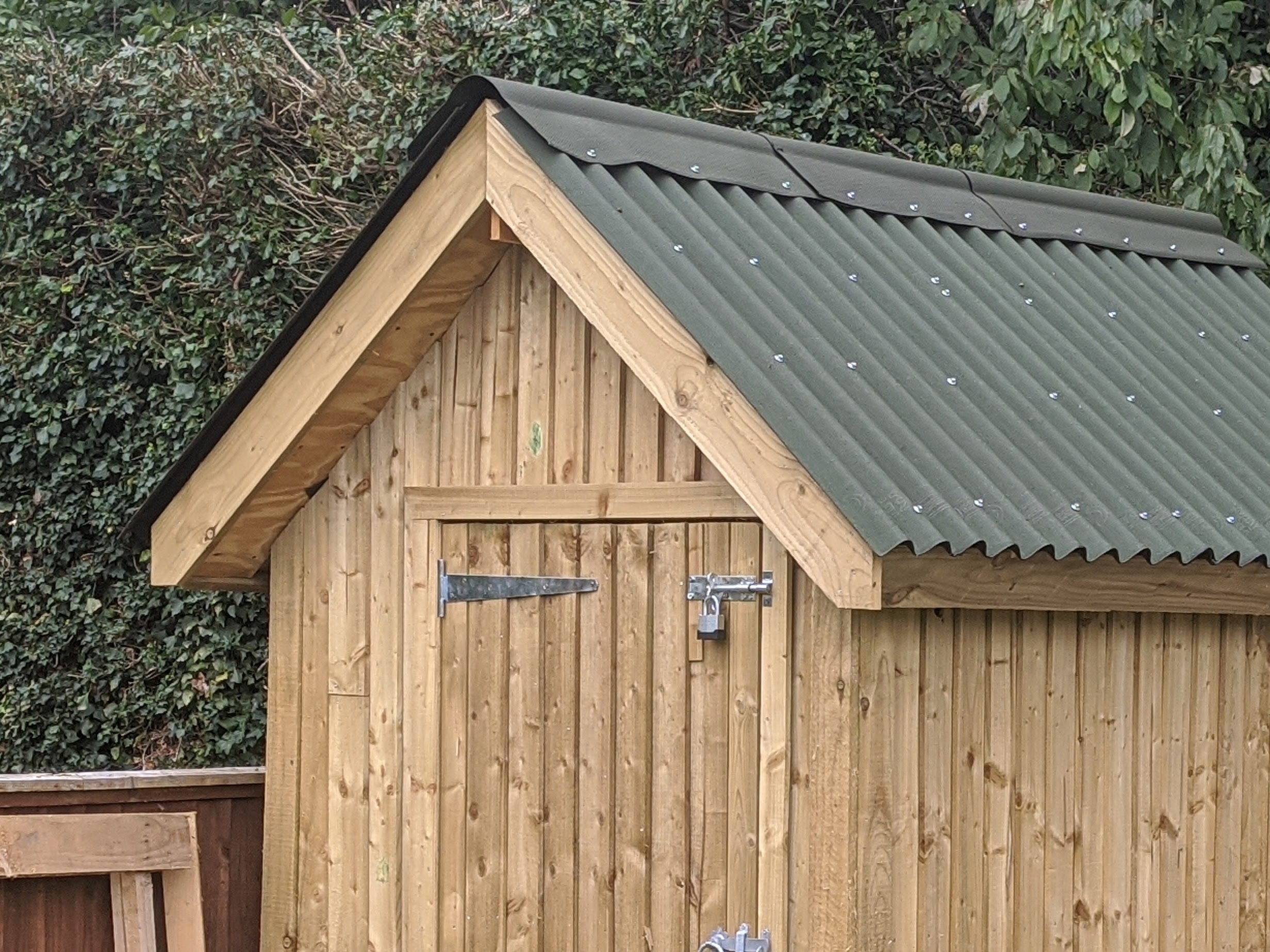
Last night I mowed my grass. It was just before dark. I looked up and I said to myself, 'Hmm, not so perfect!'
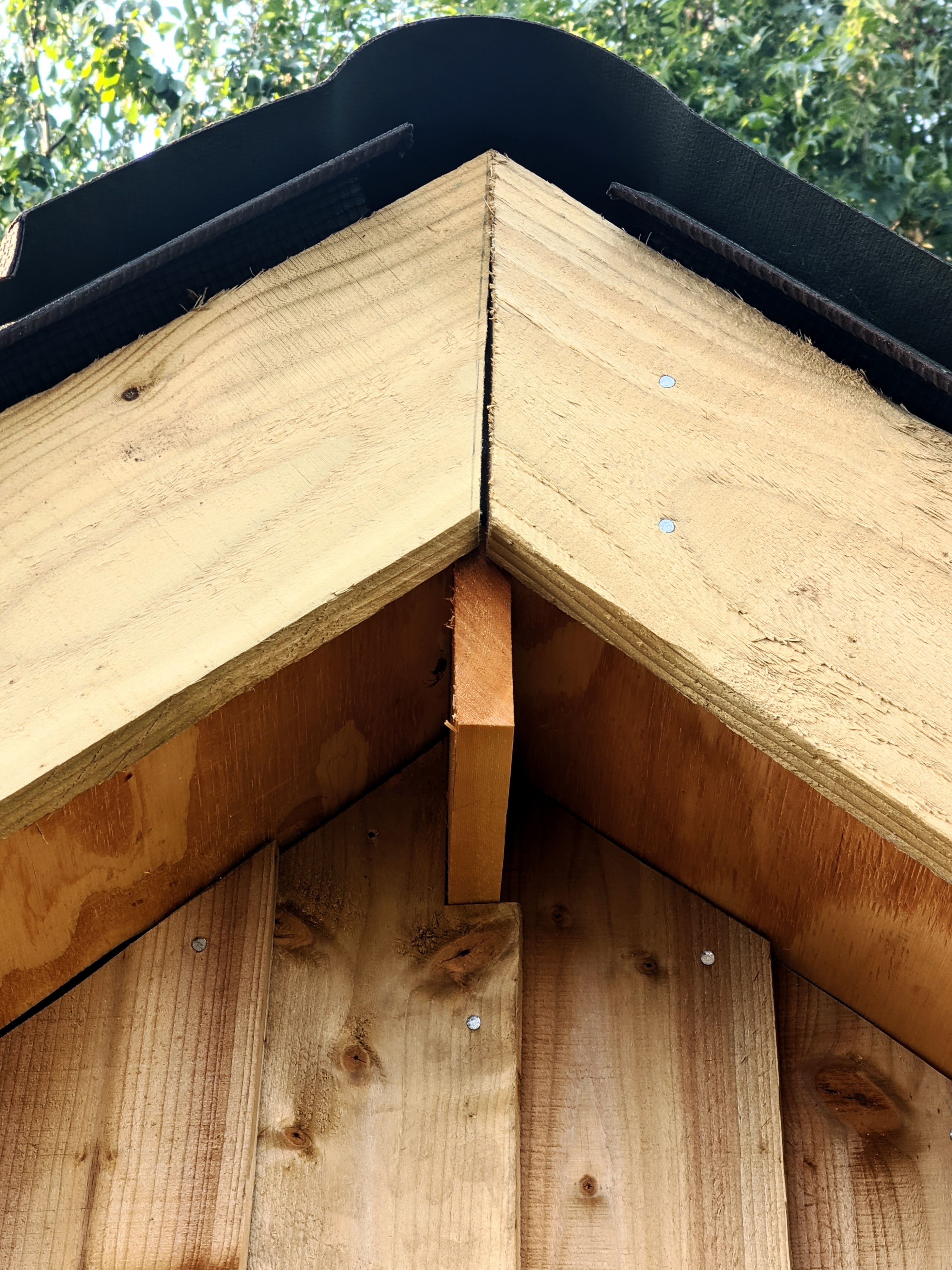
An ancient proverb states that "Pride comes before a fall, but humility before honour!"
Why do we strive for perfection if nature ultimately makes us realise its mastery over what we make? I spent time getting the angles to perfectly intersect at the apex before making the two cuts. I offered them in place and used a spirit level to establish verticality. There was no guesswork at any point. I have often looked up at external mitres to such pieces in different countries. I've been surprised at the gaps in the internal corners twixt left and right. Well, I did that in the early days of my woodworking. Judgementalism often follows us around like a nipping terrier, snarking at inaccuracies as though we are more perfect than others.
George and I were working on some architraves around some doorways. The mouldings were extravagant and complex. We were actually replacing the oak architraves because, well, the mitres were gaping. I was critical of the new work and George listened to me quietly as I bemoaned the quality of another's work. Yesterday I looked inside my shoe tidy for a measurement I missed on the drawing. As I looked beneath a certain part I saw what would have been a square hole caused by a mistaken cut. I didn't remember making the mistake but I did think that after I had made a plug to fit it would have looked good and I might then have said to myself, "Perfect!." So, was the whole then made perfect, was the fix-type perfecting an imperfection perfect, or was the fit of the filler piece perfect? Perhaps not seeing the hole seemed more perfect than the former level of imperfection!
I recalled patient George gracefully standing there bemused by my judgementalism. I knew I had done/said something that troubled him. George went to the wood rack and pulled out a piece of pine. He told me to cut the 1 x 4 into as near a perfect mitre as I could and then nail it to a plywood backer which I did. I was pretty proud of my effort when I showed it to him. He ruffled my hair and said, "Very good. Thank you! Now let's get on with these architrave mitres."
There was no such thing as a mitring chop saw back then in our workshop. We cut the angles, placed them on edge in the vise and planed the mitres with a #4 bench plane duly sharpened. Each mitre was checked against a combination square and here was where I learned the skills of planing mitres to moulded stock without a shooting board.
I didn't notice George to my test mitre away from the bench. We went to the house to replace the mitred architrave and brought the previously fitted ones back with us the shop. I continued to bemoan and George continued to listen. The following week George said he needed to speak to me about something. I felt nervous. I knew the tone and the way he was speaking didn't have the usual feel of approval. What could I have done?
From behind a heating radiator, George pulled out a plywood panel and when he flipped it over he said, "Do you remember this, Paul?" Of course, I did.
"How does your mitre look?" he asked. I looked and saw that the mitre gaped at the heel of the joint. How could that be? It was perfect before.
We sat down together and George started with, "Before we pass judgement on another man's work we should understand that circumstances can affect the longer-term outcome."
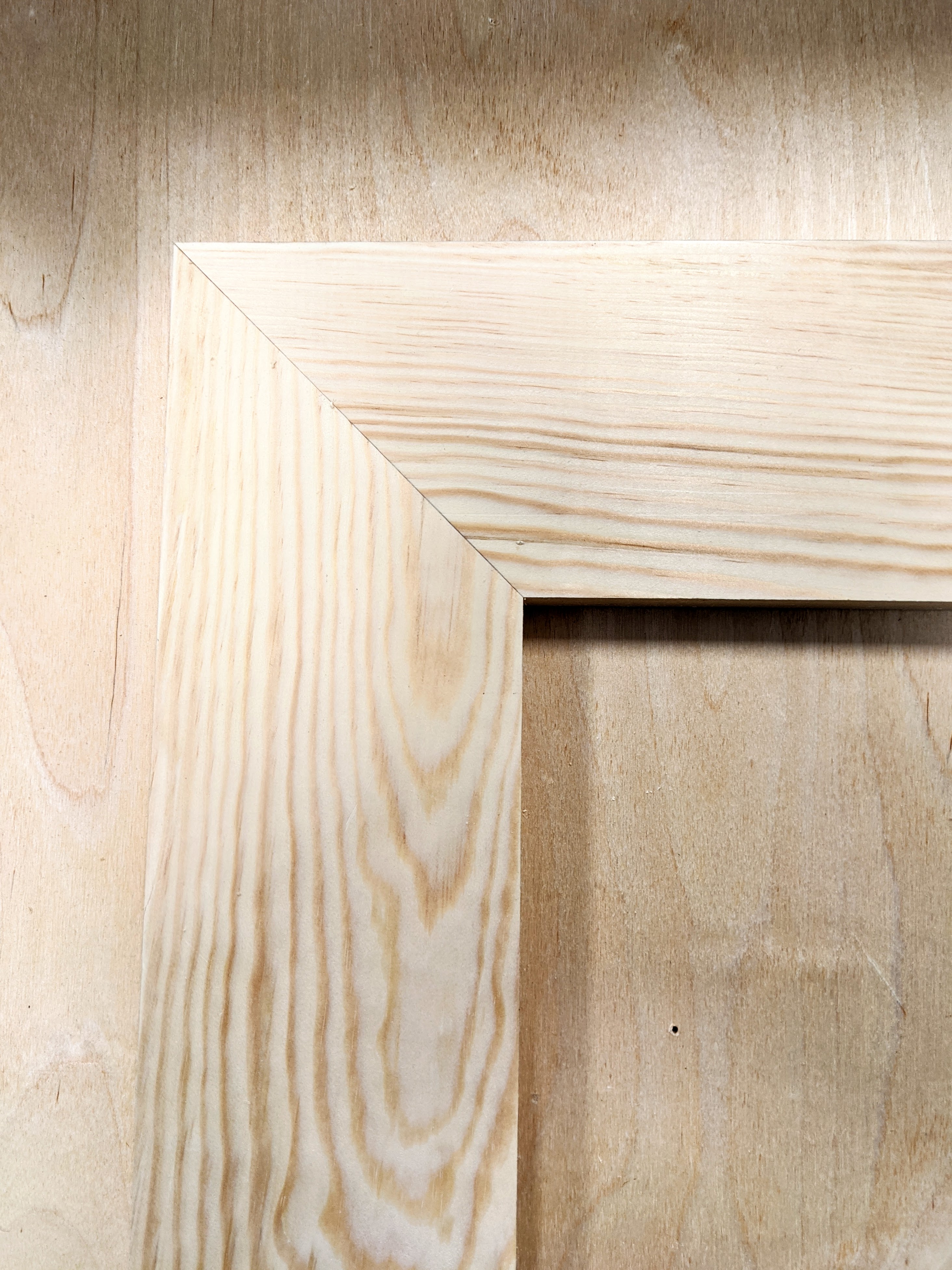
Our talk brought home the reality of wood shrinkage and expansion caused through the absorption and release of moisture from any source. It was far from the true lesson I learned in the humility it takes not judge another person's work from first appearances and indeed all of the endeavour's of others.
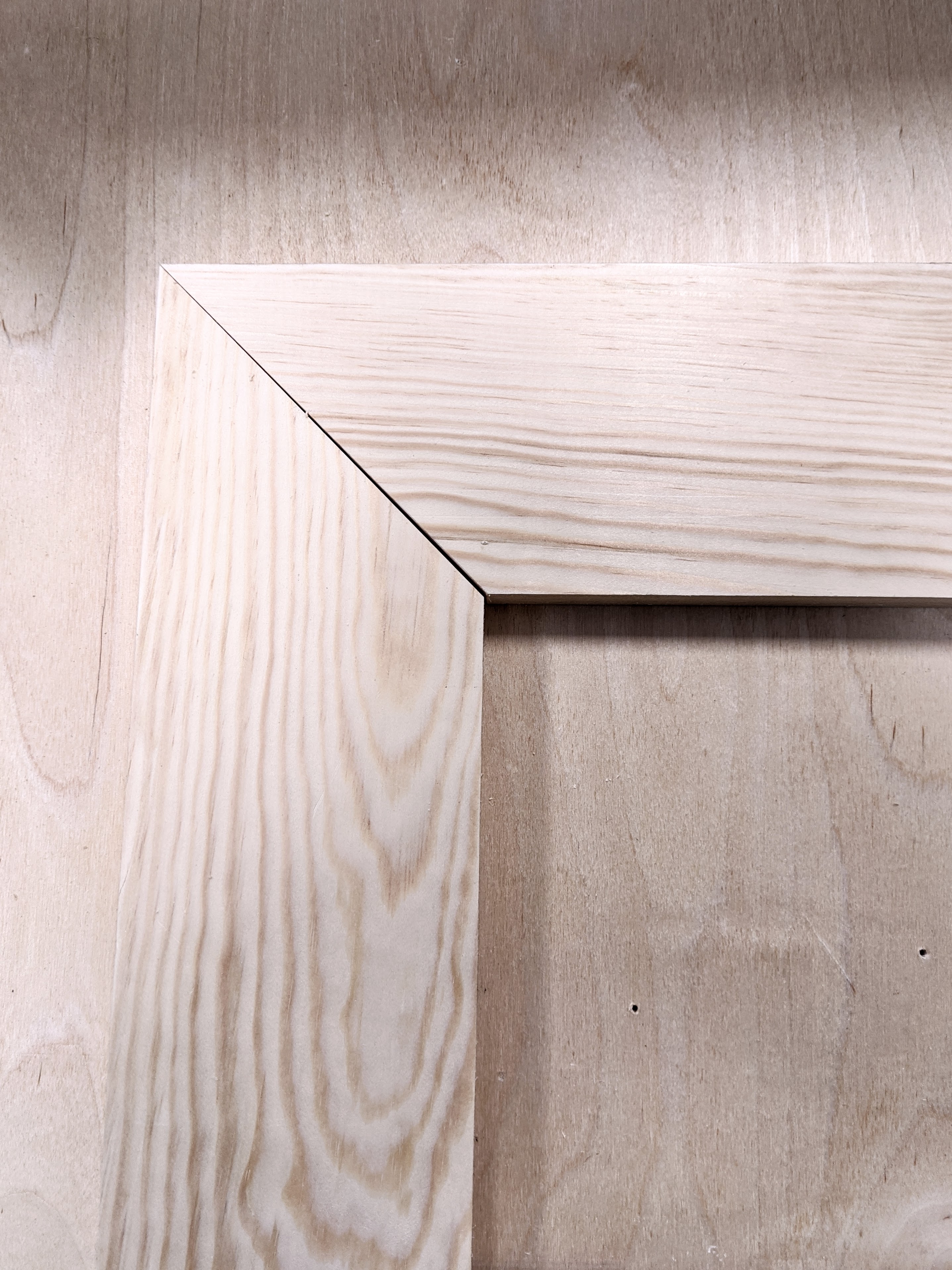
In the case of the mitres we removed, the wood was dried down to a good level but had reabsorbed atmospheric moisture by being stored in a humid place for weeks before cutting and installation. This was unbeknown to the craftsman fitting the architraves. The new host building, being now air-conditioned, had a super-low level of moisture in the atmosphere, so the wood shrank rapidly. George created a similar situation with my mitres by putting the support board and joint against a heat radiator. The wood shrank and, as with alomost all mitre cuts, the wood shrank more on the heel of the joint and the long point remained fixed against the opposite point of the other. I then understood the essentiality of matching the wood as best you can to its likely permanent placement.
My mitre on my shed was indeed spot on when I fixed it, and I knew the wood was quite wet. Fixing the boards in place in a dry summer, I understood that there would be a gap on the heel and that in our humid periods, and being outdoors, the gap would open and close according to these atmospheric changes. Indoors we have better greater control and thereby reliability, but outside, with zero control of the weather, we just do our best. You may judge someone the more if yo see something like this. . .
. . . declare to yourself, "I wonder what that's hiding in there?" You might think it differently now. I hope! Maybe the maker might be doing us a favour, to stop us from being just a tad more judgemental. I don't know.
Perfection? You define it. My shed's perfect!
Comments ()