
Misnomers
I think it's more the strange thing to work still at an actual craft at my age. By that, I mean full time as a maker when the retirement years come and go. I don't know any others that do, or, perhaps more accurately, I have yet to meet any that do. The internet gives a false reading in the use of the word 'know'. In my world, I have met only a handful of true woodworkers with a long lifetime of working wood full time in the trade of crafting. The woodworkers I have met and do know to be so-called professionals may have just a year or two, maybe few more in some cases, under their belt, but they do seem to treat work-life more as, well, perhaps more a casual occupation than something that truly grabs them to where they just cannot put it down. That is how it has been for me for 55 years to date. The ones I once knew as 'in the trade', so to speak, were similarly placed. They mostly loved the work they did.
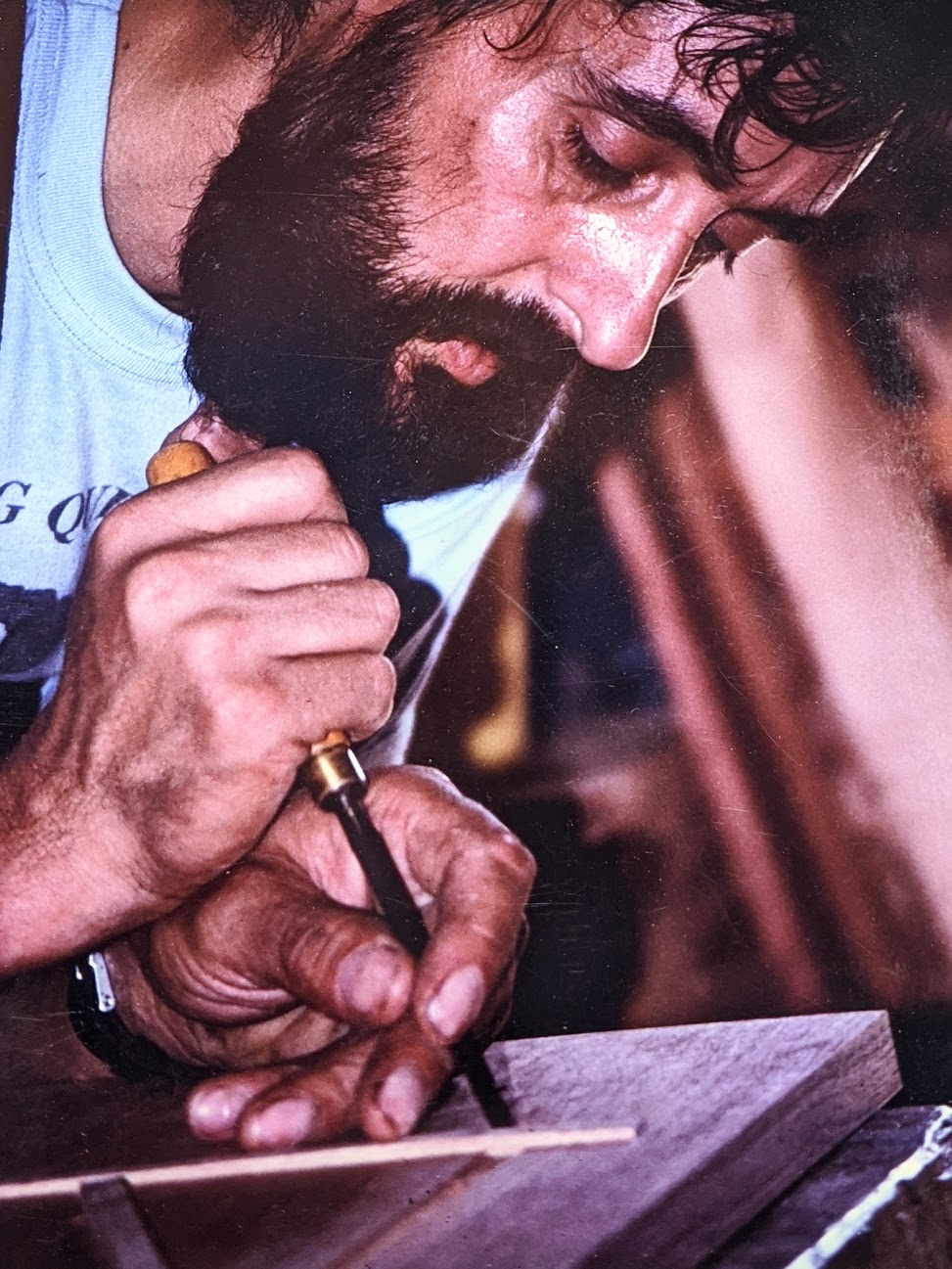
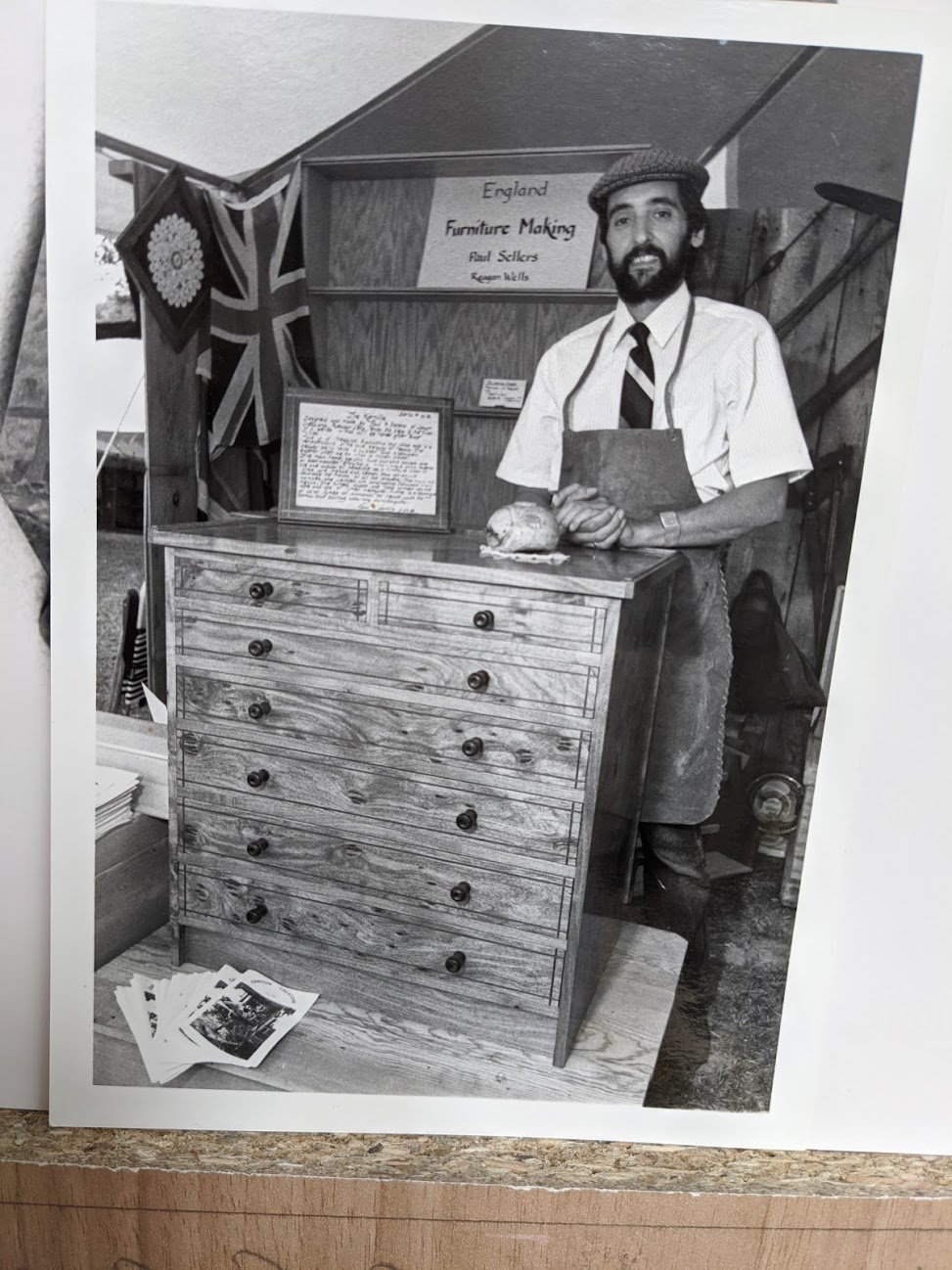
When I left the UK to migrate to the US almost 40 years ago now, I still knew tradesmen making furniture and joinery. We didn't need terms like hybrid woodworker and such. Nothing new about using hand tools and machines, we just did it. Those men mostly wore what we called bib and brace overalls. Sleeves were never short but always rolled-up when the day got hot. Fancy smarts and neckties made the distinction between workmen as did start and finish times. Those in offices started at 9, finished at 5 and took an hour for lunch. They could also make tea or coffee freely throughout the day. We started at 8 were allowed a half-hour lunch break and finished at 5.30. We also got paid an hourly wage of less money while the office workers were paid a fixed monthly salary. Jeans wore through from working in them. I wonder at what point they began to be manufactured with horizontal slits and wear patches that looked as if work-worn but someone on another continent was buzzing the wear in with abrasive sanders and probably those workers wondered why. The fake world of 'looking like' you might work manually with your whole body obviously needed a few props--some built-in character to make you feel better about yourself--I guess--maybe! There became a sort of casualness about the whole thing when that actually wasn't really the case in the 50s and 60s. Working clothes were something you bought from shops called The Army and Navy Stores and then hardware stores sold them too. Bib and brace overalls were neatly folded, starched stiff, pressed, and stacked in square, cubbyhole shelves behind the counter of the shop. You asked for them by size and colour options were either dark blue, brown or offwhite. Mostly they fit where they touched, which was two points on the shoulders where the straps hung the rest to your body. You certainly didn't wear them to be accepted in your peer-group. Funny how the real becomes artificial and the artificial somehow manages to wheedle its way in to supplant it and the change becomes permanent. Lies always stand in truth's stead! I see more men and women in pre-worn, unworked clothing looking like ragged trousered casualties of dereliction than I ever did actual manual workers. The jeans are always too tight to bend in and work from, even though made from the newer stretchier cotton weave.
And there is another casualty of our time. Most of the men I know aged 70 plus retired 10 years and more ago, or then more and less too. No matter, my hands, and muscle are not big and neither are they by any means small but they would be hard to match as far as resilience, strength and stamina go. I have no aches that stop me, though I might not jump from a great height down anymore, or over too wide a wide ditch so readily as I did when I was a slightly younger man. Imagine on Monday when I wake being almost unable to contain the excitement I feel about the woodworking I'll make in an hour or so's time, after a 15-mile bike ride, or then too, the planing of my wood. I will be out of breath, not sweaty, and I might need a periodic stop, but it will be honest work and I will swipe sawdust from my knees and belly now and then. Have I ever told you that one of my favourite machines is my bandsaw? No, it's not a big bandsaw at 16", but it's all I ever need and I have never wanted a bigger one though I have used 30" ones in my daily work with them. I use it for much of the resaw work though I do not run to it for every cut. Far from it. I say some of this to say that cultivating muscle seems more to permeate culture and people walk stiffly in a certain gait of rigidity I never witnessed in the world of working men and women. At what point did this thing happen? Hmm!
I started this post last Sunday evening and my blood pressure was 119/61, my blood sugar remained its average of around 6 throughout the day and I enjoyed a variety of weekend things including special family time, protocols in place, and respected, of course, gardening, and making things. Occasionally a Monday means a Bank Holiday but calling it that is not a celebratory issue so why a 'holiday' is the term of reference I have yet to work it out. These are bonus days for me because they are days when I can usually get twice as much done because there are no interruptions. The artificiality of terminology is now multidimensional. Muscle is developed not to be used or employed, so to speak, in work, and clothing can be made to look worn through by use but comes from the manufacturer in Bangladesh or Turkey and elsewhere. Bank Holidays, a British term for a public day off work, hardly constitutes a holiday. Why not just public holiday anyway, no matter the root of it.
The fact that work itself should be something well worth celebrating should not need stating, but, of course, things have changed markedly with the working week starting at between 8 and 9 on a Monday and finishing at the end of the fifth day around 5 pm. For me, as a self employed man and an artisan, that's just always been too late a start and early a finish time to get in a decent days graft. Not because I needed to work more to make enough money, but to give me more time working because I always found it hard waiting to start so late as 8 am and then finish so early at 5 pm. Between 6 and 7 am seemed a much better time to me and so did 6.30 pm with a restart after supper at 7.30 and going until around 10 or 11 pm. What I liked about the before-and-after-hours times was the lack of phone calls. The fire was lit on damp and cold days and I burned my shavings and offcuts of wood which I saved for those autumn days, winter freezes and cold and chilly starts to spring days. The kettle went on as soon as I arrived and I would glance over to look for the steam to rise from the spout ten minutes later. I always closed the evening with a larger log centred in the stove chamber and the stovepipe damper closed down. That kept the cold chill off and meant a good start for the kindling to kick in for a roaring kick-starter of a fire when I came in. Hot tea first thing is refreshing and essential to my wellbeing as well as the best way to start at the benchwork.

The fondest memories of woodworking are in the darker days and evenings of wintertime. Nothing equals watching my boys making their tools or their toys, furniture pieces and even instruments. Why at one time one of my young sons decided to make his own bed followed by his bedside table and a bedside lamp.
Comments ()