
Don't Bin It, Blend It!
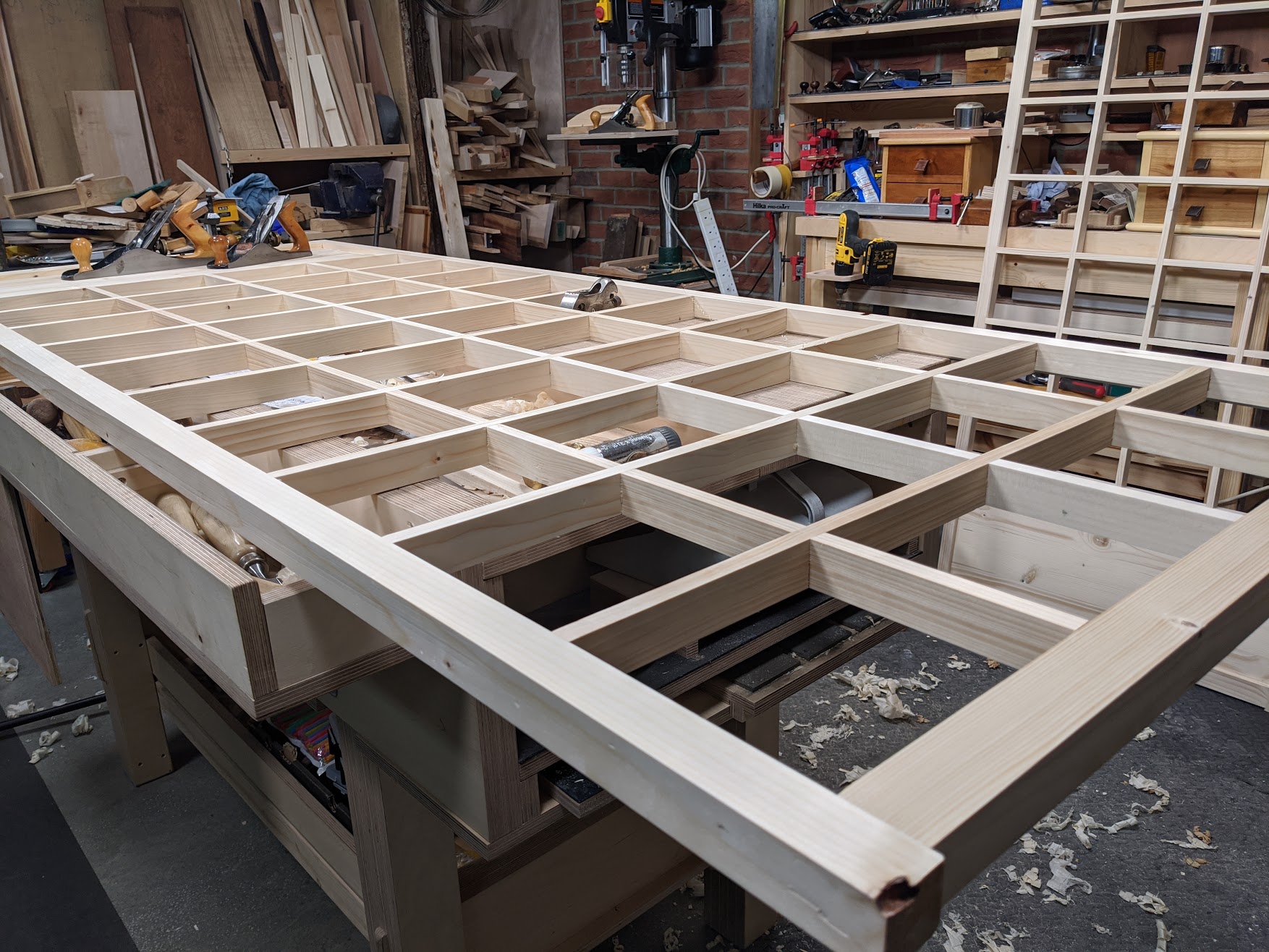
I rarely abandon a project because something goes wrong. In most cases, I can make a fix disappear into the wood itself. My screens are almost done and ready for the rice paper. The only time where I refuse a glued repair is where any failure might result in a danger. I once saw a man glue up a chair leg that had a through-break. Telling me that the glue was always stronger than the solid wood, he salved his conscience, that was all. Whereas in certain situations, that can be true, glue also fails for a variety of reasons and glue often does not have the longevity as ultimately most glues can and do break down. Glues I was told in my apprenticeship would last forever, I discovered 50 years later, became crumbly and unsafe to rely on.
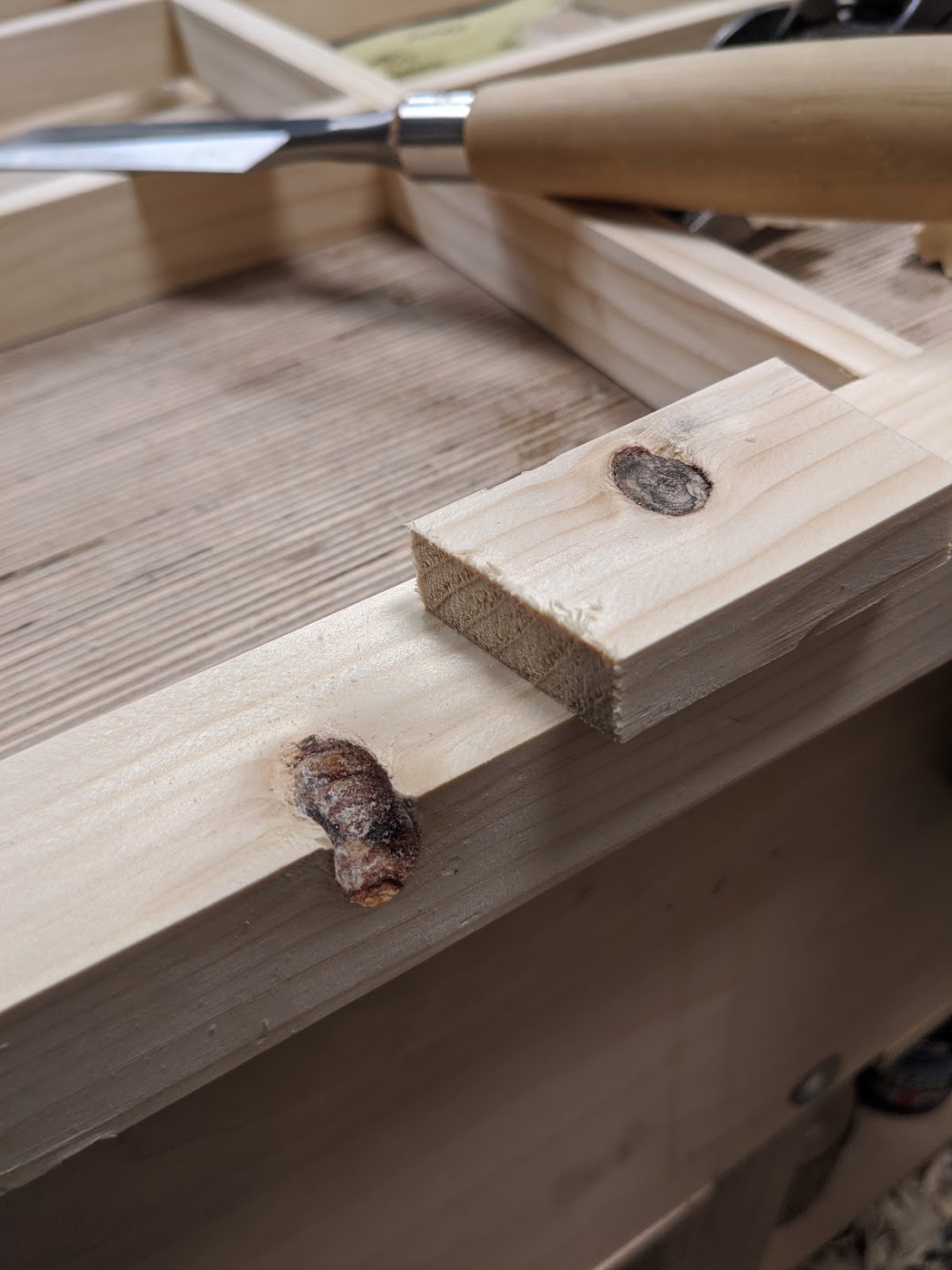
My shojis came out very nicely but for a single knot on a visible outer corner. The knots in place are part of the wood but when they do go AWOL (absent without leave) it looks ugly. Here is what I was facing. To let in a piece of wood in an unpainted part would stand out as much as the missing knot.
It is not hard to find another knot of similar size or indeed reduce a larger one to a smaller diameter. In this case, purely by chance, I picked a piece of wood with a knot that fit the existing knothole.
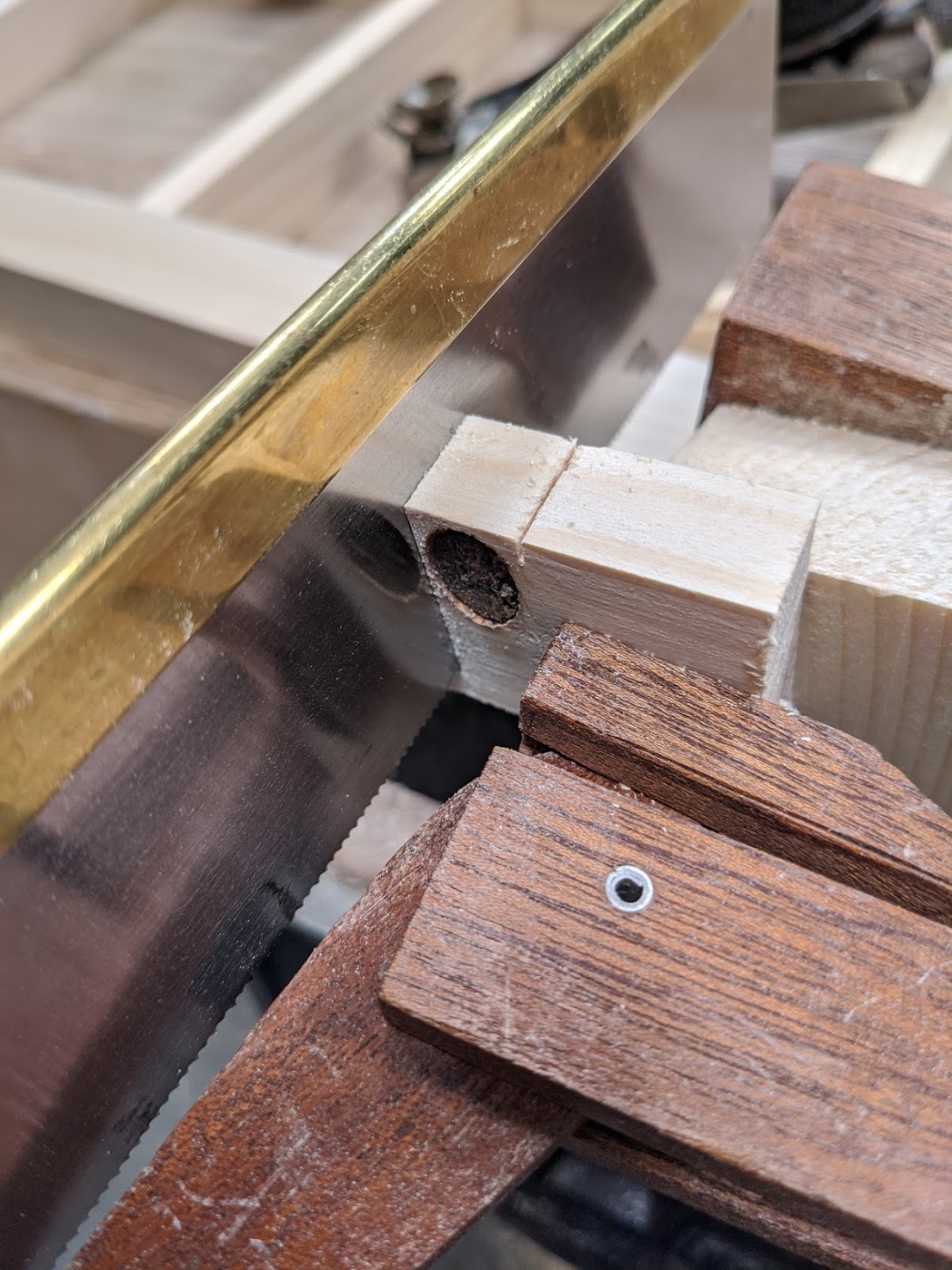
By cutting either side of the knot I was able to reduce the new dead knot from the wood.
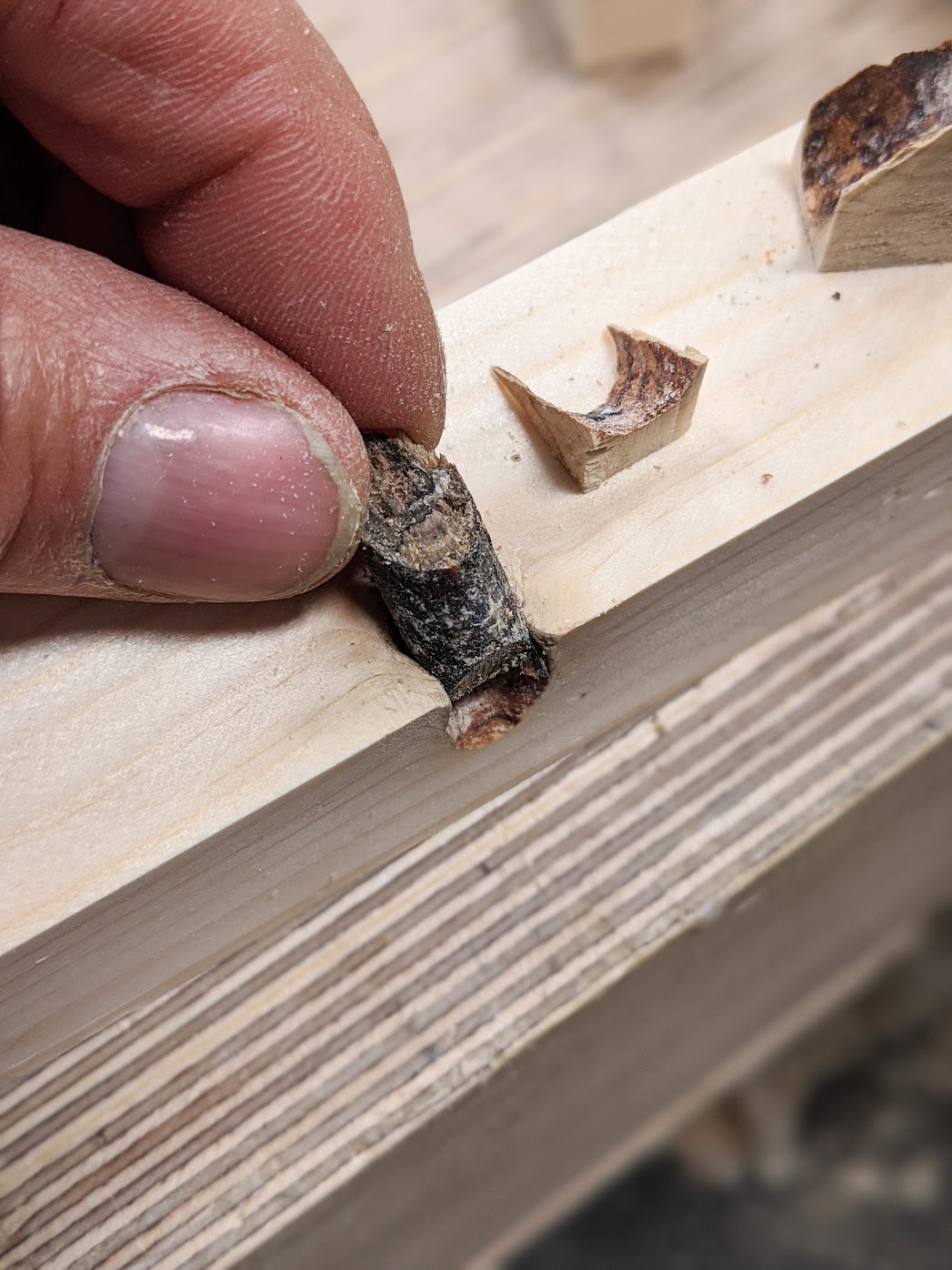
Placing it in the hole I twisted it down and it seemed perfectly at home. Just a couple of scrapes with a knife did it.
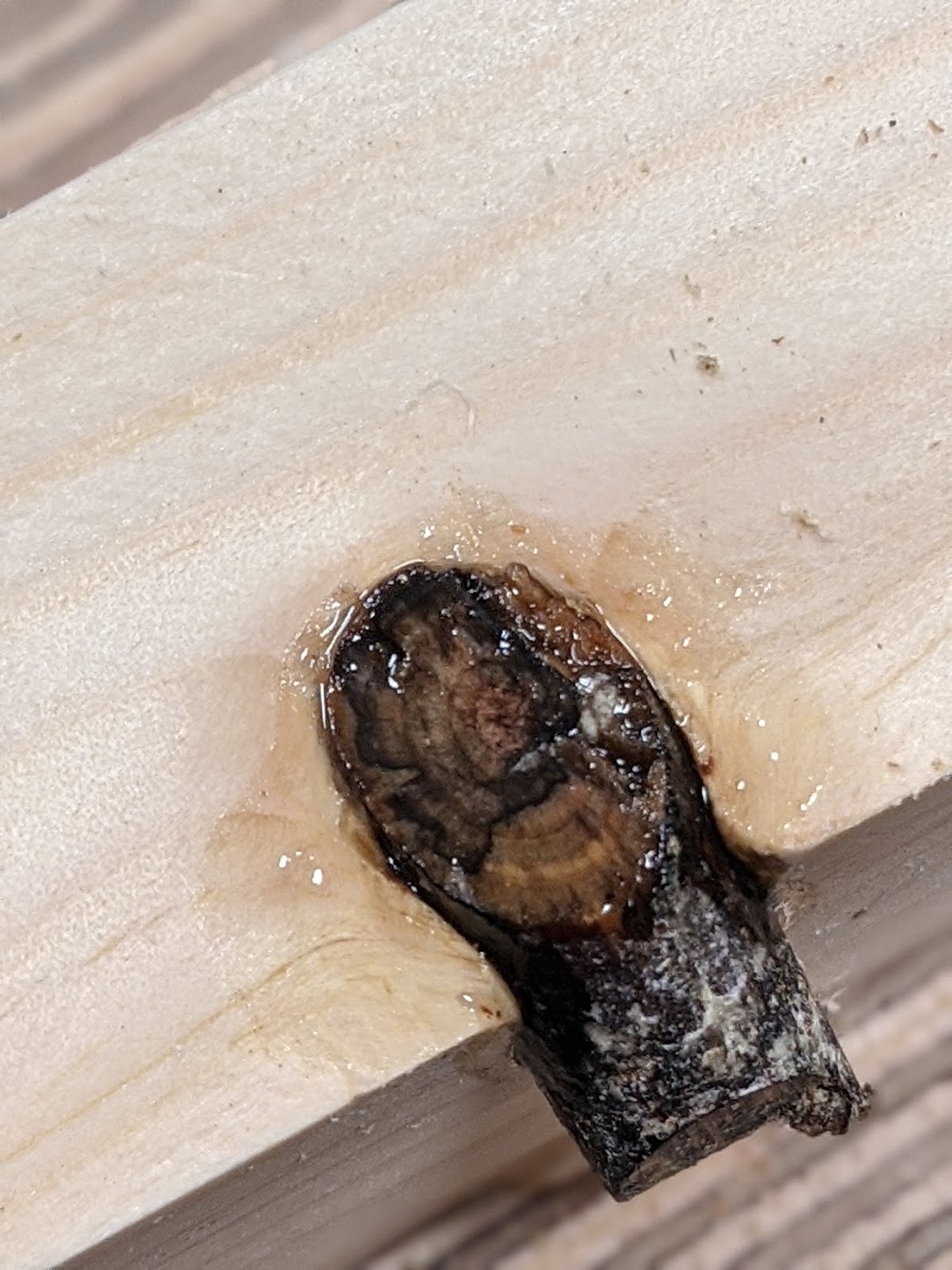
Once inside the former knothole I used a thin superglue to cement it in place.
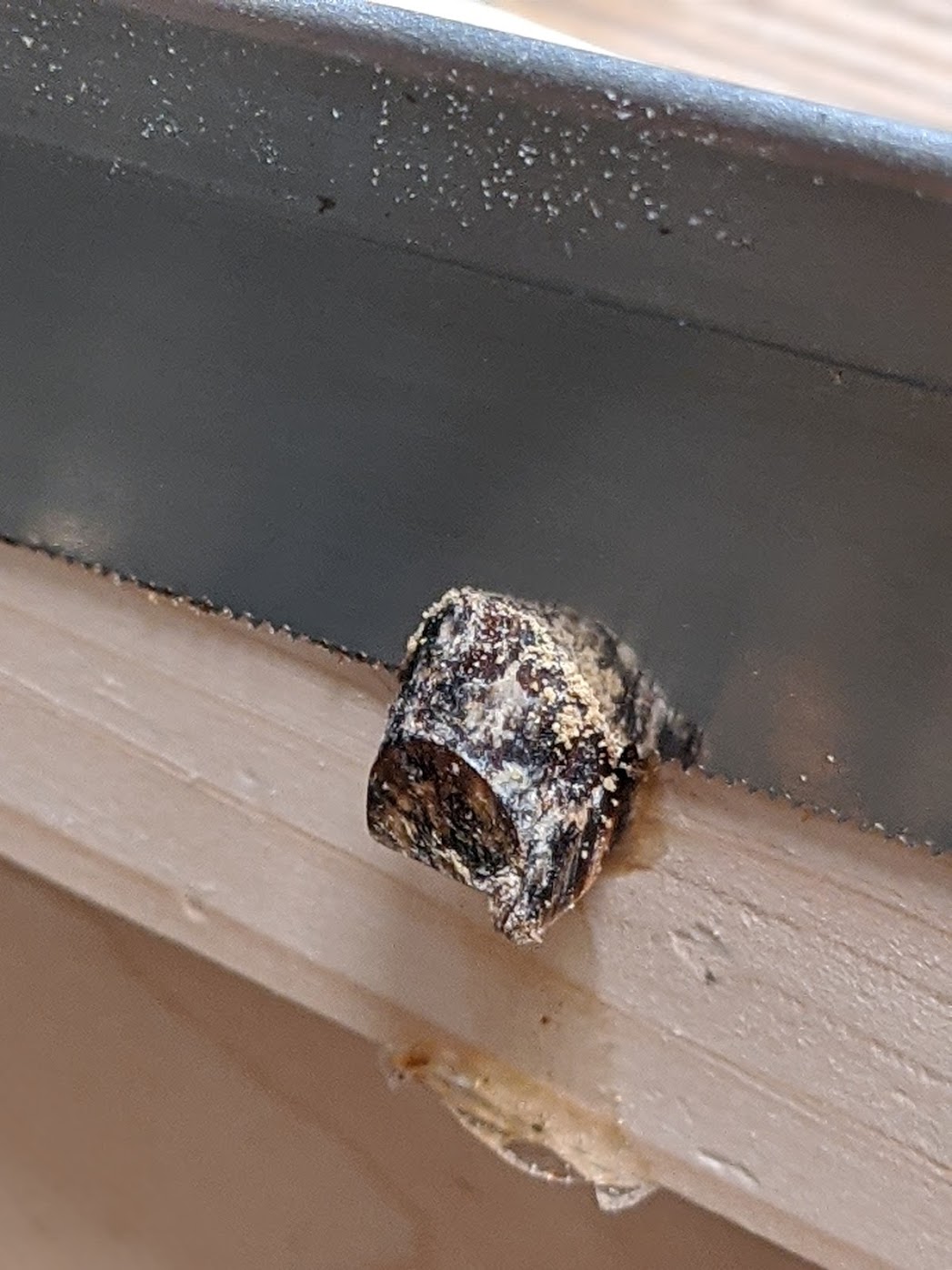
The saw took off the excess and then I planed it level.
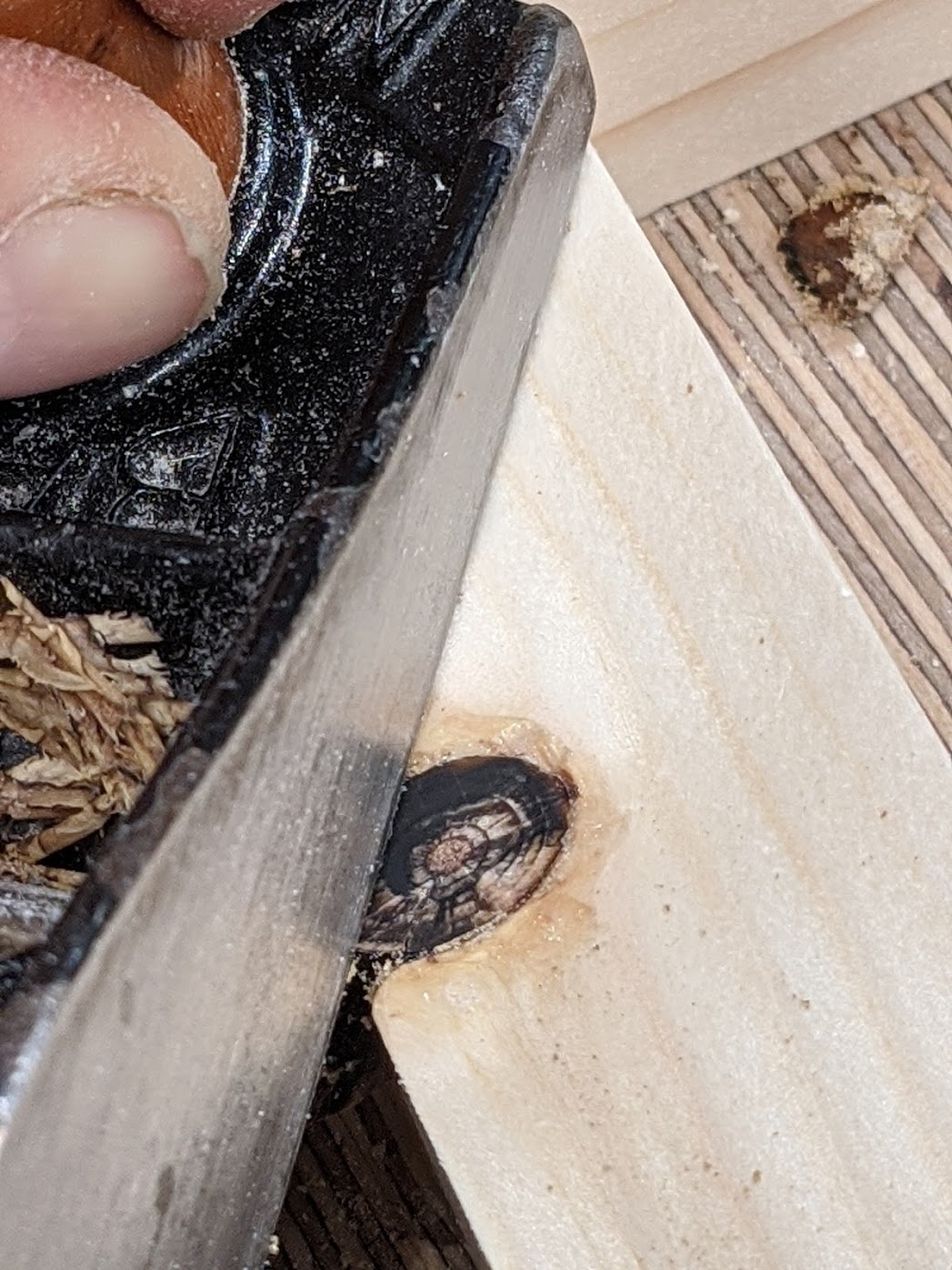
I did the same to the new knot on the adjacent face and sawed it flush...
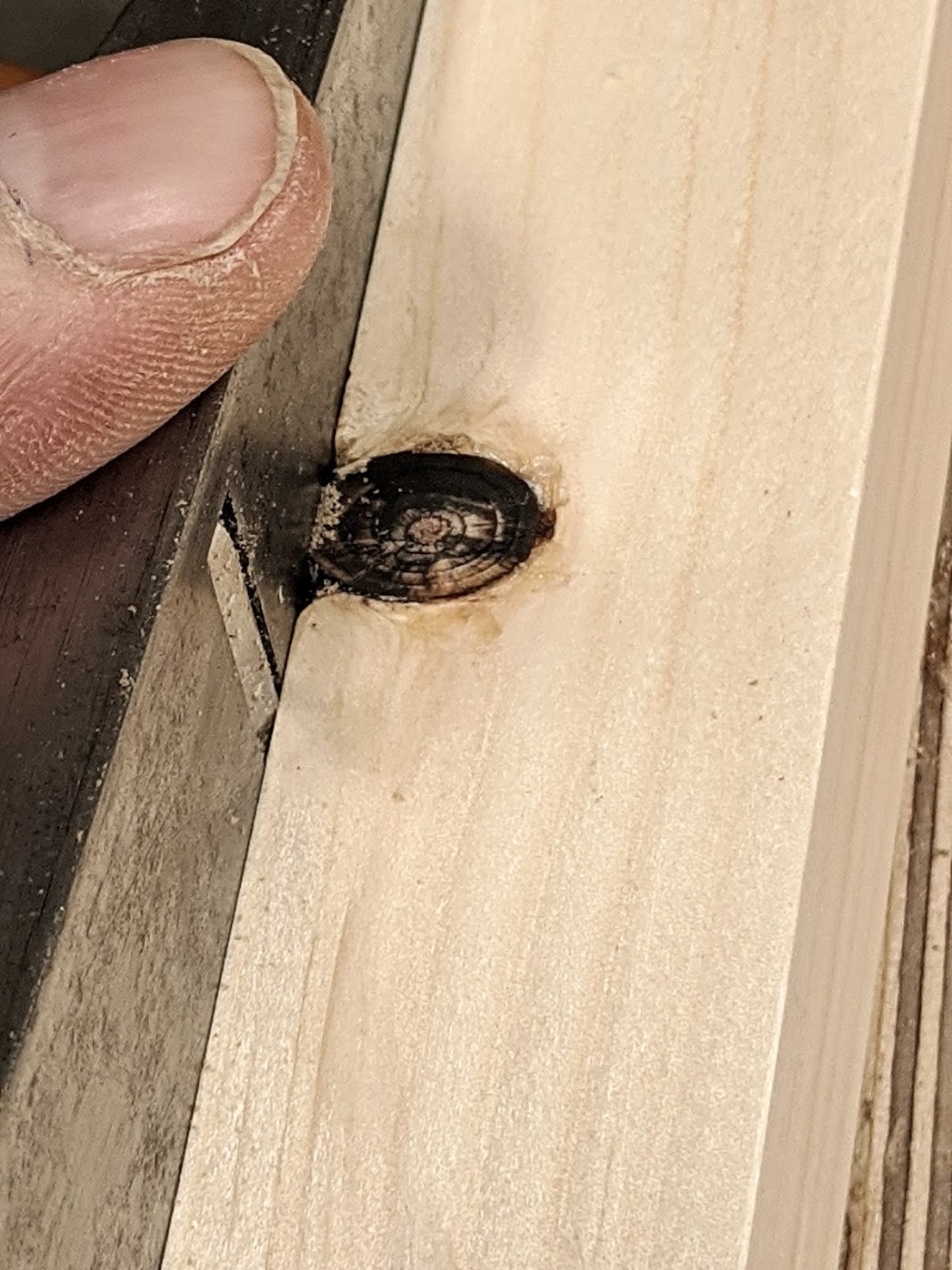
...before planing it flush.
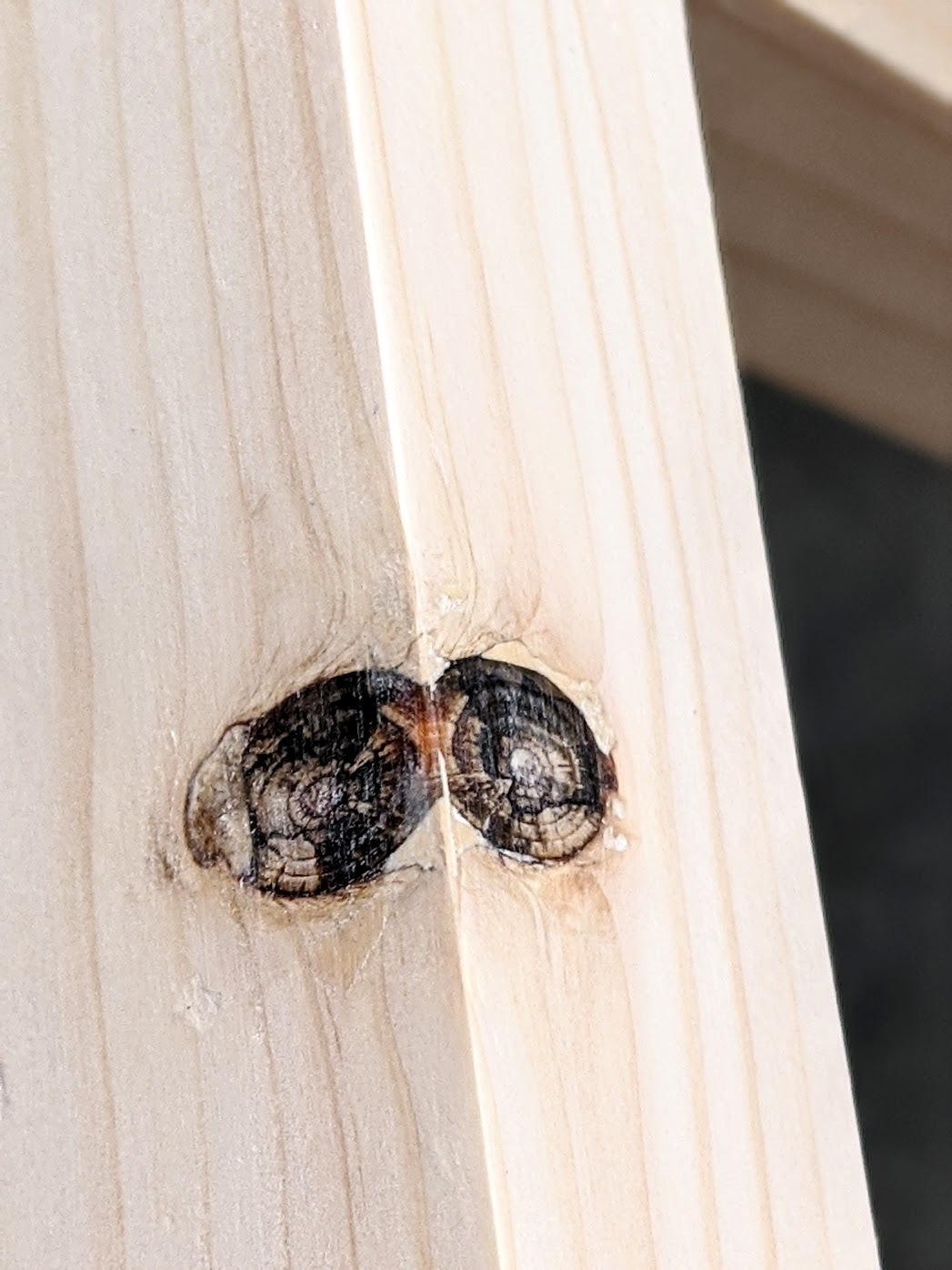
With both surfaces planed the knot needed only some wax filler stick to fill in the surrounds and it now looks like it was always there!
Comments ()