
Veracity is Everything
I've shared many times on this issue, even if the word is slightly different. Many say there is no such thing as truth but of course, there is! Truth, in fact, literal fact, is everything! In my working with wood I have earned that any compromise with regards to veracity means I leave something behind that later grows teeth and comes back to bite me later. Translate this into any and all areas of life and you see how, as the saying goes, it's the little foxes that spoil the vine. Little foxes? The small, seemingly insignificant things we think won't matter at any time. The little things we might simply know of but ignore the later significance of. The little things we might not realise will affect what we do later on. A hundredth of an inch out of square on the shoulder of a tenon magnifies 10 times if the length of the rail is ten times the width of the shoulder. A hundredth of an inch allowed in twist when we plane a rail flat does the same. Someone asked me how flat is dead flat, dead parallel, dead square, and so on? Well, as I said, any compromise compromises the finished piece. If we do compromise, even a small amount, we will need to compensate to accommodate for it elsewhere later on. Be painstakingly accurate, but do avoid being pedantic to the point of ruining your health. It pays!
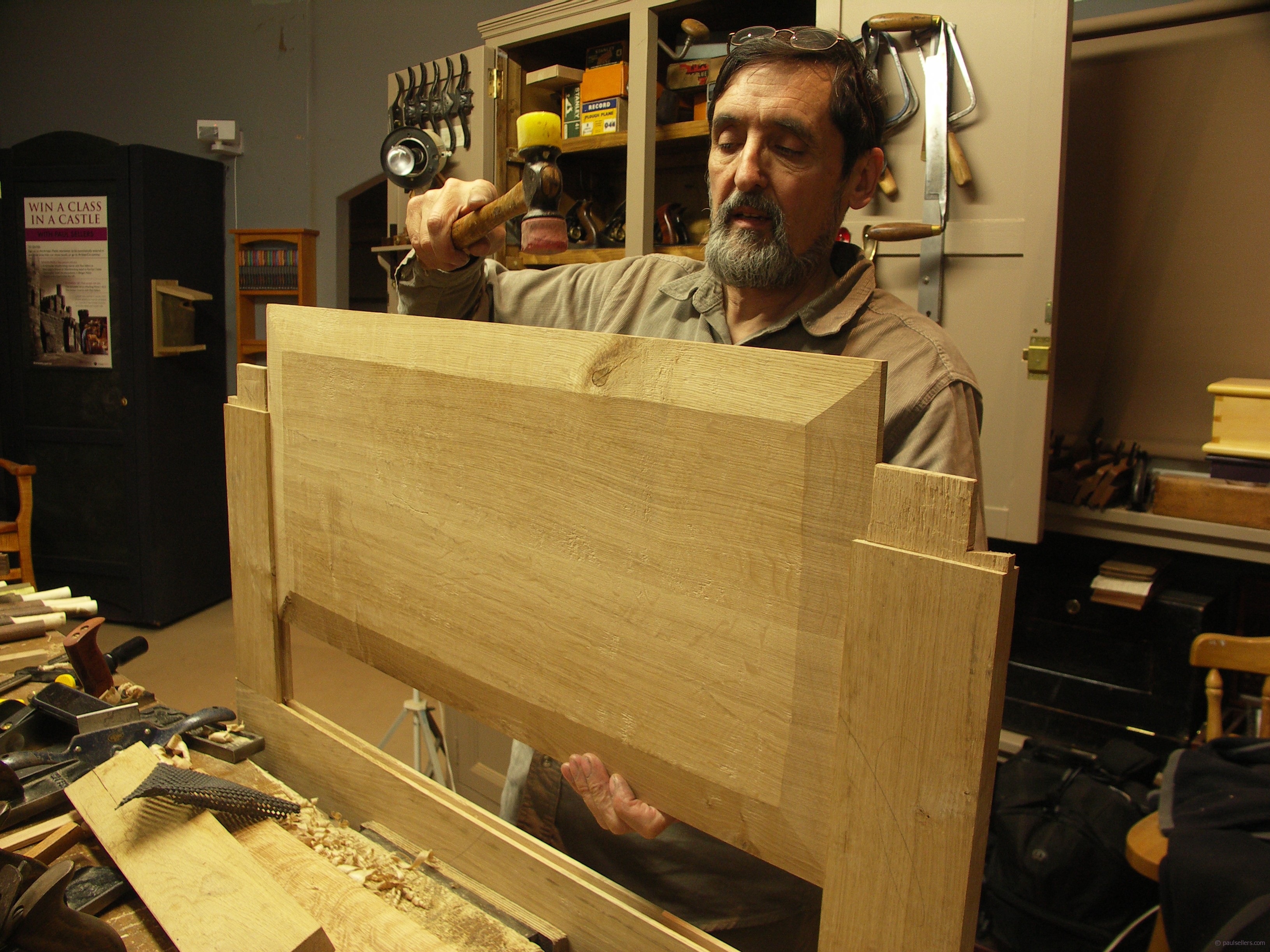
Over the years my sharing about the interchangeability between these three words, accuracy, sensitivity and precision are critical to our human creative ability. To mete out measured effort from the hands, arms and shoulder area through the upper body, then the lower body and ultimately the whole engaged body to the cutting edge and edges of tools held only in our hands to deliver an exact, sensitive amount of energy and direction to every single cut we make depends on our total engagement. The wonderful thing about hand tools is that they demand our total cognisant presence. The more we focus on accuracy as the ultimate goal, the more sensitive we become. the more we care about how the cuts become effective, the more developed our energies and the more efficient our effort. It is a highly unfortunate thing that we have lost our patience for the process of both learning first and mastering next. The union between these two different functions is essential in the symbiotic process to our becoming highly skilled and productive hand toolists and true woodworkers in every sense of the word mastery. Whereas there are those who sometimes find skilled work to be second nature to them, many of us really struggle in the beginning. These others may have occupations that demand the very finest fine motor skills but such skills can be developed. this cause me to think of an eye surgeon I once knew who showed me some of the finest tools he worked with to repair parts of the eyes he worked on. His abilities were the most critical of any I had ever seen. He asked me once whether I had considered becoming an eye surgeon because he said my skills were the same as his. I said to him, " I think I could fit that in on Saturdays!" and we laughed.
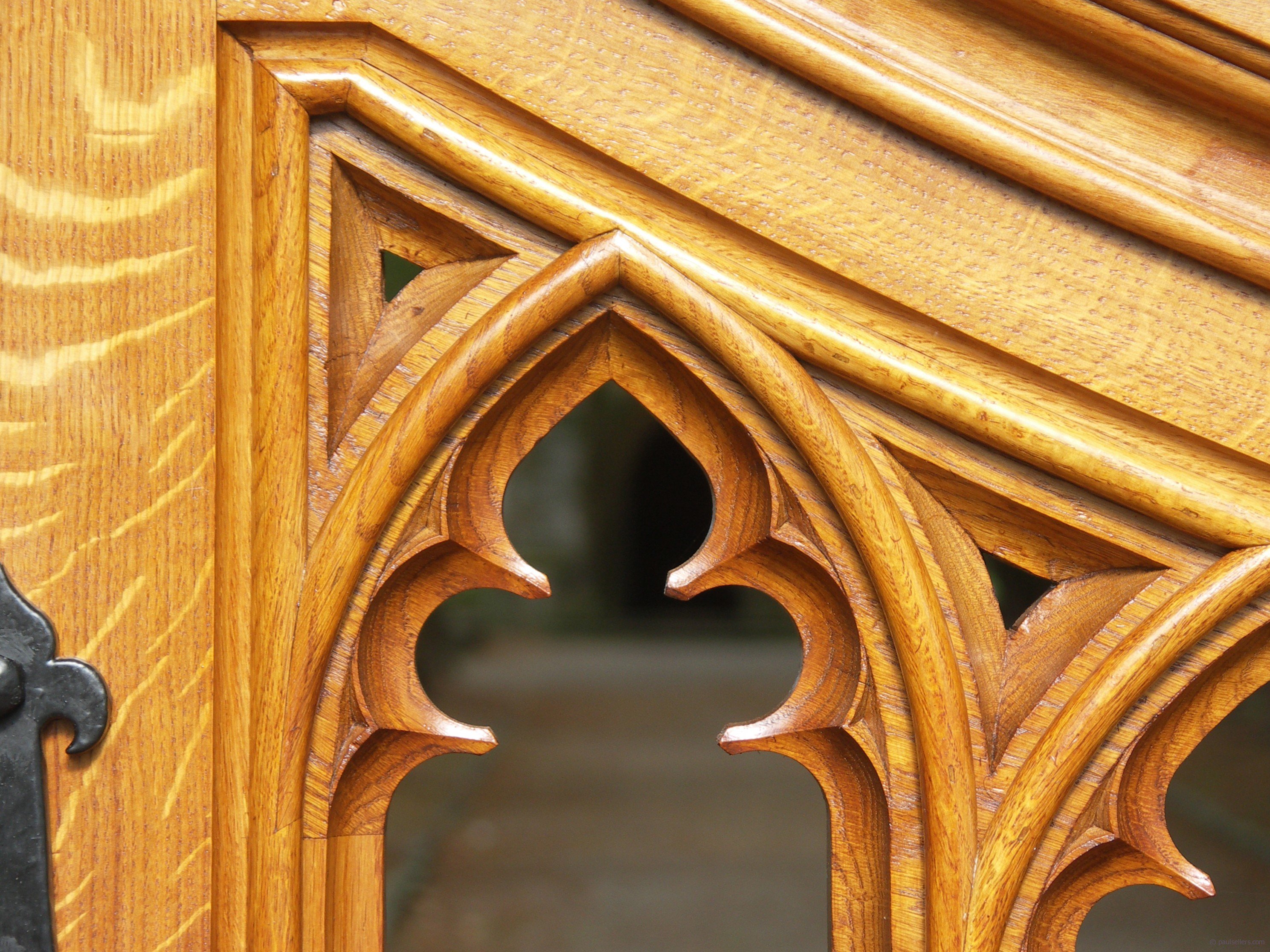
In so fast a fast-paced world it should come as no surprise that our attitude towards anything requiring patience can be somewhat waning. We tend to want things to happen immediately, a sort of microwave-mentality in the beginning of our early woodworking experience. I think that it is also true that many might think that having a higher intelligence translates into an automatic ability to work accurately and methodically in manual skills. Whereas it could and sometimes does, there is a development that needs to take place for everyone that doesn't necessarily rely on IQ levels in the upper reaches. In the same way a man might prefer a chainsaw to take down a tree, rather than an ax and a two-man saw, so it has become with working with woodworking generally. Some say that the intelligent way is to use as little effort as possible therefore use machines for everything. I say much goes beyond efficiency and production rates and especially is this so for those looking to make their own personal woodwork a more intimate experience. The experience of hand work, and then too the extraordinary skills you can and will develop, far outweigh the end result of a finished piece. In my world of making, the process is worth a thousand times more than the ownership of a table, cot or rocking chair. If a tablesaw rips our sections into perfectly straight and square stock, dead parallel and almost to a polished level, then surely this is always the better way? Well, I see that logic, of course I do. In fact I take advantage of a bandsaw much of the time, and especially for a lot of repeat rip-cutting of materials to smaller sizes, but the marathon always take more strategising, effort and decision making than riding the bus and the car. So too riding the bike and walking. The immersive experience often cannot be quantified. I was talking to a friend who told me how greater sensitivity had come to the hand that was before then almost completely without sensitivity and feeling simply by a variety of interchanges that took place both mentally and physically. These are more abstract and yet as metaphysical realities they develop the additional feeling of simply feeling well and happy. When I strain and struggle with a plane on a rough board to develop a flat plane I feel incredibly well and the feeling remains for life, not just that minute, I believe. I often look at something I made 30 years ago and the memories come flooding back of the time I spent dropping that tree, de-limbing it, loading logs and limbs and driving through five gravel-bottomed rivers to get it home for slabbing it into boards. So too my arrival at a timber place and finding boards with high figuring just when I needed them the most. The freeze of crossbanding on all the surfaces and doors of the White House credenzas came from this experience exactly.
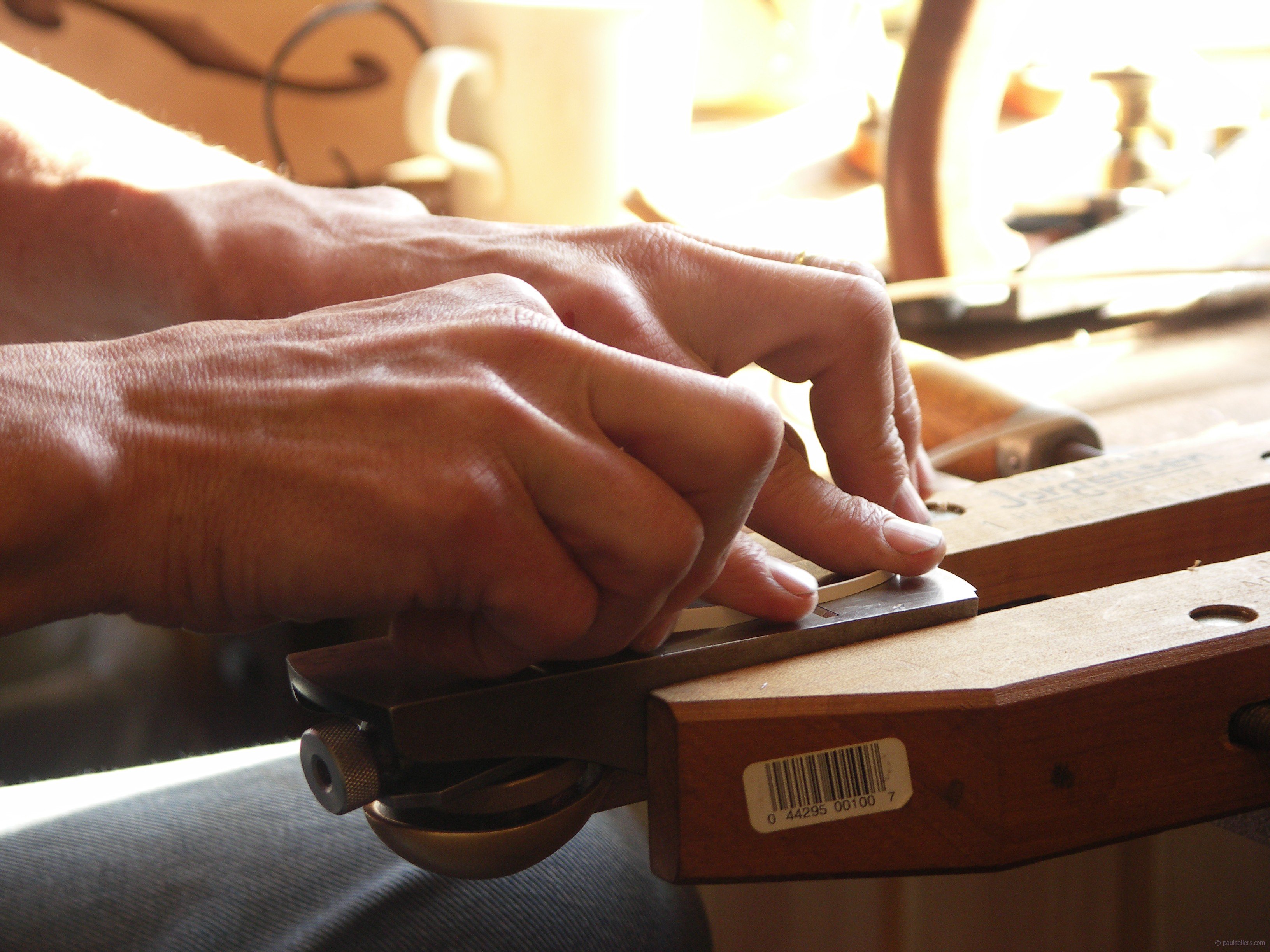
You cannot buy veracity like you can cologne in an atomizer bottle or tinned beans in a can. Veracitity comes by your personal quest for truth, ecxactness and accuracy. Accuracy is not just the square line and the straight edge of a shoulder line meeting in an intersection. Accuracy is all things joinery and all things woodworking. It's the amount of pressure you apply and then the when to apply it and when to shift and alter the pressure too. It's the direction you take and the angle you present at, the point at which you sharpen and the point at which you walk away. It is also the point at which you make the decision to use a machine over a hand tool too, without throwing the baby out with the bathwater.
Comments ()