
Planes I Use Too!
I am often told of this plane or that plane coming from an alternative culture, as though somehow never had a western version and that somehow we might be behind when in reality what we had simply got dismissed by being forgotten in the flotsam and jetsom of our industrial 'progress'. In reality it is true that planes of equal worth, quality, functionality and versatility existed through the centuries. They were just abandoned.
As a boy I watched men work planes of every type upside down, hidden from view, on pull strokes or push strokes according to access and grain orientation and the end result of each plane stroke resulted in perfection. With no need to prove themselves by taking 20-foot ribbons of shavings, and of course, no time for such things too, these men simply worked. Shavings the thickness of onion skins were really of little value back then in that production was on and things needed to be achieved and of course the bosses had little time for frivolity in the post-war years when we needed to rejuvenate the world economies. Indeed such working commonly produced shavings minute on minute. One thing I always enjoyed was the reality of work and less so the entertainment of it though it is fun to pull shavings from the throat of any plane when it just keeps coming and coming like magicians scarf from a hat. There at the various workbenches, I spent hours every week gathering up shaving six inches deep and bagging them to take to the incinerator which was the boiler we heated the workshop with. This, the work itself, proved both the man and the planes used. It was the same for the saws and the chisels. Fine workmanship is well proven in what is produced. In all cultures there are examples of workmanship exemplifying total control and mastery of material and tools. It's from this standpoint that I present two planes that do all things that they were intended to do and they do it with pizzazz! Additionally, there are scraper versions of both that deal with the most awkward of grains. I have no need for more planes, just ones that work and work well and efficiently. The spiritual connection between me and my hand tools is evident.
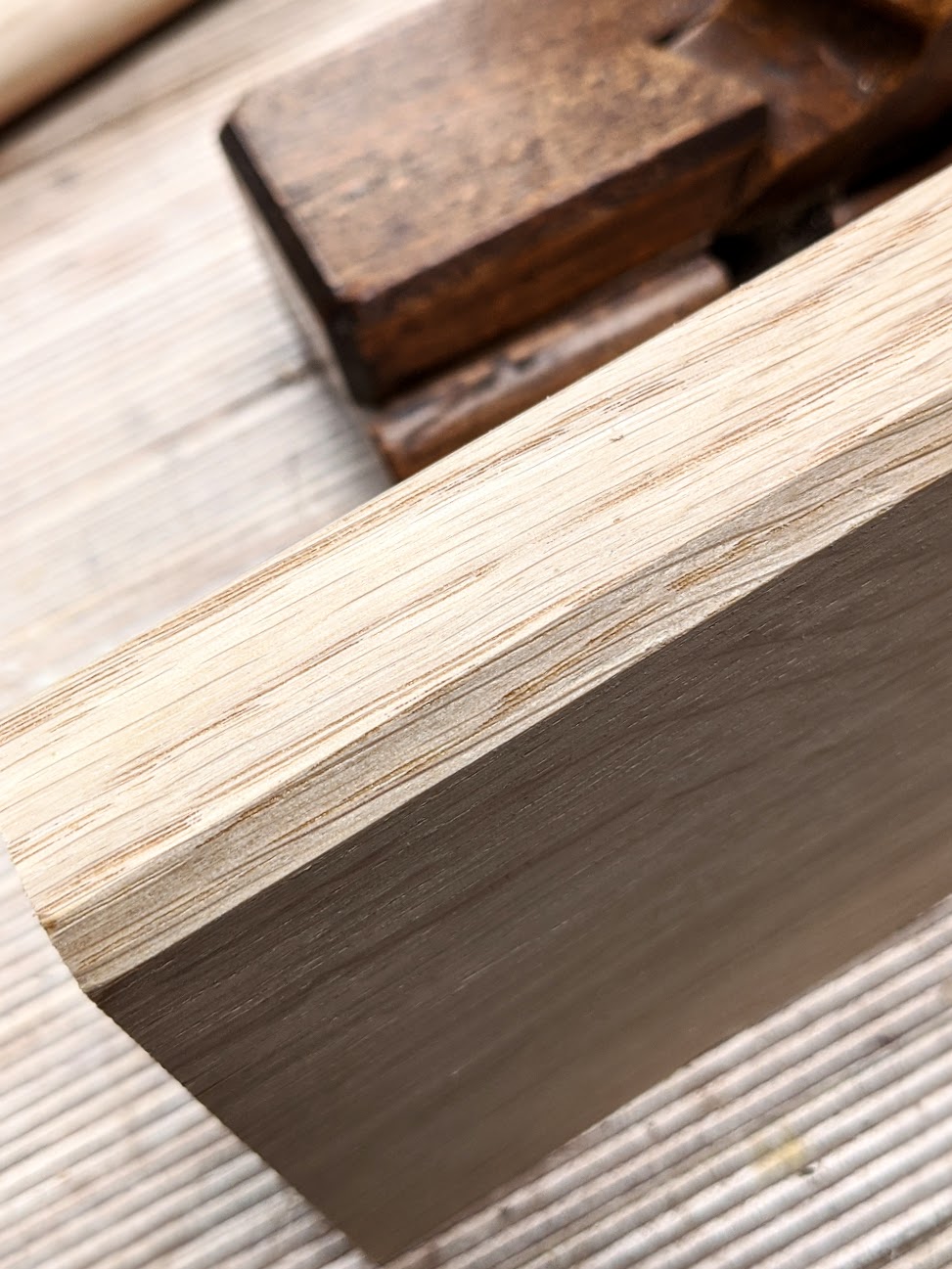
I have been working on a new project requiring bevelled corner one eighth in and one eighth deep. Mostly, for work like this, I will simply use my #4 smoother working to just my eye or using pencil lines as guides. It might surprise you if I say that after I had done mine I passed the chamfer plane along the lengths of wood and the plane took off only minute amounts to correct discrepancies.
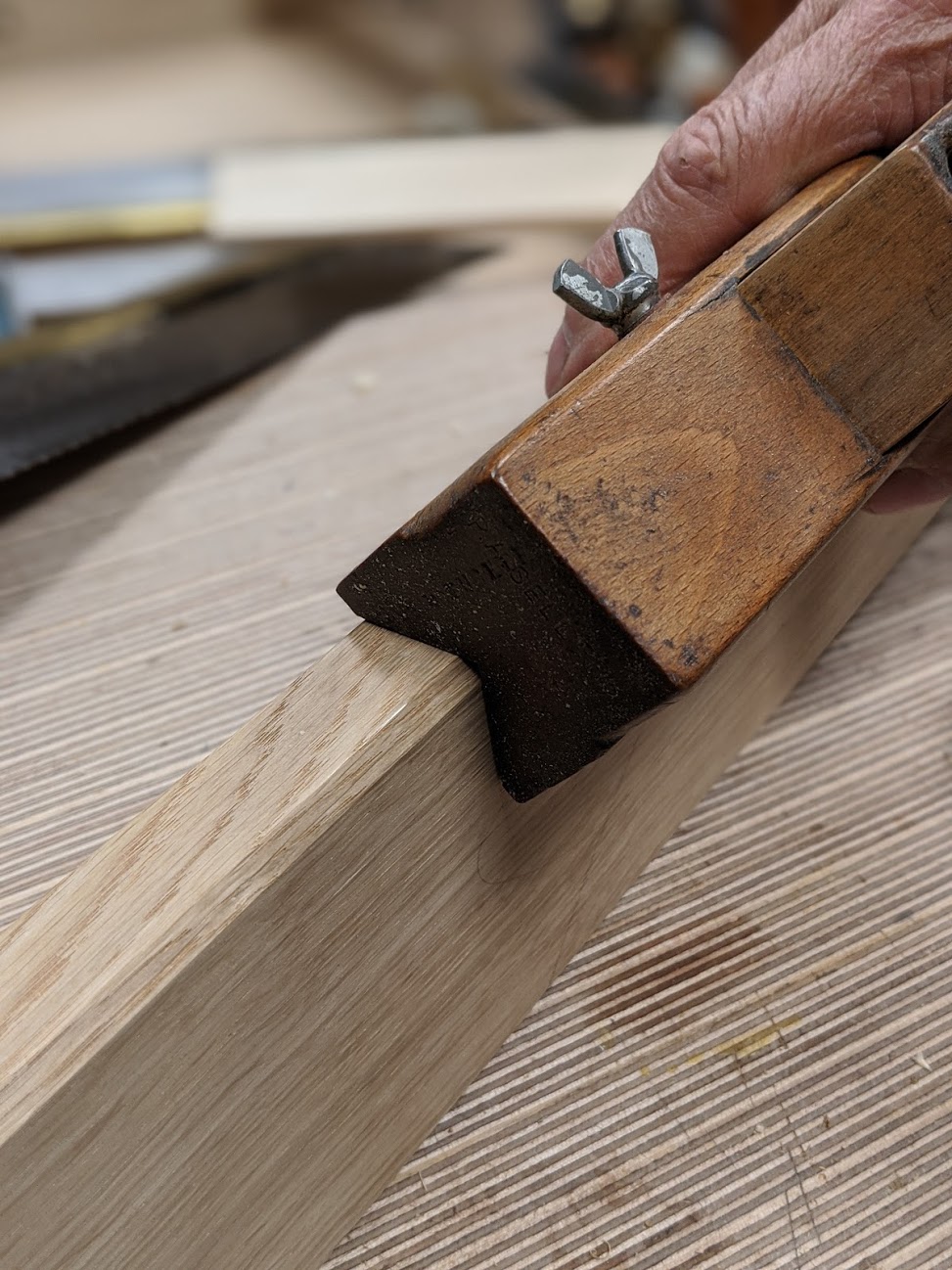
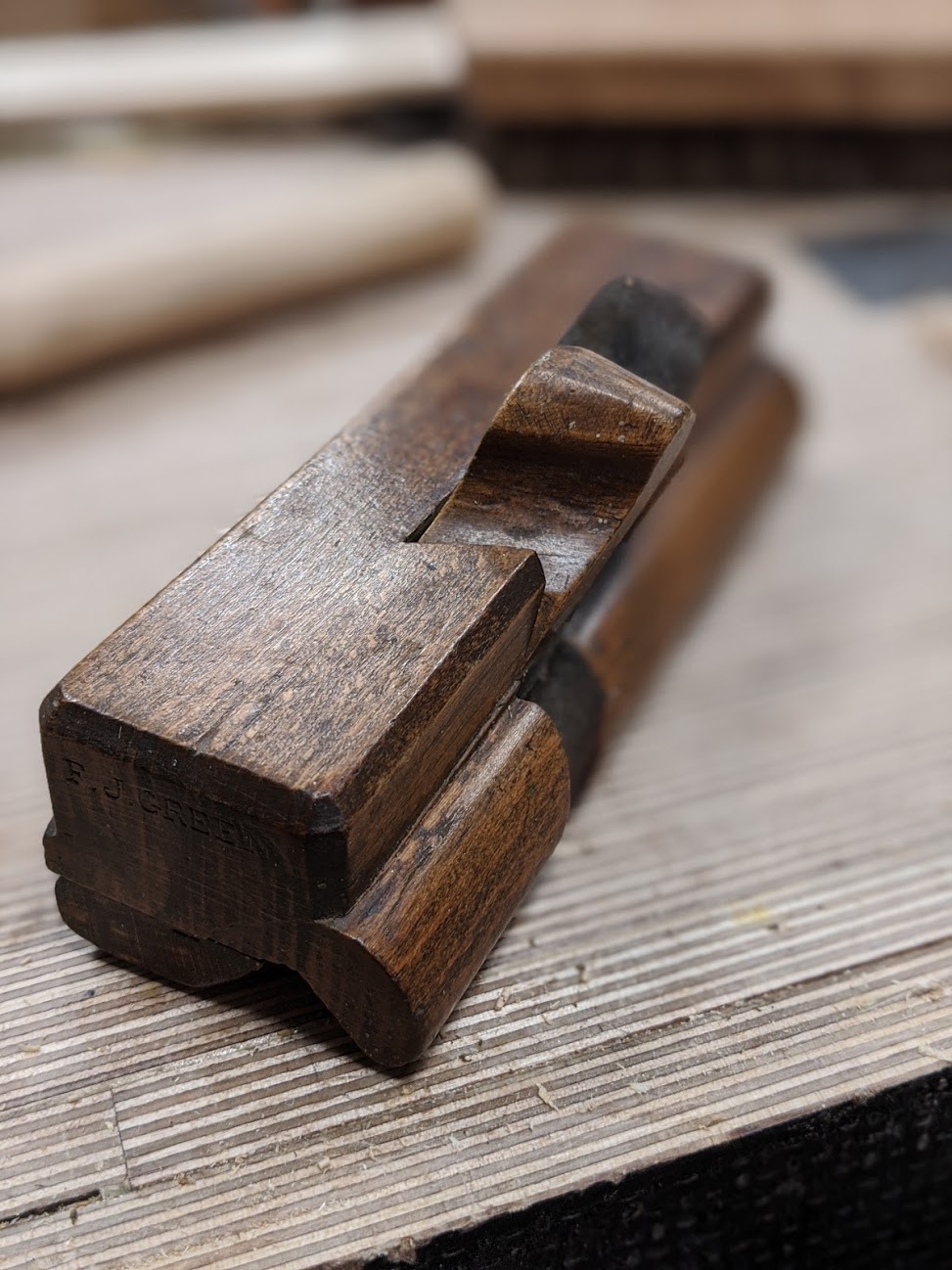
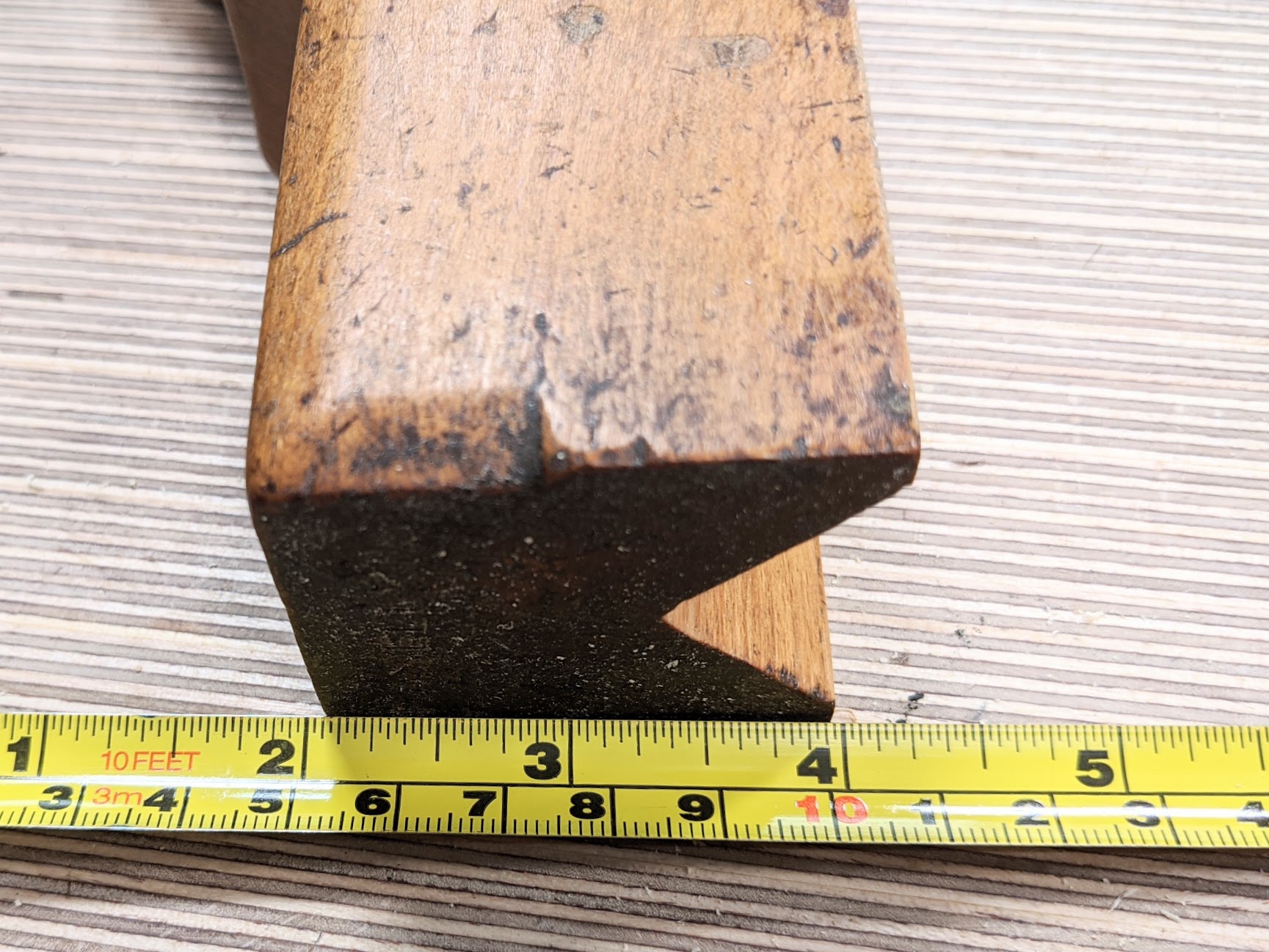
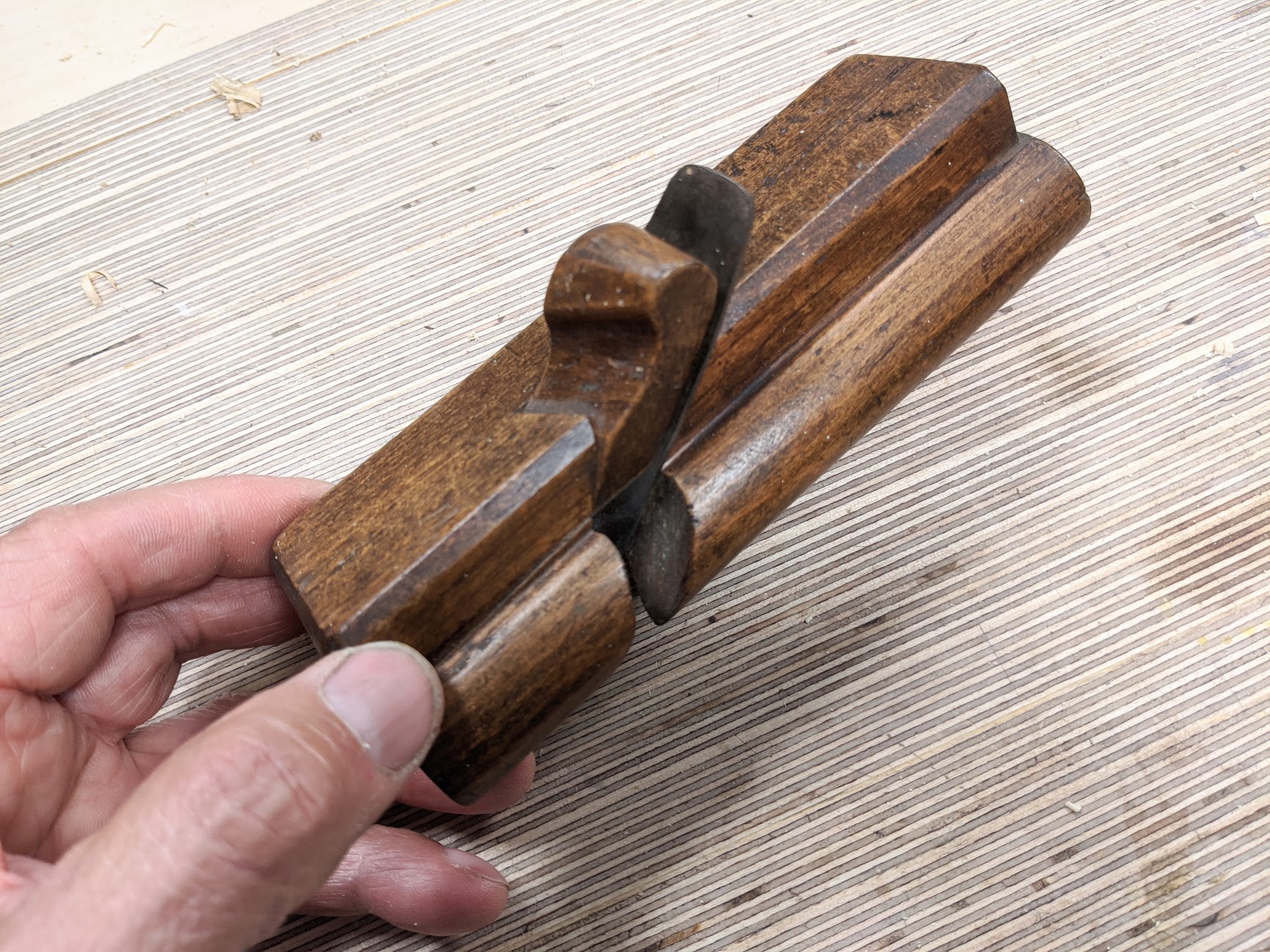
The first plane at the top is one of my favourites because it came to me as a second of its type I have seen and owned. The tapered escapement allows the exiting shaving free passage up from the throat below and out the top. The first pass is barely discernible but each stroke widens until the full width of the chamfer or bevel is achieved and the two sides of the inside of the V register on the two adjacent faces of the wood being worked (as shown in pic above). Setting the plane employs what I call the hammer-tap system where we tap the heel of the plane to shock the iron and wedge back and then to tap the wedge and cutting iron with the hammer to set the depth of cut the cutting iron removes. The width of the chamfer itself is preset before the work begins by altering the depth of the central tapered column to the desired width and planing away. Alternating grain is dealt with by planing one direction or the other according to what's seen and felt. It's simple.
The plane, as is the case with many wooden planes, is a user-made version that shows the inventiveness of the men who made them. A good design would be copied onto brown manilla paper of the stiff kind and stowed until time allowed the making to take place. Such practices were by invitation only. The owner of the plane and the designer might guard his invention as a pearl not to be cast before swine but willingly shared with those he liked on an occasion of generosity. I am including the pictures here below for those who might want to make such a version but I am not going to get into the processes as I am already maxed out in the day to day.
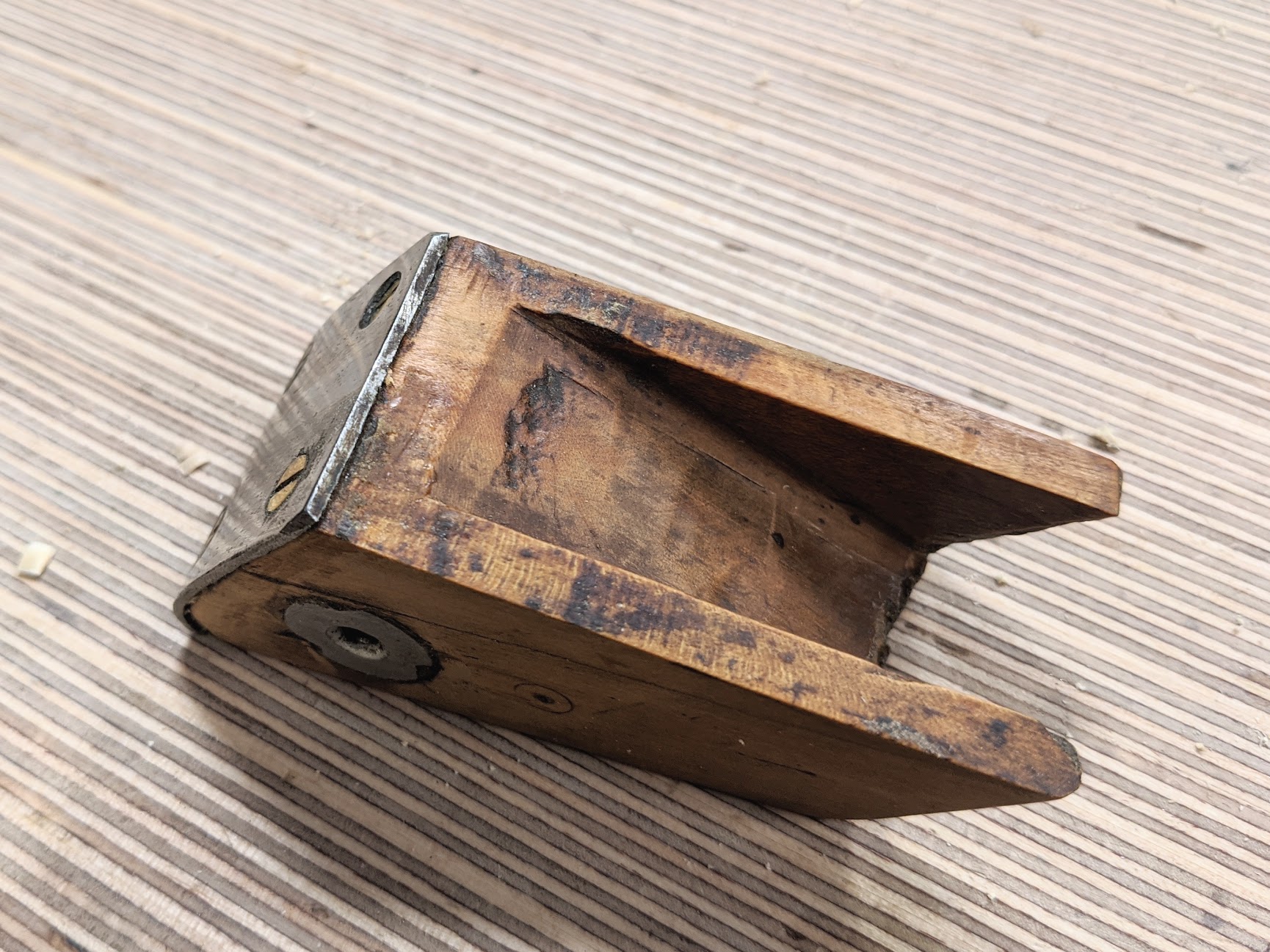
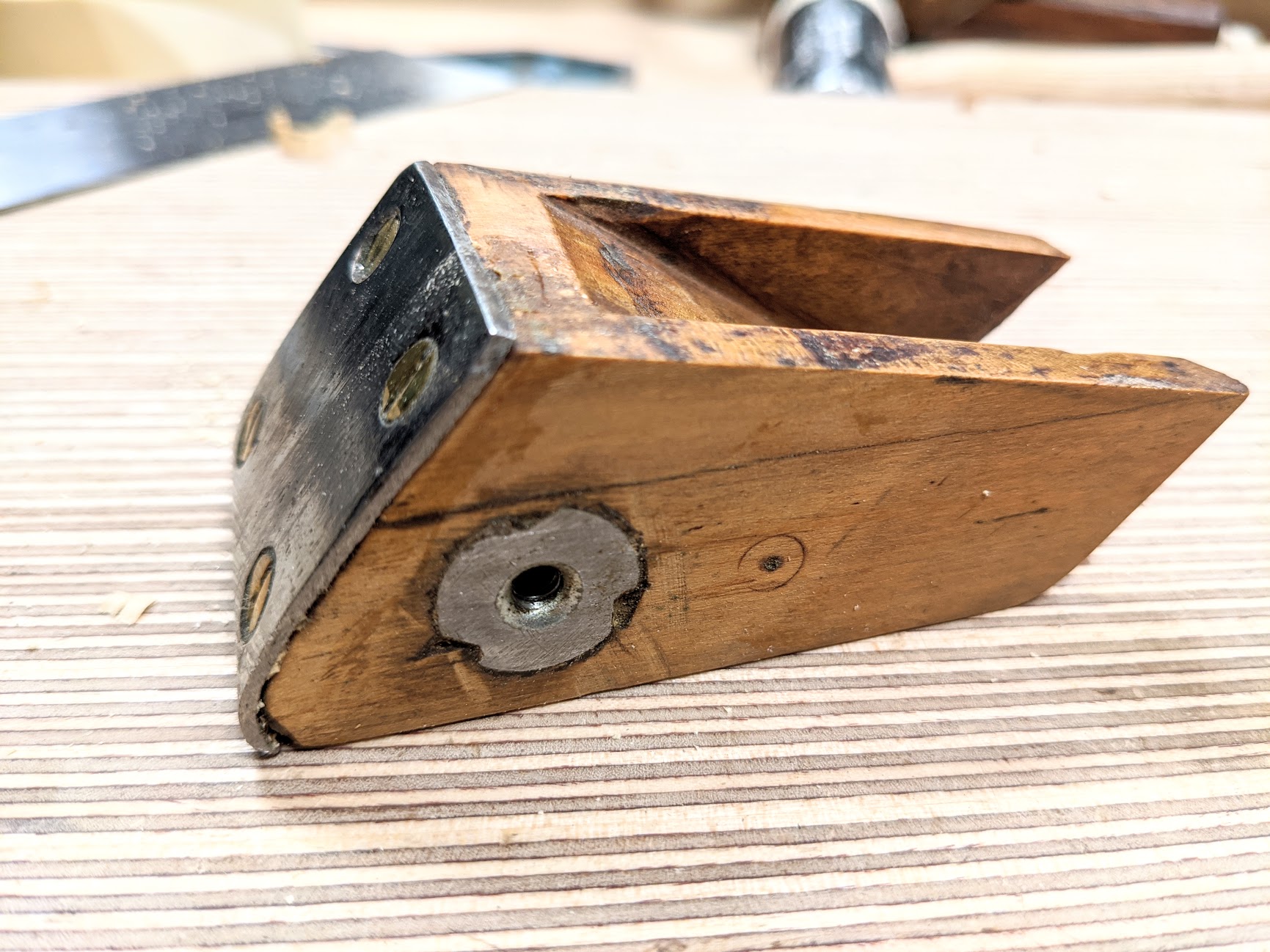
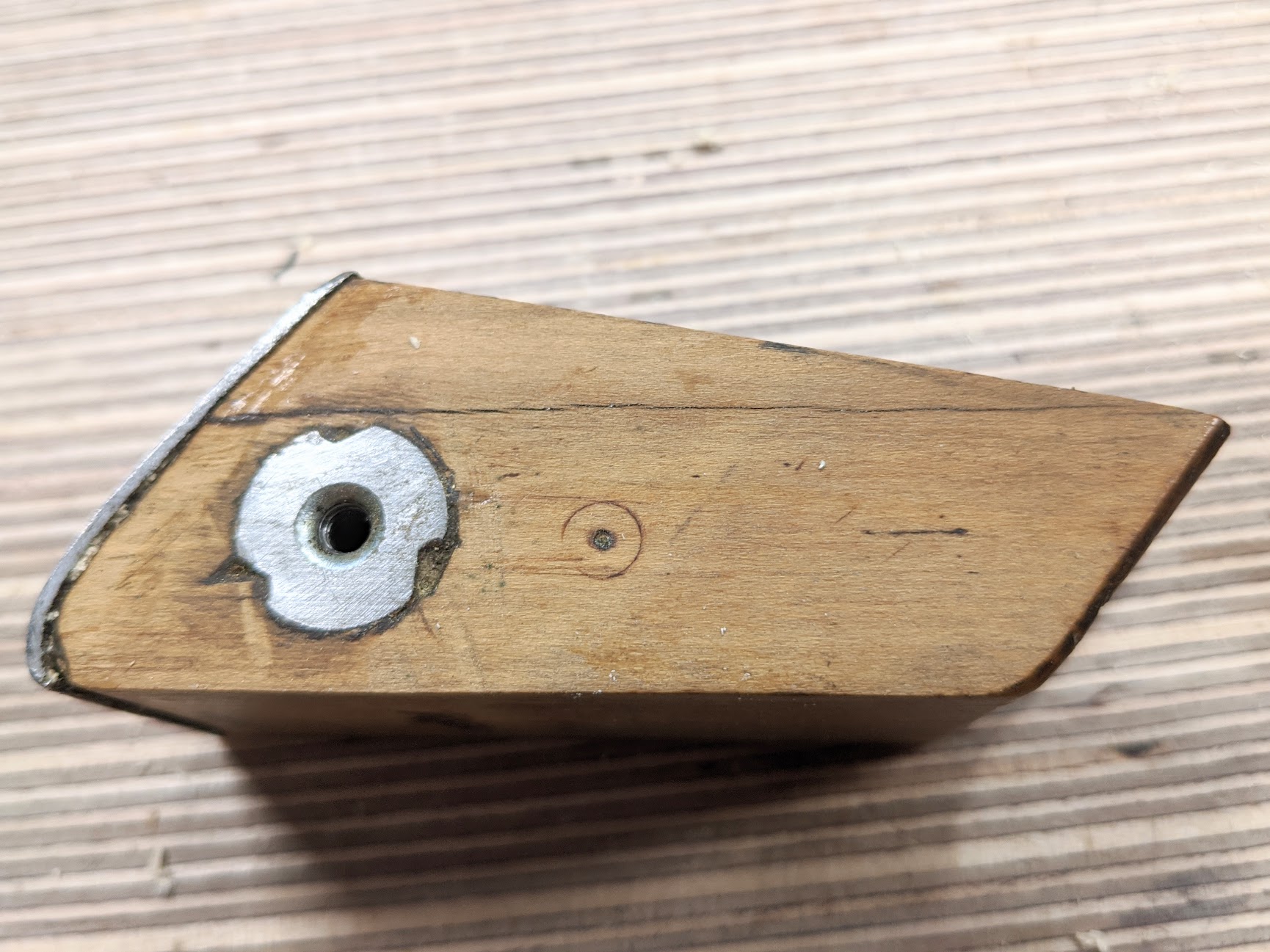
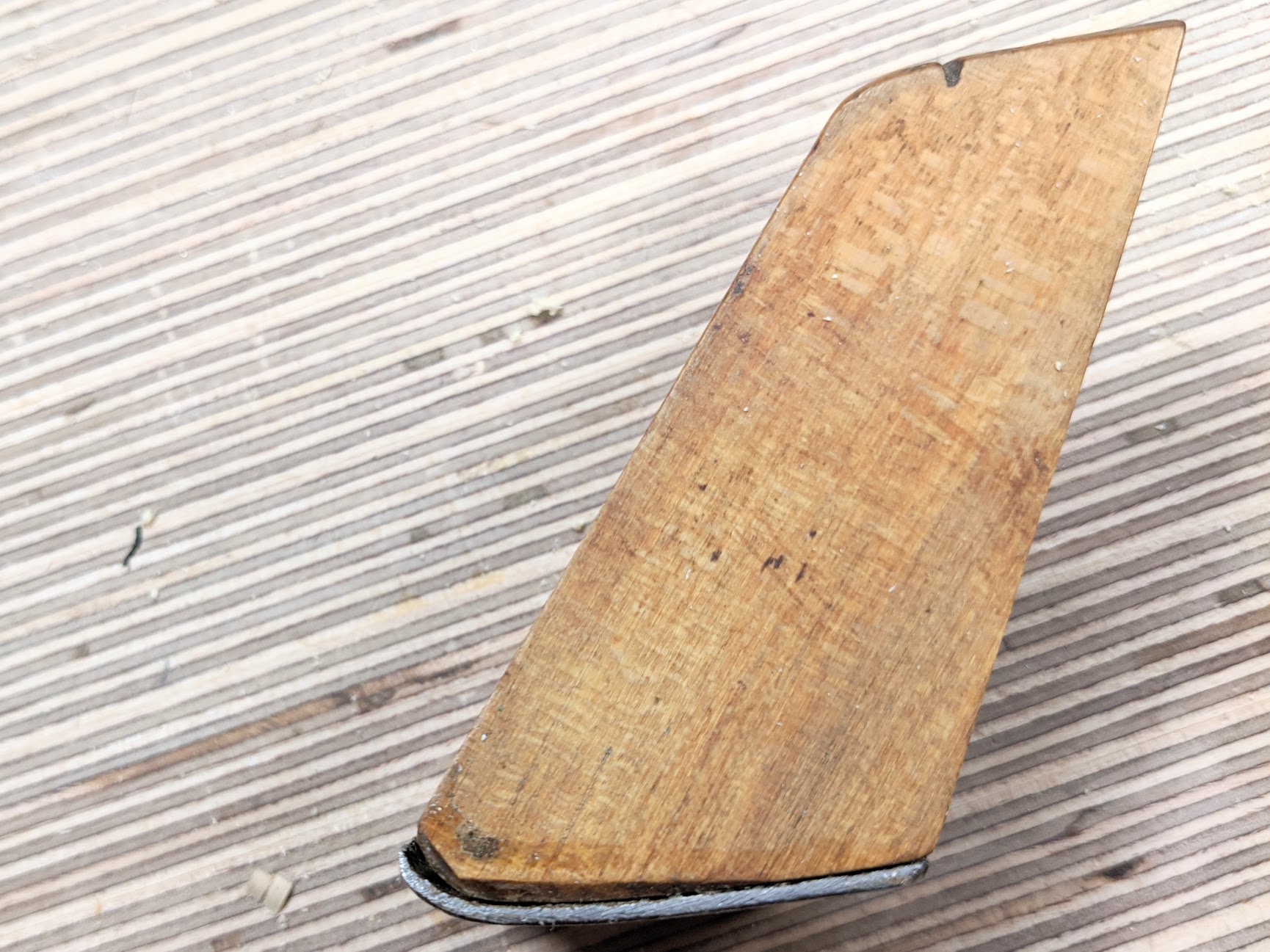
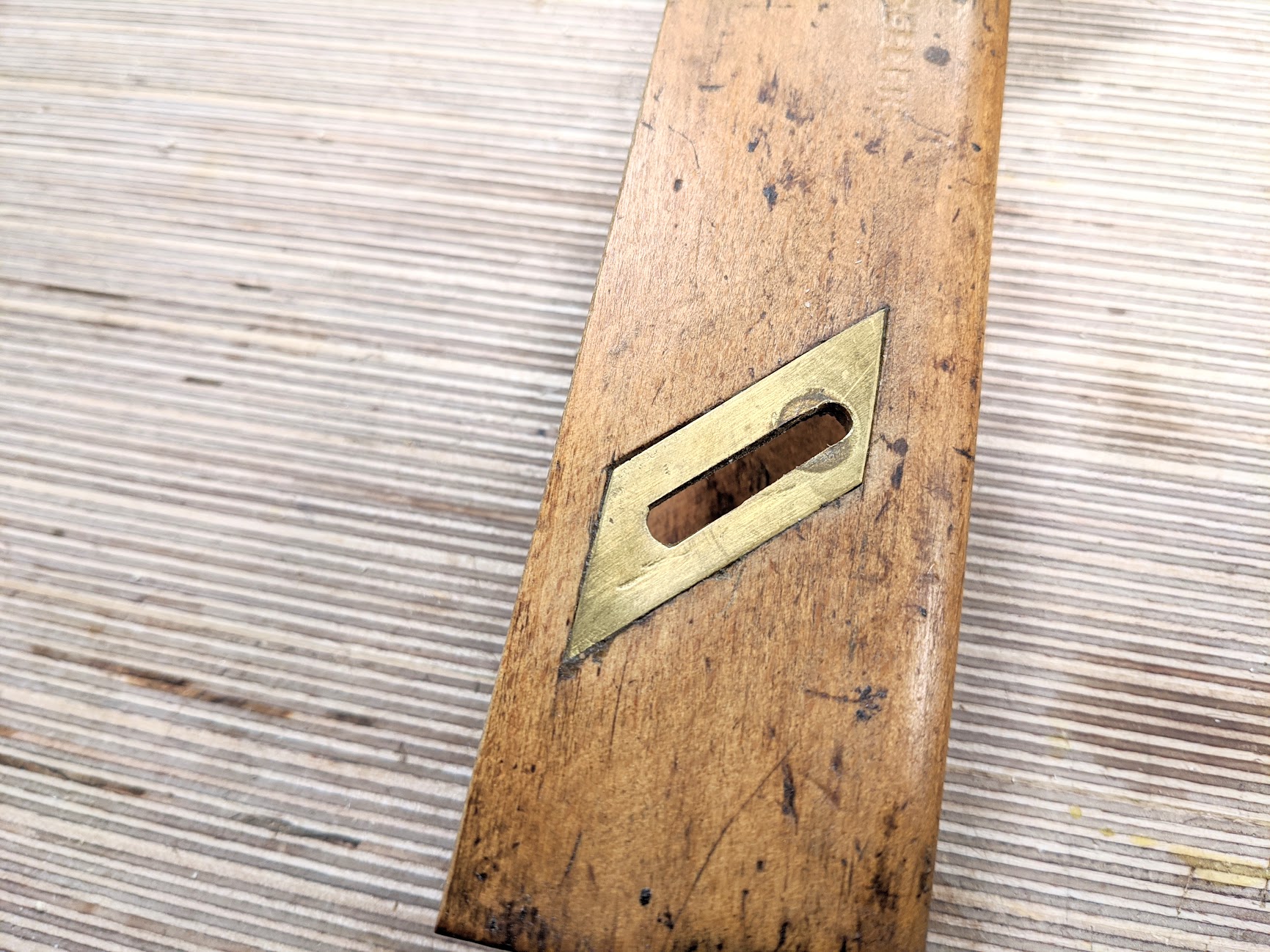
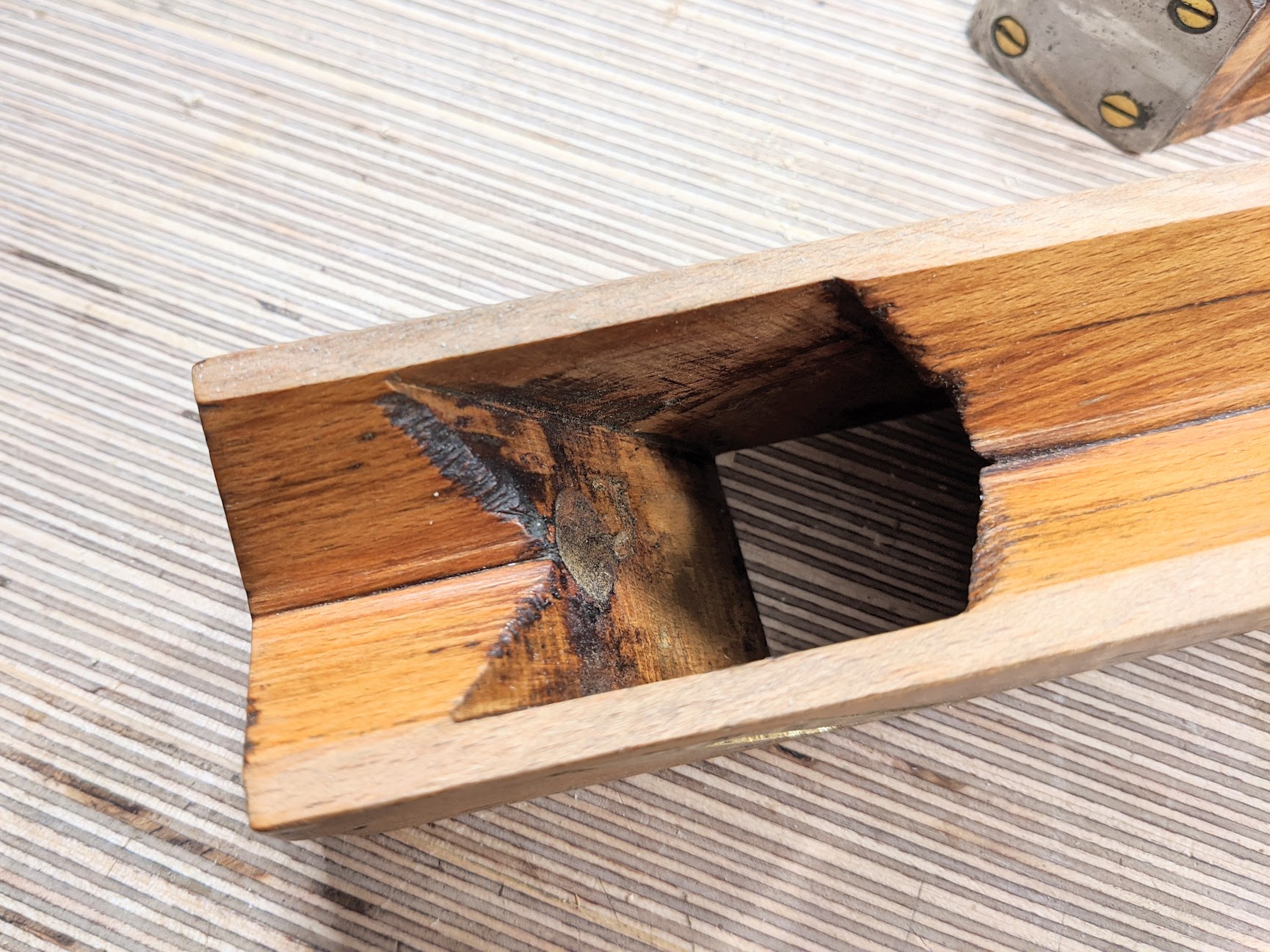
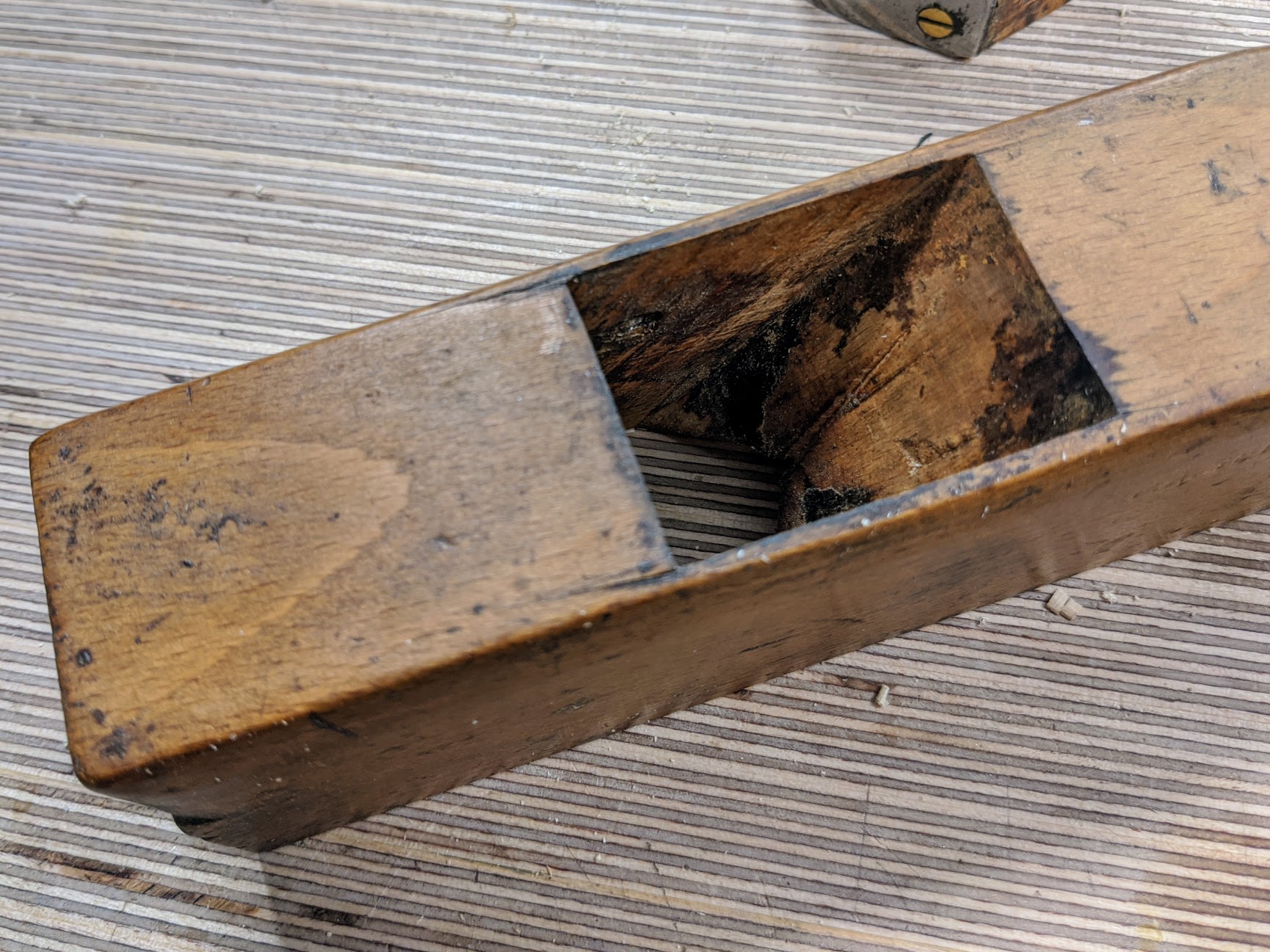
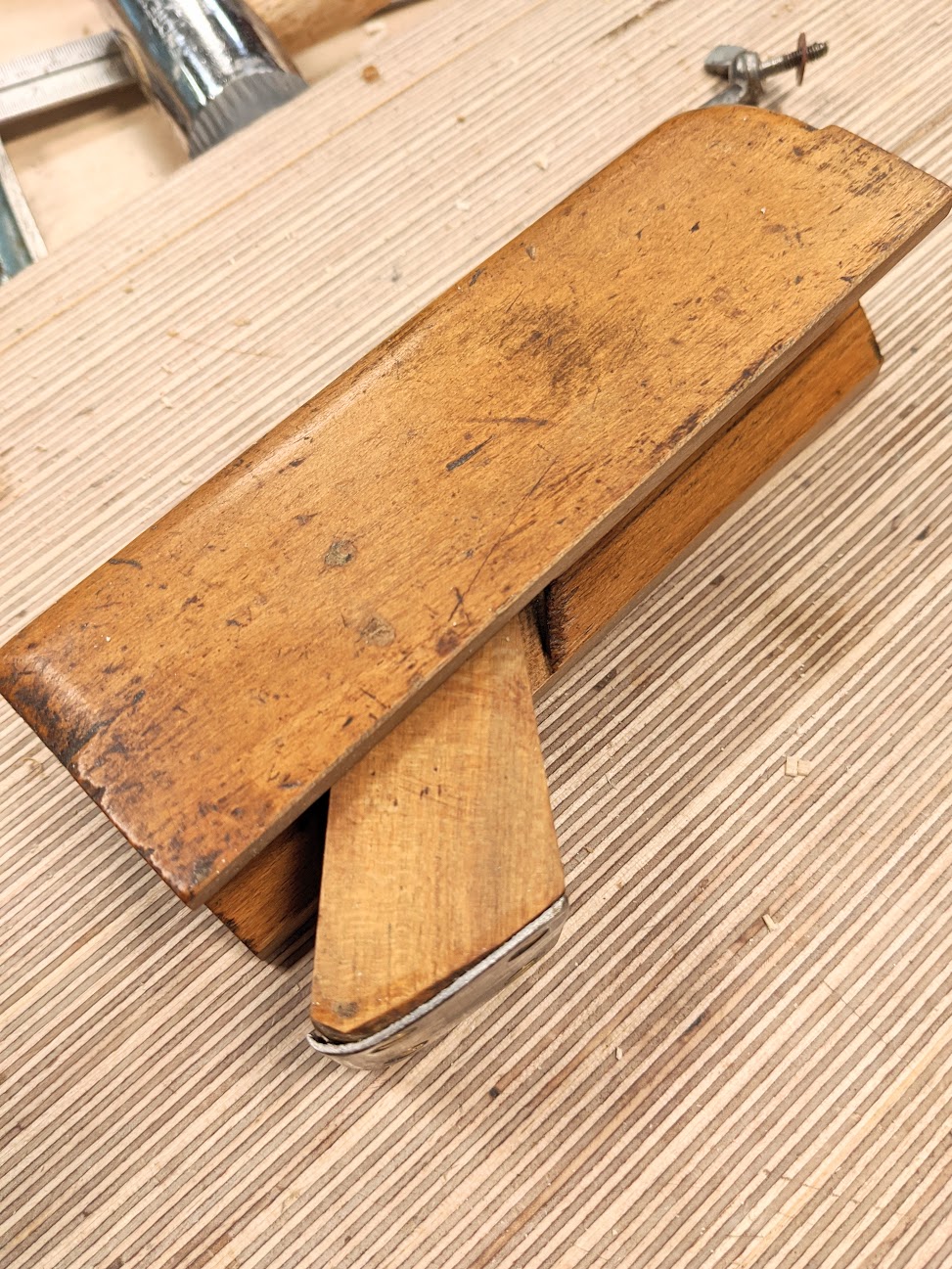
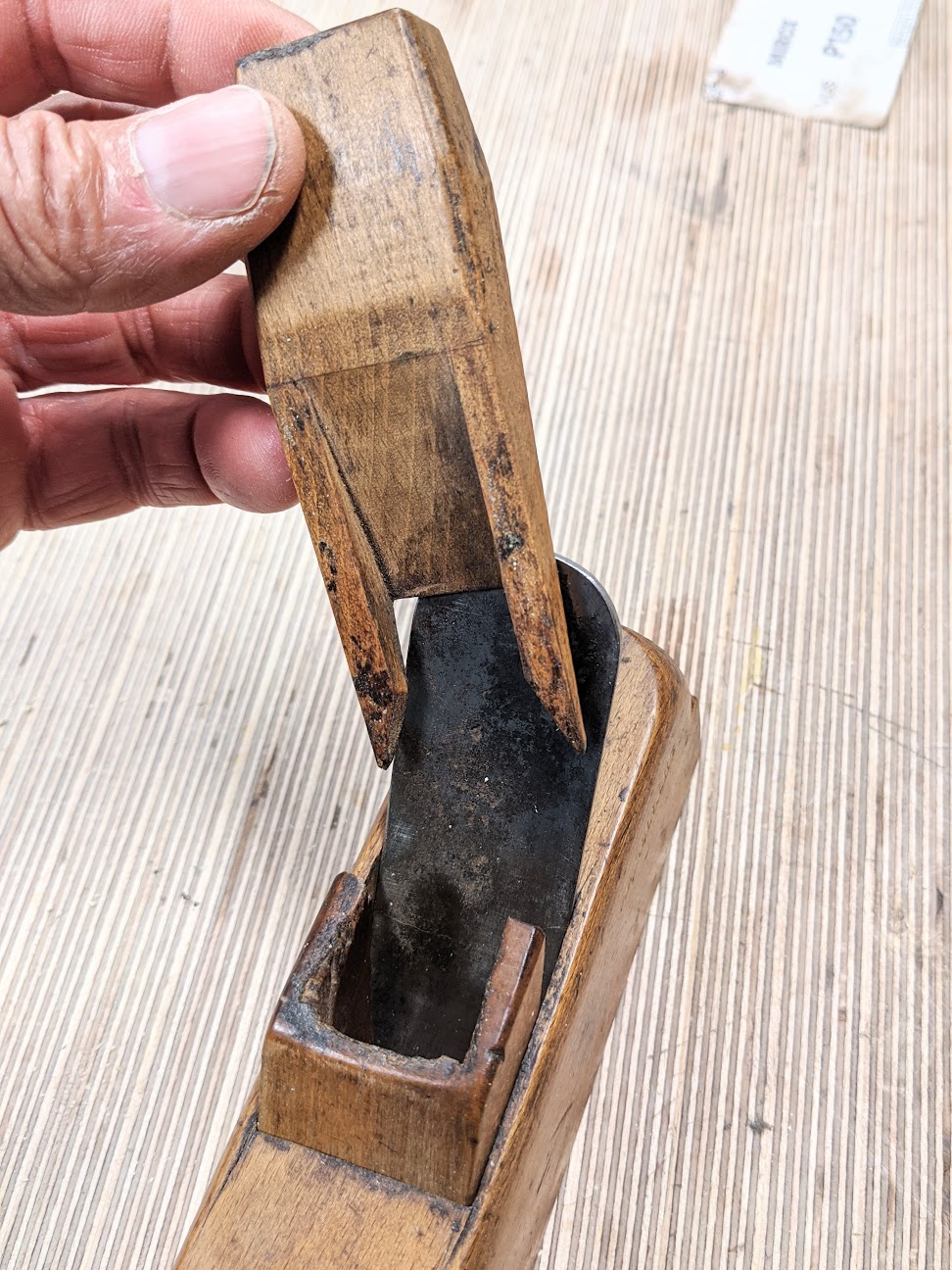
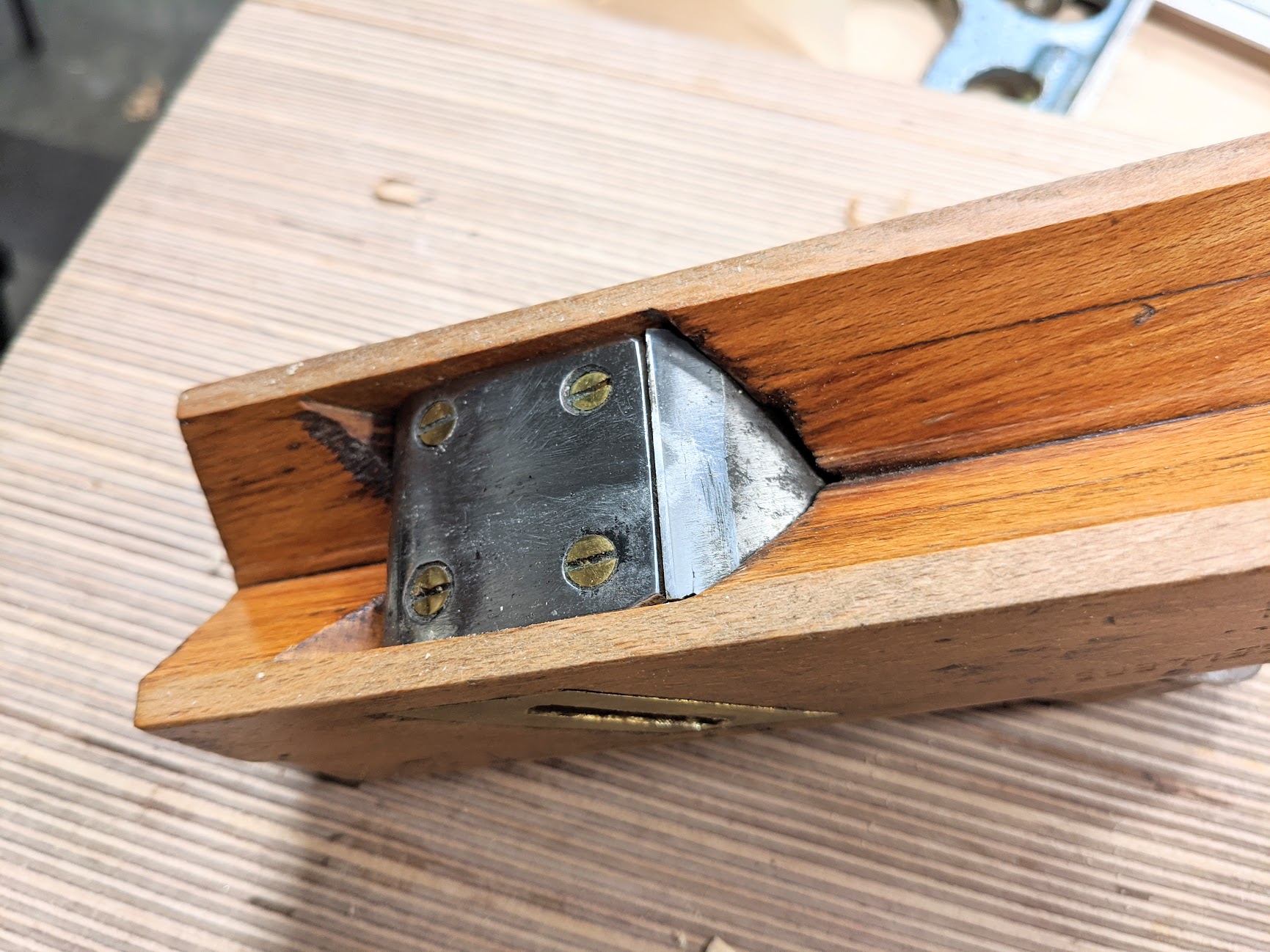
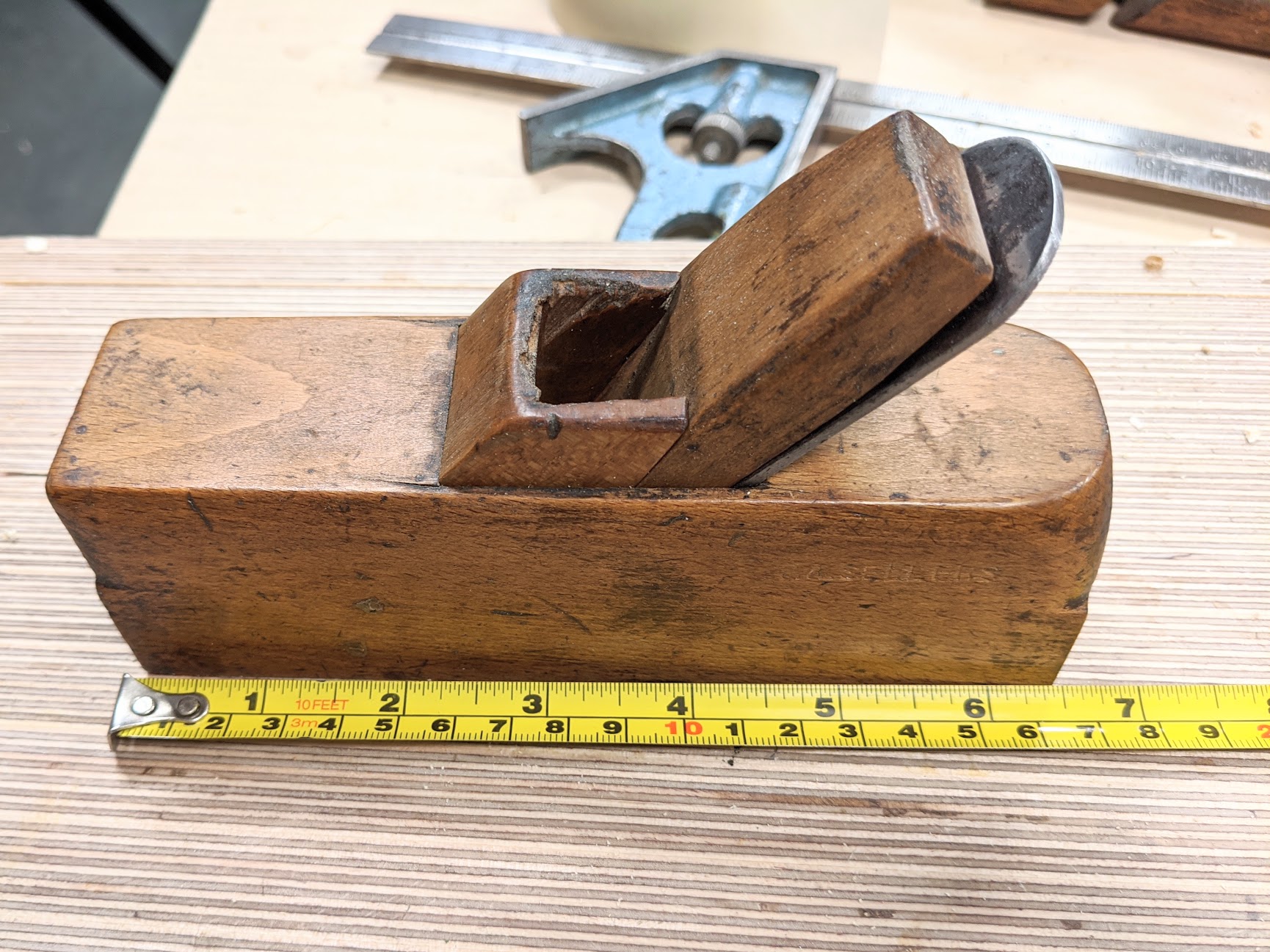
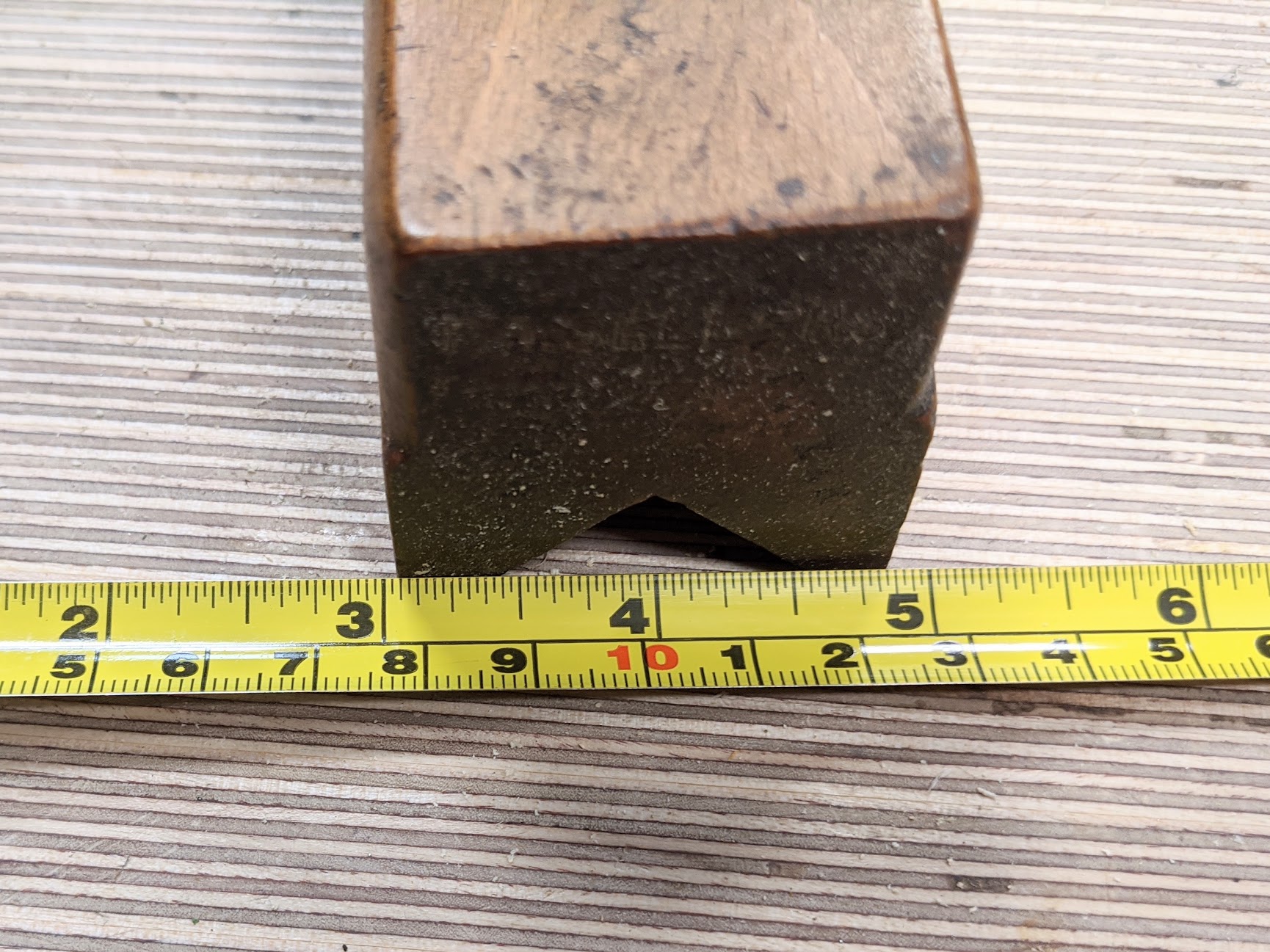
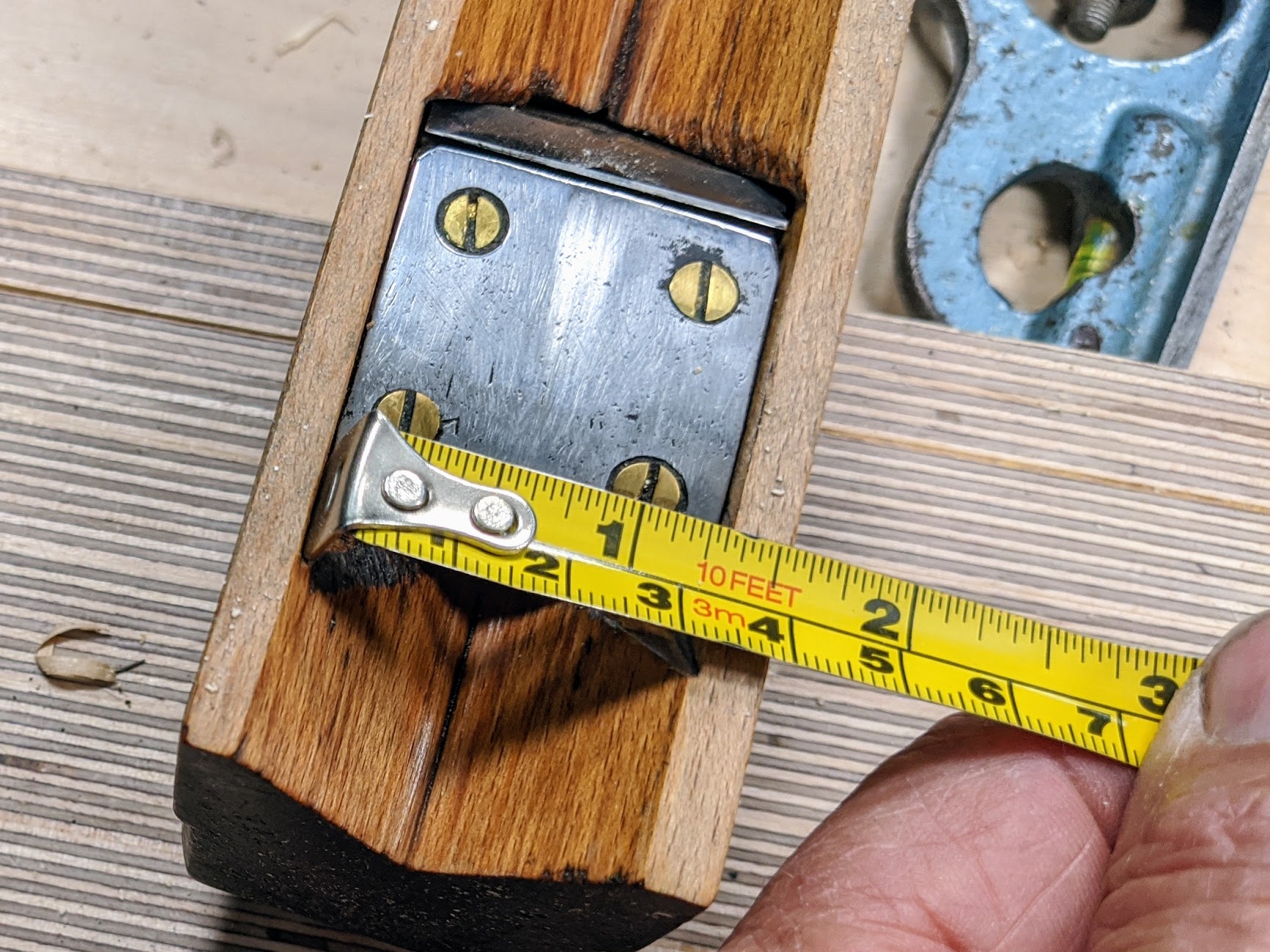
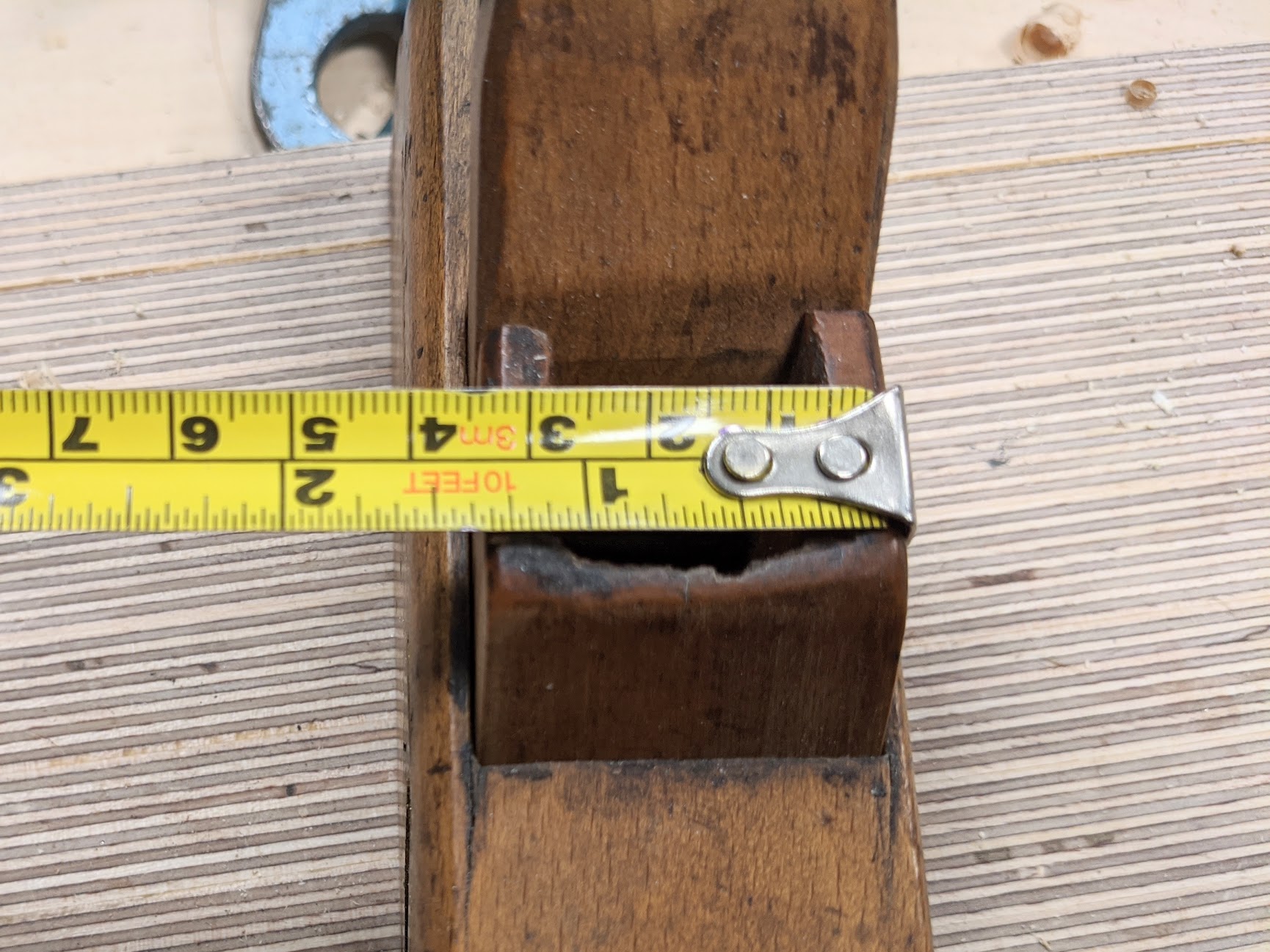
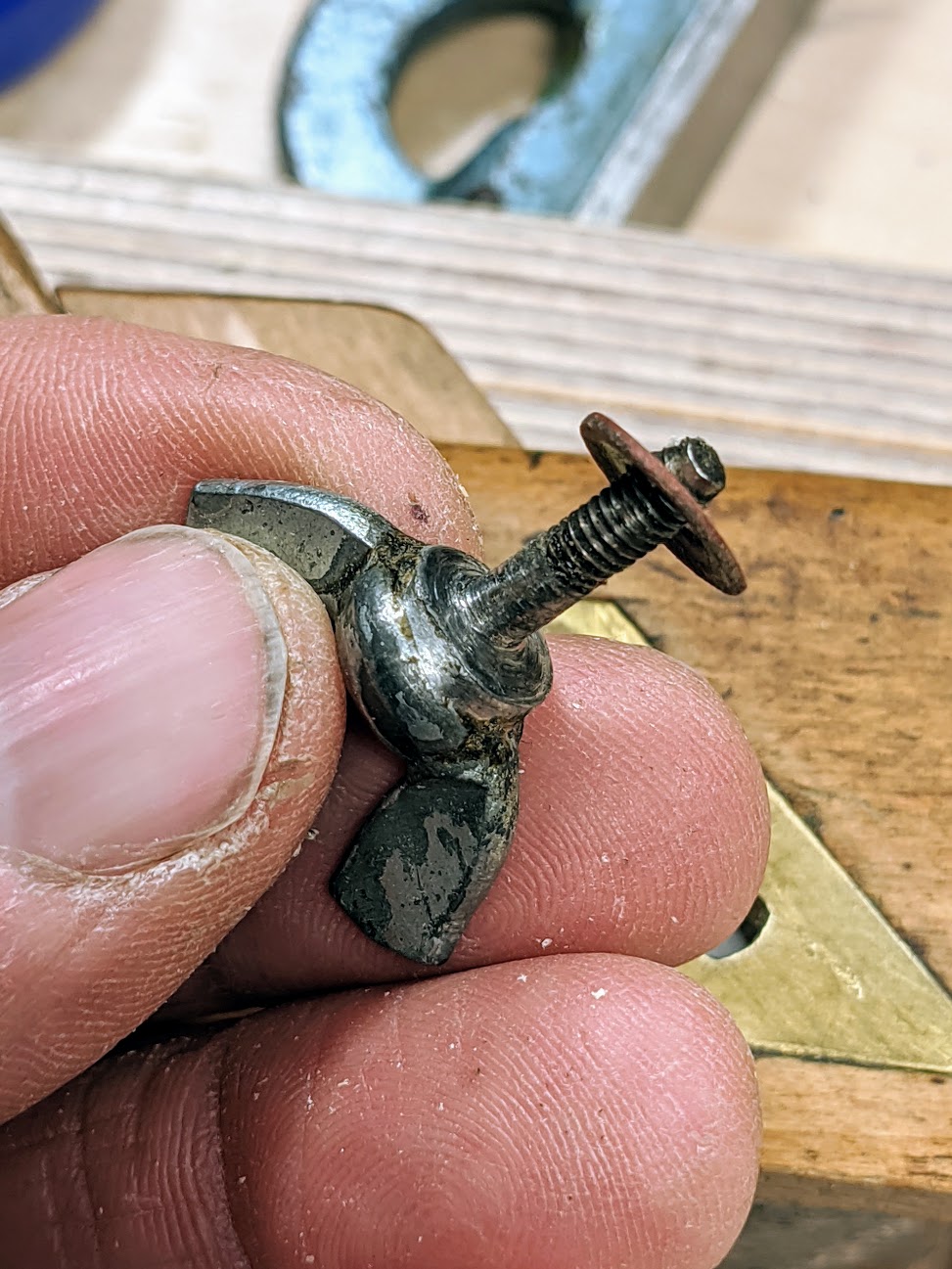
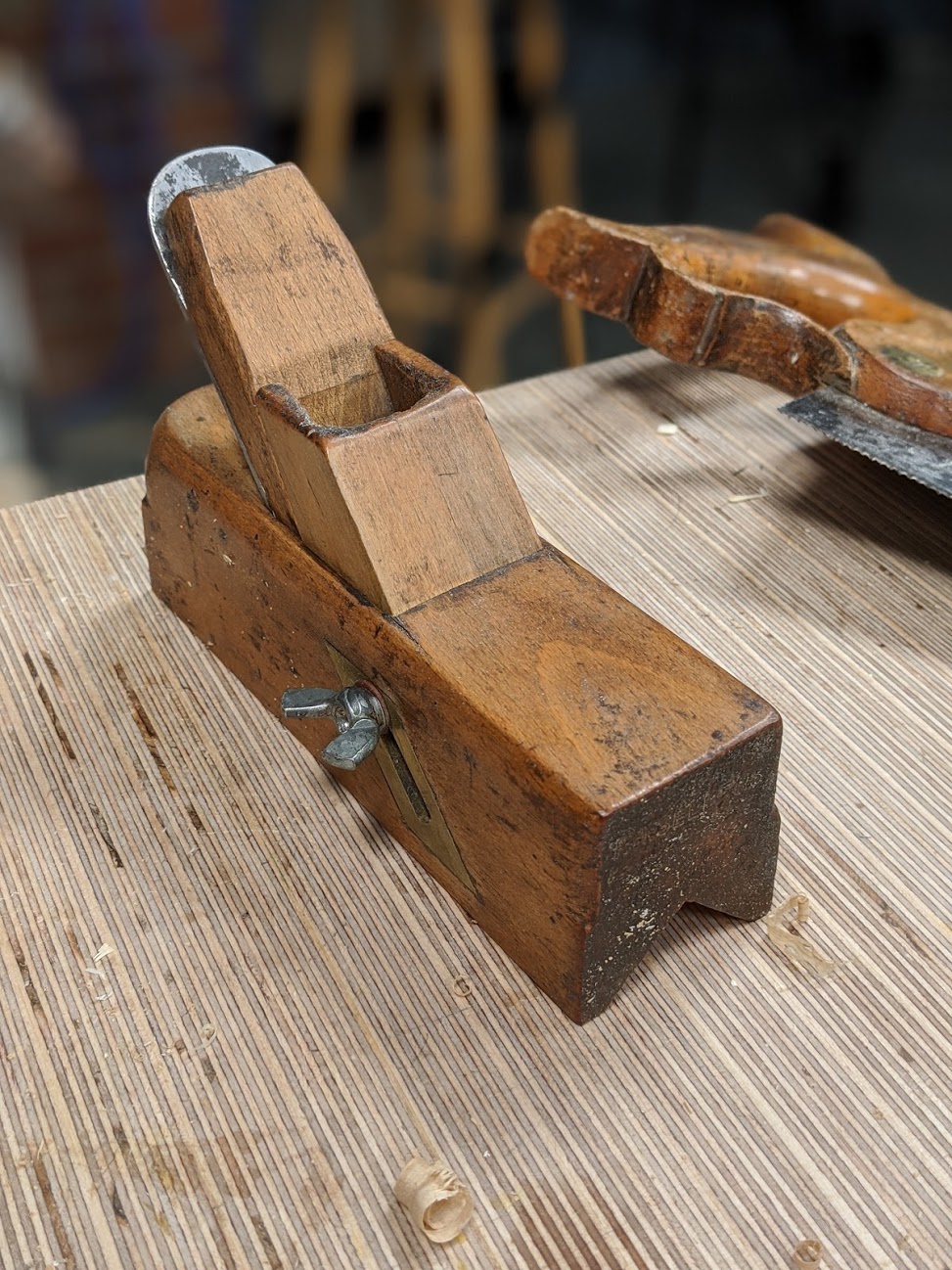
This second plane is simpler and equally pleasant to use. It too flips from one corner to the next and then end for end too with the twist and or flip of a wrist. Both planes slip into the palm of the hand so readily and are very comfortable to use being wood.
Comments ()