
Mallet Memoir & Me and George
It was a late Friday afternoon when the driver stepped down from his lorry to deliver oak to the workshop storage sheds. I was in the workshop when he came and heard him call to George at the workbench. Do you want some cherry logs, George? George quickly nodded his yes and said, Come on, Paul! Let's go for a look-see!
We all went outside and stood to stare at the logs like a bunch of calves at a new gate. "We'll take 'em." George said.

George and Merlin decided to drop the three logs in a 55-gallon drum of rainwater parked at the bottom of a downspout until it could be "sorted after.", as Merlin said. At five-thirty we retrieved the logs from the drum and laid them down on the concrete to take a second review of the cherry. Which do you want Merl'? George asked, deferring to the older joiner. He already had his eye on the straightest and largest section and George immediately agreed. Of course, I had a wanted a bit of a tussle over this one but there was no contesting. The second log went to two older apprentices and another nice log it was too. The last section was short and stocky and was crotch-grain intersection where three branches had emerged from this triangular region of confused grain. I think that the other men were quietly laughing at us taking the leftover and I must admit feeling a little miffed when George could have had either of the two good logs.

The next day the logs got cut on the bandsaw to remove the bark and split in two along the length. Ours, of course, was awkward whichever way you turned it and I thought to myself this is a waste of time. George saw my surly approach and asked me what was wrong--as if he didn't know. I said, "This cherry, it's rubbish! What good is it?"
"Ah! I see!" said George.
"Well, it's less rubbish than a boy's poor attitude!"
I immediately felt convicted and apologised with a 'Sorry!'
George wrestled the heavy stem to the bandsaw table and we steadied it into the first pass. He managed to keep it dead steady and straight. Turning it onto the new face he made the second pass and then a third and fourth one. The inside looked quite stunning. All the intersections swirling around this way and that. It was at this point that George caught the glint of joy in seeing what no man had ever seen before. I put his arm on my shoulder and led me away from the other men who also took up calf-staring at the wood.
We sat on a pile of oak and George asked me what I thought about the wood now. I told him that it was beautiful. He said, "Well, it's much more than that. We can get half a dozen mallets out of that." One each and four to sell. What do you think?"
I felt thrilled to be included in the deal. But then something said made me realise that you didn't have to wait until yoiu were old to find wisdom.
"The section I chose was calculated. Yes, I did allow the others to have first pick but `i did it knowing that no one would want the section left over. I wanted that because I had a project in mind--mallets!"
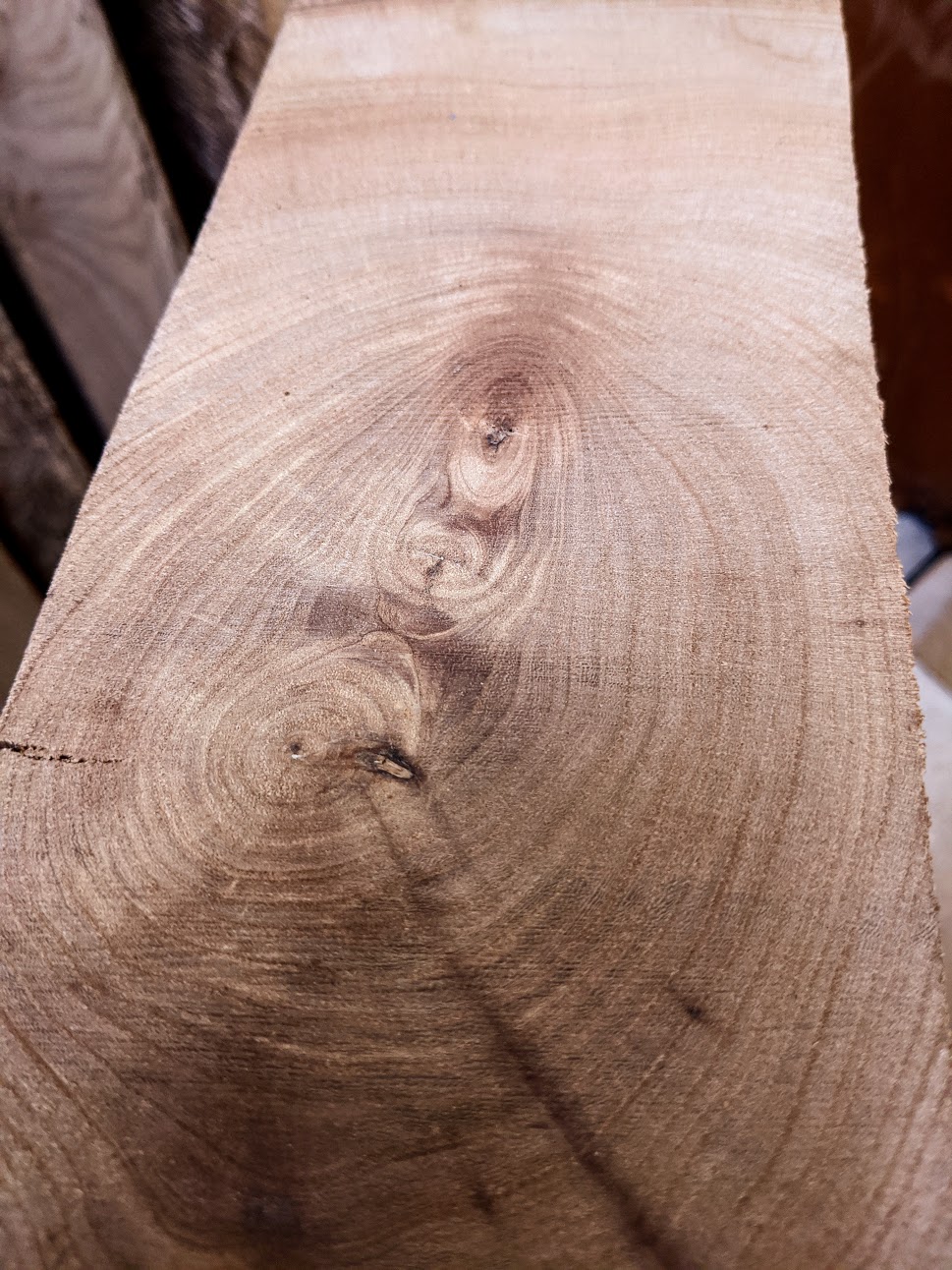
He went on, "The best place for mallet wood is the crotch of a tree because the wood is much denser and more interlocking, you see. Live-knotty areas are the same because of course that area is the root of the branches and wherever that occurs you can guarantee the wood will never split because the grain has no straightness to it and the interchangeable grain direction inside means difficulty to work but longevity to the piece. This is especially so for a tool like a mallet or a chisel handle.
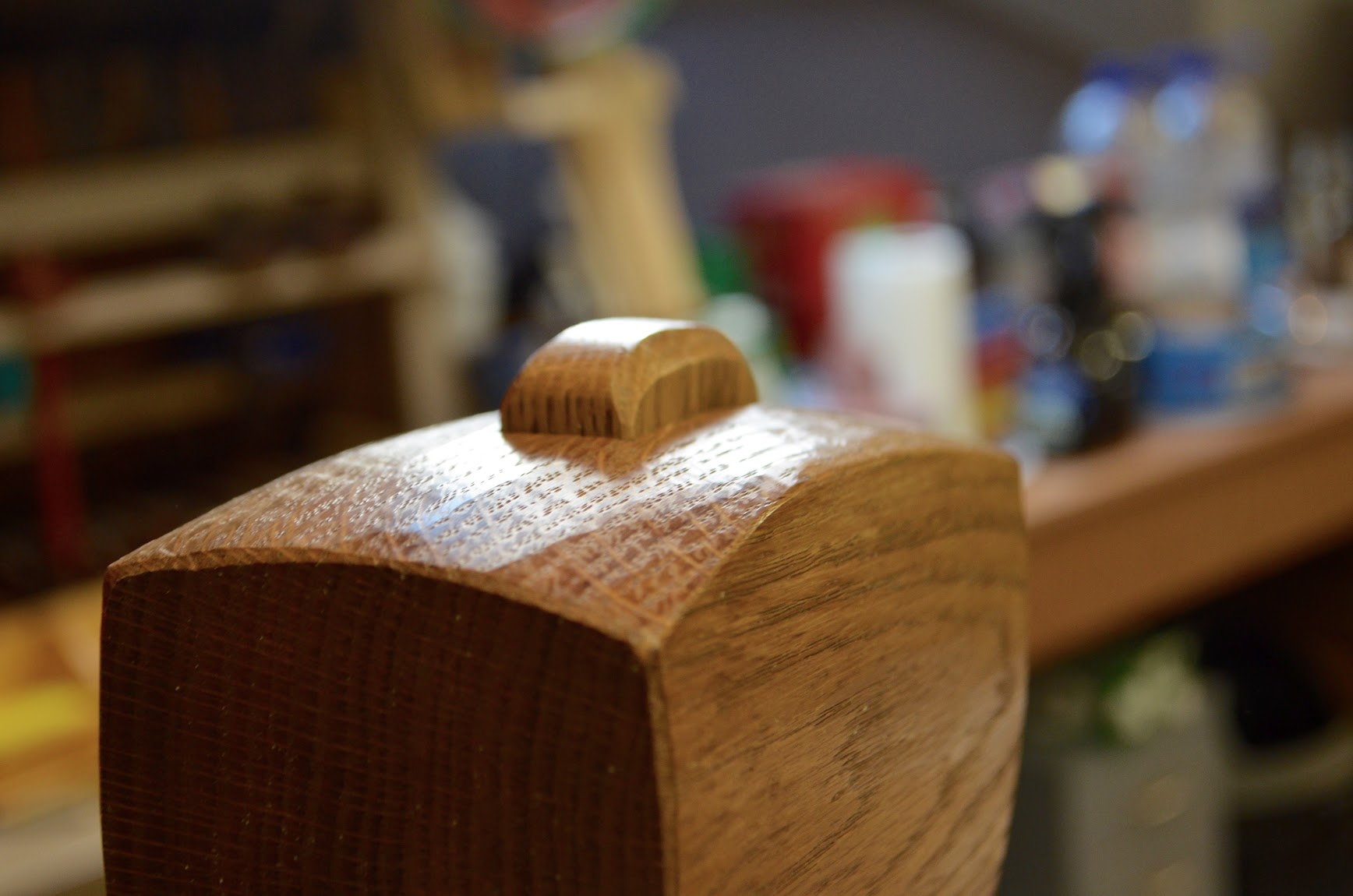
The sections were cut further and we painted the ends with oil-based undercoat to slow down evaporation from the log's end grain areas. George stuffed them under wood stacked and stored in the lean-to wood racks and I never saw them again for two years.
"Why did we put them in the barrel if water when they came, George?" I asked.
"Ah! Well, if they are left out in the open air for any time they quickly start to crack because they are still full of moisture, you see. Putting them in water and weighting them keeps the same level of water in the wood until you're ready to do what we did. On short sections like that you need to move rapidly but on longer sections it's not such a problem."
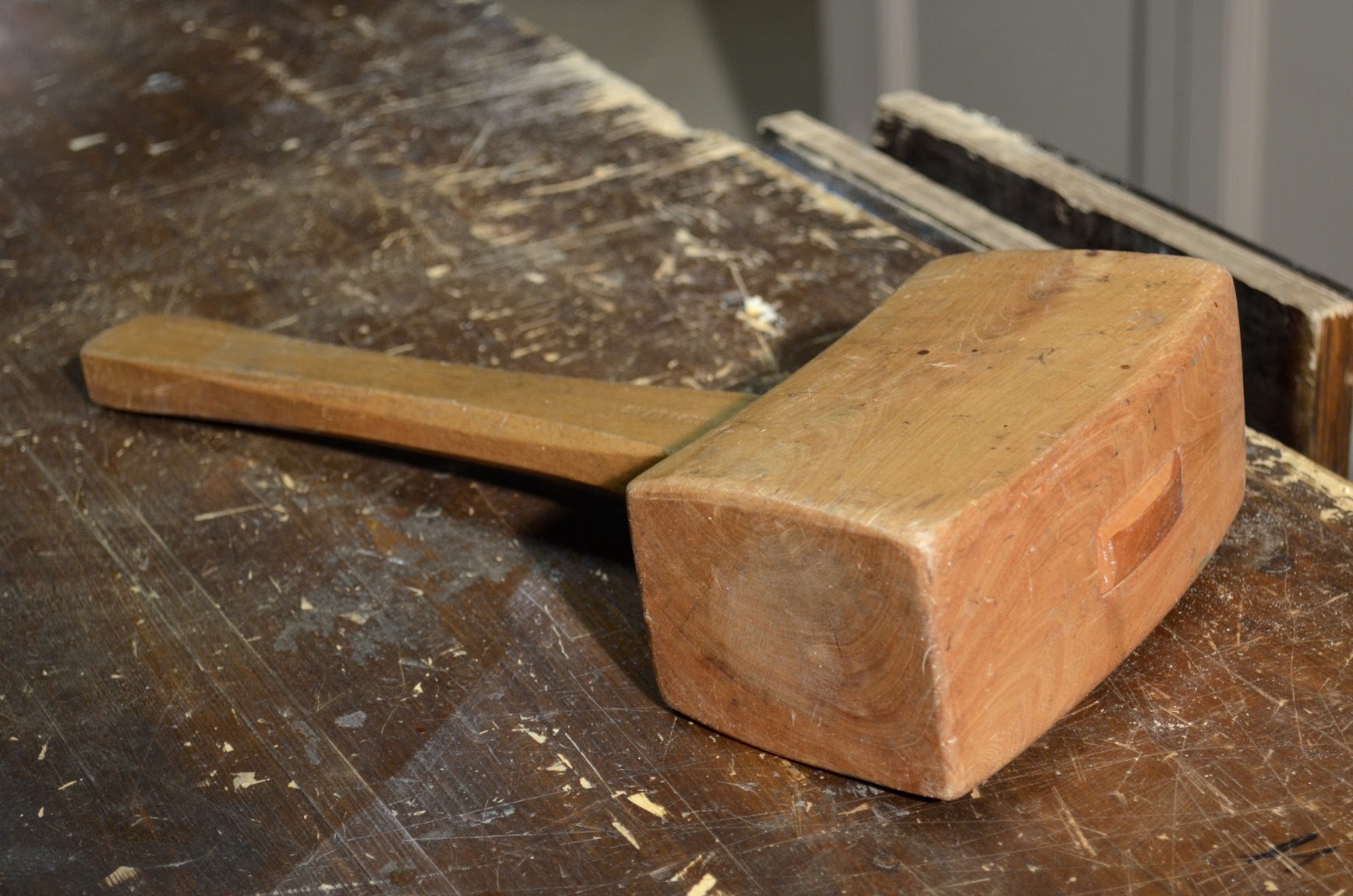
Two years later the wood was dried down enough for mallet making and George and I got permission to work late at nights after work to have mallet-making sessions. I think those two-hour stints were my very fondest memories. Needless to say, George let me pick my wood and I picked what I thought would be less good so that George got the better wood but he switched on me and said, "I want you to have this one with three hard knots in it. It will be much harder to make but it will serve you the longest.
Layout, boring, mortising and fitting handles came one step at time as I followed Georges steps. We sharpened and sawed and one night we were there until eleven o'clock before we realised the time and jumped on our bikes to cycle the cobbled streets of Hillgate, Stockport and on over to Edgeley. We split up half way and I went home to Adswood.
Over the next few nights we shared more time together and chatted as we made. These are the unforgettable times we all have from time to time and we cherish them the most because they have acts of kindness woven into them.
Comments ()