
People Send Me Links...
... but in the sending, I can tell that some people don't understand my efforts. Whereas 99% of people who love hand working have come to understand why I have done what I have over the decades, some have yet to see the implications of working only with machines and then too myriad other distractive influences. Not getting it is fine, I understand that sometimes it takes time to dismantle the coding that established our preconceived ideas and the programming from the decades of influencing. That being so, I feel I should at least try to decode some things. In the age of mass-information, we face the ever-greater reality that misinformation is highly intrusive and finds itself a whole new platform.
On watching videos
I'd like to say that I rarely look for something on the internet to watch and so when someone sends me a link to something they found interesting there is a good chance that I don't go to it unless there is a clear explanation of why I should. Some of this links to something else that might help and that is that I just don't watch TV. I stopped watching it in 1986 so in 34 years I may have seen a few days of TV, usually in places where I couldn't switch it off, garage repair waiting rooms for instance, or hotel breakfast areas in the USA. Neither do I watch videos, though I might occasionally see a film. I hasten to add here that I see nothing wrong with people watching TV, videos and films, etc, just that it's rarely if ever something I might choose for me.

More importantly in this, sometimes the link more confirms something I have said or taught. The idea is to encourage me that this or that thing I talked about is confirmed by this science or this other expert as though we're on the same page or I need some additional confirmation. The huge difference is that a scientist might spend a year setting up equipment to take a shaving and film the outcome of different effects. The video proves that this or that affects the outcome. What the video cannot do is take 20-30 different kinds of wood taken from fifty different points in a tree stem and explain the different results as an outcome of real working at the real workbench by someone who has done nothing else over 50 plus years. Their system cannot skew the plane, alter pressures, flex left and right according to sensing and whatever else. To do that would take more than a lifetime of scientific input and at the end of the day, the scientist would still only know a small fraction of what the crafting artisan in the zone of making every day would know at the end of the plane hand. Even the experimenter impacts the experiment by the very rigidity science itself imposes on the testing etc. In my world, I choose to present the only thing that I know to be proven by the using and the knowing of it experientially; something well-tested and then well-proven as well. I don't put out something that's, well, just more novelly interesting.
On sharpening
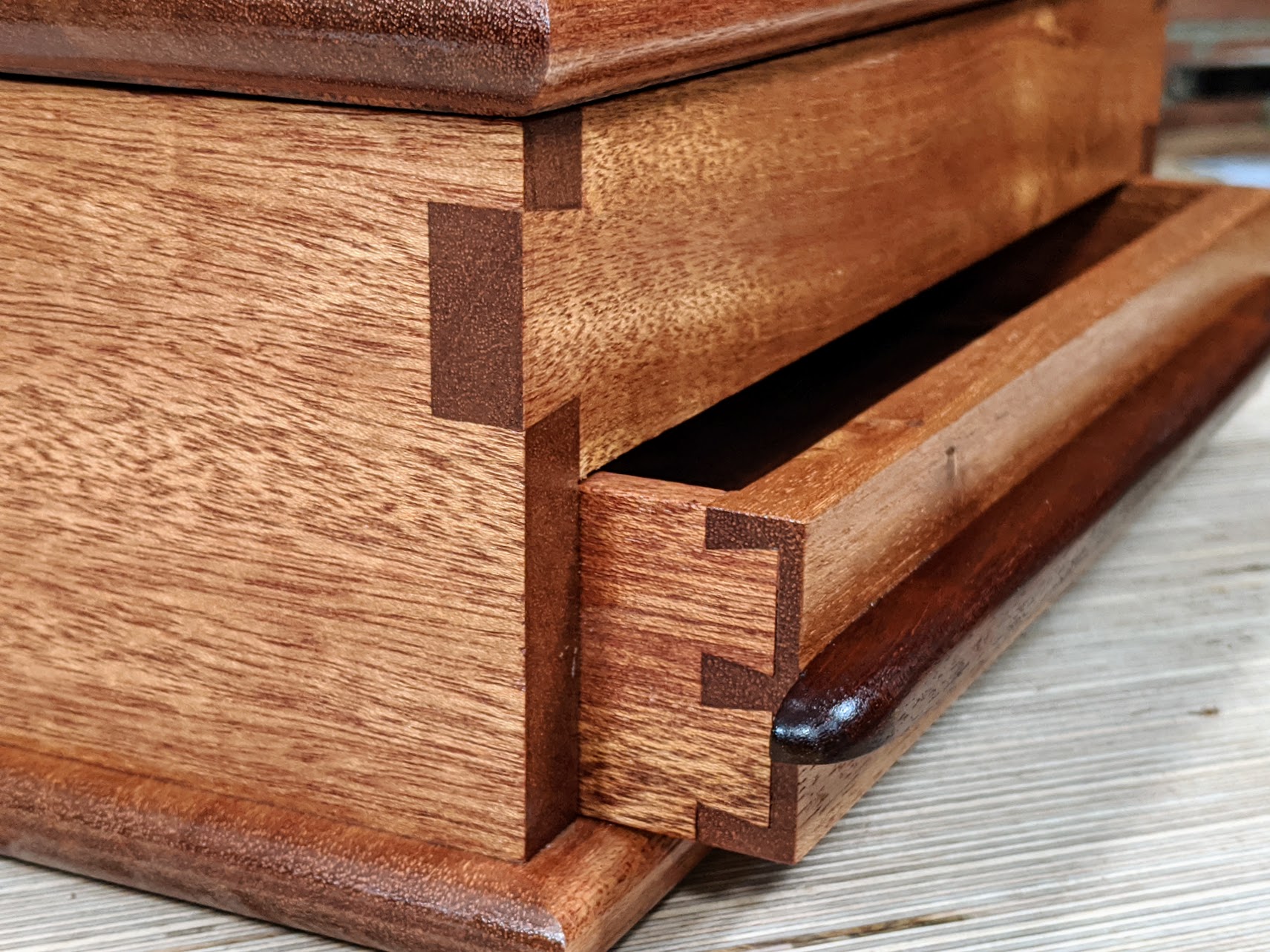
The reality of sharpening is that you can sharpen any metal to any level and you need only one thing -- abrasive. The choice of abrasive is then what needs to be looked at. The problem, of course, is that every woodworker with any experience has her and his preferred method, system and abrasive they work with. It's not a boast if I say I have probably worked with every type at some point and have worked through what is the most productively efficient and most effective for me in my real woodworking there working at the workbench. You must remember that many woodworkers are ever fascinated by an hour or two creating the single most perfect cutting edge with the most expensive method. That's not me, though in my research over the years I will most likely have tried it, looked at it seriously and then made an educated decision as to how I think it will be best for others to work with. At the end of the day, I found that the hollow grind was more a waste of time and that I most likely would never need to go to any kind of mechanical grinder to reestablish a bevel because my hand method is indeed faster and actually better than the best any mechanical grinder could give. My finding is that machines and other methods like hollow grinds to bevels do not create any sharper an edge than hand methods and neither do they create better cuts even though the claim often is that they need less effort to affect the cut. I did not find too that Japanese water stones gave me any more than the diamond plates or many other man-made sharpening stones. Calling a stone a Japanese water stone does not mean that it is any less manmade than stones made in most other regions of the world. 95% of Japanese water stones are manufactured and not natural. Fact is, all abrasives work but some might cut better than others. Then too, of course, we have the natural stones and they come in every level fineness too. The natural stones are more expensive because of quarrying and so on whereas baking ceramic and carborundum gives ease and simplicity to the giant conglomerates producing the manmade versions. Profits were massive. But today my system works as well if not better and costs under £10 for several years of sharpening service to chisels, planes and spokeshaves. No system I have seen gives me as much as what I have and so watch this and tell me why I should change a thing:
Woodworking bench heights
My posts about bench heights have drug on for a while and it recently sparked off another volley in a chain of events surrounding the right height for people to work at. Whereas my research and my surveys were not scientific and neither did I turn to so-called health-care professionals, they were very practically worked out and have proved helpful for a large number of people who ended up being surprised by my message that higher was likely better than lower for most. Many, many of you did confirm that your health and strength and then too your wellbeing markedly improved by simply raising your bench heights by several inches over what you had understood from gurus when you started out. Someone nudged me towards yet another guru expressing his idea on bench heights and yet again the bench was obviously too low and the man did hold himself in a very awkward posture as though nursing his bad back, stiff neck, etc.
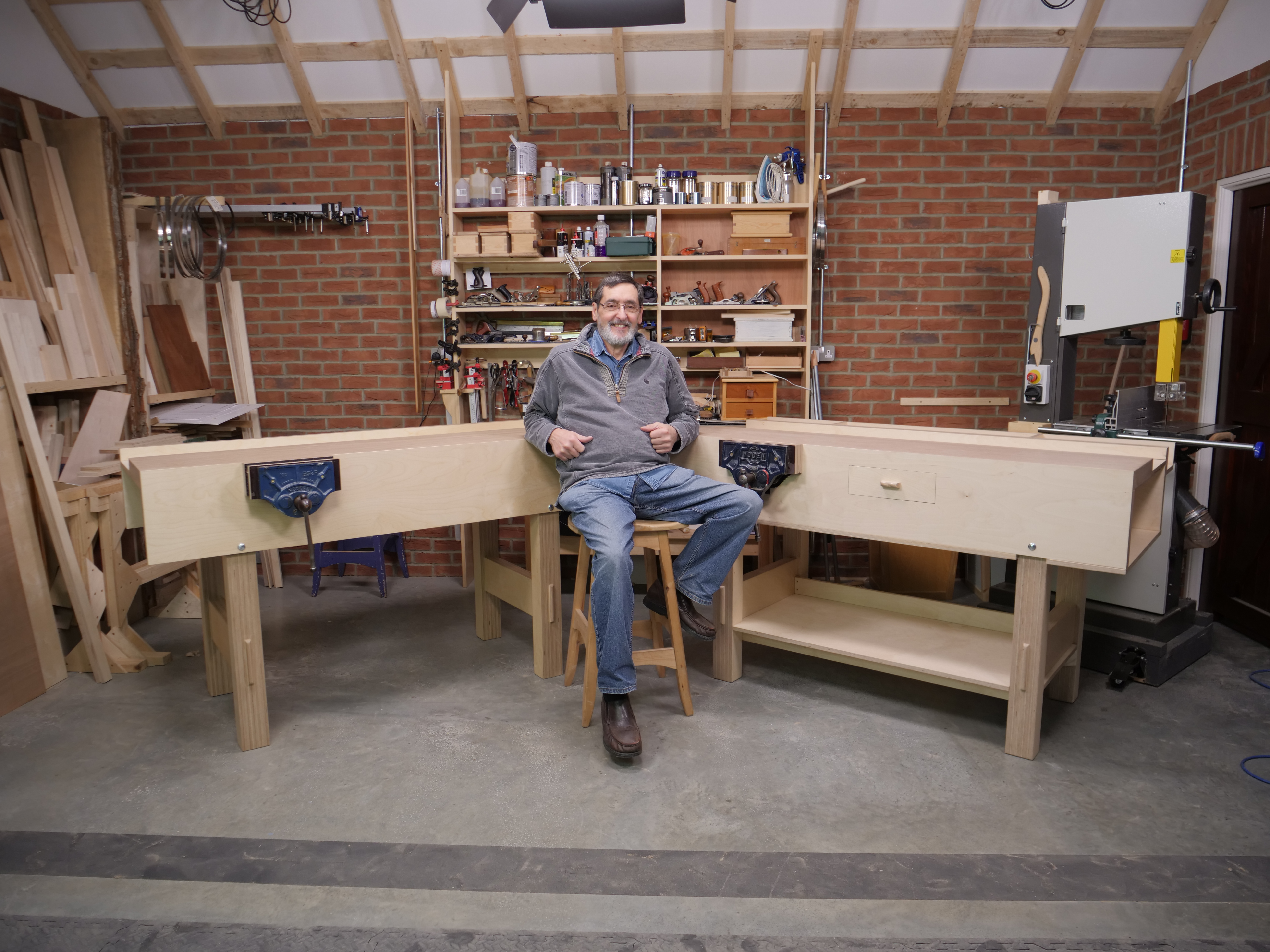
My experience with bench heights spans over five decades experimenting and five decades working at the most ideal height. How I got there is shown in the articles I built and used and then too filmed for others to make. Look through my early blogs (use the search box. It works!) for the answers to you deciding on your particular bench height. Whereas I want to learn from others, I have such good health I am very reluctant to 'fix what ain't broke'. Also, I did get support from thousands of students who loved the bench heights of my school benches which were all 38". That meant that those of 6' 3" working at 30" had been given bad advice and that they could even raise up my 38" bench if needed. What's been wrong with guru presentations is that they perhaps wrote what they wrote without too much actual experience when they did, or even questioning the status quo. I know having two or three benches of different heights might be handy a couple of times a year, but that is such a luxury for most of us it is totally impractical. Additionally, I recently visited a college of woodworking and the benches there were just massive behemoths, massive to the point that the workspace was half of what could have been much more practical. These were what was being recommended as standard, made from heavy beechwood but they were no way suited for building for a home workshop and with someone just starting out with a handful of hand tools. I think it says something that I have worked at softwood benches one third the weight, one quarter the cost and half the length too and yet they have stood with me in every test to remain immoveable in use and unswerving under any and all pressures. Why would I make something costing four times as much if what I already built lasted me for fifty years and was still good to hand down to my children? In my world, it's as unreal to believe that real-life full-time woodworkers have several benches to choose to work from as it is to think that those learning with me would feel the need to own several workbenches. That's what was suggested by one person. Silly.
So, then I could go on to other areas but I will leave it parked for now. I have covered how I feel about this through the years and so I will offer a break here. I must keep my work simple without being at all simplistic. Doing that makes it fully inclusive to any and all.
Comments ()