
More Low-down on Workbenches
After 55 years of manual working my back still holds strong and that is from standing work at a workbench six days a week for 8-10 hours moist days throughout my life. My neck feels just fine and comfortable too, quite as good as ever. If suddenly something went wrong I could hardly complain after so many good years. Short term working at a workbench is unlikely to do much more to you than cause less comfort than you'd like, long term is different, and by that I mean it's important for you to establish the optimum height as early on as you can. I've written more on this over the years on my blog. Use the search box. That works too.
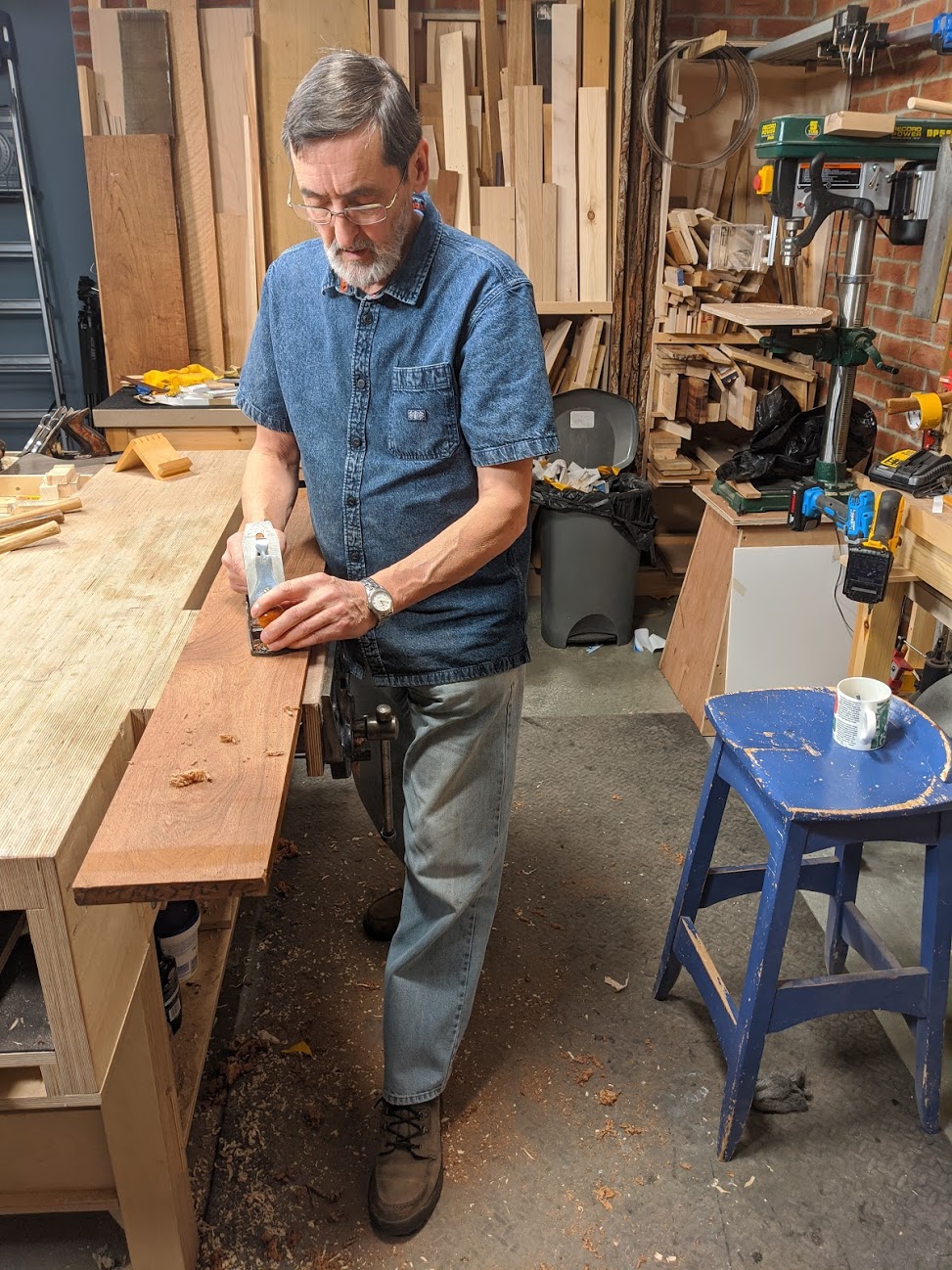
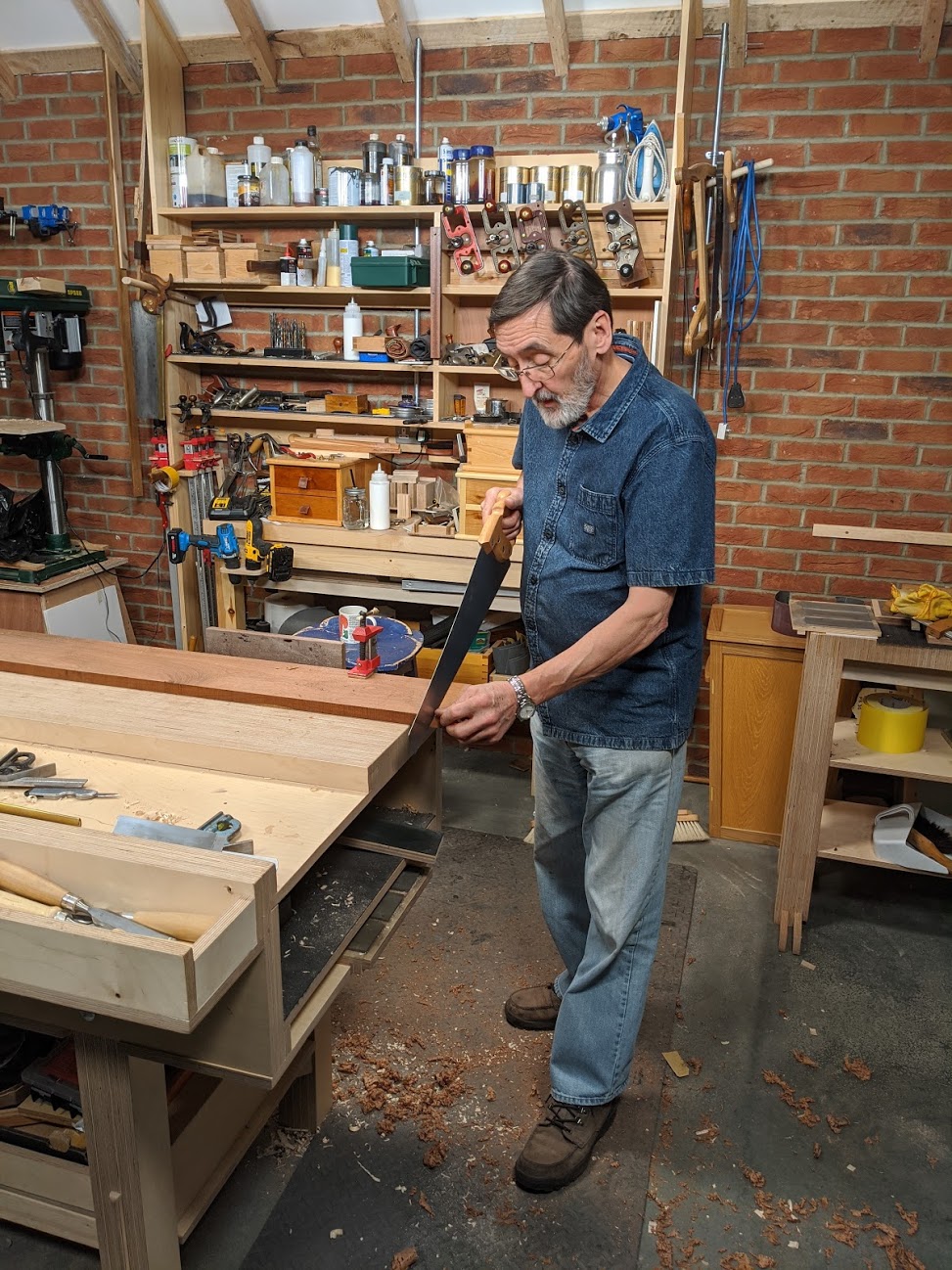
You can't ask a machine-only woodworker or one who occasionally allows a little plane work or chisel chopping here and there for any kind of knowing advice unless they did have a background of substantial handwork using hand tools to work with. It's more likely that they are primarily working in more an assembly mode most of the time. Low benches work great for routing and Skilsaw work, jigsaws and such, and then too, especially, parts assembly, belt sanding and so on. In fact, I suspect that that is where bench heights mostly come from these days. For hand toolists though, the rigours of full-on planing, sawing, mortise chopping and then and only then the assembly of components place very different demands on the user. For our work, we must often wrestle, push, sideways twist, shove and pull with great force in ways that machinists never need to and we can do that for long periods in a day. Take the efforts of flattening a five-foot plank of rough-sawn mesquite or oak to twist-free levels and smoothness. Now that's a serious business engaging a mass of upper body effort from braced leg positioning.
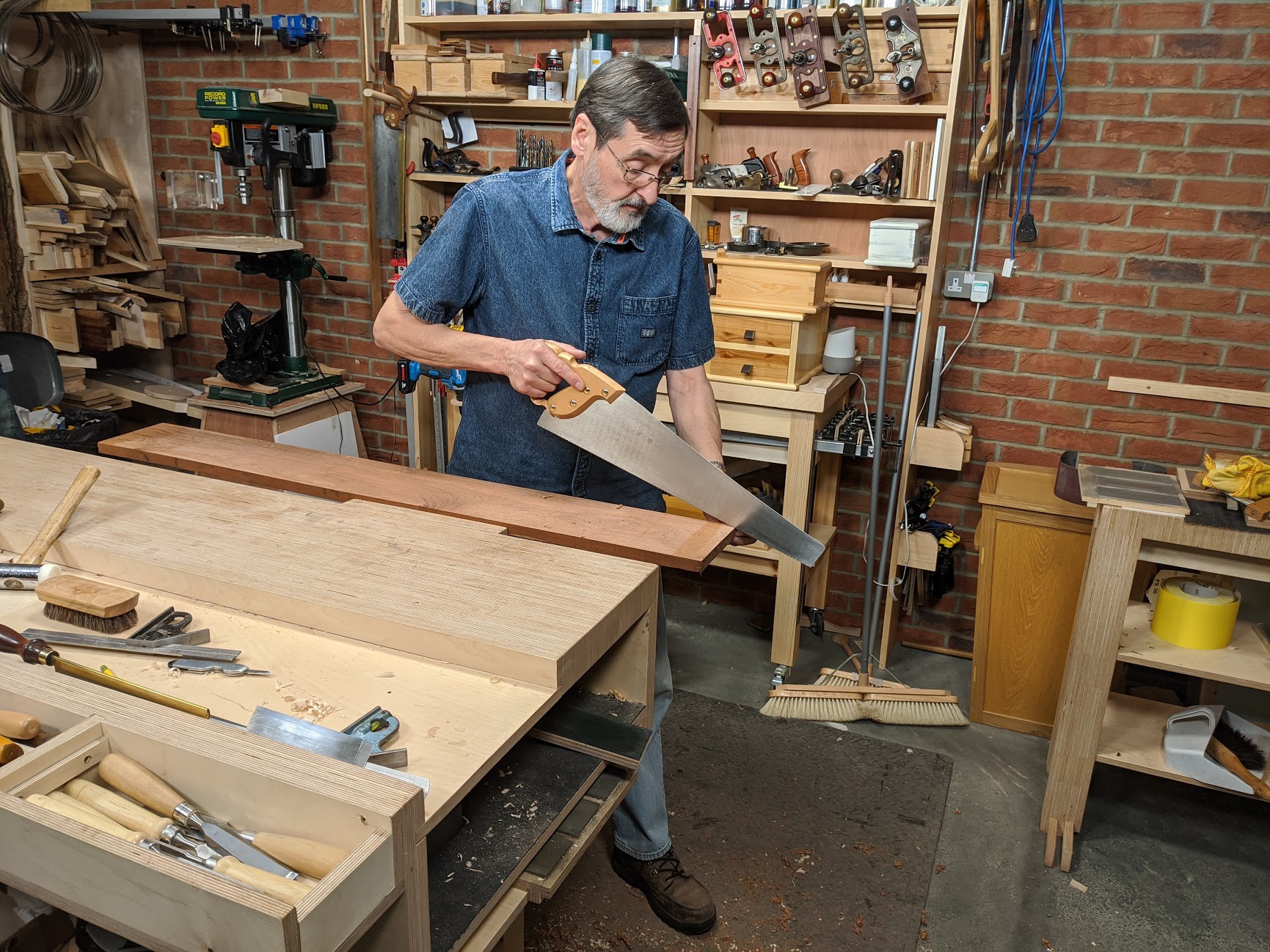
I have written aplenty on the absolute essentiality of establishing good bench work heights for general hand tool working, joiners and furniture makers working primarily with hand tools. It is critical to your long term wellbeing even if you only work for a few hours a week. Indeed we have made enquiries of our audiences through the years and the results of our survey questions have at least helped us to reconsider the difference between low bench heights and those more customised to the height of the person using it; people who once experienced back and neck pain from benchwork said raising their benches by often inches suddenly felt more refreshed and comfortable in their work even after extended periods at the bench when prior to that they had to give up after even a short time.
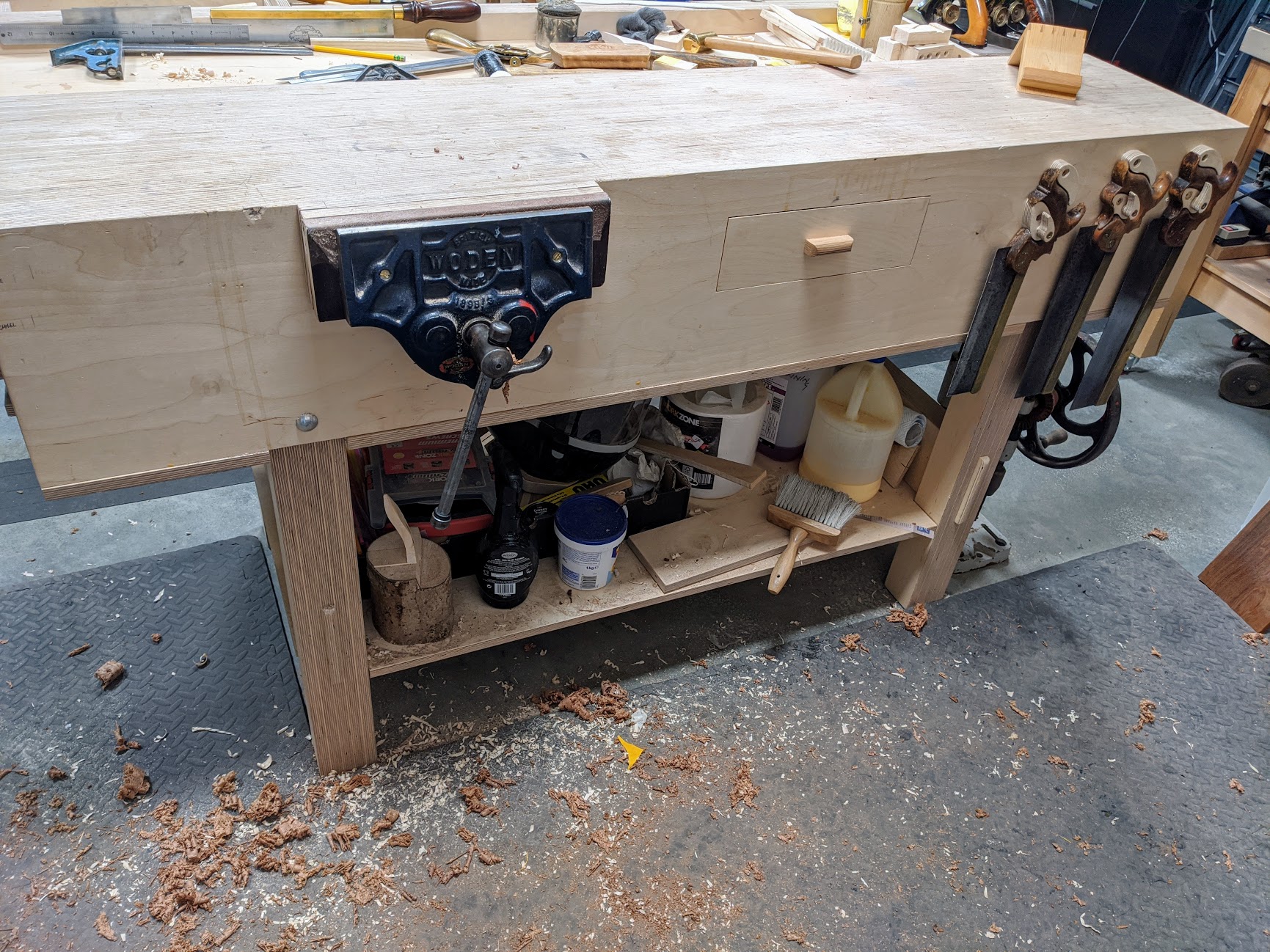
Left and right-handed dedication of workbenches are important too. If you are right-hand dominant, then the tools you reach for will be either directly in front of you or to your right. So too, if you are left-handed then the tools will mostly be the opposite as will be the placement of the vise and it is mostly this that then determines where you indeed install the vise in the first place.
On a workbench, you might ask, 'Why not just put the vise in the middle?' There are a couple of reasons. One, putting the vise centred will usually mean that one side of the benchtop will remain empty while the other side builds up with tools, wood and related day to day equipment. It's just natural. You use something for a while and lift it away with your dominant hand and place it to that side. Two, clamp anything to the benchtop to work it and your body biases determine work placement. Mostly this is determined by your handedness in terms of dominance.
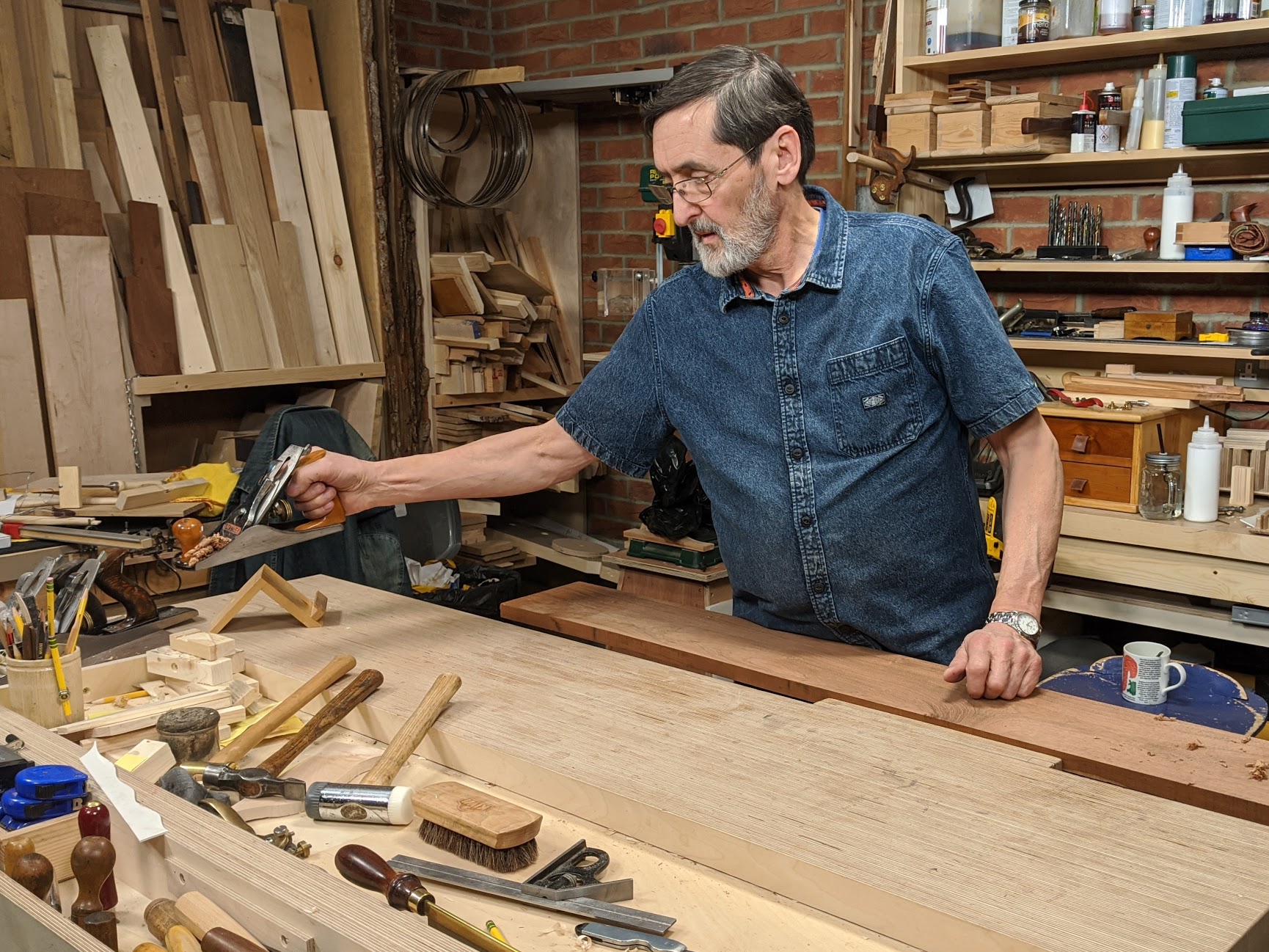
Most people are right or left hand dominant it's true but, very rarely, some are truly ambidextrous (1% or less) and as such can use either hand equally and that means equally well or equally badly. Then there are those who are two-handed. They can switch from one hand to the other.

In the case of left-handedness, most left-handers are forced to work their nondominant hand to their benefit purely because tools might not be made for them, available to them at the time, or they are handed a pair of scissors or a can opener designed for right-handed use. In my case, I switch from hand to hand when using some of my tools, not all of them. In my case, I have trained myself to use my left hand say to use a knife for instance, but this is not ambidexterity. I cannot comfortably use my left hand with a chisel hammer and chisel.
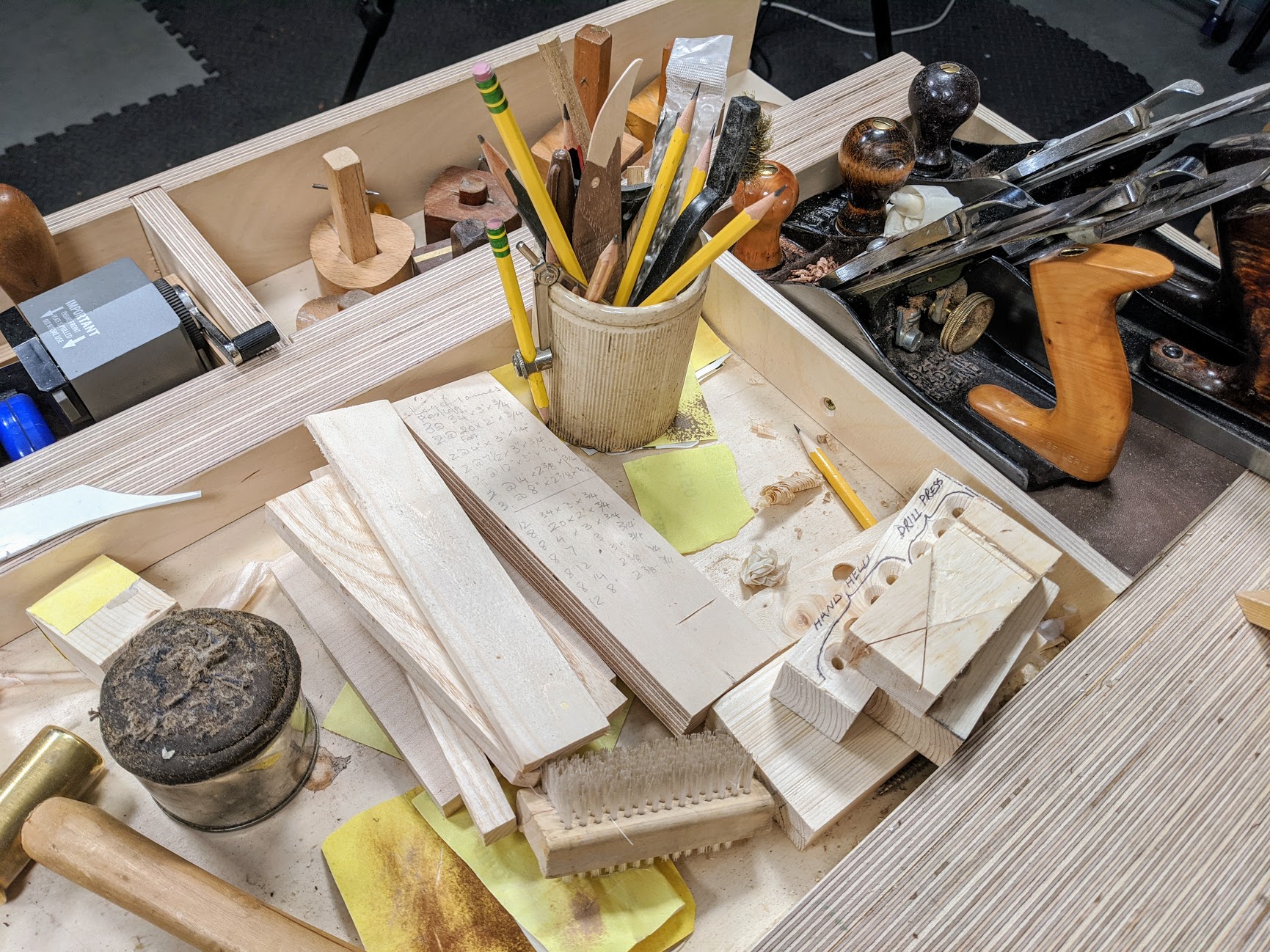
So we see that it is our human form with its individuality, be that body training in and at work, other influential exercising, abilities and disabilities, compensations we make and then our handedness that determines where and how we work at the bench.
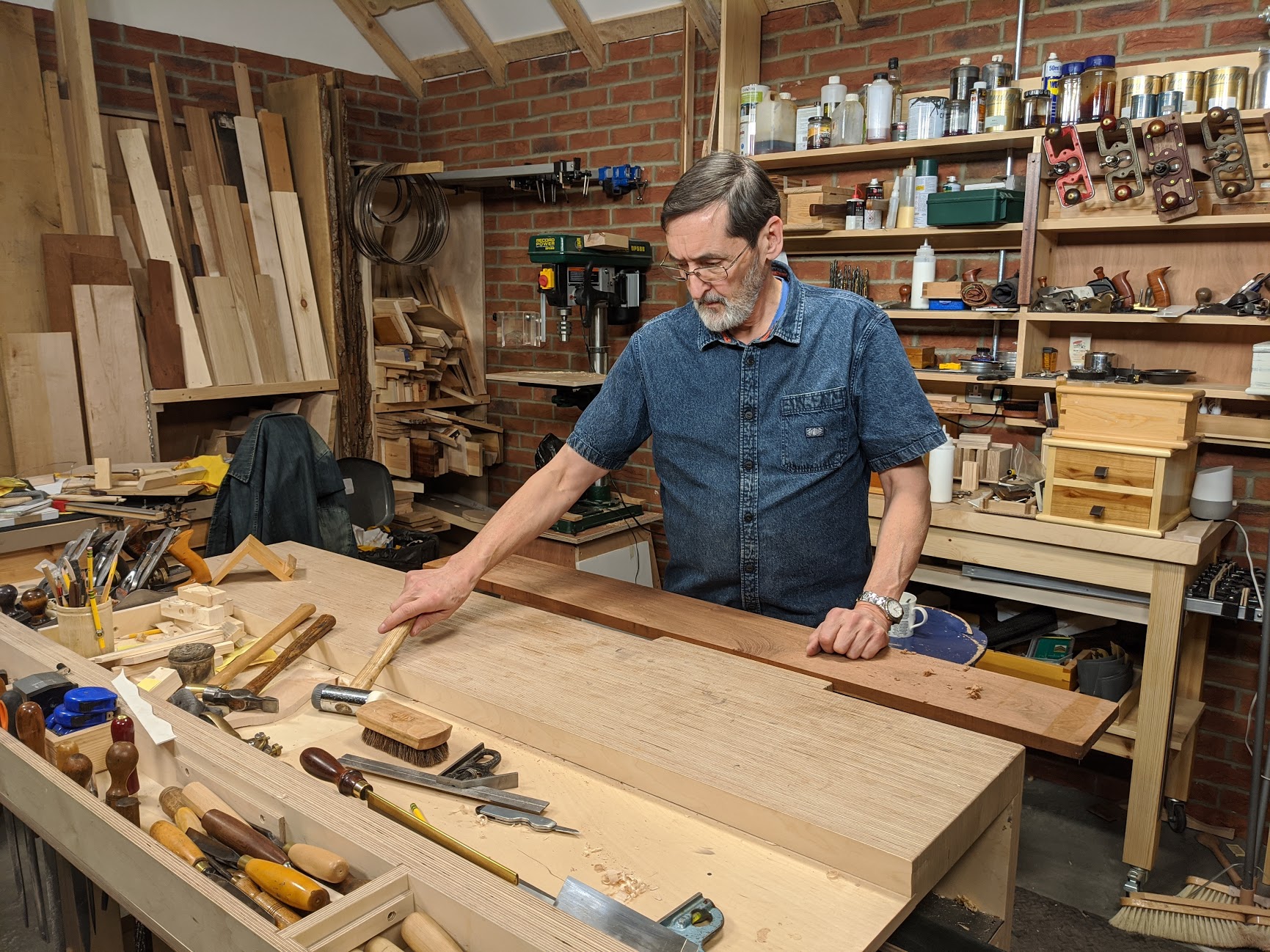
Add into the equation that a disability, no matter how small or minorly limiting, plays a major part in establishing patterns of work and then to the placement of tools and wood to maximise our individual comfort and access to all things surrounding the bench. When I have been the guest demonstrator at the workshops of others or belonging to organisations the workbenches have without exception ALWAYS been 4-6" too low. Checking on a recognised workbench making company that has made workbenches for a century, I found that they offer adult joiner's workbenches at 33" high. This for me would be a back-breaker and so too I believe for 95% of the western world yet you would expect them to offer various heights and a method for establishing the best height in workbenches. for their customers
Comments ()