
HealthinessWoodworking
It will surprise many of you that in times past I set up my woodworking designs for machine-only methods that required me to spend 8-10 hours days operating two or three machines hour on hour. The orders kept coming in and I had set up mini production lines for the different products I made. The tablesaw, router table, spindle moulder (shaper USA), bandsaw, chopsaw, radial arm saw and jointer/thickness planer occupied a floorplan covering 14 metres by 14 metres with a single workbench for assembly in one corner. Health issues ranging from respiratory problems to days when I couldn't walk through pushing wood into machines gradually emerged. I ended up working purely for money to the point that I lost interest in woodworking and pursued only. I had come to believe as many did and still do that this was essential to income without realising that my abilities with hand tools would have far surpassed anything I could achieve by machine. This reality caused me to take a reality check.
Was I enjoying my work? No!
Was I healthy? No!
Was I inspired? No!
I could go on and give you a hundred more issues I did no longer want to work with would but the reality was my work had become boring.
A comment recently made me aware of just what it took to disconnect from what had indeed become mainstream woodworking in the USA. Here's another one. A 1989 man came into my workshop one day and asked if he could see my tools. There we were, standing in a premier hand tool woodworking workshop four metres by six, with walls host to a quite vast collection of vintage hand tools and slap bang in the middle was my three-foot by eight-foot-long workbench also set up with hand tools, and he was asking me if he could see my tools. I was at best bemused!
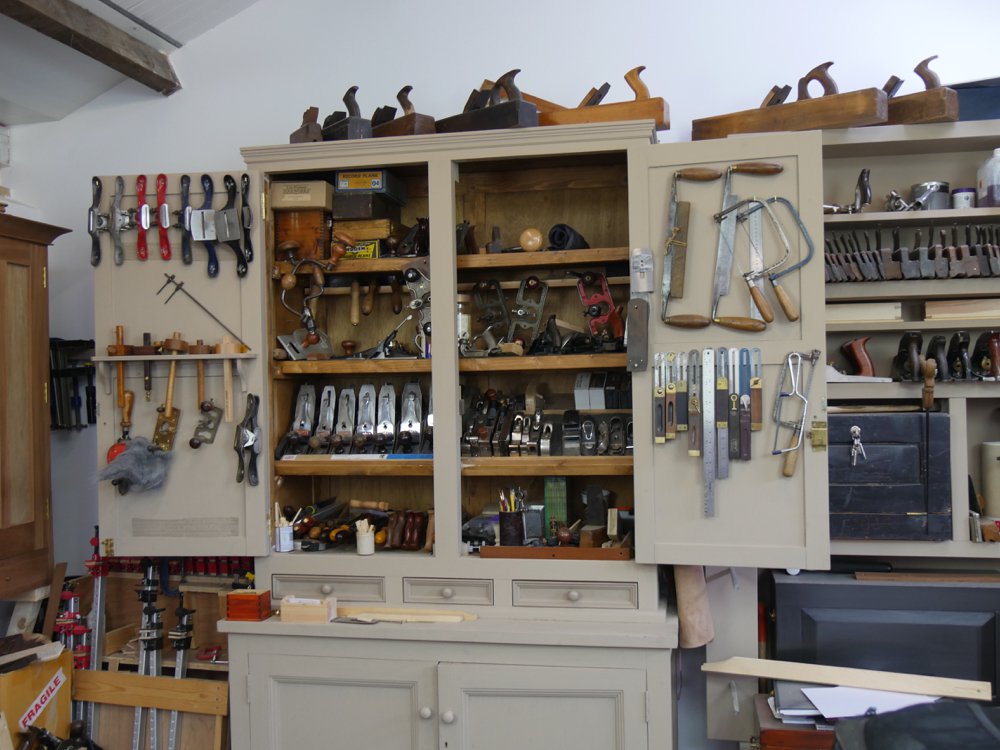
I asked back, "Excuse me"? looking around at the walls and bench and display tables laden with vintage tools.
"Your tools! can I see your tools?"
I said, "Well here they are, all around you."
"No! Your tools."
It was only then that I realised he meant the machines in the room next door. Dismissing what was in front of him, in my view, beautiful displays showing the golden age of handmade finely crafted hand tools in bronze and ebony, chariot planes, massive mortise chisels, Ultimatum braces, Norris planes and some hand-dovetailed, steel-soled versions, Scottish panel planes and a few hindred more. What he wanted to see was the machine setup I used. This pivotal point made me realise that woodworking machines had at some point been renamed power tools and to Americans, a tool was indeed whatever got the job done and what got the job done yesterday. How different this perspective seemed to me to be. Quite a distortion to my world altogether.

Breathing the wood dust from the machines I used daily had indeed caused my breathing to change, even though I always used a mask and dust extraction. My posture pushing, pulling, twisting and manoeuvring wood into, through and off the outtake of machines also cause serious physical issues. One day I calculated that my personal wellbeing was already compromised. Even though it had taken just a few short years to get there. Was money worth more than health? Of course, it wasn't. Considering all that I did I decided I could disengage from the kind of world that was so invasively polluting. It wasn't so much the atmosphere but the culture that was redefining how we worked using what. The great argument professional woodworkers reason is that you can't make it using primitive hand tools. I started to argue back, ' You can't if you don't have skill.' I did have skills and plenty of them. I could make anything a machine could make and I was about to pursue it. I could not risk losing my health and wellbeing to live as a part of the machinery. I must dismantle the conveyor belt until I settled on what I truly wanted. The only reason I did need machines was when I started the woodworking school. Preparing 600 pieces of wood for each class was impossible by hand. Doing the same for an individual piece, I needed only a simple bandsaw. That would do me.
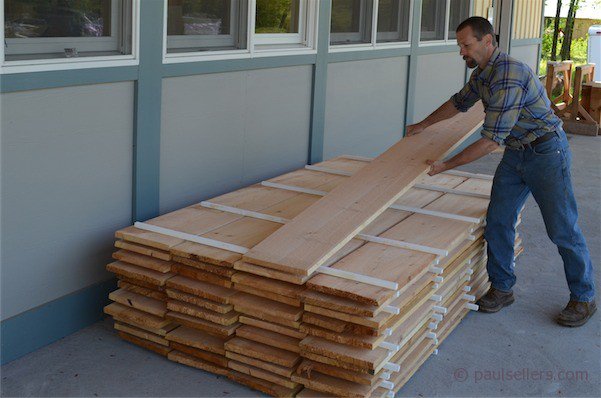
Of course, many things have been introduced to make machining safer. Today you have downsized power feeds for replacing the push and pull of infeed and take off. Digital readouts and dialling in has simplified many operations but in a space of 10 square metres machines are just totally invasive, swallowing up valuable space, yes, but then that invasiveness is polluting too, the atmosphere is charged with both dust and noise, both of which don't always go away when you switch off the machines. The process of machining demands a different protocol, a regimen that focusses totally on safe practices and much more. The periods of long-standing machining were over for me. Within a single week, I was in recovery and I do mean in recovery, recovering what I had lost. Not just recovering better health though, I was recovering my creative workspace and, not to be at all dismissed, this thing we now recognise as wellbeing. It's all too easy in our cavalier-bravado, macho-being to say, 'What's this thing people are calling "wellbeing?" We never used to use terms like that when we were out there doing it.' Well, I might say the same, but I do recall men having problems at the start of a given workday, men who back then suffered from a Second World War post-traumatic stress disorder but that wasn't named back then, and within minutes seemed more apt to recover themselves by somehow physically working. Our not having a name by which to identify something didn't mean we or others didn't have it, we just didn't know it was there. I know many carpenters on job sites who get their greatest sense of wellbeing when working on a roof with a hammer and a handsaw and a mate to work with. That's just a reality. I think too, even those that do rely on a chopsaw generally still enjoy the feeling of cutting something awkward to fit when it won't fit on a chopsaw and they have to resort to using a handsaw and get there.
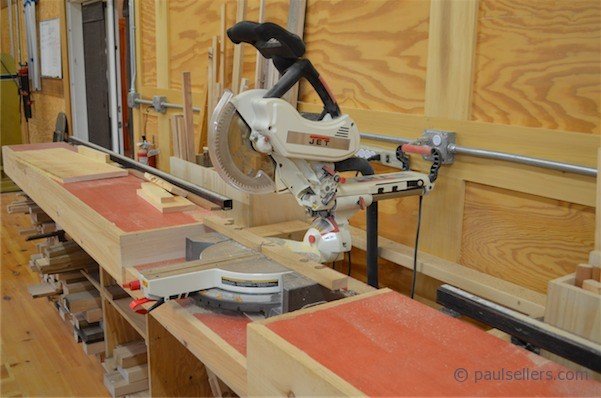
I have tried to encourage everyone to more seriously consider how woodworking using primarily hand tools can improve your life and in what ways. I know many of those in my first days of teaching wanted less to do with machines and more to do with developing skill. In that time I saw the more sedentary occupations taking over the lives of people and more men moved towards office work. An engineer, for instance, might no longer stand at a milling machine for hours but would develop computing knowledge and skills to preset machines to do what he once went out into the shop to do. This, of course, meant less physical exercise and more sitting. Weight gain was inevitable and so too the exercise physical work necessitated. It is now the same in many areas of woodworking where it has been replaced by wood machining coupled with technologies. Those who came to me had a desire to shift to become skilled with hand tools like myself. Working with computers, designing software, was how they paid the bills, so outside of that they shunned computers for the main part because they sought the demands of making with their own hands, bodies and minds working in synchrony. Mental and physical activity could thereby be dovetailed in the activity exercise of making just about anything they chose to from wood.
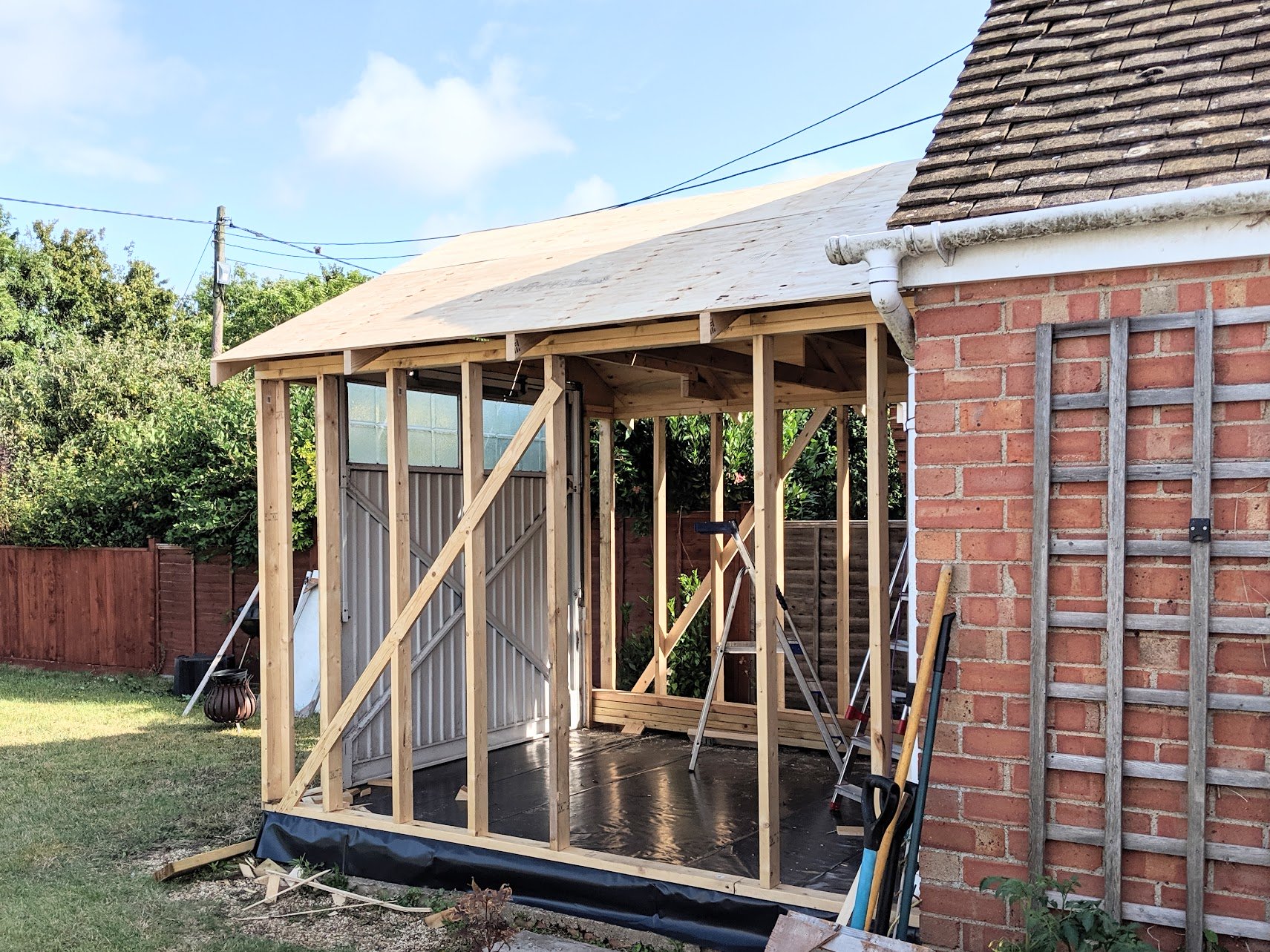
Last year I built my new shed. I felt my self-awareness reach different levels as I climbed the ladder to batten down the tin. I once again used more muscles than normal balancing on a rung atop a ladder. Over the weeks my mind improved as did my physical health and muscular development and that is for someone who does work standing every single day without much break at a workbench or in a workshop. These seemingly minor invlolvements in alternative ways of expending effort seriously impact us to create a sense of much better wellbeing. I think it is true that just about anything you do or make to improve your surroundings by making and repairing and maintaining will also improve your life on the whole and what may seem small, easing a sticking door or replacing a broken catch, anything, leaves you in a condition of feeling physiologically and psychologically better. This is especially so when you achieve something you were intimidated by or you procrastinated over doing. Improving things around you will automatically improve things within you. Overcoming a lazy attitude or making excuses not to do something will transform you and because of that or those successes you will go in search of other things to improve and be improved by. Developing any skill, even at the smallest level, is ever important to me and then too keeping in trim by repeating the work it takes as exercise can do nothing but good.
Comments ()