
Woodworking Patterns
George sent me to Jack's bench at the opposite end of the shop. His bench was more isolated from ours because the work he did in laying out needed more thought processing than the making did. You didn't barge in on Jack, you quietly walked into his space and you stood there until he eventually acknowledged you were there and he addressed you with "Yes, lad." Over familiarity was never tolerated which failing to recognise boundaries was indeed being over-familiar and warranted a headache resulting from the end of a long layout rod. I'd stand and watch Jack laying out. His precision with a pencil, square and a rod was remarkable. He rarely hesitated taking off measurements from plans with his well-worn, solid ivory scale rule and developing his rod for a new next series of projects and then too developing the individual pieces for one-of-a-kind pieces. There were patterns to his working, you see, as indeed there was a pattern for everything in the workshop. Even my standing there in wait and recognising his need for quiet and then too respecting the spheres of others within patterns there as well.
Surrounded by these emerging patterns, patterns completely new to me, I began seeing a certain beauty to each one of them. Creativity it seemed to me then was sensitivity to order and an acknowledgement that they existed to both nurture, preserve and conserve the culture of creativity. How such an amazing thing had indeed been handed down without many words seemed to me the most magnificent thing for me to yet encounter. Humility recognises the essentiality of boundaries, never violates them and searches out ways not only to protect them but to pass them on to future generations. In what is fast becoming an all the more over-familiar world, that has become difficult. In my world back then I would never have addressed George with a 'Hey, George! What's going on? It was a matter of respect and perhaps something that is indeed seen much less now.
Patterns often begin with seeing the limitations to things and the recognition that limitations harness the things we do, make and the way we make them. Remember that almost everything designed is only designed by humans and ultimately for the benefit and convenience of humans at that. This statement always prompts my being corrected that indeed other animals design too. But because an animal builds a den or a bird a nest does not at all indicate that they actually designed it; I am specifically talking about designing and the thought process of design. Fact is the nest type they interweave is woven into their DNA to build this or that according to type and they respond mechanically to a pattern they use and only make changes to according to conditions and supplies available to them. We, on the other hand, stretch things a million zillion times further, hence the computer, tarmacadam on road surfaces, cat's eyes down the centres of highways and crumple zones on cars for safety. Laws both natural and manmade establish order and if we accept them, most of the time things go well. Run a red light and things go well until the 18 wheeler sideswipes you and carries you into the ditch. Just as mathematics is beautiful, so is the arrangement and composition of the patterns we woodworkers use and work to throughout the day.
Yesterday's working reminded me that patterns are always beautiful. The more disciplined crafting artisans are in their handwork and the use of hand tools, the more beautiful their work and not just their work but their working too. You see the patterns determine the outcome so that these patterns express who they are. Each movement is economy in motion, of course, and the patterns create harmony and fluidity in movement. They speak of order and acknowledgment. Defy patterns and order and you achieve mostly chaos. Take one step ahead of the others that should have happened in the specific order of things and the domino effect sets up and every subsequent intent topples. The physical making of things often expresses things better and more practically so perhaps a physical description can help here. Even a very slight twist in a single door rail or frame of some kind yet to be made almost always creates a twisted outcome. The square must be square otherwise it's not a square in the same way a dull-pointed pencil serves more to blurry what should be the defining lines and the boundaries lead only to confusion. The knife and the knifewall separate the waste from the wanted and the joint shoulders need no shoulder planes to true them. So simple!
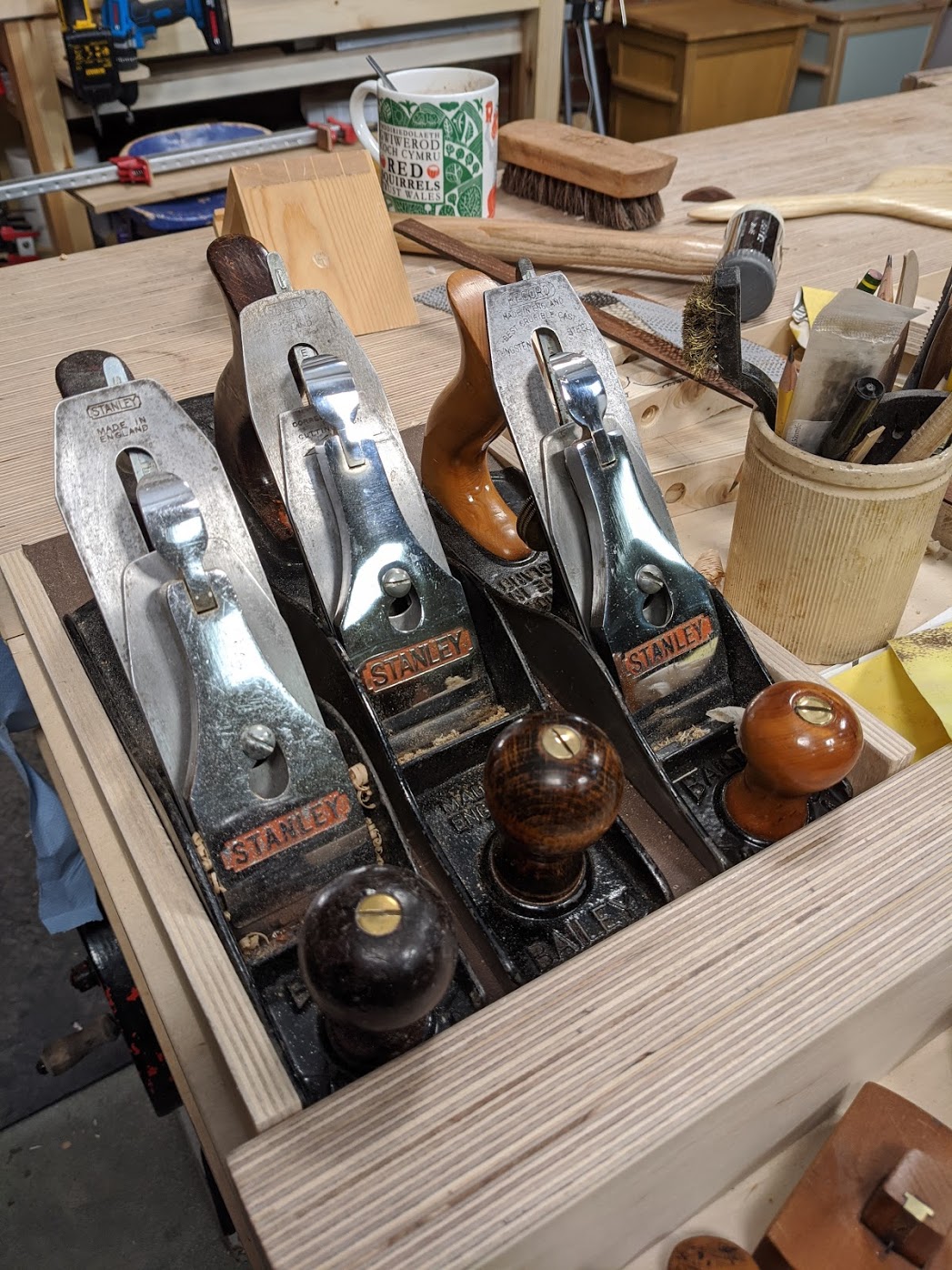
To sharpen my plane and reload the iron in the throat takes me no longer than a minute, including reestablishing the full bevel on coarse abrasive to a macro camber, refining that in three more levels to 1,200 and a final buffing with 30 strokes on the strop to 10,000. Cinching down the cap iron and resetting in the plane itself is included in the minute. It's a pattern I have used for 55 years to date and it's this that speeds up my economy levels so that I don't waste a lick. I think too that this is why more modern makers say this or that can't be done by hand because it's too slow. Truth is it's only slow for them and with good reason. In my youth, I was disciplined to work and work effectively. Mentoring in craft was part of my world. This should be passed on. My apprentices now rarely stop to just chat. Mostly that's because they are self-disciplined and with that respectful of my time as well.
Patterns work their way into our lives gradually one by one. I arrive at the workshop, park my bike and place my bag where I like it to be. In my workshop, one might be forgiven for believing the drawer filled with tools is a little disordered. So too my other drawers, trays, well and such, but every time I need this or that I follow the same pattern to where the 'this' or 'that' was ad should always be placed when I had last finished with it. This discipline and order of work makes me efficient. Without it I could not function well at all.
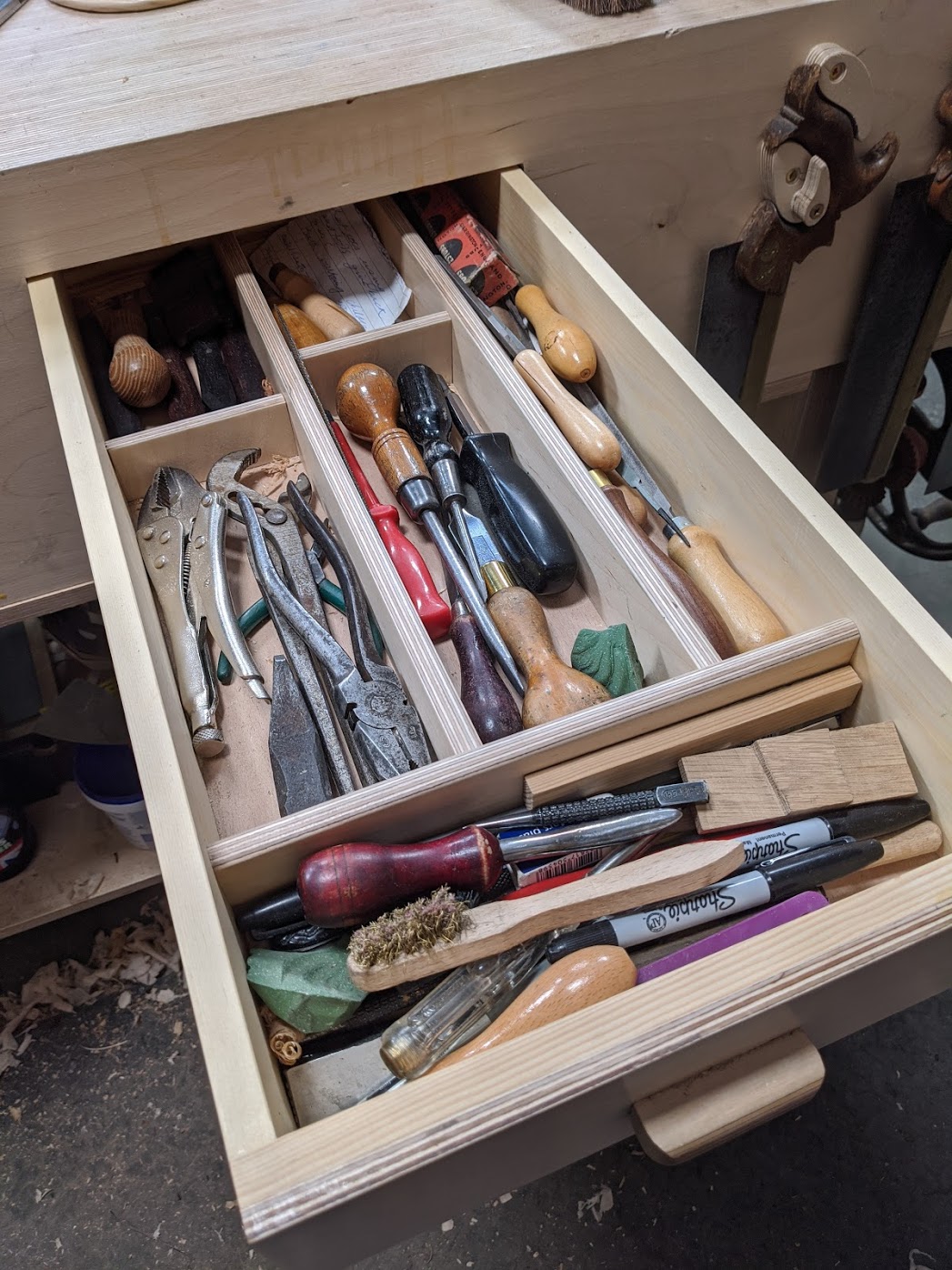
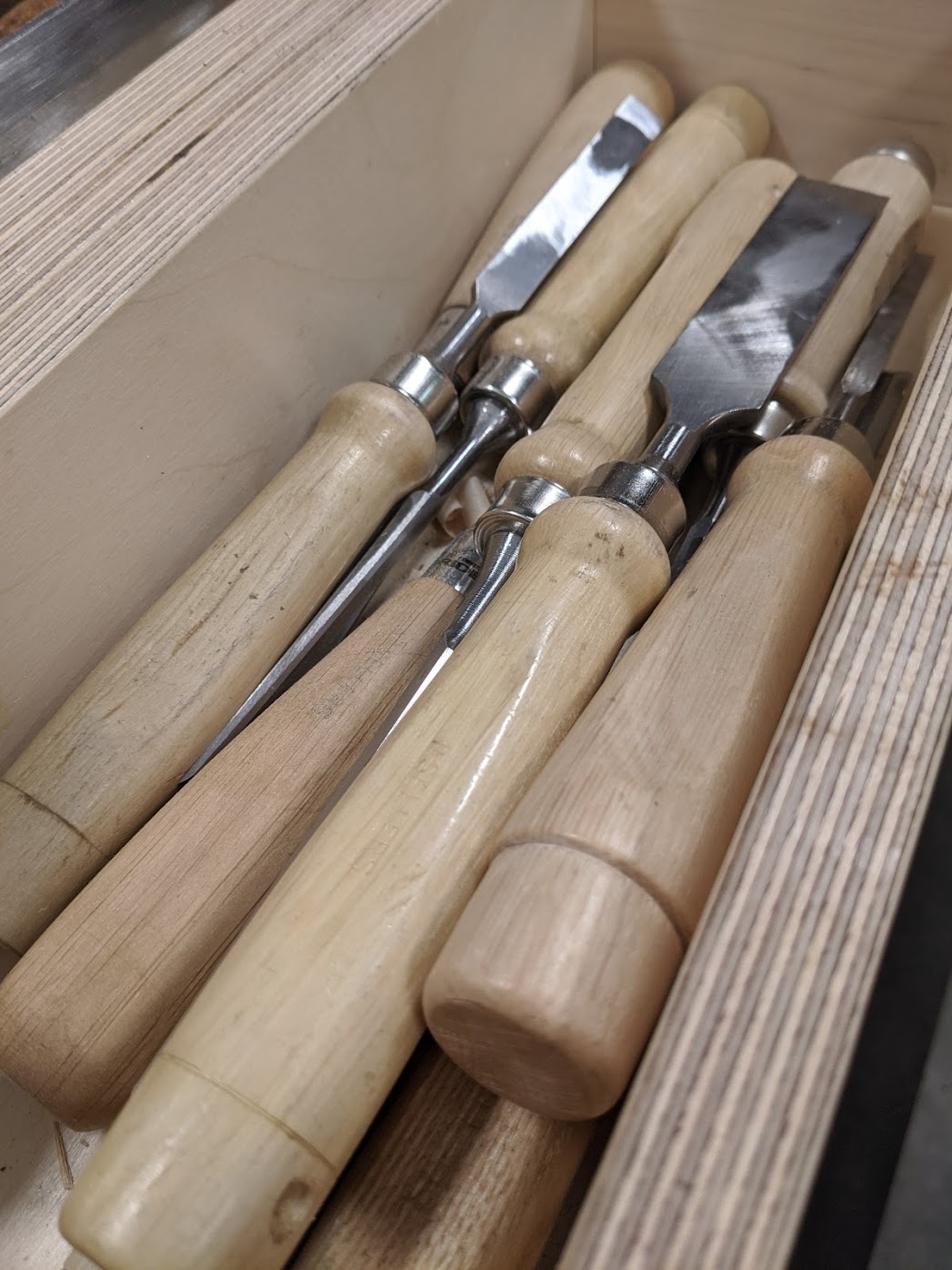
My patterns include periodic but regular sweeping, bagging, emptying and restocking, restacking and such. Patterns for stock preparation were given to me, handed down as it were, as were many of the principles of my craft and that includes the handing down of the patterns I speak of by word of mouth, man to boy, master to apprentice, in my realms. Unfortunately in this present age, the ownership of knowledge and skill is not so deep as fewer and fewer skilled craftsmen are around to teach them within those realms I grew with. Respect for master craftsmen was earned by many years even decades of practice. We live in an age of copycats as we all know, a place in a time where the unskilled copy the skilled and present it as if they own something but never actually earned it. It shows in simple things, the flipping of a plane, the alignment of a cap iron or the placement of a chisel edge to the wood. The missing ingredient in today's world of ever more mass information is, of course, the humility old masters had in the ownership of their well-earned knowledge and skill. Patterns became owned. The pattern of dismantling and assembling things like the many different planes and the sharpening of them, the shaping and sharpening of saw teeth, things such as that, proved their economy through the motion of working. Today it has become more something that puffs up the recipient of knowledge and not the mastery of acts and patterns. That's all too different.
My day begins with patterns established first by considerations. Either the previous day or on the day of my setting out I must think through the things that I must attain to. I consider everything I want to do and then prioritise my work. This, for me, is pattern making. I am establishing thought patterns first followed by planning patterns. A note on a pad or in my brain reminds me of stages of planning.
Comments ()