
Reshape Your S & J
I have thoroughly tested the Spear & Jackson handsaws over several years, recommended them as an economical alternative to higher cost makes and those offered by premium makers. They might not look as nice but that they are every bit as good and even better as far as functionality goes than saws that sell for five to ten times the price. What everyone should remember is that any saw will stay sharp enough to use efficiently, time economically for only a few hours. Once it dulls it must be resharpened and the only efficient way to do that is not to not use it so much but to master sharpening which in my view everyone can do in a matter of minutes. I must say too that I have enjoyed using the Spear & Jackson just as much and oftimes more than many other saws I have used and owned. The issue for many is their looks rather than their functionality so if you have an hour or two, a half decent rasp and a little decisive energy, join me in reshaping your Spear and Jackson.
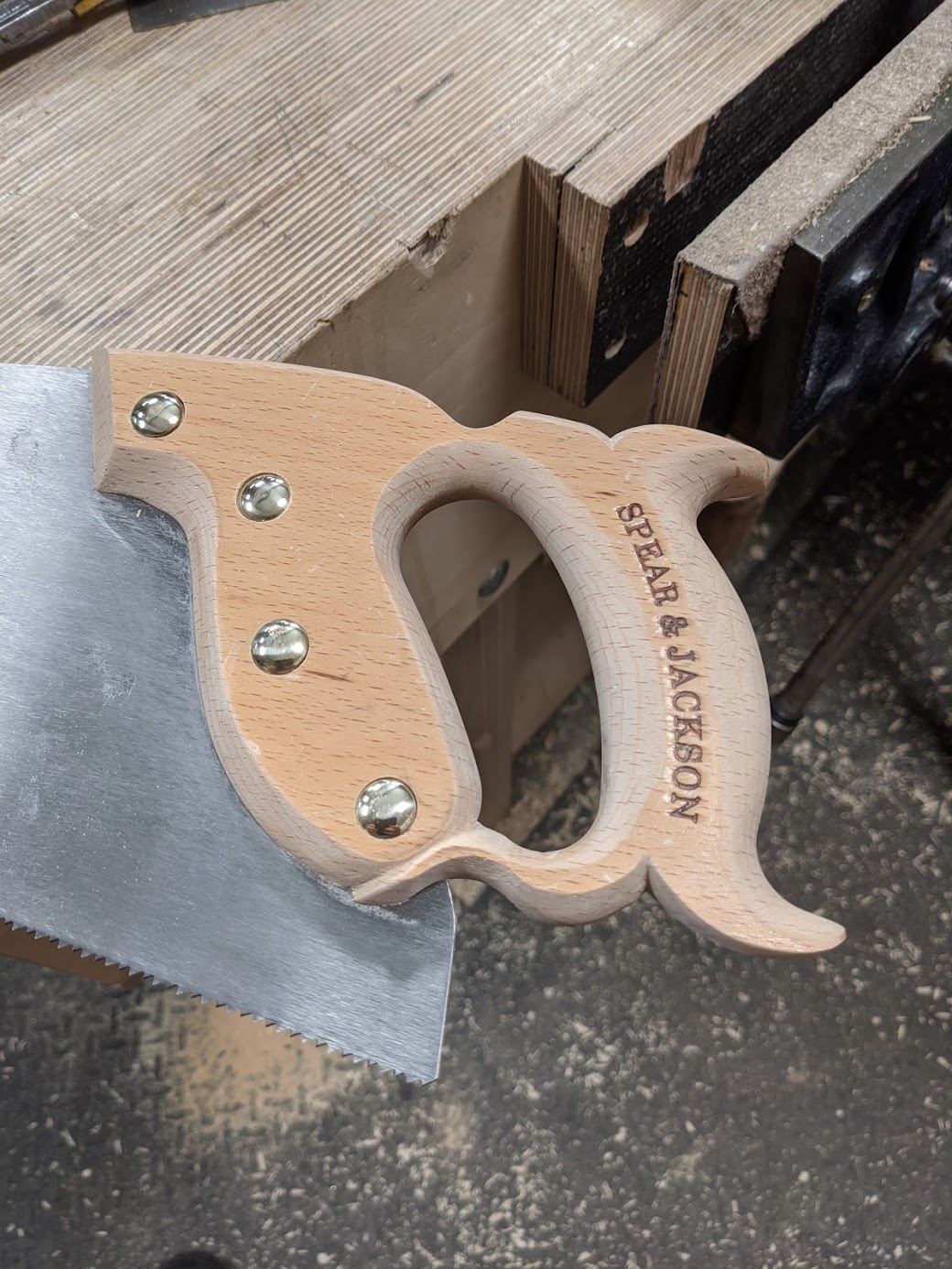
Investing an hour or two in reshaping the handles is only really worth it if the saw measures up. It's the saw plate that matters most, so when S&J decided to resurrect their 70s-style handsaw a decade or so ago I decided to give it a go, but I admit, I was distrusting of the possibility that it might fit the work of a craftsman. These saws proved to be really nice handsaws and, though not British made any more, there is no compromise in terms of quality materials and functionality. What I have enjoyed all the more about these particular saws is that they are totally resharpenable and they hold a good edge, something every handtoolist must have in a saw and also come to grips with once owning such a saw within a few hours of purchase. Owning a western-style saw of this type with its power-thrust cutting capabilities takes me four minutes to sharpen, and you can do this too. Just follow my saw sharpening videos on YouTube.
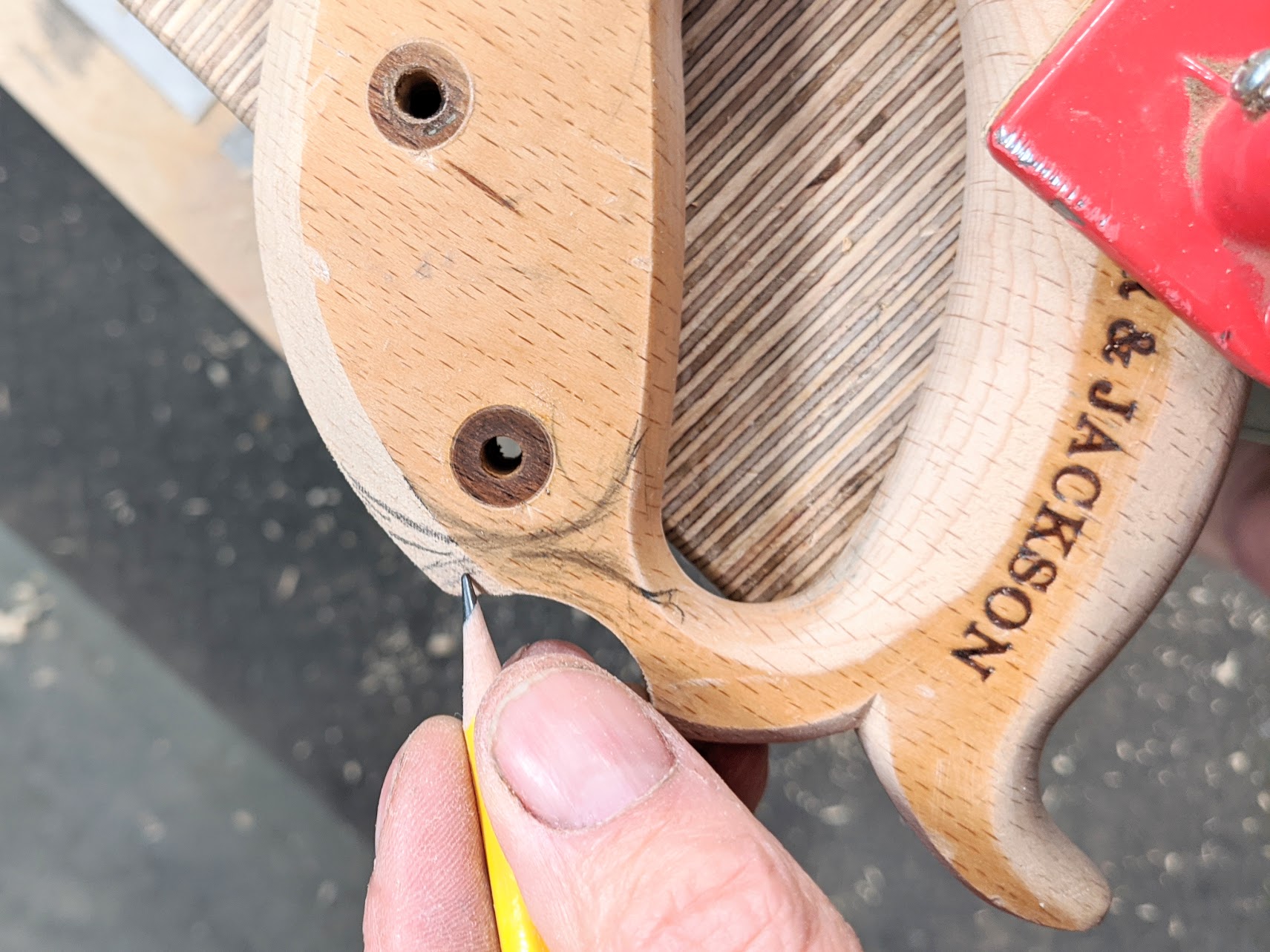
Having covered reshaping and resharpening saw teeth techniques for both rip- and cross-cut saws, and knowing this saw to be worthy of additional refinements, I decided to reshape the handle according to my own hand and then to add in a couple of curves to improve the appearance. I was not surprised that the new shaping would improve the feel and positivity of the saw, I've done this several times to saws over the years. It is always a surprise to me just what will sell for so high a price when the metal and wood are almost identical whether a so-called premium maker or an economy one. The S&J is solid beech wood handle and it is finished nicely with regards to the actual finish applied or the smoothness. I see no difference between something costing £120 and £200 because often these too could do with refining to remove hard corners where the hand grips the saw.
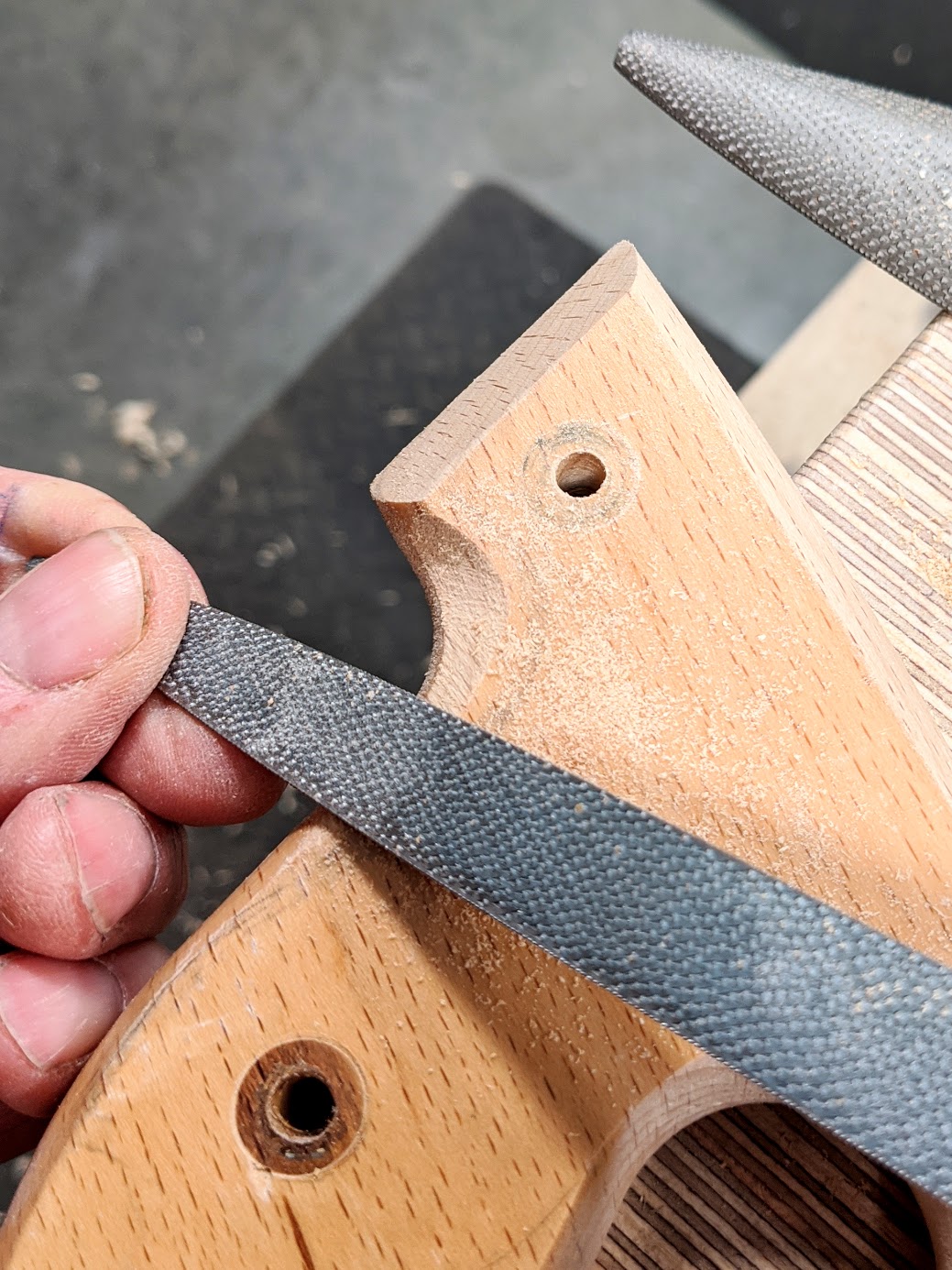
In a good hour or two at the workbench, and with a decent rasp or two, the handle should be refined, redefined and shaped and sanded smooth enough to apply three coats of brushed-on shellac.
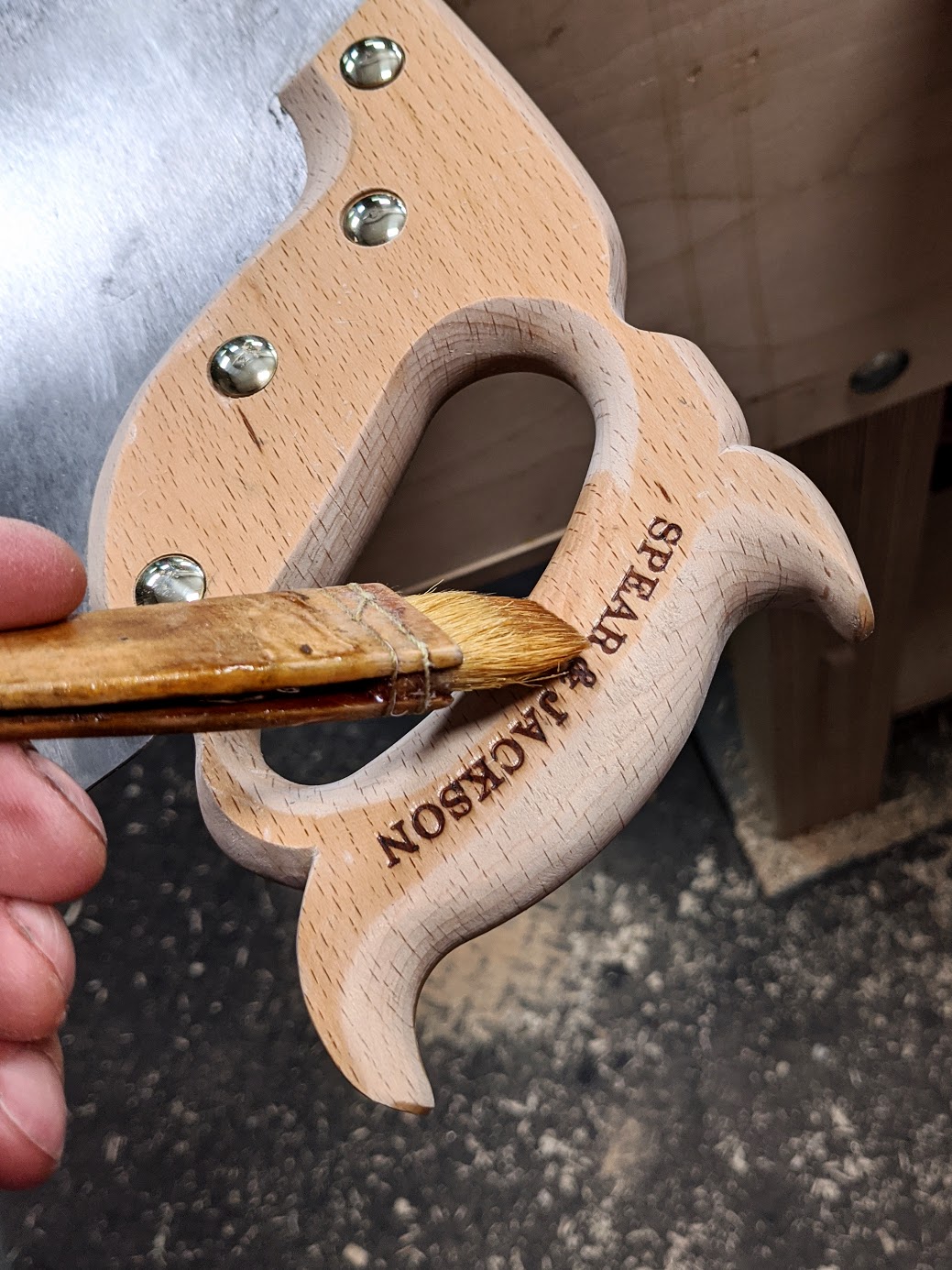
The reality is that it is hard not to succeed at this and the transformation is remarkable. I have decided to continue using these two S&J saws in my ongoing work for good reasons; they are affordable (under £25 and £30 respectively), they work/cut well, they keep a good edge, they have exactly the right flex/stiffness/tensioning and they are well balanced in the hand.
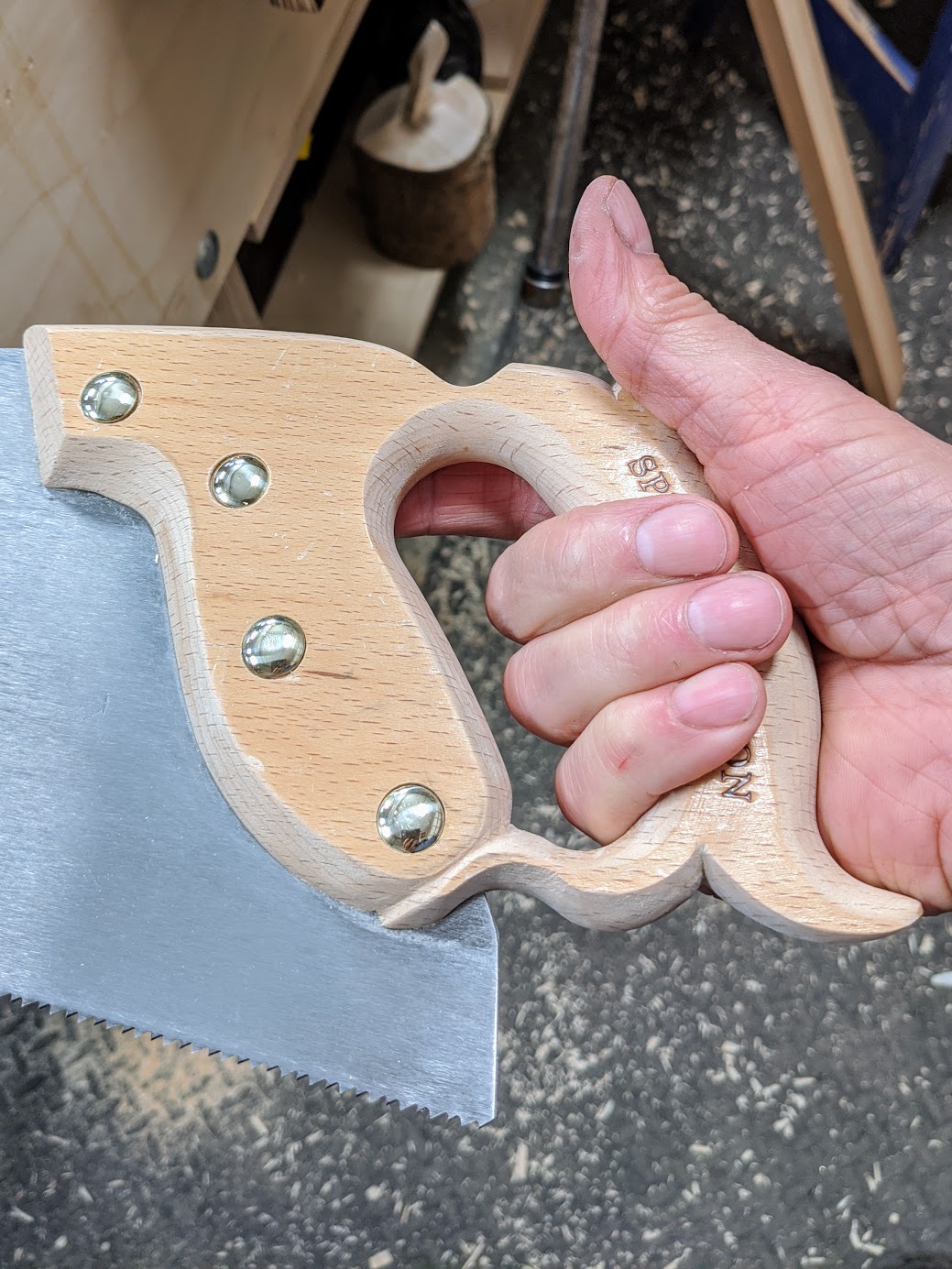
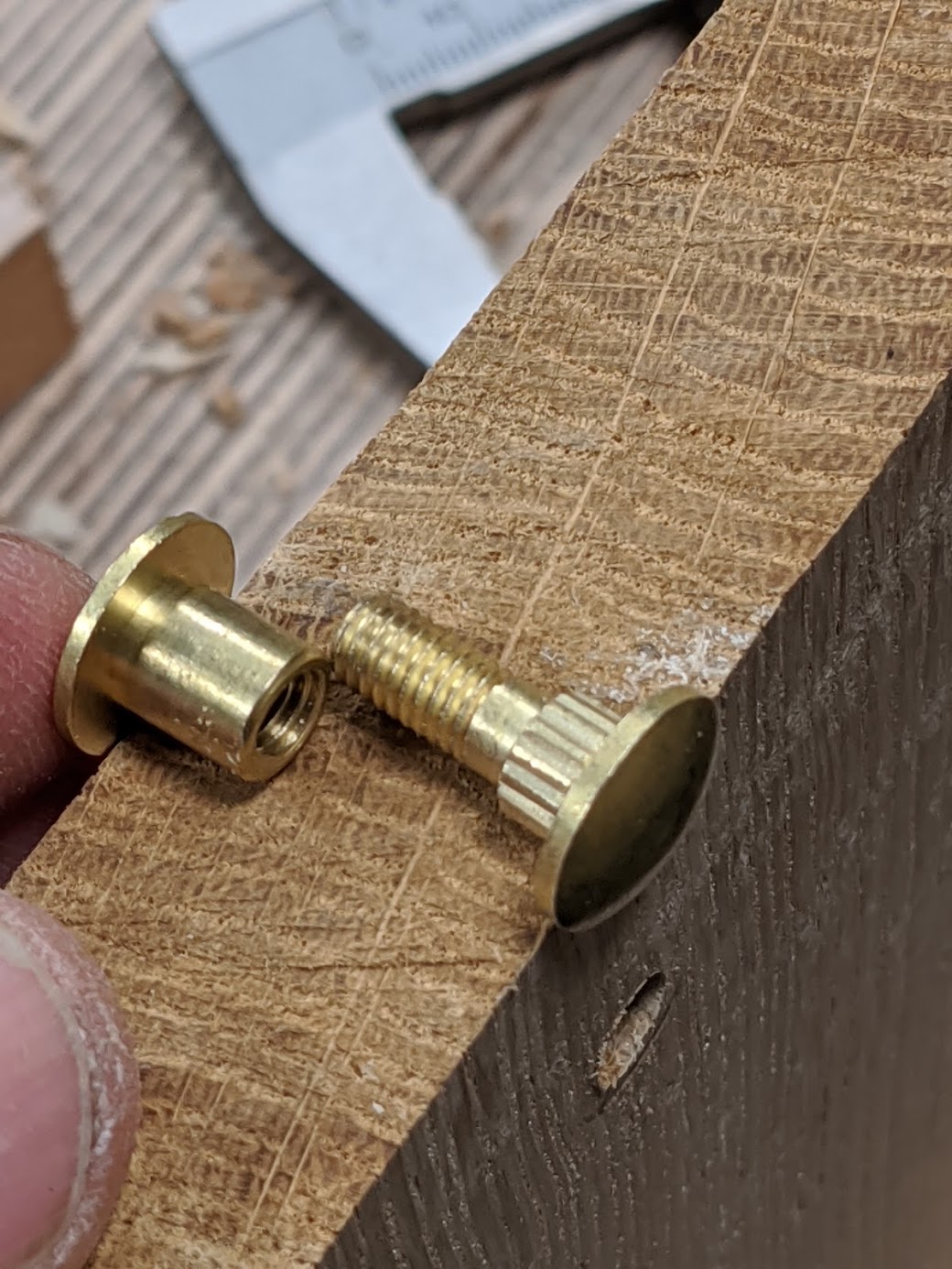
Screws and caps to replace the press-fits existing in the S&J (and many more modern makes too) are best drilled out.
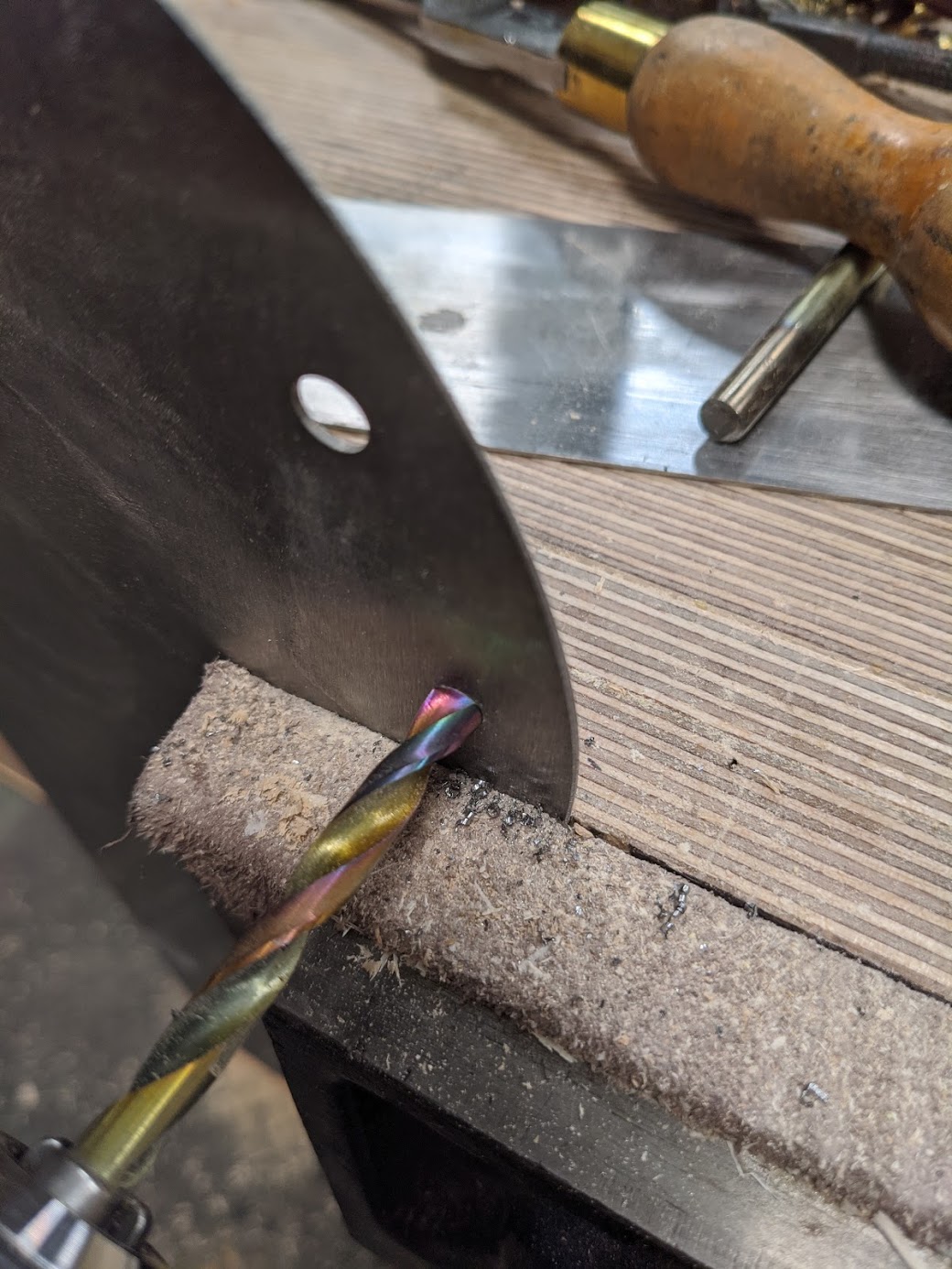
This avoids damaging the wood. A centrepunch pops the centre and then it is just a question of upsizing graduated drill sizes until the contact between the barrel and the core separates. The article I wrote here for tomorrow's blog on screws and caps explains how best to find the right ones.
Comments ()