
I Think We're Progressing
Thirty years ago I knew or heard of only a handful of handtoolists. That's not to say that they weren't there in the woodwork, more that they had little if any real voice. Books written that came out inevitably touted the routed. By that I mean they heavily promoted the new and emerging age of the router that routed out any use or need of hand tools almost totally and any hand tool in the magazines of old, the ones now mainly gone and lost, and those on their way out now, were more window dressing, a mere veneer of what some of us knew to be the real efficiency of skilled work. Of course, we just got on with the job. We worked with our hand tools and enjoyed it. We didn't rise to the critics calling us names. We knew what we had and stood by it to go from strength to strength. Today, it is my belief that hand tool woodworking is still gaining ground and it is mostly down to you following a vision of restoration -- a cultural revolution developing its own conservation where the culture of real woodworking can be nurtured by any and all who want an alternative way to work the wood. We didn't have a fancy name and we were never challenged by the opposition because we knew the opposition was firstly insecure and secondly always trying to prove something they didn't quite get.
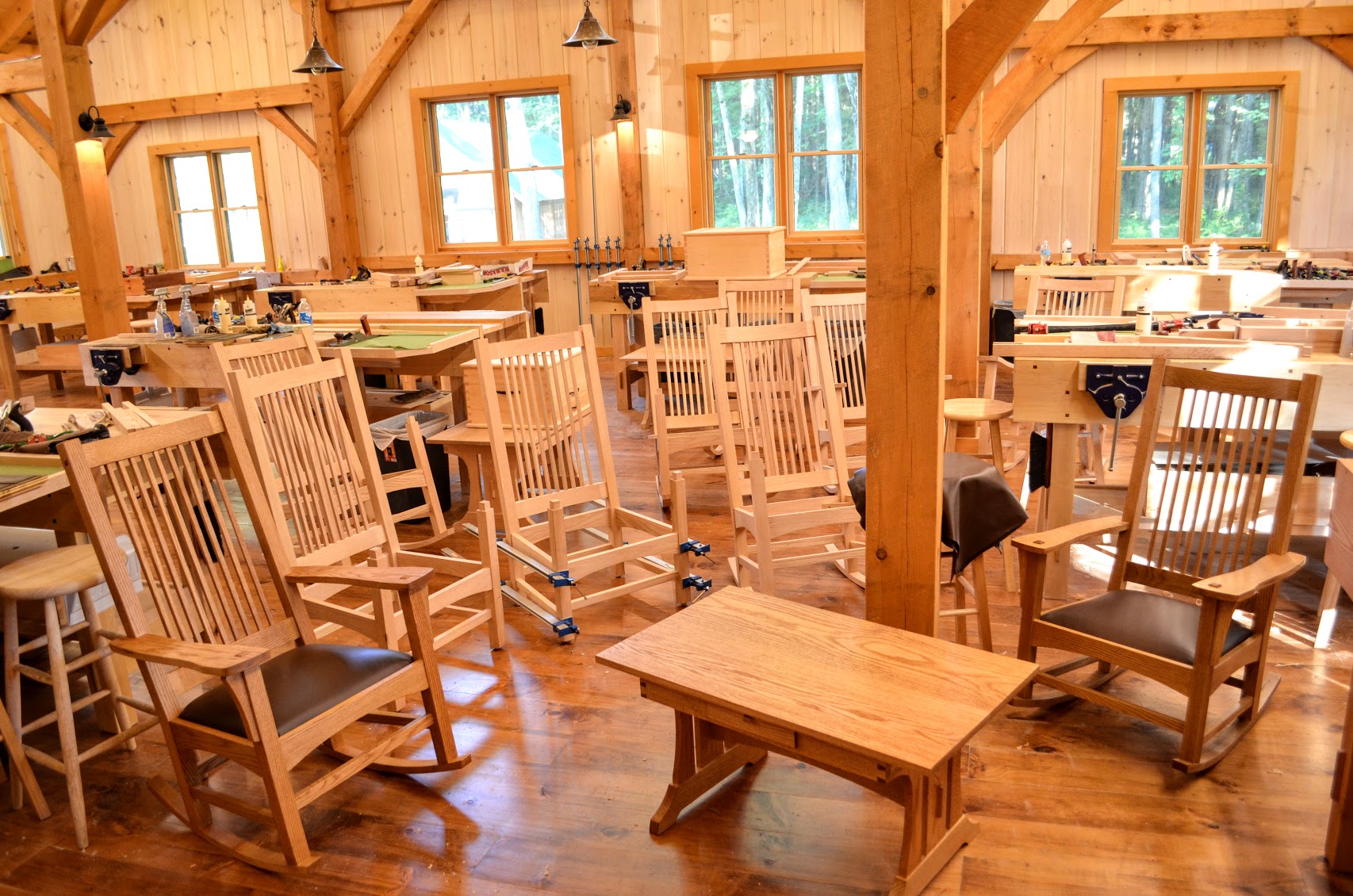
One thing that has kept our form of woodworking a living and vibrant entity is that many of us could and would and should never dedicate 20 square meters of valuable real estate floorspace to half a dozen static machines used once a week or less. With a nudge from Paul Sellers saying ten hand tools, three joints perhaps a bandsaw and a hand tool woodworking workbench you can indeed make anything you want or need from wood. Because we believed it, we did it.
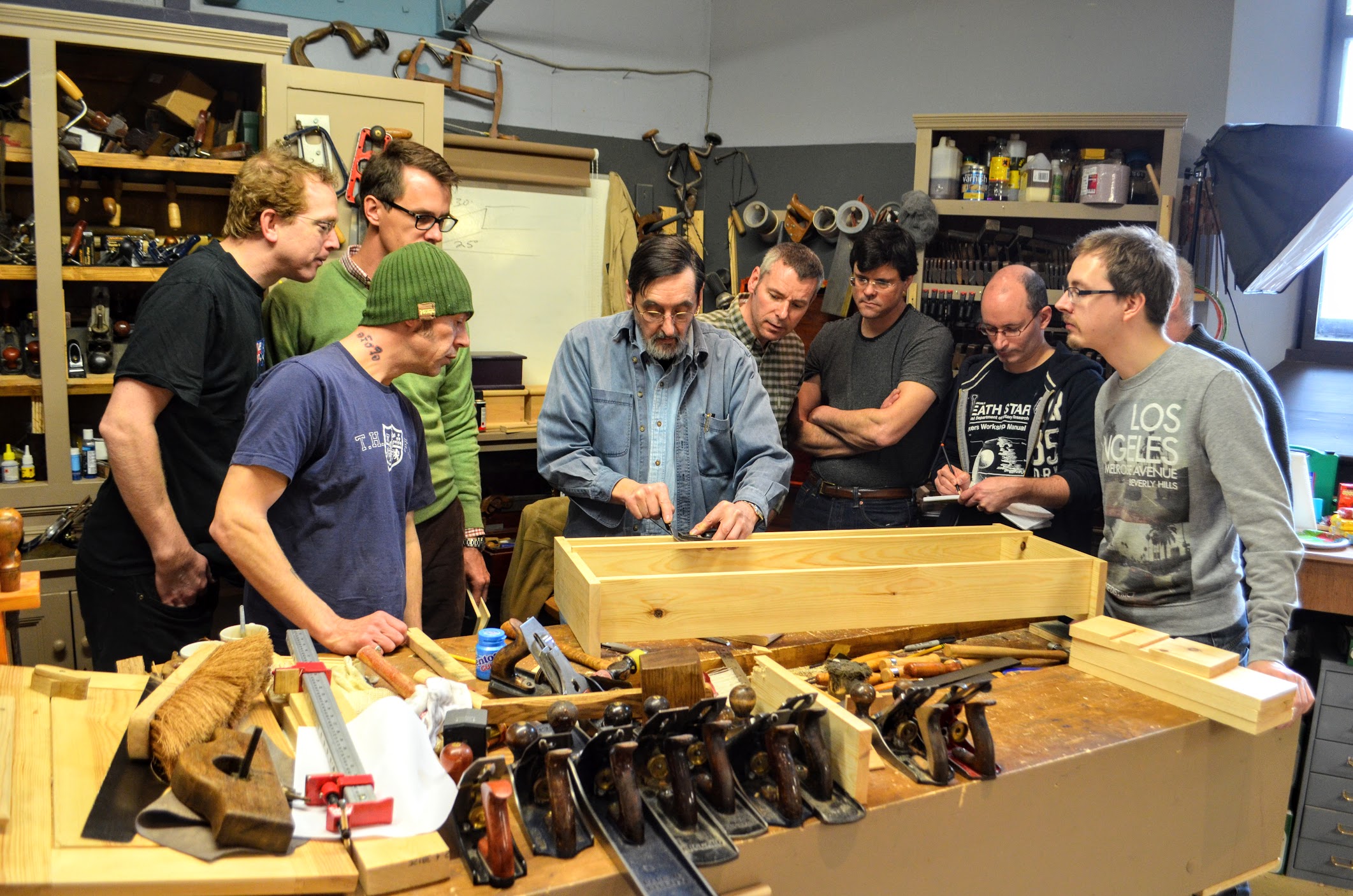
Thousands of my students made my projects even prior to any videoing endeavor I ever got involved with. 6,500 men and women went through my Foundational courses over two and half decades and now, through the internet, we have almost reached 400,000 followers on YouTube alone -- men and women searching for much greater depth to give meaning to their craft skill. We became an individual breed that believed that skilled use of hand tools produced high levels of skilled individualistic workmanship. In the classes and workshops, I listened and found answers to questions never asked or rarely asked. My saws cut through wood like hot knives through butter and then they balked at tough stuff. Theirs might not have cut square and planes did the same. I learned to teach systems and methods to those 6,500 over the three decades and that gave me skills to teach online, yes, but it gave me so much more. It gave me the burden to make sure my craft did not bleed out and die at the expense of future generations. Guess what? We have won so much. If three decades ago my craft was almost dead, and in professional realms, it has indeed moved in that direction, in amateur realms it continues to defy death.
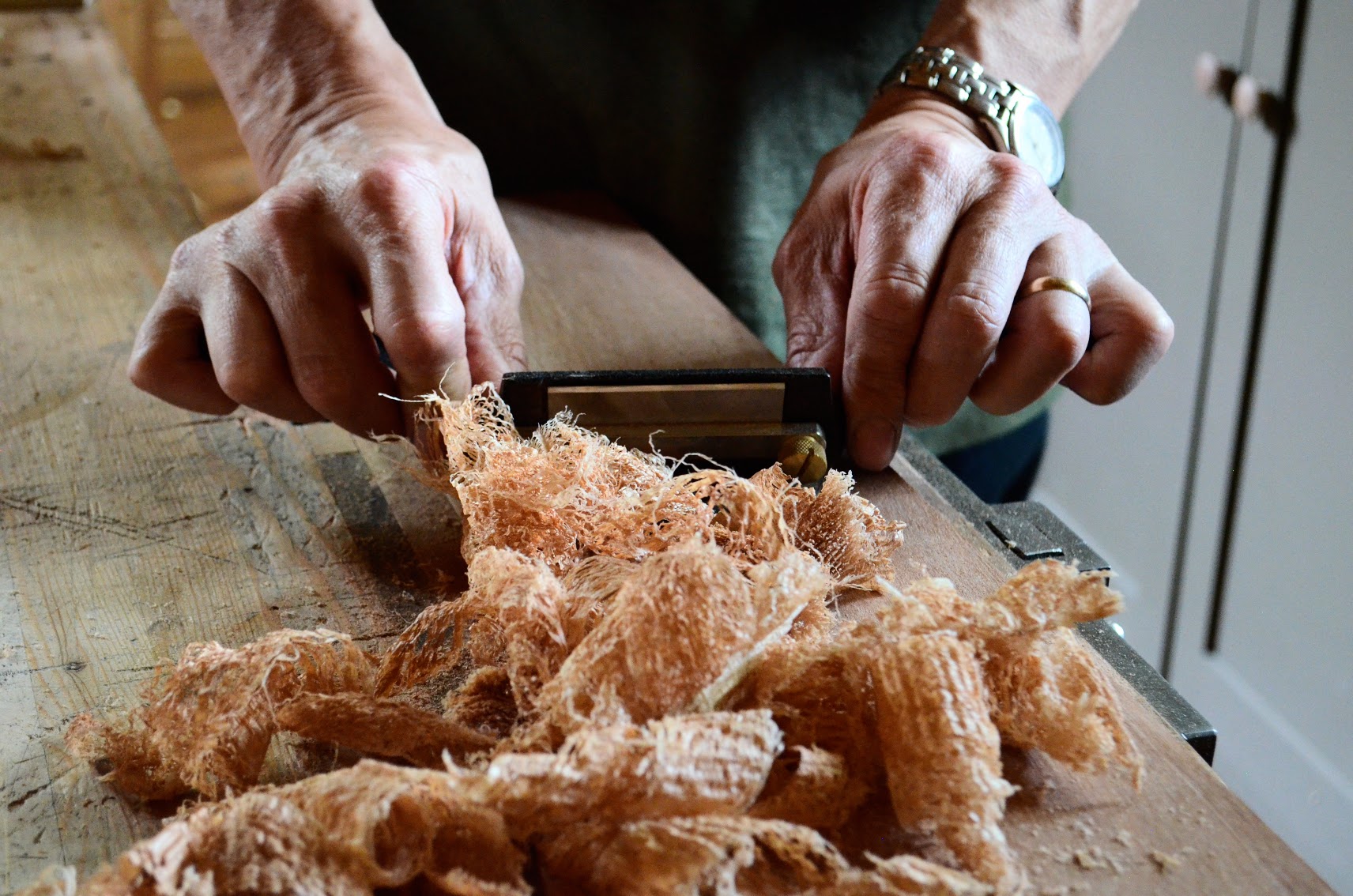
If we were losing, why do secondhand hand routers sell for 8-10 times more than just six years ago and why can't the new makers keep them stocked? Why do bench planes like the #4 Stanley and Record sell for even 20 times more than when ten years ago I bought them for £1 each? Why do people, new woodworkers, who once called the #80 cabinet scraper a spokeshave because they thought that it looked like one, now pull it out knowingly, sharpen it by turning the burr and scrape their panel faces to glass-like surfaces? I read through comments in all manner of woodworking spheres and I hear people quoting me saying "I think PS said this or that, so try it and see if it works." You see people are taking the reality of what I teach on board because they have come to know me through the decades and they see for themselves that the methodology comes from a lived life and that it can indeed be trusted. You have been my progress over the years. And I am glad that you guys have seen new suppliers coming out of the woodwork too. Look at DieterSchmidt Fine Tools in Germany who have gone from strength to strength to engage with toolmakers and suppliers to bring the best of the best to the rest of the world. Classic Hand Tools here in the UK did the same. We even have some bijou saw makers eeking out a good living with high-priced copies of vintage models and then too innovative designers reconfiguring the whole appearance and configuration of hand tools.
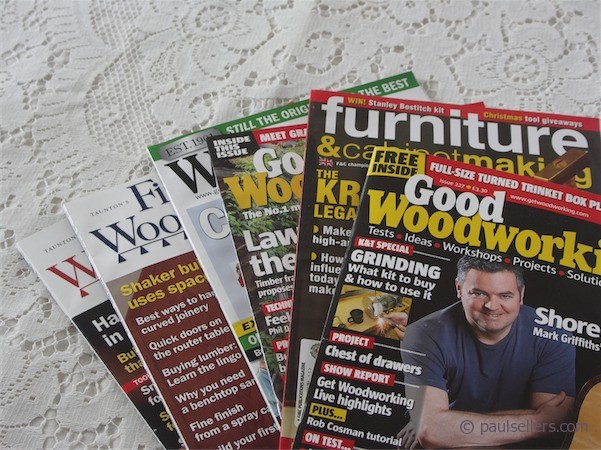
This is my success, folks. I measure my success by the lack of invitations I now get to the woodworking shows I used to go to and then also to write for now declining magazines. Time was, not that long ago when every single article I submitted to magazines was accepted 100 percent and that was because it was new wallpaper for the otherwise boring machine content they regurgitated year on year. I never had a single rejection. Woodworking shows loved my being there to draw the crowds. I now gauge my success by my not being invited. The less I am invited the more successful my work becomes.
Comments ()