
Sharpening is a Response
I think that it is a true thing that we should make a saying of; most of us wait until the tool won't cut well before we decide to sharpen our tools. Pushing dulled tools to the limit is not just pushing the tool to its limit but also the wood and our bodies. Woodworking is not resistance training as in gym work, rock climbing or mountaineering, or any other sports training to gain strength and stamina reliant on muscle and strategy, it's a response to conditions influencing the work in hand and especially is this so with regards to the tool's sharpness. Planing is a progressive task and stroke on stroke dulls the cutting edge we rely on. When do you sharpen up? As a boy, I would hear George say, "Sharpen up, Paul!" There is no George now and neither do I want to hear his voice admonishing me. There comes a point with maturity where you should own tasks like sharpening, cleaning, maintenance and sweeping and respond to the higher demands of fine woodworking. I have learned more about hand tools in the last ten years than in the previous 45 prior to now. I want to hear my inner voice and respond to it willingly, not a big stick or worse still a resulting failure that tears at the materials or damages the tool. Mostly dull tools result in the use of brute forces. Not at all the way to progress good woodworking.

I have written on the missing ingredient even well-known advocates for high, over-the-bench, upper-body pressure on low-down workbenches seem less inclined to talk about. I'm never sure if they just followed a pattern established by say French 17th century makers established for themselves or whether they actually worked it out for themselves. I have seen people well over six feet planing on what seemed to be almost knee-high workbenches that made me think, 'Something's wrong with this picture.' You must consider that today's average French person is 5'7" whereas the English is 5'9" and the USA average is a little lower, somewhere between France and the UK. Of course, this doesn't help too much because there are heights that affect averages throughout.
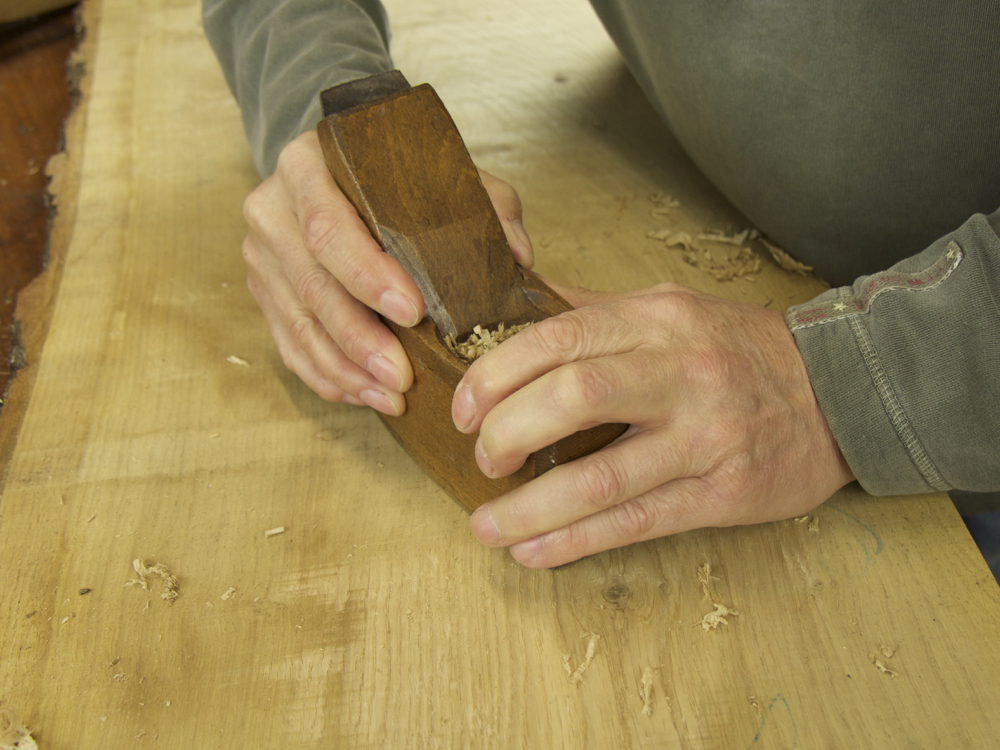
Perhaps some listen and perhaps not. The simplicity of plane work in my view and from research, our questionnaires and then 6,500 students in hands-on, at the bench classes, etc is this: It is a fact that the optimum height is the one you ultimately decide on for yourself. I have posted many blogs on this for you to make an educated decision on this.
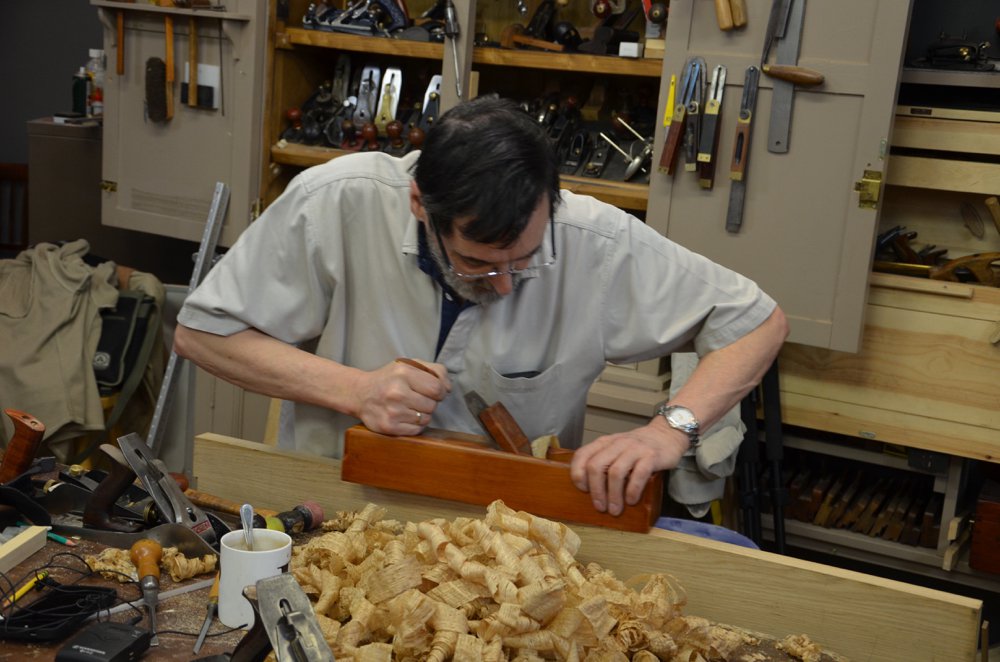
Fact is, you will find that with using a sharp plane the plane pulls itself downwards to the surface of the wood as it's pushed forward onto and into the wood. With a dull one, it simply slips and slides over the top of the surface like an ice skater and any hard forcing down achieves very little. By this simple fact, top pressure is applied to the top, flat face of the blade, as you push forward, thus the plane blade in the wood, pulls the whole plane down to the wood as the stroke progresses with each forward stroke you take. This then is the reality of natural physics in action. If you can grasp this then you will indeed see the significance of regular and precise sharpening as a response to you sensing the plane starting to glide over the wood surface rather than onto it as an efficient cutter does. If you take nothing away from this article other than this reality I have won.
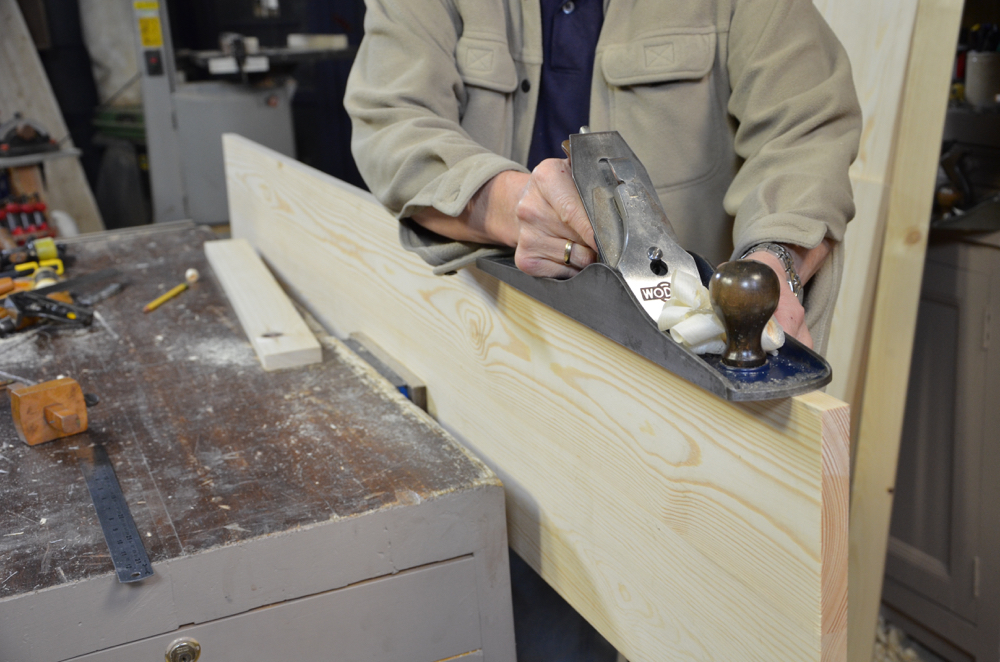
I argue too about some who say heavy planes being the way forward. I think a heavy plane has a place but not really for the day to day benchwork planing. Most advocates I've known sell them. I might have thought differently at one time but I am more convinced today than ever that any correctly sharpened and set lighter-weights beat heavyweights hands down.
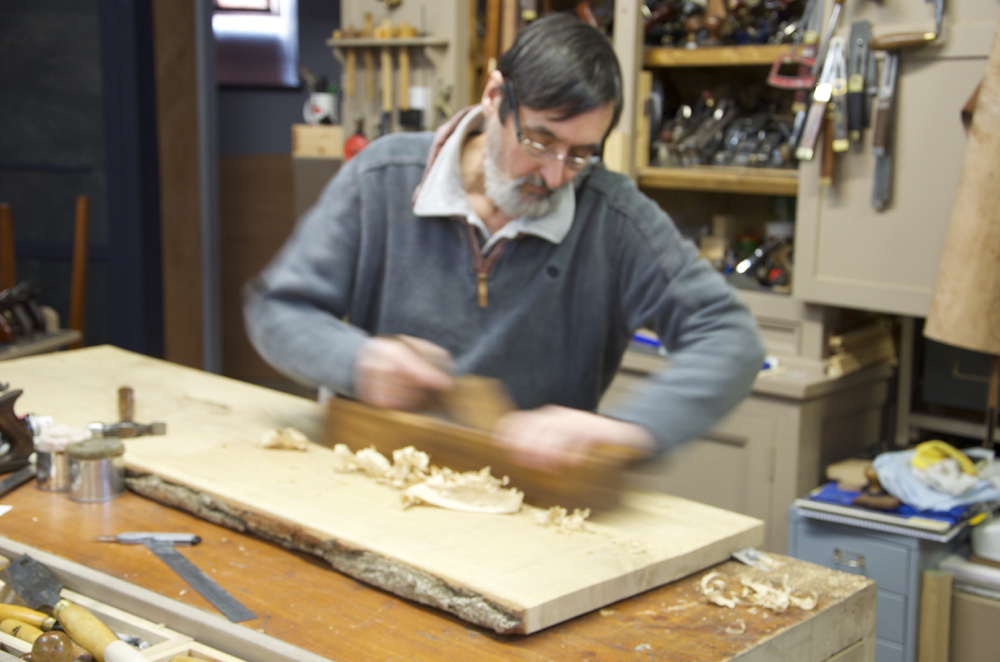
Why do I say that? Well, the former masters of old would not take even the lightweight Stanly planes fo at least half a century when they first came out, and it was not just stubborn refusal of accepting progress. In the wood-bodied, pre-cast-metal plane days, the planes were half the weight of even the basic Stanley #4s. Even the longer jointer and tri-planes were lighter, much, much lighter than the steel interlopers. But it wasn't just lightness either, these wood-on-wood planes would glide over the wood being planed as if frictionless. Not the same with the basic Stanley and so much less so with the brutes of heavyweights some seem wont to promote. Again, those crafting artisans by the hundreds of thousands across and throughout Europe knew it was the sharpness that pulled the plane to task and sharpness was neglected only by the lazy.
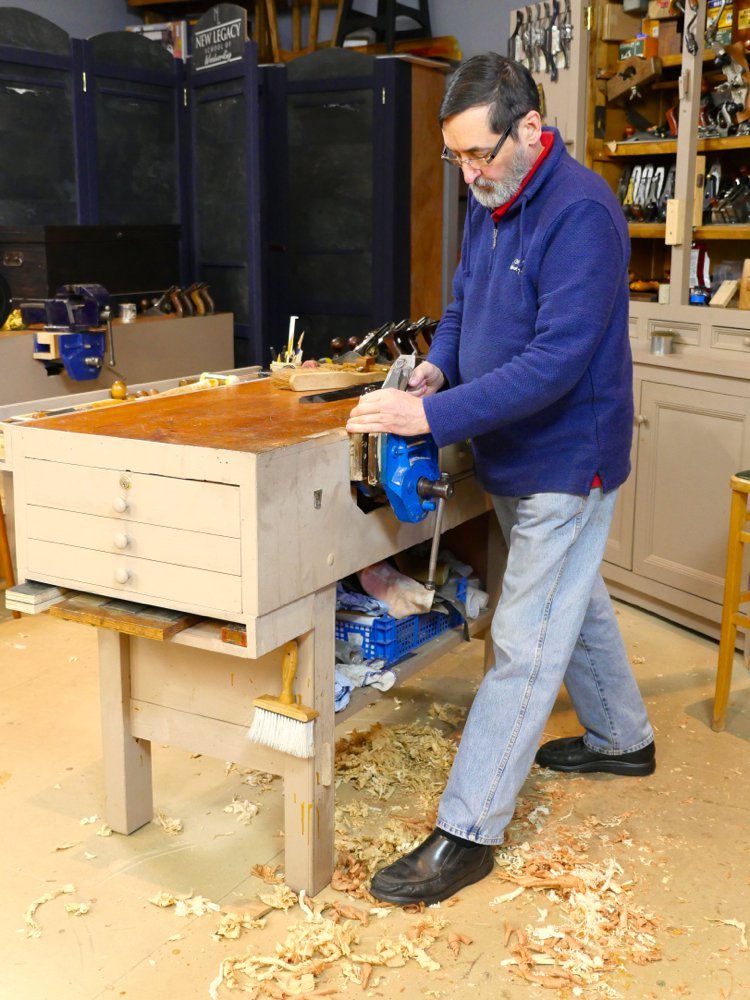
As a practicing artisan, I learned early on to trust my intuition. Sharpening is a constant. Bench height is worked out by you with the help of me. By responding to feel we engage unquestioningly in sharpening. It's a response not an option for us.
Comments ()