
Recovery III
I am not a professional health care provider of any kind but I do care and health is provided for in so many ways beyond the ability of professional health care providers. I also strongly dislike the generic terms of health care professional and health care provider. All it does is separate by exclusivity when the best healing comes through inclusivity. By emphasising detachment this way we see how very detached administrator decision makers have become from reality. But of course those who truly care are not detached from caring thoroughly.
Many of us providing health care often do so from self recovery and more so than from looking for or receiving professional help. Recovery from smoking, drug abuse, drink related issues and then physical and mental health abuse, all serious and then perhaps less serious recovery from hurt and harm but nonetheless still unpleasant less serious physical conditions; those who have suffered often offer themselves to others to steer them through troubled waters. From my birthday wishes from a thousand and more I saw a very fine silver thread woven between the words, sentences and paragraphs. It's a fragile thread but it stays strong enough for others to understand the complexities surrounding our humanity.
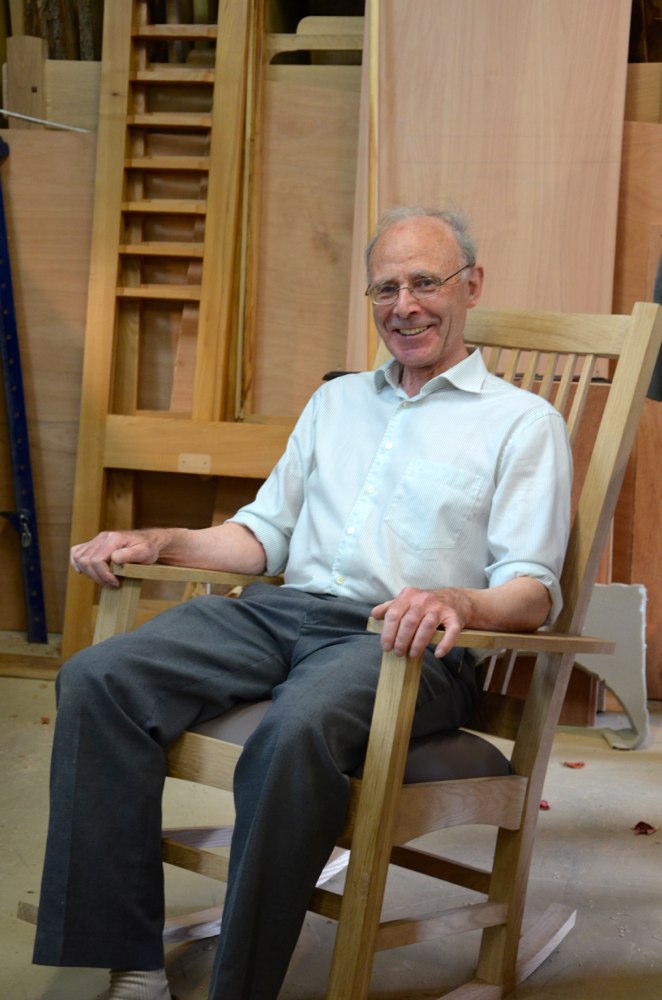
As we become more and more aware of our needs for inclusivity, signs in awkward situations say more and more, 'Not all disabilities are visible.' Dare I go further and say most disabilities may never show and thereby never be seen. The more I read from so many of you is that woodworking is now the vehicle through which you found both inner and outer recovery. The workshop became the brain massage you needed and the workbench your physical exercise machine. Some recovered from several heart attacks and strokes and others gave up dealing drugs years ago. This then becomes sustainable rehabilitation and recovery and especially from the losses of functionality. These recoveries are not easily or readily or even often prescribed by institutional health care providers though that is changing these days. But now nudges come by a woman and a man standing onside gently steering, encouraging and providing encouragement as an alternative hope. This is what woodworking means to me and of course I hasten to say it need not be woodworking alone. Hand work is by its very nature therapeutic. In my view any and everyone should find some handwork to develop craft rhythm which is a rhythm only available in the making of things, the growing of things and the cooking and baking of things and we, anyone and everyone, can access it anytime, anywhere and by any amount we choose to avail ourselves of. It does not have to be hours on end it can be just minutes in a day and even just once a week. This recovery from our lostness displaces the dominance of a world's insatiable consumption of something we call time. But it is not just time is it? It's the consumption of peace, settledness, space, the places we live in and move in. Think car, traffic, London, Manchester. Think frenetic, fragmented, disconnected, wild, hectic, frantic but don't remain there.
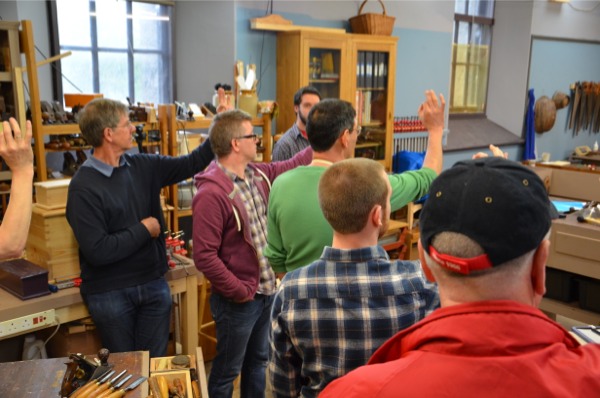
At the start of the first blog the word RECOVERY in all caps came to me. I didn't wonder why because I have known for three and half decades now that wood, working it, woodlands and nature and then creation itself is there to aid whatever it is we need to recover from. We don't all recover the total health we once had. Sometimes a stroke leaves us without full speech recovery or arm movement. It's what happens inside though that counts. If you speak other languages then the word recovery means something quite different than say recovering a piece of furniture in the same way revive doesn't only mean rag on 3 new coats of Danish oil to a piece of furniture that's worn well. Root words matter. Where they came from and how we apply them to our lives today. If we lose the root meaning of words we easily lose our rootedness through the things creative that matter. Calling a machine a tool or a computer too, is not the same as a chisel held and controlled by a human hand and mind. When we allow that in our lives then we become ever more detached from the very things that give us sanity. Machines and computers have their limited place in our world today, but CNC machines and AI can never, never replace the making of things with our hands. Remember these great advances were not made for our wellbeing but for businesses to guarantee production levels and feed the excesses of our consumerism by consistent growth. This industry displaced the craft and handwork we see the need of and embrace. Most of us are industrious but not industrial woodworkers.
c. 1300, "to regain consciousness," from Anglo-French rekeverer (13c.), Old French recovrer "come back, return; regain health; procure, get again" (11c.), from Medieval Latin recuperare "to recover" (source of Spanish recobrar, Italian ricoverare; see recuperation). Meaning "to regain health or strength" is from early 14c.; sense of "to get (anything) back" is first attested mid-14c. Related: Recovered; recovering.
In many ways I've seen that people lose evermore consciousness of many things craft. Things that related to supporting the essentials of life are long gone so things like spinning fibres, weaving materials like wool and cotton to make yarns for fabrics, basket making and such. At a craft show in the Texas Hill country I watched a middle-aged man peel of the weavers for a white oak basket from a board of oak with an oversized spokeshave. He handed the weavers to his wife and as he peeled of the strips she wove them into a very large basket 18" in diameter and 9" tall. Every hour they made the same basket and sold them for $80. Throughout the day they sold every basket plus the ones they had made before the show. It wasn't rushed but steady paced and something they had done for decades. Over the three days they took enough to RECOVER income lost before the show and went home able to pay all the bills and clothe their children. This was how it worked for both them and for me.
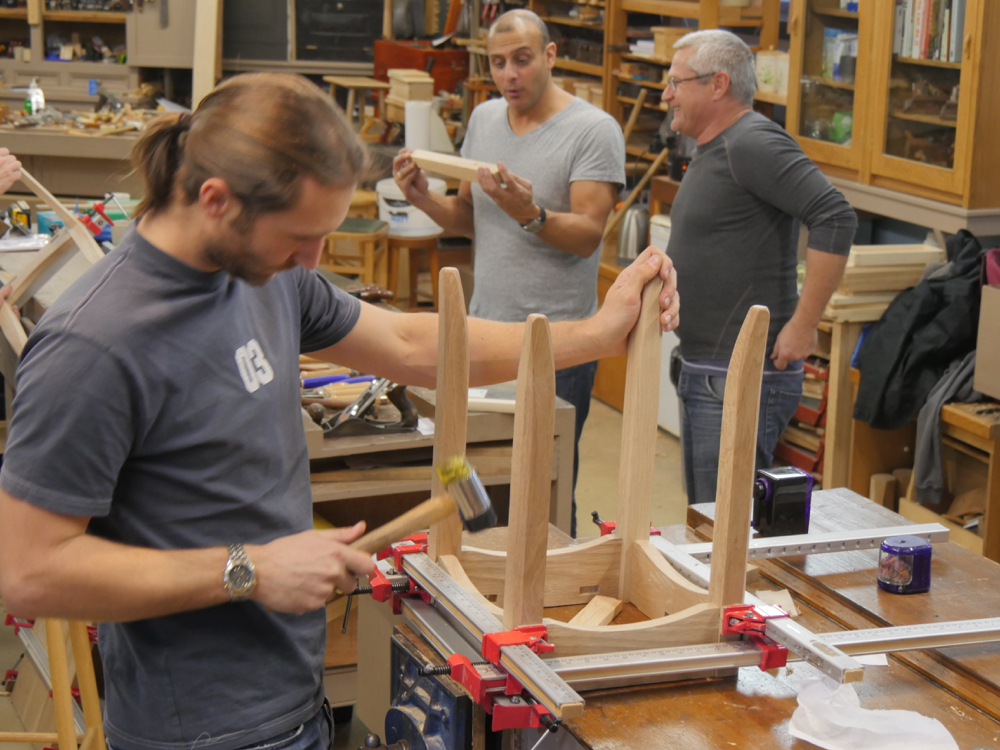
"To regain consciousness" is to recognise that we have been steadily losing something in the so-called name of progress. No one doubts there has been progress, but some progress has cost us more than we have ever gained. Accomplished making was once intrinsic to almost everyone living. We took the raw to grow and make from. The intrinsicicity of working manually to our human condition cannot be denied in light of evidence surrounding how well we feel in the day to day. Partnering industrialism is the ever increasing tragedy that adult and children's health often relies on tranquillisers and antidepressants, solutions to eating disorders and so much more. The loss of cohesion between people in work spheres, non-existent conditions a century and more ago, are now pandemic and especially so in the western world. As humans we once fought to keep our independence but instead we now accept a substitute that is not a substitute at all but more an apology in the sense of an apologetic. Since the so-called Industrial Revolution we have incurred ever deepening scars to our sensibilities and wellbeing yet we were quite blind to it's creeping impact. The Industrial Revolution was built on a toxic mix of empire building and those building the empires for self gratification and aggrandisement. Demoralisation damaged so much of the world and yet is yet still today most hail the technologies as the Saviour though it is still the greatest direct cause of the greed that resulted in the deforestation of our ever shrinking world. From fossil fuel consumption to two great wars and warring throughout the world things have changed a lot but they haven't changed at all. At my workbench, making, things change the most. It's a small sphere that's managed by common sense and reality. Here I heal.
Comments ()