
Two Opposites
Dealing with my two natures:
So, I watched a worker of smaller and lightweight stature work a plane on wood and then another of larger stature do the same. The one used strategy, different approaches, and the wood was levelled, squared and trued to compliance. The other used weight, muscle and a combined strength to weight ratio of, well, mainly body mass. So too the one used hand-eye coordination and focussed the effort on sensitivity to gather useful and usable information, stored it in mental retrieval brain pockets and drew on it at different points of interpretive need. The other muscled through the strokes, ripped into the wood and tore the surface. The muscled weight left every trace of carelessness recorded in the wood - a caustic argument between the wood, the tool and the muscled weight. The blame was clear but never taken. Each phase of work determined the outcome of the next and shoulders to joints despite the right tools never met on both sides because of the brutish application. I turned then to the graceful lightweight and saw again the gentle placing of the plane and the feeling of the grain at the very edge of the blade, the spin, the turn end for end a full one-eighty tamed what lay beneath the sole. It was bold but well determined, strategic and unforced: Earned!
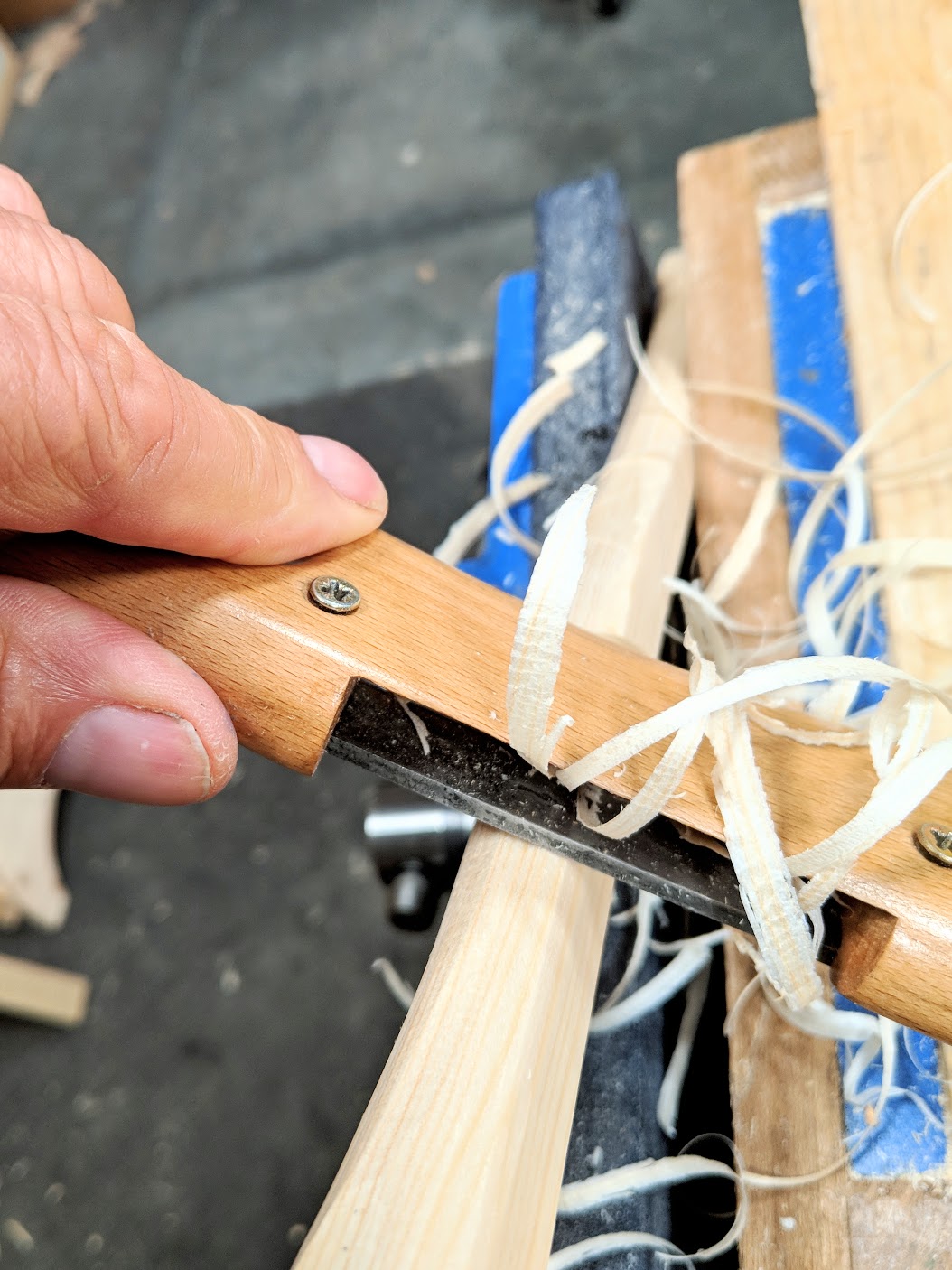
The lightweight worker sharpened more, questioned the working and thought the solution options one by one until the work was eased, the shavings lifted and the paring cuts left the surface trued, reduced and fitted fair to its opposing mate. I watched the wood yield so willingly, subsumed by the care of strokes felt. This pulled me into the sphere of the advanced hand toolist. A sphere unique to the lightweight worker in love with the tools and the wood and the workplace set aside to be. My watching never interfered as the observer in an experiment because there is no experiment but just known working practice. I anticipate the lightweight's working patterns adopted from my own to become owned. The heavyweight must learn and shift the attitude that relies on weight and muscle and strength alone for the wood bruised and ripped rarely if ever leads to the fineness good work results in. The heavyweight is not irredeemable but it takes longer to disabuse of what's been relied on over a two-decades default position, often many more. Habits of heavy handedness begin with lack of good supervision. Better habits should replace them to be set early. Good better habits of working that is. This is the work a master works for, who listens to the file strokes in the saw's gullet and speaks the sensings out -- 'Lighter strokes. Be gentle and feel for it! Less pressure; counter the rebellion with exactly the right amount of pressure and no more. More even, I think!", such like that. The strokes change in length, and weight and suddenly the method is absorbed into the worker to become owned. And so the heavyweight and the lightweight find unison and weight and strength are harnessed by the heavyweight's willingness to learn, to change and to submit to become supple and less rigid. Less brittleness means less broken wood and tools but greater brokenness that leads to highly sensitive work and working.
Comments ()