
Woodworking Alternatives
I have generally found alternative realities fascinating. A group of young people built their homes for one another in eastern Europe using alternative building methods from natural materials like straw bale, clay, timber framing and so on. They learned the techniques on courses over a number of years and then taught one another on the builds. One member came to me for training in hand tools over two sessions in two years. I think my quest to train people in the use of hand tools over the past three decades is an extension of my enjoyment working with hand tools. At a time when all others travelled the well trod path in the embracement of machinist woodworking. I took a different track. Eschewing hand tools and high demand work though left a huge hole in the world of skill-based output. I chose a radically different path to better understand the complexities of hand work and this indeed led to the work I do in training those looking for alternative ways today.
It took great self demand with regards to discipline, but it was a self discipline that would then be the prerequisite my future life would follow. I liken this to any artist or musician, performance dancer and then perhaps sports people and some academics. Mostly it's been more than just a passing interest because there are so many looking for an alternative lifestyle to continue in a form of lifelong learning. But for some it can mean much more even than that. For some it's a door opening into independence. For some it means a path of self discovery and a reach from unpredictability into something they can depend on. My interest in autism has grown massively through the years and so I have hoped that my work with hand tools can indeed enhance the lives of autists wherever possible. This in no way contradicts the current work I am doing with building a house full of furniture. Not at all. If anything, the work will ultimately embrace all people as a totally inclusive occupation for those that love to work wood with their hands. I wanted something for those who live and work as autists in a world where they might find it more of a struggle to fit elsewhere.
Today, for me at least, it seems a good time to take more steps, strides even, into helping autists interested in woodworking to better interpret how the traditions of hand tool woodworking can lead to a new genre of woodworker. One that might become the furniture maker, yes, but one also that might branch off as the musical instrument maker or the kayak and canoe designer too. You see, having made many different things in my lifetime as a woodworker, more as sidelines, you might say, I have learned that the same techniques used in one woodcraft often cross-pollinate with other wood-related areas. In reality, carving a violin belly uses basic carving skills at least initially but then relies on the maker to identify resonance and tone. Apply that to bowl carving and spoons and you get my drift. On a larger scale shaping a kayak with a spokeshave is the same as shaping many other areas of wooden items so what we do is look at the foundational work and here is where the rubber hits the road. The being the true reality I see my way to helping woodworkers who would embrace hand tools as not just a viable alternative but one that would totally enhance their life. For any autists this seems critical to me.
Over recent years my work with teaching online and through the courses I developed over the last three decades gave me ever greater insight into the future of woodworking and that means for both neuro-typicals as well as autists. Applying the precepts you have all been reading and following here with me and other areas we've developed online I have been able to teach teachers, carers and support workers working with their autists how to apply hand tool woodworking to the students and young adults they work with in the very day of life. The spectrum autists live in means that no two autists respond the same way to issues we might face in the day to day of life. This means often that what we do must be more customised to a particular autist rather than expect a curriculum as a one size fits all (as can be and often is the case in general realms of standardised education). The support workers I have been working with to date are the most amazing link for me to strategise with and through. Don't get me wrong. I am by no means any kind of expert beyond woodworking, but the thing I can offer is how this or that tool or technique or method of work can be suited or adapted to work in this or that situation. Working with the autists I have, I have been better able to see how woodworking offers multi-dimensional stimulus that counters what otherwise might be dormant chemistry in very direct ways.

In developing an apprenticing structure for high-functioning autists, I have been better abled to consider other levels of autism too. In many cases my work has led me to see that most of those working with autists end up relying on the same general methods modern day woodworkers use to become more the machine operative. My challenge was can I present an alternative using spokeshaves, saws, brace and bits, planes and so on. Answer? Yes!
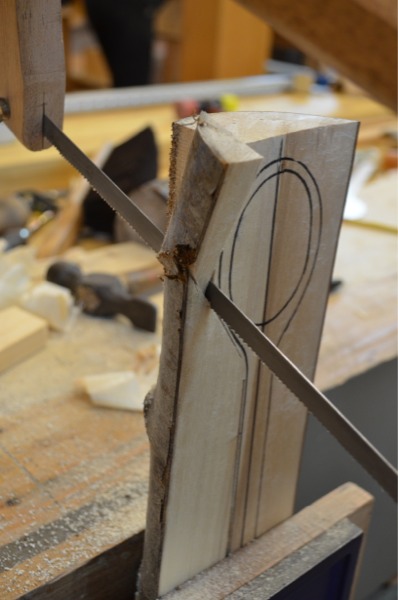
I try to think whether work can go beyond just assembly work but work that actually creates the multidimensional parts needed. Of course there's nothing at all wrong with assembling parts only. Don't get me wrong. But what I have been able to help others better understand is that even just using a spokeshave means shaped pieces and shavings can come from simply using your hands. It is always important to see that some people are able to shape wood whereas others find their fulfilment in just making the shavings. That might well be the conclusion for the time and seeing the faces of autists as the shavings spin from the spokeshave is very rewarding for everyone.
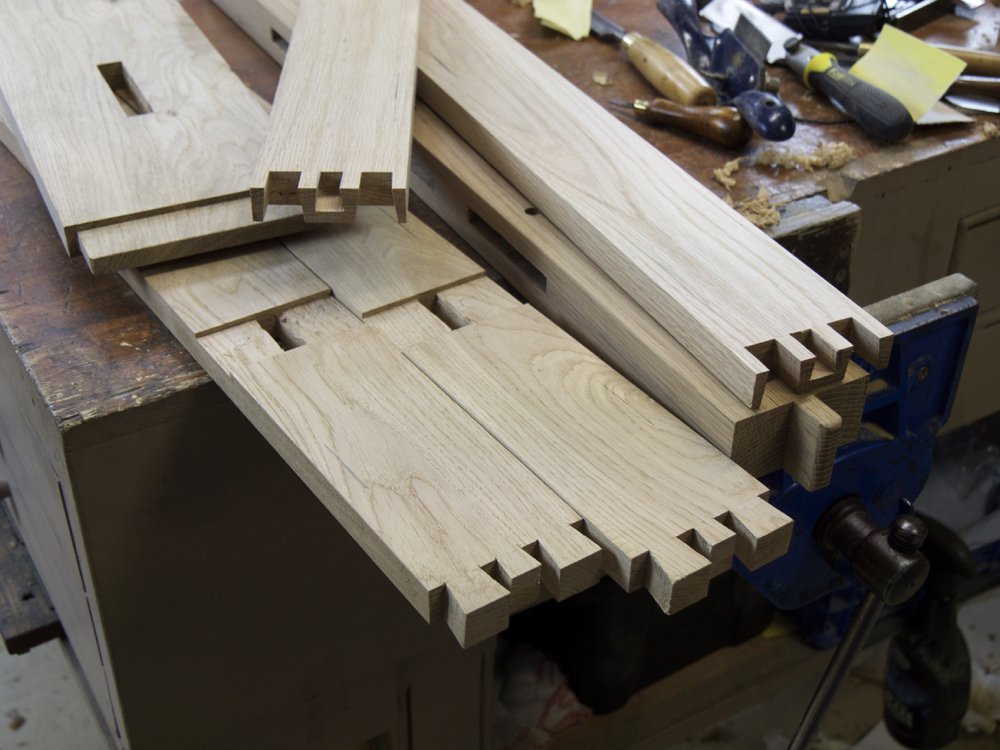
Whereas assembling parts works well for some, I wondered if machines like drill presses and drill-drivers were the most useful way to connect autists to actual woodworking. The websites I looked at projected students and trainers to a shop filled with an array of machines. This alone triggered red flags for me. But it wasn't just the danger of machines. I wanted the flex and twist of fingers and wrists. Resistance, vibration, sight, sound intonation and resonance are only possible through the use of hand tools. This for me and for hundreds of thousands of us is the mechanism we have steadily grown to embrace and rely on. Will hand tools work more efficiently for this or that task and can the skills be developed to a reliable level? I knew I could improve markedly on what was being offered simply because often the teachers were not too far ahead of the students. The quest for me was could I make the teachers and support workers skilful? Absolutely!

Over the years what was once referred to as autism spectrum disorder (ASD) has been quietly requalified, shifting its acronym towards ASC, autism spectrum condition, a much more accurate acknowledgement altogether. The condition of those with ASC embraces one expansive reality and that is that the spectrum is indeed vast in diversity and so too complexity. My fascination for woodworking has never waned in 55 years and adding autism into the spectrum I work in only complements what I have established and already do. Though a complete novice regarding reality in the expanse of autism, I saw from my beginning interest in 2009 that understanding ASC is to understand that we are all still very much on a complex and unfolding journey. Whereas we may understand the people in our immediate family or those we work alongside at work or as teachers and support workers, understanding autists means that we also understand that no two autists are typical. Rather than standing on top of the mountain we are still looking up and in search for answers yet to be revealed. In my world of woodworking I am seeing all the more that woodworking can be customised to suit each individual autist. That means that we can develop a variable in a curriculum that will tailor fit the student. I have started the journey toward that end. I will need your help.
Comments ()