
Pallet Wood, Trash Wood, Treasure
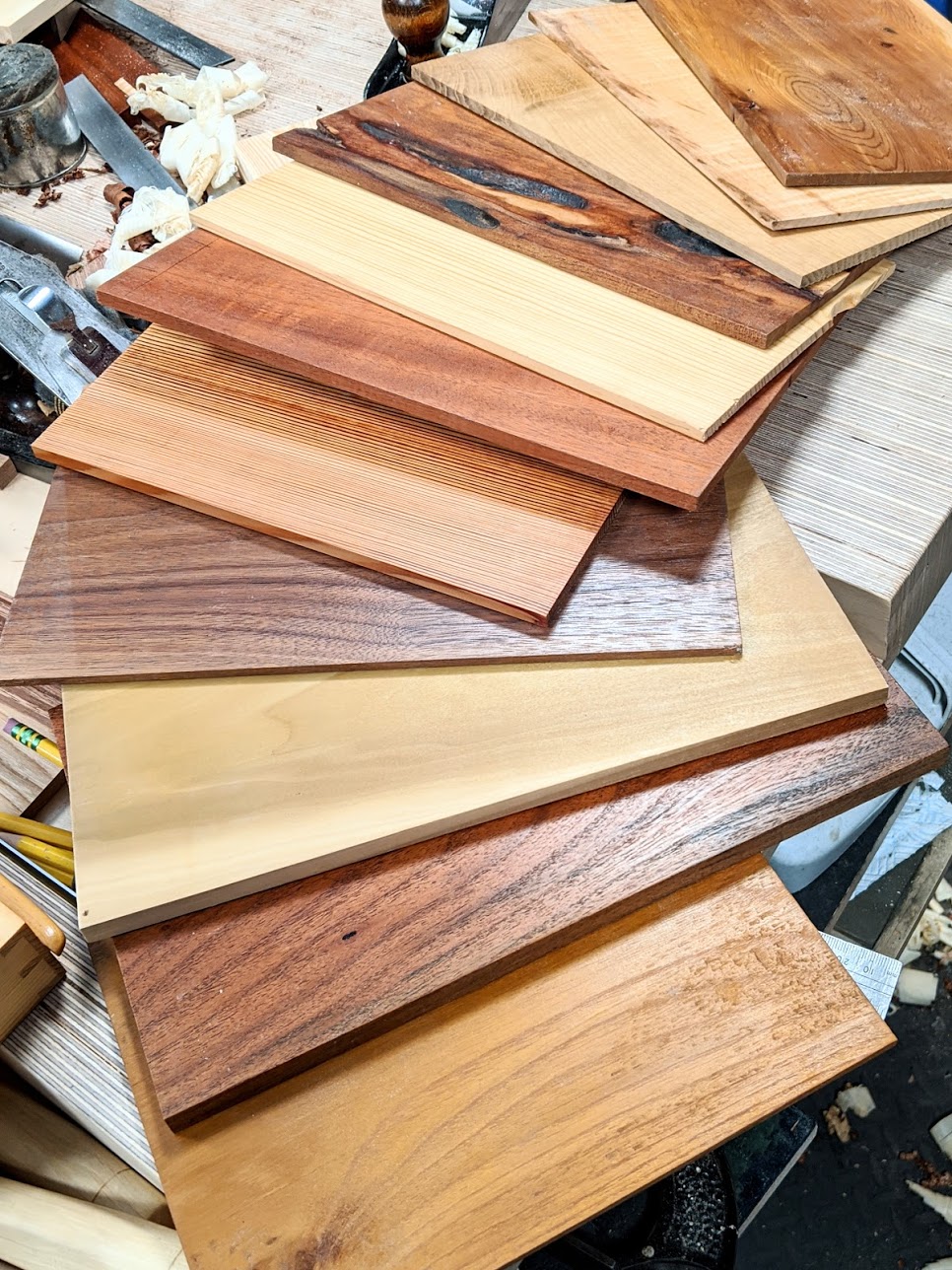
I looked at this kaleidoscope of colour in wood and felt refreshed by the diversity of tone. Take one or two pieces out of the whole and someone somewhere will say this or that version of wood is a trash wood. First off there is no such thing as trash wood. All wood is good wood be that hardwood or softwood or hard wood or soft wood, makes no difference. Mostly it comes down to woods we like and don't like for whatever reason. Also, it might depend on what we use or grow different woods for. Some trees, plane trees for instance, are specifically grown in cities like London to clean up the polluted air London is known best for. In the pre-pallet days and the pre pine plantation world, all trees were known and valued for their multidimensional uses; that's pit props, boat building and railroad sleepers (ties USA) in oak, and then cedar and ashe juniper, bois d arc or whatever for fence posts to string barbed wire from, mostly depending in where your home/farm/ranch/business was. The tragedy of the age of so much info at our fingertips is our ever-increasing inability to understand how quickly we make things go pear shaped. Palletwood is not a wood per se but a wood used to make pallets from. The softwoods are fast growing and lend themselves to plantation cultivation because they are tall, slender and pretty much branchless in that the branches are short upward pointing rather than spreading 90-degrees to the main stem. The yield from the tree is remarkable and every millimeter of girth can and often does translate into pallet or paper.
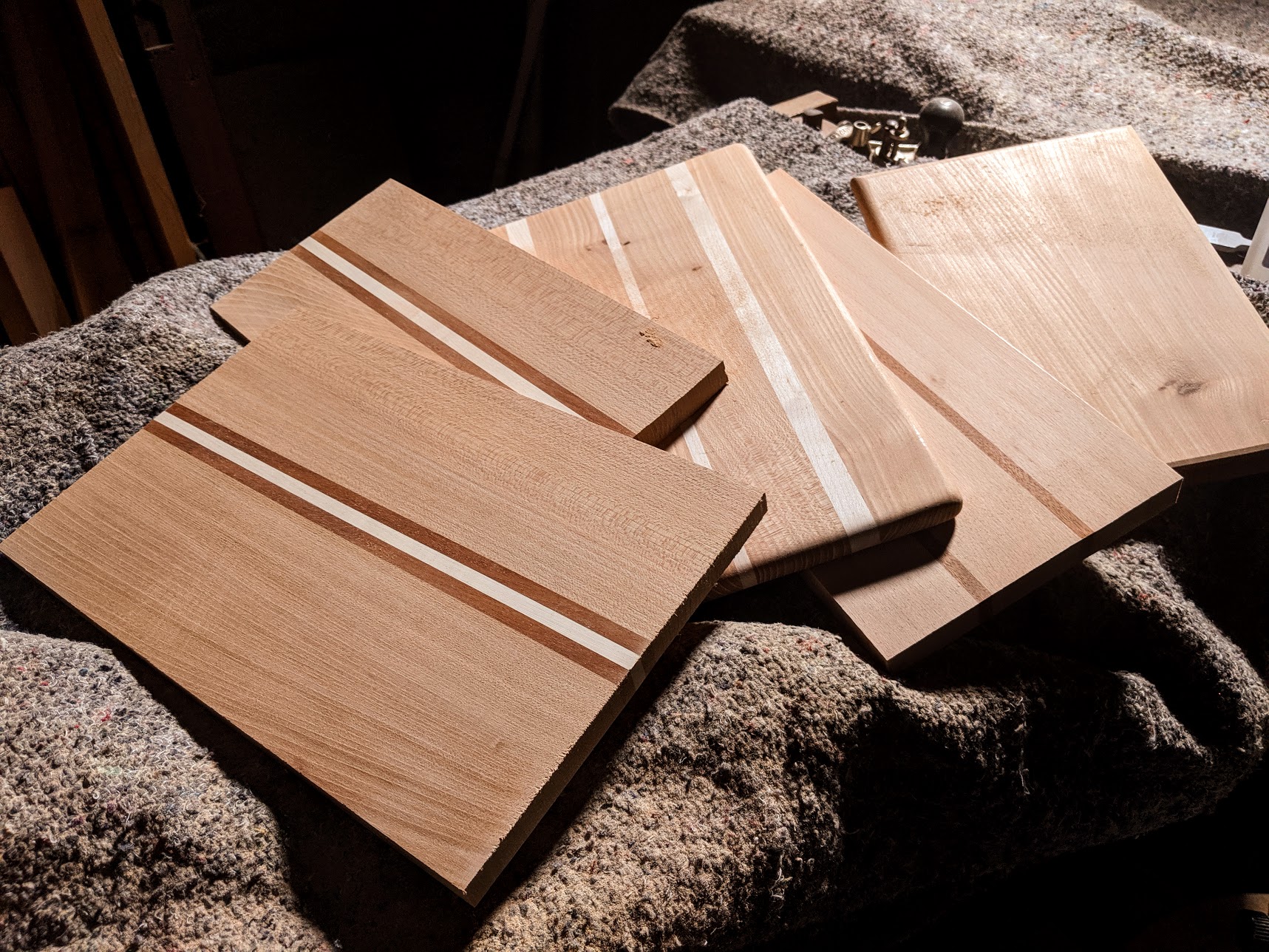
There are of course preferred woods, but our calling one over the other something bad doesn't make it so. Is it more likely that the term trash wood is just our ignorant who call it so? Those who forget that it was already fulfilling its purpose before we trashed it? The tree or the wood itself inside may not be the pretty wood (I'm thinking the more bland woods like birch and aspen, spruce and such) we are looking for, diversely rich in colour and grain, intrinsic strength and thereby something to match our expectations. Perhaps even those given to provocative incitement who like to push buttons and make statements to get a response. It's all too easy to toss out over-the-shoulder remarks to trash what's not trash by trashy retorters. I think respecting all woods is critically important and we should never forget that every tree cleans up our act and enables us to breath. If that doesn't put things into perspective then nothing will.
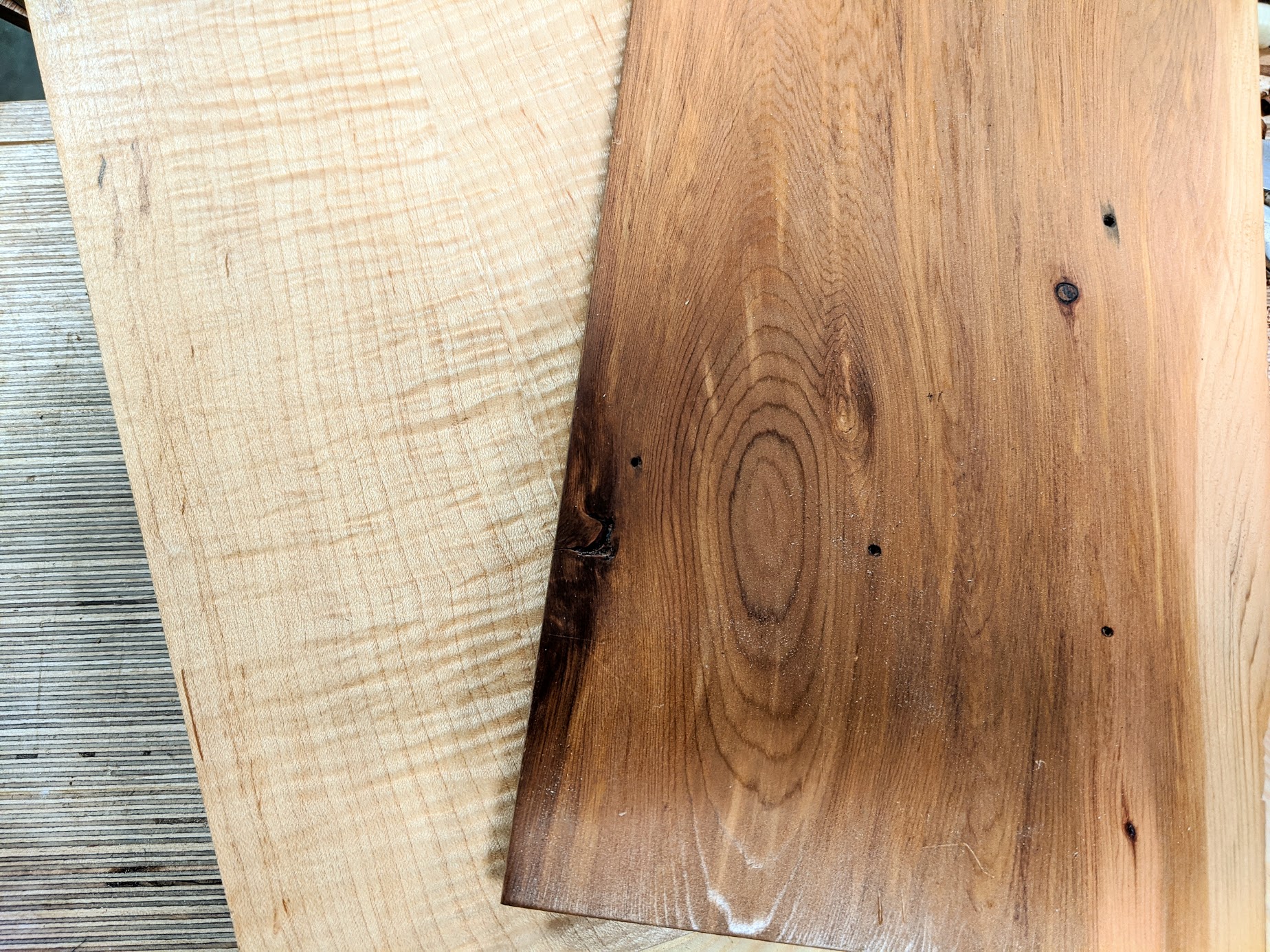
So, moving on, I gave Hannah two pieces of thin wood I had been listening to myself by flicking the wood with my finger next to my ear. I listen for the tone so that I can read the density and reflect on it. She did the same holding the wood next to her ear so that she could hear the different levels of sound absorbency in one species or piece of the same species and then the different resonance in another. Of course both reverberate to some degree, and when there are extremes, as in this situation, the contrast becomes markedly apparent. I use the word apparent cautiously as we don't actually see any difference but feel and hear it as is the case with contrast.

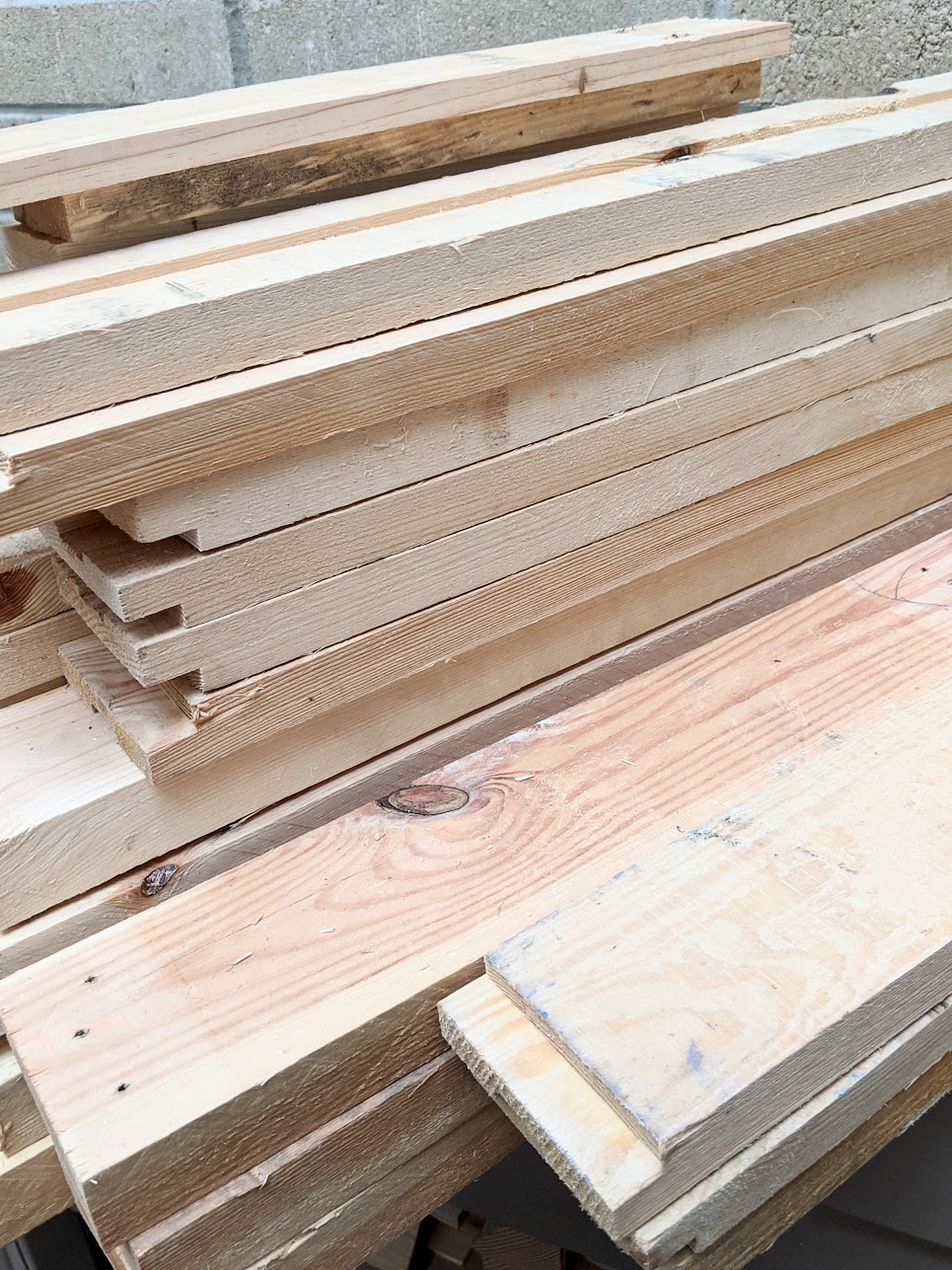
I'm making yet another box from scraps of pallet wood as parallel to one I am currently making from my recent skip find of meranti. This wood is a pine that looks, smells and works like the European redwood I grew up working with. I've had the wood in dry conditions of low humidity levels for a couple of months. Why would I do this? I think that people have heavily commented that wood pallets are indeed so-called trash wood and I understand that, but it is not what the wood is so much as what distributors in transportation require and do with it. Some pallets are indeed single-use pallets. Often, not always, they will literally be used once and often these pallets can be super-thin with regards being wood of substance, strength and durability. If or when this material, which is almost always a softwood, is to be used in European shipping, it will be spruce or something similarly soft, perhaps birch, pine, fir , larch etc. At other times the pallets may be made from a hardwood that's soft, as soft as the softwood range of trees. In some pallets, non standards, the pallet may well be made from a good if not top quality pine that's an inch and more thick. If you do take a nuts and bolts industry like logistics and distribution, that industry cares more about getting goods from A to B on budget and uses materials accordingly. They do not care about the details of pallets. If you just engineered a fine project costing you something in terms of effort, time, money and so on then even the engineer gets involved in ensuring his work is well protected. Wood must be dry, dried down to even 3-5%, otherwise rust and other damage can result, moisture in the components such as gauges, clocks and so on and then too wick between membranes that should not get wet at all. This wood is usually chosen for dryness but then too its lower absorbing properties. Additionally the wood might well need to sustain impact as a protection for what's loaded on the pallet and ferried by some kind of forklift, pallet truck and eighteen wheeler. These are the pallets I look for on my travels. Where you save is not always in time alone but in purchasing and time. It takes time to go the timber supplier where the wood will never be guaranteed to be any drier than pallets. I generally build up pallet type materials from anywhere I see it. A pallet once stacked two feet high with 4x8 sheetrock had six eight foots of clear 1x6 pine. I used it to make some doors. Nice paint-grade doors.
The second box I am making is a giveaway project to mark a special yet-to-be-decided celebration. It will follow the same pattern as the one shown here but with a different dovetail joint to each of the corners. A true sampler!
Comments ()