
My Goals
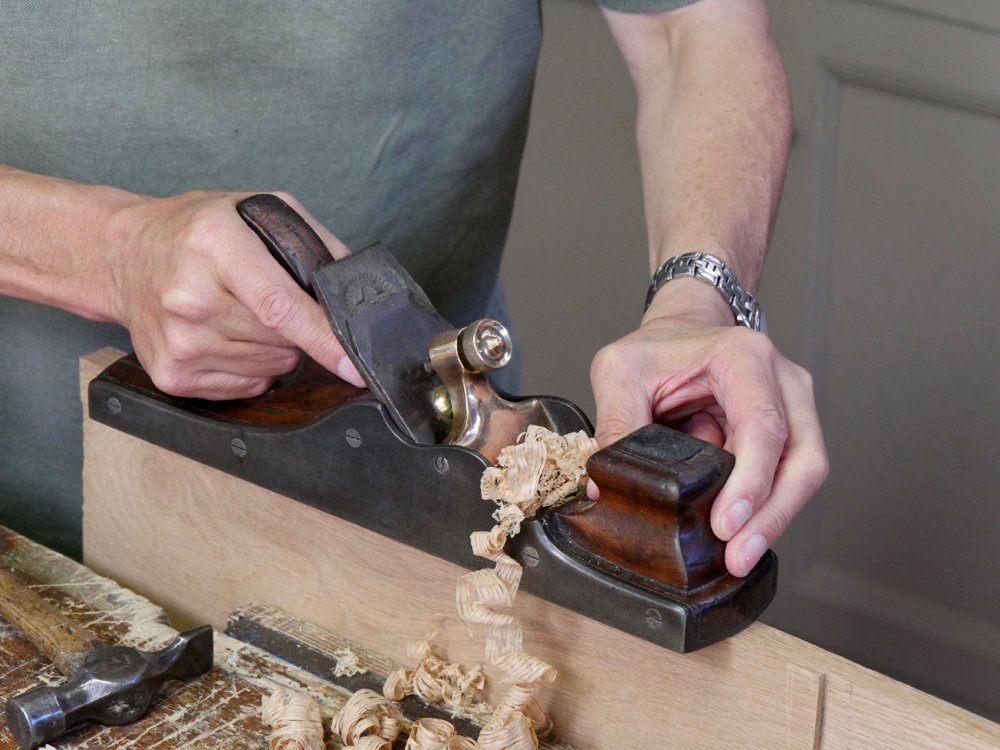
I have probably owned or used just about every type of plane and saw produced, be they the lowest of the low end and the highest of the high end and then those in between. That's not altogether true, but I have used a lot. One of the nicest planes I ever used to plane with was one made by my friend. It was completely hand made with dovetailed sole to sides individually filed and then peened in place for permanence. It was rosewood infilled and it fit my hand like a glove. He took five weeks full time to make it and when it was done I felt it was the loveliest plane I had ever seen. I never saw the plane or my friend again. Though I did enjoy seeing the skilled workmanship he put into the plane, and I would have enjoyed having it on a shelf in my living room somewhere, it wasn't really my idea of a user plane. More a luxury in the making and a luxury in the owning of it This is where the story ends for me. I do have some collectable tools I enjoy owning, but the ones I enjoy the most are the ones I use.
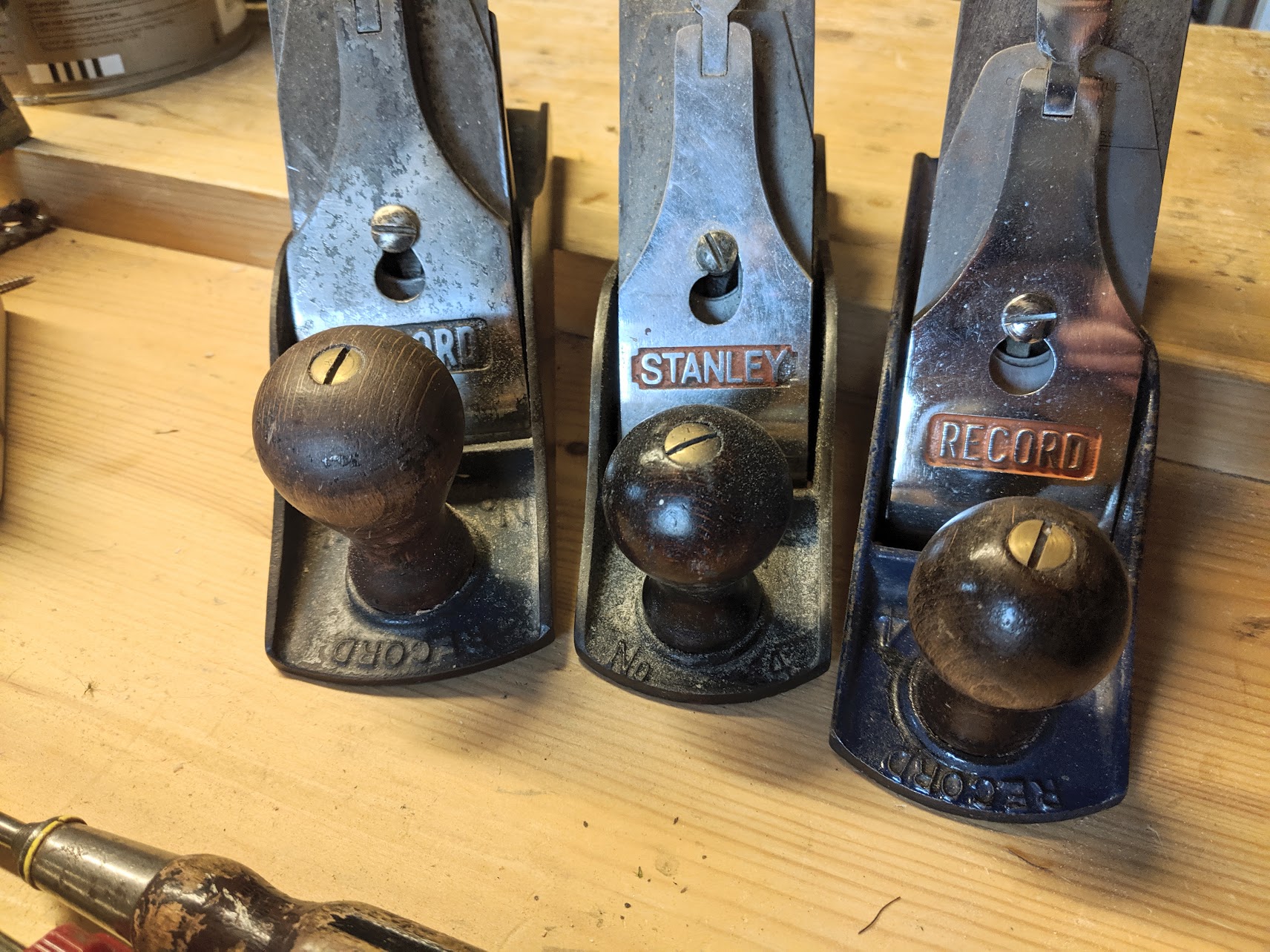
I have only admiration for those who have made a business out of making high-end planes, especially those like my friend who create absolute works of art in the doing of it using their hands, eyes and skilled filing and fettling and minimal use of milling machines and so on, but imagine how Leonard Bailey felt when he developed his own pattern of plane that would indeed displace all others on the market. The stupid thing is as it is with many tool making businesses. They truly think they're big enough and strong enough not to keep pace and up to date with market changes and the changes in people's (their customer's) attitudes. They never saw that people would buy a higher end plane as they sacrificed quality in materials and workmanship. For Stanley or Record to put out a decent quality plane that would satisfy any crafting artisan whether professional or amateur, and amateurs are much higher demanding, would take about five more minutes of a persons time and a few pence more in materials. Truth is most people would have willingly paid twice as much for the planes. They just couldn't see it. That is mostly how higher end makers made it. If they could send a plane out sharp and ready top go straight from the box, they would win. They didn't have to invent a single thing, just create their own knock offs of what was already out there but better. Not much to it really.
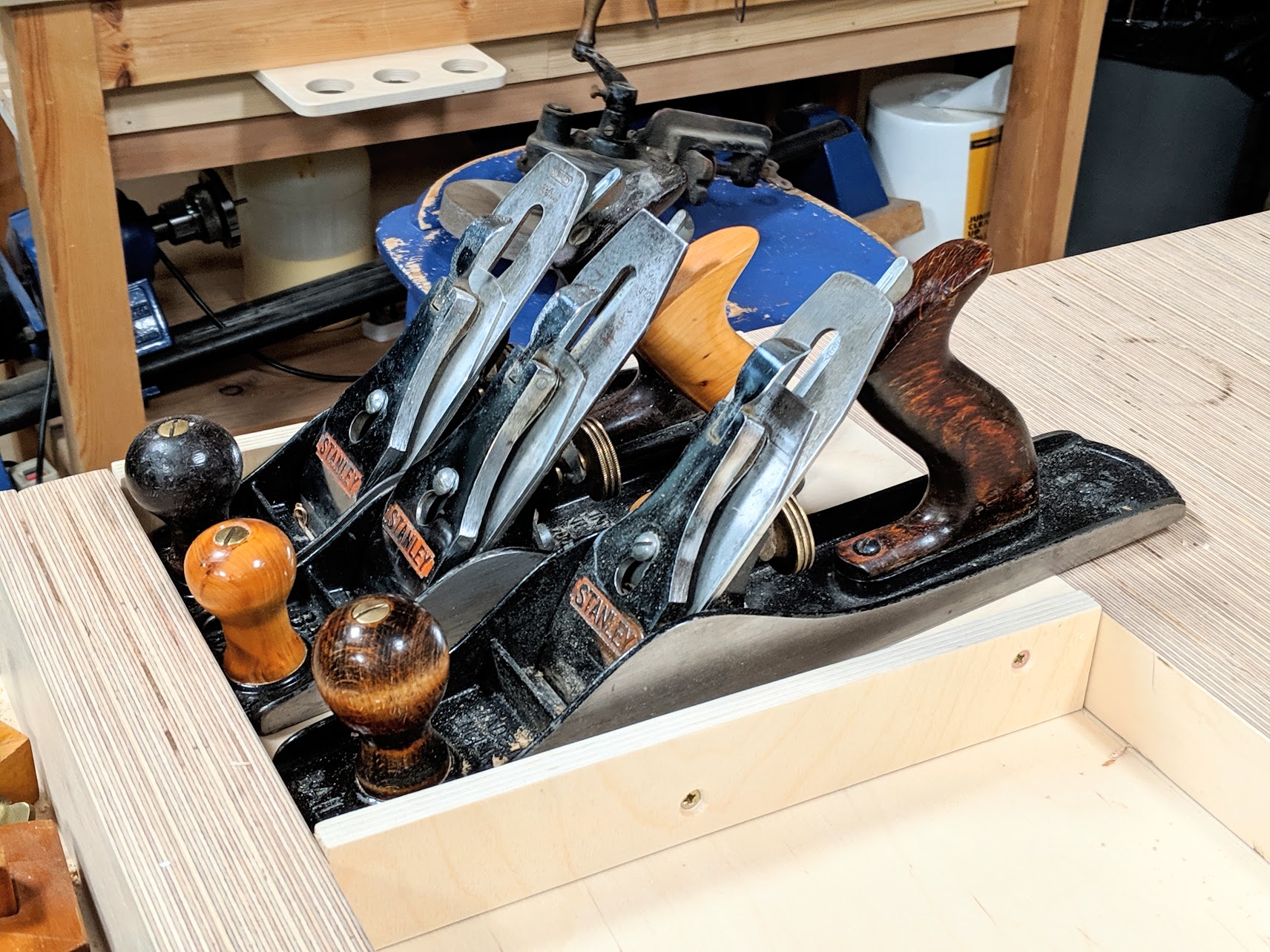
My planes are more the UK made Stanley and Record types I grew up with. I have an affection for them, I know I do. They seem to me to be well balanced and I switch between the #4s and the #4 1/2s de[ending on the widths of shaving I want, the work in hand and then the weight to strength ration I like to mix and match in plane-to-task measure. Because these planes are so inexpensive and plentiful, and they work as well as every high end plane and any in between, I think you should in fact own two or three for efficiency. I save a great deal of time by sharpening several planes at the same time and that indeed puts distance between sharpenings too.
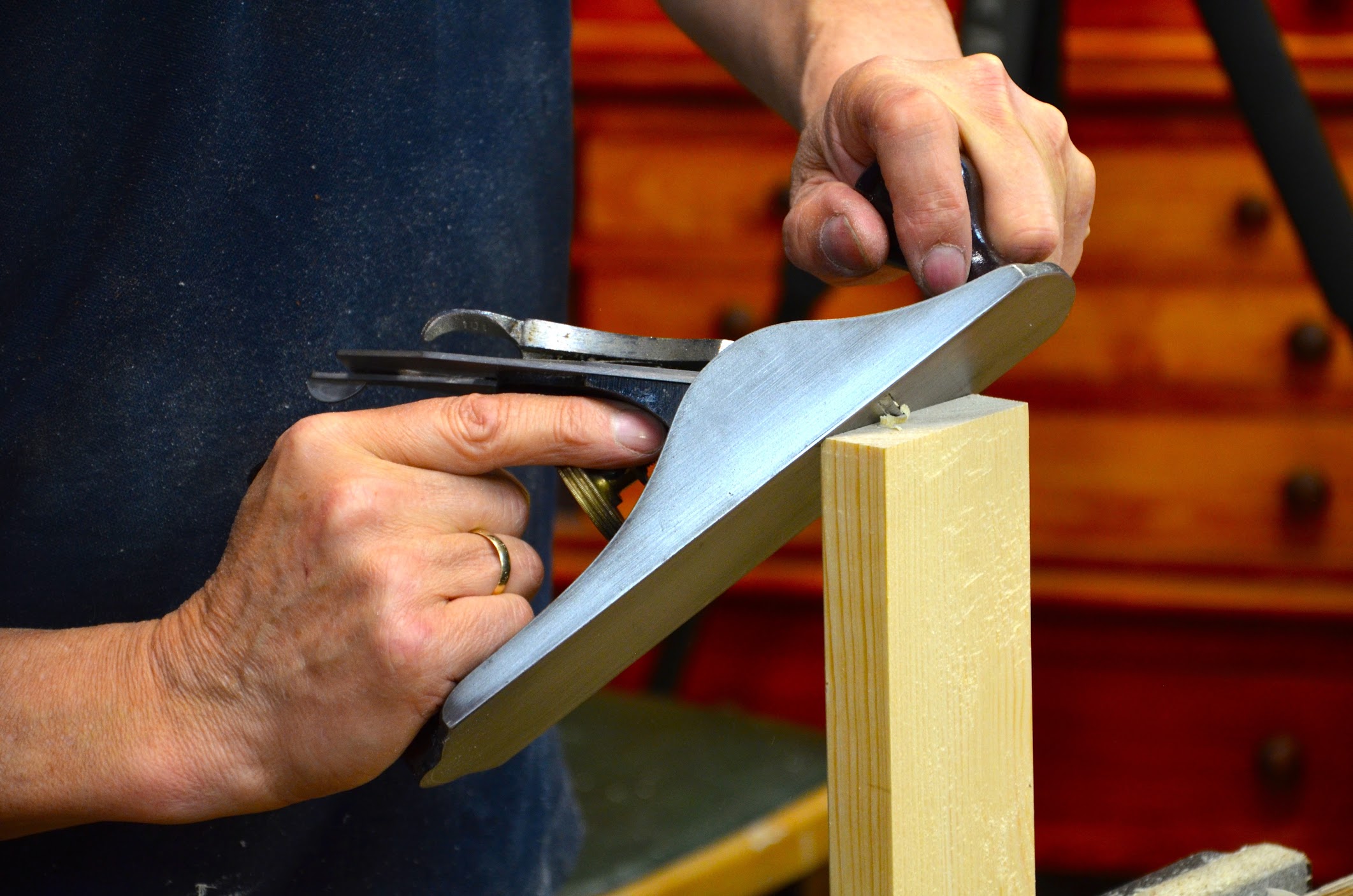
Some say that modern steels keep their edge longer. I am sure that that's the case, somewhat anyway.Whether anyone has really been able to measure this for themselves and by how much longer is questionable. And then too, always remember that when a blade or cutting iron is indeed made of a harder steel alloy it also takes more effort and longer to develop a sharpened edge. Personally sharpening up frequently is always my preference. I like the crispness regular sharpening gives to me and only laziness prevents it. I have a system with my planes off camera where I use two and even three of same planes of the same size alongside one another. The duller one prefaces a next level for roughing off unevenness and need not be pristinely sharp all of the time. I then follow on with the sharper ones so I use the dull one until I need to sharpen ahead of the sharper ones. I then sharpen up all of the planes and cycle through again. It's worked for me for years.
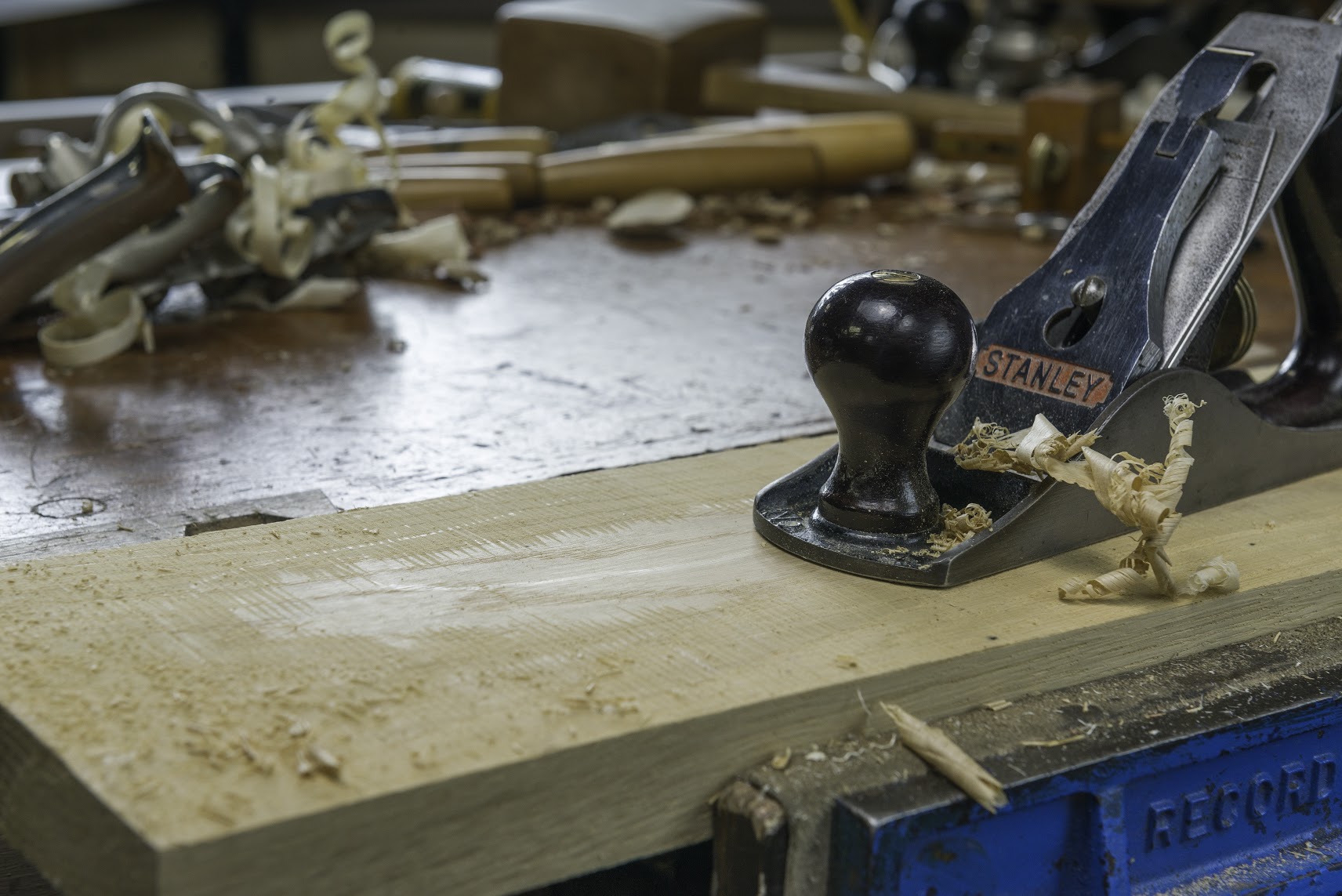
It's questionable whether heavy planes are as practicable in real life but some people just admire heavy equipment in the same way they admire Tonka trucks as children that extenuate into adult life with one-ton dually four-wheelers as city-slicker images they have of themselves. I am always amazed that with all of the scientific data at a single click we don't reevaluate what, where and how we drive. I have done this with regards to the extent I use my own energies at the workbench with the tools I use. For me, because all of my planing is by hand, a heavy plane used for over two hours in a given day translates into bench lifting hundreds of pounds over the amount I need to in a given period. Were I to do that I would not get thew work done that I have in mind and I would indeed be exhausted with a misuse of my stamina. Every time I pick up a heavier #4 I rapidly return it to the bench and plumb for a Stanley. I have yet to find a heavy plane that will do more than a light one. Those advocating heavy planes are usually selling them somewhere in the chain.
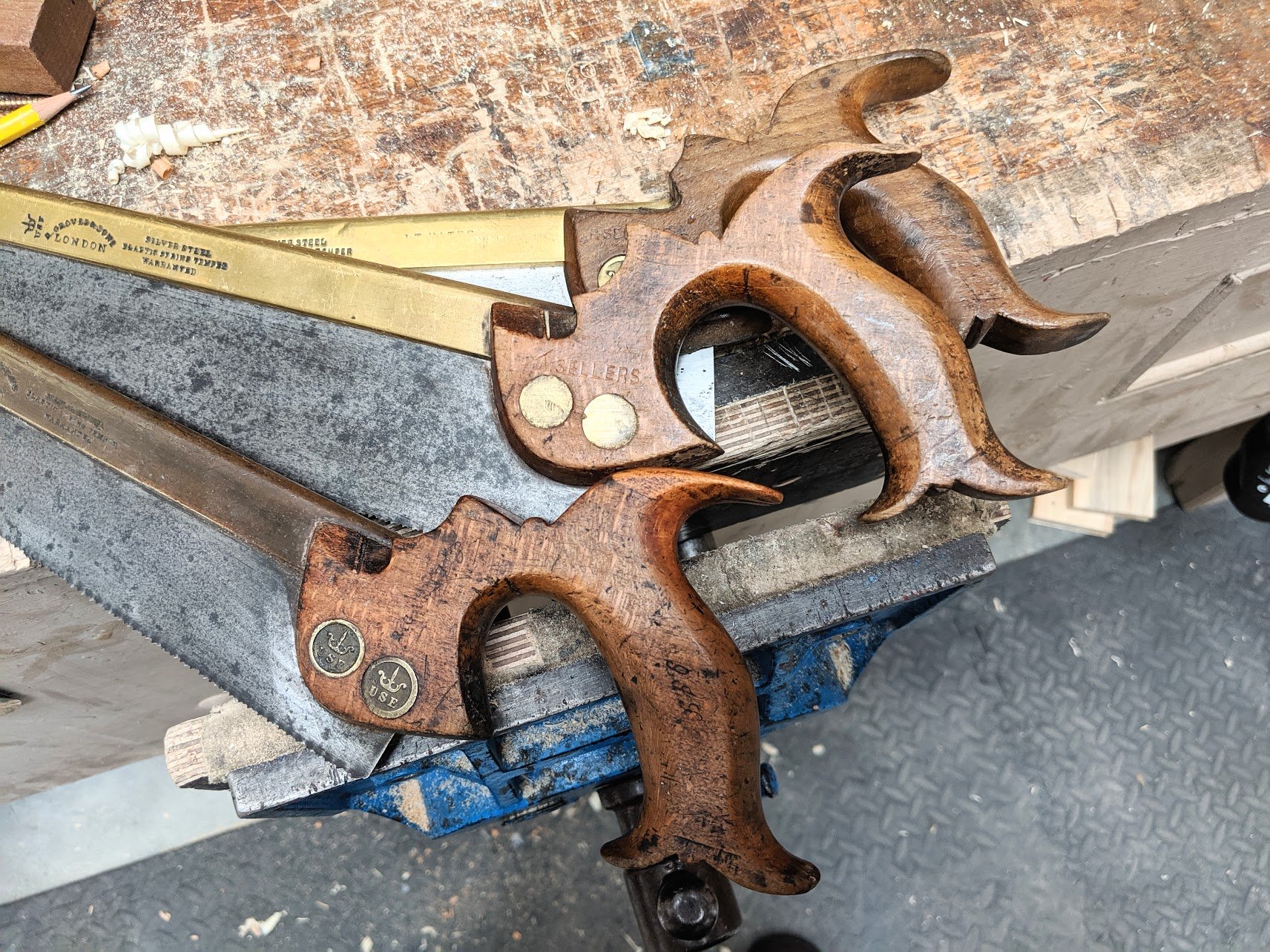
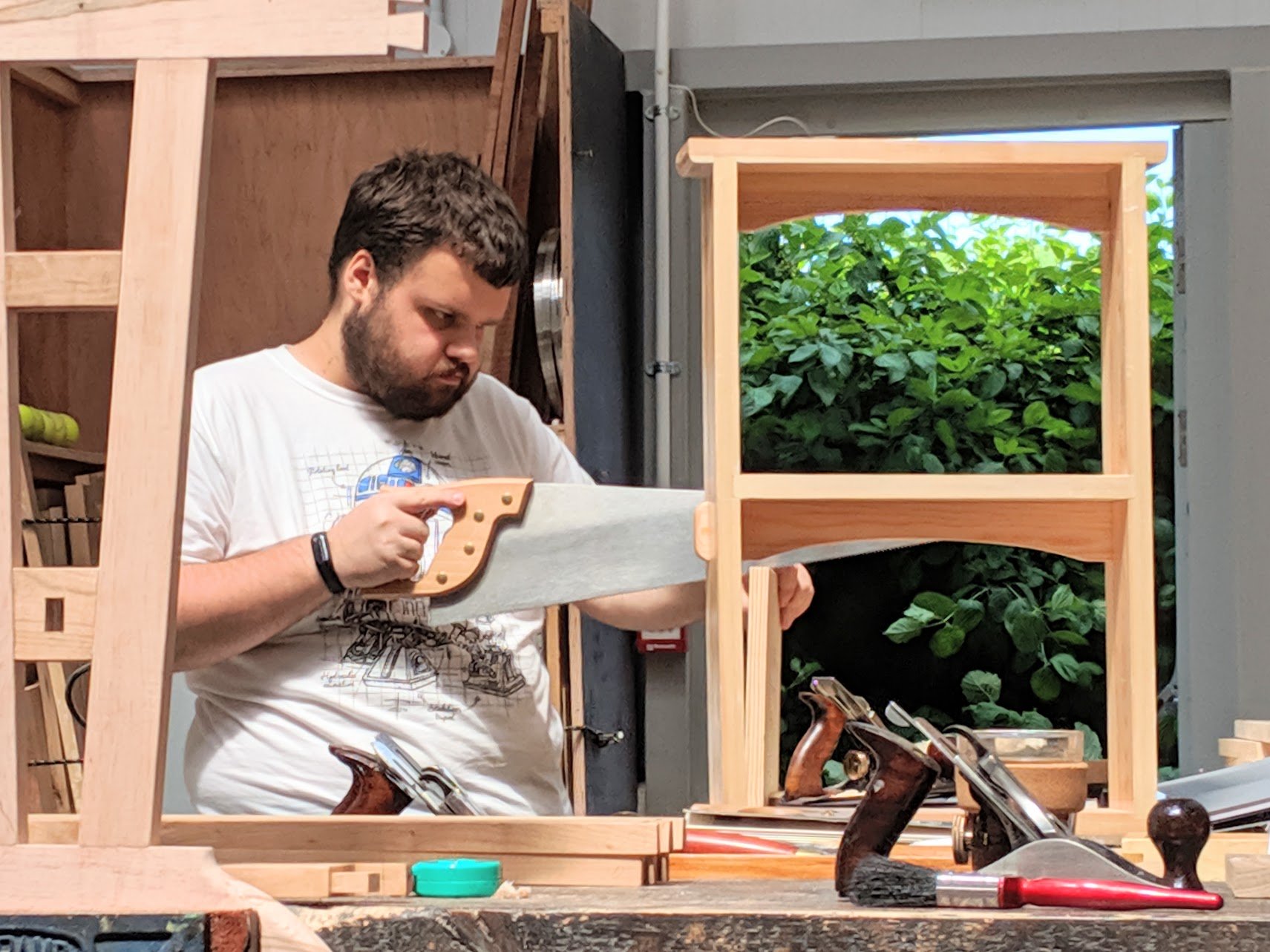
With regards to handsaws, tenon saws and such I feel the same way except for some reason advocates have never suggested heavier saws, but more the lightweight disposable types you pull instead of push. Here again I have shown how simply sharpening any new saw, including the so-called premium versions, are always improved by just touching up the teeth with single stroke, a good fine file and a light touch. Whether you buy new ones or old ones, premium ones or relatively inexpensive versions, each and every saw needs sharpening soon. It is my experience that moist people defer sharpening till way after they should. They think that a saw that cuts reasonably is good enough but generally it's not. I like to take care if my saws with a single pass, quickly, and then get to task. The only time I need to reshape a tooth is when I buy a secondhand saw that's generally been neglected, abused or both.
Matching work to weight, to strength to wood and many more is for me the more critical. Taking successive full width shavings from one end to another on perfectly aligned grain and reasonably straight wood proves almost nothing, and that's no matter the wood too. Ten strokes or so only dulls the cutting iron by a little. You can do this with most planes even when the sole is hollow or round. Where it's most important is at the intersections of jointed areas where you plane up to an adjacent unlevel part you must reduce to some great or lesser degree to make the surface align perfectly. Fitting drawer sides and widths to cases too is little to do with the need if a heavy plane, a thick iron and extra hardened steel. My lightweight Stanley, I weight them all and they can markedly differ, is amazing in the fray of wild grain taming. It whips and spins with the ease of an Arabian gelding and is as precisely accurate as a Westphalian dressage champion.
Convincing others that the basic #4 bench plane by Stanley and Record will likely be your very best choice has been somewhat difficult but I think that that is more to do with people relying on the maxim, 'You get what you pay for.' Whereas that can be true, many fail to remember that the Bailey pattern planes made by Stanley and Record have a well proven track record spanning a century and a half with almost no changes through their extensive history. It's only in latter times, to their shame, that the quality has deteriorated but in any given day you will have a hundred planes to pick from on eBay and rarely will you need top pay more than £25 a pop.
Comments ()