
I Think It's Good
My day unfolds without a plan some days, but I embrace the steps as each one obviates the course I'm taking. Today I cut wood for the dovetail tester box I promised and I was happy that from it's rough state it planed out so well with a jack and smoother. Sharpening up takes but a minute. Three diamond plates and a strop is all I need to get in the zone. No noise, no fuss, no eye protection or masks for breathing. It's too simple!
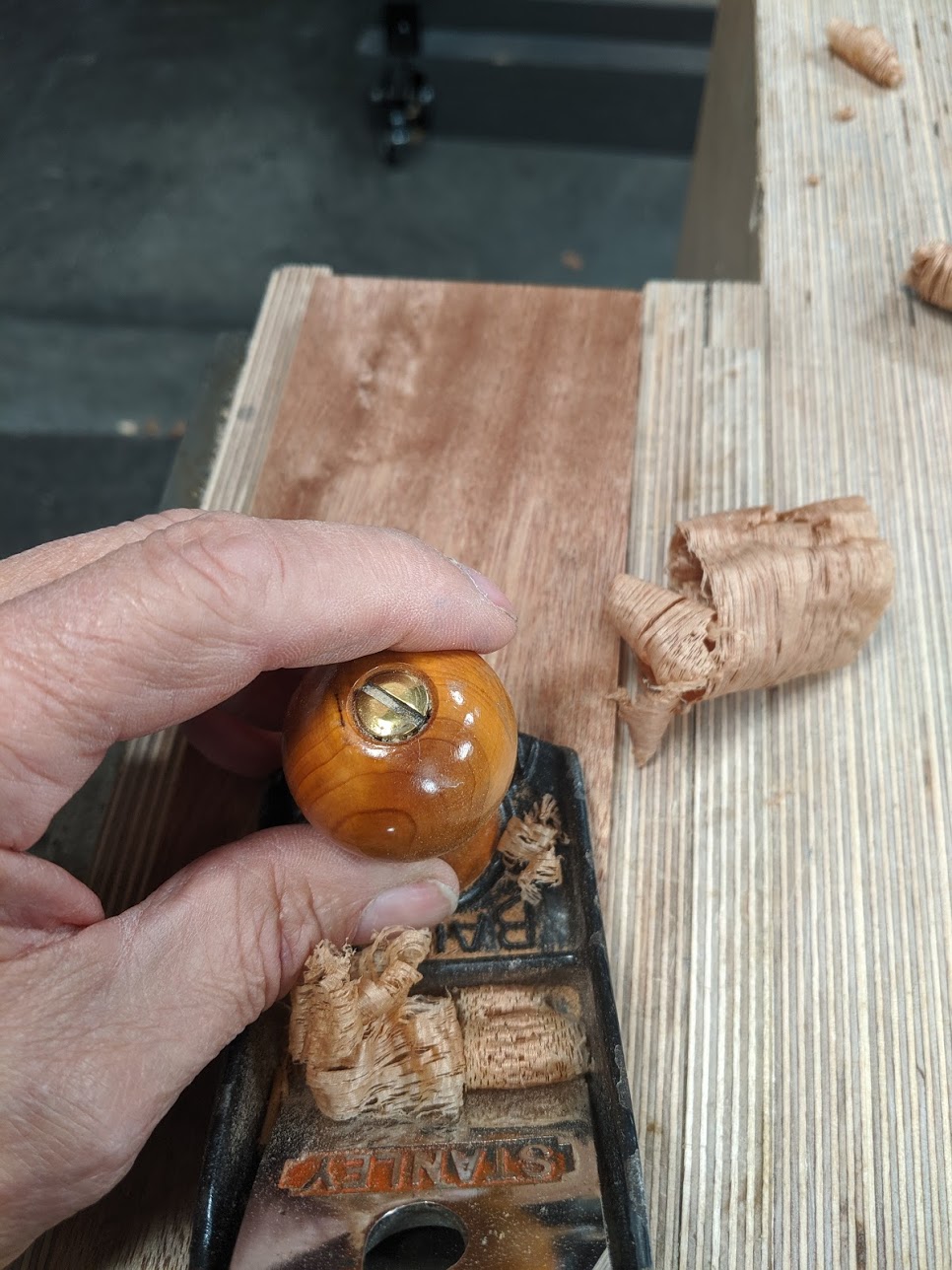
The wood looks like a cross between sapele and miranti and feels the same way as it looks in the working of it. There is just a little tear-out but it comes out with a second shallow-set stroke. Most woods are unpredictable if you treat them all the same. Best to learn them. After a while you get to know as soon as the plane sits on the wood what you are up against. I place it there and push ever so slightly. From that tiny nudge I read the grain, flip the plane and plane away. I like that predictable unpredictability. It means I have engage with the wood, interpret the message I get and adjust my attitude as well as my plane, its depth of cut, its direction, the pressure and my hands, arms, shoulder and head. So many adjustments in split seconds. And even then it's not done. the adjustments are change according to what I feel beneath my hands though most of the time it's a subconscious way of working. Negotiating more than just working. All woodworking with hand tools is about negotiating. We must compromise all the time - that much is predictable.

I just sharpened up - yet another non negotiable. Sharpness can never be compromised and my experience tells me that this is indeed the most delinquent of tasks for most woodworkers. the first non negotiable is staying in tune. Engaging with the material at the most maximum level but then too listening, feeling, watching and, in less obvious ways, bringing in the very core of your being to decide whether to take that stroke or not. This risk of work as Pye so cleverly phrased it is your decision alone. Machinists love the predictability of machining their wood, and then too the ease with which you feed it into those spinning jaws. Funny if you think about it. Every stroke you take with a saw or plane is 100% efficient yet machinists will tell you that hand tools are inefficient. In reality though, a machine makes hundreds of thousands of cuts to cover the same distance a handsaw does in just a few. If I rotate the wheel of a bandsaw by hand I can make one revolution to cut two inches of wood and yet when the motor is engaged it makes two or three thousand rotations.
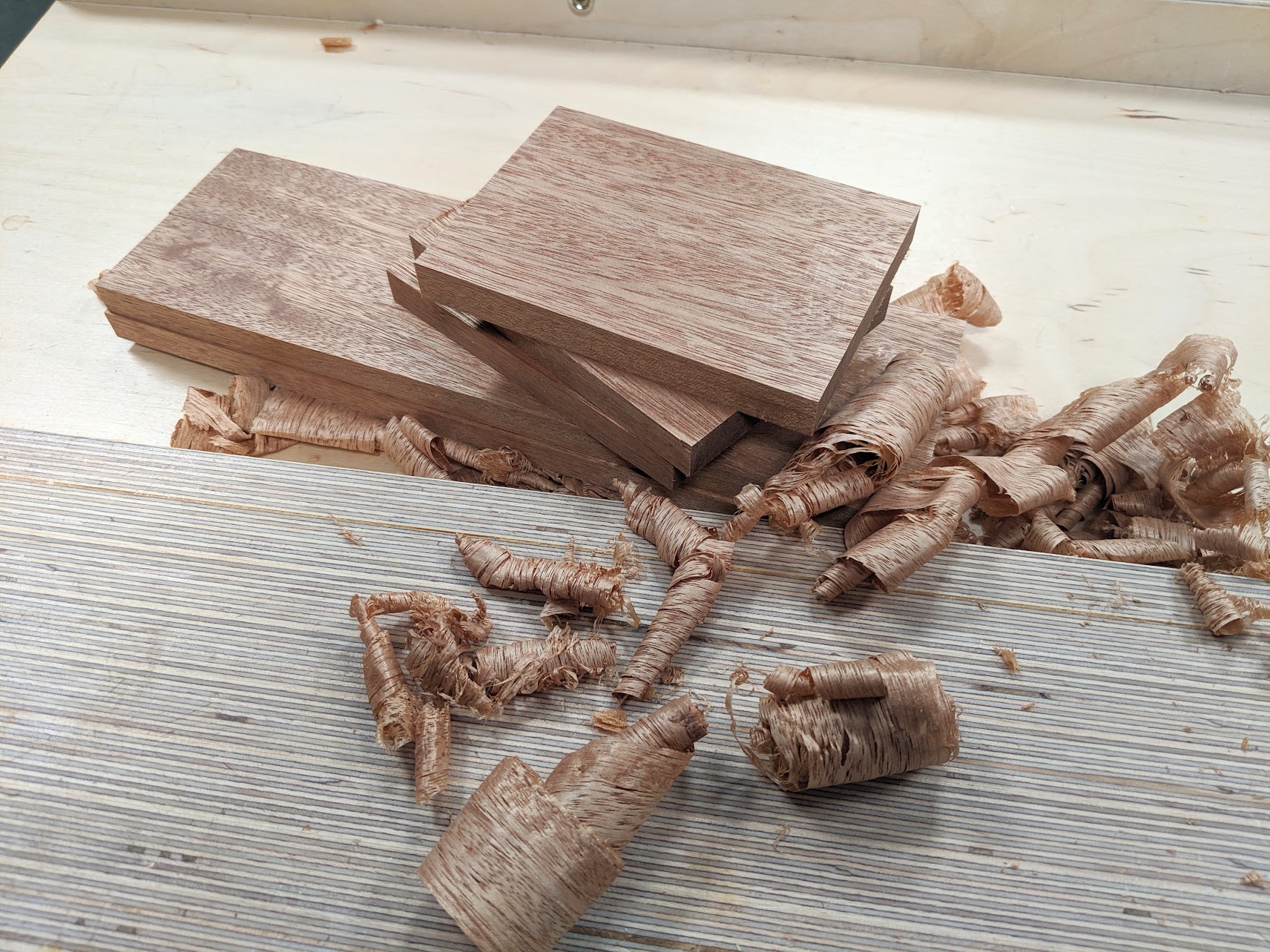
What I have enjoyed this morning is both using the bandsaw with a new blade installed and the slicing of the evenness to thickness. More than that, I see my power planer that could joint and thickness my 20 pieces in a matter of minutes but I chose, yes chose, to true and square and thickness my final stock using a bench plane. I enjoyed using the vernier to establish thickness and I have a very unique system for getting all the pieces to the same thickness without measuring every piece. I doubt anyone else uses my system but it works even within a thou'.
And now, I just finished a wonderful lunch of home made French onion soup with hearth-baked bread and I must jump back on my bike because in 10 minutes we are filming my critique of dovetails people sent in for me to cast my eye over. I go past the lake along very muddy tracks. I cover the winding, twisting paths at 12-13 mph. Fast enough for an old bloke on a bike. But I am looking forward to my afternoon. See you in the video later.
Comments ()