
Going Against It!
I see men and women from the Sophos cybersecurity entity next door every day. They escape in ones and twos from its high-rise glass edifice of corporate business to snatch a bit of exercise and sanity from nature at lunchtimes and it makes me wonder what it would do to some of them if they had a woodworking workshop there for staff to work in even for just a half hour or so during the workday, or even after work?
Facing the reality that so few people actually make something, anything with their own hands these days leaves me always concerned that our cultural shifts have left a huge hole of unresolved issues that seem to me almost insoluble. In my world of making f you are not making something with your hands, growing something you planted or cooking something from scratch it feels so, well, incomplete. These arts are so intrinsic to our humanity and when they are displaced in the way they are today the arts lie dormant. Mostly they just lay down and ultimately die from, well, a kind of systemic malnourishment. I hate to think such a famine is taking place. Imagine such a thing as craft malnutrition!

Because this increase reality seems to be the undoing of doing I think it has become ever-more important to at least consider a person's future to include the spheres I speak of. For decades I grew food, lots of it. I raised chickens for eggs, incubated them, and then for meat too. I did that for quarter of a century where we ate home grown eggs, dunged our garden with the tilled in chicken manure and enjoyed an alternative sphere to my other sphere of making. In recent years I have scaled back, but mostly because my children have flown the coup, but I still grow six months worth of potatoes and onions, tomatoes and lettuce, courgettes, things like that.
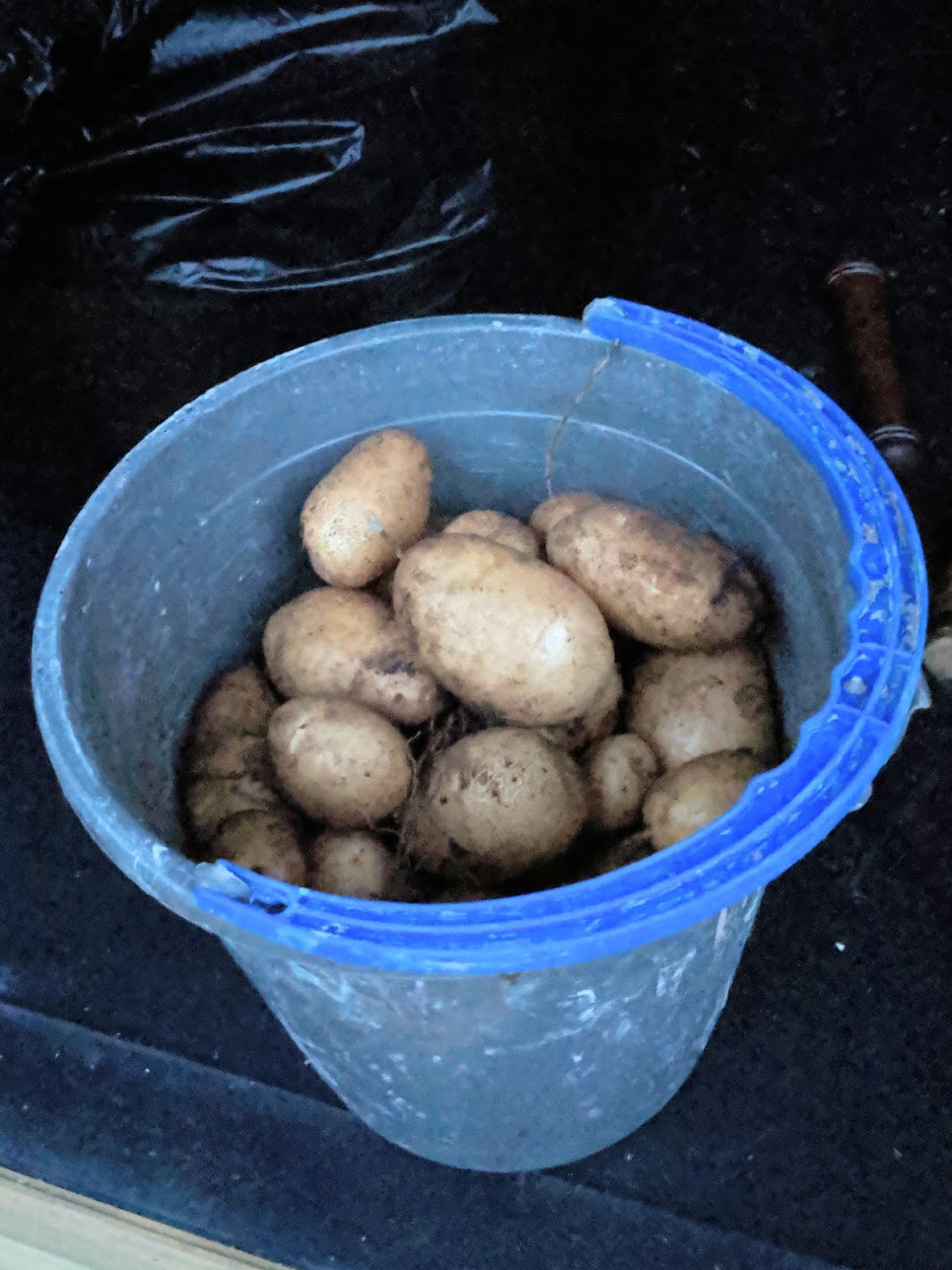
It takes about an hour a week that's all. I think it is important for us all to consider channeling some of your energies in the doing of these things regardless of what that is, and I am hoping all the more that my plans to build a whole house range of different furniture and woodworking projects will be an answer for many such people to scale up their making of things.
It's really not that long ago since half the world was involved in the making, the cooking and the growing of things . Another percentage did the keeping the book keeping as accountancy, then others replenished the stocks and generally supported those in the making, growing and cooking and baking. That's all changed over the past century or so because mechanisation replaced physical input through manpower by a massive degree. Now we've got cherry pickers with elevated platforms to work from, and then forklifts, backhoes, dump trucks and such and all of that is well on the way to becoming robotically manoeuvred. The follow up to that gave us computers and with AI well on the horizon half the world could well become even more redundant. That being so, the problems become exacerbated by these so-called newfound freedoms. Should we accept them or resist them or do we actually even have a choice?
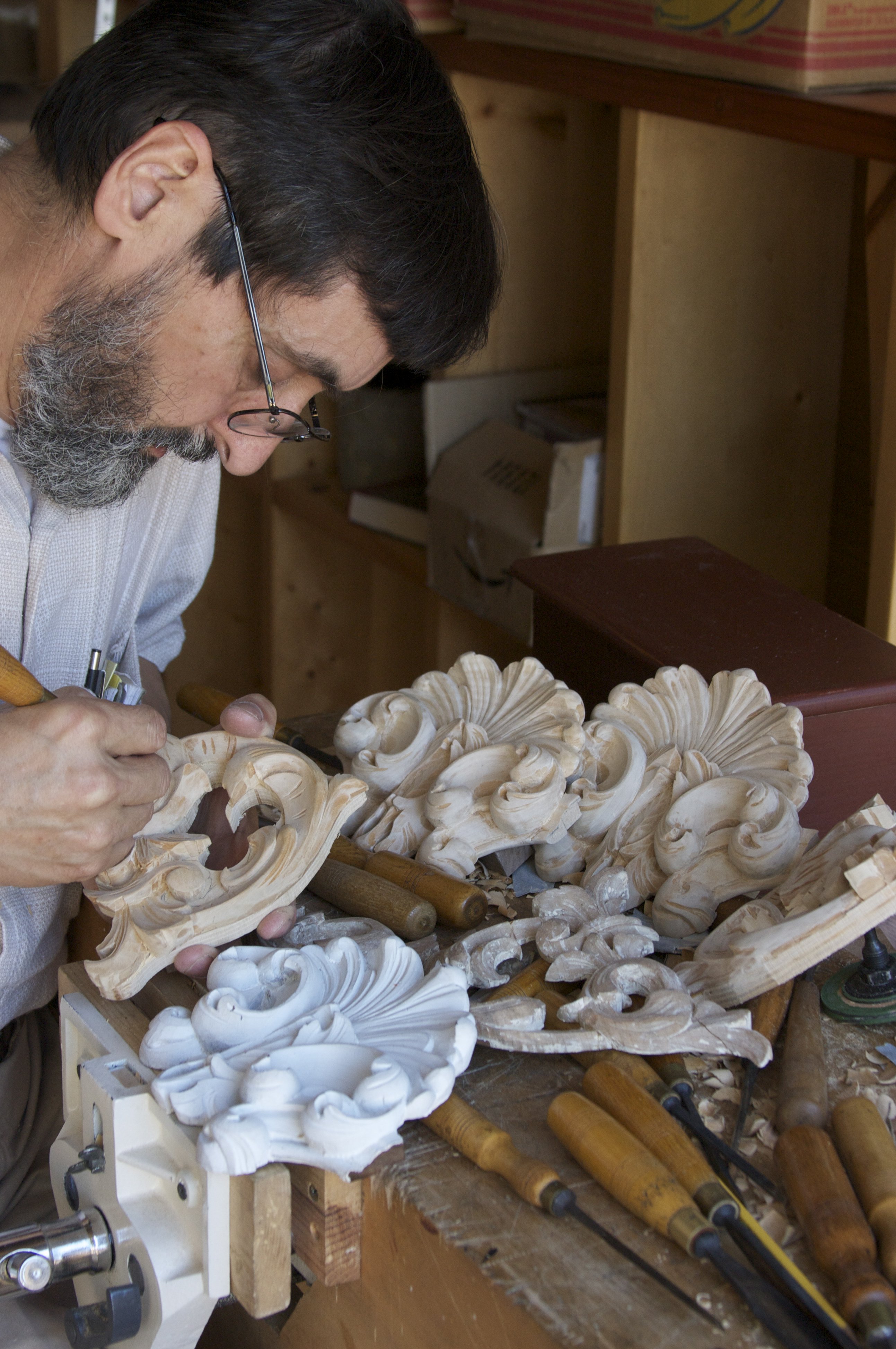
The reality for me has been coming for a long time. In my youth, furniture makers relied on handwork for about 75% of the work. Today it is in the 95% region for so called studio makers and 100% in industry where assemblers merely jump in if something slips on or off the conveyor belt. Of course that was once limited to more isolated realms of commerce but the shift now affects those of us in the amateur realms too and this is what I have personally fought against for years because I knew that skill would diminish within my craft and I didn't want to see that happen. Why did it matter? It mattered because a generation was being born that didn't realise the actual journey of developing skill could be more rewarding and fascinating than the completion of something. It's a generation that may actually never make something with their hands. At 13-15, I was making live mousetraps that meant soldering tin plate, threading rods and making nuts with taps and dies, folding metals to form boxes and even making springs for an auto-closing door once the mice entered.
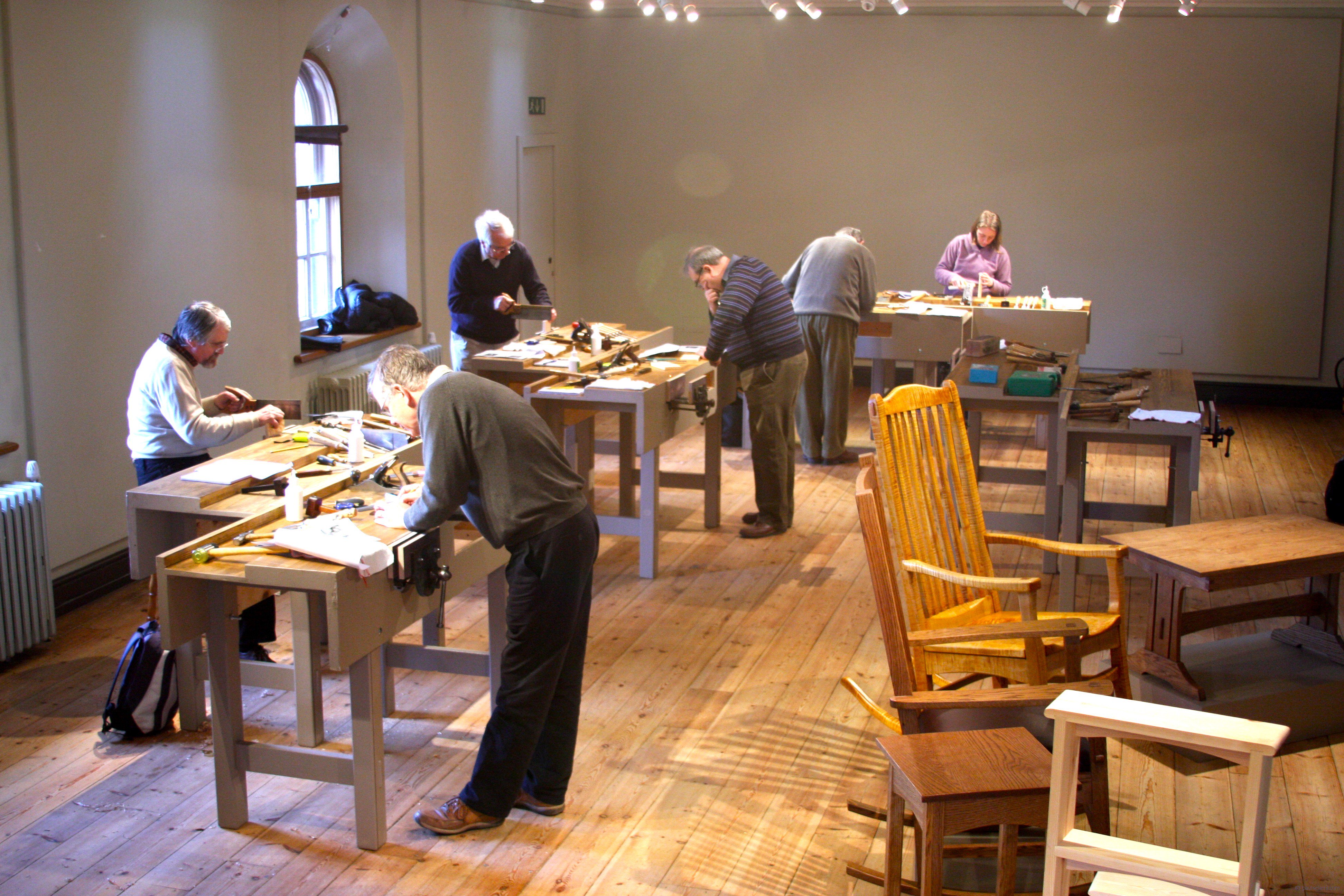
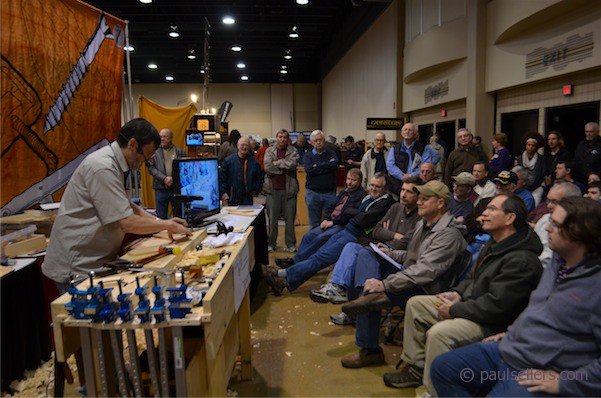
In the beginning of my strategy to get people into making I never expected such vehement opposition. It was an opposition on every front and I was on my own out there in the great big world of woodworking. When I first began to teach woodworking I felt more pressure and intimidation but it was =n't at all from the realms of the amateur but the so-called professionals. For some reason they got truly offended by my endeavour to realign people to the craft of hand work. It wasn't at all what I said so much as what I did. At the shows where they were selling or advocating or using only machines, I cam along as a paid demonstrator to show the "old ways" but the reality became evident: The visitors wanted to see more of it. So much so that they sat down for an hour to watch and did not budge. I made a decent wage just showing off my skills. The real problem came in my showing how to cut twin dovetails in a two minute demo to a standard where they would hold water. The audiences grew as word got around that there was "this English guy demoing dovetails that was amazing!" Ultimately there'd be 200 men every hour that I demoed to. In a three day weekend that meant thousands and with a show every week for 12 weeks the numbers stacked up. Ultimately I became the uninvited guest. The way I gauged my success was by the diminishing return of invitations and guess what? Today I get no more invitations.
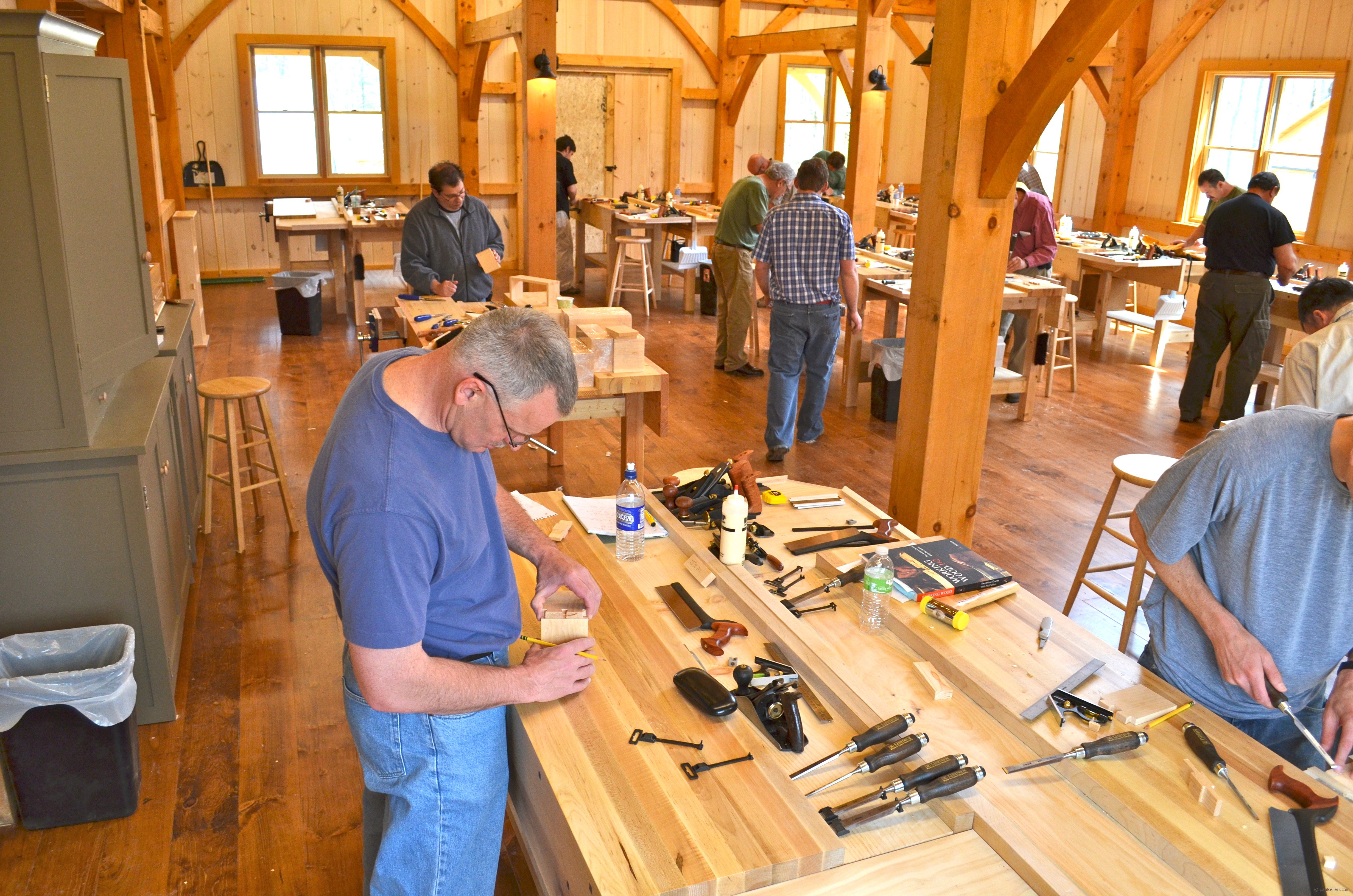
All of this still means the issues are not really being addressed. I had to take a break from teaching classes on a full time basis in both the UK and the USA because I was so time strapped. In the last two years of 2016/17 we opened the classes for registration and all the classes were filled and paid for the year within an hour. The demand is still there. It's an unfortunate thing that here in the UK educationalists have gone unopposed to make shifts in schools that basically eliminate the art of craft working from the curriculum while CNC and technology steer them only toward industry and industrial type production. These so called educational leaders base everything on technology and have been well proven to be fully incompetent to make insightful decisions. They saw only ways to industrialise the course work of what was at one time headed craft. That would include woodworking, metalworking, sewing and many others. They reinvented this area of education and prescribed a different agenda for those who would teach in these spheres. Design and technology became the ultimate new enemy to developing any kind of craft and skill although I do see that technology is indeed crafting and skilful. It just has nothing to do with handwork per se and it is very evident that we now have vast percentages covering two generations that are unskilled in the manual arts over a diverse range of skilled areas. The children had everything dumbed down to using only computers as the mainstay of the new realms we call design and technology. They were being groomed for industry and promises were made that if they wanted a successful future they would always need a good degree and that success is always measured in how much you earn. It has become all the more difficult to counter this kind of cultural precedent because the young are so governed by existing paradigms and the subject is so impossible to broach because people like myself and many a hundred thousand others never have access to tell them something different.
Thankfully we are able to reach these missing generations via the work we do and their desire to develop some alternative recreational activity. 99% of achieving anything is a made up mind and many friends from the tech world are very much enjoying the making of things in whatever spare time they have.
Comments ()