
A Poor Man's Raspy Thingy
My reason for revisiting the issue of shaping wood by hand is this: I think that it is very likely that people in general cannot spend a £120 on a rasp to make a project like say a spoon that they do not know if they will like producing more of into the future. We've also discussed the reality that many if not most of the four-in-hand rasps work very poorly and do not last at all well. If you need to make one wooden spoon or two, or perhaps a spatula and a cutting board, even the Shinto might well be prohibitive, you cannot really justify the outlay for such minimal use of a tool.
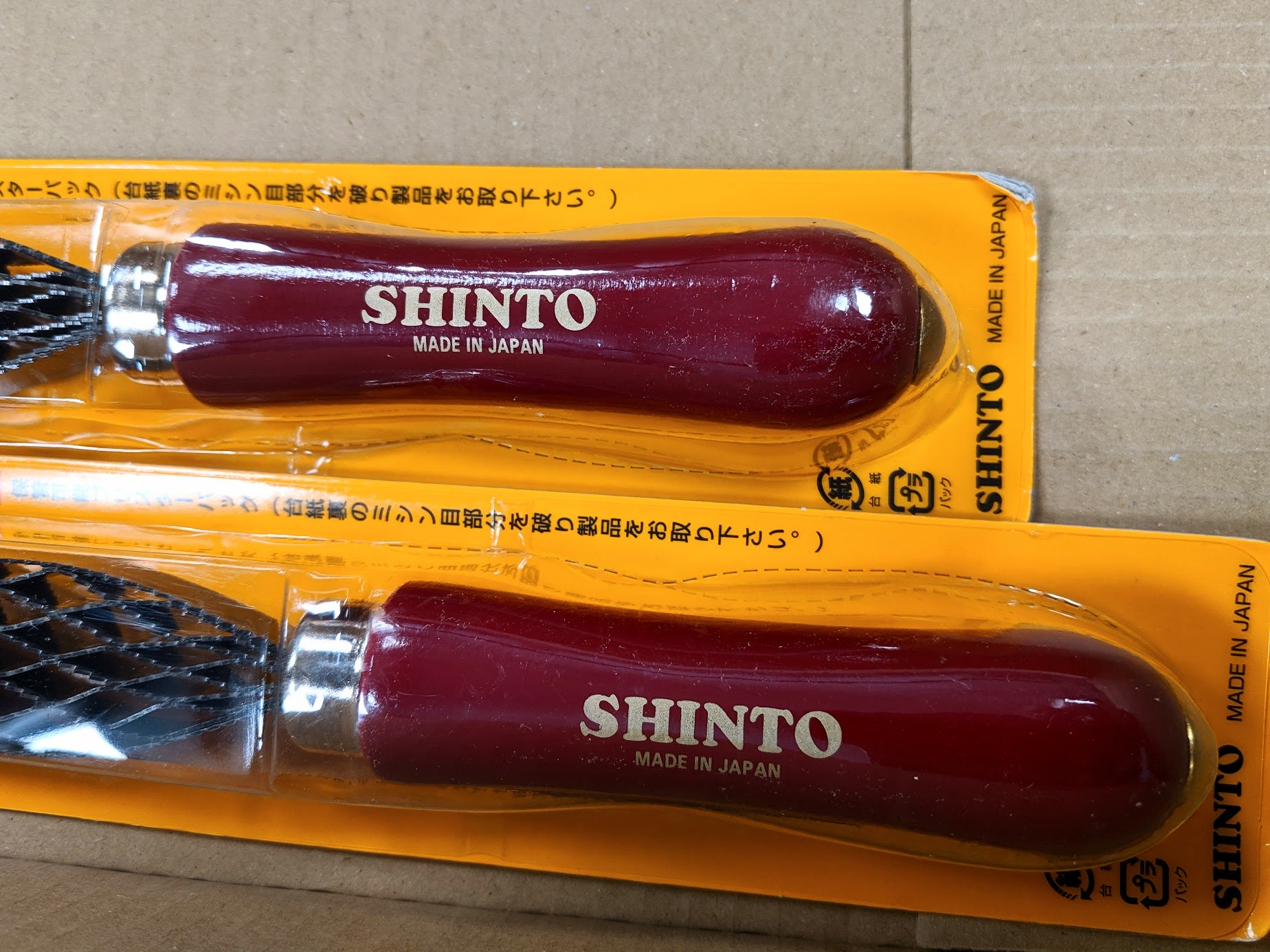
That is not to say that the premium rasps are not worth it, not at all, or the Shinto substitute, just that we have to have or be a solution and especially so in times of need, times of austerity and times of trialing our hopes to become that woodworker we always hoped to become.
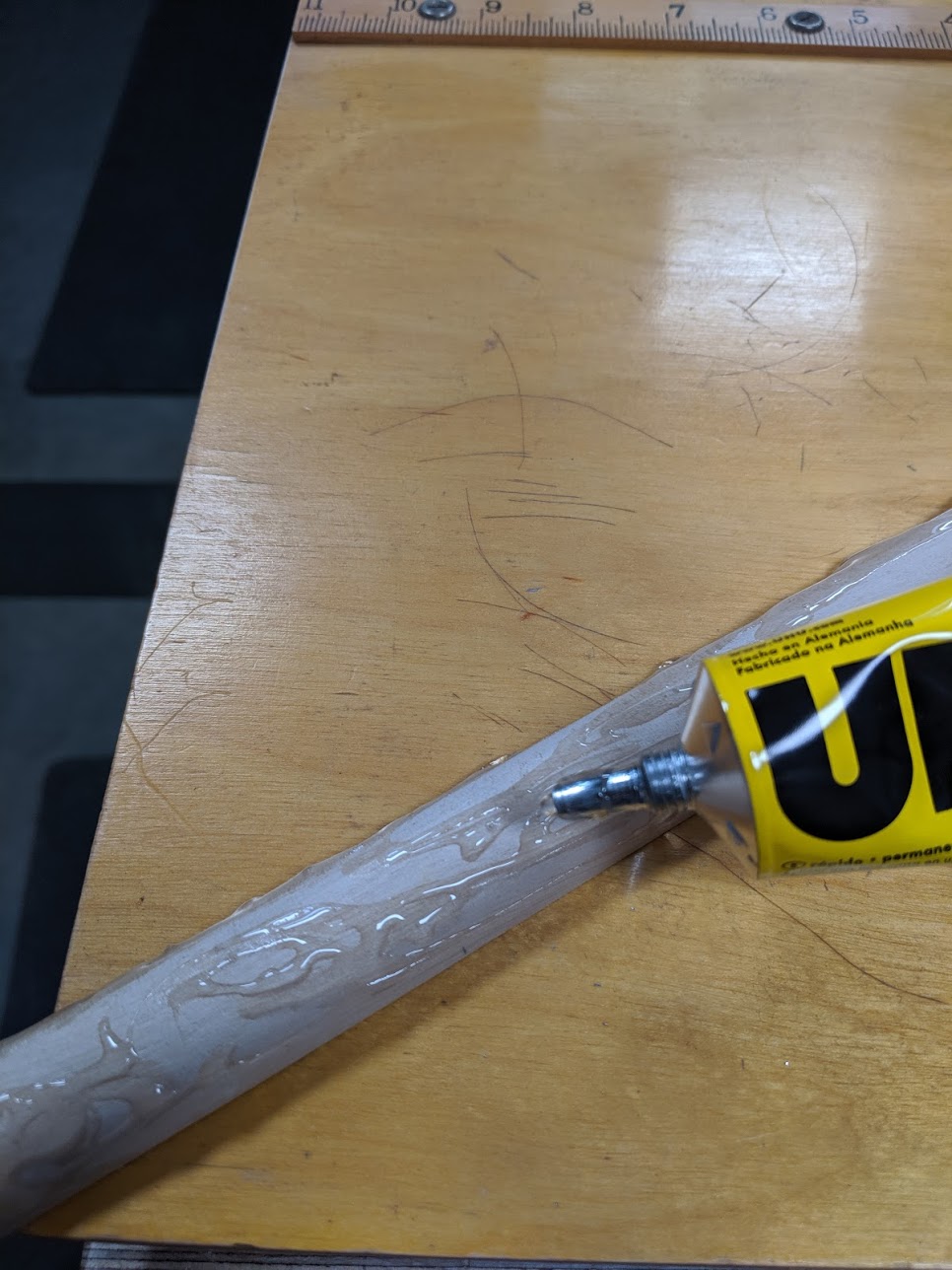
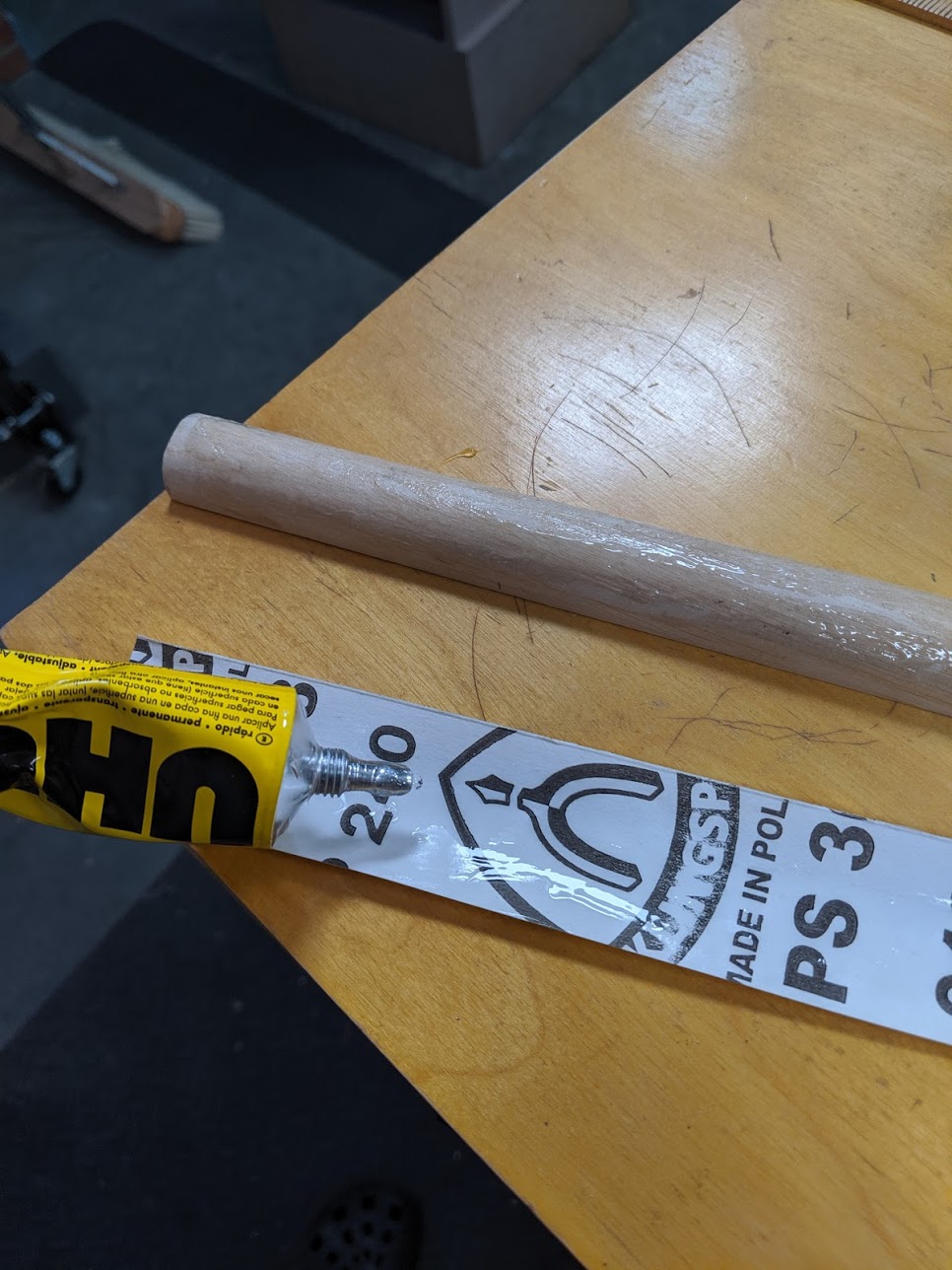
And here too is another reality: now it's not the same tool, but a coarse 60- to 80- grit strip of sandpaper glued to wooden scraps made into sanding paddles works really well. You can make several pieces for replacing worn out pieces. Create three levels of abrasive and you can take the fineness up to 250 grit with a 150-grit in between. Now see how well they work. I think you'll like these.
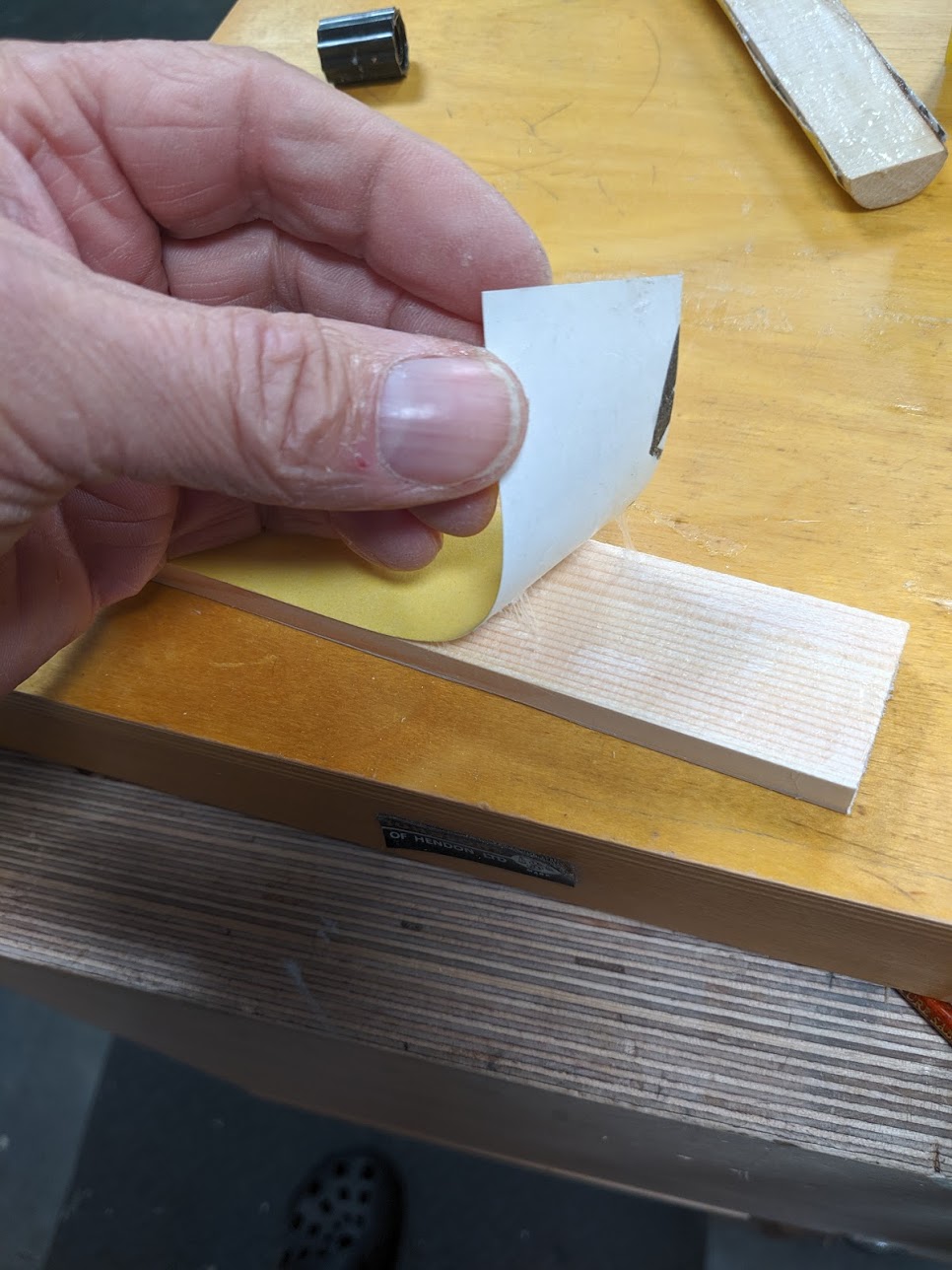
Making them.
You can use double-sided tape on flat surfaces but curved surfaces seem to turn loose more readily and too soon. I use contact cement to stick down the abrasive regardless and so it stays glued. The property of contact cement is that you glue both surfaces and then wait long enough for both surfaces to become slightly tacky so almost dry. Make sure to align the surface to the paddle and press them firmly together. Add pressure if possible and the paddle is ready for use. The advantage of abrasive paddles over rasps and files is that the abrasive ones cut wood in any direction you move the surface over whereas the rasps and files have teeth that cut in one direction on the forward stroke. When the abrasive is too worn to cut, change the abrasive by pulling off the old.
Comments ()