
Oxford...
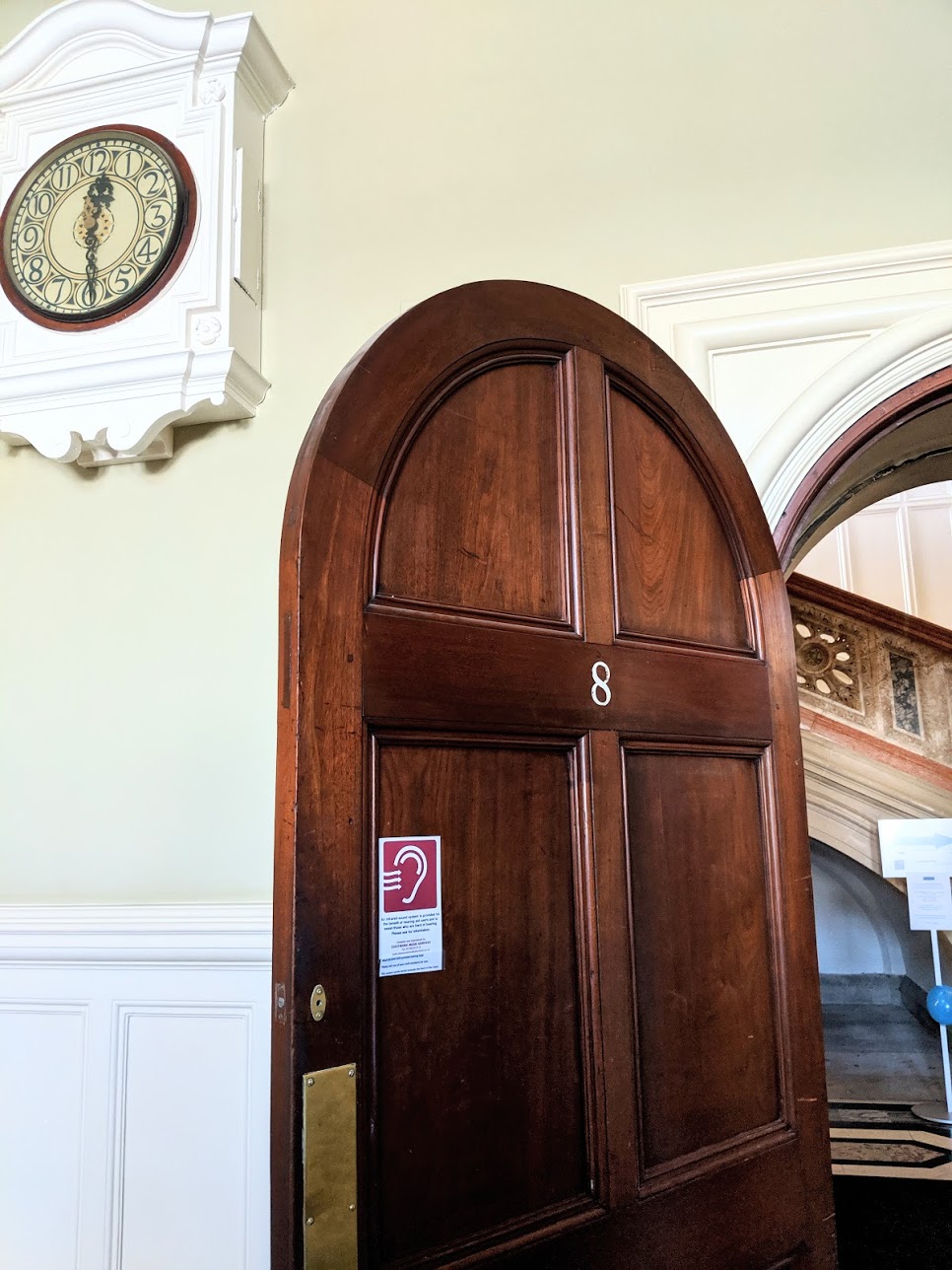
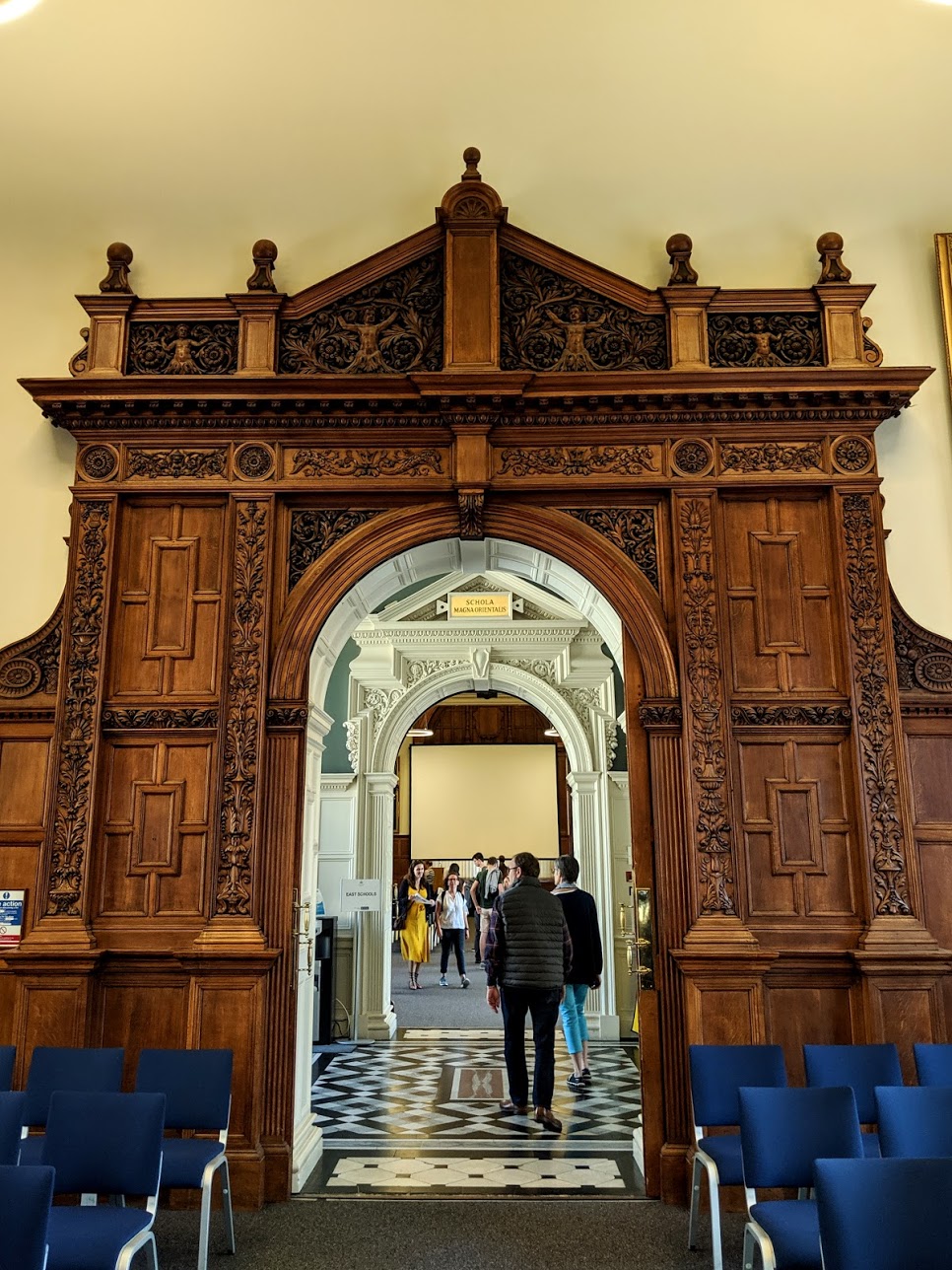
...So many buildings, so much history, too much to seen in a day. I blogged before about the doors of Oxford. How people just walk past them, through them, mostly oblivious to their constructs, the men that made them and what it's taken to adapt them to ever-shifting decades and centuries of culture shifts. But you won't find men like me who understand the internalising of massive pocket doors that slide easily out of view and latch gates with studded hinges behind lecterns exposing the life of the doors. I should and could write the book on Oxford doors and frames alone and it would be 2,000 pages in a few weeks just with the explanations of how they were made and by who; that's without pictures and drawings too.

My family usually walk on ahead when they are with me; they know I stop to contemplate the unknowns within shoulder lines at every piece, be that arm-wrought blacksmithed iron or faces of wood. Betwixt hammer and anvil such beauty transformed rough iron with a sensitivity now much lost to the art of smithing. Polished by a million hands grasping at levers, rails and handles, the steely shine ignores the next hand opening the door or closing the latch. Some steel has been replaced with the rotted wood but the doors and steel were faithfully replicated to match exactly what hung for 400 years before. Arches carved by small gouges sweep up thirty feet and sometimes more towards the heavens in the vaulted ceilings of these hallowed halls of learning. Each precise and though through cut a fallen chip of oak from the then ancient forests of England left behind a rose and a leaf and the face of a new cherub. The classic form from the Greco-Roman empire, when two worlds and cultures collided to subsequently impress an emerging Britain, went beyond geographical limits to influence the seats of learning forming the British Empire and its Industrial Revolution.
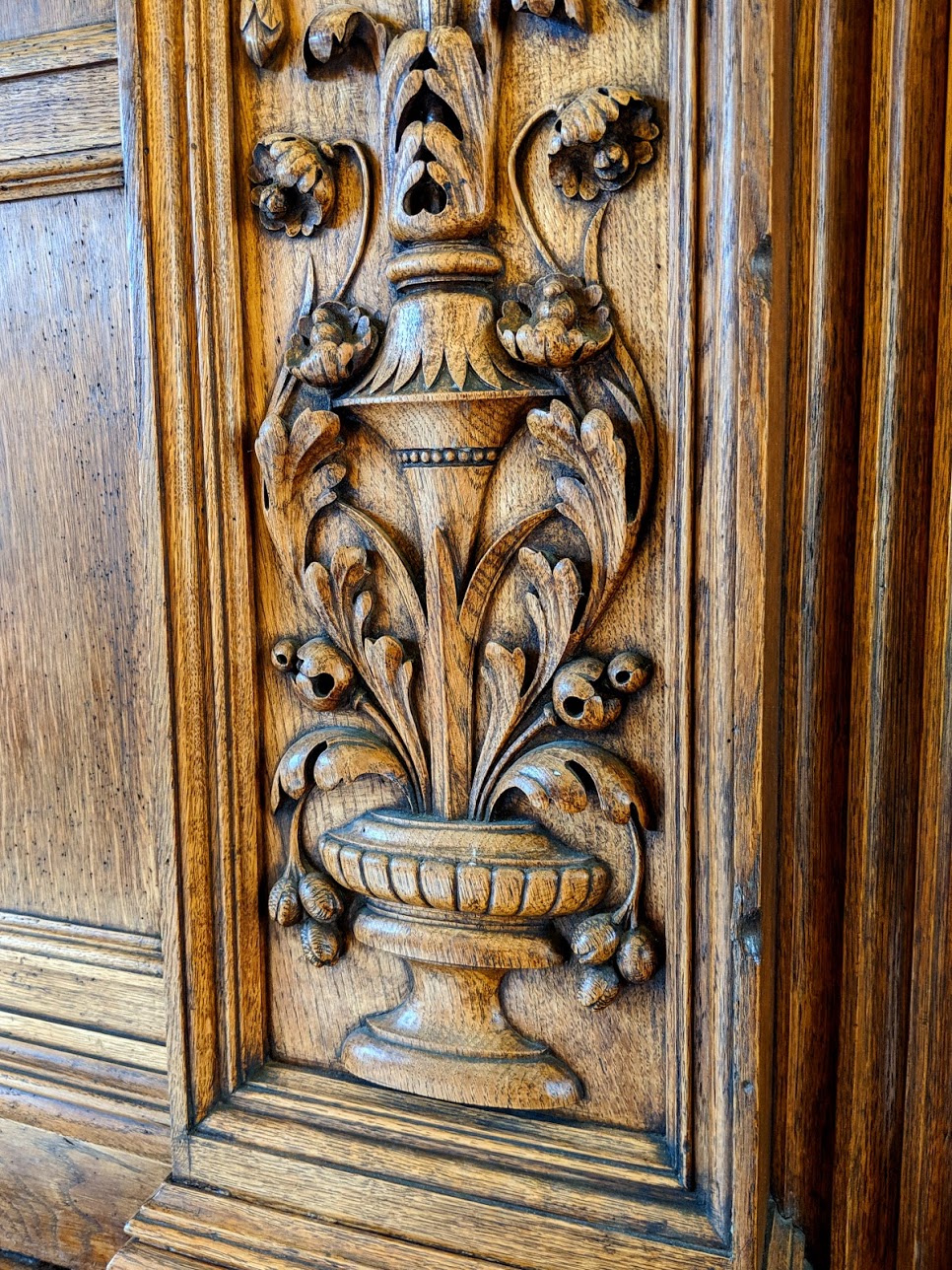
So I walk past door after door and enter one or two new places and discover new seats of learning, read books through glass panels and find myself amazed at discovery, wondering to myself, "Would my life have changed had I too come to Oxford to understand 3D. Would my designs for the house we've bought to build furniture for be greatly different. How has the internet shaped my perspective?" Whereas I am apprenticed as a crafting artisan, I must say that most of what I know is self taught. When I learned there was no internet and to be honest, people think I have access to YouTube to learn from but I must tell you. I have not watched other woodworkers on YT and that's mostly because my time making takes all of my time and I don't watch TV beyond maybe four films a year.
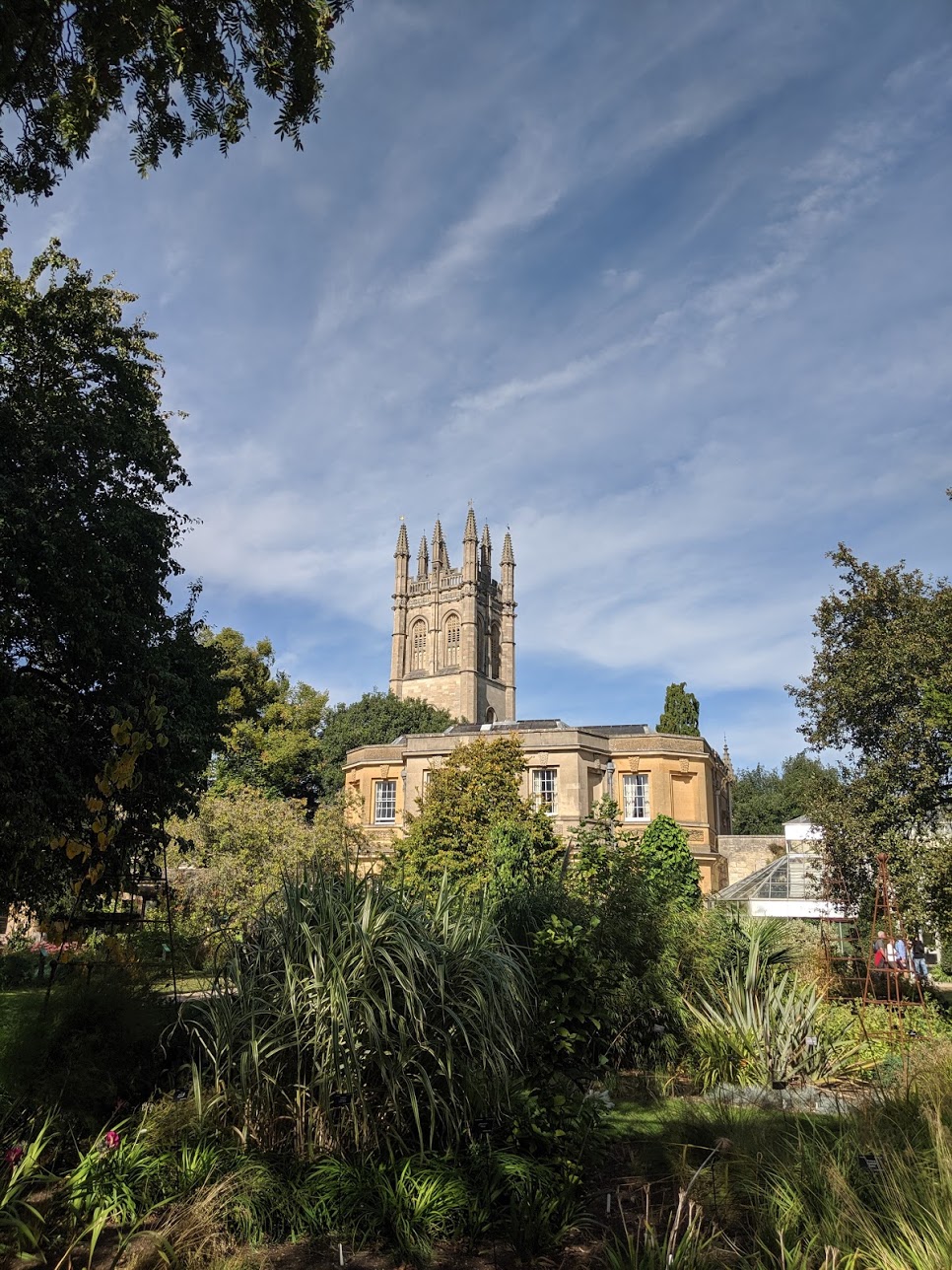
I may pop back into Oxford and consider more that book on Oxford doors today. What a fascinating subject. As I walked out of a common toilet facility in the Oxford Botanical Gardens I saw a framed and ledged batten door and thought about the house we've bought and thought these could be the kind of door I might like for the house. They are not in keeping, but they are nice.

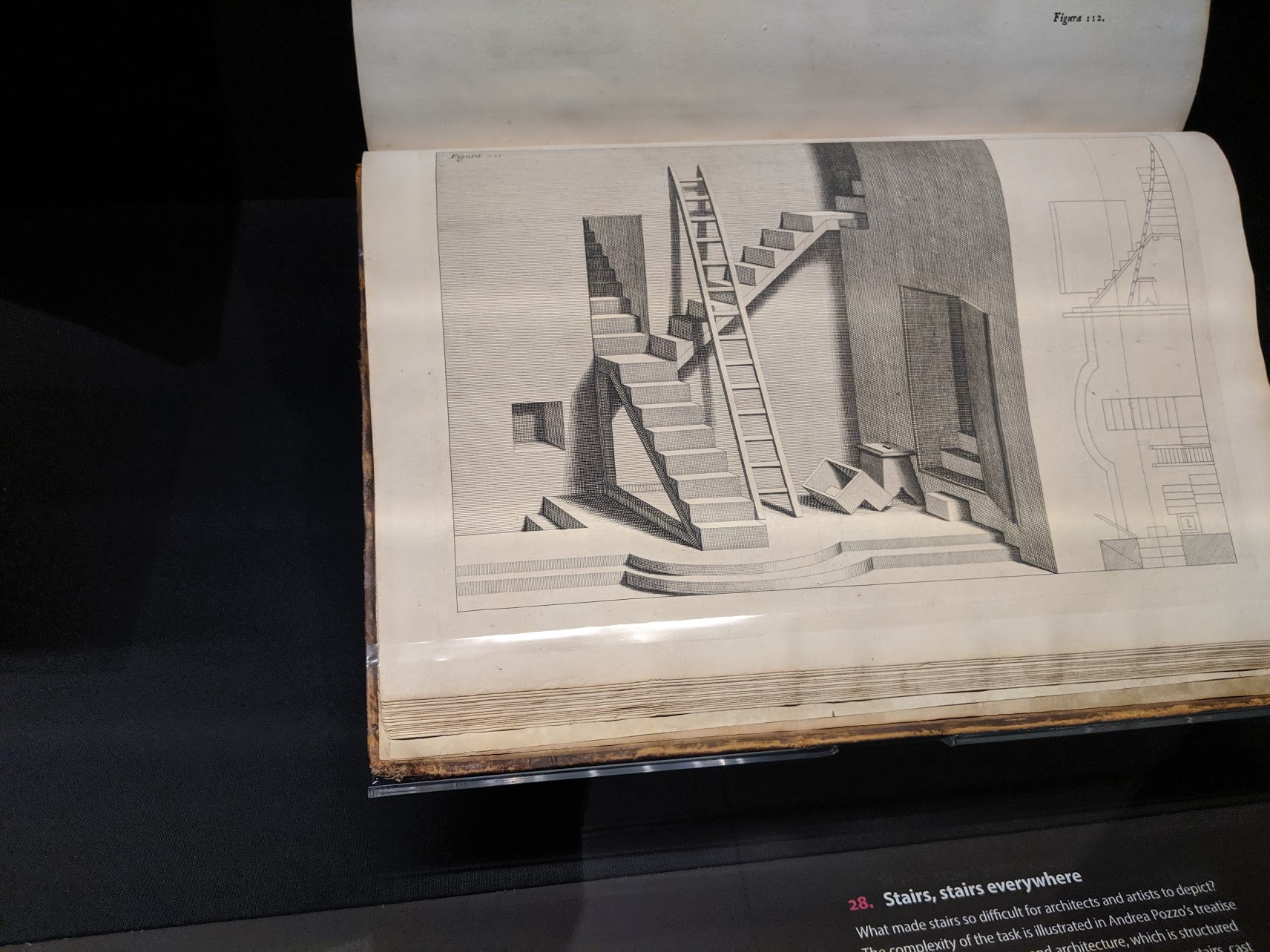
Oh, off topic slightly but not really. If you are local and want to, you should take in the 3D presentation as shown here. You should love it!

Now, my days thus enriched by 8, 9 10 centuries of buildings that still stand for another millennia, I think of the past with the future in mind. Will what I build last in the lives of those I design and make and build for? I hope the thread that I have begun will build a sure and true foundation as the men and women of old who are long forgotten as unknown and anonymous makers of material things but who's spirit remains in the work and legacy they left to inspire us. It was all hand work my friends, we should never forget it was indeed all hand work.
For more on Oxfords long history involvement in the education go to: https://www.ox.ac.uk/about/organisation/history?wssl=1
Comments ()