
Making Mock-ups
Sketch drawings reflect my gathering of thoughts. They may not exactly match my idea on paper but they will record that genesis and any discrepancy will be corrected as my brain fills in the blanks. It's a bit like placing a ruler along the top or bottom half of a line of text and you discover you can still accurately read the sentence flawlessly with or without the different curlycues.
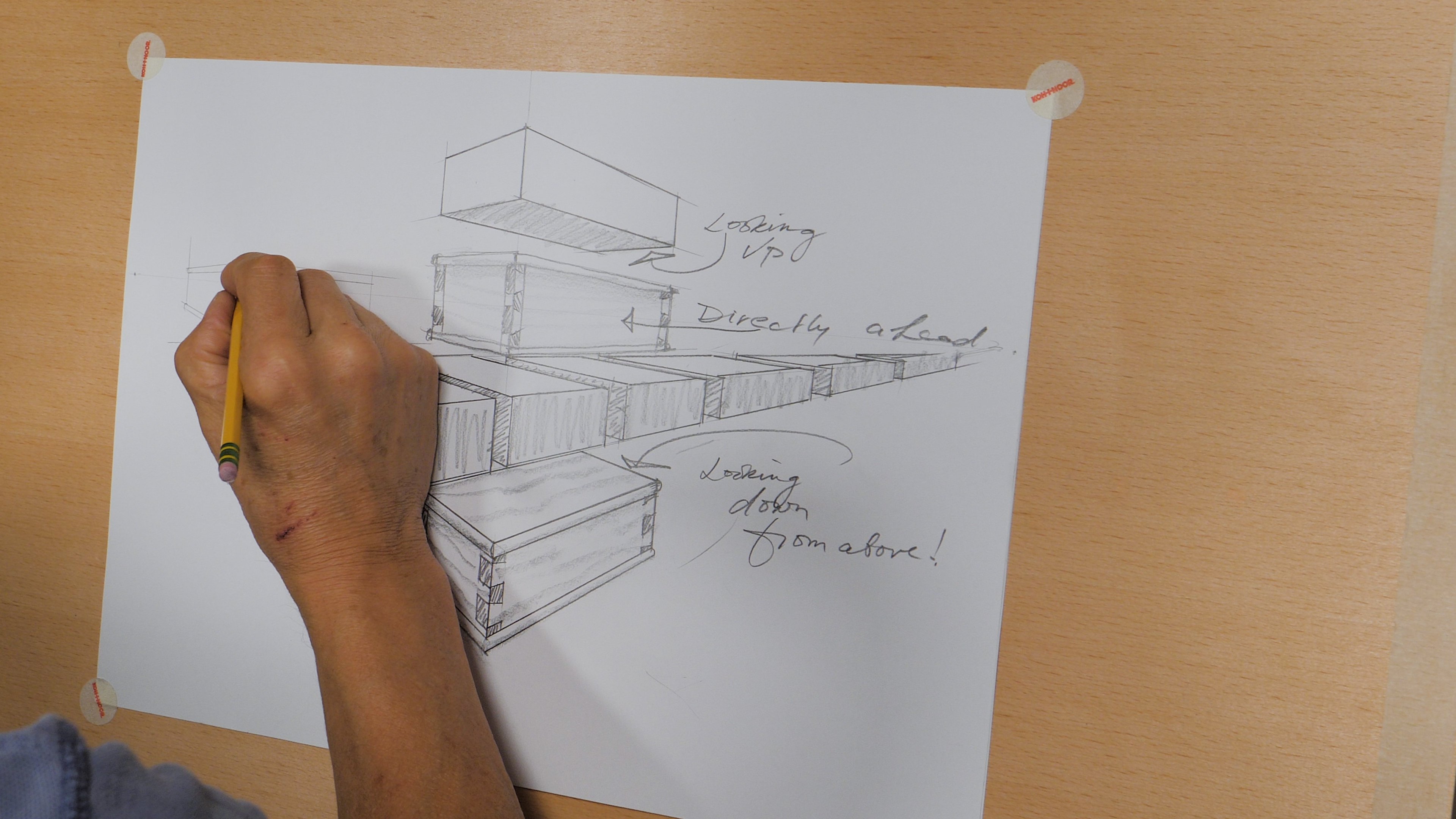
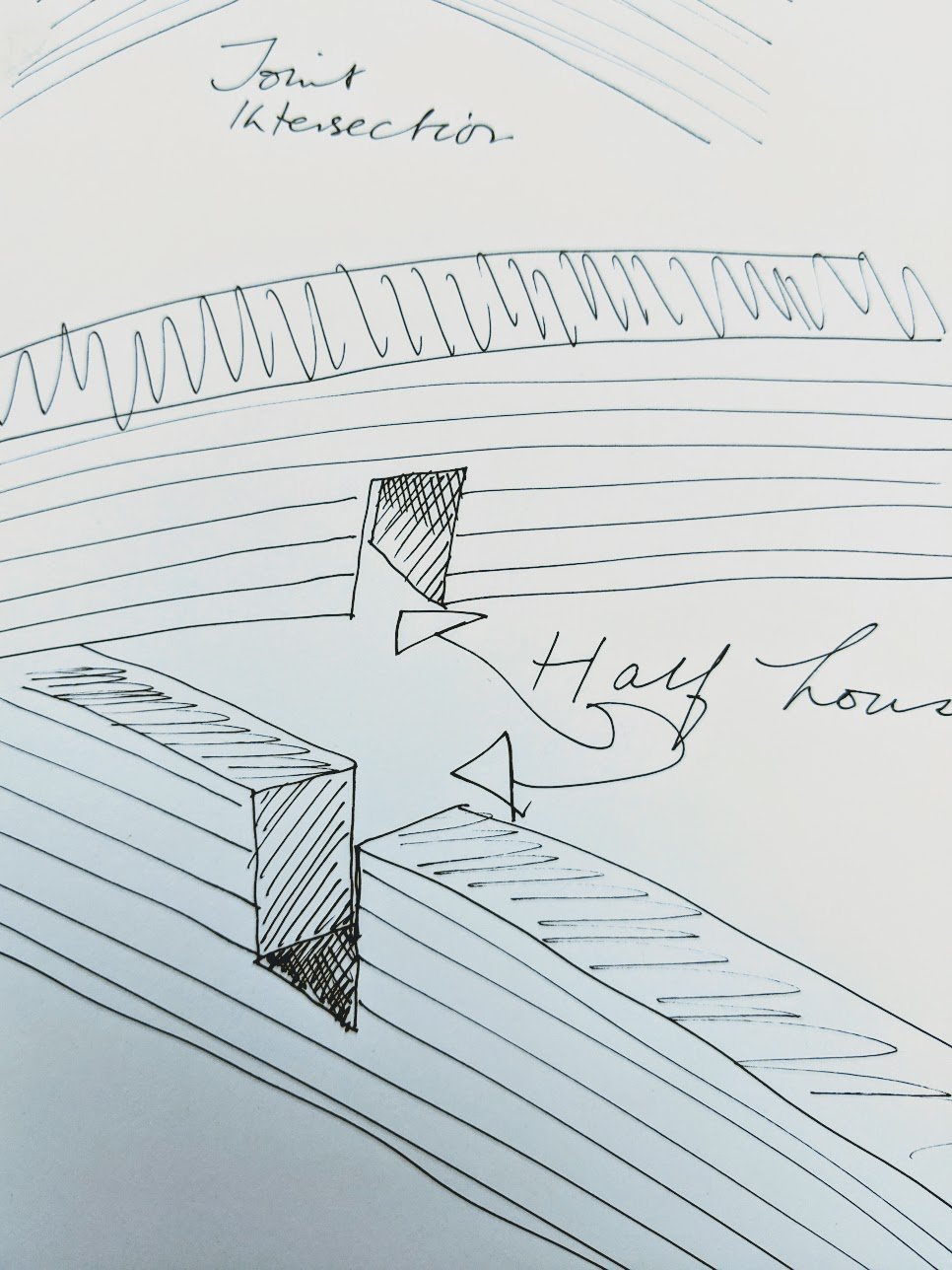
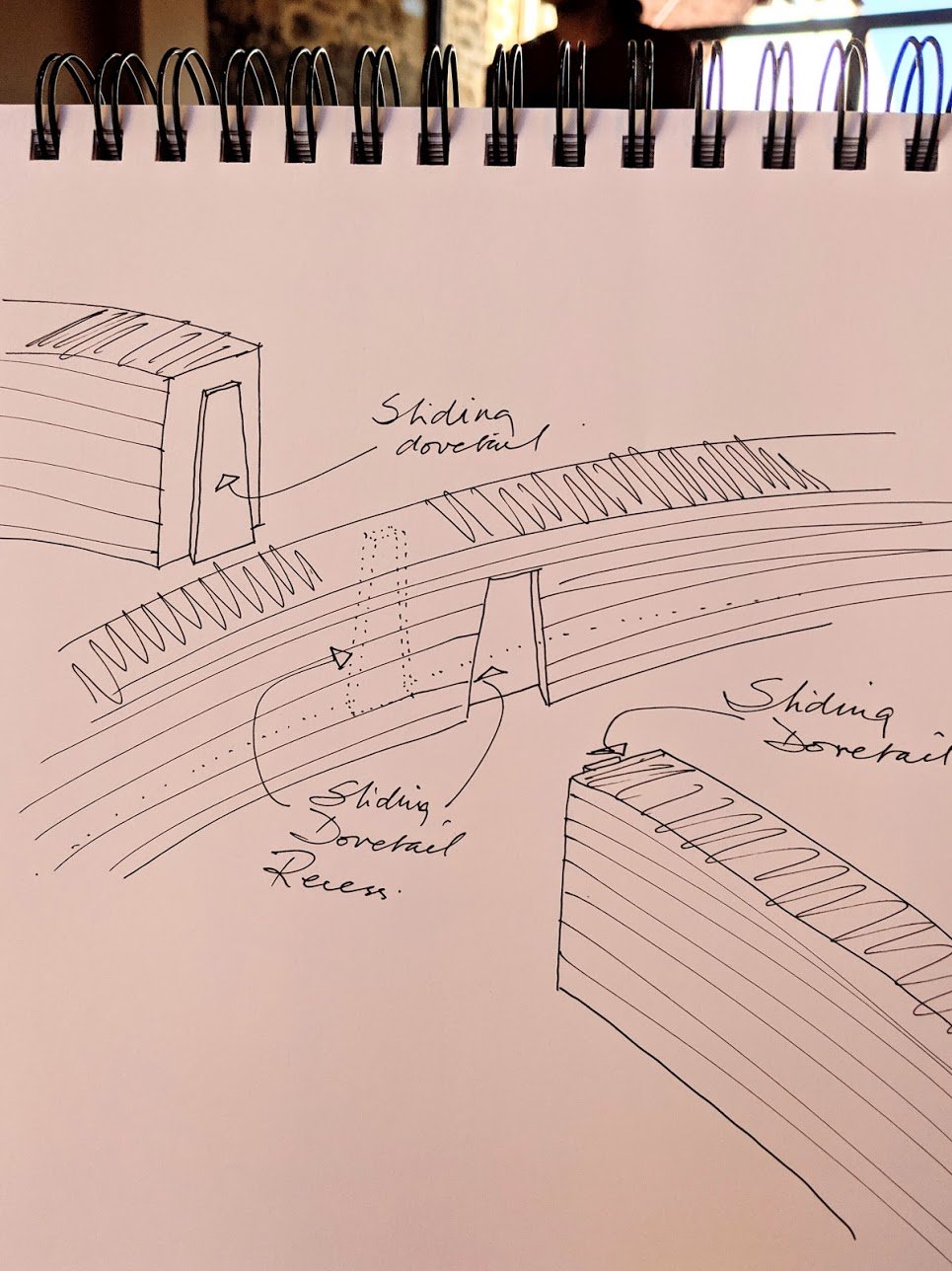
I use drawings in the same way I record or write down a sentence to capture a thought I want to expand on later. When I am at the bench my note pad is an offcut of wood , a shavings even. It makes it to my note pad and journals and are always kept as a record of shifts and changes I've made along the way. You see, just the same way a passage you are writing can change potency when you stray from an original thought, so too a design. Sketches seem somehow to capture changes, they have the ability to encapsulate and protect original intent. In my view that's important. It doesn't mean change cannot take place or even be welcomed, just that the evolving process ensures a projects success. As an instance I may have an idea for shapes but when I come to the joining of components the materials may not allow the initial thoughts surrounding the joinery. because it's impractical for one good reason or another. Something may well need to shift and I may need to change an angle or a component size or the very joint I thought might work altogether. An intersection may look as I want it to look, but then inside I may change a halving joint to a sliding dovetail to make it happen. From the outside the intersection looks identical, but the inside of the jointed area is absolutely different.
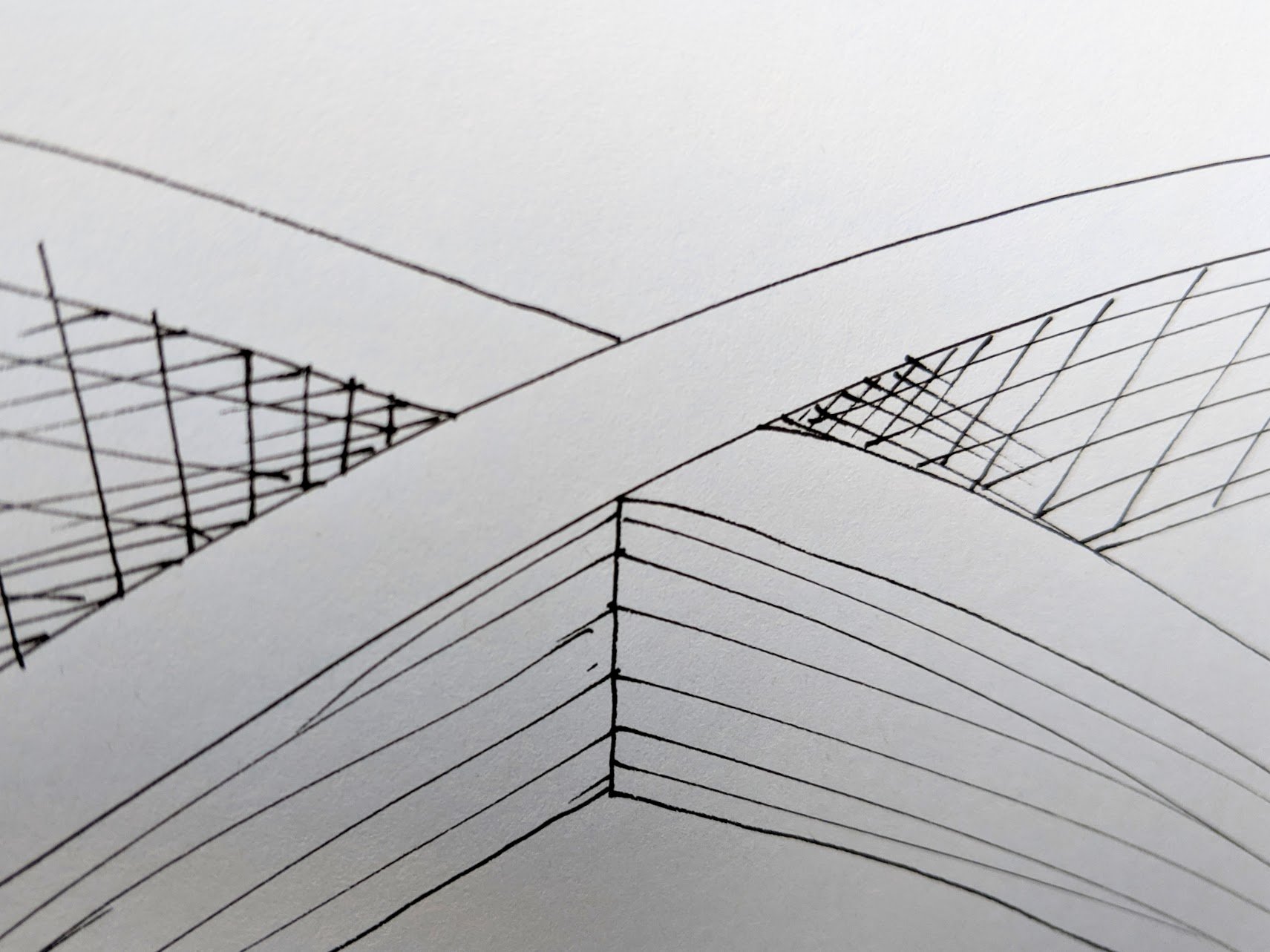
Is lamination a good idea or will solid wood wood outlast lamination? Good question and in the age of increased fashion and consumerism we face other decisions we must make because people wear disposable throwaway clothing for the sake of fashion and then protest other developments they once embraced like for instance fleece jackets and plastic straws. These culture shifts affect our thought processes all the more and balance is often difficult to find without the scales by which to measure decisions by. Whereas cutting solid wood may seem the longer-lasting option, it also translates into weak points that are likely to split under excess pressure cause by dropping or adverse handling. In the case of this project solid wood is an easy option and the joinery is ready to go once the arching is cut. The problem area is at the foot where the toe has contact with the floor. Band-sawing the curves is of course instant but then I like the multi-lined look of lamination incorporated as part of my design. To keep or not to keep?
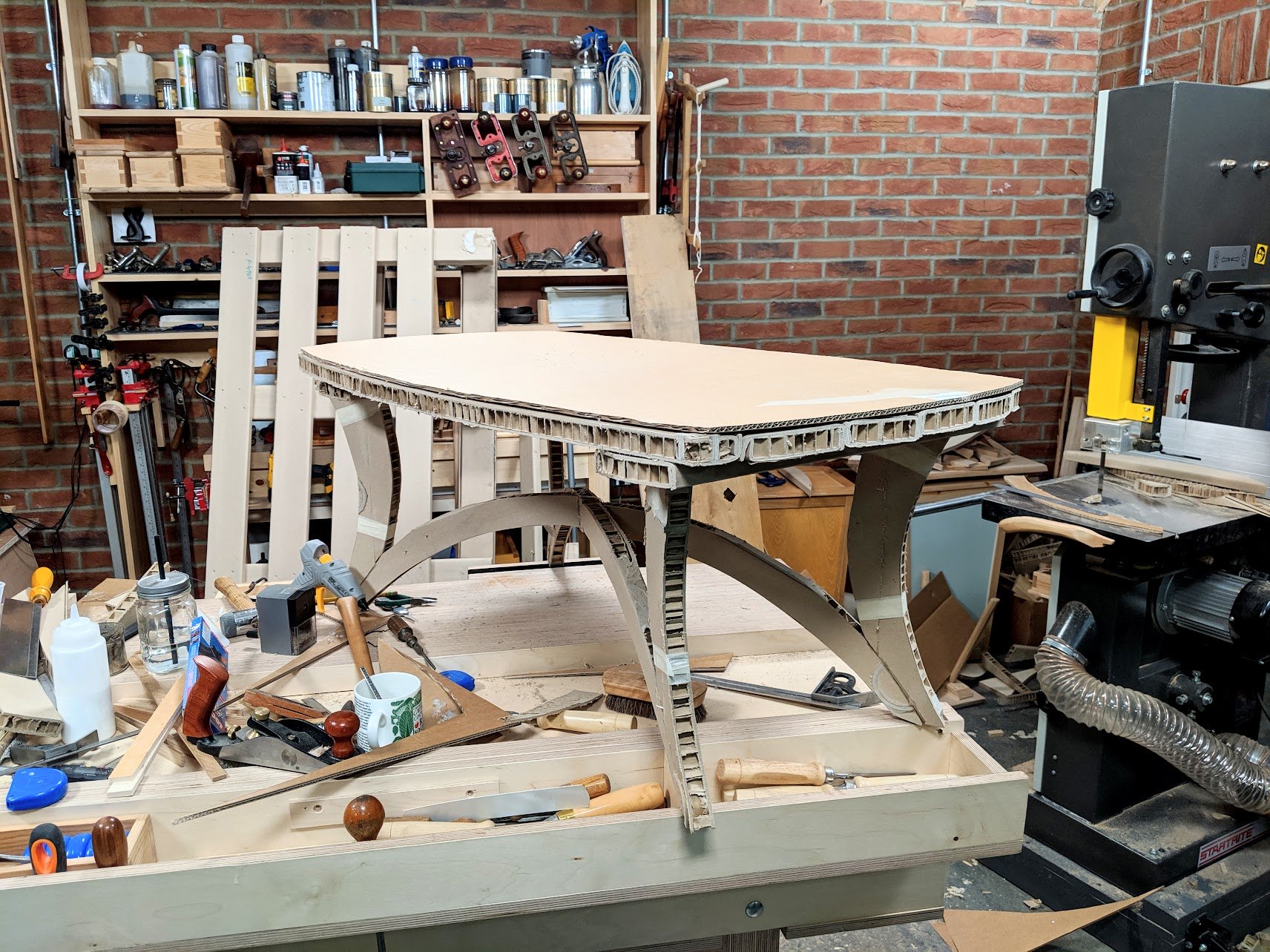
So we now see that mock-ups give is a solid. Something so solid we can consider it when it's placed in the room. Shape, proportion and size alone can be seen visually and considered initially for this purpose but then we must investigate the inner options we have to play with - the joinery. This happens mainly when we stray from the rectilinear standards where 90-degree corners and intersections would typically come from the more general three-joint-choice-standard of mortise and tenon, housing dado and dovetail. In general these joints almost always rely on square shoulder lines abutting into stiles, posts and panel sides of one kind or another. Straying from such norms demands that we rethink our option and when we think of using lamination as a process to achieve our objective we must truly go to the drawing board to invent possibly what has not yet been invented.
Comments ()