
Just Another Chair
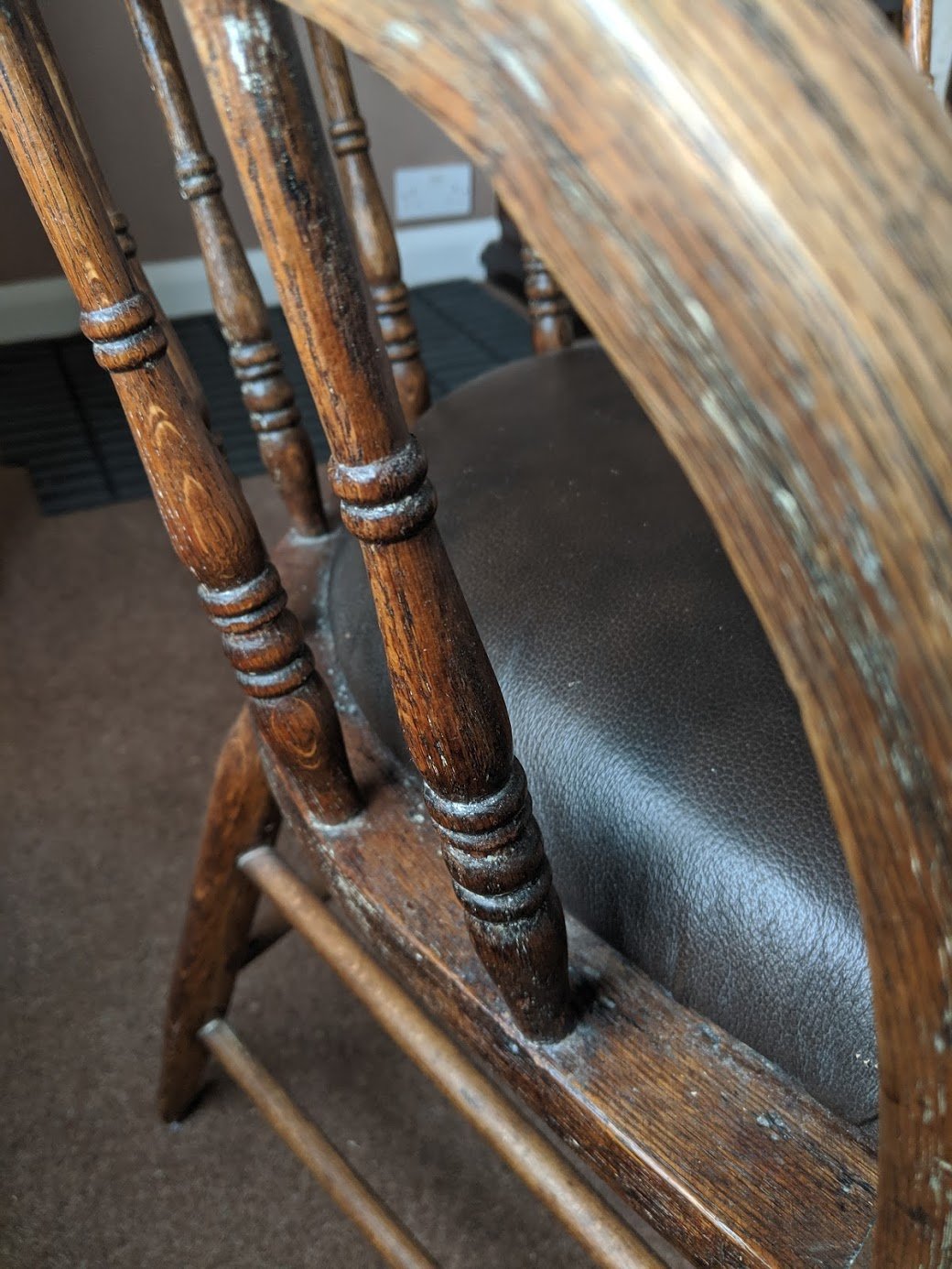
Spindled chairs are not complex. Not really. In fact, though they mostly look it, they are truly simple. The chairs most predominantly used in public places relying on chairs for seating (taking out plastic ones of course) are mostly made of turned components. The reason of course is that they re surprisingly strong, easily jigged for boring reception holes and the wood can be dried down to almost zero so that no further shrinkage after manufacture can possible take place meaning the wood will only expand into the holes long term. This method means that most restaurant and cafe chairs are not jointed chairs as joiners and furniture makers might know it, with angular shoulders set at 90-degrees and such but think rods into bored holes. This has to be the single most simple form of connecting one or more pieces of wood to another. You bore a hole and size the spindle. It fits and is driven home. By tapering the ends of the dowels slightly the leg, rails and spindles tighten as the bottom out in the round recesses.
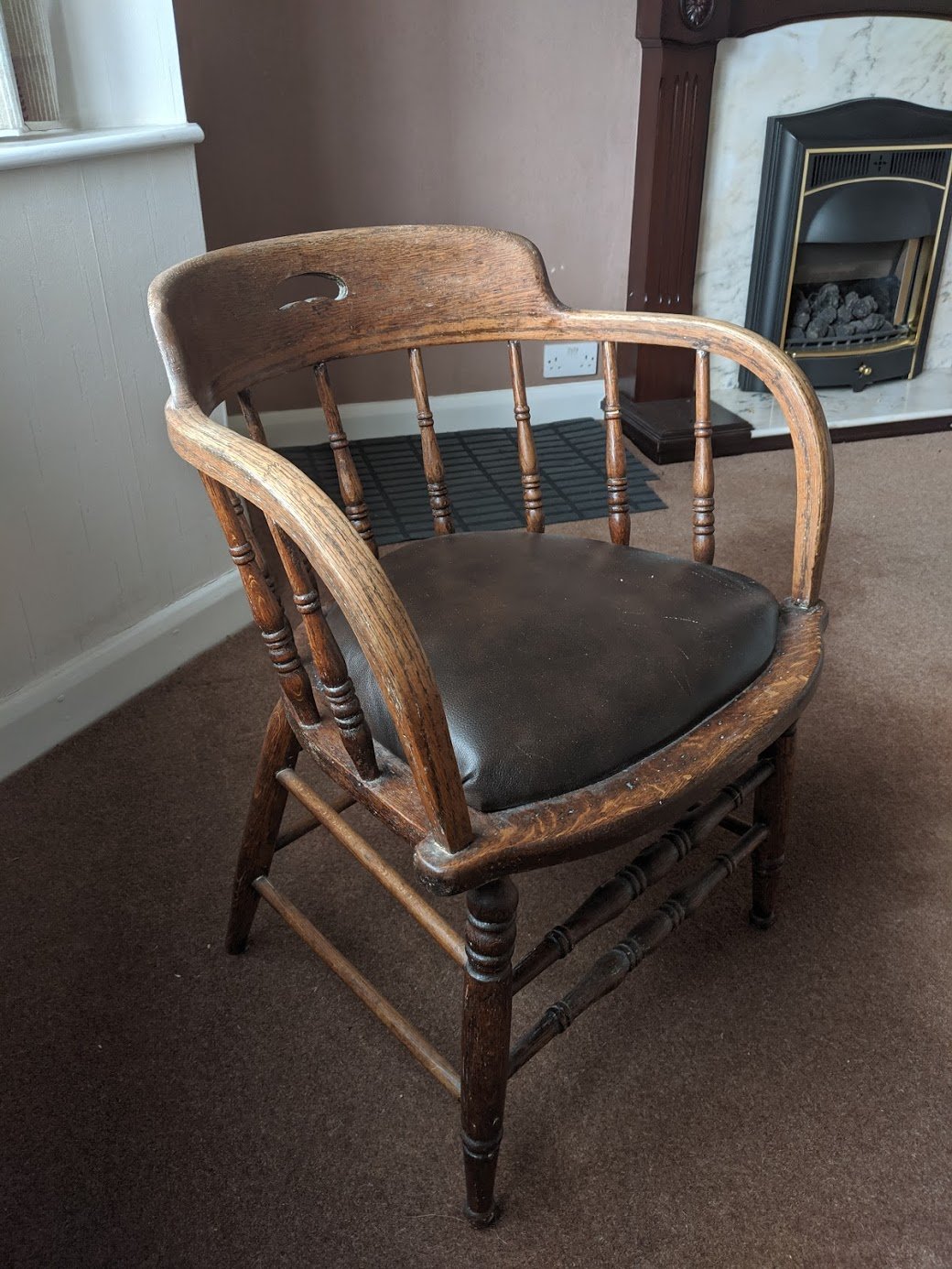
Chairs made with spindles, no matter how the spindles are turned or rounded and no matter the shape, are mostly made up as a multi-dimensional wheel with spindles splaying out to form seat backs, arms and legs. Think of the seat as more a wheel hub. Seeing the spindle chairs this way marks the difference between jointed chairs and spindled chairs. I like such simplicity and seeing such practicality helps us to see the intrinsic strength, speed and easer of manufacture.
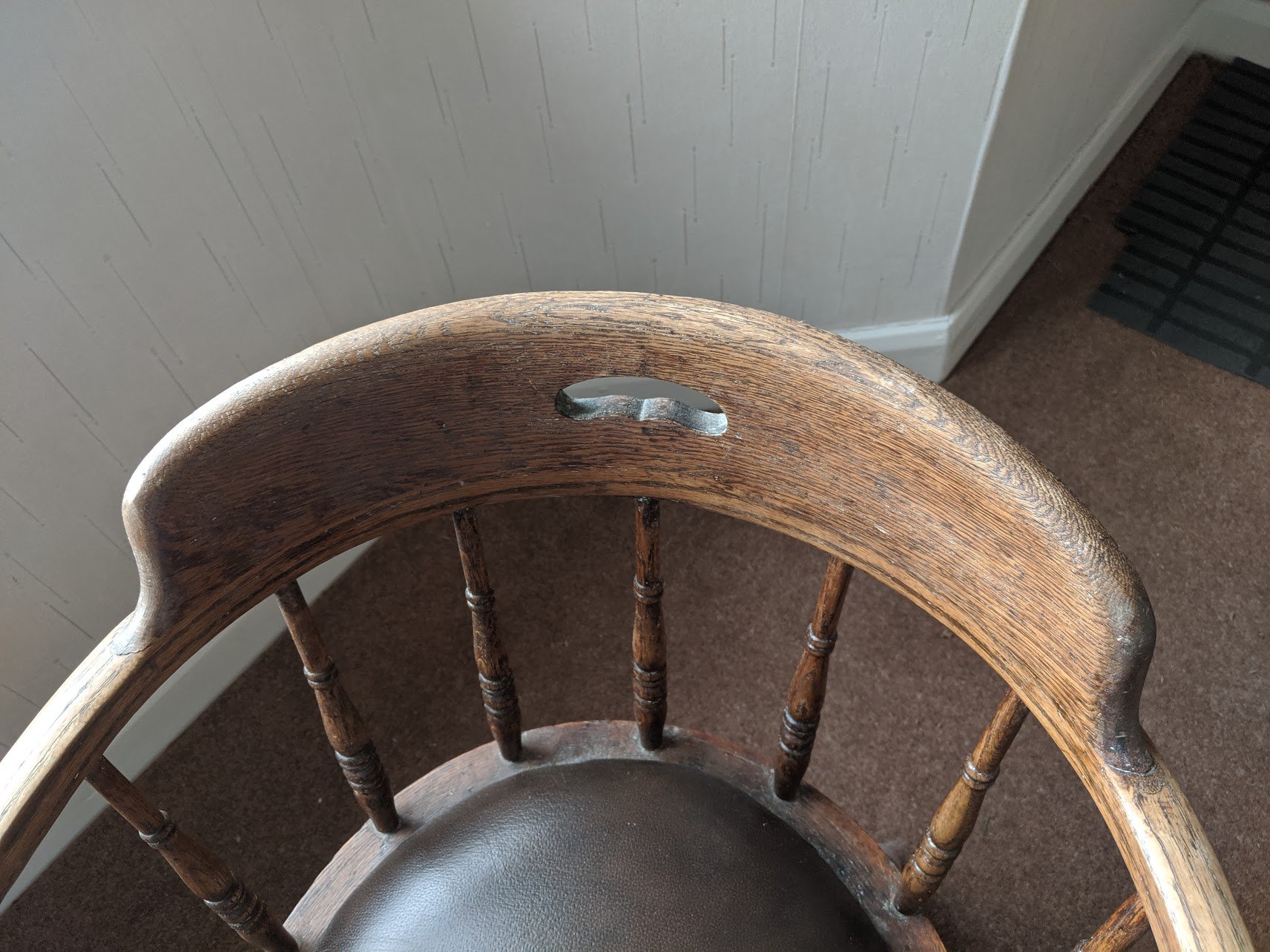
I bought this chair in damaged condition at auction for a few pennies - 50 pence I think. It is one of my favourites and it is a comfortable working chair. The features comprise a few twists and turns that came from the steamer to the former and then to the chair. The back of the frame is a continues 2" by 1 1/4" oak section bent to a half round U shape that's then tenoned permanently into a front crosspiece member. Joinery as such is minimised. No more than ten minutes work I should say. The next bend comprises two bends in a single stick.Again looking complex but all. Then there is the back support crown:the bit with the hand hold in the topmost section.
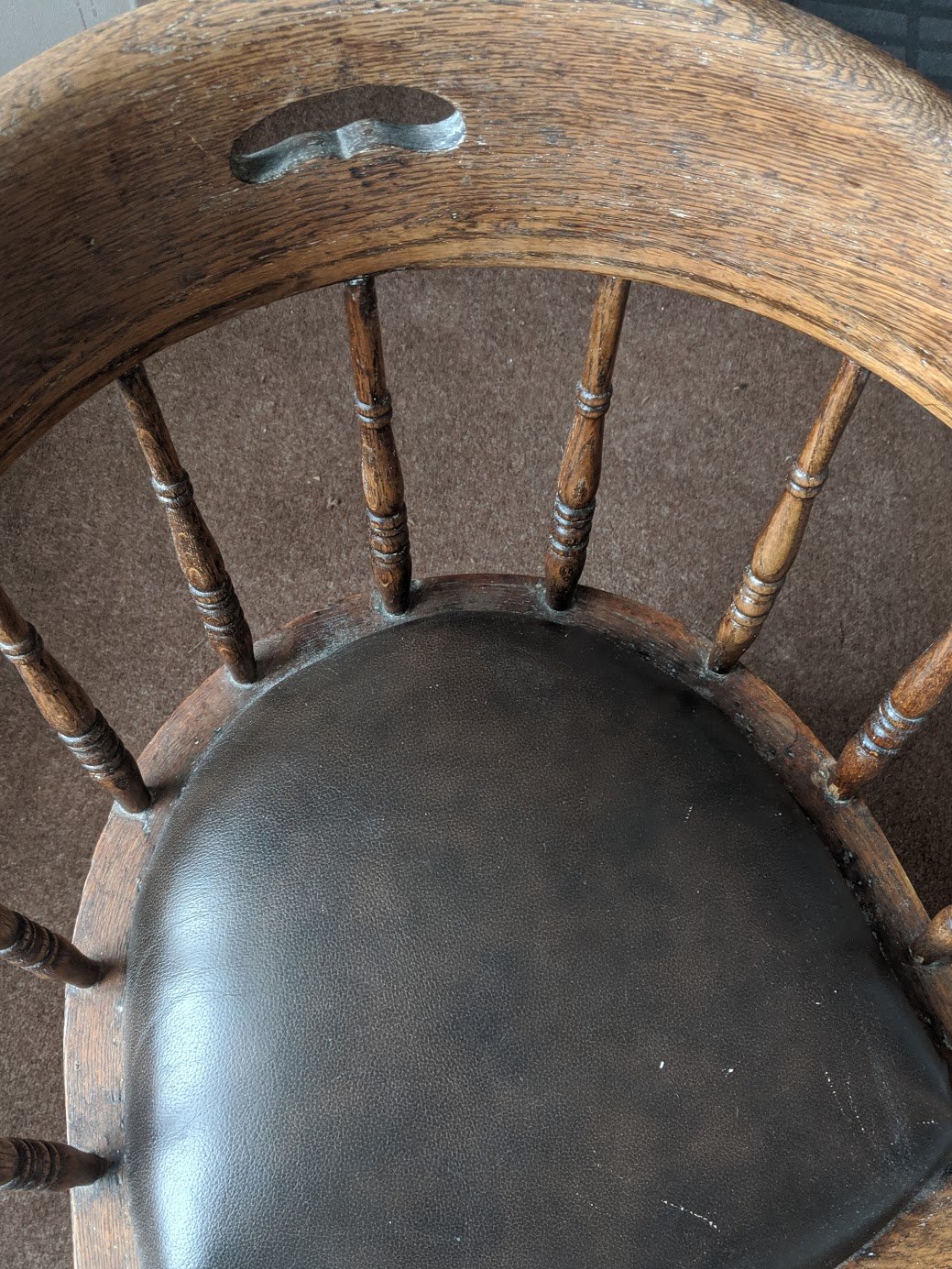
Spindles on my chair are fairly rugged, not finer work at all, yet still I like it. It's nice enough all round and also quite robust. English chairs like this have very upright legs rather than the splayed legs of say the American Windsor chair. This verticality increases the longevity but certainly looks less graceful. The question for me is who said, "less graceful" and what does it really mean?
Comments ()