
Collecting the Past Makers
Just when you think you're done, eBay finds yet another tool you missed from your collection that most likely you would never have found or even known about outside of eBay. In the last year or so I have found R Groves saws I didn't know existed, adding them to my still growing but quite modest collection of saws. Just when I thought I had them all I found my compass saw followed by a table saw designed specifically for circular and oval tabletops. Then surprise, surprise I found the exceptionally rare 16" tenon saw for another. A month ago I found the rarest of treasures in a 16" (my favourites) handsaw as well and then perhaps a not so rare log saw too.
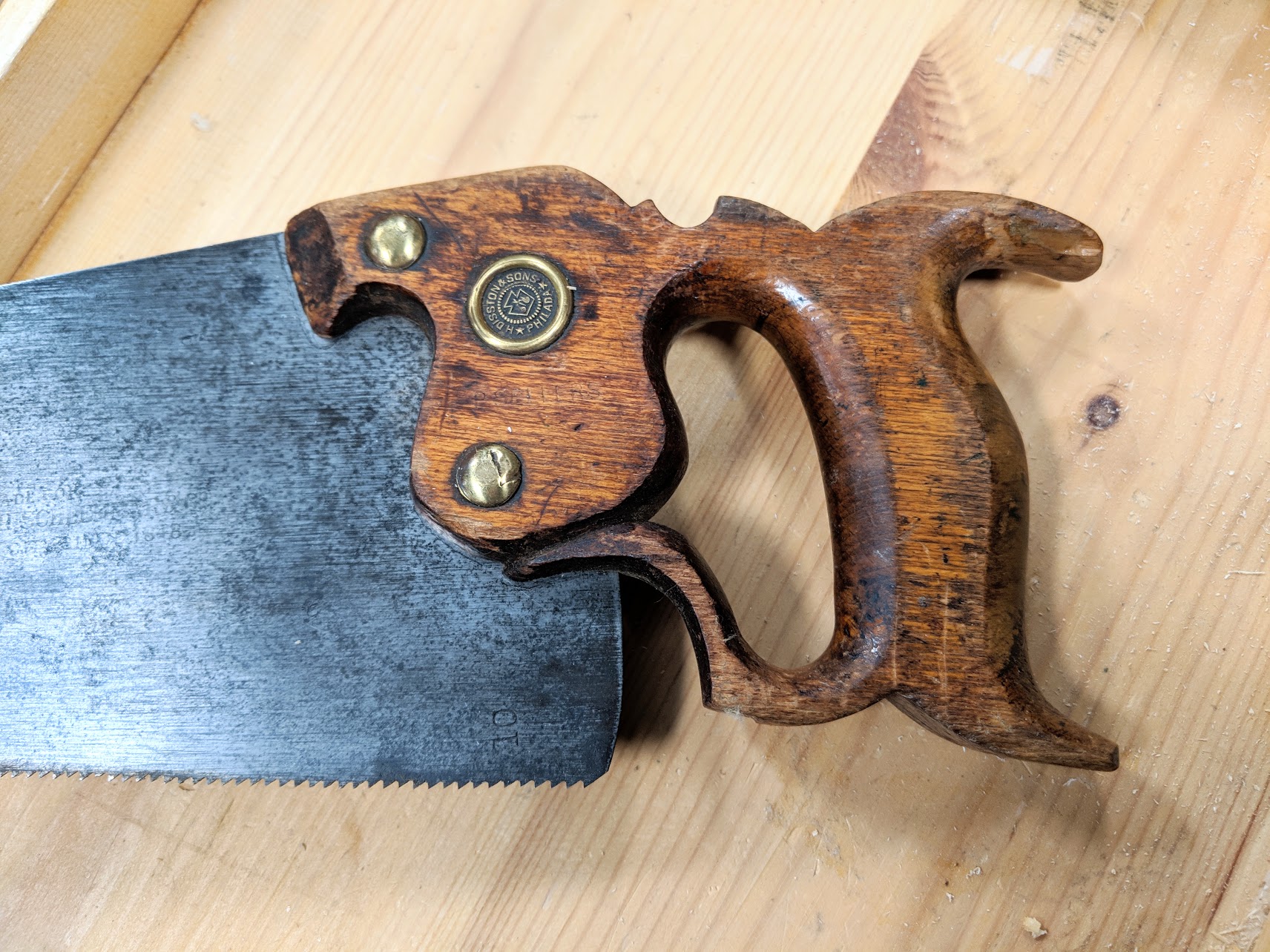
If you recall a previous blog from years back I told of one of my favourite of favourite saws of all and that is the Henry Disston 16" handsaw made especially for the department store Hammacher Schlemmer in New York City back in the 1860s. I doubt that any other saw could replace it, but my new R Groves comes really close because my family of Groves saws has steadily grown since the first one I bought decades ago.
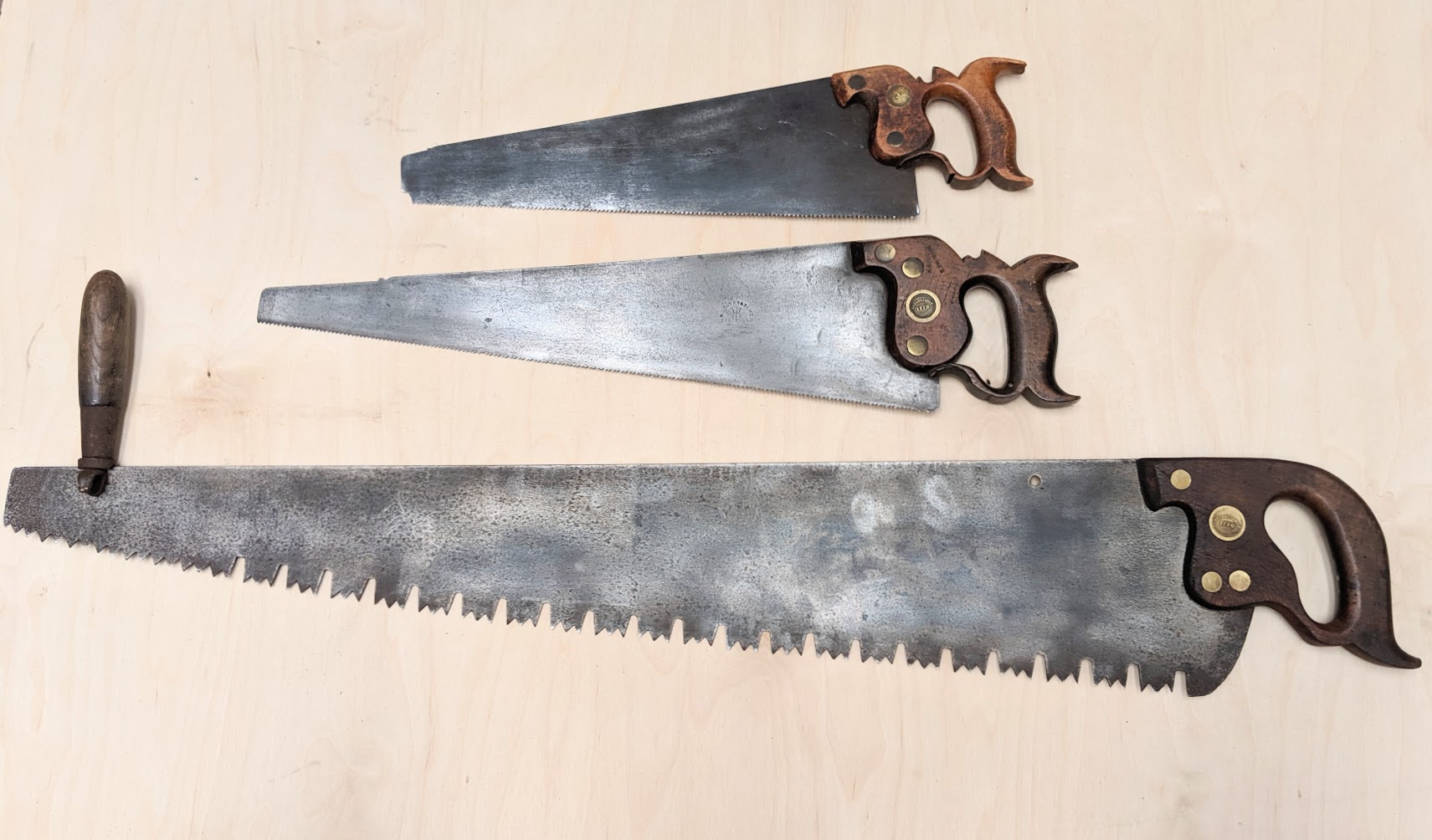
One thing I have noticed of late is my growing interest on former proven technologies. Whereas history and the burgeoning development of the Industrial Revolution has always fascinated me, my interest in the Groves family of saws parallels the development of say makers like Henry Disston and of course a whole group of 50 and more then British makers. The most famed and the longest lasting is the Spear and Jackson with an ampersand betwixt the two names. Of course the Disstons were not really better than those earlier British makers, as with all and every maker the demise soon followed with the development of machine sawing available to all. Who doesn't have a tablesaw and a chop saw in the USA, and with its mass of acreage and extra large homes with outdoor space large enough to accommodate two and four-car garages, space was rarely a limiting factor to setting up a dedicated machine shop. I say demise because in the 60s or thereabouts the USA Disston company was bought by a Canadian company to make the Canadian version of the Disston.
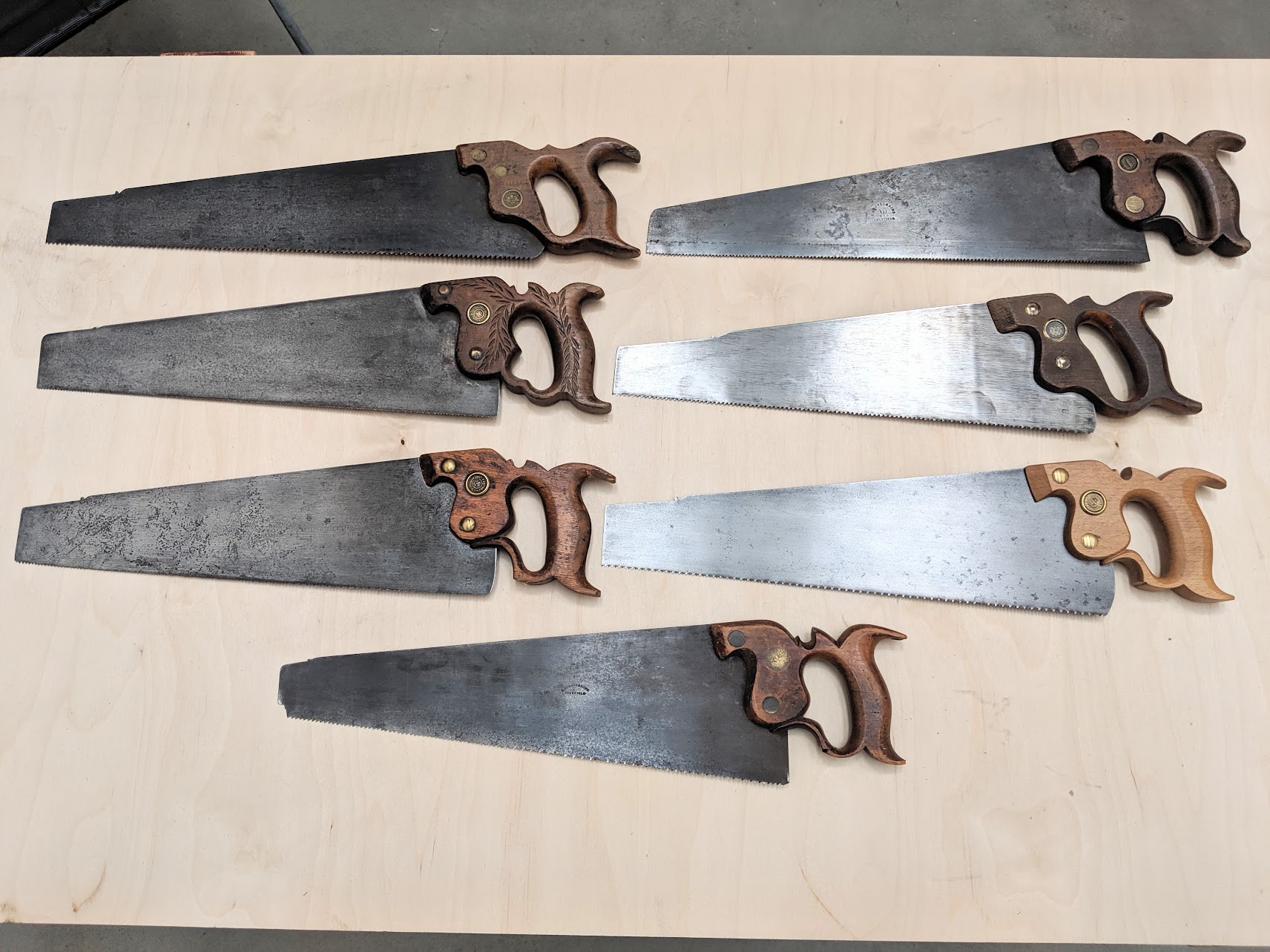
This company never paralleled the Philadelphia Disston but an ugly version of saw made with utilitarian components. The plates were way thicker with too little flex and so too the handle no more than an unrefined oversized clunky chunk of beech wood. Two World Wars saw to this deterioration of both quality and pride in workmanship. In general we lost the refinement of the handsaws in general though there are some makers who've taken on refinements in the handle aspect of manufacture on a small scale and of course there is high price to pay for it. It's a funny thing but the plate takes such little work compared to the handle shaping which takes the most effort. Even so, a power router followed by flap sanding produces the necessary refinement in a few minutes with only a little tilting and tipping of the handle to the flapping abrasive by someone who's been trained to task.
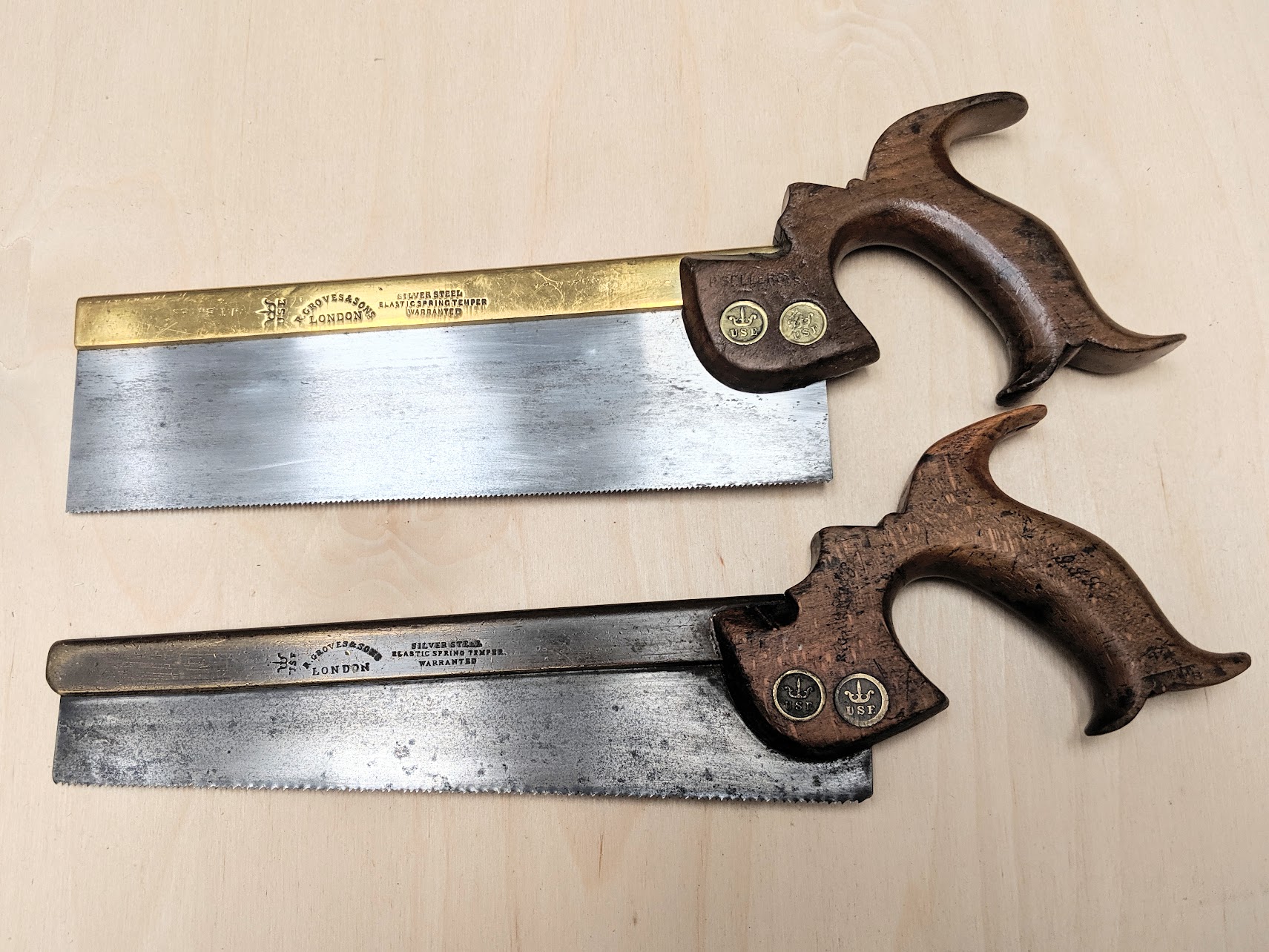
Needless to say that there is no shortage of saws available to us on eBay and other secondhand outlets. £10 to £20 gets you a good maker and if you follow my sharpening videos on woodworkingmasterclasses (for free) you will have perfectly good lifetime saws for life.
Comments ()